TREATMENT OF DIABETES
    - WHAT IS NEW ?


          Jitendra Patil
     M.Pharm (Pharmacology)
                              1
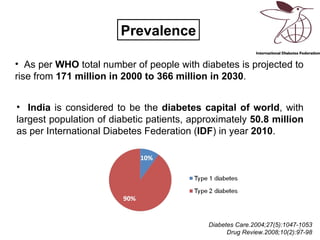
Prevalence

• As per WHO total number of people with diabetes is projected to
rise from 171 million in 2000 to 366 million in 2030.


• India is considered to be the diabetes capital of world, with
largest population of diabetic patients, approximately 50.8 million
as per International Diabetes Federation (IDF) in year 2010.


                                            Diabetes Care.2004;27(5):1047-1053
                                                                          2
                                                  Drug Review.2008;10(2):97-98
Choice of agents in current use

a) Sulfonylureas
b) Insulin
c) Thiazolidindiones (TZDs)
d) Biguanides
e) α- Glucosidase inhibitors
f) Meglitinides


                                     3
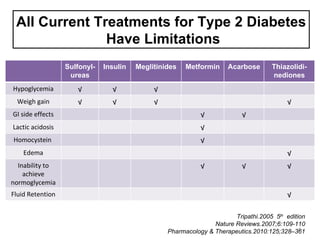
All Current Treatments for Type 2 Diabetes
               Have Limitations
                  Sulfonyl-   Insulin   Meglitinides   Metformin     Acarbose       Thiazolidi-
                   ureas                                                            nediones
Hypoglycemia         √          √            √
  Weigh gain         √          √            √                                           √
GI side effects                                             √             √
Lactic acidosis                                             √
Homocystein                                                 √
    Edema                                                                                √
  Inability to                                              √             √              √
    achieve
normoglycemia
Fluid Retention                                                                          √

                                                                       Tripathi.2005 5th edition
                                                                Nature Reviews.2007;6:109-110
                                                 Pharmacology & Therapeutics.2010:125;328–361 4
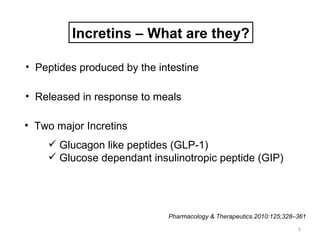
Incretins – What are they?

• Peptides produced by the intestine

• Released in response to meals

• Two major Incretins
     Glucagon like peptides (GLP-1)
     Glucose dependant insulinotropic peptide (GIP)


                             Pharmacology & Therapeutics.2010:125;328–361
                                                                      5
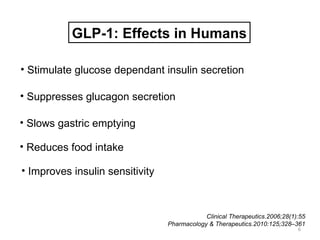
GLP-1: Effects in Humans

• Stimulate glucose dependant insulin secretion

• Suppresses glucagon secretion

• Slows gastric emptying

• Reduces food intake

• Improves insulin sensitivity


                                             Clinical Therapeutics.2006;28(1):55
                                 Pharmacology & Therapeutics.2010:125;328–361
                                                                             6
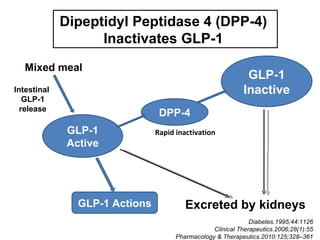
Dipeptidyl Peptidase 4 (DPP-4)
                   Inactivates GLP-1
   Mixed meal
                                                              GLP-1
Intestinal                                                   Inactive
   GLP-1
  release
                                 DPP-4
              GLP-1             Rapid inactivation
              Active


                GLP-1 Actions            Excreted by kidneys
                                                               Diabetes.1995;44:1126
                                                  Clinical Therapeutics.2006;28(1):55
                                      Pharmacology & Therapeutics.2010:125;328–361
Newer Therapies

 GLP-1 analogs:
     Exenatide


 Dipeptidyl Peptidase-4 (DPP 4) inhibitors:
      Sitagliptin, Saxagliptin, Vildagliptin


                             Pharmacology & Therapeutics.2010:125;328–361
                                                                    8
SITAGLIPTIN

Mechanism of action (MOA)

• Sitagliptin is selective inhibitor of the enzyme DPP-4.

• Reduces hemoglobin A1c (HbA1c), fasting and postprandial
glucose by glucose dependant stimulation of insulin secretion
and inhibition of glucagon secretion.

• Delays gastric emptying and reduce appetite.


                                             Drug Review.2008;10(2):97-98
                                                                       9
                                                                        9
Pharmacokinetics

 Bioavailability of Sitagliptin is approximately 87% .

 Half life is between 8-14 hours.

 It is 38% bound to plasma proteins.

 Elimination is mainly through urine.


                                            Drug Review.2008;10(2):97-98
                                                                     10
CLINICAL EVIDENCE

• In very well controlled randomized clinical trials Sitagliptin
(100 mg) treatment significantly improved glycemic control
by
   • reducing both fasting and postprandial glucose
      concentration,
   • clinically meaningful reductions in glycosylated
      hemoglobin (HbA1c) levels in type 2 diabetic patients.

• Improved Homeostasis model assessment of β cell and
Proinsulin-to-insulin ratio.

• Monotherapy with Sitagliptin 100 mg daily decreases mean
HbA1c by 0.6-0.98%.
                                                  Drug Review.2008;10(2):97-98
                                                        Consultant.2009:S5-11
                                                                          11
                                   Pharmacology & Therapeutics.2010;25:328-361
Efficacy & Safety of Sitagliptin in Indian T2D patients


• Sitagliptin (100 mg) monotherapy for 18 weeks significantly
improved glycemic control by reducing HbA1c, fasting and
postprandial glucose in Indian type 2 diabetic (T2D) patients .


• Sitagliptin was well tolerated and no hypoglycemia
reported.


                             Diabetes Research and Clinical Practice.2009;83:106-116
                                                                               12
Sitagliptin and Blood Pressure

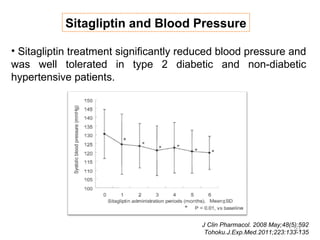
• Sitagliptin treatment significantly reduced blood pressure and
was well tolerated in type 2 diabetic and non-diabetic
hypertensive patients.


                                         J Clin Pharmacol. 2008 May;48(5):592
                                                                        13
                                          Tohoku.J.Exp.Med.2011;223:133-135
Sitagliptin and Inflammatory Markers

• Sitagliptin (100 mg) treatment for 3 months decreased
inflammatory markers C-reactive protein (CRP), Interleukin-6
(IL-6), Myeloperoxidase (MPO), Monocyte chemotactic
protein-1 (MCP-1) in type 2 diabetic patients with
atherosclerosis.


• Changes in markers levels correlated with the improvement
of glycemic control as shown by Hb A1c.


                              Journal of Clinical Lipidology.2008;2(5S):S137-138

                                                                             14
Sitagliptin Vs Voglibose

• In comparative, randomized clinical trial, once daily
Sitagliptin monotherapy showed greater efficacy and
better tolerability than thrice daily Voglibose over 12 week in
type 2 diabetes patients.
    Significantly reduced HbA1c
    Significantly reduced fasting and postprandial plasma glucose
    Significant lowered side effects


                                        Diabetes Obese Metab.2010;12(7):613-22

                                                                           15
Side Effects

• In clinical trials, Sitagliptin demonstrated an overall incidence
of side effects comparable to placebo.
• Upper respiratory tract infection, stuffy or running nose, sore
throat, headache and diarrhea was reported with Sitagliptin.

• No significant change in body weight was reported.

• The incidence of Hypoglycemia with Sitagliptin monotherapy
was not Significantly different than placebo.


                                              Drug Review.2008;10(2):97-98
                                                                       16
Recommended Dosage

• The recommended dose of Sitagliptin is 100 mg once
daily. It may be taken with or without food.


                                                   17
Drug Interaction

• Sitagliptin plasma concentration may be increased modest
(approximately 68%) with Cyclosporine which is not
expected to be clinically important.

• Digoxin plasma levels may be increased slightly
(approximately18%), no dosage adjustment is recommended.

• Care should be taken with drugs that can potentially lower
blood sugar, such as: Probencid, NSAIDs, Aspirin, Sulfa
drugs, MAO inhibitors or Beta blockers.


                                          Drug Review.2008;10(2):97-98
                                                                   18
Contraindications

• Sitagliptin is a pregnancy category B drug.

• Dosage adjustments are needed in patients with moderate
or severe renal function impairment.
    In moderate renal function impairment (Ccr 30 to less
   than 50mL/min) dose should be reduced to 50mg once
   daily. severe renal function impairment (Ccr less than 30
    In
   mL/min) dose should be reduced to 25 mg once daily.

• Sitagliptin is contraindicated in diabetic ketoacidosis.


                                             Drug Review.2008;10(2):97-98
                                                                      19
Regulatory Affairs

• In October 2006, the U.S. Food and Drug Administration
(FDA) approved Sitagliptin as monotherapy and as add-on
therapy to either of two other types of oral diabetes
medications.

• In March, 2007 it was approved in European Union.

• In April, 2007 FDA approved the combination product of
Sitagliptin and Metformin for type 2 diabetes.

• Sitagliptin is currently approved in 70 Countries.


                                                       20
Marketed Brands

 Januvia (Sitagliptin)

 Janumet (Sitagliptin and Metformin)


                                        21
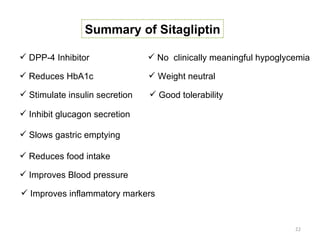
Summary of Sitagliptin

 DPP-4 Inhibitor                No clinically meaningful hypoglycemia

 Reduces HbA1c                  Weight neutral

 Stimulate insulin secretion    Good tolerability

 Inhibit glucagon secretion

 Slows gastric emptying

 Reduces food intake

 Improves Blood pressure

 Improves inflammatory markers


                                                                   22
THANK YOU
            23

Sitagliptin

  • 1.
    TREATMENT OF DIABETES - WHAT IS NEW ? Jitendra Patil M.Pharm (Pharmacology) 1
  • 2.
    Prevalence • As perWHO total number of people with diabetes is projected to rise from 171 million in 2000 to 366 million in 2030. • India is considered to be the diabetes capital of world, with largest population of diabetic patients, approximately 50.8 million as per International Diabetes Federation (IDF) in year 2010. Diabetes Care.2004;27(5):1047-1053 2 Drug Review.2008;10(2):97-98
  • 3.
    Choice of agentsin current use a) Sulfonylureas b) Insulin c) Thiazolidindiones (TZDs) d) Biguanides e) α- Glucosidase inhibitors f) Meglitinides 3
  • 4.
    All Current Treatmentsfor Type 2 Diabetes Have Limitations Sulfonyl- Insulin Meglitinides Metformin Acarbose Thiazolidi- ureas nediones Hypoglycemia √ √ √ Weigh gain √ √ √ √ GI side effects √ √ Lactic acidosis √ Homocystein √ Edema √ Inability to √ √ √ achieve normoglycemia Fluid Retention √ Tripathi.2005 5th edition Nature Reviews.2007;6:109-110 Pharmacology & Therapeutics.2010:125;328–361 4
  • 5.
    Incretins – Whatare they? • Peptides produced by the intestine • Released in response to meals • Two major Incretins  Glucagon like peptides (GLP-1)  Glucose dependant insulinotropic peptide (GIP) Pharmacology & Therapeutics.2010:125;328–361 5
  • 6.
    GLP-1: Effects inHumans • Stimulate glucose dependant insulin secretion • Suppresses glucagon secretion • Slows gastric emptying • Reduces food intake • Improves insulin sensitivity Clinical Therapeutics.2006;28(1):55 Pharmacology & Therapeutics.2010:125;328–361 6
  • 7.
    Dipeptidyl Peptidase 4(DPP-4) Inactivates GLP-1 Mixed meal GLP-1 Intestinal Inactive GLP-1 release DPP-4 GLP-1 Rapid inactivation Active GLP-1 Actions Excreted by kidneys Diabetes.1995;44:1126 Clinical Therapeutics.2006;28(1):55 Pharmacology & Therapeutics.2010:125;328–361
  • 8.
    Newer Therapies  GLP-1analogs: Exenatide  Dipeptidyl Peptidase-4 (DPP 4) inhibitors: Sitagliptin, Saxagliptin, Vildagliptin Pharmacology & Therapeutics.2010:125;328–361 8
  • 9.
    SITAGLIPTIN Mechanism of action(MOA) • Sitagliptin is selective inhibitor of the enzyme DPP-4. • Reduces hemoglobin A1c (HbA1c), fasting and postprandial glucose by glucose dependant stimulation of insulin secretion and inhibition of glucagon secretion. • Delays gastric emptying and reduce appetite. Drug Review.2008;10(2):97-98 9 9
  • 10.
    Pharmacokinetics  Bioavailability ofSitagliptin is approximately 87% .  Half life is between 8-14 hours.  It is 38% bound to plasma proteins.  Elimination is mainly through urine. Drug Review.2008;10(2):97-98 10
  • 11.
    CLINICAL EVIDENCE • Invery well controlled randomized clinical trials Sitagliptin (100 mg) treatment significantly improved glycemic control by • reducing both fasting and postprandial glucose concentration, • clinically meaningful reductions in glycosylated hemoglobin (HbA1c) levels in type 2 diabetic patients. • Improved Homeostasis model assessment of β cell and Proinsulin-to-insulin ratio. • Monotherapy with Sitagliptin 100 mg daily decreases mean HbA1c by 0.6-0.98%. Drug Review.2008;10(2):97-98 Consultant.2009:S5-11 11 Pharmacology & Therapeutics.2010;25:328-361
  • 12.
    Efficacy & Safetyof Sitagliptin in Indian T2D patients • Sitagliptin (100 mg) monotherapy for 18 weeks significantly improved glycemic control by reducing HbA1c, fasting and postprandial glucose in Indian type 2 diabetic (T2D) patients . • Sitagliptin was well tolerated and no hypoglycemia reported. Diabetes Research and Clinical Practice.2009;83:106-116 12
  • 13.
    Sitagliptin and BloodPressure • Sitagliptin treatment significantly reduced blood pressure and was well tolerated in type 2 diabetic and non-diabetic hypertensive patients. J Clin Pharmacol. 2008 May;48(5):592 13 Tohoku.J.Exp.Med.2011;223:133-135
  • 14.
    Sitagliptin and InflammatoryMarkers • Sitagliptin (100 mg) treatment for 3 months decreased inflammatory markers C-reactive protein (CRP), Interleukin-6 (IL-6), Myeloperoxidase (MPO), Monocyte chemotactic protein-1 (MCP-1) in type 2 diabetic patients with atherosclerosis. • Changes in markers levels correlated with the improvement of glycemic control as shown by Hb A1c. Journal of Clinical Lipidology.2008;2(5S):S137-138 14
  • 15.
    Sitagliptin Vs Voglibose •In comparative, randomized clinical trial, once daily Sitagliptin monotherapy showed greater efficacy and better tolerability than thrice daily Voglibose over 12 week in type 2 diabetes patients.  Significantly reduced HbA1c  Significantly reduced fasting and postprandial plasma glucose  Significant lowered side effects Diabetes Obese Metab.2010;12(7):613-22 15
  • 16.
    Side Effects • Inclinical trials, Sitagliptin demonstrated an overall incidence of side effects comparable to placebo. • Upper respiratory tract infection, stuffy or running nose, sore throat, headache and diarrhea was reported with Sitagliptin. • No significant change in body weight was reported. • The incidence of Hypoglycemia with Sitagliptin monotherapy was not Significantly different than placebo. Drug Review.2008;10(2):97-98 16
  • 17.
    Recommended Dosage • Therecommended dose of Sitagliptin is 100 mg once daily. It may be taken with or without food. 17
  • 18.
    Drug Interaction • Sitagliptinplasma concentration may be increased modest (approximately 68%) with Cyclosporine which is not expected to be clinically important. • Digoxin plasma levels may be increased slightly (approximately18%), no dosage adjustment is recommended. • Care should be taken with drugs that can potentially lower blood sugar, such as: Probencid, NSAIDs, Aspirin, Sulfa drugs, MAO inhibitors or Beta blockers. Drug Review.2008;10(2):97-98 18
  • 19.
    Contraindications • Sitagliptin isa pregnancy category B drug. • Dosage adjustments are needed in patients with moderate or severe renal function impairment.  In moderate renal function impairment (Ccr 30 to less than 50mL/min) dose should be reduced to 50mg once daily. severe renal function impairment (Ccr less than 30  In mL/min) dose should be reduced to 25 mg once daily. • Sitagliptin is contraindicated in diabetic ketoacidosis. Drug Review.2008;10(2):97-98 19
  • 20.
    Regulatory Affairs • InOctober 2006, the U.S. Food and Drug Administration (FDA) approved Sitagliptin as monotherapy and as add-on therapy to either of two other types of oral diabetes medications. • In March, 2007 it was approved in European Union. • In April, 2007 FDA approved the combination product of Sitagliptin and Metformin for type 2 diabetes. • Sitagliptin is currently approved in 70 Countries. 20
  • 21.
    Marketed Brands  Januvia(Sitagliptin)  Janumet (Sitagliptin and Metformin) 21
  • 22.
    Summary of Sitagliptin DPP-4 Inhibitor  No clinically meaningful hypoglycemia  Reduces HbA1c  Weight neutral  Stimulate insulin secretion  Good tolerability  Inhibit glucagon secretion  Slows gastric emptying  Reduces food intake  Improves Blood pressure  Improves inflammatory markers 22
  • 23.