Pathophysiology of
Type 2 Diabetes Mellitus
Dr. Shashikiran Umakanth
Professor & Head
Department of Internal Medicine
Dr. TMA Pai Hospital - Udupi, MMMC
Manipal University, INDIA
Type 2 diabetes mellitus (T2DM)
 There is an explosion of T2DM prevalence
 >370 million people with T2DM
 Need to address the pathogenesis and treatment
of this syndrome
 else, macrovascular and microvascular damages of
T2DM will remain a major burden for decades to come
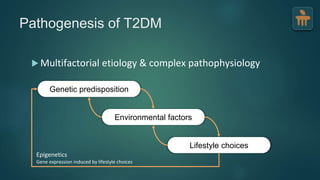
Pathogenesis of T2DM
 Multifactorial etiology & complex pathophysiology
Genetic predisposition
Environmental factors
Lifestyle choices
Epigenetics
Gene expression induced by lifestyle choices
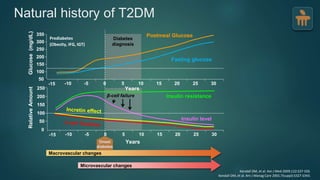
Microvascular changes
Macrovascular changes
Kendall DM, et al. Am J Med 2009;122:S37-S50.
Kendall DM, et al. Am J Manag Care 2001;7(suppl):S327-S343.
RelativeAmount
β-cell failure
Onset
diabetes
Glucose(mg/dL)
Diabetes
diagnosis
50
100
150
200
250
300
350
Fasting glucose
Prediabetes
(Obesity, IFG, IGT)
Postmeal Glucose
-10 -5 0 5 10 15 20 25 30-15
Years
Natural history of T2DM
Years
-10 -5 0 5 10 15 20 25 30
Insulin resistance
Insulin level
0
50
100
150
200
250
-15
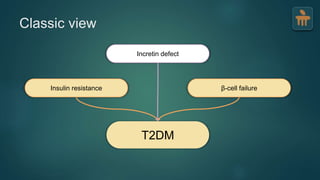
Insulin resistance β-cell failure
T2DM
Incretin defect
Classic view
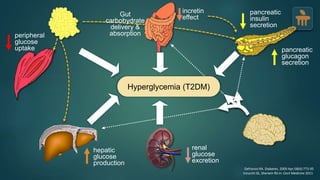
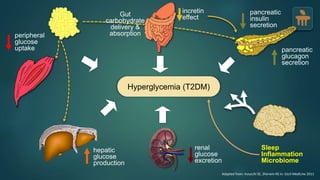
peripheral
glucose
uptake
hepatic
glucose
production
pancreatic
insulin
secretion
pancreatic
glucagon
secretion
Gut
carbohydrate
delivery &
absorption
incretin
effect
Defronzo RA. Diabetes. 2009 Apr;58(4):773-95
Inzucchi SE, Sherwin RS in: Cecil Medicine 2011
renal
glucose
excretion
Hyperglycemia (T2DM)
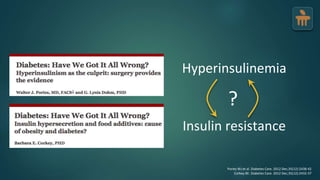
Which came first?
Hyperinsulinemia
Insulin resistance
?
Pories WJ et al. Diabetes Care. 2012 Dec;35(12):2438-42
Corkey BE. Diabetes Care. 2012 Dec;35(12):2432-37
Hyperinsulinemia
Insulin resistance
?
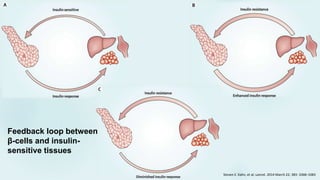
Steven E. Kahn, et al; Lancet. 2014 March 22; 383: 1068–1083
Feedback loop between
β-cells and insulin-
sensitive tissues
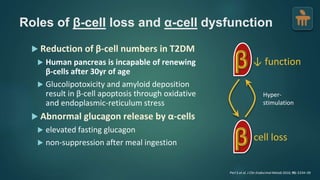
Roles of β-cell loss and α-cell dysfunction
 Reduction of β-cell numbers in T2DM
 Human pancreas is incapable of renewing
β-cells after 30yr of age
 Glucolipotoxicity and amyloid deposition
result in β-cell apoptosis through oxidative
and endoplasmic-reticulum stress
 Abnormal glucagon release by α-cells
 elevated fasting glucagon
 non-suppression after meal ingestion
Perl S et al. J Clin Endocrinol Metab 2010; 95: E234–39
↓ function
cell loss
Hyper-
stimulation
Role of Intestines
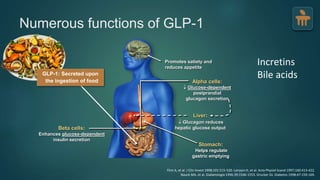
Numerous functions of GLP-1
Stomach:
Helps regulate
gastric emptying
Promotes satiety and
reduces appetite
Liver:
 Glucagon reduces
hepatic glucose outputBeta cells:
Enhances glucose-dependent
insulin secretion
Alpha cells:
 Glucose-dependent
postprandial
glucagon secretion
Flint A, et al. J Clin Invest 1998;101:515-520. Larsson H, et al. Acta Physiol Scand 1997;160:413-422.
Nauck MA, et al. Diabetologia 1996;39:1546-1553. Drucker DJ. Diabetes 1998;47:159-169.
GLP-1: Secreted upon
the ingestion of food
Incretins
Bile acids
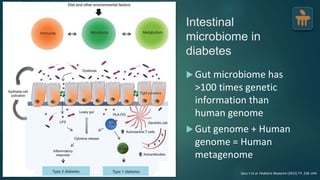
Intestinal
microbiome in
diabetes
 Gut microbiome has
>100 times genetic
information than
human genome
 Gut genome + Human
genome = Human
metagenome
Sanz Y et al. Pediatric Research (2015) 77, 236–244
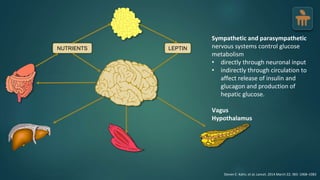
Role of Brain
LEPTINNUTRIENTS
Sympathetic and parasympathetic
nervous systems control glucose
metabolism
• directly through neuronal input
• indirectly through circulation to
affect release of insulin and
glucagon and production of
hepatic glucose.
Vagus
Hypothalamus
Steven E. Kahn, et al; Lancet. 2014 March 22; 383: 1068–1083
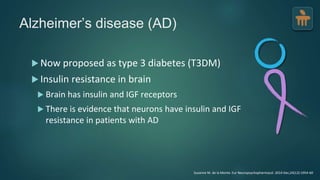
Alzheimer’s disease (AD)
 Now proposed as type 3 diabetes (T3DM)
 Insulin resistance in brain
 Brain has insulin and IGF receptors
 There is evidence that neurons have insulin and IGF
resistance in patients with AD
Suzanne M. de la Monte. Eur Neuropsychopharmacol. 2014 Dec;24(12):1954-60
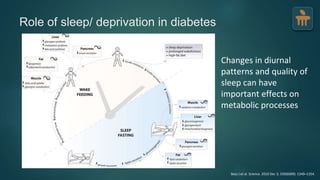
Role of sleep/ deprivation in diabetes
Bass J et al. Science. 2010 Dec 3; 330(6009): 1349–1354.
Changes in diurnal
patterns and quality of
sleep can have
important effects on
metabolic processes
Role of inflammation
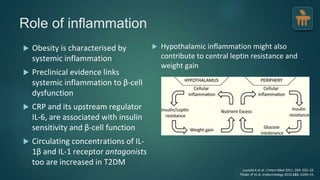
 Obesity is characterised by
systemic inflammation
 Preclinical evidence links
systemic inflammation to β-cell
dysfunction
 CRP and its upstream regulator
IL-6, are associated with insulin
sensitivity and β-cell function
 Circulating concentrations of IL-
1β and IL-1 receptor antagonists
too are increased in T2DM
Luotola K et al. J Intern Med 2011; 269: 322–32.
Thaler JP et al. Endocrinology 2010;151: 4109–15.
 Hypothalamic inflammation might also
contribute to central leptin resistance and
weight gain
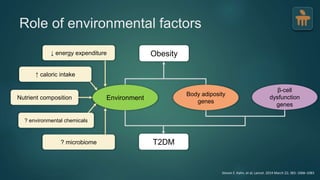
Role of environmental factors
T2DM
Role of environmental factors
Environment
Body adiposity
genes
β-cell
dysfunction
genes
Obesity↓ energy expenditure
↑ caloric intake
Nutrient composition
? environmental chemicals
? microbiome
Steven E. Kahn, et al; Lancet. 2014 March 22; 383: 1068–1083
Association between
maternal smoking
during pregnancy and
overweight/obesity in
offspring
Thayer KA et al. Environ Health Perspect. 2012 Jun;120(6):779-89
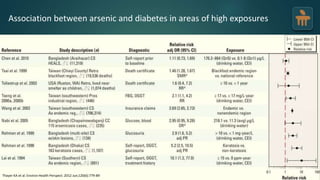
Association between arsenic and diabetes in areas of high exposures
Thayer KA et al. Environ Health Perspect. 2012 Jun;120(6):779-89
Summary
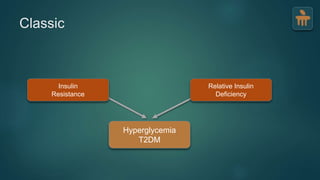
Classic
Insulin
Resistance
Relative Insulin
Deficiency
Hyperglycemia
T2DM
peripheral
glucose
uptake
hepatic
glucose
production
pancreatic
insulin
secretion
pancreatic
glucagon
secretion
Gut
carbohydrate
delivery &
absorption
incretin
effect
Adapted from: Inzucchi SE, Sherwin RS in: Cecil Medicine 2011
renal
glucose
excretion
Hyperglycemia (T2DM)
Sleep
Inflammation
Microbiome
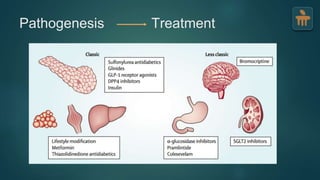
Pathogenesis Treatment
Pathophysiology of T2DM is
not like a simple bicycle with
pedal-handle-wheels
(IR - βCF - Glucose)
It is much more complex:
Thank you
Thank you
Questions
Question 1
 Which factors determine development of insulin
resistance and β-cell dysfunction?
A. Genes, environment and lifestyle together are
important determinants
B. Genetic factors alone
C. Obesity alone, by triggering hyperstimulation of β-cells
causing their failure
D. None of the above
Question 2
 Example of environmental factors that influence
development of T2DM include
A. Saturated fats in diet
B. Arsenic exposure
C. Gut microbiome
D. All of the above

Type 2 Diabetes Mellitus - Pathophysiology

  • 1.
    Pathophysiology of Type 2Diabetes Mellitus Dr. Shashikiran Umakanth Professor & Head Department of Internal Medicine Dr. TMA Pai Hospital - Udupi, MMMC Manipal University, INDIA
  • 2.
    Type 2 diabetesmellitus (T2DM)  There is an explosion of T2DM prevalence  >370 million people with T2DM  Need to address the pathogenesis and treatment of this syndrome  else, macrovascular and microvascular damages of T2DM will remain a major burden for decades to come
  • 3.
    Pathogenesis of T2DM Multifactorial etiology & complex pathophysiology Genetic predisposition Environmental factors Lifestyle choices Epigenetics Gene expression induced by lifestyle choices
  • 4.
    Microvascular changes Macrovascular changes KendallDM, et al. Am J Med 2009;122:S37-S50. Kendall DM, et al. Am J Manag Care 2001;7(suppl):S327-S343. RelativeAmount β-cell failure Onset diabetes Glucose(mg/dL) Diabetes diagnosis 50 100 150 200 250 300 350 Fasting glucose Prediabetes (Obesity, IFG, IGT) Postmeal Glucose -10 -5 0 5 10 15 20 25 30-15 Years Natural history of T2DM Years -10 -5 0 5 10 15 20 25 30 Insulin resistance Insulin level 0 50 100 150 200 250 -15
  • 5.
    Insulin resistance β-cellfailure T2DM Incretin defect Classic view
  • 6.
    peripheral glucose uptake hepatic glucose production pancreatic insulin secretion pancreatic glucagon secretion Gut carbohydrate delivery & absorption incretin effect Defronzo RA.Diabetes. 2009 Apr;58(4):773-95 Inzucchi SE, Sherwin RS in: Cecil Medicine 2011 renal glucose excretion Hyperglycemia (T2DM)
  • 7.
    Which came first? Hyperinsulinemia Insulinresistance ? Pories WJ et al. Diabetes Care. 2012 Dec;35(12):2438-42
  • 8.
    Pories WJ etal. Diabetes Care. 2012 Dec;35(12):2438-42 Corkey BE. Diabetes Care. 2012 Dec;35(12):2432-37 Hyperinsulinemia Insulin resistance ?
  • 9.
    Steven E. Kahn,et al; Lancet. 2014 March 22; 383: 1068–1083 Feedback loop between β-cells and insulin- sensitive tissues
  • 10.
    Roles of β-cellloss and α-cell dysfunction  Reduction of β-cell numbers in T2DM  Human pancreas is incapable of renewing β-cells after 30yr of age  Glucolipotoxicity and amyloid deposition result in β-cell apoptosis through oxidative and endoplasmic-reticulum stress  Abnormal glucagon release by α-cells  elevated fasting glucagon  non-suppression after meal ingestion Perl S et al. J Clin Endocrinol Metab 2010; 95: E234–39 ↓ function cell loss Hyper- stimulation
  • 11.
  • 12.
    Numerous functions ofGLP-1 Stomach: Helps regulate gastric emptying Promotes satiety and reduces appetite Liver:  Glucagon reduces hepatic glucose outputBeta cells: Enhances glucose-dependent insulin secretion Alpha cells:  Glucose-dependent postprandial glucagon secretion Flint A, et al. J Clin Invest 1998;101:515-520. Larsson H, et al. Acta Physiol Scand 1997;160:413-422. Nauck MA, et al. Diabetologia 1996;39:1546-1553. Drucker DJ. Diabetes 1998;47:159-169. GLP-1: Secreted upon the ingestion of food Incretins Bile acids
  • 13.
    Intestinal microbiome in diabetes  Gutmicrobiome has >100 times genetic information than human genome  Gut genome + Human genome = Human metagenome Sanz Y et al. Pediatric Research (2015) 77, 236–244
  • 14.
  • 15.
    LEPTINNUTRIENTS Sympathetic and parasympathetic nervoussystems control glucose metabolism • directly through neuronal input • indirectly through circulation to affect release of insulin and glucagon and production of hepatic glucose. Vagus Hypothalamus Steven E. Kahn, et al; Lancet. 2014 March 22; 383: 1068–1083
  • 16.
    Alzheimer’s disease (AD) Now proposed as type 3 diabetes (T3DM)  Insulin resistance in brain  Brain has insulin and IGF receptors  There is evidence that neurons have insulin and IGF resistance in patients with AD Suzanne M. de la Monte. Eur Neuropsychopharmacol. 2014 Dec;24(12):1954-60
  • 17.
    Role of sleep/deprivation in diabetes Bass J et al. Science. 2010 Dec 3; 330(6009): 1349–1354. Changes in diurnal patterns and quality of sleep can have important effects on metabolic processes
  • 18.
  • 19.
    Role of inflammation Obesity is characterised by systemic inflammation  Preclinical evidence links systemic inflammation to β-cell dysfunction  CRP and its upstream regulator IL-6, are associated with insulin sensitivity and β-cell function  Circulating concentrations of IL- 1β and IL-1 receptor antagonists too are increased in T2DM Luotola K et al. J Intern Med 2011; 269: 322–32. Thaler JP et al. Endocrinology 2010;151: 4109–15.  Hypothalamic inflammation might also contribute to central leptin resistance and weight gain
  • 20.
  • 21.
    T2DM Role of environmentalfactors Environment Body adiposity genes β-cell dysfunction genes Obesity↓ energy expenditure ↑ caloric intake Nutrient composition ? environmental chemicals ? microbiome Steven E. Kahn, et al; Lancet. 2014 March 22; 383: 1068–1083
  • 22.
    Association between maternal smoking duringpregnancy and overweight/obesity in offspring Thayer KA et al. Environ Health Perspect. 2012 Jun;120(6):779-89
  • 23.
    Association between arsenicand diabetes in areas of high exposures Thayer KA et al. Environ Health Perspect. 2012 Jun;120(6):779-89
  • 24.
  • 25.
  • 26.
    peripheral glucose uptake hepatic glucose production pancreatic insulin secretion pancreatic glucagon secretion Gut carbohydrate delivery & absorption incretin effect Adapted from:Inzucchi SE, Sherwin RS in: Cecil Medicine 2011 renal glucose excretion Hyperglycemia (T2DM) Sleep Inflammation Microbiome
  • 27.
  • 28.
    Pathophysiology of T2DMis not like a simple bicycle with pedal-handle-wheels (IR - βCF - Glucose) It is much more complex: Thank you
  • 29.
  • 30.
  • 31.
    Question 1  Whichfactors determine development of insulin resistance and β-cell dysfunction? A. Genes, environment and lifestyle together are important determinants B. Genetic factors alone C. Obesity alone, by triggering hyperstimulation of β-cells causing their failure D. None of the above
  • 32.
    Question 2  Exampleof environmental factors that influence development of T2DM include A. Saturated fats in diet B. Arsenic exposure C. Gut microbiome D. All of the above

Editor's Notes

  • #10 (A) Insulin interacts in the liver to suppress glucose production, and in muscle and adipose tissue to stimulate uptake of glucose, aminoacids, and fatty acids. The amount of insulin released to maintain normal glucose homoeostasis is established by prevailing insulin sensitivity. This feedback is probably mediated through neuronal and humoral mechanisms, but exact mediators are still not known. (B) When insulin resistance develops in insulin-sensitive tissues, feedback to β cells ensures that the cells increase insulin output to maintain normal glucose tolerance. (C) When β cells are incapable of increasing insulin output in the presence of insulin resistance, the result is development of increased glucose concentrations, which initially manifests as impaired glucose tolerance. Because β-cell dysfunction progresses, further elevations in glycaemia occur and diabetes is the eventual result.
  • #16 nervous system is another important regulator of metabolic processes Both sympathetic and para- sympathetic nervous systems control glucose metabolism, directly through neuronal input, and indirectly through the circulation to affect release of insulin and glucagon and production of hepatic glucose. In human beings, the vagus is important in regulation of islets, because severing of this nerve results in impaired insulin secretion The hypothalamus is an important integrator, because its ablation in rats results in dysregulation of β cells and development of hyperinsulinaemia This brain region also regulates hepatic production of glucose through the actions of insulin, glucose, and fatty acids Insulin action at this site is also essential in regulation of bodyweight, with decreased activity leading to obesity Inflammation- induced neuronal injury occurs rapidly in rodents fed a high-fat diet. Findings from imaging studies of obese and lean people suggest that structural changes occur in the hypothalamus, consistent with the occurrence of gliosis in obesity
  • #18 Clock genes expressed in the brain are important in establishment of circadian rhythmicity and, together with sleep, have become a focus of investigation because changes in diurnal patterns and quality of sleep can have important effects on metabolic processes
  • #20 The vicious cycle of obesity and diabetes. Energy intake in excess of energy requirements leads to a state of chronic nutrient excess that causes cellular inflammation in both peripheral tissues and the hypothalamus. The resulting activation of inflammatory pathways generates insulin and leptin resistance ultimately promoting obesity and diabetes. Therapies that prevent hypothalamic inflammation may disrupt these interlinked vicious cycles with consequent improvements in energy and glucose homeostasis.
  • #32 Correct answer: A
  • #33 Correct answer: D