Type 2 Diabetes
Definition
Epidemiology
Etiology
Diagnosis
Treatment
Prevention
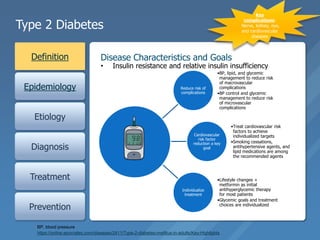
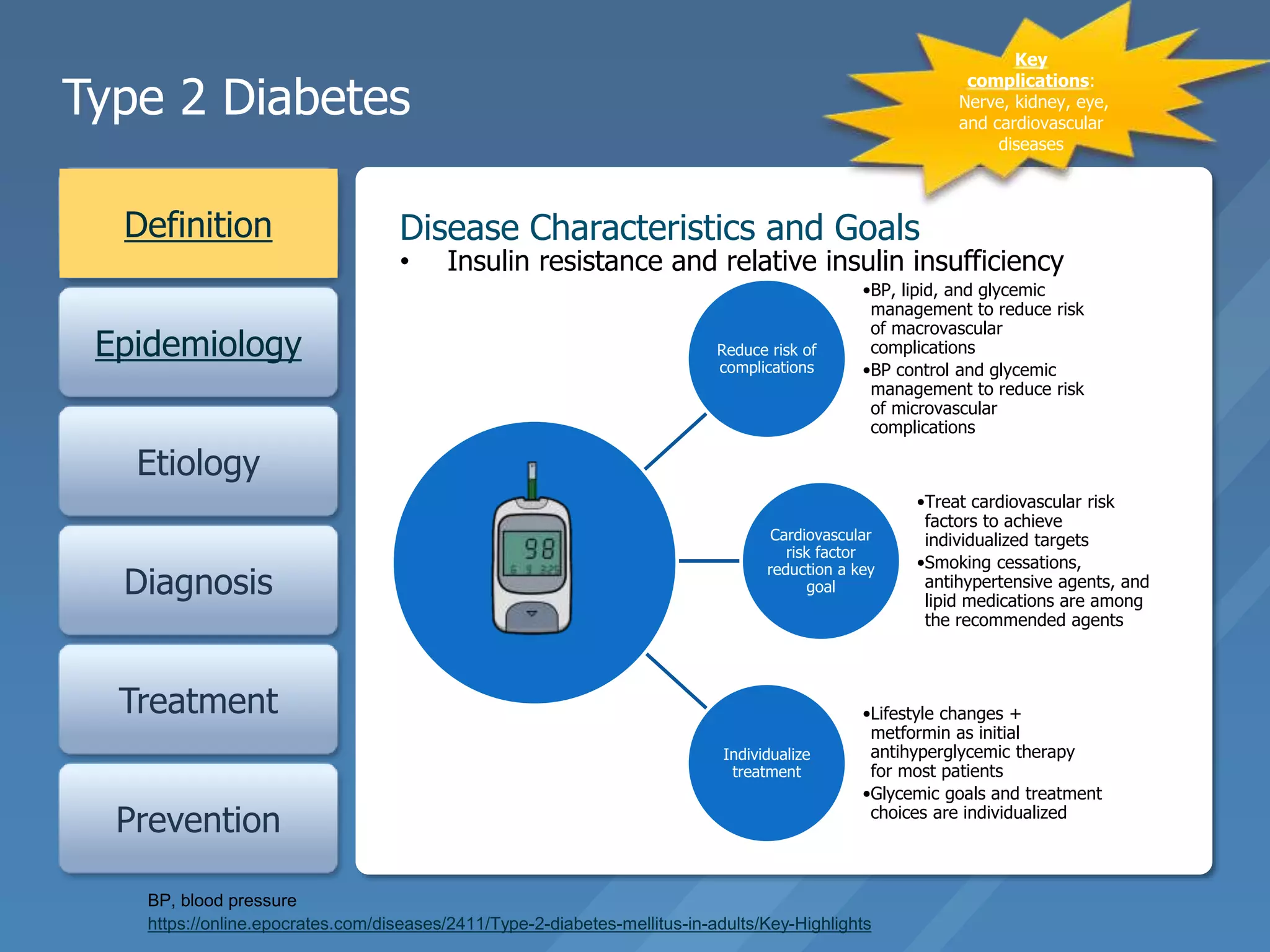
Disease Characteristics and Goals
Reduce risk of
complications
•BP, lipid, and glycemic
management to reduce risk
of macrovascular
complications
•BP control and glycemic
management to reduce risk
of microvascular
complications
Cardiovascular
risk factor
reduction a key
goal
•Treat cardiovascular risk
factors to achieve
individualized targets
•Smoking cessations,
antihypertensive agents, and
lipid medications are among
the recommended agents
Individualize
treatment
•Lifestyle changes +
metformin as initial
antihyperglycemic therapy
for most patients
•Glycemic goals and treatment
choices are individualized
• Insulin resistance and relative insulin insufficiency
https://online.epocrates.com/diseases/2411/Type-2-diabetes-mellitus-in-adults/Key-Highlights
BP, blood pressure
Key
complications:
Nerve, kidney, eye,
and cardiovascular
diseases
Type 2 Diabetes
Definition
Epidemiology
Etiology
Diagnosis
Treatment
Prevention
Prediabetes
• Prediabetes is a metabolic condition characterized by
hyperglycemia
– Diagnostic criteria below those used to define Type 2
diabetes eg, fasting plasma glucose concentrations are 5·6
mmol/L or higher but less than 7·0 mmol/L (termed
impaired fasting glucose [IFG])
Est., estimated
Garber AJ, Abrahamson MJ, Barzilay JI, Endocrine Practice. 2016;22(1):84-113.
Stefan N, Fritsche A, Schick F, et al. TLancet Diabetes & Endocrinology. 2016;4(9):789-98.
USA
>38% est.
to have prediabetes
China
>50% est.
to have prediabetes
In terms of pathophysiology, prediabetes reflects failing pancreatic islet
β-cell compensation for an underlying state of insulin resistance, most
commonly caused by excess body weight or obesity.
Type 2 Diabetes
Definition
Epidemiology
Etiology
Diagnosis
Treatment
Prevention
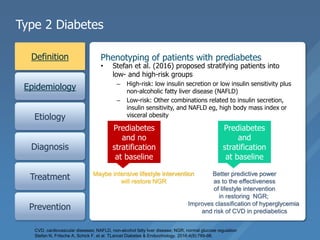
Phenotyping of patients with prediabetes
• Stefan et al. (2016) proposed stratifying patients into
low- and high-risk groups
– High-risk: low insulin secretion or low insulin sensitivity plus
non-alcoholic fatty liver disease (NAFLD)
– Low-risk: Other combinations related to insulin secretion,
insulin sensitivity, and NAFLD eg, high body mass index or
visceral obesity
.
CVD, cardiovascular diseases; NAFLD, non-alcohol fatty liver disease; NGR, normal glucose regulation
Stefan N, Fritsche A, Schick F, et al. TLancet Diabetes & Endocrinology. 2016;4(9):789-98.
Prediabetes
and no
stratification
at baseline
Maybe intensive lifestyle intervention
will restore NGR
Prediabetes
and
stratification
at baseline
Better predictive power
as to the effectiveness
of lifestyle intervention
in restoring NGR;
Improves classification of hyperglycemia
and risk of CVD in prediabetics
Diabetes Epidemiology
Definition
Etiology
Diagnosis
Treatment
Prevention
Epidemiology
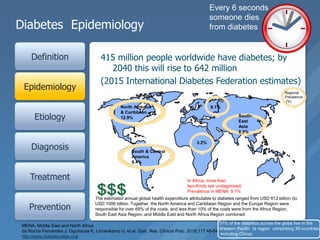
415 million people worldwide have diabetes; by
2040 this will rise to 642 million
(2015 International Diabetes Federation estimates)
The estimated annual global health expenditure attributable to diabetes ranged from USD 612 billion (to
USD 1099 billion. Together, the North America and Caribbean Region and the Europe Region were
responsible for over 69% of the costs, and less than 10% of the costs were from the Africa Region,
South East Asia Region, and Middle East and North Africa Region combined.
MENA, Middle East and North Africa
da Rocha Fernandes J, Ogurtsova K, Linnenkamp U, et al. Diab. Res. Clinical Prac. 2016;117:48-54.
http://www.diabetesatlas.org/
Every 6 seconds
someone dies
from diabetes
3.2%
In Africa, more than
two-thirds are undiagnosed;
Prevalence in MENA: 9.1%
Regional
Prevalence
(%)
North America
& Caribbean
12.9%
South & Central
America
9.4%
South-
East
Asia
8.5%
9.1%
37% of the diabetics across the globe live in the
Western Pacific (a region comprising 39 countries,
including China)
Type 2 Diabetes: Etiology/Pathophysiology
Definition
Epidemiology
Etiology
Diagnosis
Treatment
Prevention
• ≥40 years old
• Hereditary predisposition
• Pre-diabetic
• Woman who had gestational diabetes
• Woman who gave birth to a ≥9 lb baby
• Overweight/excess abdominal weight
• High BP or cholesterol issues
• Psychosocial disorders/HIV infection/polycystic ovarian
syndrome/acanthosis nigricans
• Specific medications eg, antipsychotics/anti-
inflammatory steroids
What are the risk factors?
BP, blood pressure; HIV, human immunodeficiency virus
Cheng AY. and members of the Clinical Practice Guideline Committees. CJD. 2013;37 Suppl 1:227 pp.
Type 2 Diabetes: Etiology/Pathophysiology
Definition
Epidemiology
Etiology
Diagnosis
Treatment
Prevention
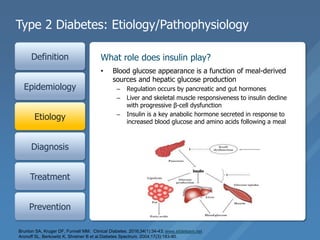
• Blood glucose appearance is a function of meal-derived
sources and hepatic glucose production
– Regulation occurs by pancreatic and gut hormones
– Liver and skeletal muscle responsiveness to insulin decline
with progressive β-cell dysfunction
– Insulin is a key anabolic hormone secreted in response to
increased blood glucose and amino acids following a meal
What role does insulin play?
Brunton SA, Kruger DF, Funnell MM. Clinical Diabetes. 2016;34(1):34-43; www.slideteam.net
Aronoff SL, Berkowitz K, Shreiner B et al.Diabetes Spectrum. 2004;17(3):183-90.
Type 2 Diabetes: Etiology/Pathophysiology
Definition
Epidemiology
Etiology
Diagnosis
Treatment
Prevention
• Insulin resistance is aggravated by aging, physical
inactivity, and overweight (BMI 25-29.9 kg/m2) or
obesity (BMI >30 kg/m2)
• Complexity of intracellular derangements suggest the
disease may be stratified into many subtypes
Etiology
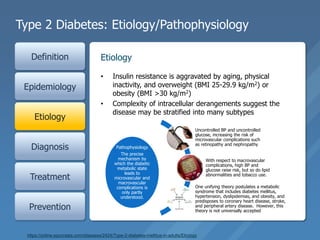
Pathophysiology
The precise
mechanism by
which the diabetic
metabolic state
leads to
microvascular and
macrovascular
complications is
only partly
understood.
Uncontrolled BP and uncontrolled
glucose, increasing the risk of
microvascular complications such
as retinopathy and nephropathy
With respect to macrovascular
complications, high BP and
glucose raise risk, but so do lipid
abnormalities and tobacco use.
One unifying theory postulates a metabolic
syndrome that includes diabetes mellitus,
hypertension, dyslipidemias, and obesity, and
predisposes to coronary heart disease, stroke,
and peripheral artery disease. However, this
theory is not universally accepted.
https://online.epocrates.com/diseases/2424/Type-2-diabetes-mellitus-in-adults/Etiology
Type 2 Diabetes – Diagnostic Approach
Definition
Epidemiology
Etiology
Diagnosis
Treatment
Prevention
• impaired glucose tolerance, impaired fasting glucose, or
metabolic syndrome are risk factors
– Any one of these factors is associated with a 5-fold increase
in future T2D risk
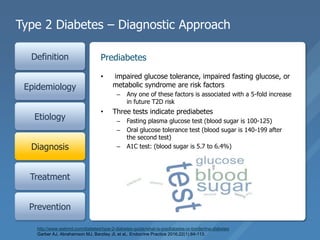
• Three tests indicate prediabetes
– Fasting plasma glucose test (blood sugar is 100-125)
– Oral glucose tolerance test (blood sugar is 140-199 after
the second test)
– A1C test: (blood sugar is 5.7 to 6.4%)
Prediabetes
http://www.webmd.com/diabetes/type-2-diabetes-guide/what-is-prediabetes-or-borderline-diabetes
Garber AJ, Abrahamson MJ, Barzilay JI, et al,. Endocrine Practice 2016;22(1):84-113.
Type 2 Diabetes – Diagnostic Approach
Definition
Epidemiology
Etiology
Diagnosis
Treatment
Prevention
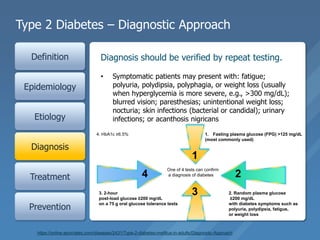
• Symptomatic patients may present with: fatigue;
polyuria, polydipsia, polyphagia, or weight loss (usually
when hyperglycemia is more severe, e.g., >300 mg/dL);
blurred vision; paresthesias; unintentional weight loss;
nocturia; skin infections (bacterial or candidal); urinary
infections; or acanthosis nigricans
Diagnosis should be verified by repeat testing.
1
3
24
One of 4 tests can confirm
a diagnosis of diabetes
1. Fasting plasma glucose (FPG) >125 mg/dL
(most commonly used)
2. Random plasma glucose
≥200 mg/dL
with diabetes symptoms such as
polyuria, polydipsia, fatigue,
or weight loss
3. 2-hour
post-load glucose ≥200 mg/dL
on a 75 g oral glucose tolerance tests
4. HbA1c ≥6.5%
https://online.epocrates.com/diseases/2431/Type-2-diabetes-mellitus-in-adults/Diagnostic-Approach
Type 2 Diabetes – Goals for Glycemic Control
Definition
Epidemiology
Etiology
Diagnosis
Treatment
Prevention
• Strong risk factors, which also indicate the need for
screening, include: older age; overweight/obesity; black,
Hispanic, or Native American ancestry; family history of
Type 2 Diabetes; history of gestational diabetes;
presence of prediabetes; physical inactivity; polycystic
ovary syndrome; hypertension; dyslipidemia; or known
cardiovascular disease
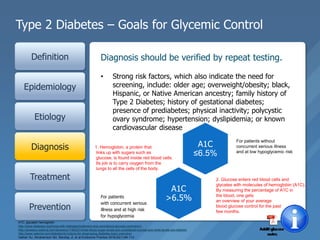
For patients
with concurrent serious
illness and at high risk
for hypoglycemia
Diagnosis should be verified by repeat testing.
A1C
≤6.5%
A1C
>6.5%
For patients without
concurrent serious illness
and at low hypoglycemic risk
A1C, glycated hemoglobin
http://www.diabetes.org/living-with-diabetes/treatment-and-care/blood-glucose-control/a1c
http://answers.webmd.com/answers/1180327/what-blood-sugar-levels-are-considered-normal-and-what-levels-are-diabetic
http://www.webmd.com/diabetes/tc/criteria-for-diagnosing-diabetes-topic-overview/
Garber AJ, Abrahamson MJ, Barzilay JI, et al.Endocrine Practice 2016;22(1):84-113.
2. Glucose enters red blood cells and
glycates with molecules of hemoglobin (A1C)..
By measuring the percentage of A1C in
the blood, one gets
an overview of your average
blood glucose control for the past
few months.
1. Hemoglobin, a protein that
links up with sugars such as
glucose, is found inside red blood cells.
Its job is to carry oxygen from the
lungs to all the cells of the body.
Type 2 Diabetes Treatment
Definition
Epidemiology
Etiology
Diagnosis
Treatment
Prevention
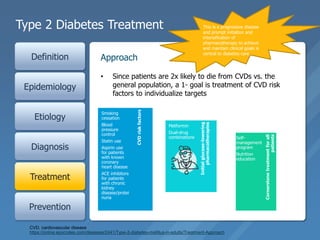
• Since patients are 2x likely to die from CVDs vs. the
general population, a 1◦ goal is treatment of CVD risk
factors to individualize targets
Approach
Cornerstonetreatmentforall
patients
Initialglucose-lowering
pharmacotherapies
CVDriskfactors
Smoking
cessation
Blood
pressure
control
Statin use
Aspirin use
for patients
with known
coronary
heart disease
ACE inhibitors
for patients
with chronic
kidney
disease/protei
nuria
Metformin
Dual-drug
combinations Self-
management
program
Nutrition
education
This is a progressive disease
and prompt initiation and
intensification of
pharmacotherapy to achieve
and maintain clinical goals is
central to diabetes care.
https://online.epocrates.com/diseases/2441/Type-2-diabetes-mellitus-in-adults/Treatment-Approach
CVD, cardiovascular disease
Type 2 Diabetes Treatment
Definition
Epidemiology
Etiology
Diagnosis
Treatment
Prevention
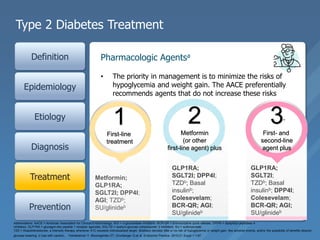
• The priority in management is to minimize the risks of
hypoglycemia and weight gain. The AACE preferentially
recommends agents that do not increase these risks
Pharmacologic Agentsa
Smoking
cessation
Blood
pressure
control
Statin use
Aspirin use
for patients
with known
coronary
heart disease
ACE inhibitors
for patients
with chronic
kidney
disease/protei
nuria
Metformin
Dual-drug
combinations Self-
management
program
Nutrition
education
Abbreviations: AACE = American Association for Clinical Endocrinology; AGI = α-glucosidase inhibitors; BCR-QR = bromocriptine quick release; DPP4I = dipeptidyl peptidase 4
inhibitors; GLP1RA = glucagon-like peptide 1 receptor agonists; SGLT2I = sodium-glucose cotransporter 2 inhibitors; SU = sulfonylureas;
TZD = thiazolidinediones; a Intensify therapy whenever A1C exceeds individualized target. Boldface denotes little or no risk of hypoglycemia or weight gain, few adverse events, and/or the possibility of benefits beyond
glucose lowering. b Use with caution. Handelsman Y, Bloomgarden ZT, Grunberger G,et al. Endocrine Practice. 2015;21 Suppl 1:1-87.
Metformin;
GLP1RA;
SGLT2I; DPP4I;
AGI; TZDb;
SU/glinideb
GLP1RA;
SGLT2I;
TZDb; Basal
insulinb; DPP4I;
Colesevelam;
BCR-QR; AGI;
SU/glinideb
GLP1RA;
SGLT2I; DPP4I;
TZDb; Basal
insulinb;
Colesevelam;
BCR-QR; AGI;
SU/glinideb
1First-line
treatment
2Metformin
(or other
first-line agent) plus
3First- and
second-line
agent plus
Type 2 Diabetes Treatment
Definition
Epidemiology
Etiology
Diagnosis
Treatment
Prevention
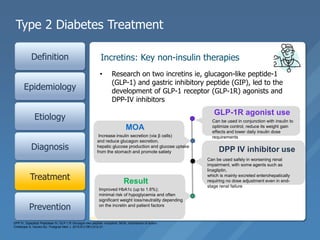
• Research on two incretins ie, glucagon-like peptide-1
(GLP-1) and gastric inhibitory peptide (GIP), led to the
development of GLP-1 receptor (GLP-1R) agonists and
DPP-IV inhibitors
Incretins: Key non-insulin therapies
Smoking
cessation
Blood
pressure
control
Statin use
Aspirin use
for patients
with known
coronary
heart disease
ACE inhibitors
for patients
with chronic
kidney
disease/protei
nuria
Metformin
Dual-drug
combinations Self-
management
program
Nutrition
education
DPP IV, Dipeptidyl Peptidase IV; GLP-1,R Glucagon-like peptide- receptors; MOA, mechanism of action;
Chatterjee S, Davies MJ. Postgrad Med J. 2015;91(1081):612-21.
Can be used in conjunction with insulin to
optimize control, reduce its weight gain
effects and lower daily insulin dose
requirements
GLP-1R agonist use
Improved HbA1c (up to 1.6%);
minimal risk of hypoglycemia and often
significant weight loss/neutrality depending
on the incretin and patient factors
Result
Can be used safely in worsening renal
impairment, with some agents such as
linagliptin,
which is mainly excreted enterohepatically
requiring no dose adjustment even in end-
stage renal failure
DPP IV inhibitor use
MOA
Increase insulin secretion (via β cells)
and reduce glucagon secretion,
hepatic glucose production and glucose uptake
from the stomach and promote satiety
Type 2 Diabetes Treatment
Definition
Epidemiology
Etiology
Diagnosis
Treatment
Prevention
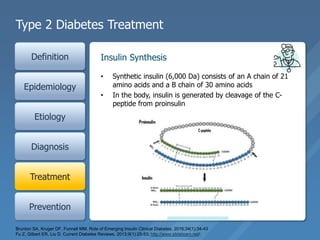
• Synthetic insulin (6,000 Da) consists of an A chain of 21
amino acids and a B chain of 30 amino acids
• In the body, insulin is generated by cleavage of the C-
peptide from proinsulin
Insulin Synthesis
Smoking
cessation
Blood
pressure
control
Statin use
Aspirin use
for patients
with known
coronary
heart disease
ACE inhibitors
for patients
with chronic
kidney
disease/protei
nuria
Metformin
Dual-drug
combinations Self-
management
program
Nutrition
education
Brunton SA, Kruger DF, Funnell MM. Role of Emerging Insulin Clinical Diabetes. 2016;34(1):34-43
Fu Z, Gilbert ER, Liu D. Current Diabetes Reviews. 2013;9(1):25-53; http://www.slideteam.net/.
Type 2 Diabetes Treatment
Definition
Epidemiology
Etiology
Diagnosis
Treatment
Prevention
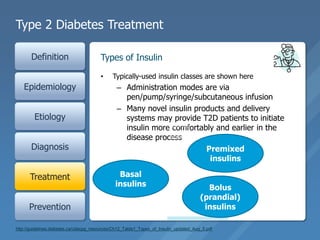
• Typically-used insulin classes are shown here
– Administration modes are via
pen/pump/syringe/subcutaneous infusion
– Many novel insulin products and delivery
systems may provide T2D patients to initiate
insulin more comfortably and earlier in the
disease process
Types of Insulin
Smoking
cessation
Blood
pressure
control
Statin use
Aspirin use
for patients
with known
coronary
heart disease
ACE inhibitors
for patients
with chronic
kidney
disease/protei
nuria
Metformin
Dual-drug
combinations Self-
management
program
Nutrition
education
http://guidelines.diabetes.ca/cdacpg_resources/Ch12_Table1_Types_of_Insulin_updated_Aug_5.pdf
Bolus
(prandial)
insulins
Basal
insulins
Premixed
insulins
Type 2 Diabetes Treatment
Definition
Epidemiology
Etiology
Diagnosis
Treatment
Prevention
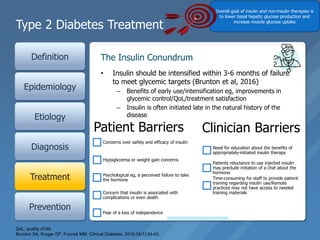
• Insulin should be intensified within 3-6 months of failure
to meet glycemic targets (Brunton et al, 2016)
– Benefits of early use/intensification eg, improvements in
glycemic control/QoL/treatment satisfaction
– Insulin is often initiated late in the natural history of the
disease
The Insulin Conundrum
Smoking
cessation
Blood
pressure
control
Statin use
Aspirin use
for patients
with known
coronary
heart disease
ACE inhibitors
for patients
with chronic
kidney
disease/protei
nuria
Metformin
Dual-drug
combinations Self-
management
program
Nutrition
education
QoL, quality of life
Brunton SA, Kruger DF, Funnell MM. Clinical Diabetes. 2016;34(1):34-43.
Patient Barriers
Concerns over safety and efficacy of insulin
Hypoglycemia or weight gain concerns
Psychological eg, a perceived failure to take
the hormone
Concern that insulin is associated with
complications or even death
Fear of a loss of independence
Clinician Barriers
Need for education about the benefits of
appropriately-initiated insulin therapy
Patients reluctance to use injected insulin
may preclude initiation of a chat about the
hormone
Time-consuming for staff to provide patient
training regarding insulin use/Remote
practices may not have access to needed
training materials
Overall goal of insulin and non-insulin therapies is
to lower basal hepatic glucose production and
increase muscle glucose uptake
Type 2 Diabetes Treatment
Definition
Epidemiology
Etiology
Diagnosis
Treatment
Prevention
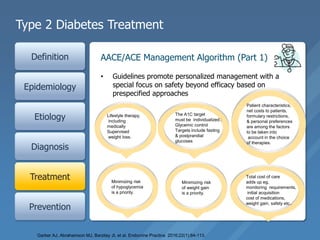
• Guidelines promote personalized management with a
special focus on safety beyond efficacy based on
prespecified approaches
AACE/ACE Management Algorithm (Part 1)
Metformin
Dual-drug
combinations education
Garber AJ, Abrahamson MJ, Barzilay JI, et al. Endocrine Practice 2016;22(1):84-113.
Lifestyle therapy,
including
medically
Supervised
weight loss.
The A1C target
must be individualized.;
Glycemic control
Targets include fasting
& postprandial
glucoses
Patient characteristics,
net costs to patients,
formulary restrictions,
& personal preferences
are among the factors
to be taken into
account in the choice
of therapies.
Minimizing risk
of hypoglycemia
is a priority.
Minimizing risk
of weight gain
is a priority.
Total cost of care
adds up eg,
monitoring requirements,
initial acquisition
cost of medications,
weight gain, safety etc..
Type 2 Diabetes Treatment
Definition
Epidemiology
Etiology
Diagnosis
Treatment
Prevention
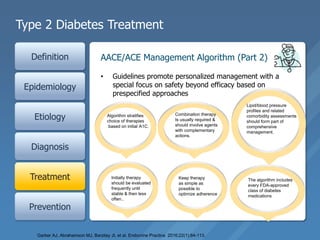
• Guidelines promote personalized management with a
special focus on safety beyond efficacy based on
prespecified approaches
AACE/ACE Management Algorithm (Part 2)
Metformin
Dual-drug
combinations education
Garber AJ, Abrahamson MJ, Barzilay JI, et al. Endocrine Practice 2016;22(1):84-113.
Algorithm stratifies
choice of therapies
based on initial A1C.
Combination therapy
Is usually required &
should involve agents
with complementary
actions.
Lipid/blood pressure
profiles and related
comorbidity assessments
should form part of
comprehensive
management.
Initially therapy
should be evaluated
frequently until
stable & then less
often..
Keep therapy
as simple as
possible to
optimize adherence
The algorithm includes
every FDA-approved
class of diabetes
medications
Type 2 Diabetes Treatment
Definition
Epidemiology
Etiology
Diagnosis
Treatment
Prevention
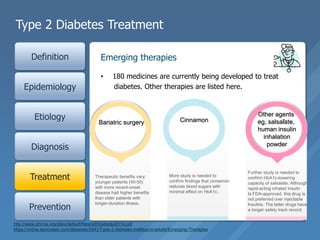
• 180 medicines are currently being developed to treat
diabetes. Other therapies are listed here.
Emerging therapies
Smoking
cessation
Blood
pressure
control
Statin use
Aspirin use
for patients
with known
coronary
heart disease
ACE inhibitors
for patients
with chronic
kidney
disease/protei
nuria
Metformin
Dual-drug
combinations Self-
management
program
Nutrition
education
http://www.phrma.org/sites/default/files/pdf/diabetes2014.pdf
https://online.epocrates.com/diseases/2443/Type-2-diabetes-mellitus-in-adults/Emerging-Therapies
Bariatric surgery Cinnamon
Other agents
eg, salsalate,
human insulin
inhalation
powder
Therapeutic benefits vary;
younger patients (40-50)
with more recent-onset
disease had higher benefits
than older patients with
longer-duration illness.
More study is needed to
confirm findings that cinnamon
reduces blood sugars with
minimal effect on HbA1c..
Further study is needed to
confirm HbA1c-lowering
capacity of salsalate; Although
rapid-acting inhaled insulin
Is FDA-approved, this drug is
not preferred over injectable
Insulins. The latter drugs have
a longer safety track record.
Diabetes Treatment
Definition
Epidemiology
Etiology
Diagnosis
Treatment
Prevention
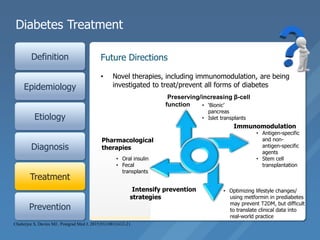
• Novel therapies, including immunomodulation, are being
investigated to treat/prevent all forms of diabetes
Future Directions
Smoking
cessation
Blood
pressure
control
Statin use
Aspirin use
for patients
with known
coronary
heart disease
ACE inhibitors
for patients
with chronic
kidney
disease/protei
nuria
Metformin
Dual-drug
combinations Self-
management
program
Nutrition
education
Chatterjee S, Davies MJ.. Postgrad Med J. 2015;91(1081):612-21.
Preserving/increasing β-cell
function • ‘Bionic’
pancreas
• Islet transplants
Immunomodulation
• Antigen-specific
and non-
antigen-specific
agents
• Stem cell
transplantation
Intensify prevention
strategies
• Optimizing lifestyle changes/
using metformin in prediabetes
may prevent T2DM, but difficult
to translate clinical data into
real-world practice
Pharmacological
therapies
• Oral insulin
• Fecal
transplants
Type 2 Diabetes
Definition
Epidemiology
Etiology
Diagnosis
Treatment
Prevention
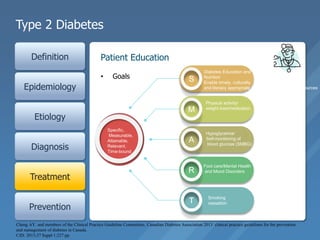
• Goals
Patient Education
Cheng AY. and members of the Clinical Practice Guideline Committees. Canadian Diabetes Association 2013 clinical practice guidelines for the prevention
and management of diabetes in Canada.
CJD. 2013;37 Suppl 1:227 pp.
Smoking
cessation
S
M
A
R
T
Specific,
Measurable,
Attainable,
Relevant,
Time-bound
Diabetes Education and
Nutrition
Enable timely, culturally
and literacy appropriate diabetes education and resources
Physical activity/
weight loss/medication
Hypoglycemia/
Self-monitoring of
blood glucose (SMBG)
Foot care/Mental Health
and Mood Disorders
Type 2 Diabetes: Prevention
Definition
Epidemiology
Etiology
Diagnosis
Treatment
Prevention
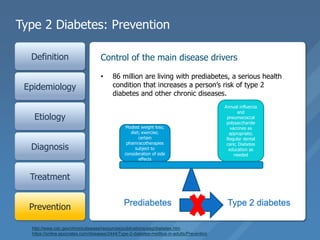
• 86 million are living with prediabetes, a serious health
condition that increases a person’s risk of type 2
diabetes and other chronic diseases.
Control of the main disease drivers
http://www.cdc.gov/chronicdisease/resources/publications/aag/diabetes.htm
https://online.epocrates.com/diseases/2444/Type-2-diabetes-mellitus-in-adults/Prevention
Modest weight loss;
diet; exercise;
certain
phamracotherapies
subject to
consideration of side
effects
Annual influenza
and
pneumococcal
polysaccharide
vaccines as
appropriate;
Regular dental
care; Diabetes
education as
needed
Prediabetes Type 2 diabetes

Type 2 diabetes - A 2016 update by Zeena Nackerdien

  • 1.
    Type 2 Diabetes Definition Epidemiology Etiology Diagnosis Treatment Prevention DiseaseCharacteristics and Goals Reduce risk of complications •BP, lipid, and glycemic management to reduce risk of macrovascular complications •BP control and glycemic management to reduce risk of microvascular complications Cardiovascular risk factor reduction a key goal •Treat cardiovascular risk factors to achieve individualized targets •Smoking cessations, antihypertensive agents, and lipid medications are among the recommended agents Individualize treatment •Lifestyle changes + metformin as initial antihyperglycemic therapy for most patients •Glycemic goals and treatment choices are individualized • Insulin resistance and relative insulin insufficiency https://online.epocrates.com/diseases/2411/Type-2-diabetes-mellitus-in-adults/Key-Highlights BP, blood pressure Key complications: Nerve, kidney, eye, and cardiovascular diseases
  • 2.
    Type 2 Diabetes Definition Epidemiology Etiology Diagnosis Treatment Prevention Prediabetes •Prediabetes is a metabolic condition characterized by hyperglycemia – Diagnostic criteria below those used to define Type 2 diabetes eg, fasting plasma glucose concentrations are 5·6 mmol/L or higher but less than 7·0 mmol/L (termed impaired fasting glucose [IFG]) Est., estimated Garber AJ, Abrahamson MJ, Barzilay JI, Endocrine Practice. 2016;22(1):84-113. Stefan N, Fritsche A, Schick F, et al. TLancet Diabetes & Endocrinology. 2016;4(9):789-98. USA >38% est. to have prediabetes China >50% est. to have prediabetes In terms of pathophysiology, prediabetes reflects failing pancreatic islet β-cell compensation for an underlying state of insulin resistance, most commonly caused by excess body weight or obesity.
  • 3.
    Type 2 Diabetes Definition Epidemiology Etiology Diagnosis Treatment Prevention Phenotypingof patients with prediabetes • Stefan et al. (2016) proposed stratifying patients into low- and high-risk groups – High-risk: low insulin secretion or low insulin sensitivity plus non-alcoholic fatty liver disease (NAFLD) – Low-risk: Other combinations related to insulin secretion, insulin sensitivity, and NAFLD eg, high body mass index or visceral obesity . CVD, cardiovascular diseases; NAFLD, non-alcohol fatty liver disease; NGR, normal glucose regulation Stefan N, Fritsche A, Schick F, et al. TLancet Diabetes & Endocrinology. 2016;4(9):789-98. Prediabetes and no stratification at baseline Maybe intensive lifestyle intervention will restore NGR Prediabetes and stratification at baseline Better predictive power as to the effectiveness of lifestyle intervention in restoring NGR; Improves classification of hyperglycemia and risk of CVD in prediabetics
  • 4.
    Diabetes Epidemiology Definition Etiology Diagnosis Treatment Prevention Epidemiology 415 millionpeople worldwide have diabetes; by 2040 this will rise to 642 million (2015 International Diabetes Federation estimates) The estimated annual global health expenditure attributable to diabetes ranged from USD 612 billion (to USD 1099 billion. Together, the North America and Caribbean Region and the Europe Region were responsible for over 69% of the costs, and less than 10% of the costs were from the Africa Region, South East Asia Region, and Middle East and North Africa Region combined. MENA, Middle East and North Africa da Rocha Fernandes J, Ogurtsova K, Linnenkamp U, et al. Diab. Res. Clinical Prac. 2016;117:48-54. http://www.diabetesatlas.org/ Every 6 seconds someone dies from diabetes 3.2% In Africa, more than two-thirds are undiagnosed; Prevalence in MENA: 9.1% Regional Prevalence (%) North America & Caribbean 12.9% South & Central America 9.4% South- East Asia 8.5% 9.1% 37% of the diabetics across the globe live in the Western Pacific (a region comprising 39 countries, including China)
  • 5.
    Type 2 Diabetes:Etiology/Pathophysiology Definition Epidemiology Etiology Diagnosis Treatment Prevention • ≥40 years old • Hereditary predisposition • Pre-diabetic • Woman who had gestational diabetes • Woman who gave birth to a ≥9 lb baby • Overweight/excess abdominal weight • High BP or cholesterol issues • Psychosocial disorders/HIV infection/polycystic ovarian syndrome/acanthosis nigricans • Specific medications eg, antipsychotics/anti- inflammatory steroids What are the risk factors? BP, blood pressure; HIV, human immunodeficiency virus Cheng AY. and members of the Clinical Practice Guideline Committees. CJD. 2013;37 Suppl 1:227 pp.
  • 6.
    Type 2 Diabetes:Etiology/Pathophysiology Definition Epidemiology Etiology Diagnosis Treatment Prevention • Blood glucose appearance is a function of meal-derived sources and hepatic glucose production – Regulation occurs by pancreatic and gut hormones – Liver and skeletal muscle responsiveness to insulin decline with progressive β-cell dysfunction – Insulin is a key anabolic hormone secreted in response to increased blood glucose and amino acids following a meal What role does insulin play? Brunton SA, Kruger DF, Funnell MM. Clinical Diabetes. 2016;34(1):34-43; www.slideteam.net Aronoff SL, Berkowitz K, Shreiner B et al.Diabetes Spectrum. 2004;17(3):183-90.
  • 7.
    Type 2 Diabetes:Etiology/Pathophysiology Definition Epidemiology Etiology Diagnosis Treatment Prevention • Insulin resistance is aggravated by aging, physical inactivity, and overweight (BMI 25-29.9 kg/m2) or obesity (BMI >30 kg/m2) • Complexity of intracellular derangements suggest the disease may be stratified into many subtypes Etiology Pathophysiology The precise mechanism by which the diabetic metabolic state leads to microvascular and macrovascular complications is only partly understood. Uncontrolled BP and uncontrolled glucose, increasing the risk of microvascular complications such as retinopathy and nephropathy With respect to macrovascular complications, high BP and glucose raise risk, but so do lipid abnormalities and tobacco use. One unifying theory postulates a metabolic syndrome that includes diabetes mellitus, hypertension, dyslipidemias, and obesity, and predisposes to coronary heart disease, stroke, and peripheral artery disease. However, this theory is not universally accepted. https://online.epocrates.com/diseases/2424/Type-2-diabetes-mellitus-in-adults/Etiology
  • 8.
    Type 2 Diabetes– Diagnostic Approach Definition Epidemiology Etiology Diagnosis Treatment Prevention • impaired glucose tolerance, impaired fasting glucose, or metabolic syndrome are risk factors – Any one of these factors is associated with a 5-fold increase in future T2D risk • Three tests indicate prediabetes – Fasting plasma glucose test (blood sugar is 100-125) – Oral glucose tolerance test (blood sugar is 140-199 after the second test) – A1C test: (blood sugar is 5.7 to 6.4%) Prediabetes http://www.webmd.com/diabetes/type-2-diabetes-guide/what-is-prediabetes-or-borderline-diabetes Garber AJ, Abrahamson MJ, Barzilay JI, et al,. Endocrine Practice 2016;22(1):84-113.
  • 9.
    Type 2 Diabetes– Diagnostic Approach Definition Epidemiology Etiology Diagnosis Treatment Prevention • Symptomatic patients may present with: fatigue; polyuria, polydipsia, polyphagia, or weight loss (usually when hyperglycemia is more severe, e.g., >300 mg/dL); blurred vision; paresthesias; unintentional weight loss; nocturia; skin infections (bacterial or candidal); urinary infections; or acanthosis nigricans Diagnosis should be verified by repeat testing. 1 3 24 One of 4 tests can confirm a diagnosis of diabetes 1. Fasting plasma glucose (FPG) >125 mg/dL (most commonly used) 2. Random plasma glucose ≥200 mg/dL with diabetes symptoms such as polyuria, polydipsia, fatigue, or weight loss 3. 2-hour post-load glucose ≥200 mg/dL on a 75 g oral glucose tolerance tests 4. HbA1c ≥6.5% https://online.epocrates.com/diseases/2431/Type-2-diabetes-mellitus-in-adults/Diagnostic-Approach
  • 10.
    Type 2 Diabetes– Goals for Glycemic Control Definition Epidemiology Etiology Diagnosis Treatment Prevention • Strong risk factors, which also indicate the need for screening, include: older age; overweight/obesity; black, Hispanic, or Native American ancestry; family history of Type 2 Diabetes; history of gestational diabetes; presence of prediabetes; physical inactivity; polycystic ovary syndrome; hypertension; dyslipidemia; or known cardiovascular disease For patients with concurrent serious illness and at high risk for hypoglycemia Diagnosis should be verified by repeat testing. A1C ≤6.5% A1C >6.5% For patients without concurrent serious illness and at low hypoglycemic risk A1C, glycated hemoglobin http://www.diabetes.org/living-with-diabetes/treatment-and-care/blood-glucose-control/a1c http://answers.webmd.com/answers/1180327/what-blood-sugar-levels-are-considered-normal-and-what-levels-are-diabetic http://www.webmd.com/diabetes/tc/criteria-for-diagnosing-diabetes-topic-overview/ Garber AJ, Abrahamson MJ, Barzilay JI, et al.Endocrine Practice 2016;22(1):84-113. 2. Glucose enters red blood cells and glycates with molecules of hemoglobin (A1C).. By measuring the percentage of A1C in the blood, one gets an overview of your average blood glucose control for the past few months. 1. Hemoglobin, a protein that links up with sugars such as glucose, is found inside red blood cells. Its job is to carry oxygen from the lungs to all the cells of the body.
  • 11.
    Type 2 DiabetesTreatment Definition Epidemiology Etiology Diagnosis Treatment Prevention • Since patients are 2x likely to die from CVDs vs. the general population, a 1◦ goal is treatment of CVD risk factors to individualize targets Approach Cornerstonetreatmentforall patients Initialglucose-lowering pharmacotherapies CVDriskfactors Smoking cessation Blood pressure control Statin use Aspirin use for patients with known coronary heart disease ACE inhibitors for patients with chronic kidney disease/protei nuria Metformin Dual-drug combinations Self- management program Nutrition education This is a progressive disease and prompt initiation and intensification of pharmacotherapy to achieve and maintain clinical goals is central to diabetes care. https://online.epocrates.com/diseases/2441/Type-2-diabetes-mellitus-in-adults/Treatment-Approach CVD, cardiovascular disease
  • 12.
    Type 2 DiabetesTreatment Definition Epidemiology Etiology Diagnosis Treatment Prevention • The priority in management is to minimize the risks of hypoglycemia and weight gain. The AACE preferentially recommends agents that do not increase these risks Pharmacologic Agentsa Smoking cessation Blood pressure control Statin use Aspirin use for patients with known coronary heart disease ACE inhibitors for patients with chronic kidney disease/protei nuria Metformin Dual-drug combinations Self- management program Nutrition education Abbreviations: AACE = American Association for Clinical Endocrinology; AGI = α-glucosidase inhibitors; BCR-QR = bromocriptine quick release; DPP4I = dipeptidyl peptidase 4 inhibitors; GLP1RA = glucagon-like peptide 1 receptor agonists; SGLT2I = sodium-glucose cotransporter 2 inhibitors; SU = sulfonylureas; TZD = thiazolidinediones; a Intensify therapy whenever A1C exceeds individualized target. Boldface denotes little or no risk of hypoglycemia or weight gain, few adverse events, and/or the possibility of benefits beyond glucose lowering. b Use with caution. Handelsman Y, Bloomgarden ZT, Grunberger G,et al. Endocrine Practice. 2015;21 Suppl 1:1-87. Metformin; GLP1RA; SGLT2I; DPP4I; AGI; TZDb; SU/glinideb GLP1RA; SGLT2I; TZDb; Basal insulinb; DPP4I; Colesevelam; BCR-QR; AGI; SU/glinideb GLP1RA; SGLT2I; DPP4I; TZDb; Basal insulinb; Colesevelam; BCR-QR; AGI; SU/glinideb 1First-line treatment 2Metformin (or other first-line agent) plus 3First- and second-line agent plus
  • 13.
    Type 2 DiabetesTreatment Definition Epidemiology Etiology Diagnosis Treatment Prevention • Research on two incretins ie, glucagon-like peptide-1 (GLP-1) and gastric inhibitory peptide (GIP), led to the development of GLP-1 receptor (GLP-1R) agonists and DPP-IV inhibitors Incretins: Key non-insulin therapies Smoking cessation Blood pressure control Statin use Aspirin use for patients with known coronary heart disease ACE inhibitors for patients with chronic kidney disease/protei nuria Metformin Dual-drug combinations Self- management program Nutrition education DPP IV, Dipeptidyl Peptidase IV; GLP-1,R Glucagon-like peptide- receptors; MOA, mechanism of action; Chatterjee S, Davies MJ. Postgrad Med J. 2015;91(1081):612-21. Can be used in conjunction with insulin to optimize control, reduce its weight gain effects and lower daily insulin dose requirements GLP-1R agonist use Improved HbA1c (up to 1.6%); minimal risk of hypoglycemia and often significant weight loss/neutrality depending on the incretin and patient factors Result Can be used safely in worsening renal impairment, with some agents such as linagliptin, which is mainly excreted enterohepatically requiring no dose adjustment even in end- stage renal failure DPP IV inhibitor use MOA Increase insulin secretion (via β cells) and reduce glucagon secretion, hepatic glucose production and glucose uptake from the stomach and promote satiety
  • 14.
    Type 2 DiabetesTreatment Definition Epidemiology Etiology Diagnosis Treatment Prevention • Synthetic insulin (6,000 Da) consists of an A chain of 21 amino acids and a B chain of 30 amino acids • In the body, insulin is generated by cleavage of the C- peptide from proinsulin Insulin Synthesis Smoking cessation Blood pressure control Statin use Aspirin use for patients with known coronary heart disease ACE inhibitors for patients with chronic kidney disease/protei nuria Metformin Dual-drug combinations Self- management program Nutrition education Brunton SA, Kruger DF, Funnell MM. Role of Emerging Insulin Clinical Diabetes. 2016;34(1):34-43 Fu Z, Gilbert ER, Liu D. Current Diabetes Reviews. 2013;9(1):25-53; http://www.slideteam.net/.
  • 15.
    Type 2 DiabetesTreatment Definition Epidemiology Etiology Diagnosis Treatment Prevention • Typically-used insulin classes are shown here – Administration modes are via pen/pump/syringe/subcutaneous infusion – Many novel insulin products and delivery systems may provide T2D patients to initiate insulin more comfortably and earlier in the disease process Types of Insulin Smoking cessation Blood pressure control Statin use Aspirin use for patients with known coronary heart disease ACE inhibitors for patients with chronic kidney disease/protei nuria Metformin Dual-drug combinations Self- management program Nutrition education http://guidelines.diabetes.ca/cdacpg_resources/Ch12_Table1_Types_of_Insulin_updated_Aug_5.pdf Bolus (prandial) insulins Basal insulins Premixed insulins
  • 16.
    Type 2 DiabetesTreatment Definition Epidemiology Etiology Diagnosis Treatment Prevention • Insulin should be intensified within 3-6 months of failure to meet glycemic targets (Brunton et al, 2016) – Benefits of early use/intensification eg, improvements in glycemic control/QoL/treatment satisfaction – Insulin is often initiated late in the natural history of the disease The Insulin Conundrum Smoking cessation Blood pressure control Statin use Aspirin use for patients with known coronary heart disease ACE inhibitors for patients with chronic kidney disease/protei nuria Metformin Dual-drug combinations Self- management program Nutrition education QoL, quality of life Brunton SA, Kruger DF, Funnell MM. Clinical Diabetes. 2016;34(1):34-43. Patient Barriers Concerns over safety and efficacy of insulin Hypoglycemia or weight gain concerns Psychological eg, a perceived failure to take the hormone Concern that insulin is associated with complications or even death Fear of a loss of independence Clinician Barriers Need for education about the benefits of appropriately-initiated insulin therapy Patients reluctance to use injected insulin may preclude initiation of a chat about the hormone Time-consuming for staff to provide patient training regarding insulin use/Remote practices may not have access to needed training materials Overall goal of insulin and non-insulin therapies is to lower basal hepatic glucose production and increase muscle glucose uptake
  • 17.
    Type 2 DiabetesTreatment Definition Epidemiology Etiology Diagnosis Treatment Prevention • Guidelines promote personalized management with a special focus on safety beyond efficacy based on prespecified approaches AACE/ACE Management Algorithm (Part 1) Metformin Dual-drug combinations education Garber AJ, Abrahamson MJ, Barzilay JI, et al. Endocrine Practice 2016;22(1):84-113. Lifestyle therapy, including medically Supervised weight loss. The A1C target must be individualized.; Glycemic control Targets include fasting & postprandial glucoses Patient characteristics, net costs to patients, formulary restrictions, & personal preferences are among the factors to be taken into account in the choice of therapies. Minimizing risk of hypoglycemia is a priority. Minimizing risk of weight gain is a priority. Total cost of care adds up eg, monitoring requirements, initial acquisition cost of medications, weight gain, safety etc..
  • 18.
    Type 2 DiabetesTreatment Definition Epidemiology Etiology Diagnosis Treatment Prevention • Guidelines promote personalized management with a special focus on safety beyond efficacy based on prespecified approaches AACE/ACE Management Algorithm (Part 2) Metformin Dual-drug combinations education Garber AJ, Abrahamson MJ, Barzilay JI, et al. Endocrine Practice 2016;22(1):84-113. Algorithm stratifies choice of therapies based on initial A1C. Combination therapy Is usually required & should involve agents with complementary actions. Lipid/blood pressure profiles and related comorbidity assessments should form part of comprehensive management. Initially therapy should be evaluated frequently until stable & then less often.. Keep therapy as simple as possible to optimize adherence The algorithm includes every FDA-approved class of diabetes medications
  • 19.
    Type 2 DiabetesTreatment Definition Epidemiology Etiology Diagnosis Treatment Prevention • 180 medicines are currently being developed to treat diabetes. Other therapies are listed here. Emerging therapies Smoking cessation Blood pressure control Statin use Aspirin use for patients with known coronary heart disease ACE inhibitors for patients with chronic kidney disease/protei nuria Metformin Dual-drug combinations Self- management program Nutrition education http://www.phrma.org/sites/default/files/pdf/diabetes2014.pdf https://online.epocrates.com/diseases/2443/Type-2-diabetes-mellitus-in-adults/Emerging-Therapies Bariatric surgery Cinnamon Other agents eg, salsalate, human insulin inhalation powder Therapeutic benefits vary; younger patients (40-50) with more recent-onset disease had higher benefits than older patients with longer-duration illness. More study is needed to confirm findings that cinnamon reduces blood sugars with minimal effect on HbA1c.. Further study is needed to confirm HbA1c-lowering capacity of salsalate; Although rapid-acting inhaled insulin Is FDA-approved, this drug is not preferred over injectable Insulins. The latter drugs have a longer safety track record.
  • 20.
    Diabetes Treatment Definition Epidemiology Etiology Diagnosis Treatment Prevention • Noveltherapies, including immunomodulation, are being investigated to treat/prevent all forms of diabetes Future Directions Smoking cessation Blood pressure control Statin use Aspirin use for patients with known coronary heart disease ACE inhibitors for patients with chronic kidney disease/protei nuria Metformin Dual-drug combinations Self- management program Nutrition education Chatterjee S, Davies MJ.. Postgrad Med J. 2015;91(1081):612-21. Preserving/increasing β-cell function • ‘Bionic’ pancreas • Islet transplants Immunomodulation • Antigen-specific and non- antigen-specific agents • Stem cell transplantation Intensify prevention strategies • Optimizing lifestyle changes/ using metformin in prediabetes may prevent T2DM, but difficult to translate clinical data into real-world practice Pharmacological therapies • Oral insulin • Fecal transplants
  • 21.
    Type 2 Diabetes Definition Epidemiology Etiology Diagnosis Treatment Prevention •Goals Patient Education Cheng AY. and members of the Clinical Practice Guideline Committees. Canadian Diabetes Association 2013 clinical practice guidelines for the prevention and management of diabetes in Canada. CJD. 2013;37 Suppl 1:227 pp. Smoking cessation S M A R T Specific, Measurable, Attainable, Relevant, Time-bound Diabetes Education and Nutrition Enable timely, culturally and literacy appropriate diabetes education and resources Physical activity/ weight loss/medication Hypoglycemia/ Self-monitoring of blood glucose (SMBG) Foot care/Mental Health and Mood Disorders
  • 22.
    Type 2 Diabetes:Prevention Definition Epidemiology Etiology Diagnosis Treatment Prevention • 86 million are living with prediabetes, a serious health condition that increases a person’s risk of type 2 diabetes and other chronic diseases. Control of the main disease drivers http://www.cdc.gov/chronicdisease/resources/publications/aag/diabetes.htm https://online.epocrates.com/diseases/2444/Type-2-diabetes-mellitus-in-adults/Prevention Modest weight loss; diet; exercise; certain phamracotherapies subject to consideration of side effects Annual influenza and pneumococcal polysaccharide vaccines as appropriate; Regular dental care; Diabetes education as needed Prediabetes Type 2 diabetes