What is Sculpture?
The Function of Sculpture
Public and Private Works
  –   Commemorative
  –   Religious Reflection
  –   Aesthetic
  –   Communicative
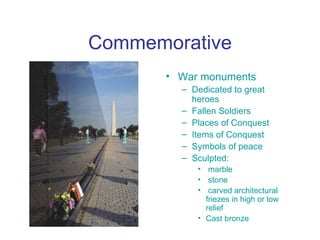
Commemorative
       • War monuments
         – Dedicated to great
           heroes
         – Fallen Soldiers
         – Places of Conquest
         – Items of Conquest
         – Symbols of peace
         – Sculpted:
            • marble
            • stone
            • carved architectural
              friezes in high or low
              relief
            • Cast bronze
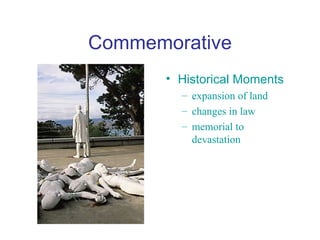
Commemorative
       • Historical Moments
         – expansion of land
         – changes in law
         – memorial to
           devastation
Commemorative
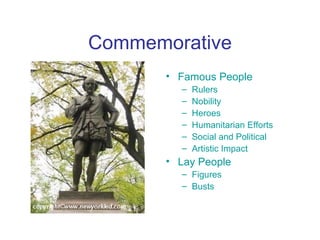
       • Famous People
         –   Rulers
         –   Nobility
         –   Heroes
         –   Humanitarian Efforts
         –   Social and Political
         –   Artistic Impact
       • Lay People
         – Figures
         – Busts
Religious Reflection
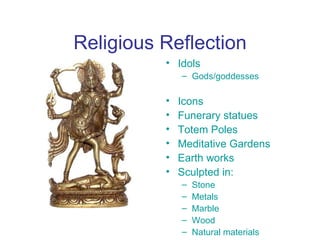
          • Idols
              – Gods/goddesses

          •   Icons
          •   Funerary statues
          •   Totem Poles
          •   Meditative Gardens
          •   Earth works
          •   Sculpted in:
              –   Stone
              –   Metals
              –   Marble
              –   Wood
              –   Natural materials
Absolute Aesthetic

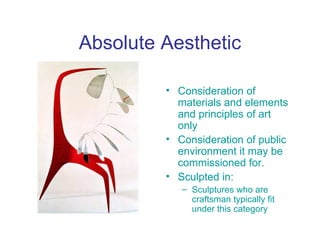
         • Consideration of
           materials and elements
           and principles of art
           only
         • Consideration of public
           environment it may be
           commissioned for.
         • Sculpted in:
            – Sculptures who are
              craftsman typically fit
              under this category
Communicative
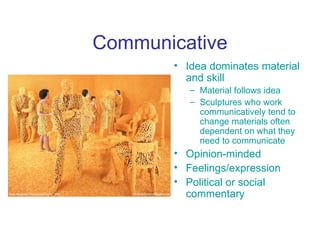
       • Idea dominates material
         and skill
          – Material follows idea
          – Sculptures who work
            communicatively tend to
            change materials often
            dependent on what they
            need to communicate
       • Opinion-minded
       • Feelings/expression
       • Political or social
         commentary
Sculpture and Materials
• Subtractive
• Additive
Sculpture and Materials
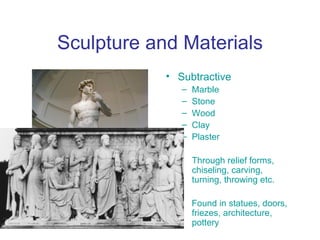
            • Subtractive
               –   Marble
               –   Stone
               –   Wood
               –   Clay
               –   Plaster

                   Through relief forms,
                   chiseling, carving,
                   turning, throwing etc.

                   Found in statues, doors,
                   friezes, architecture,
                   pottery
Sculpture and Materials
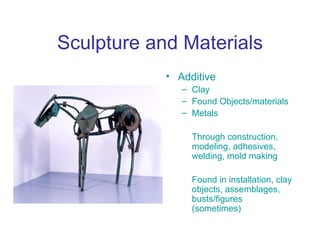
            • Additive
               – Clay
               – Found Objects/materials
               – Metals

                 Through construction,
                 modeling, adhesives,
                 welding, mold making

                 Found in installation, clay
                 objects, assemblages,
                 busts/figures
                 (sometimes)
Sculptural Methods
• Contemporary Methods
• Traditional Methods
Sculptural Methods
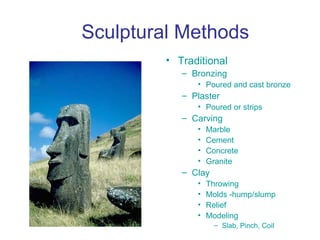
         • Traditional
            – Bronzing
               • Poured and cast bronze
            – Plaster
               • Poured or strips
            – Carving
               •   Marble
               •   Cement
               •   Concrete
               •   Granite
            – Clay
               •   Throwing
               •   Molds -hump/slump
               •   Relief
               •   Modeling
                     – Slab, Pinch, Coil
Sculptural Methods
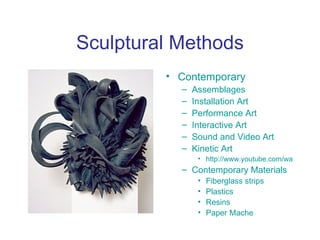
         • Contemporary
           –   Assemblages
           –   Installation Art
           –   Performance Art
           –   Interactive Art
           –   Sound and Video Art
           –   Kinetic Art
                • http://www.youtube.com/watch?v=W
           – Contemporary Materials
                •   Fiberglass strips
                •   Plastics
                •   Resins
                •   Paper Mache
Sculptural Concepts
• Craftsman
  Sculptor
• Conceptual
  Sculptor
Sculptural Concepts
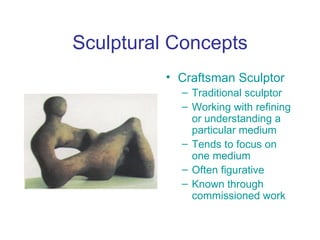
          • Craftsman Sculptor
            – Traditional sculptor
            – Working with refining
              or understanding a
              particular medium
            – Tends to focus on
              one medium
            – Often figurative
            – Known through
              commissioned work
Sculptural Concepts
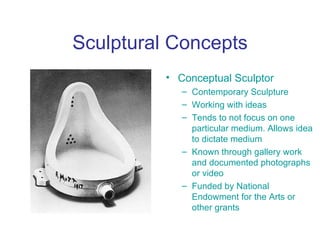
          • Conceptual Sculptor
             – Contemporary Sculpture
             – Working with ideas
             – Tends to not focus on one
               particular medium. Allows idea
               to dictate medium
             – Known through gallery work
               and documented photographs
               or video
             – Funded by National
               Endowment for the Arts or
               other grants
Big Idea Artists
Vik Muniz
http://blog.ted.com/2007/04/20/vik_muniz_on_te/


http://www.ted.com/talks/lang/eng/natalie_jeremijenko_the_art_of_


http://video.pbs.org/video/1237715781
Do-ho-Suh

What is sculpture

  • 1.
  • 2.
    The Function ofSculpture Public and Private Works – Commemorative – Religious Reflection – Aesthetic – Communicative
  • 3.
    Commemorative • War monuments – Dedicated to great heroes – Fallen Soldiers – Places of Conquest – Items of Conquest – Symbols of peace – Sculpted: • marble • stone • carved architectural friezes in high or low relief • Cast bronze
  • 4.
    Commemorative • Historical Moments – expansion of land – changes in law – memorial to devastation
  • 5.
    Commemorative • Famous People – Rulers – Nobility – Heroes – Humanitarian Efforts – Social and Political – Artistic Impact • Lay People – Figures – Busts
  • 6.
    Religious Reflection • Idols – Gods/goddesses • Icons • Funerary statues • Totem Poles • Meditative Gardens • Earth works • Sculpted in: – Stone – Metals – Marble – Wood – Natural materials
  • 7.
    Absolute Aesthetic • Consideration of materials and elements and principles of art only • Consideration of public environment it may be commissioned for. • Sculpted in: – Sculptures who are craftsman typically fit under this category
  • 8.
    Communicative • Idea dominates material and skill – Material follows idea – Sculptures who work communicatively tend to change materials often dependent on what they need to communicate • Opinion-minded • Feelings/expression • Political or social commentary
  • 9.
    Sculpture and Materials •Subtractive • Additive
  • 10.
    Sculpture and Materials • Subtractive – Marble – Stone – Wood – Clay – Plaster Through relief forms, chiseling, carving, turning, throwing etc. Found in statues, doors, friezes, architecture, pottery
  • 11.
    Sculpture and Materials • Additive – Clay – Found Objects/materials – Metals Through construction, modeling, adhesives, welding, mold making Found in installation, clay objects, assemblages, busts/figures (sometimes)
  • 12.
    Sculptural Methods • ContemporaryMethods • Traditional Methods
  • 13.
    Sculptural Methods • Traditional – Bronzing • Poured and cast bronze – Plaster • Poured or strips – Carving • Marble • Cement • Concrete • Granite – Clay • Throwing • Molds -hump/slump • Relief • Modeling – Slab, Pinch, Coil
  • 14.
    Sculptural Methods • Contemporary – Assemblages – Installation Art – Performance Art – Interactive Art – Sound and Video Art – Kinetic Art • http://www.youtube.com/watch?v=W – Contemporary Materials • Fiberglass strips • Plastics • Resins • Paper Mache
  • 15.
    Sculptural Concepts • Craftsman Sculptor • Conceptual Sculptor
  • 16.
    Sculptural Concepts • Craftsman Sculptor – Traditional sculptor – Working with refining or understanding a particular medium – Tends to focus on one medium – Often figurative – Known through commissioned work
  • 17.
    Sculptural Concepts • Conceptual Sculptor – Contemporary Sculpture – Working with ideas – Tends to not focus on one particular medium. Allows idea to dictate medium – Known through gallery work and documented photographs or video – Funded by National Endowment for the Arts or other grants
  • 18.
    Big Idea Artists VikMuniz http://blog.ted.com/2007/04/20/vik_muniz_on_te/ http://www.ted.com/talks/lang/eng/natalie_jeremijenko_the_art_of_ http://video.pbs.org/video/1237715781 Do-ho-Suh

Editor's Notes

  • #17 Henry moore
  • #18 Marcel du champ 1917 Ready Made firs tof the conceptual artists formt he Dada movement Dada means Hobby horse and was given the name by athe group as the knife they were using landed on a french dictionary page hitting the word Dada for hobby horse. Gain the idea of not trying so hard!