Impressionism
What is Impressionism?
Impressionism- an art movement developed by
a group of artist in the late 1800s.
 Vincent van Gogh (1853-1890)
 Claude Monet (1840–1926)
 Alfred Sisley (1839–1899)
 Edgar Degas (1834–1917)
Impressionism
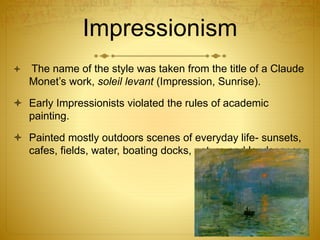
 The name of the style was taken from the title of a Claude
Monet’s work, soleil levant (Impression, Sunrise).
 Early Impressionists violated the rules of academic
painting.
 Painted mostly outdoors scenes of everyday life- sunsets,
cafes, fields, water, boating docks, nature and landscapes
Impressionism Characteristics
and Definitions
 Short, thick brush strokes capture mood not detail.
 The paint is often applied impasto (thick application of paint).
 Paintings are made en plein air (outdoors).
 Colors are not blended or smoothly shaded.
 Wet-on-wet, or alla prima (Italian) is a painting technique in
which layers of wet paint are applied to previous layers of wet
paint. This technique requires a fast way of working.
 Painting during evening to get the shadowy effects of the light
in the evening or twilight. The play of natural light is
emphasized.
 Reproduction- an imitation of a work of art.
Vincent van Gogh (1853-1890)
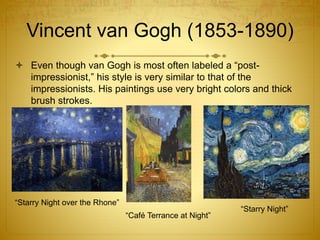
 Even though van Gogh is most often labeled a “post-
impressionist,” his style is very similar to that of the
impressionists. His paintings use very bright colors and thick
brush strokes.
“Starry Night over the Rhone”
“Café Terrance at Night”
“Starry Night”
Claude Monet (1840-1926)
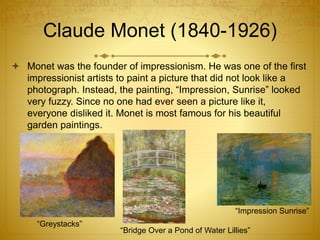
 Monet was the founder of impressionism. He was one of the first
impressionist artists to paint a picture that did not look like a
photograph. Instead, the painting, “Impression, Sunrise” looked
very fuzzy. Since no one had ever seen a picture like it,
everyone disliked it. Monet is most famous for his beautiful
garden paintings.
“Impression Sunrise”
“Bridge Over a Pond of Water Lillies”
“Greystacks”
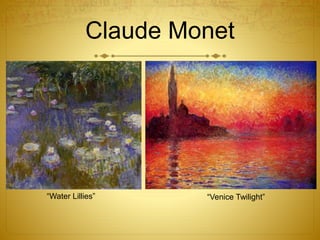
Claude Monet
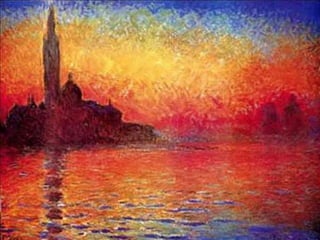
“Water Lillies” “Venice Twilight”
Edgar Degas (1834-1890)
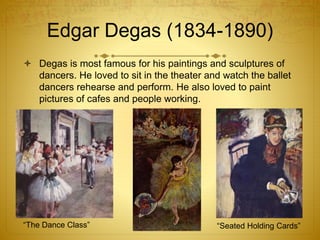
 Degas is most famous for his paintings and sculptures of
dancers. He loved to sit in the theater and watch the ballet
dancers rehearse and perform. He also loved to paint
pictures of cafes and people working.
“The Dance Class” “Seated Holding Cards”
Alfred Sisley (1839-1899)
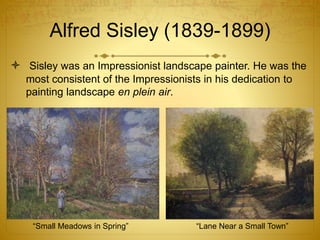
 Sisley was an Impressionist landscape painter. He was the
most consistent of the Impressionists in his dedication to
painting landscape en plein air.
“Small Meadows in Spring” “Lane Near a Small Town”
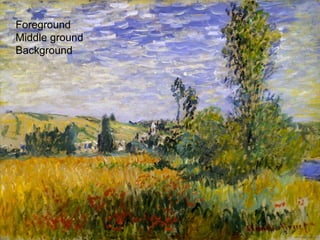
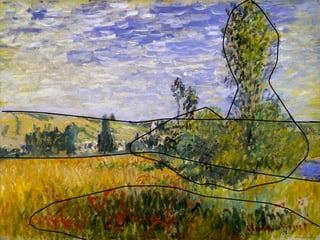
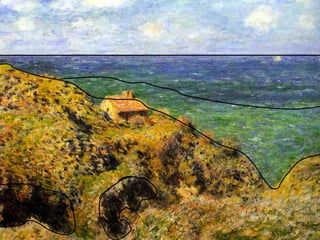
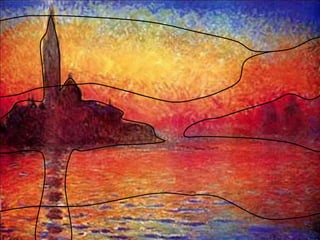
Foreground
Middle ground
Background
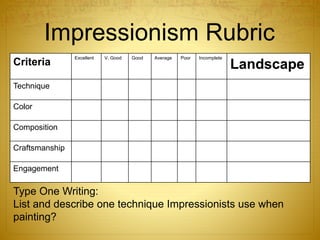
Impressionism Rubric
Criteria
Excellent V. Good Good Average Poor Incomplete
Landscape
Technique
Color
Composition
Craftsmanship
Engagement
Type One Writing:
List and describe one technique Impressionists use when
painting?
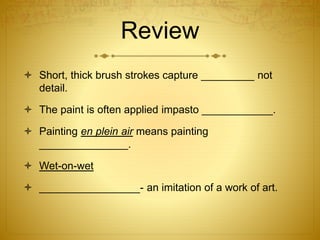
Review
 Short, thick brush strokes capture _________ not
detail.
 The paint is often applied impasto ____________.
 Painting en plein air means painting
_______________.
 Wet-on-wet
 _________________- an imitation of a work of art.
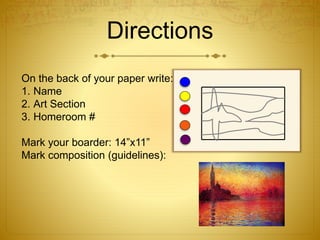
Directions
On the back of your paper write:
1. Name
2. Art Section
3. Homeroom #
Mark your boarder: 14”x11”
Mark composition (guidelines):

Impressionism power point

  • 1.
  • 2.
    What is Impressionism? Impressionism-an art movement developed by a group of artist in the late 1800s.  Vincent van Gogh (1853-1890)  Claude Monet (1840–1926)  Alfred Sisley (1839–1899)  Edgar Degas (1834–1917)
  • 3.
    Impressionism  The nameof the style was taken from the title of a Claude Monet’s work, soleil levant (Impression, Sunrise).  Early Impressionists violated the rules of academic painting.  Painted mostly outdoors scenes of everyday life- sunsets, cafes, fields, water, boating docks, nature and landscapes
  • 4.
    Impressionism Characteristics and Definitions Short, thick brush strokes capture mood not detail.  The paint is often applied impasto (thick application of paint).  Paintings are made en plein air (outdoors).  Colors are not blended or smoothly shaded.  Wet-on-wet, or alla prima (Italian) is a painting technique in which layers of wet paint are applied to previous layers of wet paint. This technique requires a fast way of working.  Painting during evening to get the shadowy effects of the light in the evening or twilight. The play of natural light is emphasized.  Reproduction- an imitation of a work of art.
  • 5.
    Vincent van Gogh(1853-1890)  Even though van Gogh is most often labeled a “post- impressionist,” his style is very similar to that of the impressionists. His paintings use very bright colors and thick brush strokes. “Starry Night over the Rhone” “Café Terrance at Night” “Starry Night”
  • 6.
    Claude Monet (1840-1926) Monet was the founder of impressionism. He was one of the first impressionist artists to paint a picture that did not look like a photograph. Instead, the painting, “Impression, Sunrise” looked very fuzzy. Since no one had ever seen a picture like it, everyone disliked it. Monet is most famous for his beautiful garden paintings. “Impression Sunrise” “Bridge Over a Pond of Water Lillies” “Greystacks”
  • 7.
    Claude Monet “Water Lillies”“Venice Twilight”
  • 8.
    Edgar Degas (1834-1890) Degas is most famous for his paintings and sculptures of dancers. He loved to sit in the theater and watch the ballet dancers rehearse and perform. He also loved to paint pictures of cafes and people working. “The Dance Class” “Seated Holding Cards”
  • 9.
    Alfred Sisley (1839-1899) Sisley was an Impressionist landscape painter. He was the most consistent of the Impressionists in his dedication to painting landscape en plein air. “Small Meadows in Spring” “Lane Near a Small Town”
  • 10.
  • 16.
    Impressionism Rubric Criteria Excellent V.Good Good Average Poor Incomplete Landscape Technique Color Composition Craftsmanship Engagement Type One Writing: List and describe one technique Impressionists use when painting?
  • 17.
    Review  Short, thickbrush strokes capture _________ not detail.  The paint is often applied impasto ____________.  Painting en plein air means painting _______________.  Wet-on-wet  _________________- an imitation of a work of art.
  • 18.
    Directions On the backof your paper write: 1. Name 2. Art Section 3. Homeroom # Mark your boarder: 14”x11” Mark composition (guidelines):