SCULPTURE
A sculptor is a person obsessed
with the form and shape of
things, and it’s not just the shape
of one thing, but the shape of
anything and everything: the
hard, tense strength, although
delicate form of a bone; the
strong, solid fleshiness of a beech
tree                           trunk.

                 –Henry Moore
Henry Moore [British, 1898–1986], Reclining Figure: Angles, 1979.
Sculpture
Sculpture - The art of carving,
  casting, modeling, or assembling
  materials into three-dimensional
  figures or forms
 Relief sculpture
 Bas-Relief or low relief
 High Relief
 Freestanding sculpture
Subtractive and Additive
 Types of Sculpture

Subtractive Process - Carving,
 unwanted      materials   are
 removed.
Additive Process - Modeling,
 Casting, Construction
Mass:   a   solid,  three-
dimensional form that has
weight and takes up real
space

Voids: the empty spaces
between the masses of
sculpture
Carving
Carving    -    removing
 portions of a block of
 materials to create a
 form.
Can use stone, wood,
 ivory, chocolate…
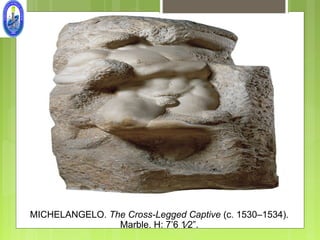
MICHELANGELO. The Cross-Legged Captive (c. 1530–1534).
                Marble. H: 7’6 1⁄2”.
Modeling
Modeling - using a pliable
 materials such as clay or
 wax the artist shapes the
 material into a 3D form.
Can be done by hand or
 tools.
Casting
Casting - liquid metal material is
  poured into a mold to create a
  form.
Mold - the form into which the
  material is poured and with imparts
  the shape.
 Any material that hardens can be
  used for casting.
 One of the oldest and most
  common is Bronze.
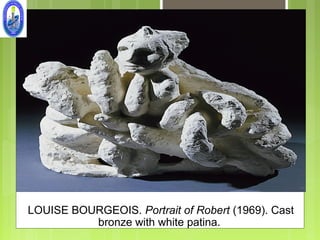
LOUISE BOURGEOIS. Portrait of Robert (1969). Cast
          bronze with white patina.
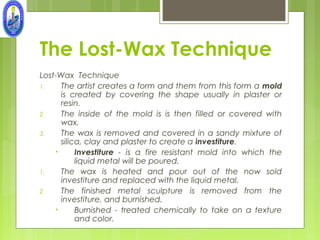
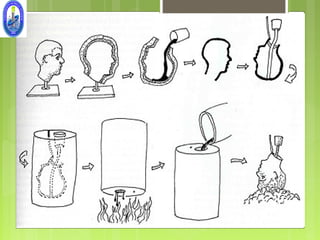
The Lost-Wax Technique
Lost-Wax Technique
1.    The artist creates a form and them from this form a mold
      is created by covering the shape usually in plaster or
      resin.
2.    The inside of the mold is is then filled or covered with
      wax.
3.    The wax is removed and covered in a sandy mixture of
      silica, clay and plaster to create a investiture.
    •      Investiture - is a fire resistant mold into which the
           liquid metal will be poured.
1.    The wax is heated and pour out of the now sold
      investiture and replaced with the liquid metal.
2.    The finished metal sculpture is removed from the
      investiture, and burnished.
    •      Burnished - treated chemically to take on a texture
           and color.
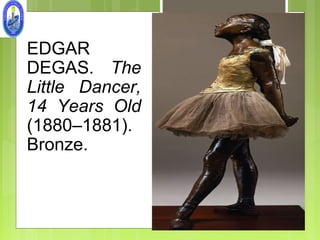
EDGAR
DEGAS. The
Little Dancer,
14 Years Old
(1880–1881).
Bronze.
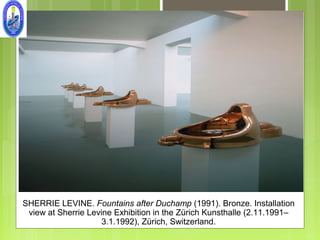
SHERRIE LEVINE. Fountains after Duchamp (1991). Bronze. Installation
 view at Sherrie Levine Exhibition in the Zürich Kunsthalle (2.11.1991–
                     3.1.1992), Zürich, Switzerland.
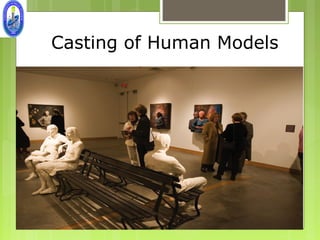
Casting of Human Models
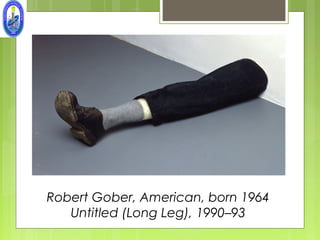
Robert Gober, American, born 1964
   Untitled (Long Leg), 1990–93
Types of Materials
 Stone
 Wood
 Clay
 Metal
Stone
  Stone is extremely hard
 It is also very durable
 Appropriate for monuments and
  statues
 Stone tools include the chisel,
  mallet, and rasp.
 Artists also use contemporary
  power tools
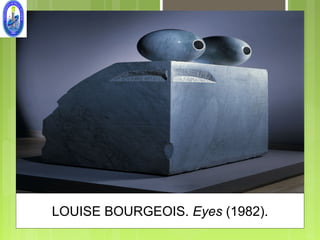
LOUISE BOURGEOIS. Eyes (1982).
Wood
 Wood     can be carved, scraped, drilled,
  and polished molded and bent.
 Different    woods have a different
  hardnesses.
 Wood appeals to sculptures because of
  its grain, color, and workability.
 Wood is easier to carved than stone.
 Tensile strength - The inherent strength of
  a material.
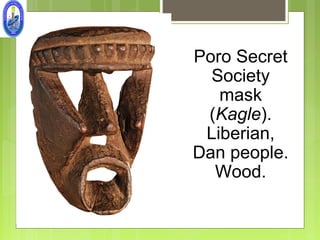
Poro Secret
  Society
   mask
 (Kagle).
 Liberian,
Dan people.
  Wood.
Clay
 Clay is more pliable than stone or
  wood
   Clay is not very strong.
   Nor is permanent.
 Armature - an inner skeleton
  normally made of metal used to
  help     give    clay     additional
  strength.
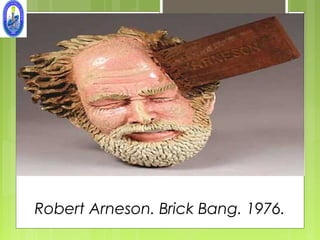
Robert Arneson. Brick Bang. 1976.
Metal
 Metals    can be cast, extruded,
  forged, stamped, drilled, filed, and
  burnished.
 Cast bronze sculptures
 Direct-metal        sculptures     -
  Assembling sculpture by welding,
  riveting, and soldering.
 Patinas - the colors created on
  bronze due to oxidation.
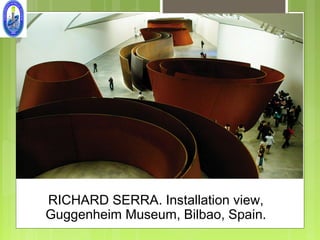
RICHARD SERRA. Installation view,
Guggenheim Museum, Bilbao, Spain.
Modern and Contemporary
 Materials and Methods
Throughout      history sculptures   have
  searched for new forms expression.
• Constructed sculpture
• Assemblage
• Readymades
• Mixed media
• Kinetic sculpture
• Light sculpture
• Land art
Constructed sculpture


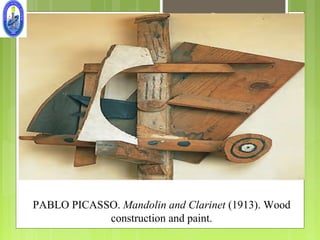
PABLO PICASSO. Mandolin and Clarinet (1913). Wood
            construction and paint.
Constructed sculpture
 The artist “builds” the sculpture
 Materials could include, sheet
  metal, cardboard, celluloid, or
  wire
 Some artworks are lighter than
  those from stone or wood
 Unorthodox materials can also be
  used
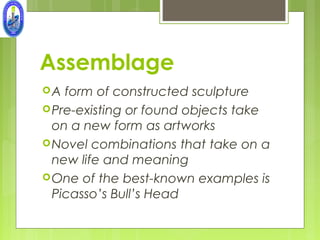
Assemblage
A  form of constructed sculpture
 Pre-existing or found objects take
  on a new form as artworks
 Novel combinations that take on a
  new life and meaning
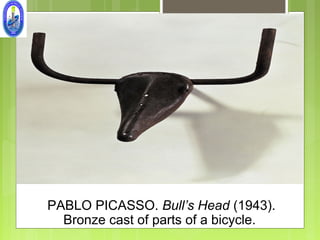
 One of the best-known examples is
  Picasso’s Bull’s Head
PABLO PICASSO. Bull’s Head (1943).
  Bronze cast of parts of a bicycle.
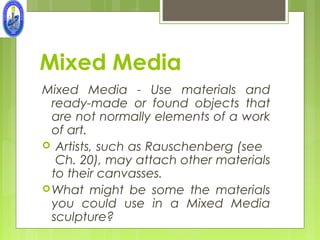
Mixed Media
Mixed Media - Use materials and
  ready-made or found objects that
  are not normally elements of a work
  of art.
 Artists, such as Rauschenberg (see
   Ch. 20), may attach other materials
  to their canvasses.
 What might be some the materials
  you could use in a Mixed Media
  sculpture?
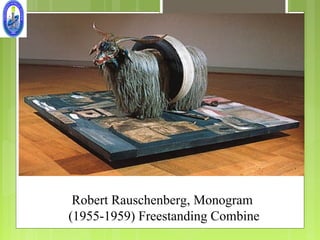
Robert Rauschenberg, Monogram
(1955-1959) Freestanding Combine
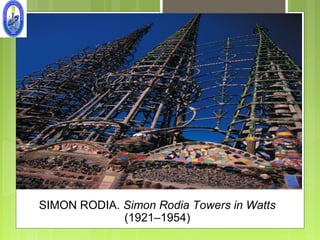
SIMON RODIA. Simon Rodia Towers in Watts
             (1921–1954)
Kinetic Sculpture
Kinetic sculpture - Sculptures that move,
  art + action. Example: the mobile.
Forms of movement might include:
 Wind
 Magnetic fields
 Jets of water
 Electric motors
 The intensity of light
 Human manipulations
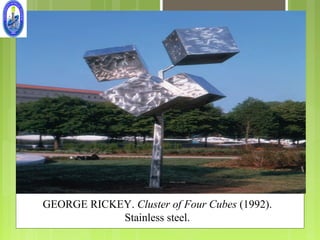
GEORGE RICKEY. Cluster of Four Cubes (1992).
            Stainless steel.
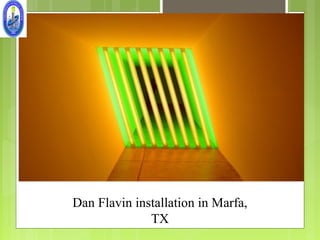
Light Sculpture
 Light    and its reflections have
  always been an important
  elements in sculpture (and art!)
 However, “light sculpture” is a
  20th-century artform
 What        are    the     physical
  psychological     and      physical
  effects of color and the creation
  of illusion?
Dan Flavin installation in Marfa,
              TX
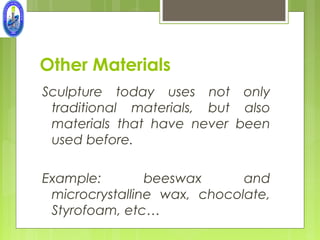
Other Materials
Sculpture today uses not only
 traditional materials, but also
 materials that have never been
 used before.

Example:        beeswax      and
 microcrystalline wax, chocolate,
 Styrofoam, etc…
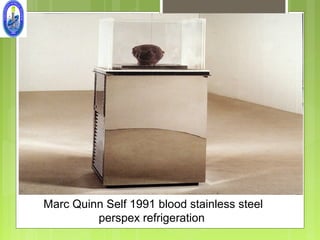
Marc Quinn Self 1991 blood stainless steel
         perspex refrigeration
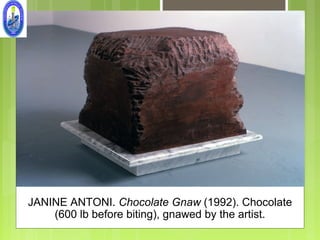
JANINE ANTONI. Chocolate Gnaw (1992). Chocolate
    (600 lb before biting), gnawed by the artist.
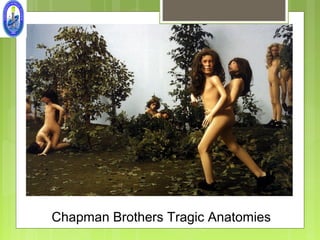
Chapman Brothers Tragic Anatomies
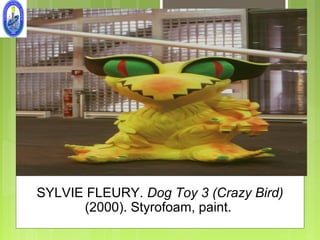
SYLVIE FLEURY. Dog Toy 3 (Crazy Bird)
      (2000). Styrofoam, paint.
THANK
 YOU FOR
LISTENING!
THE END!

Sculpture

  • 1.
  • 2.
    A sculptor isa person obsessed with the form and shape of things, and it’s not just the shape of one thing, but the shape of anything and everything: the hard, tense strength, although delicate form of a bone; the strong, solid fleshiness of a beech tree trunk. –Henry Moore
  • 3.
    Henry Moore [British,1898–1986], Reclining Figure: Angles, 1979.
  • 4.
    Sculpture Sculpture - Theart of carving, casting, modeling, or assembling materials into three-dimensional figures or forms Relief sculpture  Bas-Relief or low relief  High Relief  Freestanding sculpture
  • 5.
    Subtractive and Additive Types of Sculpture Subtractive Process - Carving, unwanted materials are removed. Additive Process - Modeling, Casting, Construction
  • 6.
    Mass: a solid, three- dimensional form that has weight and takes up real space Voids: the empty spaces between the masses of sculpture
  • 7.
    Carving Carving - removing portions of a block of materials to create a form. Can use stone, wood, ivory, chocolate…
  • 8.
    MICHELANGELO. The Cross-LeggedCaptive (c. 1530–1534). Marble. H: 7’6 1⁄2”.
  • 9.
    Modeling Modeling - usinga pliable materials such as clay or wax the artist shapes the material into a 3D form. Can be done by hand or tools.
  • 10.
    Casting Casting - liquidmetal material is poured into a mold to create a form. Mold - the form into which the material is poured and with imparts the shape.  Any material that hardens can be used for casting.  One of the oldest and most common is Bronze.
  • 11.
    LOUISE BOURGEOIS. Portraitof Robert (1969). Cast bronze with white patina.
  • 12.
    The Lost-Wax Technique Lost-WaxTechnique 1. The artist creates a form and them from this form a mold is created by covering the shape usually in plaster or resin. 2. The inside of the mold is is then filled or covered with wax. 3. The wax is removed and covered in a sandy mixture of silica, clay and plaster to create a investiture. • Investiture - is a fire resistant mold into which the liquid metal will be poured. 1. The wax is heated and pour out of the now sold investiture and replaced with the liquid metal. 2. The finished metal sculpture is removed from the investiture, and burnished. • Burnished - treated chemically to take on a texture and color.
  • 14.
    EDGAR DEGAS. The Little Dancer, 14Years Old (1880–1881). Bronze.
  • 15.
    SHERRIE LEVINE. Fountainsafter Duchamp (1991). Bronze. Installation view at Sherrie Levine Exhibition in the Zürich Kunsthalle (2.11.1991– 3.1.1992), Zürich, Switzerland.
  • 16.
  • 17.
    Robert Gober, American,born 1964 Untitled (Long Leg), 1990–93
  • 18.
    Types of Materials Stone  Wood  Clay  Metal
  • 19.
    Stone  Stoneis extremely hard  It is also very durable  Appropriate for monuments and statues  Stone tools include the chisel, mallet, and rasp.  Artists also use contemporary power tools
  • 20.
  • 21.
    Wood  Wood can be carved, scraped, drilled, and polished molded and bent.  Different woods have a different hardnesses.  Wood appeals to sculptures because of its grain, color, and workability.  Wood is easier to carved than stone.  Tensile strength - The inherent strength of a material.
  • 22.
    Poro Secret Society mask (Kagle). Liberian, Dan people. Wood.
  • 23.
    Clay  Clay ismore pliable than stone or wood  Clay is not very strong.  Nor is permanent.  Armature - an inner skeleton normally made of metal used to help give clay additional strength.
  • 24.
  • 25.
    Metal  Metals can be cast, extruded, forged, stamped, drilled, filed, and burnished.  Cast bronze sculptures  Direct-metal sculptures - Assembling sculpture by welding, riveting, and soldering.  Patinas - the colors created on bronze due to oxidation.
  • 26.
    RICHARD SERRA. Installationview, Guggenheim Museum, Bilbao, Spain.
  • 27.
    Modern and Contemporary Materials and Methods Throughout history sculptures have searched for new forms expression. • Constructed sculpture • Assemblage • Readymades • Mixed media • Kinetic sculpture • Light sculpture • Land art
  • 28.
    Constructed sculpture PABLO PICASSO.Mandolin and Clarinet (1913). Wood construction and paint.
  • 29.
    Constructed sculpture  Theartist “builds” the sculpture  Materials could include, sheet metal, cardboard, celluloid, or wire  Some artworks are lighter than those from stone or wood  Unorthodox materials can also be used
  • 30.
    Assemblage A formof constructed sculpture  Pre-existing or found objects take on a new form as artworks  Novel combinations that take on a new life and meaning  One of the best-known examples is Picasso’s Bull’s Head
  • 31.
    PABLO PICASSO. Bull’sHead (1943). Bronze cast of parts of a bicycle.
  • 32.
    Mixed Media Mixed Media- Use materials and ready-made or found objects that are not normally elements of a work of art.  Artists, such as Rauschenberg (see Ch. 20), may attach other materials to their canvasses.  What might be some the materials you could use in a Mixed Media sculpture?
  • 33.
  • 34.
    SIMON RODIA. SimonRodia Towers in Watts (1921–1954)
  • 35.
    Kinetic Sculpture Kinetic sculpture- Sculptures that move, art + action. Example: the mobile. Forms of movement might include:  Wind  Magnetic fields  Jets of water  Electric motors  The intensity of light  Human manipulations
  • 36.
    GEORGE RICKEY. Clusterof Four Cubes (1992). Stainless steel.
  • 37.
    Light Sculpture  Light and its reflections have always been an important elements in sculpture (and art!)  However, “light sculpture” is a 20th-century artform  What are the physical psychological and physical effects of color and the creation of illusion?
  • 38.
  • 39.
    Other Materials Sculpture todayuses not only traditional materials, but also materials that have never been used before. Example: beeswax and microcrystalline wax, chocolate, Styrofoam, etc…
  • 40.
    Marc Quinn Self1991 blood stainless steel perspex refrigeration
  • 41.
    JANINE ANTONI. ChocolateGnaw (1992). Chocolate (600 lb before biting), gnawed by the artist.
  • 42.
  • 43.
    SYLVIE FLEURY. DogToy 3 (Crazy Bird) (2000). Styrofoam, paint.
  • 44.
  • 45.