GAC 023
GENERAL SCIENCE
Refina Ayu Alifa
Tsamara Alifia
ION
Alifia and Alifa
Basic
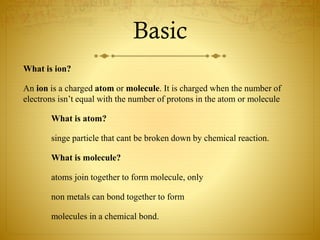
What is ion?
An ion is a charged atom or molecule. It is charged when the number of
electrons isn’t equal with the number of protons in the atom or molecule
What is atom?
singe particle that cant be broken down by chemical reaction.
What is molecule?
atoms join together to form molecule, only
non metals can bond together to form
molecules in a chemical bond.
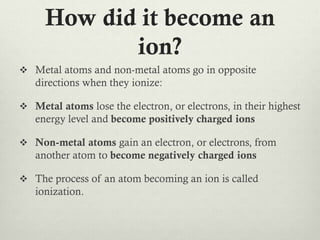
How did it become an
ion?
 Metal atoms and non-metal atoms go in opposite

directions when they ionize:
 Metal atoms lose the electron, or electrons, in their highest

energy level and become positively charged ions
 Non-metal atoms gain an electron, or electrons, from

another atom to become negatively charged ions
 The process of an atom becoming an ion is called

ionization.
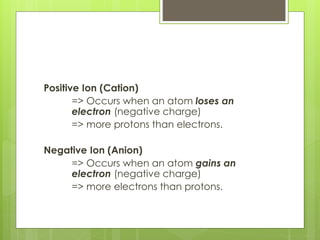
Positive Ion (Cation)
=> Occurs when an atom loses an
electron (negative charge)
=> more protons than electrons.

Negative Ion (Anion)
=> Occurs when an atom gains an
electron (negative charge)
=> more electrons than protons.
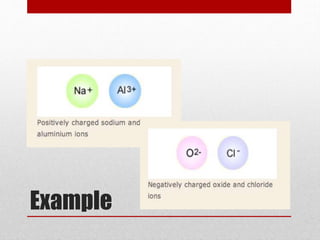
Example
HOW TO DETERMINE THE
CHARGE?
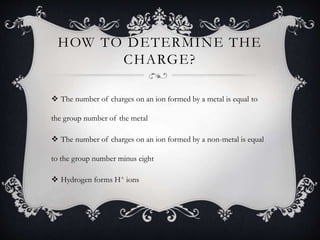
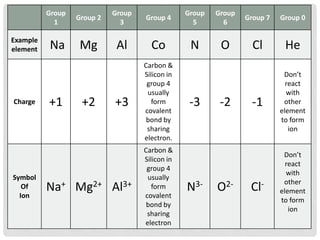
 The number of charges on an ion formed by a metal is equal to
the group number of the metal
 The number of charges on an ion formed by a non-metal is equal
to the group number minus eight

 Hydrogen forms H+ ions
Group
1
Example
element

Charge

Symbol
Of
Ion

Group 2

Na

Mg

+1

+2

Group
3

Group 4

Al

Co

+3

Carbon &
Silicon in
group 4
usually
form
covalent
bond by
sharing
electron.

Group
5

Group
6

Group 7

Group 0

N

O

Cl

He

-1

Don’t
react
with
other
element
to form
ion

EXAMPLE

Na+ Mg2+ Al3+

Carbon &
Silicon in
group 4
usually
form
covalent
bond by
sharing
electron

-3

N3-

-2

O2-

Cl-

Don’t
react
with
other
element
to form
ion
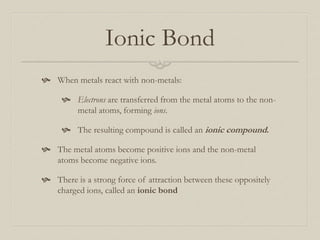
Ionic Bond
 When metals react with non-metals:
 Electrons are transferred from the metal atoms to the nonmetal atoms, forming ions.
 The resulting compound is called an ionic compound.
 The metal atoms become positive ions and the non-metal
atoms become negative ions.
 There is a strong force of attraction between these oppositely
charged ions, called an ionic bond
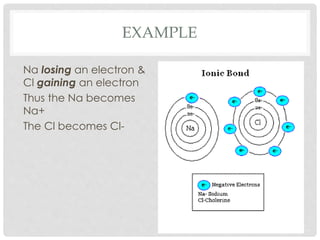
EXAMPLE
Na losing an electron &
Cl gaining an electron
Thus the Na becomes
Na+
The Cl becomes Cl-
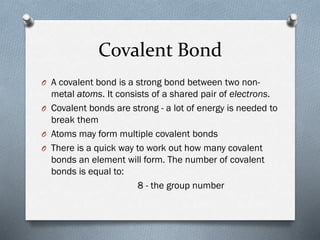
Covalent Bond
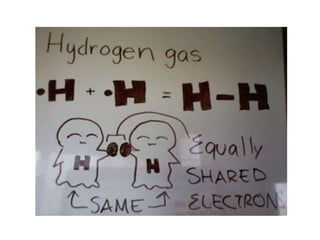
O A covalent bond is a strong bond between two non-

metal atoms. It consists of a shared pair of electrons.
O Covalent bonds are strong - a lot of energy is needed to
break them
O Atoms may form multiple covalent bonds
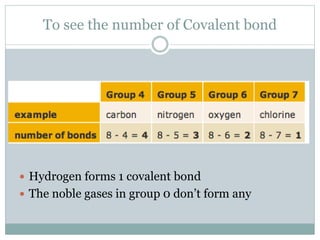
O There is a quick way to work out how many covalent
bonds an element will form. The number of covalent
bonds is equal to:
8 - the group number
To see the number of Covalent bond

 Hydrogen forms 1 covalent bond

 The noble gases in group 0 don’t form any
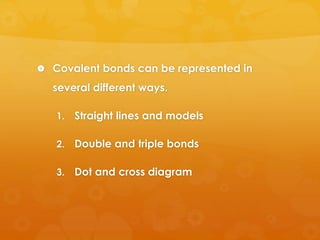
 Covalent bonds can be represented in

several different ways.
1.

Straight lines and models

2.

Double and triple bonds

3.

Dot and cross diagram
Straight and line models

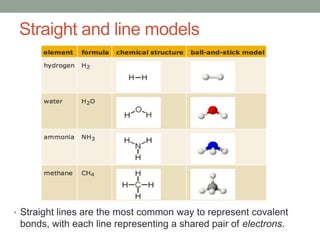
• Straight lines are the most common way to represent covalent

bonds, with each line representing a shared pair of electrons.
Double and triple bonds
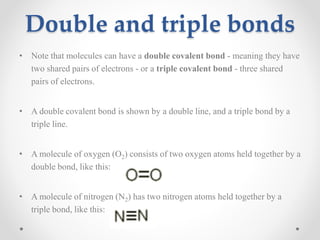
• Note that molecules can have a double covalent bond - meaning they have
two shared pairs of electrons - or a triple covalent bond - three shared
pairs of electrons.
• A double covalent bond is shown by a double line, and a triple bond by a
triple line.
• A molecule of oxygen (O2) consists of two oxygen atoms held together by a
double bond, like this:

• A molecule of nitrogen (N2) has two nitrogen atoms held together by a
triple bond, like this:
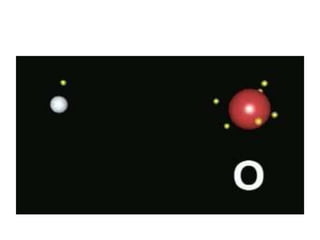
Dot – and – cross diagram
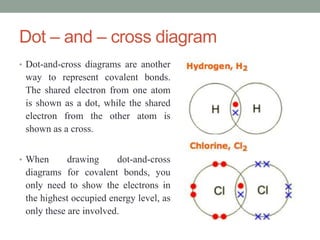
• Dot-and-cross diagrams are another

way to represent covalent bonds.
The shared electron from one atom
is shown as a dot, while the shared
electron from the other atom is
shown as a cross.
• When

drawing
dot-and-cross
diagrams for covalent bonds, you
only need to show the electrons in
the highest occupied energy level, as
only these are involved.
References
 http://www.bbc.co.uk/schools/gcsebitesize/science/add_aq

a_pre_2011/atomic/ionicrev4.shtml
 http://www.bbc.co.uk/schools/gcsebitesize/science/add_aq

a_pre_2011/atomic/covalentrev3.shtml
 http://www.chem4kids.com/files/atom_ions.html
 http://www.qrg.northwestern.edu/projects/vss/docs/propul

sion/1-what-is-an-atom.html
 http://www.microncorp.com/energaire/ions.html
1.
2.
3.
4.
5.
6.
7.

What is an Ion?
How did an ion became a cation?
How did an ion became an anion?
Mention 2 examples of Cation and Anion!
What is an ionic Compound?
What is a covalent bond?
Mention three ways to present covalent bonds!

What is an ion? - Chemistry presentation

  • 1.
    GAC 023 GENERAL SCIENCE RefinaAyu Alifa Tsamara Alifia
  • 2.
  • 3.
    Basic What is ion? Anion is a charged atom or molecule. It is charged when the number of electrons isn’t equal with the number of protons in the atom or molecule What is atom? singe particle that cant be broken down by chemical reaction. What is molecule? atoms join together to form molecule, only non metals can bond together to form molecules in a chemical bond.
  • 4.
    How did itbecome an ion?  Metal atoms and non-metal atoms go in opposite directions when they ionize:  Metal atoms lose the electron, or electrons, in their highest energy level and become positively charged ions  Non-metal atoms gain an electron, or electrons, from another atom to become negatively charged ions  The process of an atom becoming an ion is called ionization.
  • 5.
    Positive Ion (Cation) =>Occurs when an atom loses an electron (negative charge) => more protons than electrons. Negative Ion (Anion) => Occurs when an atom gains an electron (negative charge) => more electrons than protons.
  • 6.
  • 7.
    HOW TO DETERMINETHE CHARGE?  The number of charges on an ion formed by a metal is equal to the group number of the metal  The number of charges on an ion formed by a non-metal is equal to the group number minus eight  Hydrogen forms H+ ions
  • 8.
    Group 1 Example element Charge Symbol Of Ion Group 2 Na Mg +1 +2 Group 3 Group 4 Al Co +3 Carbon& Silicon in group 4 usually form covalent bond by sharing electron. Group 5 Group 6 Group 7 Group 0 N O Cl He -1 Don’t react with other element to form ion EXAMPLE Na+ Mg2+ Al3+ Carbon & Silicon in group 4 usually form covalent bond by sharing electron -3 N3- -2 O2- Cl- Don’t react with other element to form ion
  • 9.
    Ionic Bond  Whenmetals react with non-metals:  Electrons are transferred from the metal atoms to the nonmetal atoms, forming ions.  The resulting compound is called an ionic compound.  The metal atoms become positive ions and the non-metal atoms become negative ions.  There is a strong force of attraction between these oppositely charged ions, called an ionic bond
  • 10.
    EXAMPLE Na losing anelectron & Cl gaining an electron Thus the Na becomes Na+ The Cl becomes Cl-
  • 11.
    Covalent Bond O Acovalent bond is a strong bond between two non- metal atoms. It consists of a shared pair of electrons. O Covalent bonds are strong - a lot of energy is needed to break them O Atoms may form multiple covalent bonds O There is a quick way to work out how many covalent bonds an element will form. The number of covalent bonds is equal to: 8 - the group number
  • 14.
    To see thenumber of Covalent bond  Hydrogen forms 1 covalent bond  The noble gases in group 0 don’t form any
  • 15.
     Covalent bondscan be represented in several different ways. 1. Straight lines and models 2. Double and triple bonds 3. Dot and cross diagram
  • 16.
    Straight and linemodels • Straight lines are the most common way to represent covalent bonds, with each line representing a shared pair of electrons.
  • 17.
    Double and triplebonds • Note that molecules can have a double covalent bond - meaning they have two shared pairs of electrons - or a triple covalent bond - three shared pairs of electrons. • A double covalent bond is shown by a double line, and a triple bond by a triple line. • A molecule of oxygen (O2) consists of two oxygen atoms held together by a double bond, like this: • A molecule of nitrogen (N2) has two nitrogen atoms held together by a triple bond, like this:
  • 18.
    Dot – and– cross diagram • Dot-and-cross diagrams are another way to represent covalent bonds. The shared electron from one atom is shown as a dot, while the shared electron from the other atom is shown as a cross. • When drawing dot-and-cross diagrams for covalent bonds, you only need to show the electrons in the highest occupied energy level, as only these are involved.
  • 19.
    References  http://www.bbc.co.uk/schools/gcsebitesize/science/add_aq a_pre_2011/atomic/ionicrev4.shtml  http://www.bbc.co.uk/schools/gcsebitesize/science/add_aq a_pre_2011/atomic/covalentrev3.shtml http://www.chem4kids.com/files/atom_ions.html  http://www.qrg.northwestern.edu/projects/vss/docs/propul sion/1-what-is-an-atom.html  http://www.microncorp.com/energaire/ions.html
  • 20.
    1. 2. 3. 4. 5. 6. 7. What is anIon? How did an ion became a cation? How did an ion became an anion? Mention 2 examples of Cation and Anion! What is an ionic Compound? What is a covalent bond? Mention three ways to present covalent bonds!