TYPES OF CHEMICAL 
BONDING 
ASWATHY M 
PHYSICAL SCIENCE 
N.S.S.T.C PANDALAM 
REG: NO:- 13304004
1. Ionic bonds – 
2. Covalent bonds – 
3. Metallic bonds
IONIC BOND 
bond formed between 
two ions by the 
transfer of electrons
Ionic Bond 
• Between atoms of metals and nonmetals 
with very different electronegativity 
• Bond formed by transfer of electrons 
• Produce charged ions all states. Conductors 
and have high melting point. 
• Examples; NaCl, CaCl2, K2O
1). Ionic bond – electron from Na is transferred to Cl, 
this causes a charge imbalance in each atom. The Na 
becomes (Na+) and the Cl becomes (Cl-), charged 
particles or ions.
COVALENT BOND 
bond formed by the 
sharing of electrons
Covalent Bond 
• Between nonmetallic elements of similar 
electronegativity. 
• Formed by sharing electron pairs 
• Stable non-ionizing particles, they are not 
conductors at any state 
• Examples; O2, CO2, C2H6, H2O, SiC
Bonds in all the 
polyatomic ions 
and diatomics 
are all covalent 
bonds
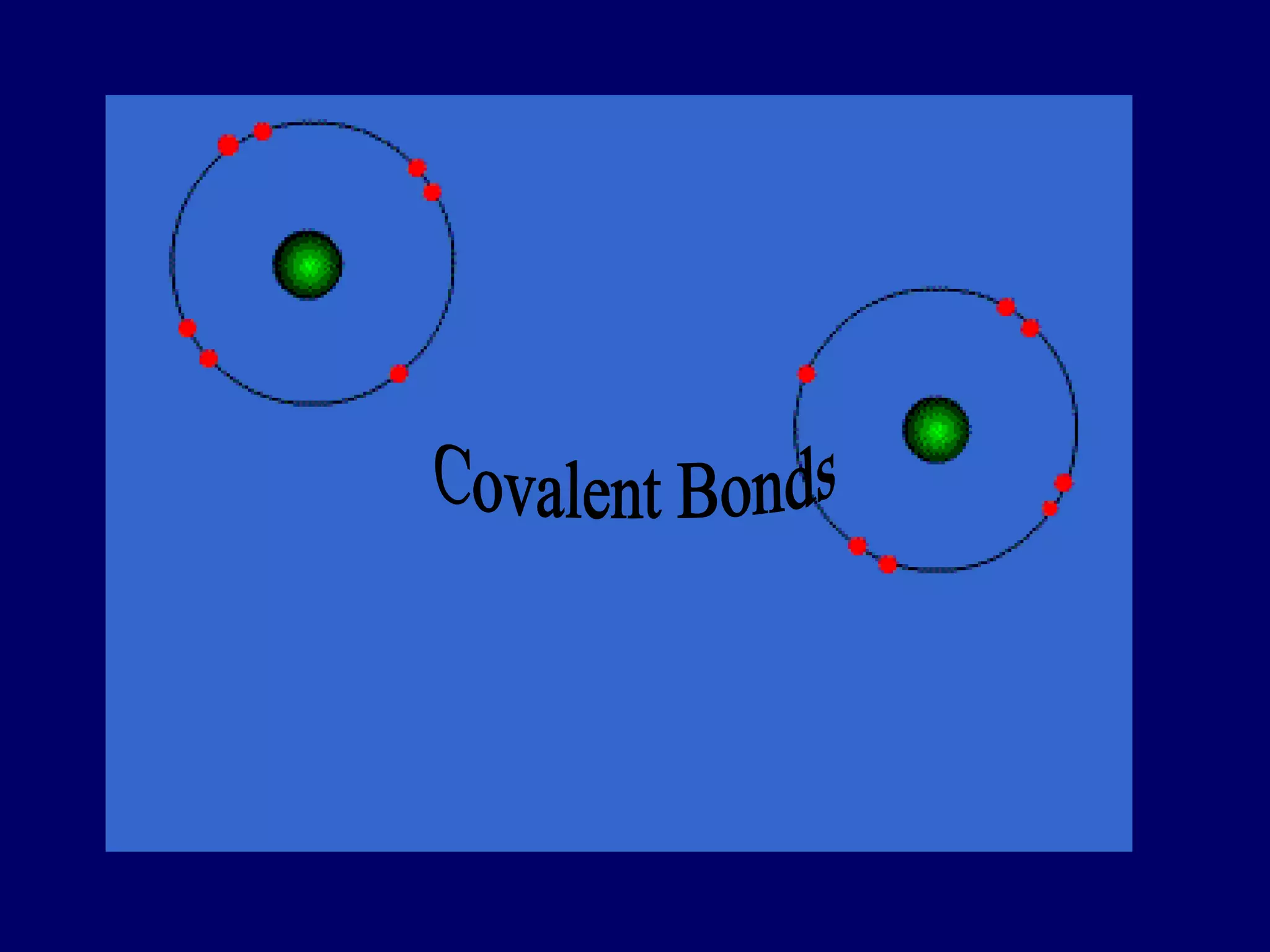
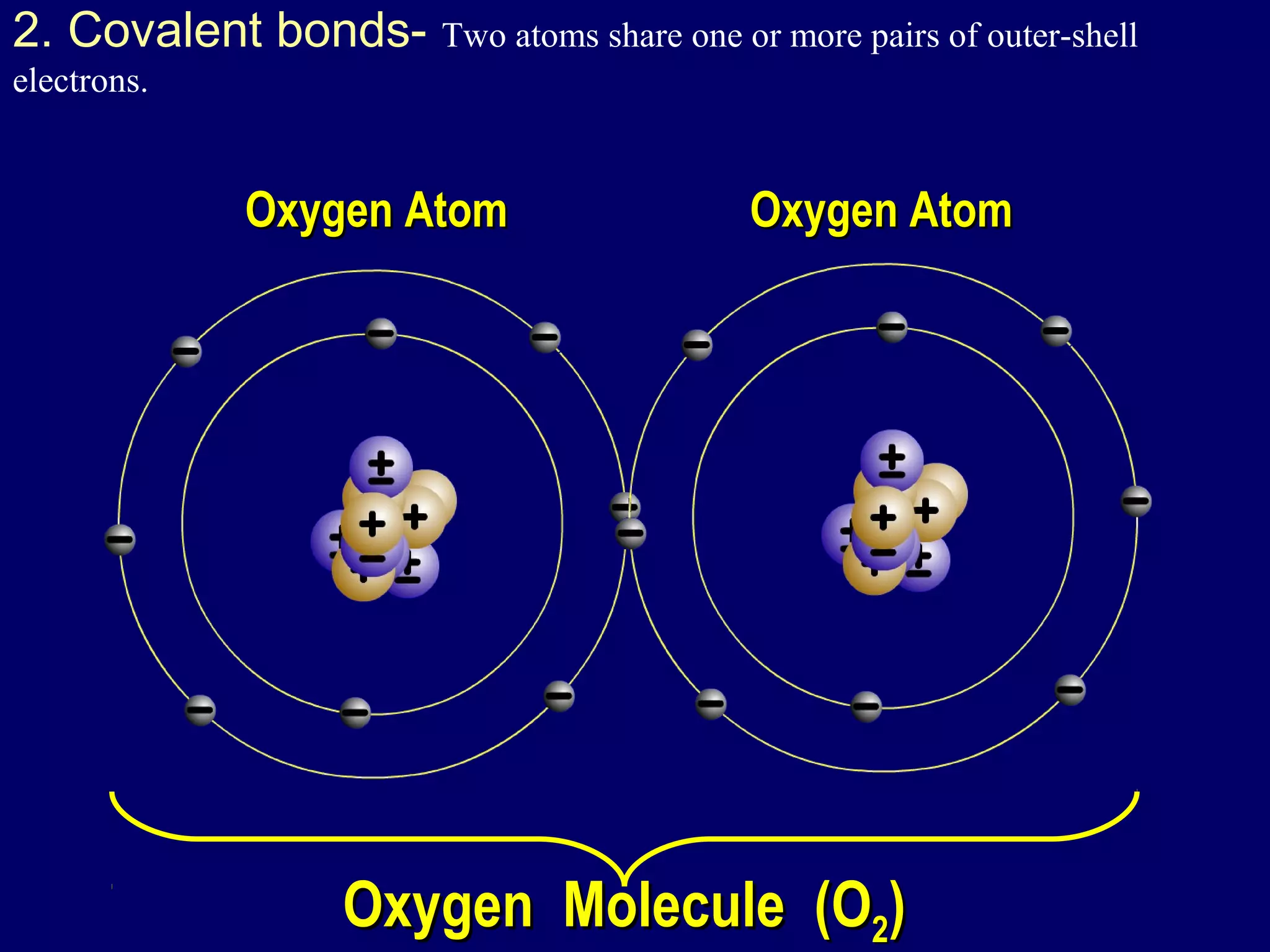
2. Covalent bonds- Two atoms share one or more pairs of outer-shell 
electrons. 
OOxxyyggeenn AAttoomm OOxxyyggeenn AAttoomm 
OOxxyyggeenn MMoolleeccuullee ((OO22))
METALLIC BOND 
bond found in 
metals; holds metal 
atoms together 
very strongly
Metallic Bond 
• Formed between atoms of metallic elements 
• Electron cloud around atoms 
• Good conductors at all states, lustrous, very 
high melting points 
• Examples; Na, Fe, Al, Au, Co

types of chemical bonding

  • 1.
    TYPES OF CHEMICAL BONDING ASWATHY M PHYSICAL SCIENCE N.S.S.T.C PANDALAM REG: NO:- 13304004
  • 2.
    1. Ionic bonds– 2. Covalent bonds – 3. Metallic bonds
  • 3.
    IONIC BOND bondformed between two ions by the transfer of electrons
  • 4.
    Ionic Bond •Between atoms of metals and nonmetals with very different electronegativity • Bond formed by transfer of electrons • Produce charged ions all states. Conductors and have high melting point. • Examples; NaCl, CaCl2, K2O
  • 6.
    1). Ionic bond– electron from Na is transferred to Cl, this causes a charge imbalance in each atom. The Na becomes (Na+) and the Cl becomes (Cl-), charged particles or ions.
  • 7.
    COVALENT BOND bondformed by the sharing of electrons
  • 8.
    Covalent Bond •Between nonmetallic elements of similar electronegativity. • Formed by sharing electron pairs • Stable non-ionizing particles, they are not conductors at any state • Examples; O2, CO2, C2H6, H2O, SiC
  • 10.
    Bonds in allthe polyatomic ions and diatomics are all covalent bonds
  • 11.
    2. Covalent bonds-Two atoms share one or more pairs of outer-shell electrons. OOxxyyggeenn AAttoomm OOxxyyggeenn AAttoomm OOxxyyggeenn MMoolleeccuullee ((OO22))
  • 12.
    METALLIC BOND bondfound in metals; holds metal atoms together very strongly
  • 13.
    Metallic Bond •Formed between atoms of metallic elements • Electron cloud around atoms • Good conductors at all states, lustrous, very high melting points • Examples; Na, Fe, Al, Au, Co