LAB SAFETY RULES,
SAFETY SYMBOLS AND
LAB TOOLS
EXPERIMENTAL SKILLS (PART 1)
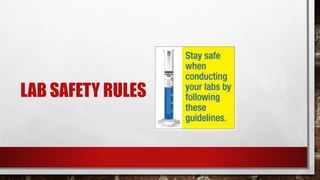
LAB SAFETY RULES
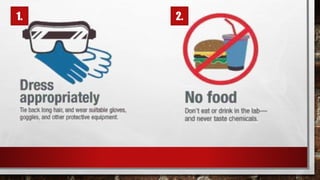
1. 2.
3. 4.
5.
6.
7.
8. 9. 10.
SAFETY SYMBOLS
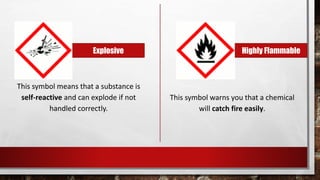
This symbol means that a substance is
self-reactive and can explode if not
handled correctly.
Explosive Highly Flammable
This symbol warns you that a chemical
will catch fire easily.
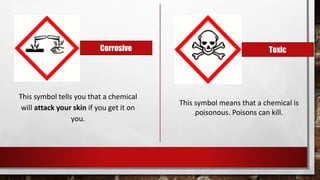
Corrosive
This symbol tells you that a chemical
will attack your skin if you get it on
you.
Toxic
This symbol means that a chemical is
poisonous. Poisons can kill.
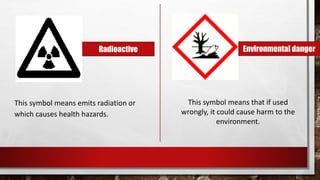
Radioactive
This symbol means emits radiation or
which causes health hazards.
Environmental danger
This symbol means that if used
wrongly, it could cause harm to the
environment.
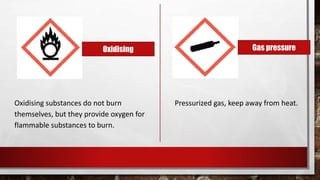
Oxidising
Oxidising substances do not burn
themselves, but they provide oxygen for
flammable substances to burn.
Gas pressure
Pressurized gas, keep away from heat.
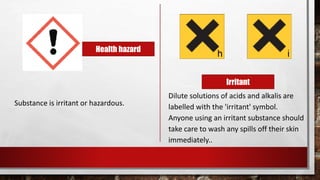
Health hazard
Substance is irritant or hazardous.
Irritant
Dilute solutions of acids and alkalis are
labelled with the 'irritant' symbol.
Anyone using an irritant substance should
take care to wash any spills off their skin
immediately..
LAB TOOLS
When you perform an investigation and then, afterwards, write down what
happened; you may need to draw how the apparatus was arranged.
To save time in science, there are special ways to draw the apparatus.
In the next set of slides, you will know names of different apparatus, the use and 2D
drawing of each apparatus.
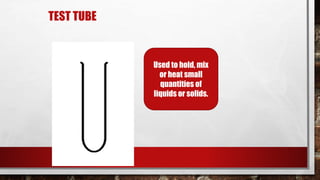
TEST TUBE
Used to hold, mix
or heat small
quantities of
liquids or solids.
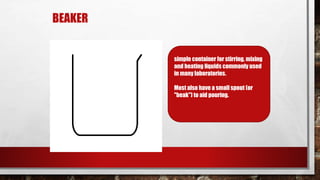
BEAKER
simple container for stirring, mixing
and heating liquids commonly used
in many laboratories.
Most also have a small spout (or
"beak") to aid pouring.
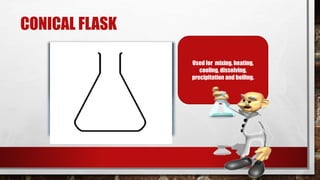
CONICAL FLASK
Used for mixing, heating,
cooling, dissolving,
precipitation and boiling.
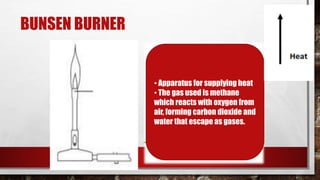
BUNSEN BURNER
• Apparatus for supplying heat
• The gas used is methane
which reacts with oxygen from
air, forming carbon dioxide and
water that escape as gases.
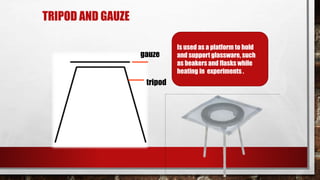
TRIPOD AND GAUZE
tripod
gauze
Is used as a platform to hold
and support glassware, such
as beakers and flasks while
heating in experiments .
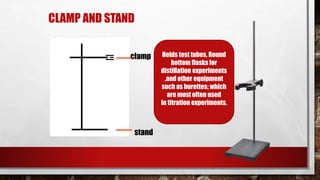
CLAMP AND STAND
stand
clamp Holds test tubes, Round
bottom flasks for
distillation experiments
,and other equipment
such as burettes; which
are most often used
in titration experiments.
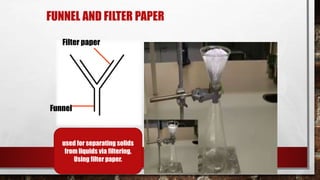
FUNNEL AND FILTER PAPER
Funnel
Filter paper
used for separating solids
from liquids via filtering,
Using filter paper.
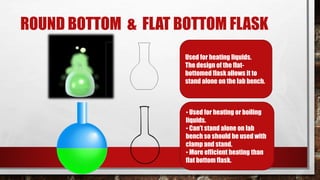
ROUND BOTTOM & FLAT BOTTOM FLASK
Used for heating liquids.
The design of the flat-
bottomed flask allows it to
stand alone on the lab bench.
• Used for heating or boiling
liquids.
• Can’t stand alone on lab
bench so should be used with
clamp and stand.
• More efficient heating than
flat bottom flask.
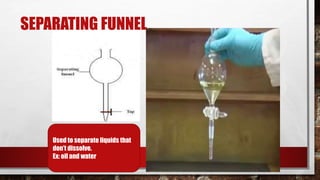
SEPARATING FUNNEL
Used to separate liquids that
don’t dissolve.
Ex: oil and water
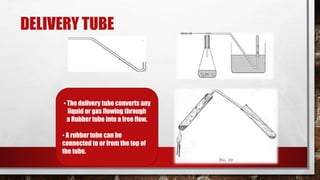
DELIVERY TUBE
• The delivery tube converts any
liquid or gas flowing through
a Rubber tube into a free flow.
• A rubber tube can be
connected to or from the top of
the tube.

Lab safety rules, safety symbols and tools

  • 1.
    LAB SAFETY RULES, SAFETYSYMBOLS AND LAB TOOLS EXPERIMENTAL SKILLS (PART 1)
  • 2.
  • 3.
  • 4.
  • 5.
  • 6.
  • 7.
  • 8.
  • 9.
    This symbol meansthat a substance is self-reactive and can explode if not handled correctly. Explosive Highly Flammable This symbol warns you that a chemical will catch fire easily.
  • 10.
    Corrosive This symbol tellsyou that a chemical will attack your skin if you get it on you. Toxic This symbol means that a chemical is poisonous. Poisons can kill.
  • 11.
    Radioactive This symbol meansemits radiation or which causes health hazards. Environmental danger This symbol means that if used wrongly, it could cause harm to the environment.
  • 12.
    Oxidising Oxidising substances donot burn themselves, but they provide oxygen for flammable substances to burn. Gas pressure Pressurized gas, keep away from heat.
  • 13.
    Health hazard Substance isirritant or hazardous. Irritant Dilute solutions of acids and alkalis are labelled with the 'irritant' symbol. Anyone using an irritant substance should take care to wash any spills off their skin immediately..
  • 14.
  • 15.
    When you performan investigation and then, afterwards, write down what happened; you may need to draw how the apparatus was arranged. To save time in science, there are special ways to draw the apparatus. In the next set of slides, you will know names of different apparatus, the use and 2D drawing of each apparatus.
  • 18.
    TEST TUBE Used tohold, mix or heat small quantities of liquids or solids.
  • 19.
    BEAKER simple container forstirring, mixing and heating liquids commonly used in many laboratories. Most also have a small spout (or "beak") to aid pouring.
  • 20.
    CONICAL FLASK Used formixing, heating, cooling, dissolving, precipitation and boiling.
  • 21.
    BUNSEN BURNER • Apparatusfor supplying heat • The gas used is methane which reacts with oxygen from air, forming carbon dioxide and water that escape as gases.
  • 22.
    TRIPOD AND GAUZE tripod gauze Isused as a platform to hold and support glassware, such as beakers and flasks while heating in experiments .
  • 23.
    CLAMP AND STAND stand clampHolds test tubes, Round bottom flasks for distillation experiments ,and other equipment such as burettes; which are most often used in titration experiments.
  • 24.
    FUNNEL AND FILTERPAPER Funnel Filter paper used for separating solids from liquids via filtering, Using filter paper.
  • 25.
    ROUND BOTTOM &FLAT BOTTOM FLASK Used for heating liquids. The design of the flat- bottomed flask allows it to stand alone on the lab bench. • Used for heating or boiling liquids. • Can’t stand alone on lab bench so should be used with clamp and stand. • More efficient heating than flat bottom flask.
  • 26.
    SEPARATING FUNNEL Used toseparate liquids that don’t dissolve. Ex: oil and water
  • 27.
    DELIVERY TUBE • Thedelivery tube converts any liquid or gas flowing through a Rubber tube into a free flow. • A rubber tube can be connected to or from the top of the tube.