PEOPLE AND
EARTH’S
ECOSYSTEM
HUMAN IMPACTS ON THE ENVIRONMENT
OBJECTIVES
 1. Express understanding of the complex
interactions of humans and ecosystem in
the world.
 2. Enumerate the biotic and abiotic
factors that contributes to the survival of
an organisms.
LESSON 1 : EARTH’S ECOSYSTEM
LESSON OUTCOMES:
1. Discuss the concepts, types and basic
structure of ecosystem.
2. Differentiate the biotic and abiotic factors
of the ecosystem.
ECOLOGY
 From the Greek word “oikos” which means
“house”
 The study of houses or habitats or more
broadly, of organisms and their
relationships to environment.
 Modern scientist defines it as the study of
the structure and function of nature.
ECOSYSTEM
 Includes all the different organisms living in
a certain area along with their physical
environment.
 “ Eco” refers to the environment, while
“system” refers to a collection of related
parts that works as a whole.
PARTS OF THE ECOSYSTEM
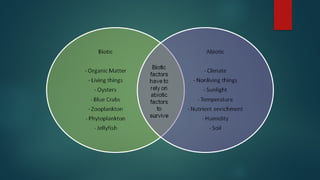
 Abiotic or the non-living
- This term includes the prefix ”a”
which means “not’ or “without”
 Biotic or the living
- This term includes the root up “bio”
which means living
General Characteristics of an
Ecosystem
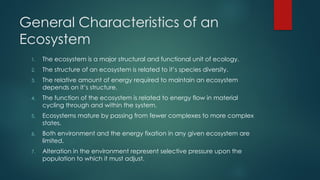
1. The ecosystem is a major structural and functional unit of ecology.
2. The structure of an ecosystem is related to it’s species diversity.
3. The relative amount of energy required to maintain an ecosystem
depends on it’s structure.
4. The function of the ecosystem is related to energy flow in material
cycling through and within the system.
5. Ecosystems mature by passing from fewer complexes to more complex
states.
6. Both environment and the energy fixation in any given ecosystem are
limited.
7. Alteration in the environment represent selective pressure upon the
population to which it must adjust.
ASPECTS OF ECOSYSTEM
1. Structural Aspect
a. Description of the arrangement
b. Types and numbers of species and their life
histories
2. Functional Aspect
a. Flow of energy
b. Cycling of materials
RELATIONSHIPS AMONG
ORGANISMS
1. Effects
2. Competition
3. Neutralism
4. Protoco-operation and mutualism
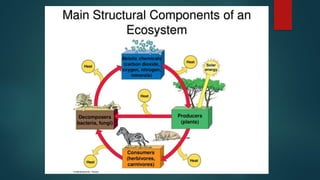
COMPONENTS OF ECOSYSTEM
 Solar Energy
 Producers (Plants)
 Consumers (of Plants, Insects, and
Animals)
 Decomposers (Bacteria and Fungi)
 Nutrients (Important for growth- carbon
dioxide, oxygen, nitrogen, minerals)
SPECIES AND THEIR NATURAL
HABITAT
SPECIES
 The smallest unit of classification for biological organisms.
INDIVIDUALS
 Species that are alike in structure and function. Individual of the same
species can breed with each other.
HABITAT
 The place where an organism can meet the need of specific conditions
to survive and reproduce. The structure of a habitat describe the shape,
size, and placement of abiotic and biotic features of an ecosystem.
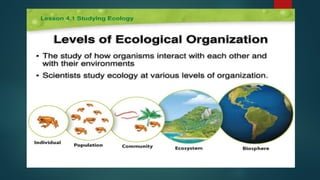
LEVELS OF ECOLOGICAL
ORGANIZATION
POPULATION
 All the individuals of a single species inhabiting a certain area
COMMUNITY
 All the populations of different species that share an area
ECOSYSTEM
 Community along with the nonliving elements of the forest(like soil, water,
sunlight)
BIOME
 Ecosystems around the planet with similar characteristics
BIOSPHERE
 All the biomes on earth
NICHES
 It is the way of life or the role of a species pursues within its habitat.
 An organism’s niche is composed of both biotic and abiotic parts.
 Biotic factors that defines a niche are food sources and predators.
 Abiotic factors are the amount of sunlight and water,
 Within a niche, a species satisfies its basic needs in four categories:
- Food
- Water
- Shelter
- Reproduction
 An organism’s niche includes how much water it needs, what it eats, where it
lives, what it uses for shelter from enemies and the elements, when and how it
reproduces, how its young and such factors makes up its life.
ECOLOGICAL DISTURBANCES
 A change in an ecosystem caused by an
event that disrupts or changes all or part
of an ecosystem.
 It can have many effects on both the
abiotic, non-living, and biotic living.
ECOSYSTEM CHANGE
 It is an event that cause disturbances that alter
the structure and function of ecosystems.
 Some organisms will thrive in a changed area,
others will be displaced or killed.
 When studying ecological disturbances consider
the following:
- Types of disturbances
- Intensity or how severe the changes or
destruction
- Frequency or how often it occurs
EVIDENCES OF DISTURBANCES
 Charcoal in soil
 Jagged edge stumps
 Compacted soil
 Fresh sand or silt deposits
 Rounded rocks
 Single plant species in the forest
 Burn scars on trees
 Numerous snags
 Pole-sized trees bent over
 Group of dead or dying trees
 Debris in streamside vegetation
 Ash and pumice mixed in soil
 Even-aged trees
 Tree tops missing

Lesson-1-Earths-Ecosystem, Lesson 1and 2

  • 1.
  • 2.
    OBJECTIVES  1. Expressunderstanding of the complex interactions of humans and ecosystem in the world.  2. Enumerate the biotic and abiotic factors that contributes to the survival of an organisms.
  • 3.
    LESSON 1 :EARTH’S ECOSYSTEM LESSON OUTCOMES: 1. Discuss the concepts, types and basic structure of ecosystem. 2. Differentiate the biotic and abiotic factors of the ecosystem.
  • 4.
    ECOLOGY  From theGreek word “oikos” which means “house”  The study of houses or habitats or more broadly, of organisms and their relationships to environment.  Modern scientist defines it as the study of the structure and function of nature.
  • 5.
    ECOSYSTEM  Includes allthe different organisms living in a certain area along with their physical environment.  “ Eco” refers to the environment, while “system” refers to a collection of related parts that works as a whole.
  • 6.
    PARTS OF THEECOSYSTEM  Abiotic or the non-living - This term includes the prefix ”a” which means “not’ or “without”  Biotic or the living - This term includes the root up “bio” which means living
  • 8.
    General Characteristics ofan Ecosystem 1. The ecosystem is a major structural and functional unit of ecology. 2. The structure of an ecosystem is related to it’s species diversity. 3. The relative amount of energy required to maintain an ecosystem depends on it’s structure. 4. The function of the ecosystem is related to energy flow in material cycling through and within the system. 5. Ecosystems mature by passing from fewer complexes to more complex states. 6. Both environment and the energy fixation in any given ecosystem are limited. 7. Alteration in the environment represent selective pressure upon the population to which it must adjust.
  • 9.
    ASPECTS OF ECOSYSTEM 1.Structural Aspect a. Description of the arrangement b. Types and numbers of species and their life histories 2. Functional Aspect a. Flow of energy b. Cycling of materials
  • 10.
    RELATIONSHIPS AMONG ORGANISMS 1. Effects 2.Competition 3. Neutralism 4. Protoco-operation and mutualism
  • 11.
    COMPONENTS OF ECOSYSTEM Solar Energy  Producers (Plants)  Consumers (of Plants, Insects, and Animals)  Decomposers (Bacteria and Fungi)  Nutrients (Important for growth- carbon dioxide, oxygen, nitrogen, minerals)
  • 13.
    SPECIES AND THEIRNATURAL HABITAT SPECIES  The smallest unit of classification for biological organisms. INDIVIDUALS  Species that are alike in structure and function. Individual of the same species can breed with each other. HABITAT  The place where an organism can meet the need of specific conditions to survive and reproduce. The structure of a habitat describe the shape, size, and placement of abiotic and biotic features of an ecosystem.
  • 14.
    LEVELS OF ECOLOGICAL ORGANIZATION POPULATION All the individuals of a single species inhabiting a certain area COMMUNITY  All the populations of different species that share an area ECOSYSTEM  Community along with the nonliving elements of the forest(like soil, water, sunlight) BIOME  Ecosystems around the planet with similar characteristics BIOSPHERE  All the biomes on earth
  • 16.
    NICHES  It isthe way of life or the role of a species pursues within its habitat.  An organism’s niche is composed of both biotic and abiotic parts.  Biotic factors that defines a niche are food sources and predators.  Abiotic factors are the amount of sunlight and water,  Within a niche, a species satisfies its basic needs in four categories: - Food - Water - Shelter - Reproduction  An organism’s niche includes how much water it needs, what it eats, where it lives, what it uses for shelter from enemies and the elements, when and how it reproduces, how its young and such factors makes up its life.
  • 17.
    ECOLOGICAL DISTURBANCES  Achange in an ecosystem caused by an event that disrupts or changes all or part of an ecosystem.  It can have many effects on both the abiotic, non-living, and biotic living.
  • 18.
    ECOSYSTEM CHANGE  Itis an event that cause disturbances that alter the structure and function of ecosystems.  Some organisms will thrive in a changed area, others will be displaced or killed.  When studying ecological disturbances consider the following: - Types of disturbances - Intensity or how severe the changes or destruction - Frequency or how often it occurs
  • 19.
    EVIDENCES OF DISTURBANCES Charcoal in soil  Jagged edge stumps  Compacted soil  Fresh sand or silt deposits  Rounded rocks  Single plant species in the forest  Burn scars on trees  Numerous snags  Pole-sized trees bent over  Group of dead or dying trees  Debris in streamside vegetation  Ash and pumice mixed in soil  Even-aged trees  Tree tops missing