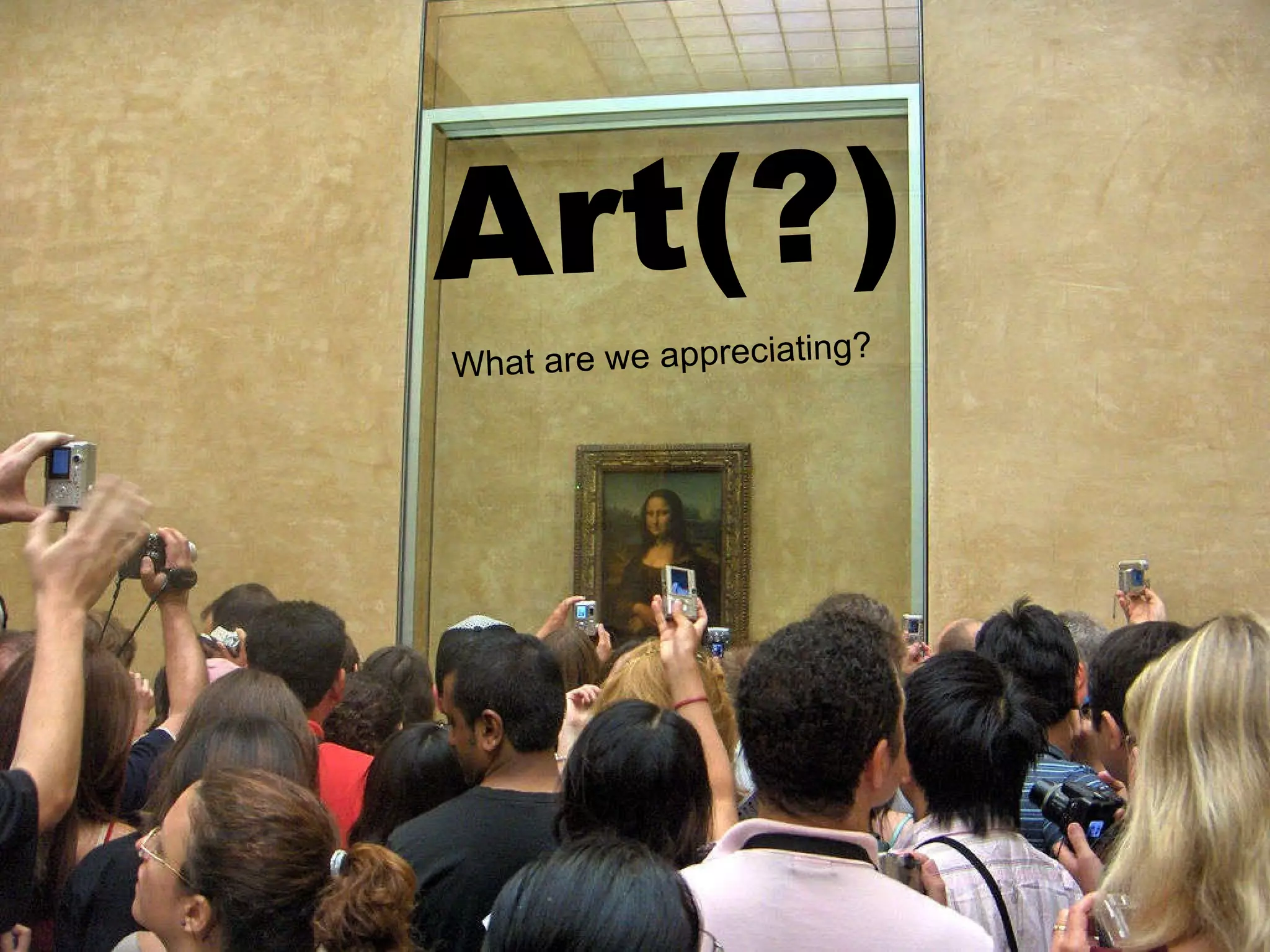
Art(?) What are we appreciating?
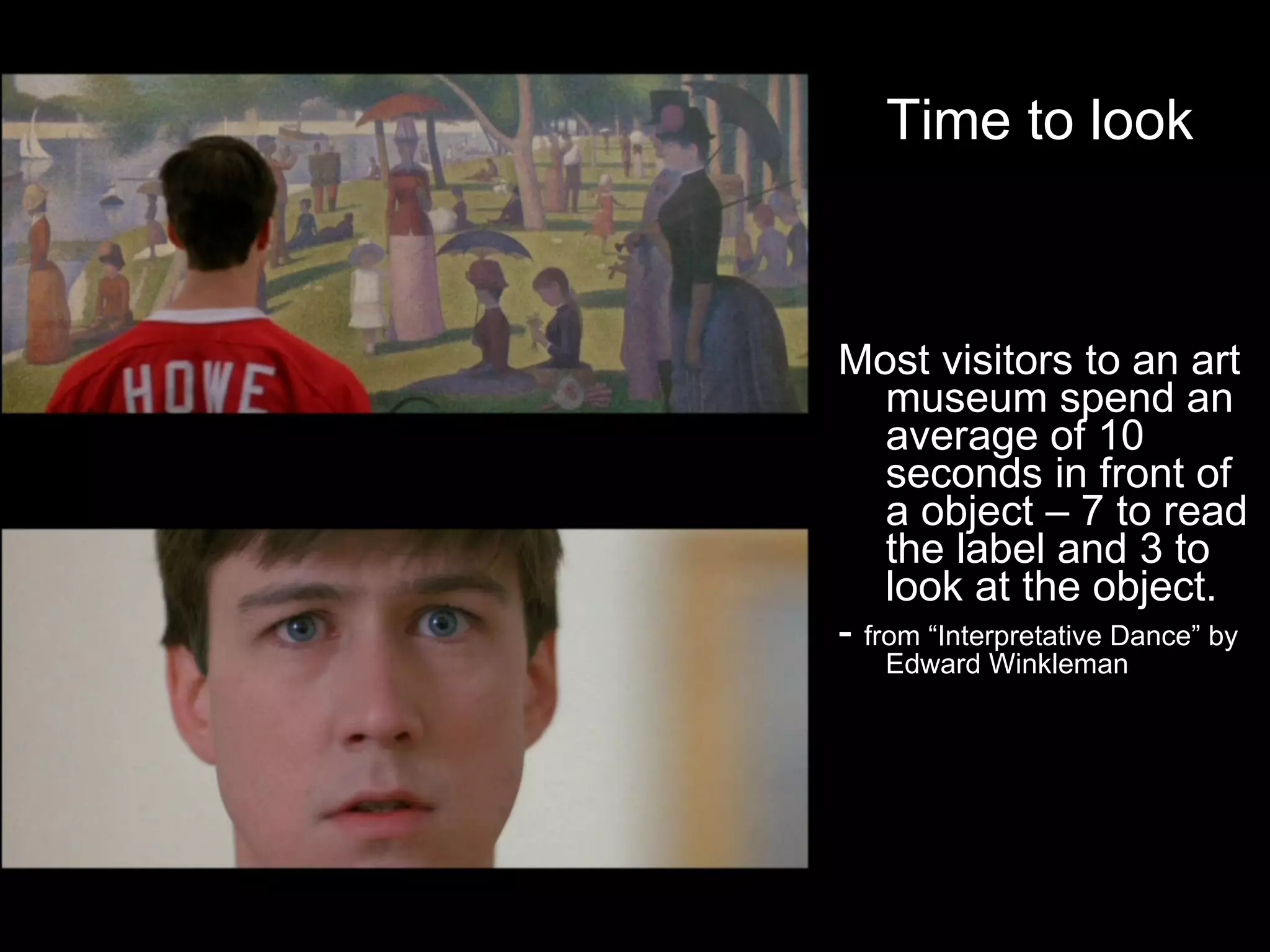
Time to look Most visitors to an art museum spend an average of 10 seconds in front of a object – 7 to read the label and 3 to look at the object. -  from “Interpretative Dance” by Edward Winkleman
Art is made up of: Form:  Media, Style, Composition Content:   Subject matter, Message, Iconography Context:   Knowledge of artist, time & culture
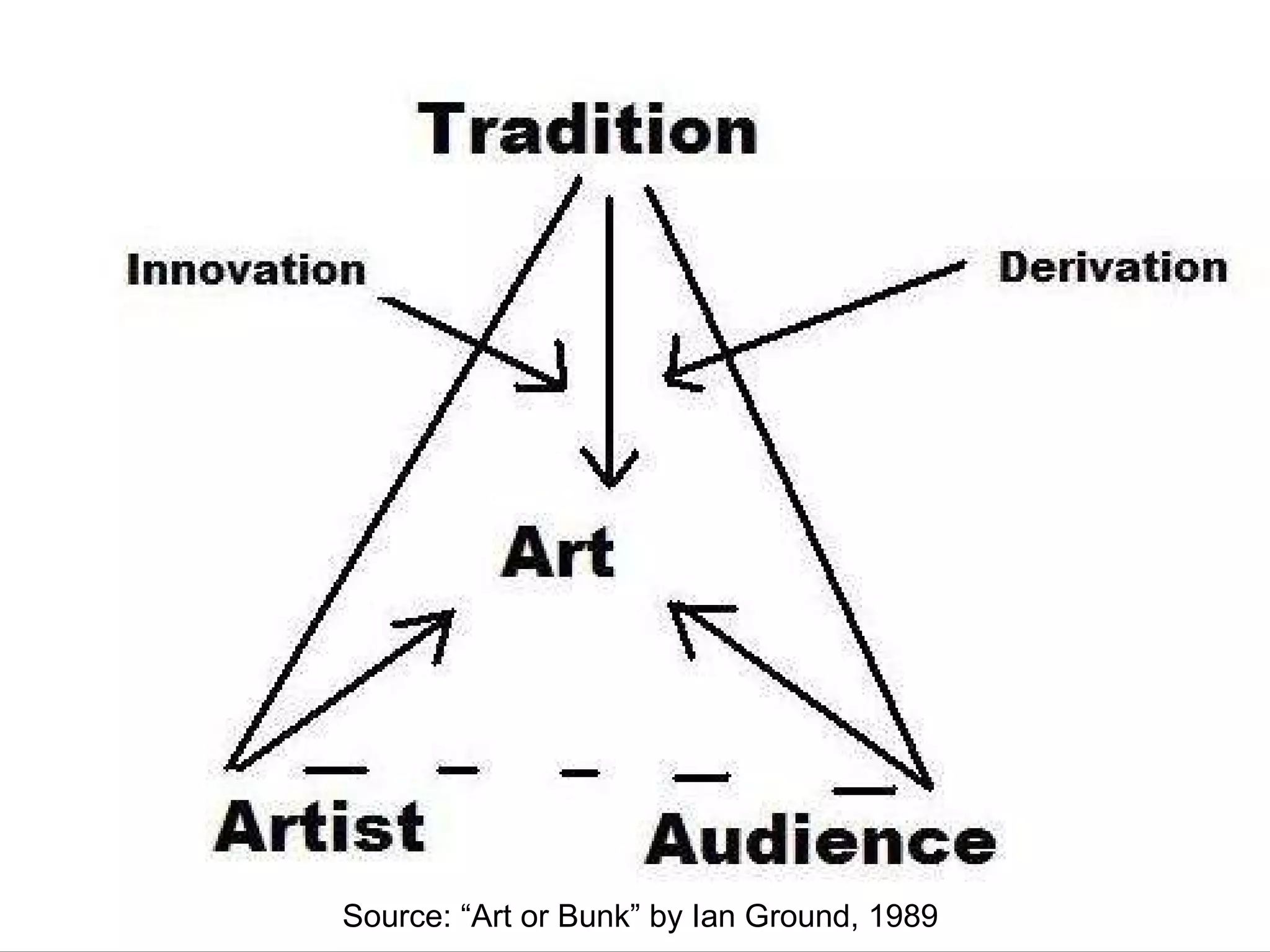
Source: “Art or Bunk” by Ian Ground, 1989
Art and Artist Creator determined – intention/content Art and Audience Viewer determined – eye of the beholder Art and Tradition Historically conditioned object/historical process
What distinguishes Art? without doubt everything is clear Human-made? Certain Materials? Does the material alone make it art? Marble vs the Pieta An idea or intent?  Physical? Limits/Parameters? Physical limits? Time?  A function? Beauty ?  Skill? The audience?
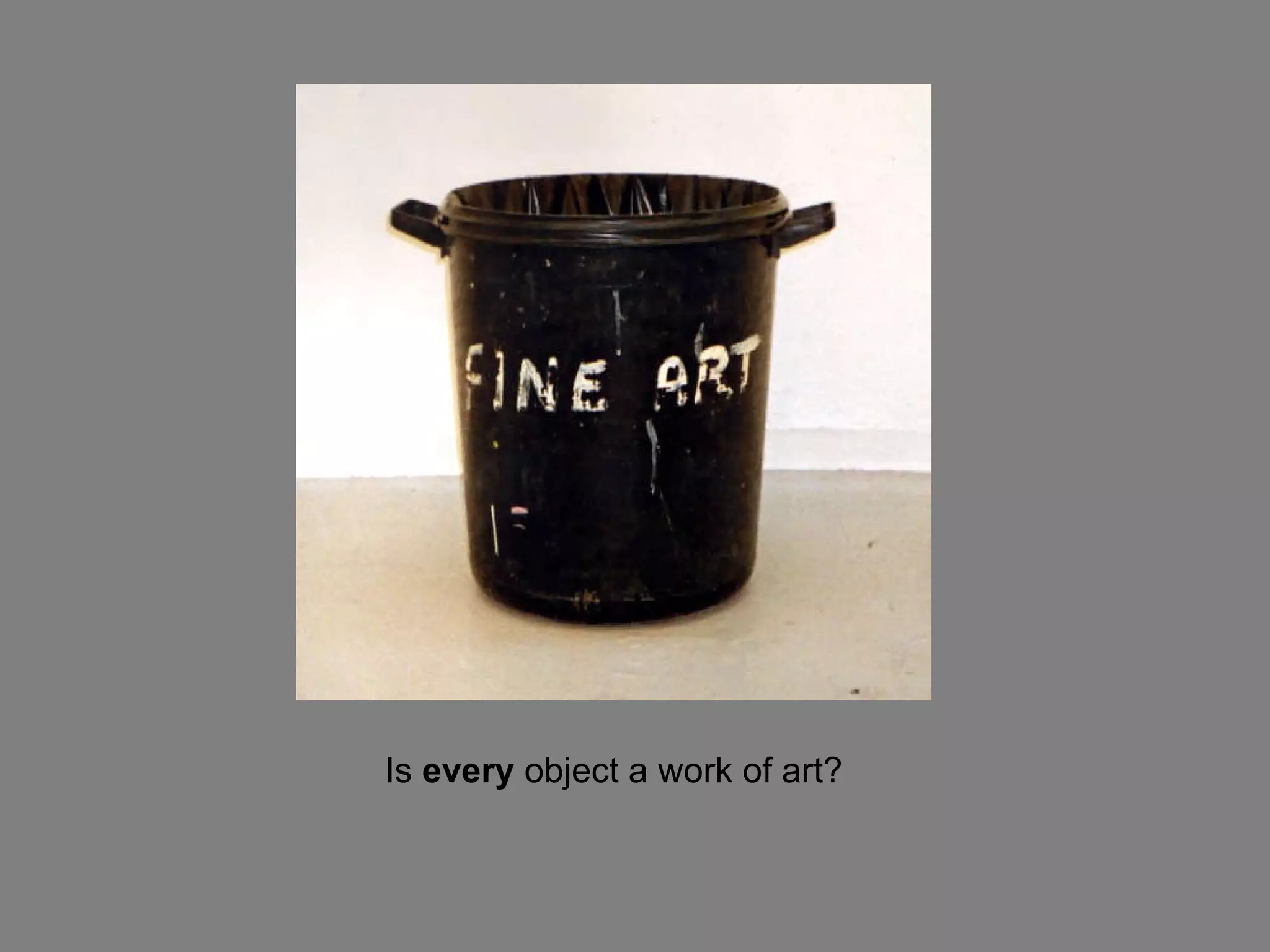
Is  every  object a work of art?
“Our enjoyment and appreciation of works of art in whatever medium is  not  something completely isolated from everyday aspects of human life. All of us, most of the time, make decisions, come to conclusions and above all appreciate and enjoy things in ways which are the same sorts of ways in which we enjoy and understand works of art” Ian Ground
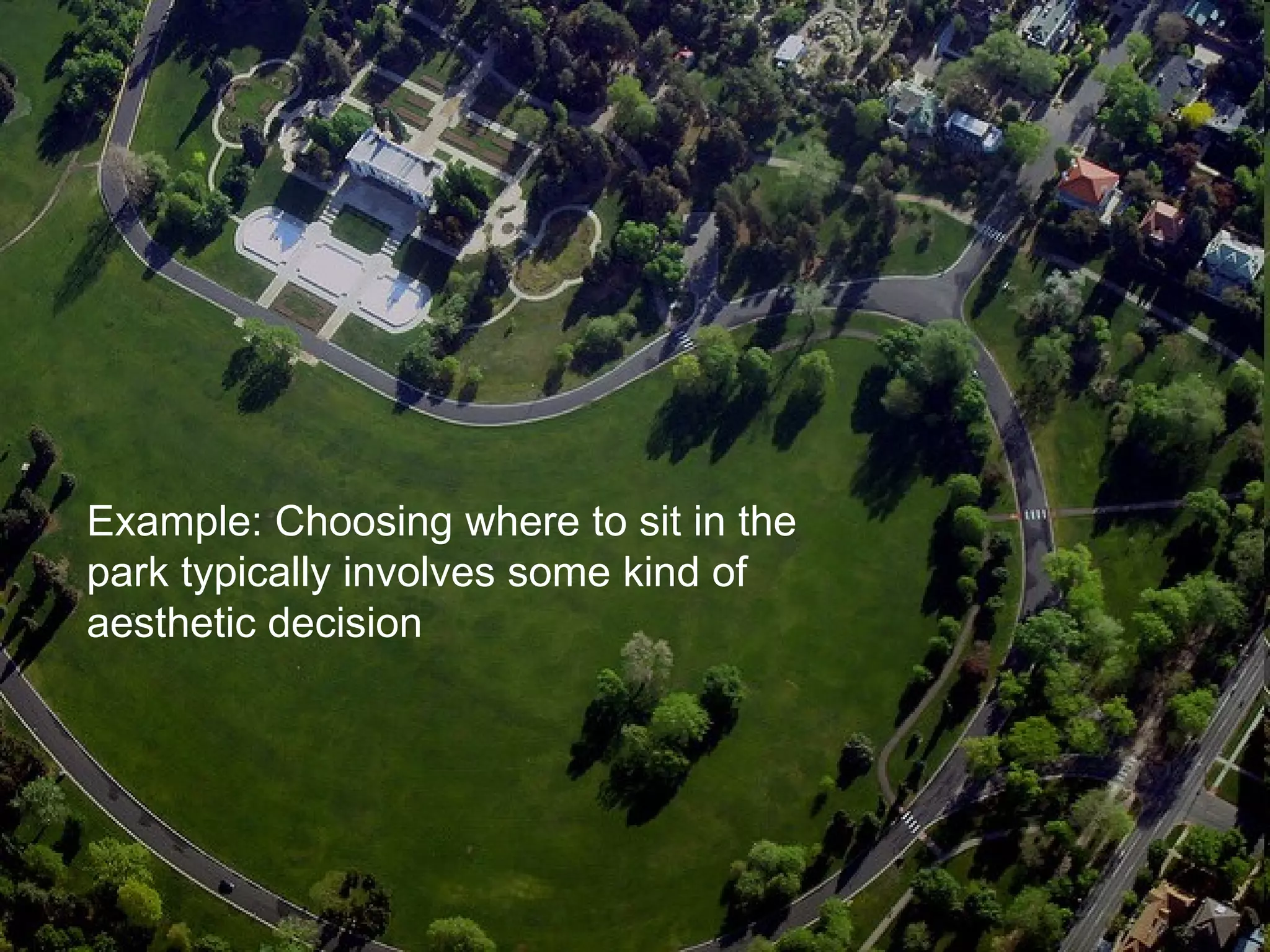
Example: Choosing where to sit in the park typically involves some kind of aesthetic decision
Aesthetics  – a branch of philosophy concerned with feelings aroused in us by sensory experiences such as seeing and hearing (your particular taste or what appeals to you personally)
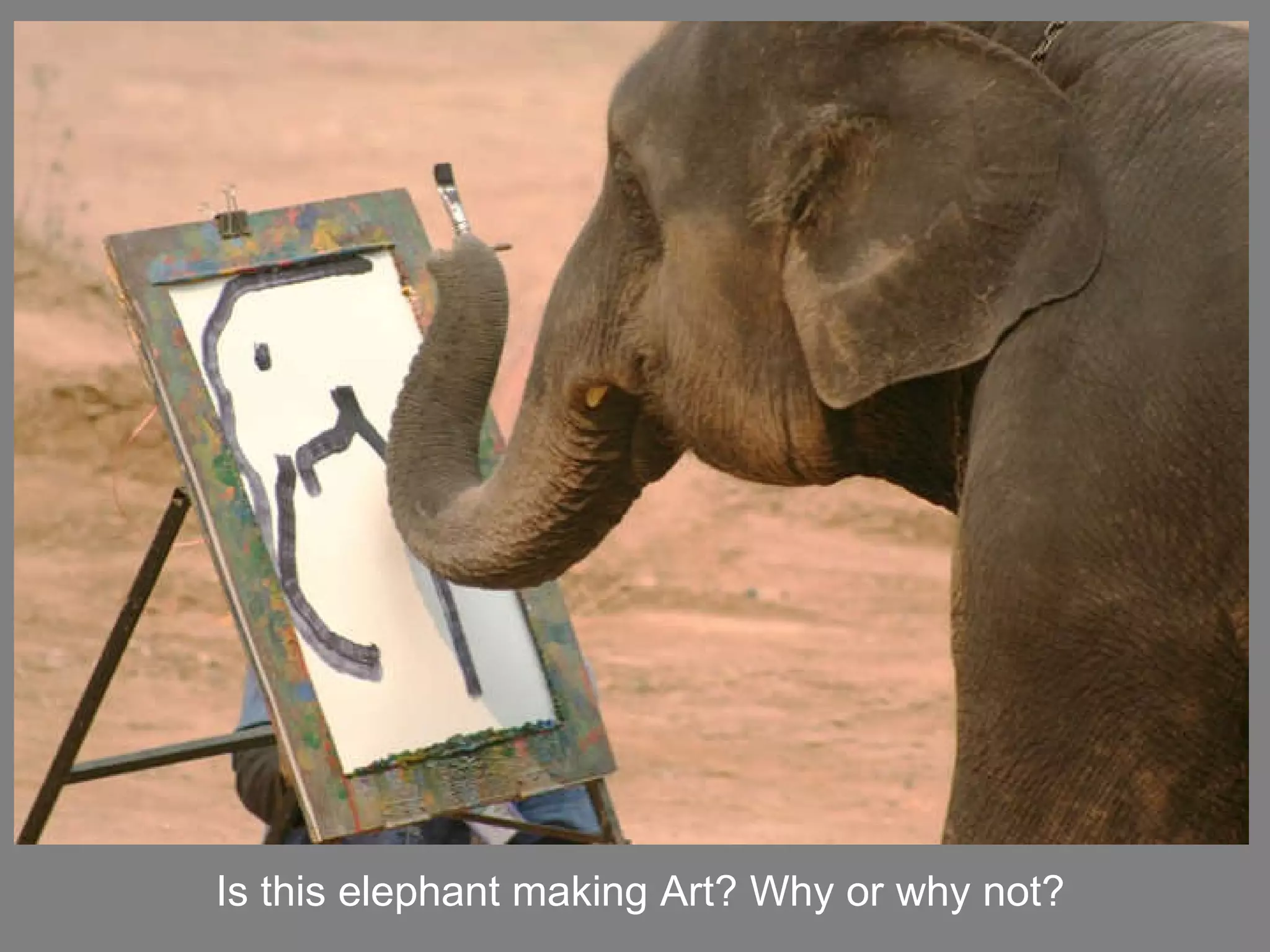
Is this elephant making Art? Why or why not?
Denver Zoo – elephant painting
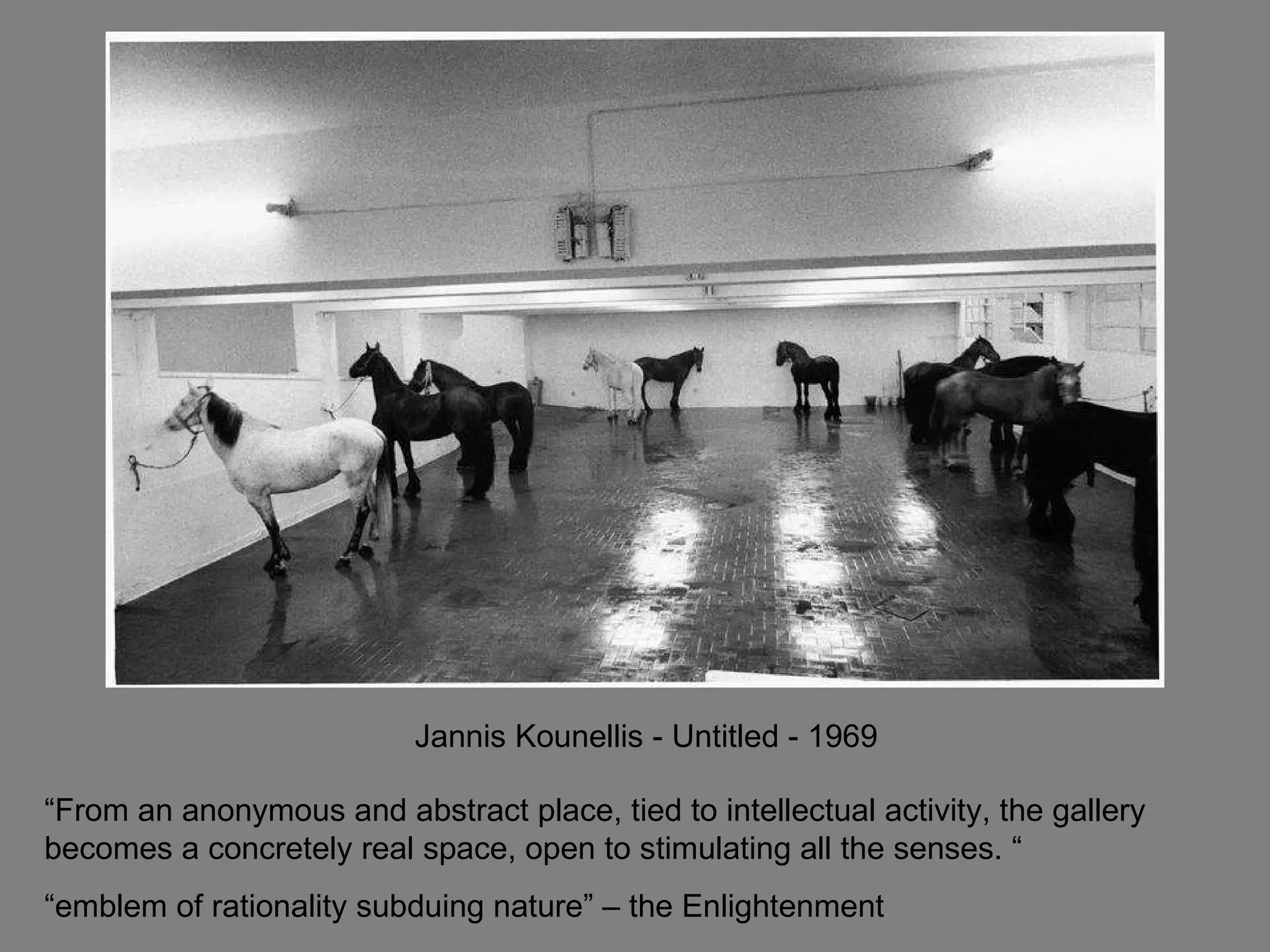
“From an anonymous and abstract place, tied to intellectual activity, the gallery becomes a concretely real space, open to stimulating all the senses. “ “emblem of rationality subduing nature” – the Enlightenment Jannis Kounellis - Untitled - 1969
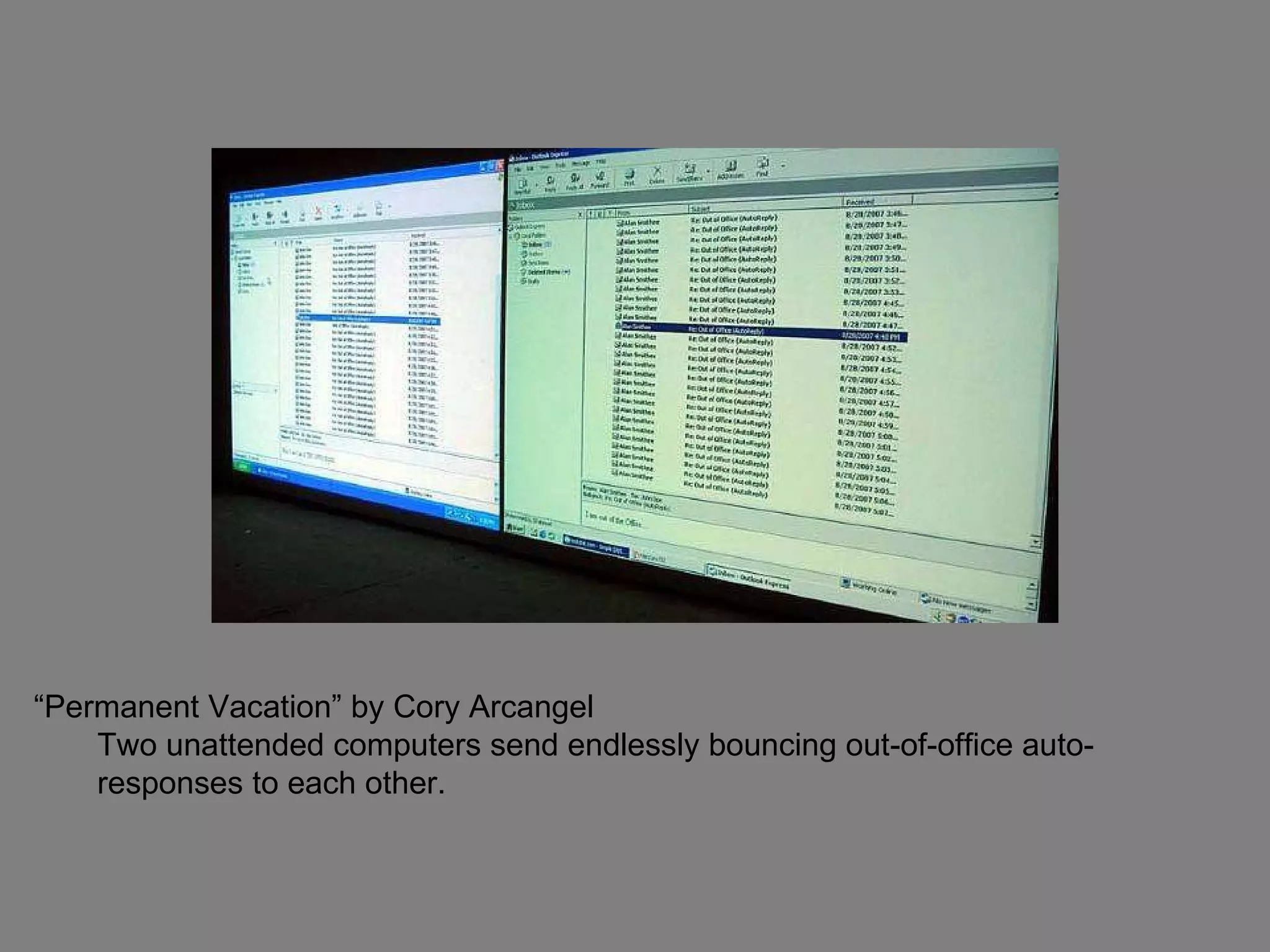
“ Permanent Vacation” by Cory Arcangel  Two unattended computers send endlessly bouncing out-of-office auto-responses to each other.
 
 
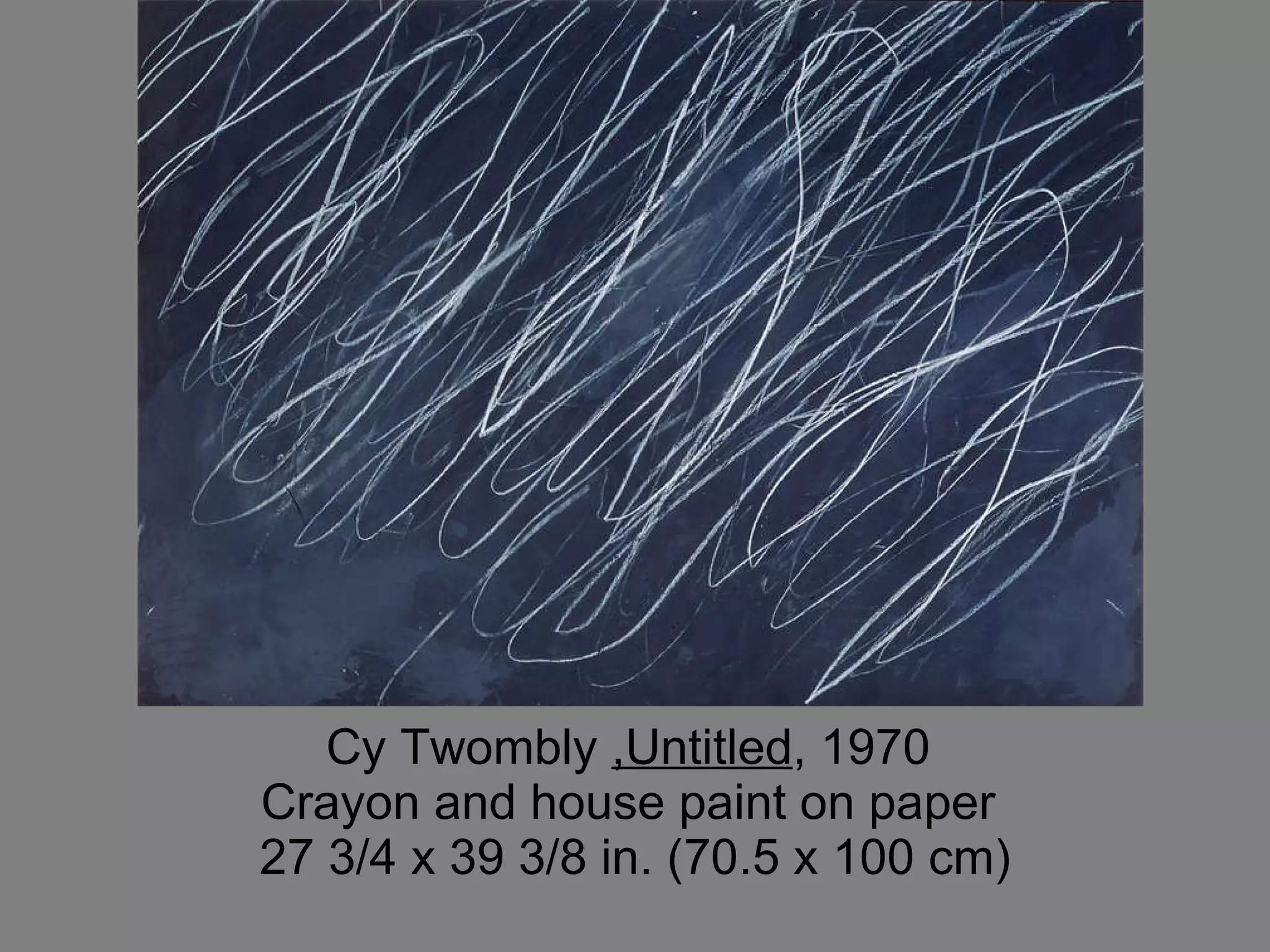
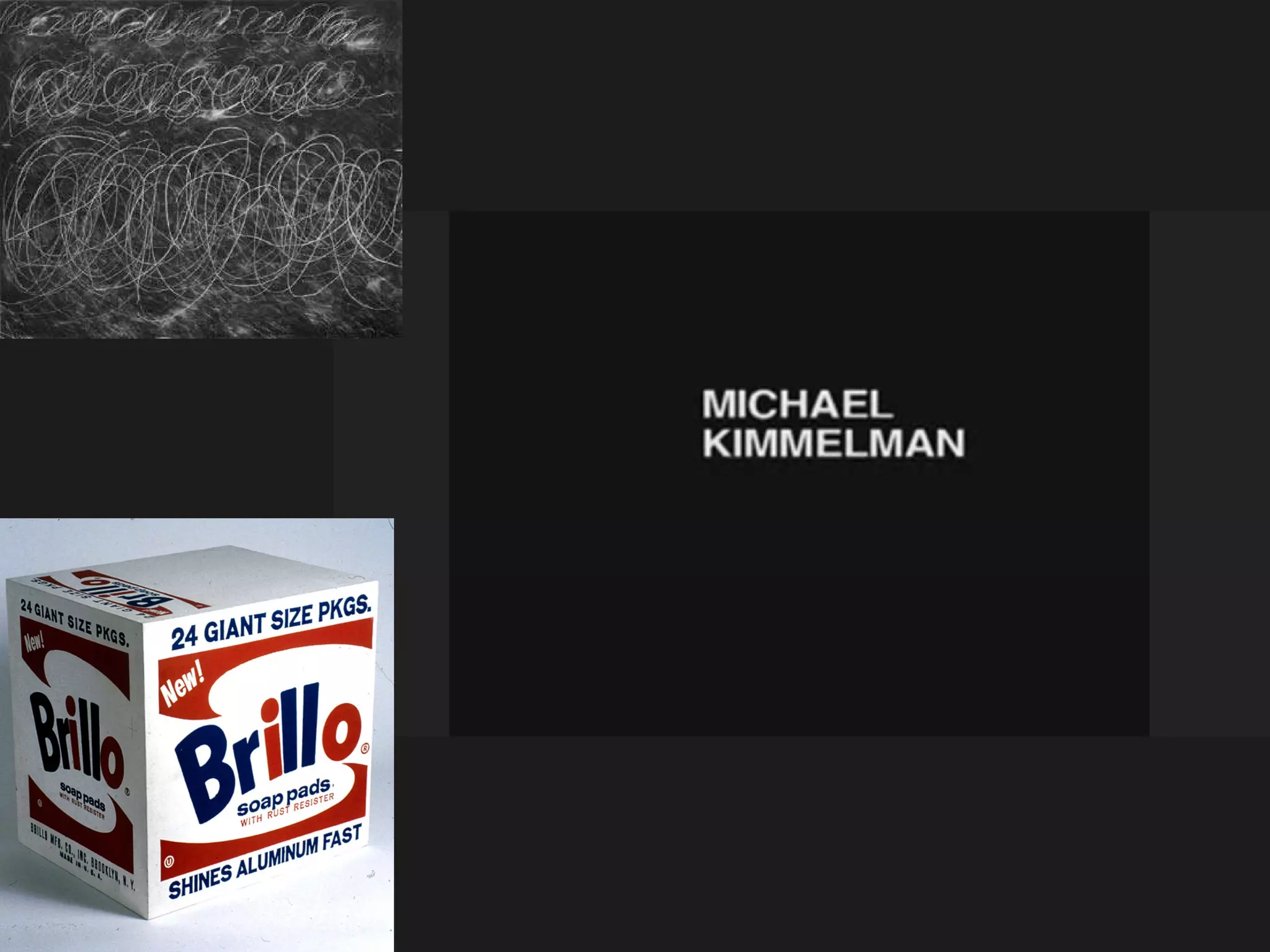
Cy Twombly  ,Untitled , 1970  Crayon and house paint on paper  27 3/4 x 39 3/8 in. (70.5 x 100 cm)
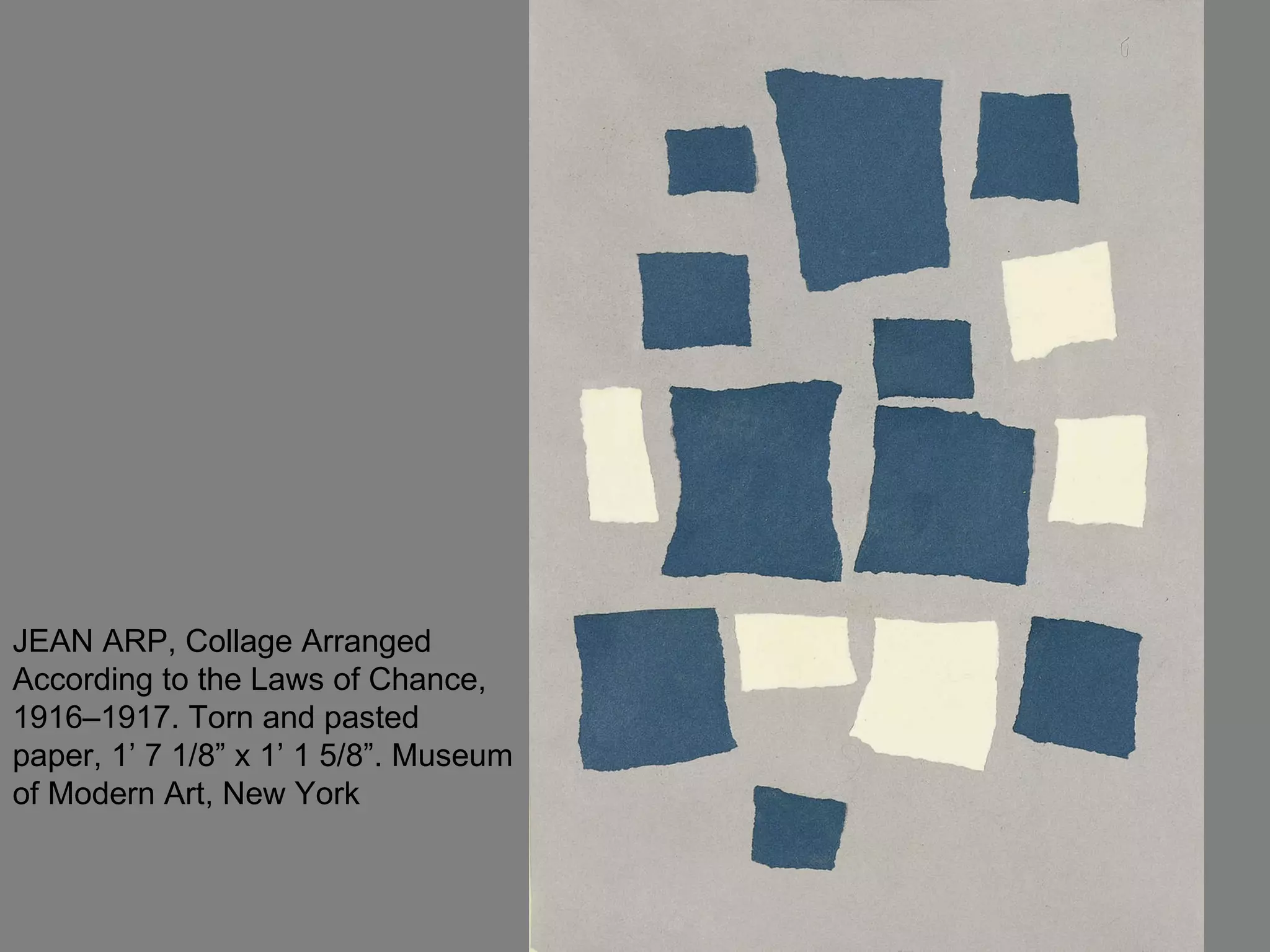
JEAN ARP, Collage Arranged According to the Laws of Chance, 1916–1917. Torn and pasted paper, 1’ 7 1/8” x 1’ 1 5/8”. Museum of Modern Art, New York
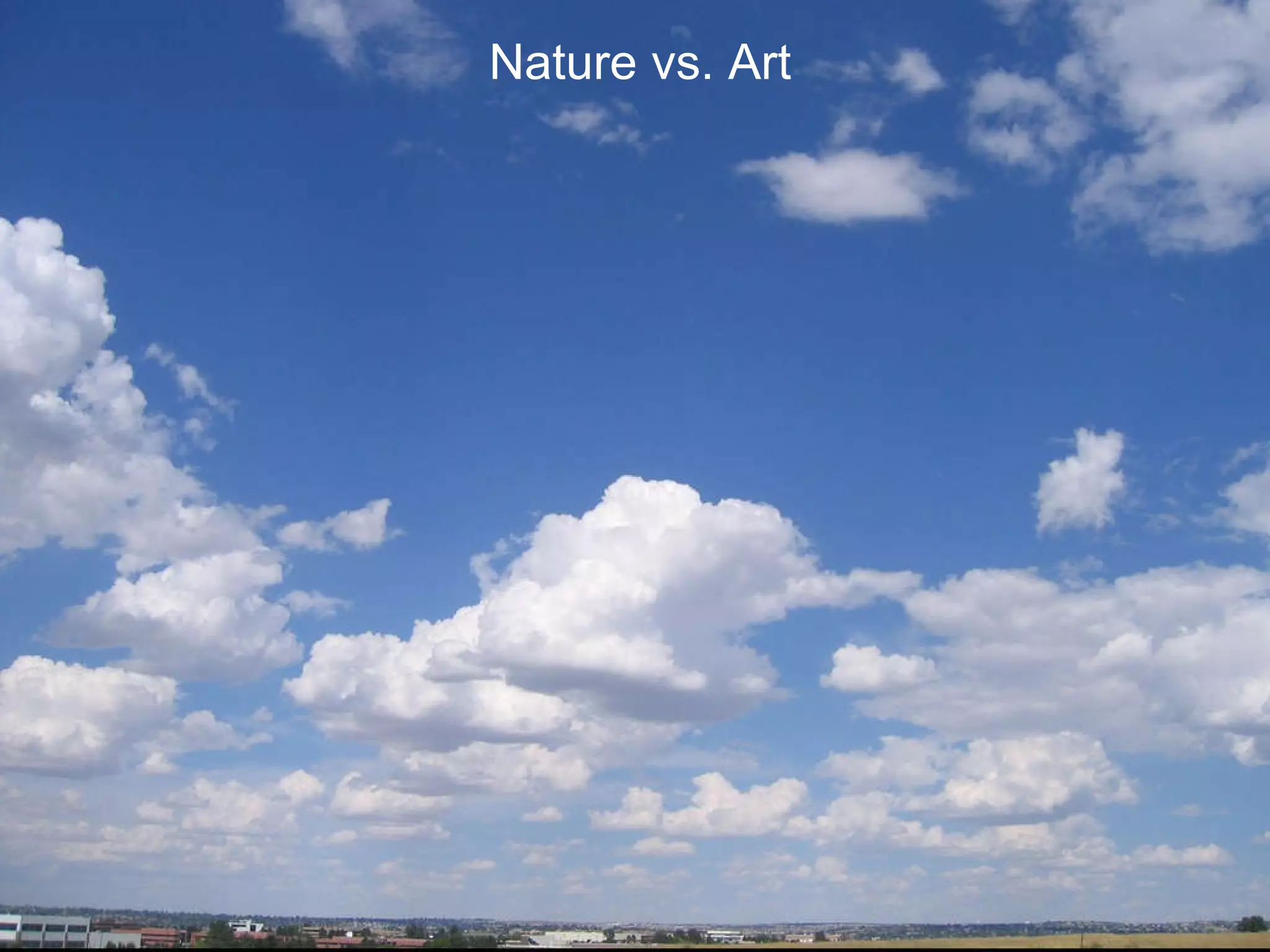
Nature vs. Art
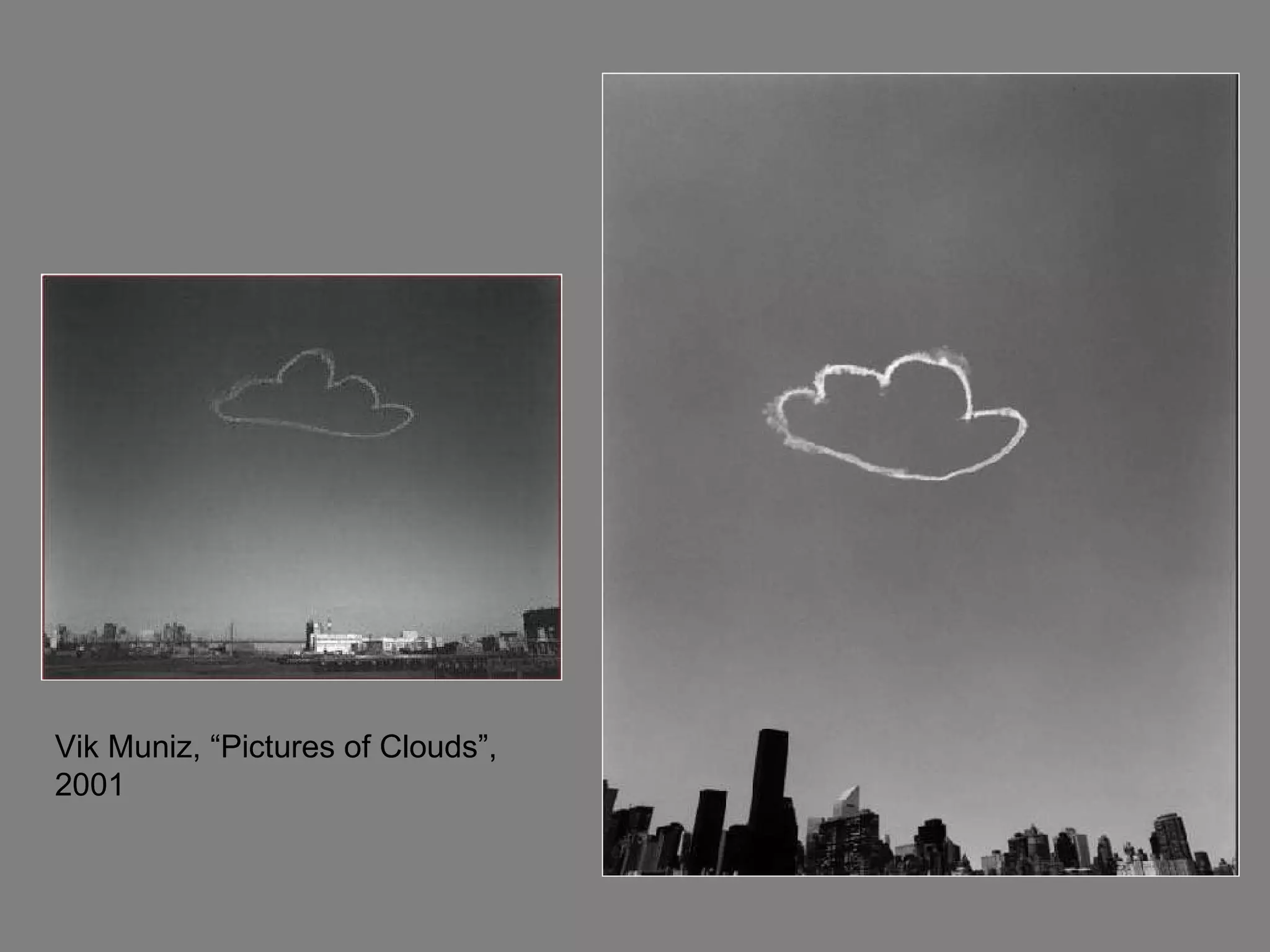
Vik Muniz, “Pictures of Clouds”, 2001
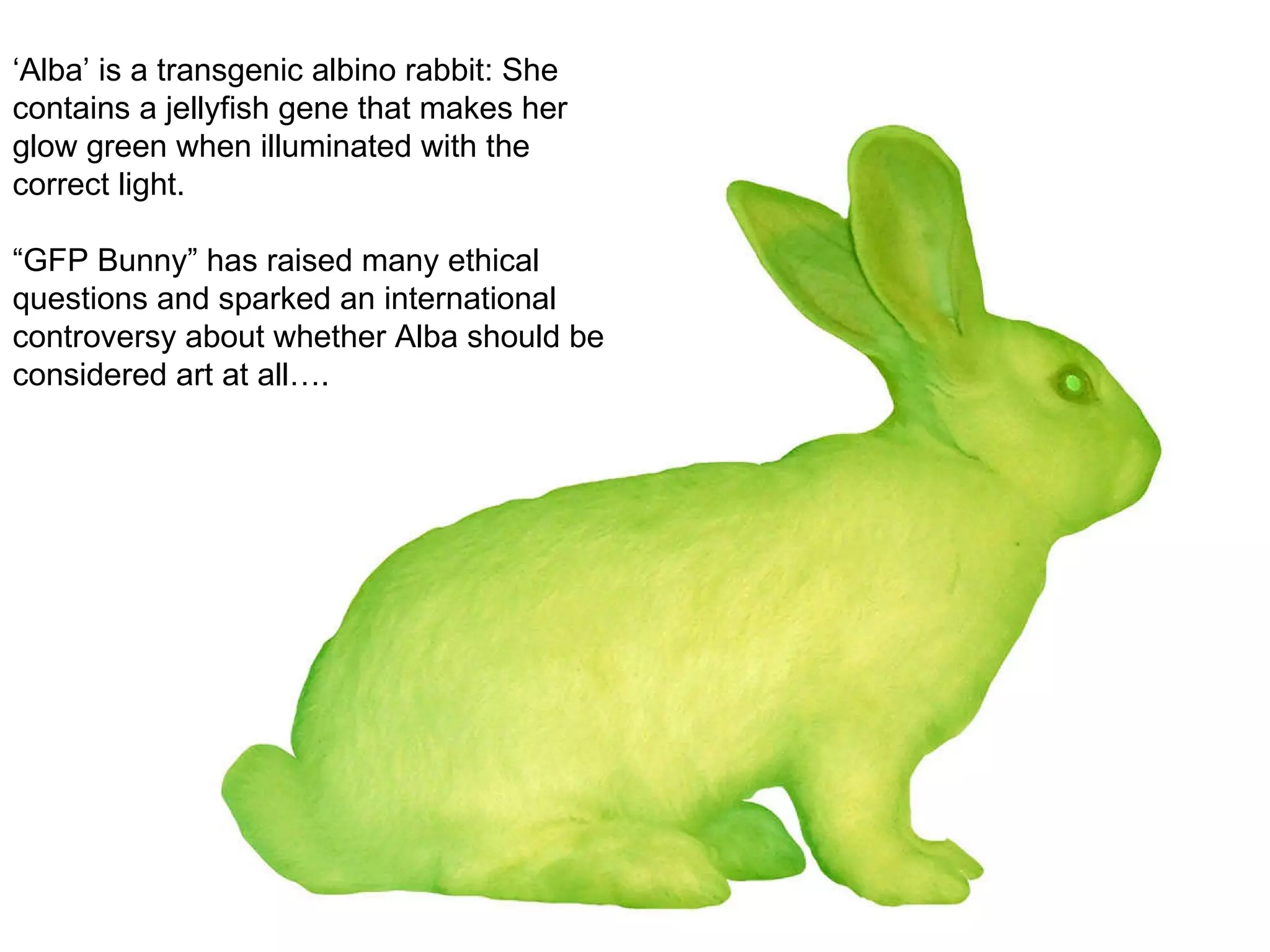
‘Alba’ is a transgenic albino rabbit: She contains a jellyfish gene that makes her glow green when illuminated with the correct light.  “GFP Bunny” has raised many ethical questions and sparked an international controversy about whether Alba should be considered art at all….
 
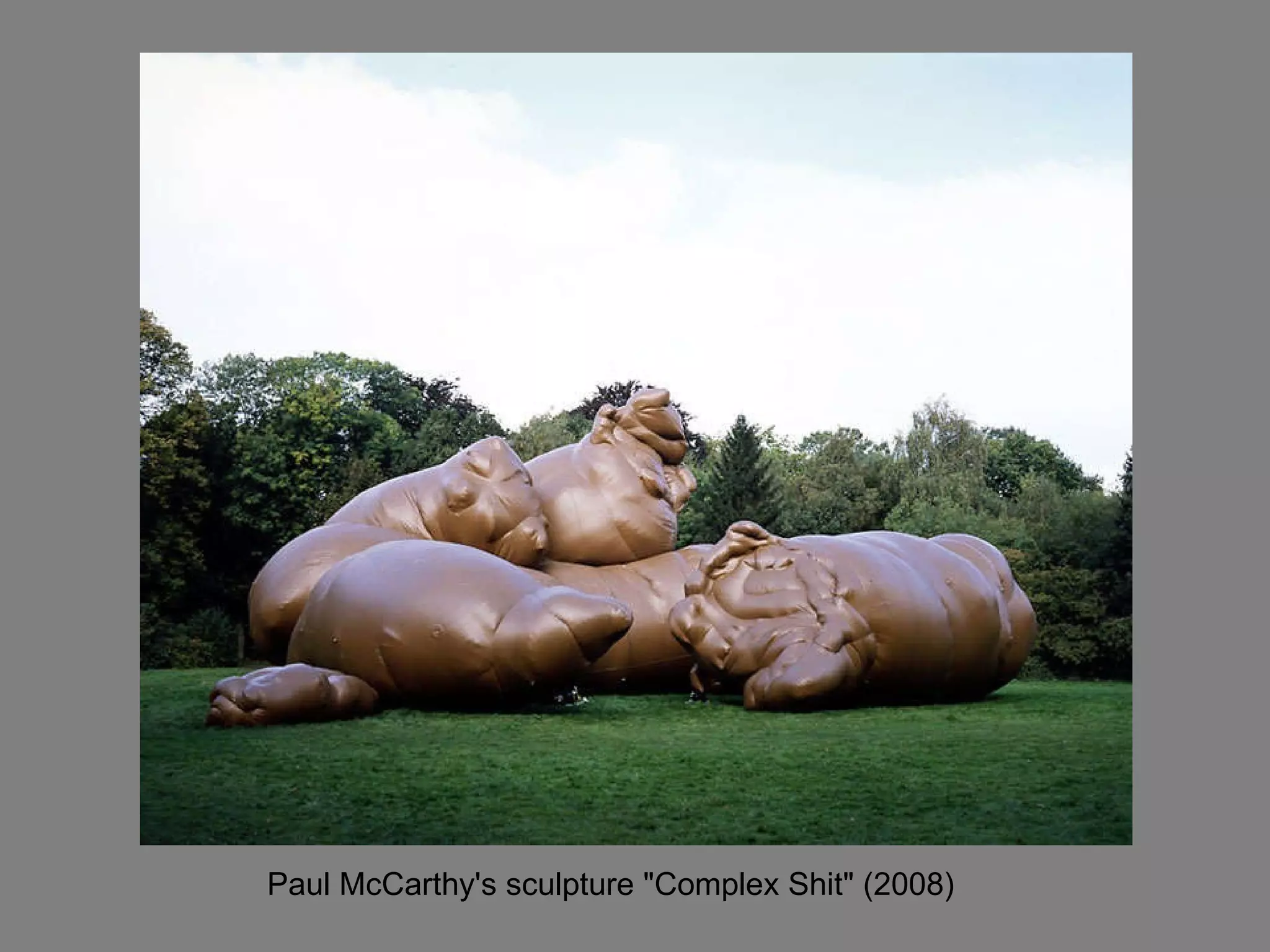
Paul McCarthy's sculpture "Complex Shit" (2008)
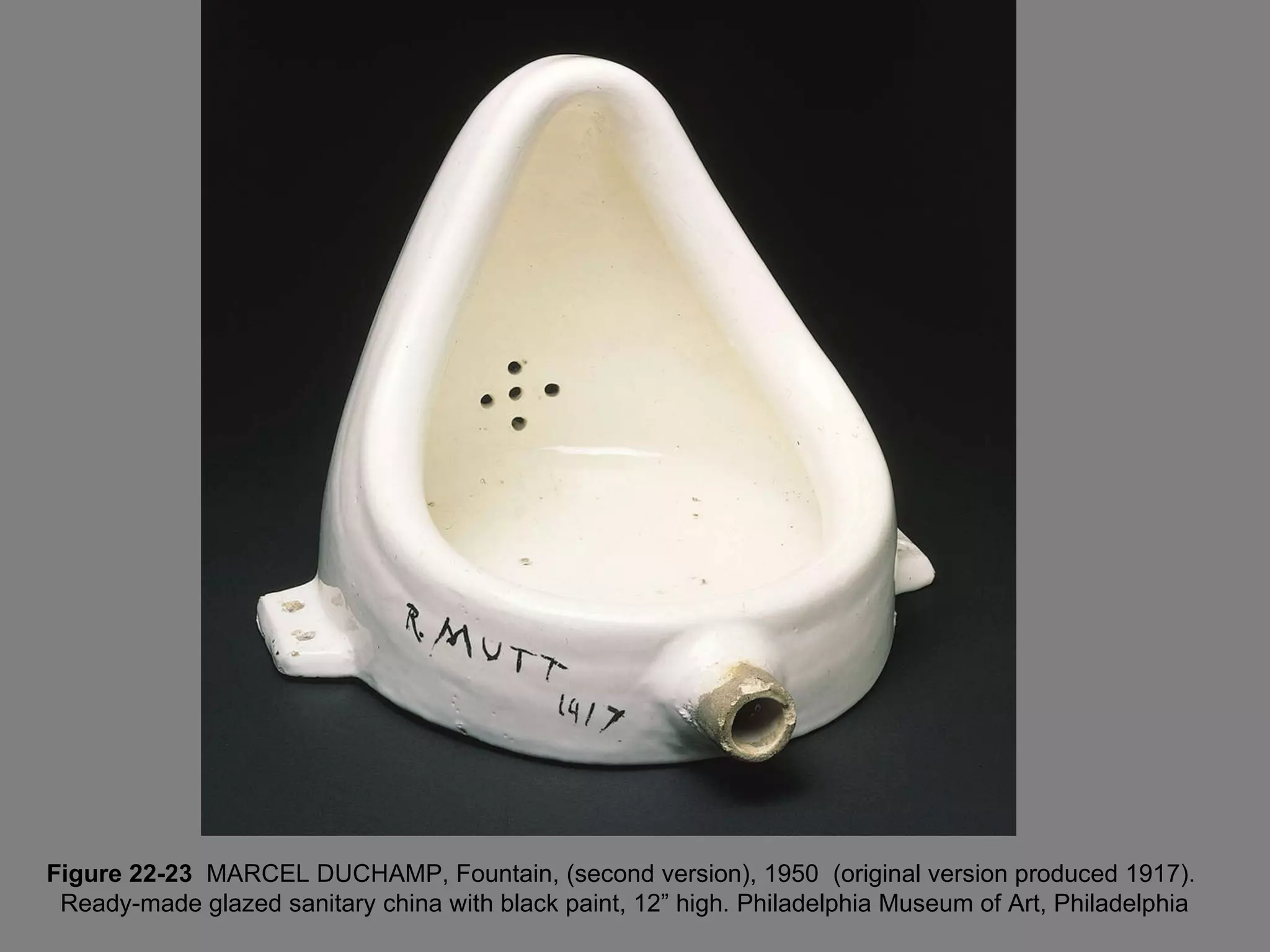
Figure 22-23  MARCEL DUCHAMP, Fountain, (second version), 1950  (original version produced 1917).  Ready-made glazed sanitary china with black paint, 12” high. Philadelphia Museum of Art, Philadelphia
 
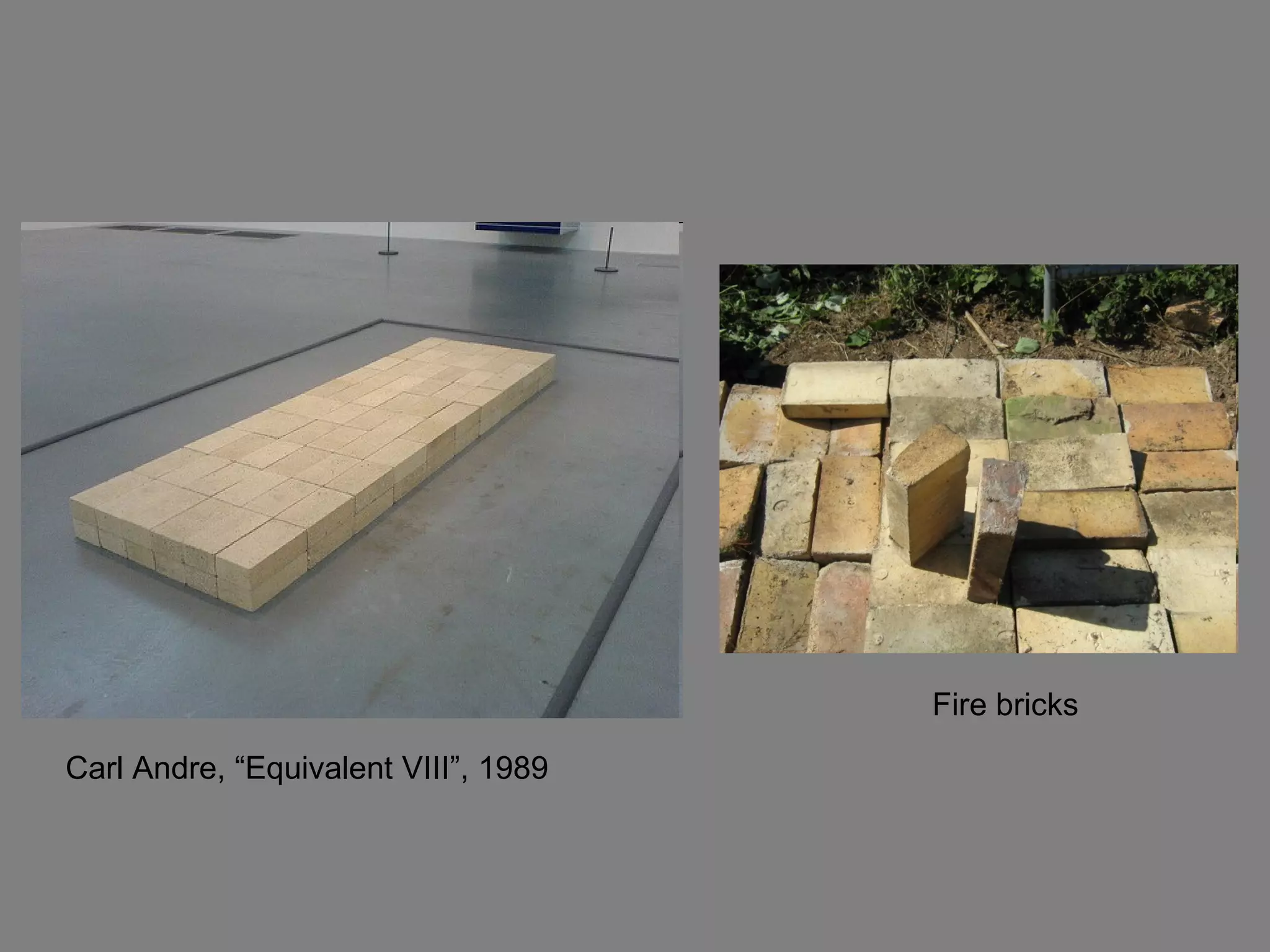
Carl Andre, “Equivalent VIII”, 1989 Fire bricks
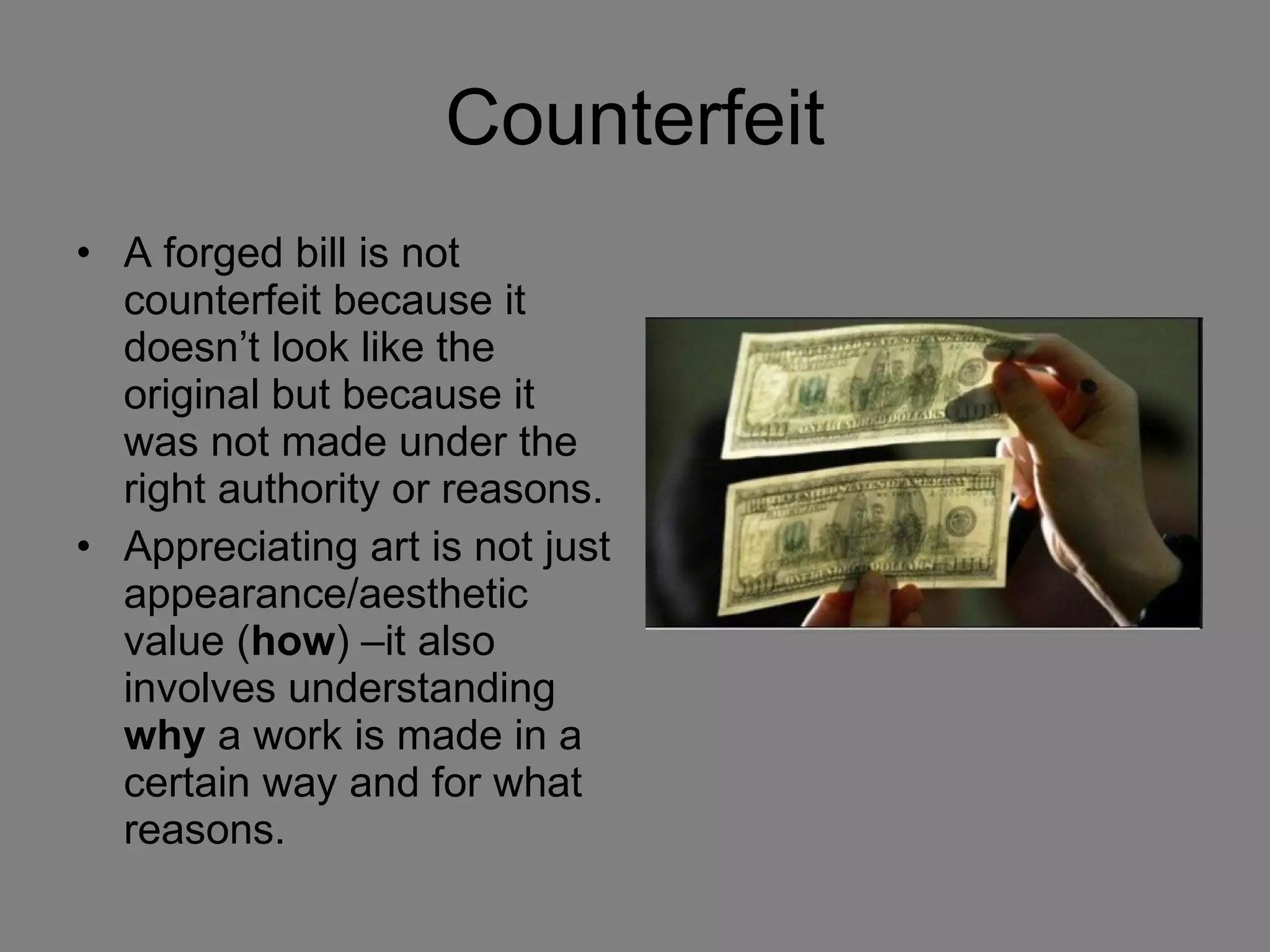
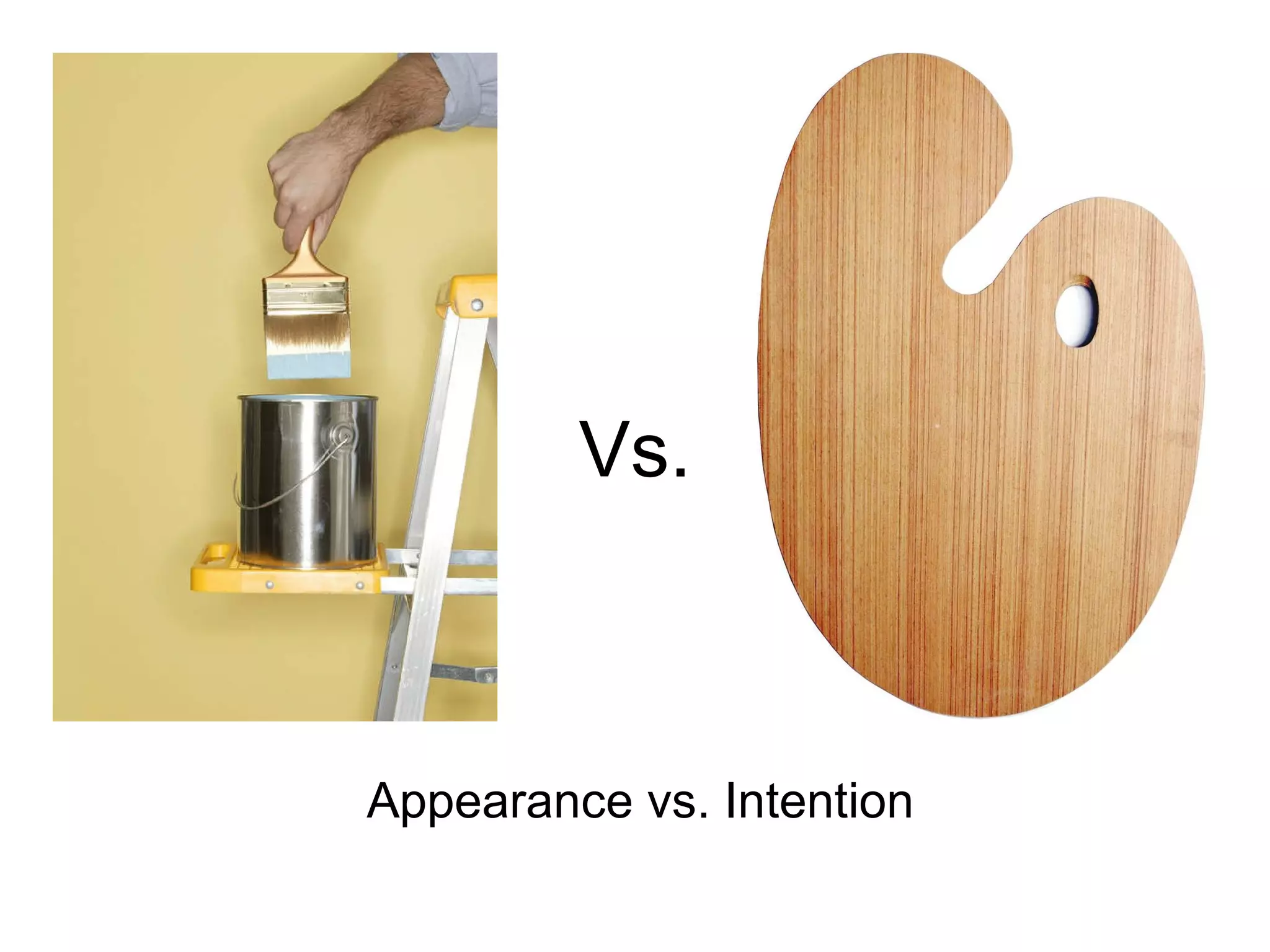
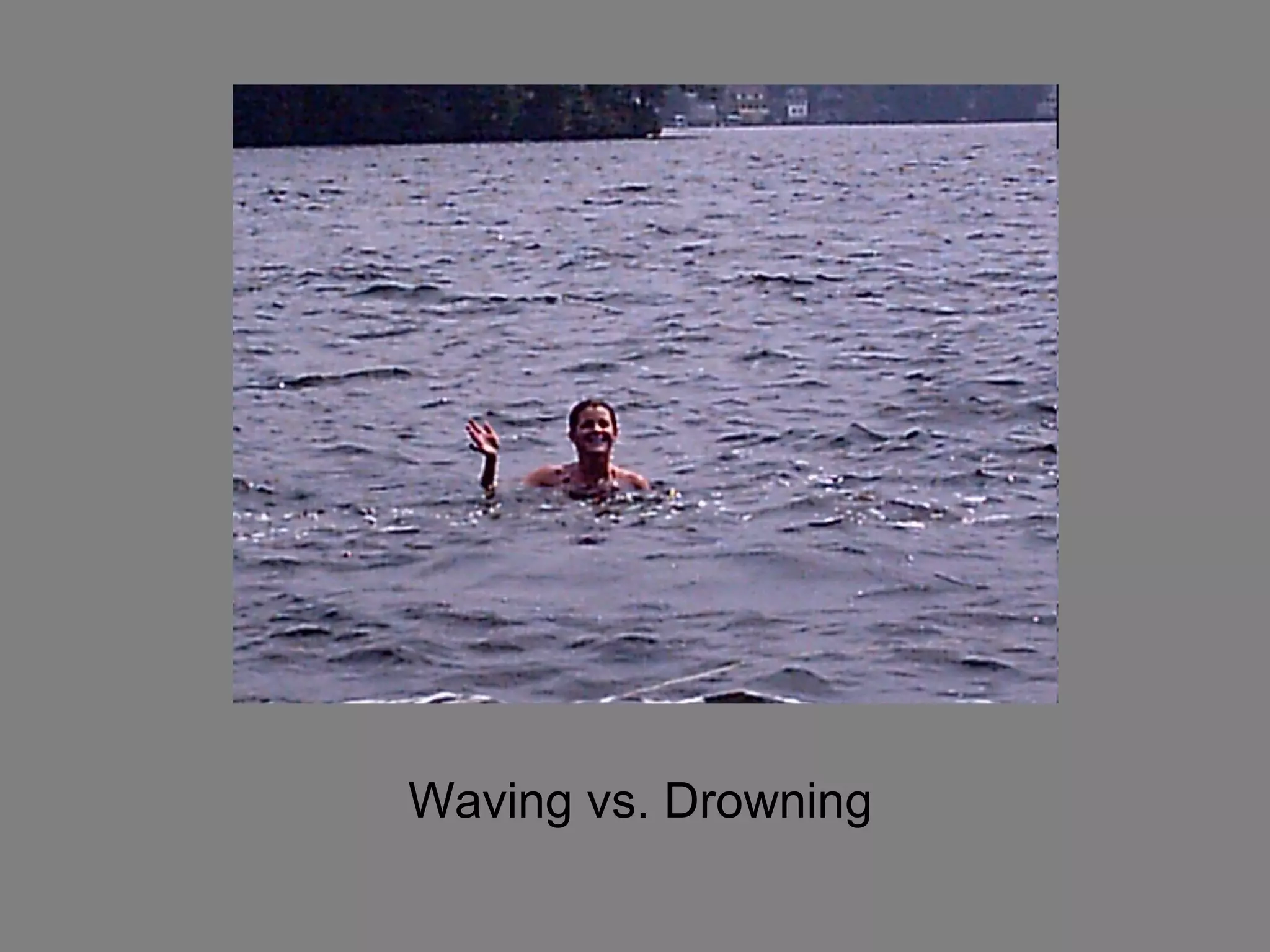
Counterfeit A forged bill is not counterfeit because it doesn’t look like the original but because it was not made under the right authority or reasons.  Appreciating art is not just appearance/aesthetic value ( how ) –it also involves understanding  why  a work is made in a certain way and for what reasons.
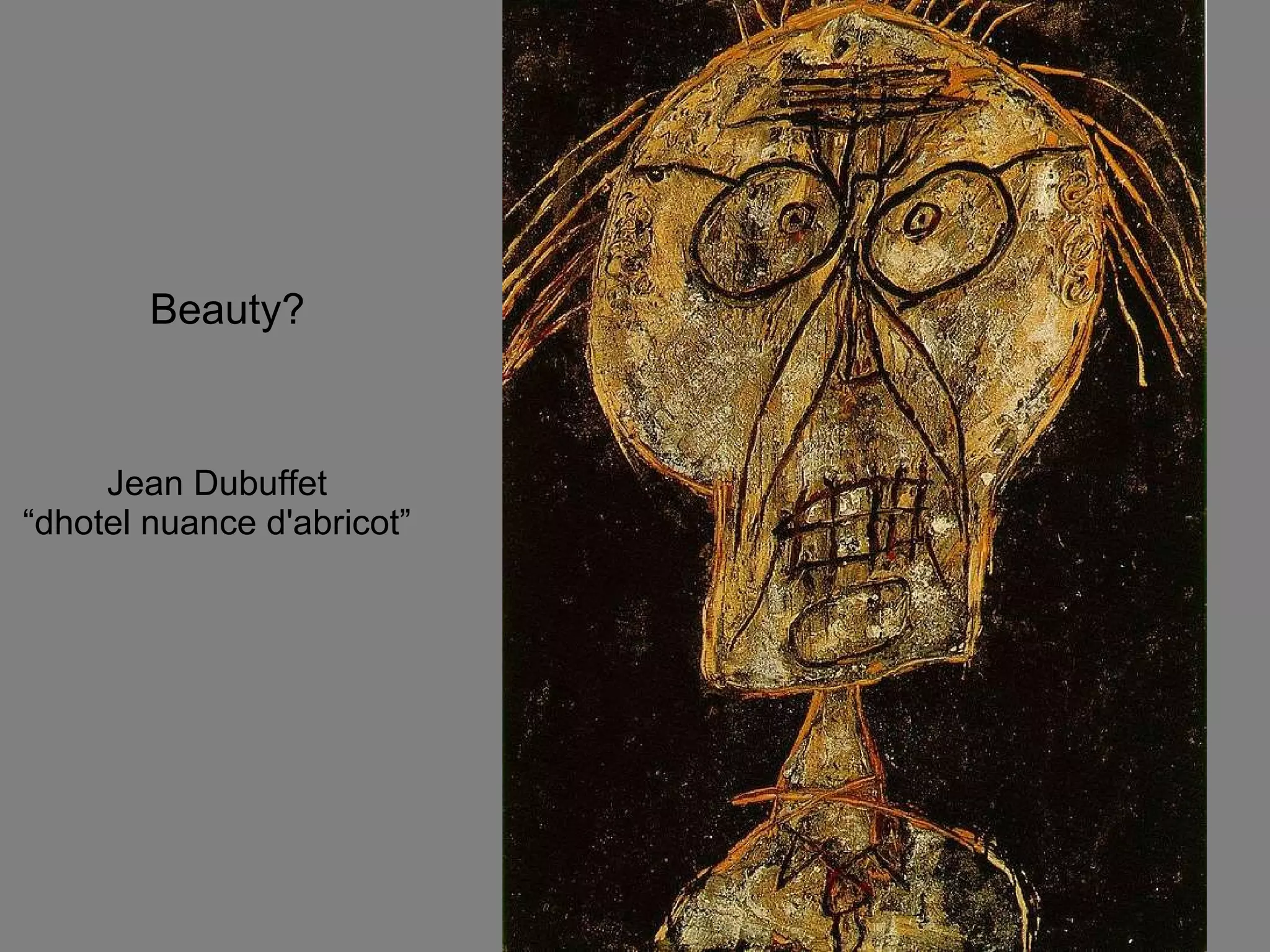
Jean Dubuffet “dhotel nuance d'abricot” Beauty?
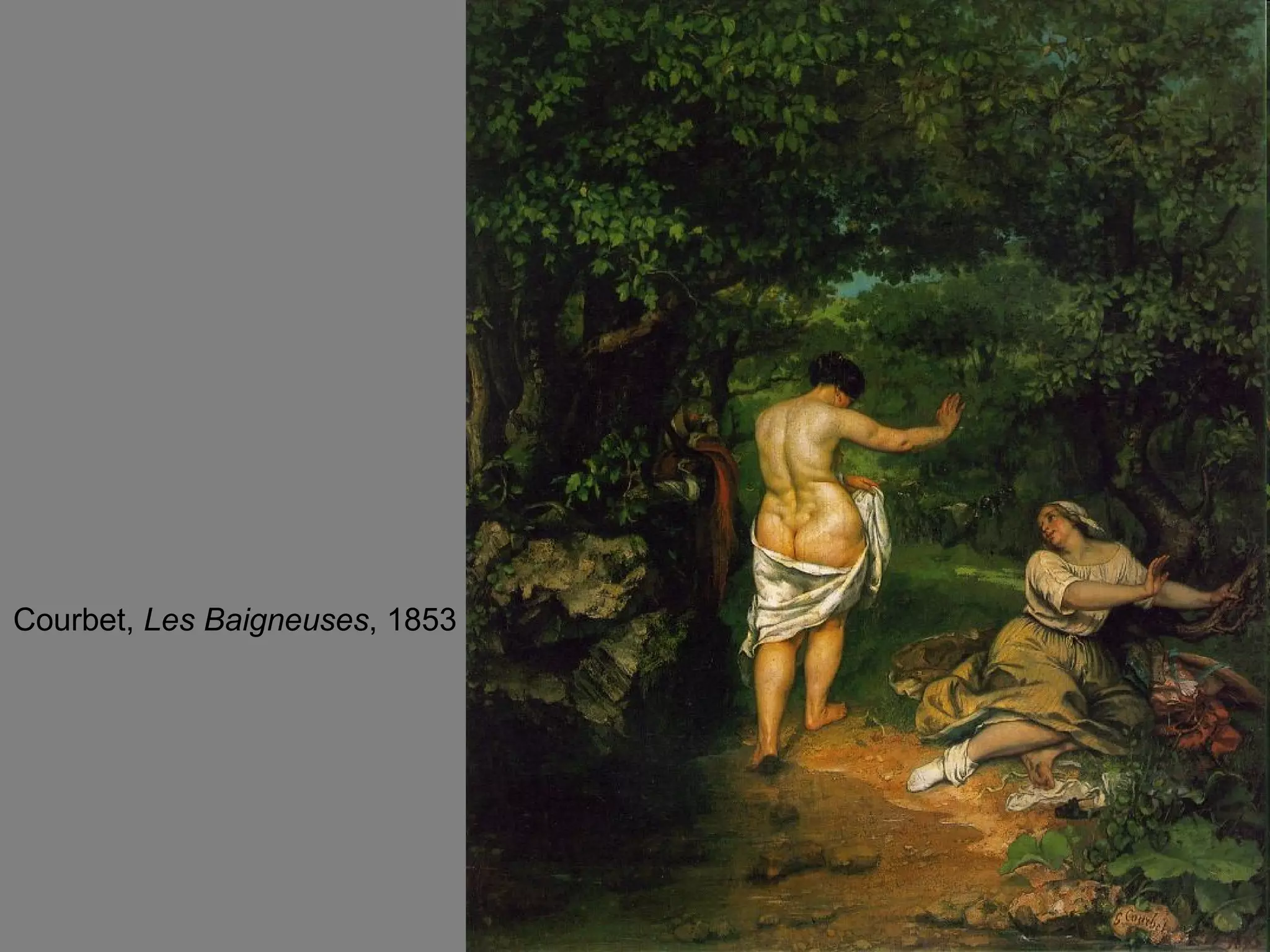
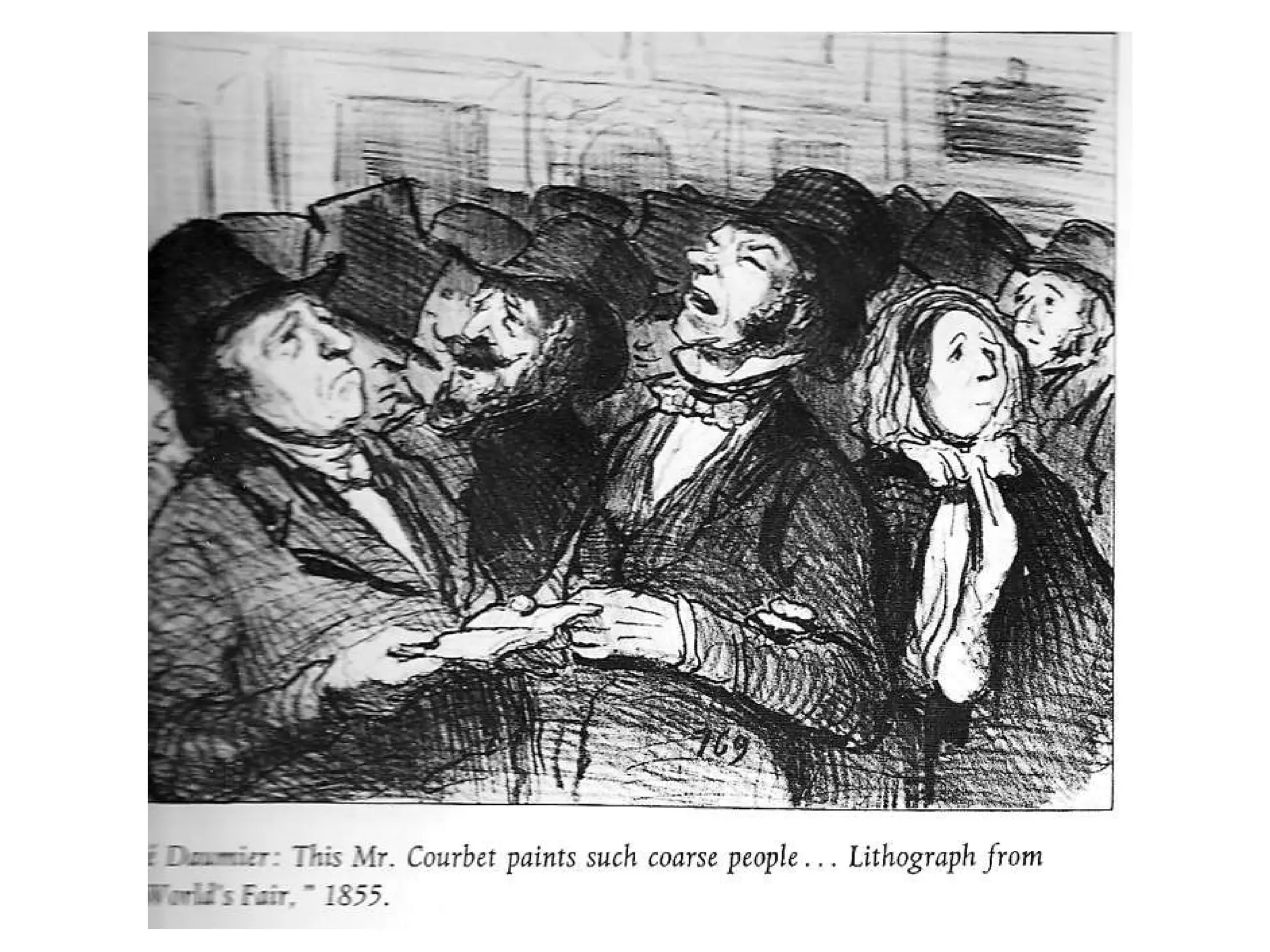
Courbet,  Les Baigneuses , 1853
 
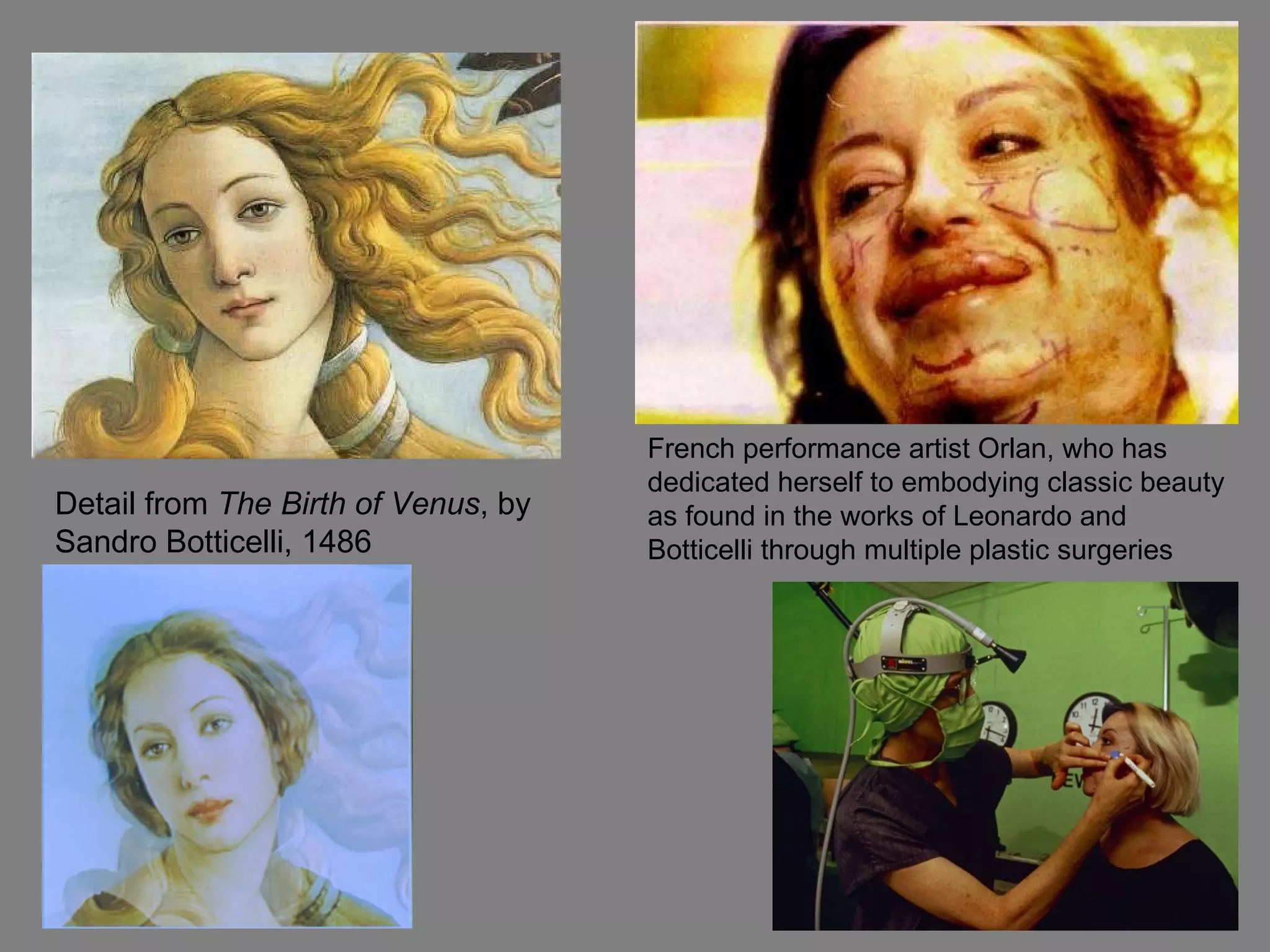
French performance artist Orlan, who has dedicated herself to embodying classic beauty as found in the works of Leonardo and Botticelli through multiple plastic surgeries Detail from  The Birth of Venus , by Sandro Botticelli, 1486
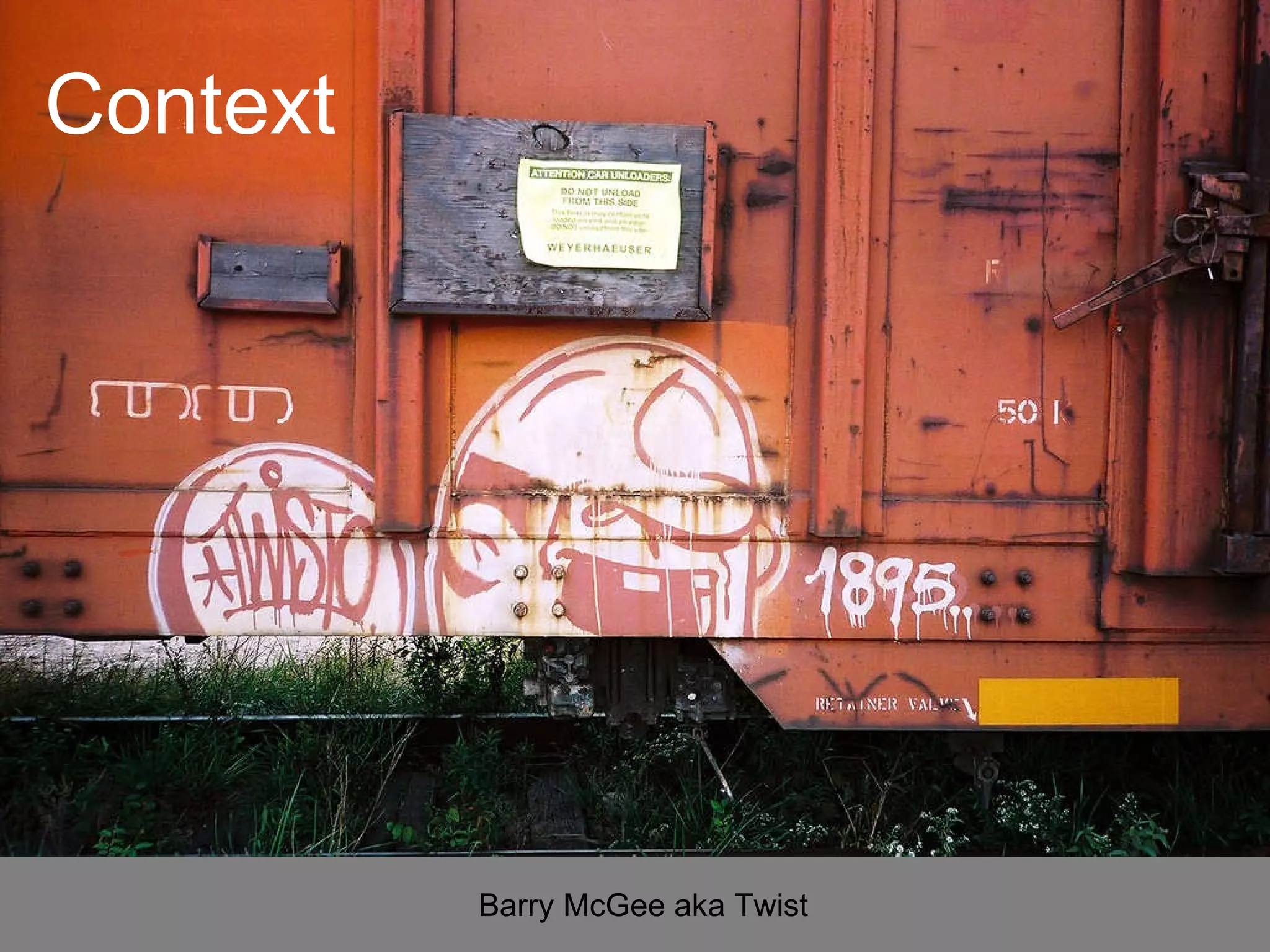
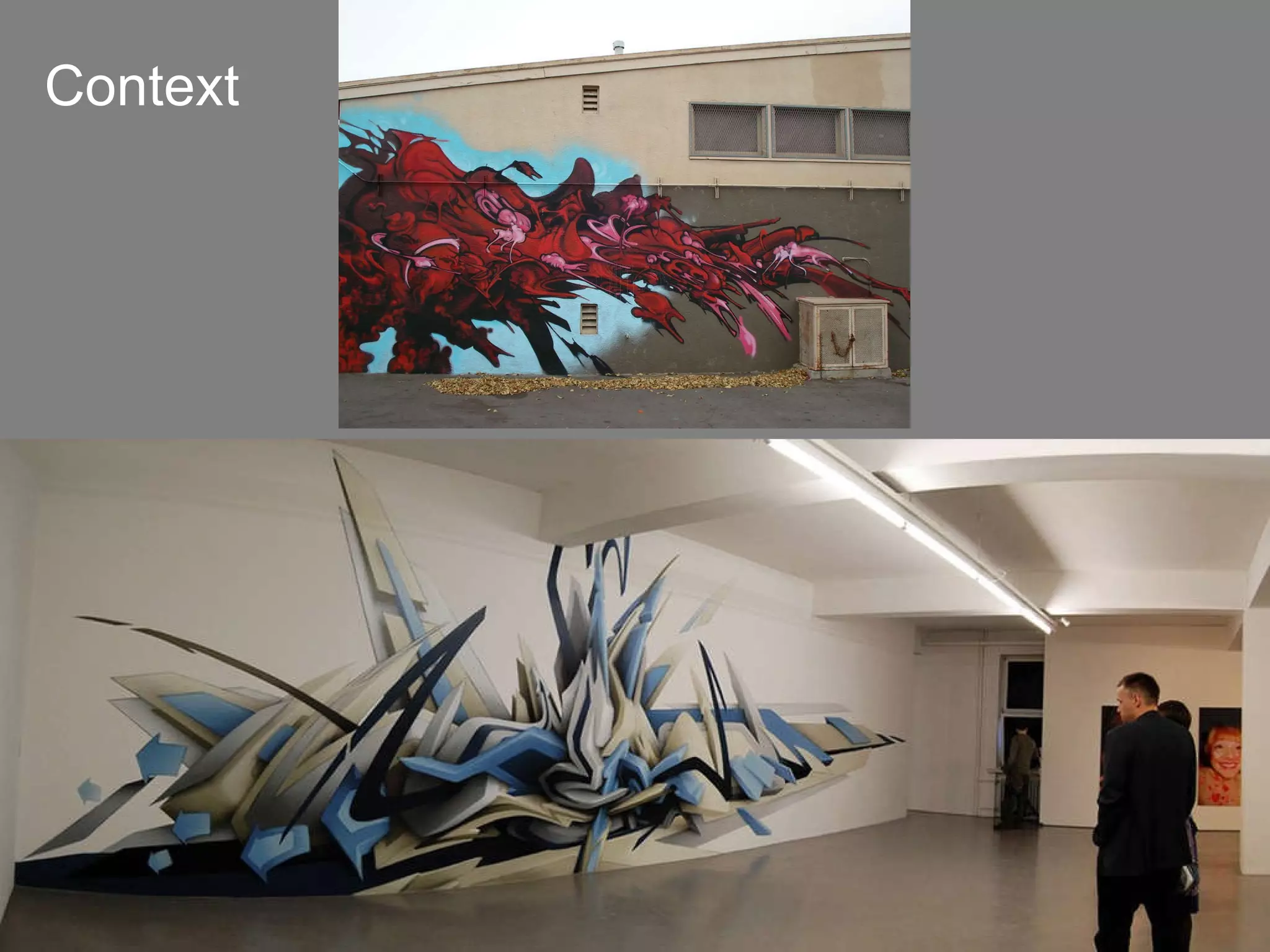
Barry McGee aka Twist Context
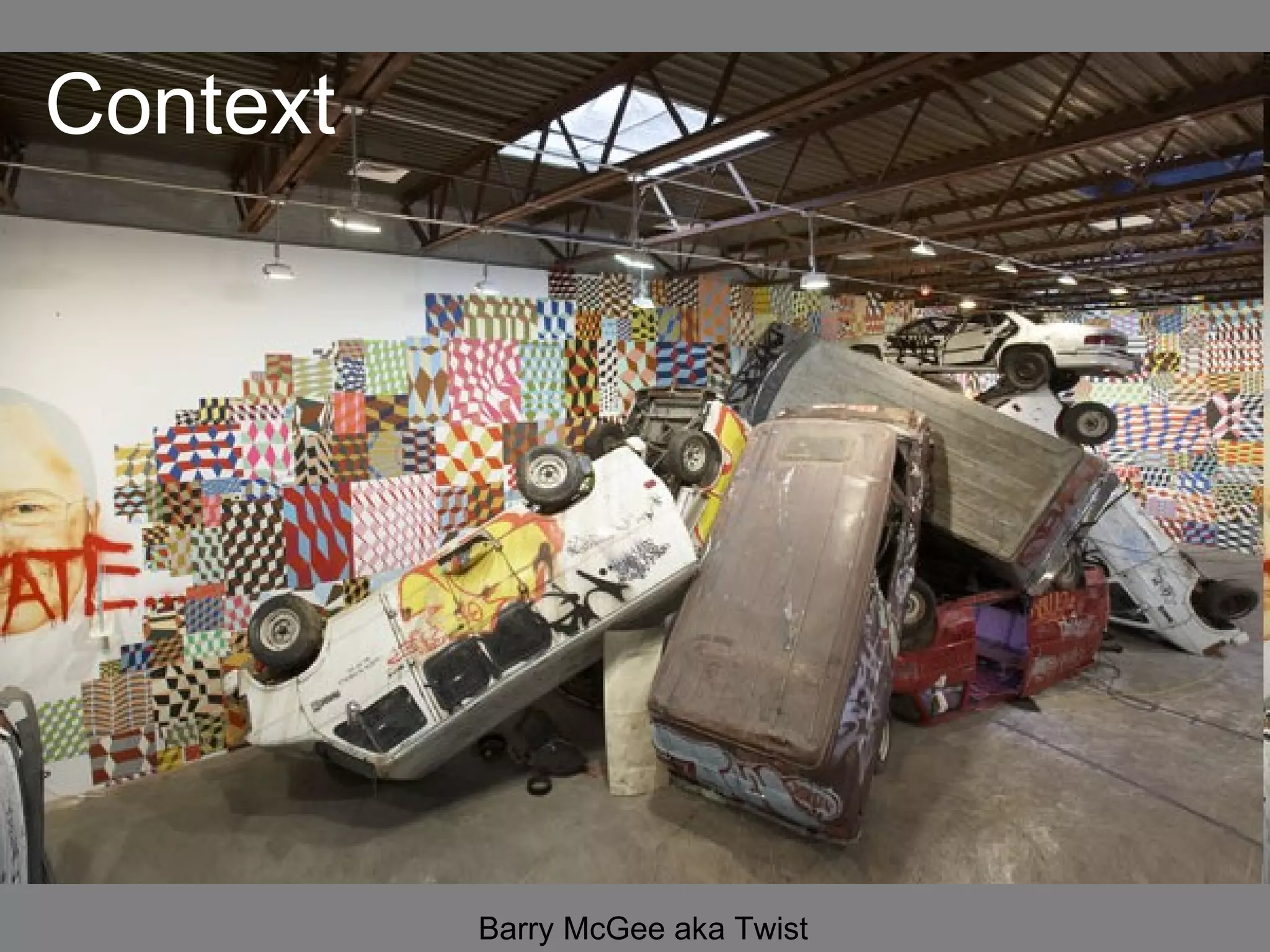
Context
Vs. Appearance vs. Intention
Waving vs. Drowning
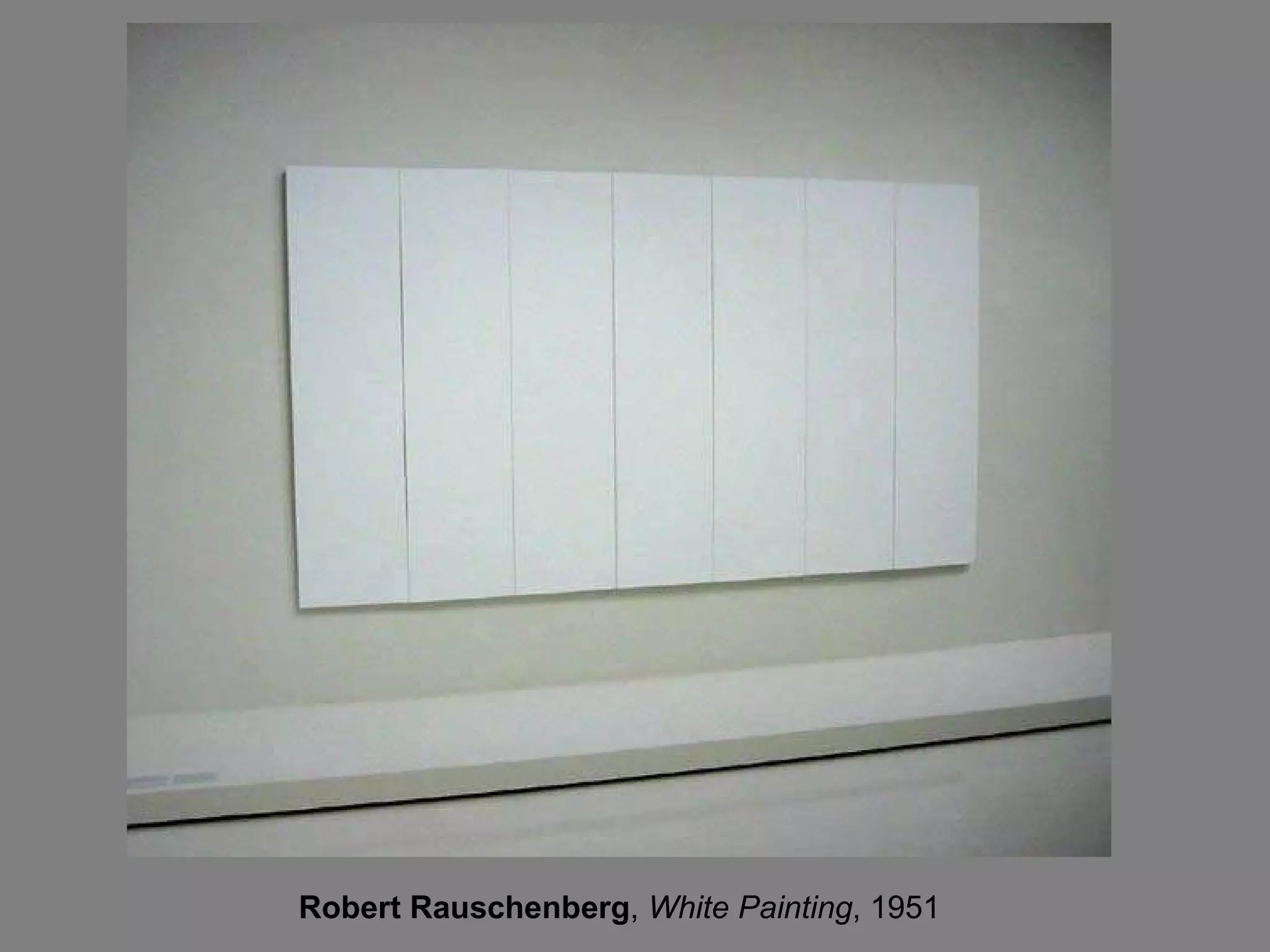
Robert Rauschenberg ,  White Painting , 1951
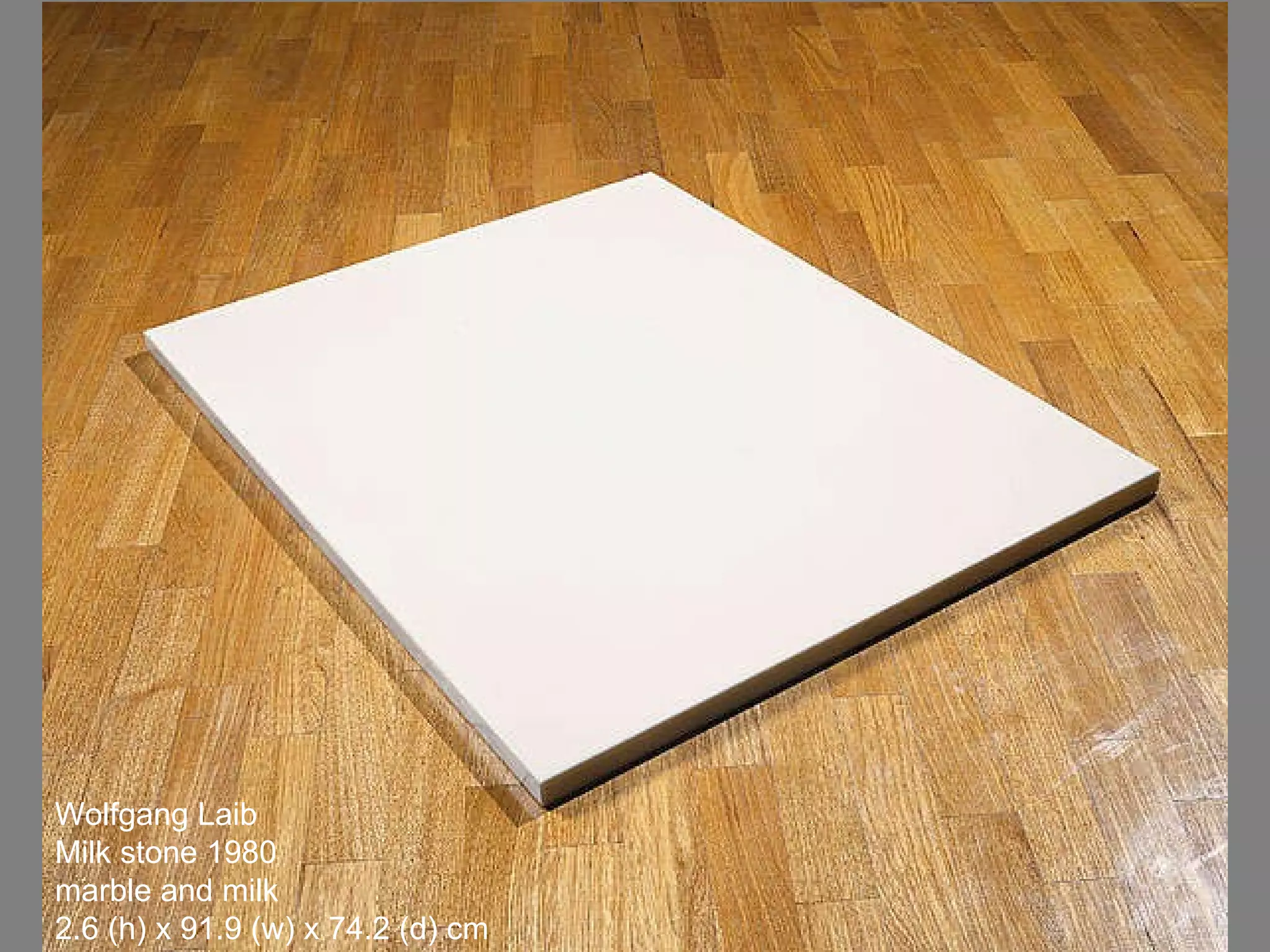
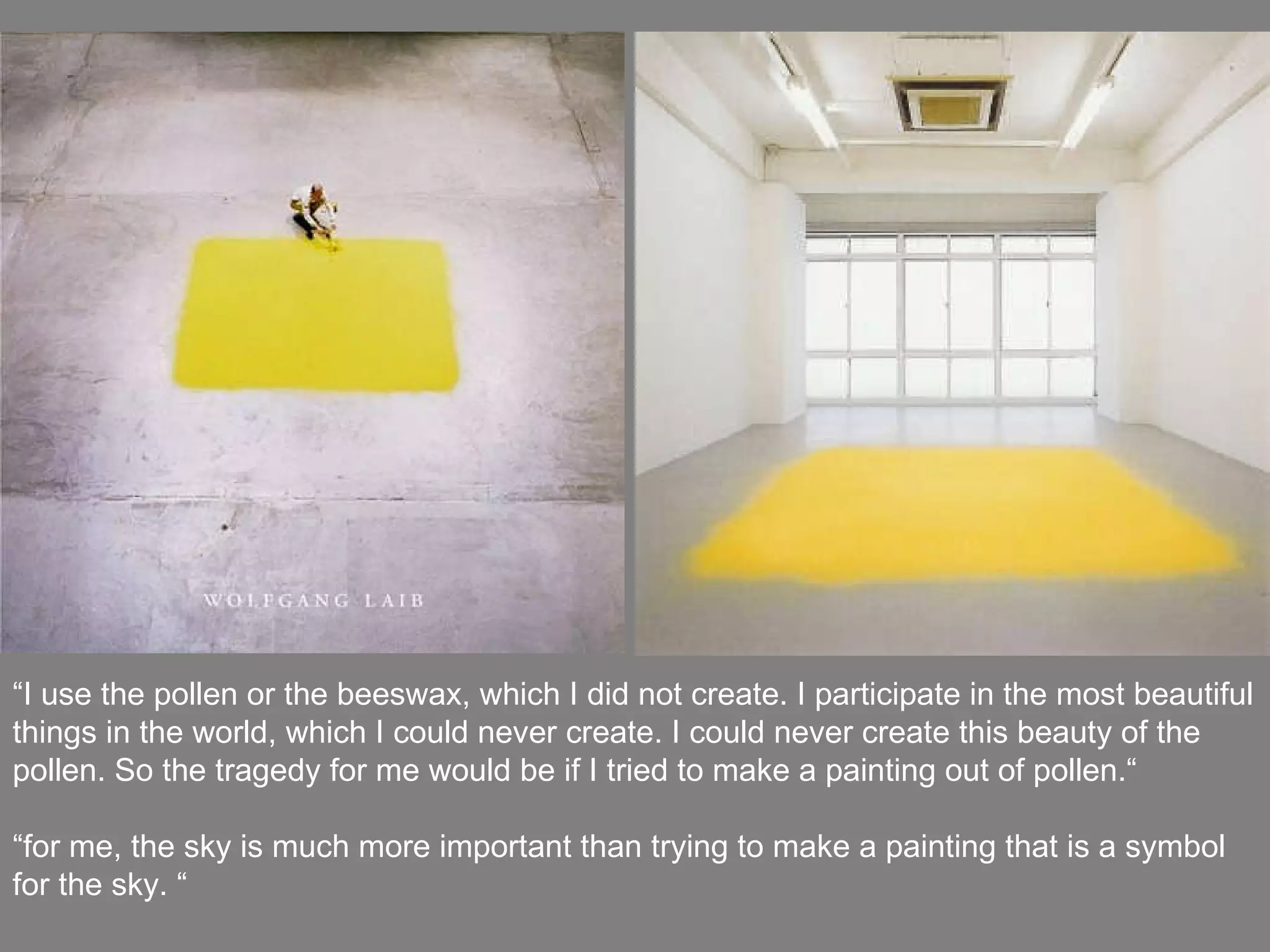
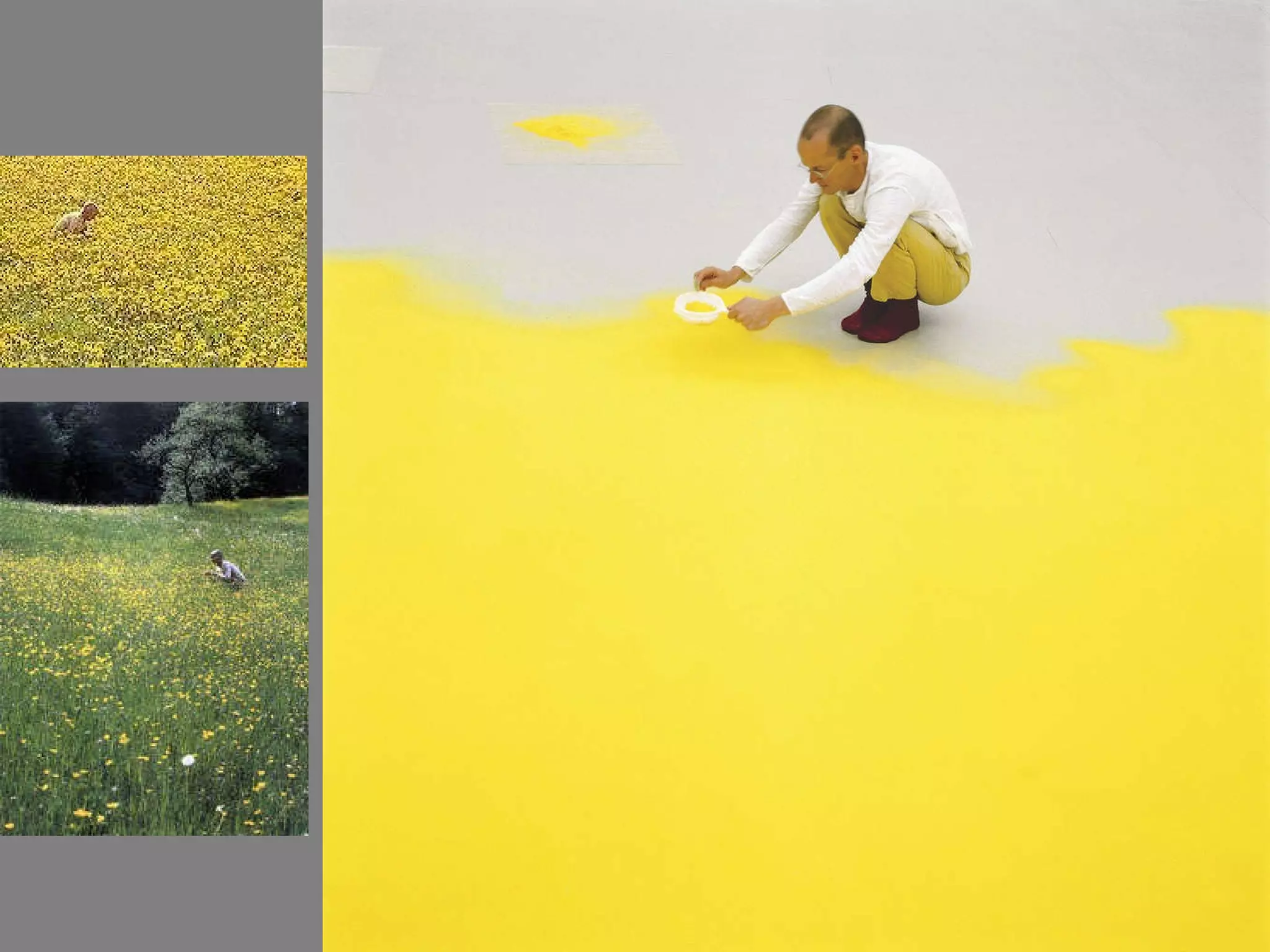
“ I use the pollen or the beeswax, which I did not create. I participate in the most beautiful things in the world, which I could never create. I could never create this beauty of the pollen. So the tragedy for me would be if I tried to make a painting out of pollen.“ “ for me, the sky is much more important than trying to make a painting that is a symbol for the sky. “
 
Wolfgang Laib Milk stone 1980 marble and milk 2.6 (h) x 91.9 (w) x 74.2 (d) cm
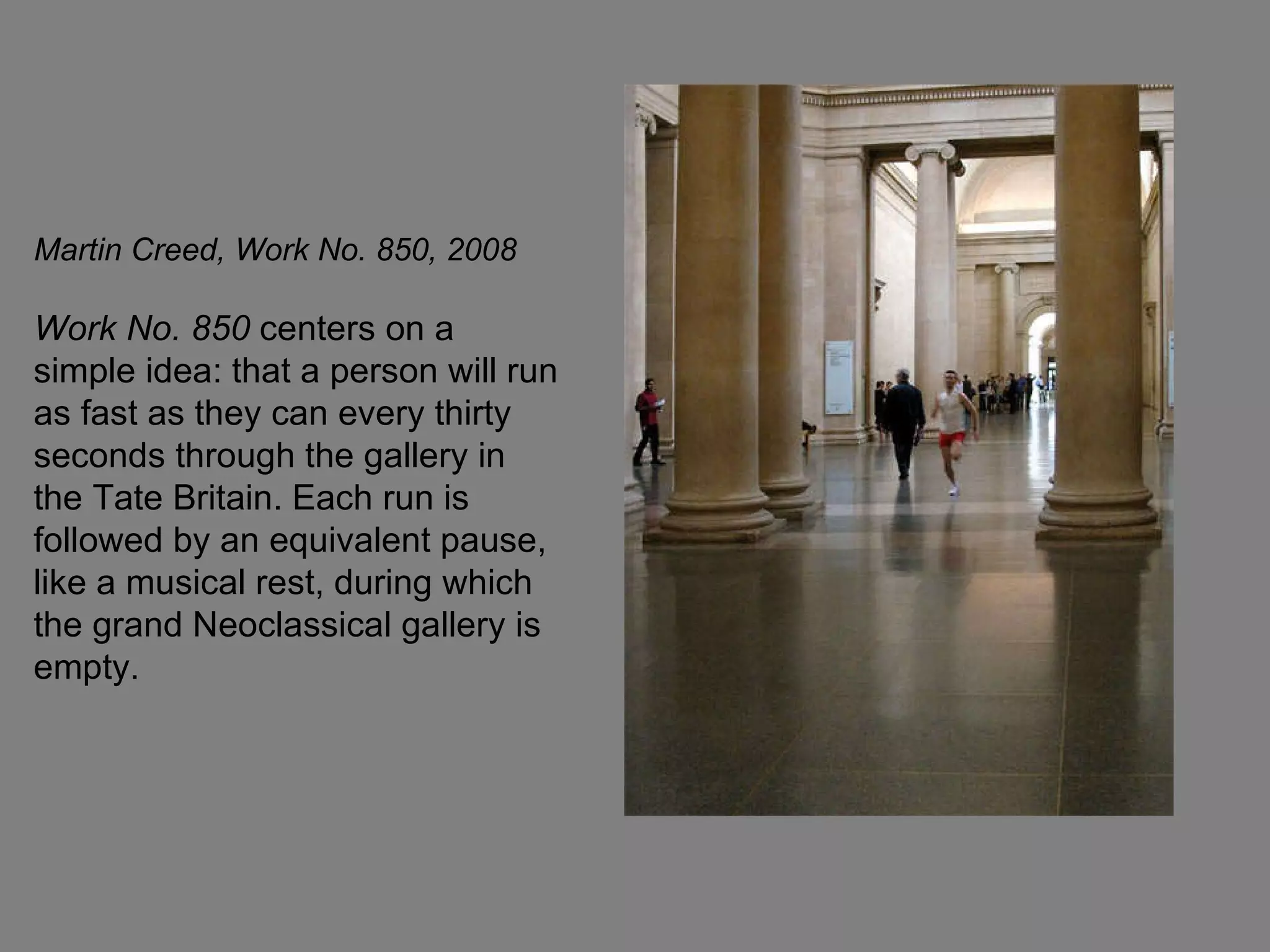
Martin Creed, Work No. 850, 2008   Work No. 850  centers on a simple idea: that a person will run as fast as they can every thirty seconds through the gallery in the Tate Britain. Each run is followed by an equivalent pause, like a musical rest, during which the grand Neoclassical gallery is empty.
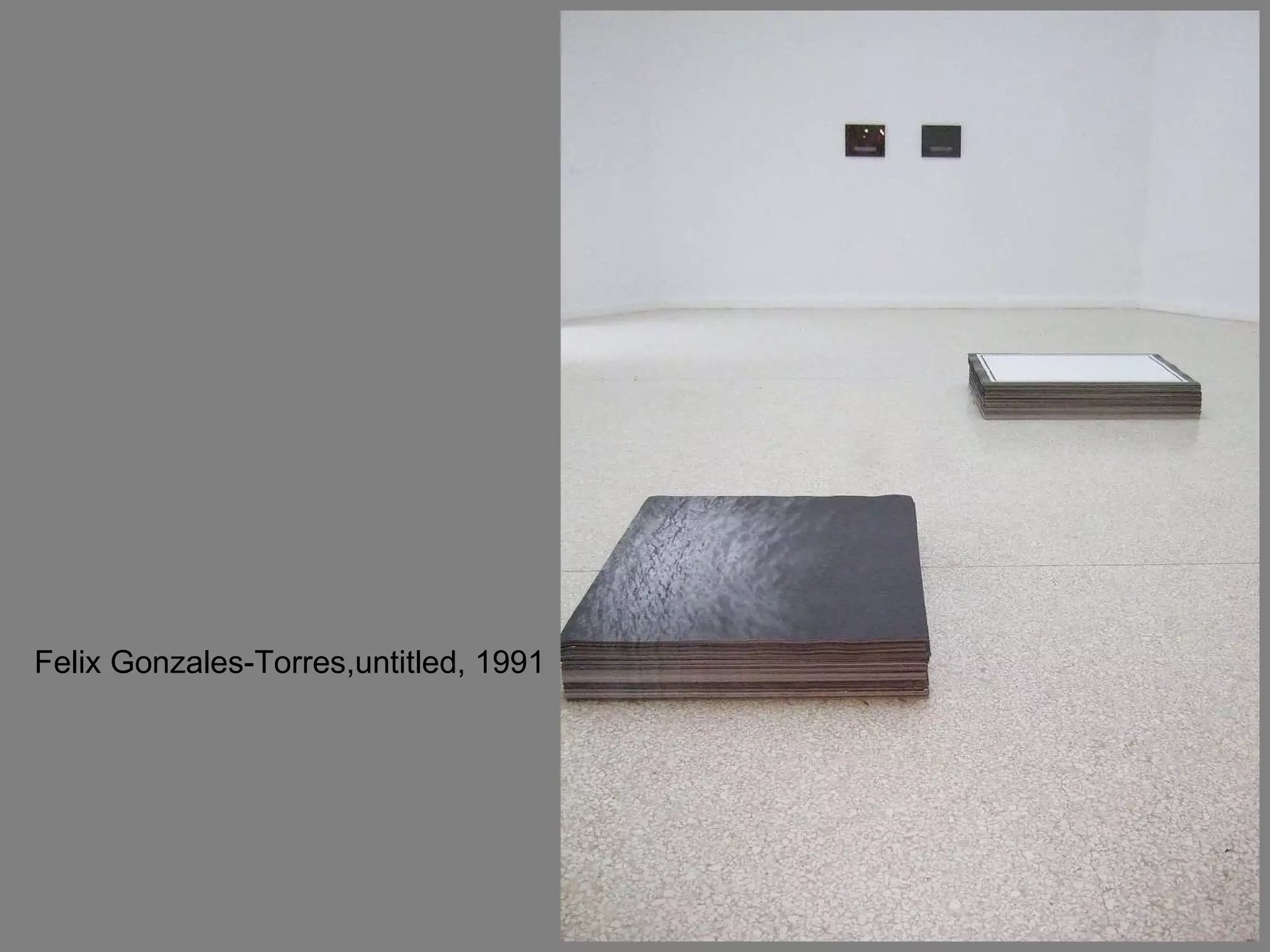
Felix Gonzales-Torres,untitled, 1991
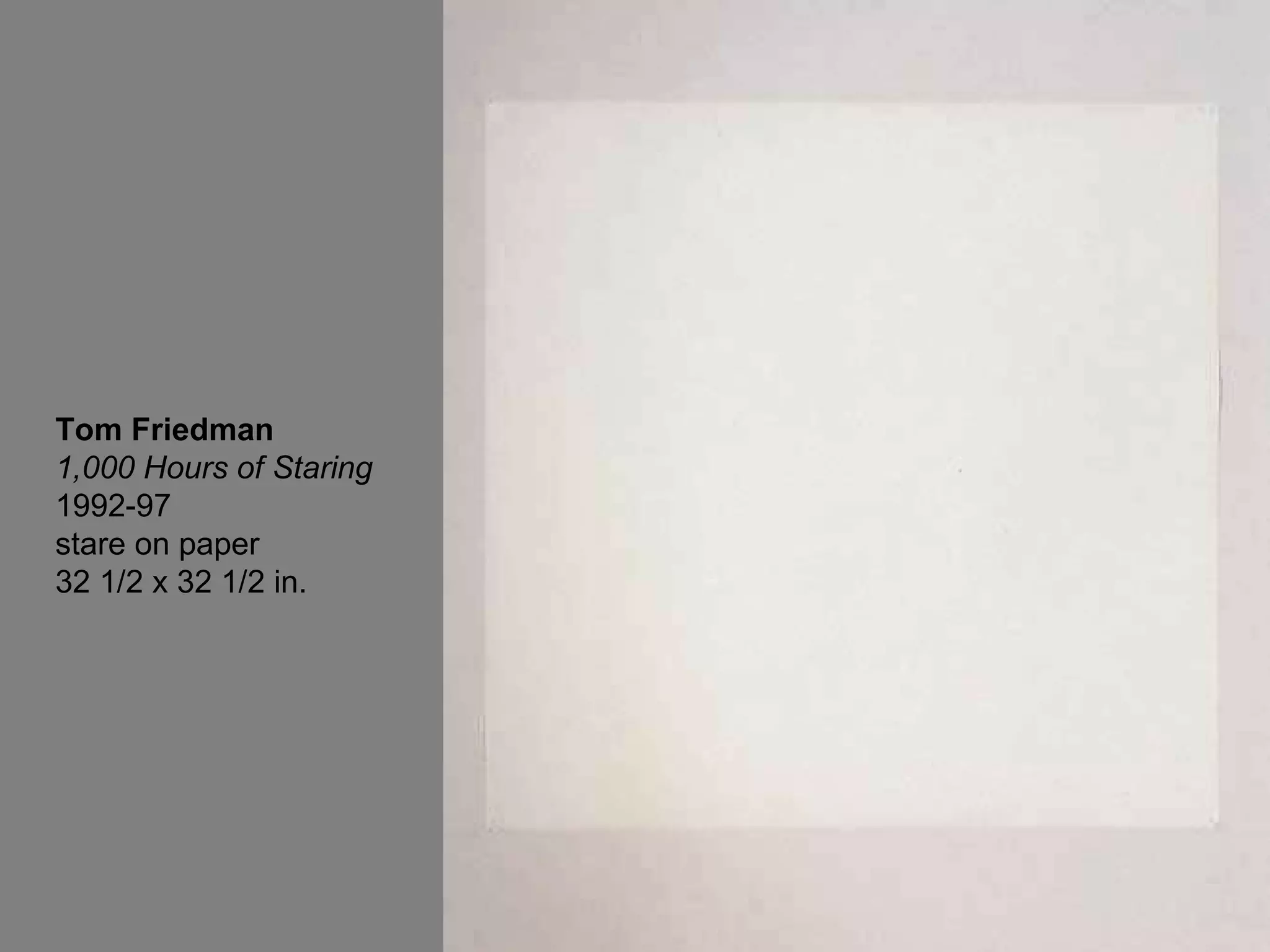
Tom Friedman 1,000 Hours of Staring 1992-97 stare on paper 32 1/2 x 32 1/2 in.
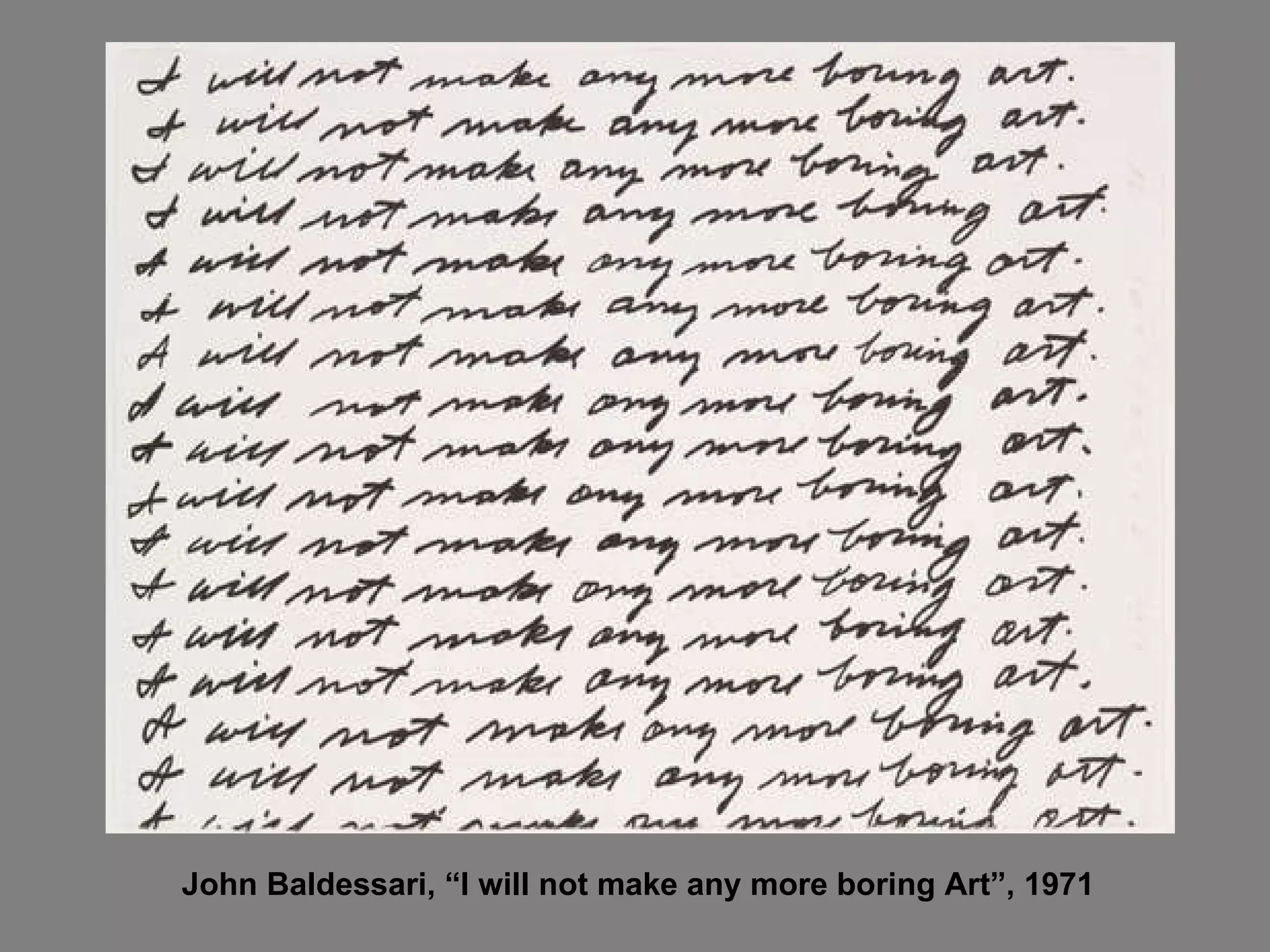
John Baldessari, “I will not make any more boring Art”, 1971


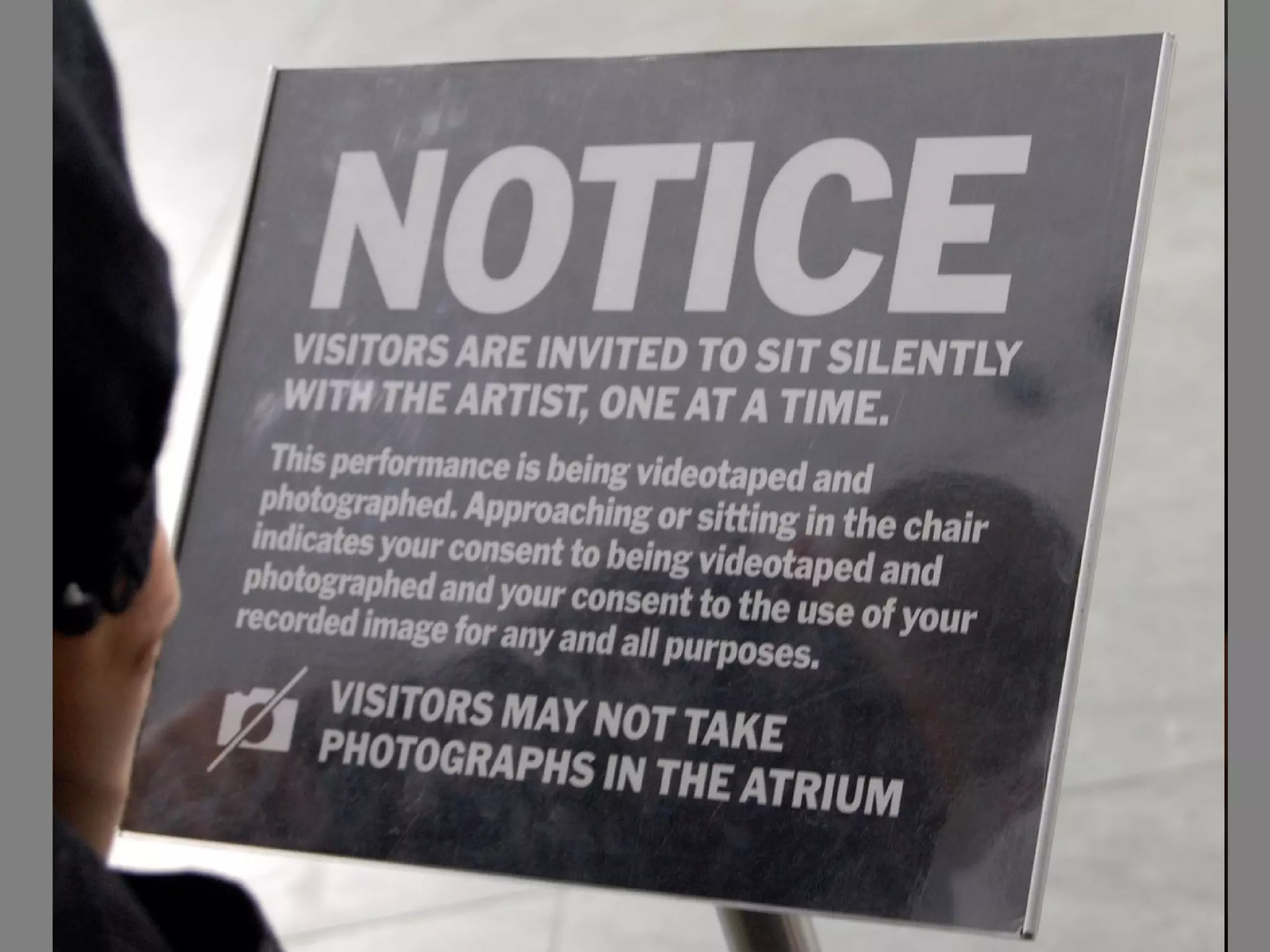
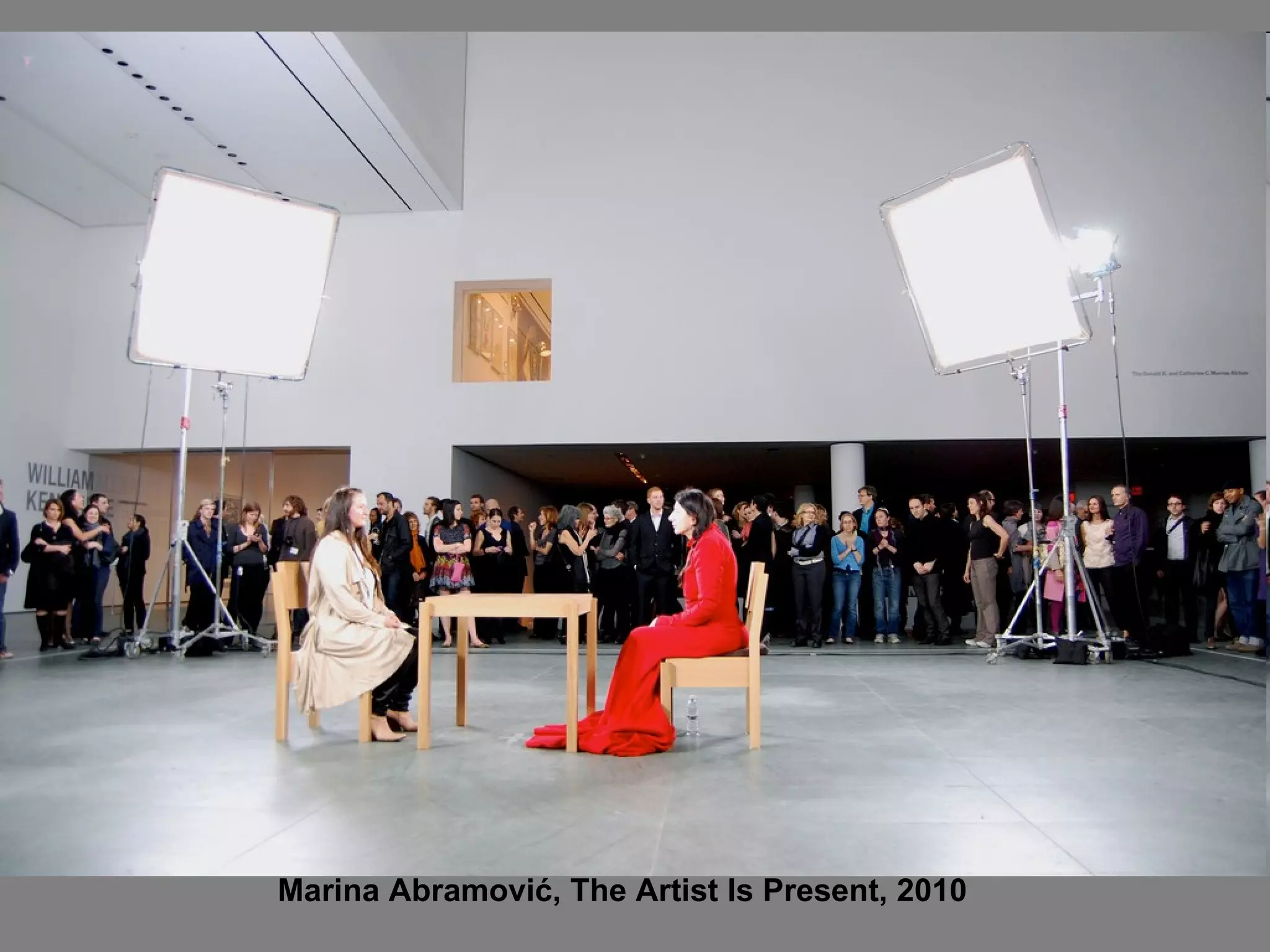
Marina Abramović, The Artist Is Present, 2010
 
 
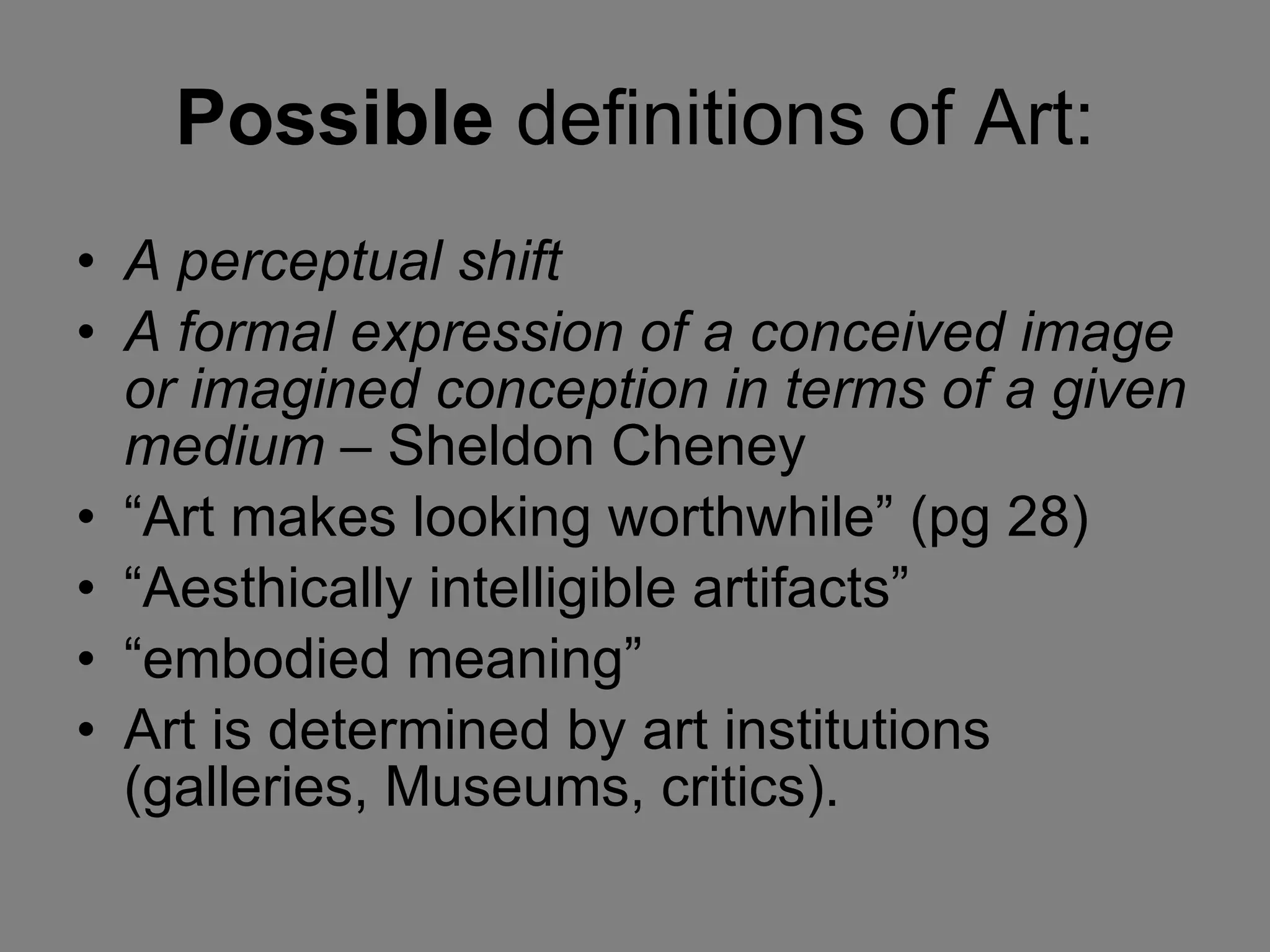
Possible  definitions of Art: A perceptual shift A formal expression of a conceived image or imagined conception in terms of a given medium  – Sheldon Cheney “ Art makes looking worthwhile” (pg 28) “ Aesthically intelligible artifacts” “ embodied meaning”  Art is determined by art institutions (galleries, Museums, critics).
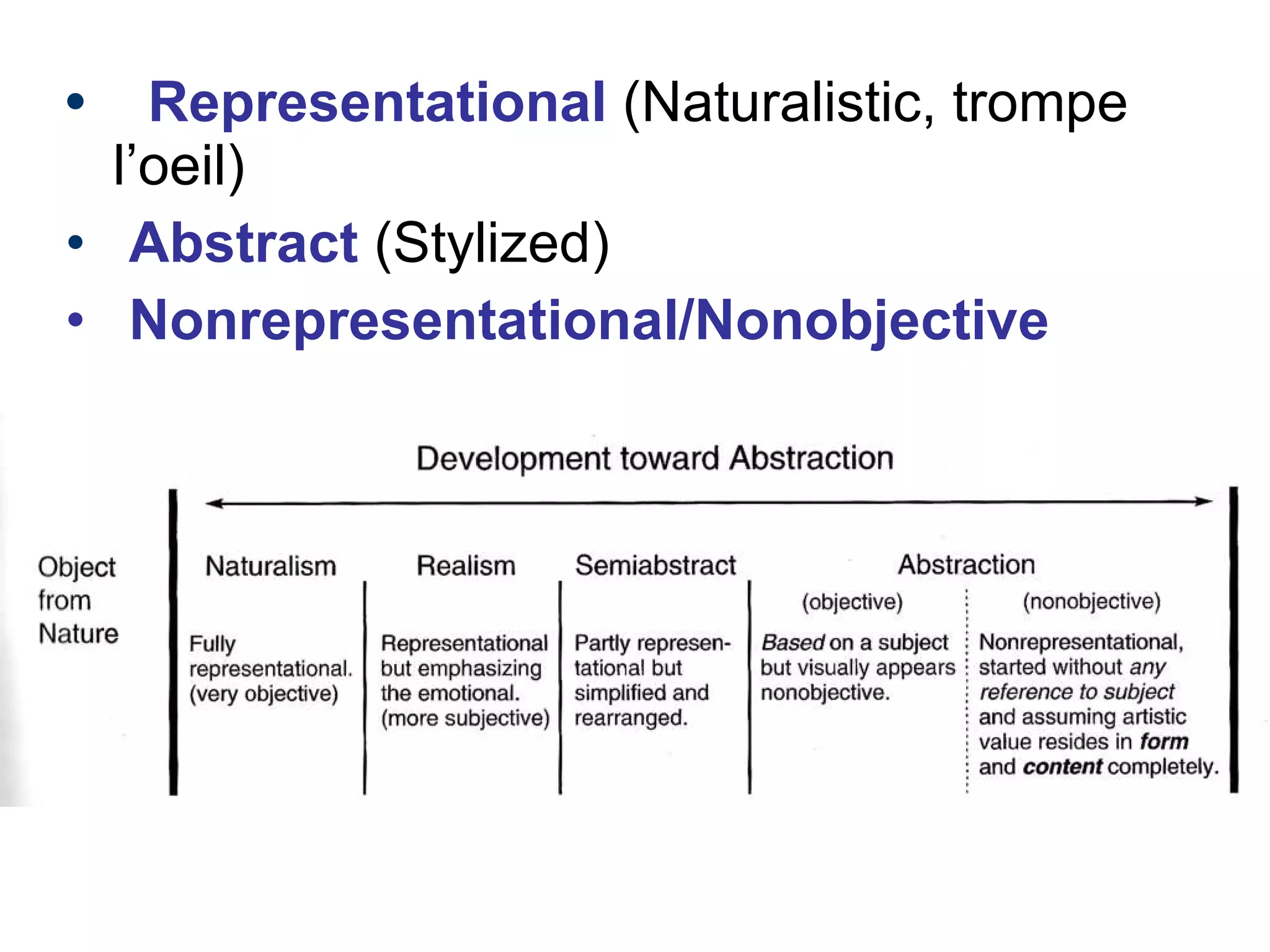
Chapter 2 What is Art? Audience/Context Notion of Beauty Representational/Naturalistic Abstract Non-representational Non-objective Form Content Aesthetics:   Philosophy of meaning & nature of art
•  Representational   (Naturalistic, trompe l’oeil) Abstract   (Stylized) Nonrepresentational/Nonobjective
(abbreviated) Fallacies about Contemporary Art  – L Magazine, May 13, 2009 Anything can be art!   Duchamp didn’t make every shovel art, just the one he labeled.  Value is completely subjective.   There are methods of evaluating art, and just because viewers respond differently doesn’t mean they don’t exist.  Anyone could do that.   A sentiment typically refuted with the argument, “But you didn’t.  I don’t know enough about art to talk about it.   Anyone can discuss art well, few of us however look at it long enough to be able to do so. Trust your instincts, talk about what you see — don’t be afraid to be wrong. The beauty of an opinion is that you can change it as your response evolves.

Week1 Art or Not

  • 1.
    Art(?) What arewe appreciating?
  • 2.
    Time to lookMost visitors to an art museum spend an average of 10 seconds in front of a object – 7 to read the label and 3 to look at the object. - from “Interpretative Dance” by Edward Winkleman
  • 3.
    Art is madeup of: Form: Media, Style, Composition Content: Subject matter, Message, Iconography Context: Knowledge of artist, time & culture
  • 4.
    Source: “Art orBunk” by Ian Ground, 1989
  • 5.
    Art and ArtistCreator determined – intention/content Art and Audience Viewer determined – eye of the beholder Art and Tradition Historically conditioned object/historical process
  • 6.
    What distinguishes Art?without doubt everything is clear Human-made? Certain Materials? Does the material alone make it art? Marble vs the Pieta An idea or intent? Physical? Limits/Parameters? Physical limits? Time? A function? Beauty ? Skill? The audience?
  • 7.
    Is every object a work of art?
  • 8.
    “Our enjoyment andappreciation of works of art in whatever medium is not something completely isolated from everyday aspects of human life. All of us, most of the time, make decisions, come to conclusions and above all appreciate and enjoy things in ways which are the same sorts of ways in which we enjoy and understand works of art” Ian Ground
  • 9.
    Example: Choosing whereto sit in the park typically involves some kind of aesthetic decision
  • 10.
    Aesthetics –a branch of philosophy concerned with feelings aroused in us by sensory experiences such as seeing and hearing (your particular taste or what appeals to you personally)
  • 11.
    Is this elephantmaking Art? Why or why not?
  • 12.
    Denver Zoo –elephant painting
  • 13.
    “From an anonymousand abstract place, tied to intellectual activity, the gallery becomes a concretely real space, open to stimulating all the senses. “ “emblem of rationality subduing nature” – the Enlightenment Jannis Kounellis - Untitled - 1969
  • 14.
    “ Permanent Vacation”by Cory Arcangel Two unattended computers send endlessly bouncing out-of-office auto-responses to each other.
  • 15.
  • 16.
  • 17.
    Cy Twombly ,Untitled , 1970 Crayon and house paint on paper 27 3/4 x 39 3/8 in. (70.5 x 100 cm)
  • 18.
    JEAN ARP, CollageArranged According to the Laws of Chance, 1916–1917. Torn and pasted paper, 1’ 7 1/8” x 1’ 1 5/8”. Museum of Modern Art, New York
  • 19.
  • 20.
    Vik Muniz, “Picturesof Clouds”, 2001
  • 21.
    ‘Alba’ is atransgenic albino rabbit: She contains a jellyfish gene that makes her glow green when illuminated with the correct light. “GFP Bunny” has raised many ethical questions and sparked an international controversy about whether Alba should be considered art at all….
  • 22.
  • 23.
    Paul McCarthy's sculpture"Complex Shit" (2008)
  • 24.
    Figure 22-23 MARCEL DUCHAMP, Fountain, (second version), 1950 (original version produced 1917). Ready-made glazed sanitary china with black paint, 12” high. Philadelphia Museum of Art, Philadelphia
  • 25.
  • 26.
    Carl Andre, “EquivalentVIII”, 1989 Fire bricks
  • 27.
    Counterfeit A forgedbill is not counterfeit because it doesn’t look like the original but because it was not made under the right authority or reasons. Appreciating art is not just appearance/aesthetic value ( how ) –it also involves understanding why a work is made in a certain way and for what reasons.
  • 28.
    Jean Dubuffet “dhotelnuance d'abricot” Beauty?
  • 29.
    Courbet, LesBaigneuses , 1853
  • 30.
  • 31.
    French performance artistOrlan, who has dedicated herself to embodying classic beauty as found in the works of Leonardo and Botticelli through multiple plastic surgeries Detail from The Birth of Venus , by Sandro Botticelli, 1486
  • 32.
    Barry McGee akaTwist Context
  • 33.
    Barry McGee akaTwist Context
  • 34.
  • 35.
  • 36.
  • 37.
    Robert Rauschenberg , White Painting , 1951
  • 38.
    “ I usethe pollen or the beeswax, which I did not create. I participate in the most beautiful things in the world, which I could never create. I could never create this beauty of the pollen. So the tragedy for me would be if I tried to make a painting out of pollen.“ “ for me, the sky is much more important than trying to make a painting that is a symbol for the sky. “
  • 39.
  • 40.
    Wolfgang Laib Milkstone 1980 marble and milk 2.6 (h) x 91.9 (w) x 74.2 (d) cm
  • 41.
    Martin Creed, WorkNo. 850, 2008 Work No. 850 centers on a simple idea: that a person will run as fast as they can every thirty seconds through the gallery in the Tate Britain. Each run is followed by an equivalent pause, like a musical rest, during which the grand Neoclassical gallery is empty.
  • 42.
  • 43.
    Tom Friedman 1,000Hours of Staring 1992-97 stare on paper 32 1/2 x 32 1/2 in.
  • 44.
    John Baldessari, “Iwill not make any more boring Art”, 1971
  • 45.
  • 46.
  • 47.
  • 48.
    Marina Abramović, TheArtist Is Present, 2010
  • 49.
  • 50.
  • 51.
    Possible definitionsof Art: A perceptual shift A formal expression of a conceived image or imagined conception in terms of a given medium – Sheldon Cheney “ Art makes looking worthwhile” (pg 28) “ Aesthically intelligible artifacts” “ embodied meaning” Art is determined by art institutions (galleries, Museums, critics).
  • 52.
    Chapter 2 Whatis Art? Audience/Context Notion of Beauty Representational/Naturalistic Abstract Non-representational Non-objective Form Content Aesthetics: Philosophy of meaning & nature of art
  • 53.
    • Representational (Naturalistic, trompe l’oeil) Abstract (Stylized) Nonrepresentational/Nonobjective
  • 54.
    (abbreviated) Fallacies aboutContemporary Art – L Magazine, May 13, 2009 Anything can be art! Duchamp didn’t make every shovel art, just the one he labeled. Value is completely subjective. There are methods of evaluating art, and just because viewers respond differently doesn’t mean they don’t exist. Anyone could do that. A sentiment typically refuted with the argument, “But you didn’t. I don’t know enough about art to talk about it. Anyone can discuss art well, few of us however look at it long enough to be able to do so. Trust your instincts, talk about what you see — don’t be afraid to be wrong. The beauty of an opinion is that you can change it as your response evolves.

Editor's Notes

  • #13 Can a machine/program make art?
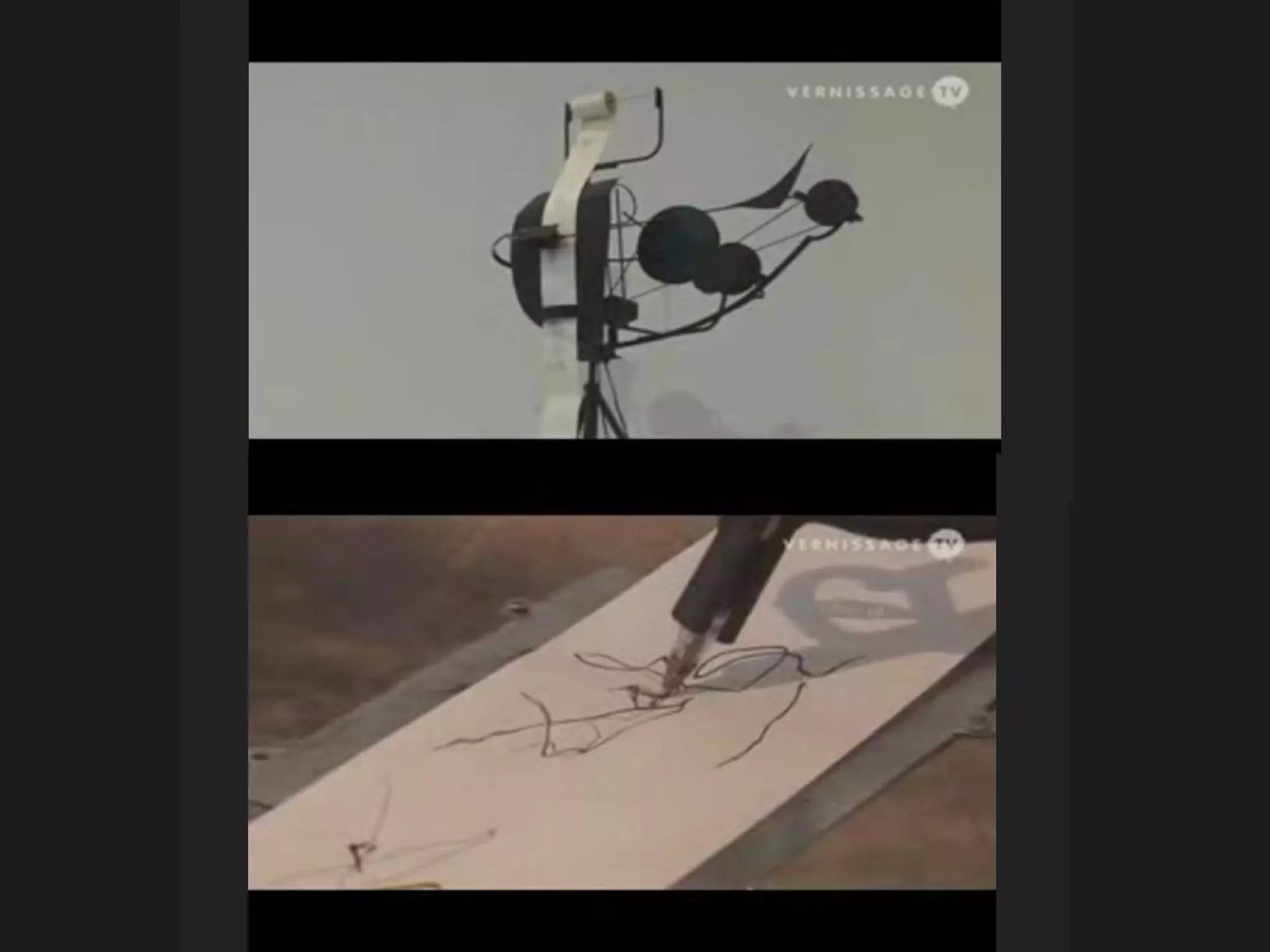
  • #15 Can a machine/robot make art? Is the drawing itself art?
  • #16 Very similar to the drawing made by machines – if it is similar aesthetically – does that make the robot drawing art?
  • #17 Intention/element of chance
  • #18 Natural cloud formations – art in themselves?
  • #19 “drawn” (flown) cloud formations – art?
  • #21 Contemporary art?
  • #23 Found art/ownership/creation
  • #24 What is the difference?
  • #27 Beauty?
  • #31 Barry McGee – tagging outside of a gallery environment
  • #32 Barry McGee – tagging outside of a gallery environment Barry McGee – tagging outside of a gallery environment Barry McGee tagging INSIDE a gallery context
  • #33 Barry McGee – tagging outside of a gallery environment Barry McGee – tagging outside of a gallery environment Barry McGee tagging INSIDE a gallery context Barry McGee – tagging outside of a gallery environment Barry McGee – tagging outside of a gallery environment Barry McGee tagging INSIDE a gallery context
  • #34 Context – inside/outside
  • #35 Painting on wall – art? Painting with a palette/canvas art? Why do we privilege certain mediums/methods?
  • #37 context
  • #38 No transformation of materials – honesty in work – just change in formal presentation and context
  • #39 Filled with milk daily
  • #40 Work that is not tangible
  • #41 Works with out a end – these papers can be taken by a viewer and will be replace endlessly by the gallery
  • #42 Content/concepts – playing on the stereotype of the thoughtful painter/artist
  • #43 Conceptual art
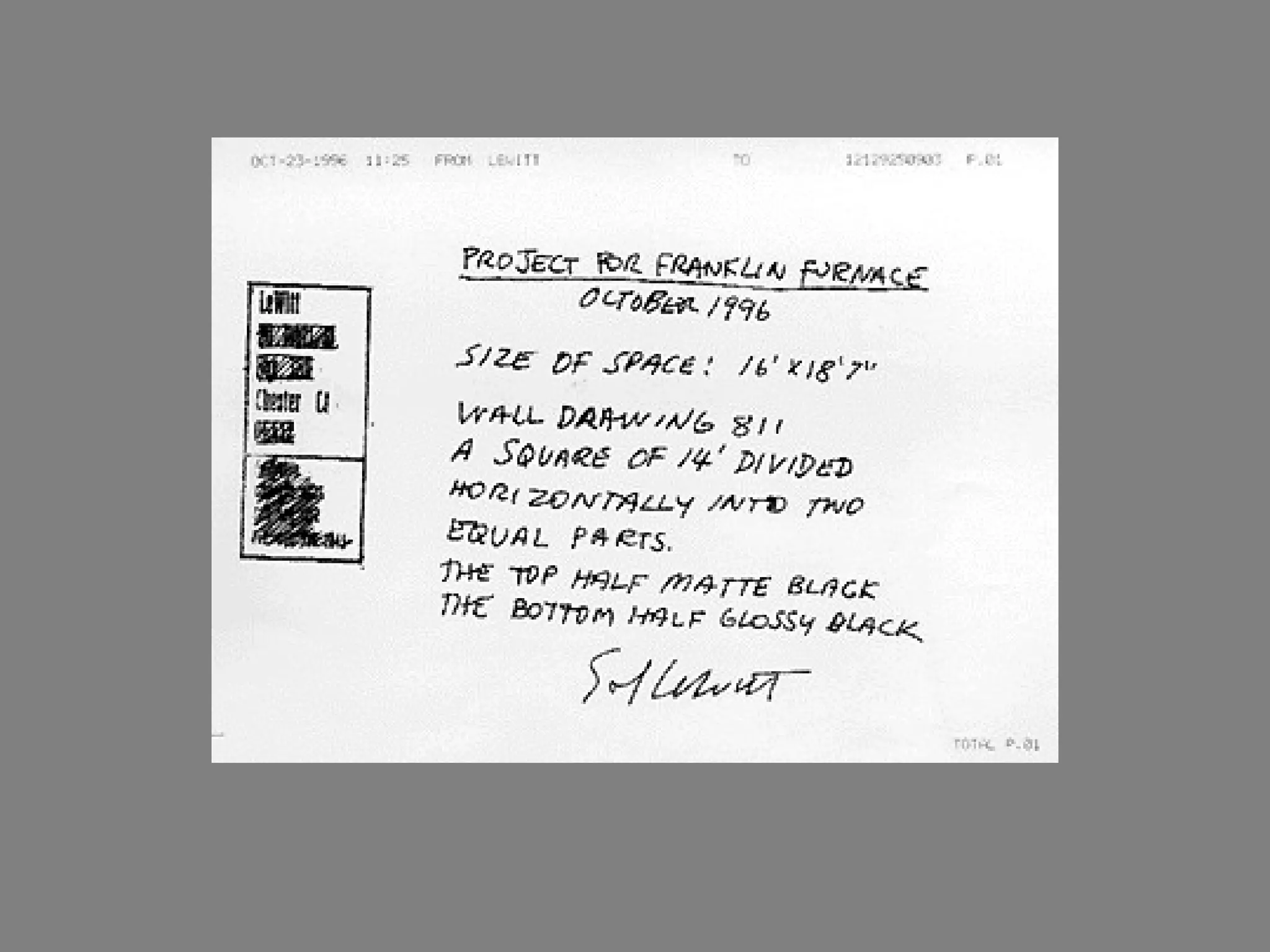
  • #44 Conceptual art – instructions by Sol Lewitt
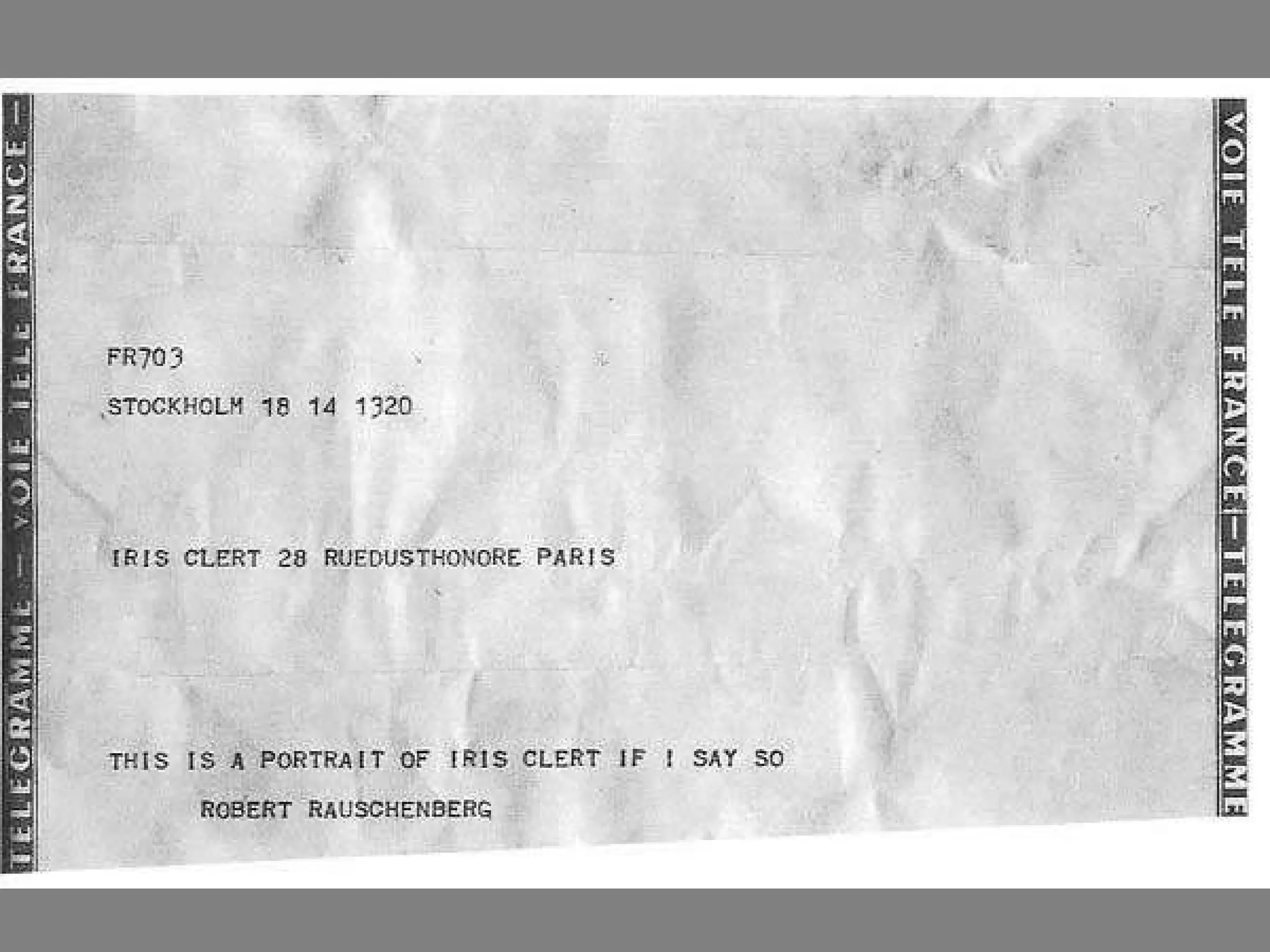
  • #45 Conceptual art?