Watercolor
Landscape
Studio Art
Watercolor






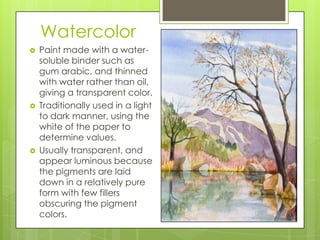
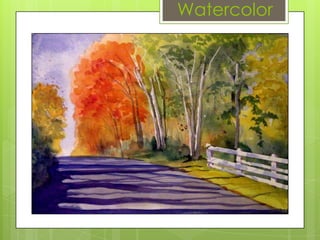
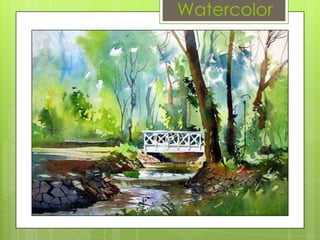
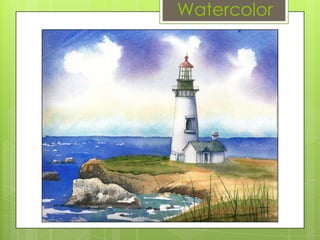
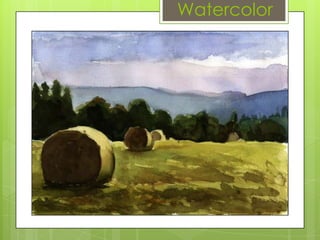
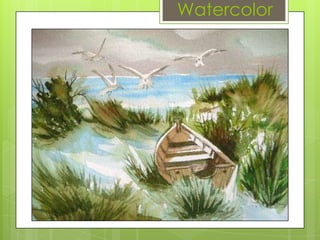
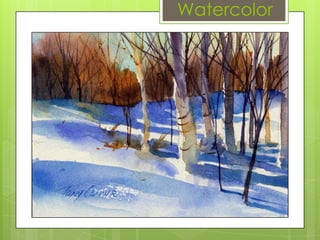
Paint made with a watersoluble binder such as
gum arabic, and thinned
with water rather than oil,
giving a transparent color.
Traditionally used in a light
to dark manner, using the
white of the paper to
determine values.
Usually transparent, and
appear luminous because
the pigments are laid
down in a relatively pure
form with few fillers
obscuring the pigment
colors.
Landscape


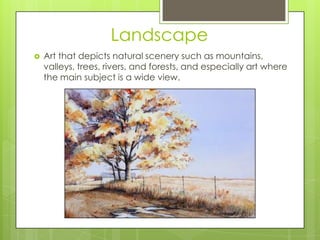
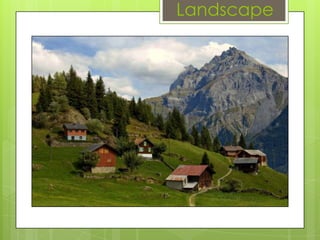
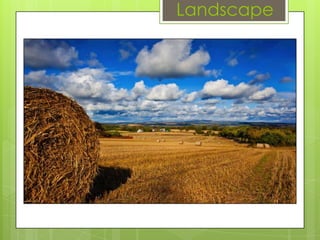
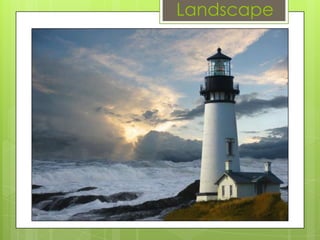
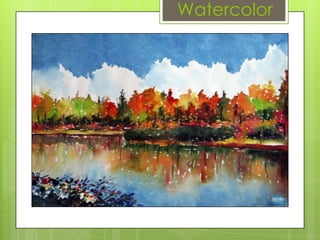
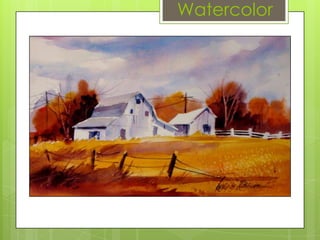
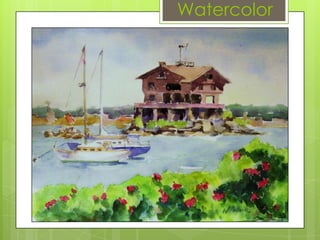
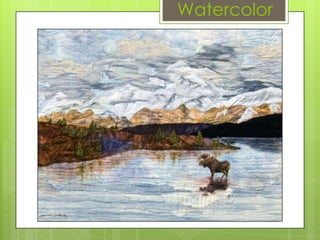
Art that depicts natural scenery such as mountains,
valleys, trees, rivers, and forests, and especially art where
the main subject is a wide view.
Landscape
Landscape
Landscape
Watercolor
Watercolor
Watercolor
Watercolor
Watercolor
Watercolor
Watercolor
Watercolor
Watercolor
Watercolor
TASK
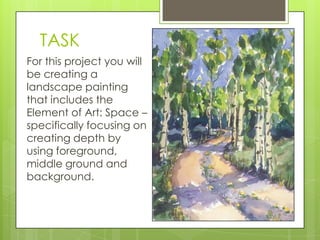
For this project you will
be creating a
landscape painting
that includes the
Element of Art: Space –
specifically focusing on
creating depth by
using foreground,
middle ground and
background.
STEP 1: References
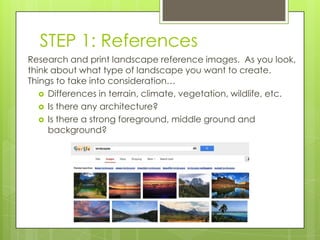
Research and print landscape reference images. As you look,
think about what type of landscape you want to create.
Things to take into consideration…
 Differences in terrain, climate, vegetation, wildlife, etc.
 Is there any architecture?
 Is there a strong foreground, middle ground and
background?
Step 2: Planning
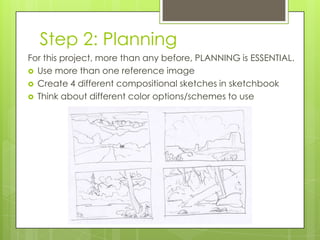
For this project, more than any before, PLANNING is ESSENTIAL.
 Use more than one reference image
 Create 4 different compositional sketches in sketchbook
 Think about different color options/schemes to use
Step 2: Planning
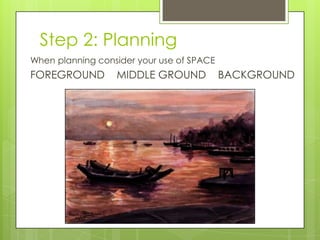
When planning consider your use of SPACE

FOREGROUND

MIDDLE GROUND

BACKGROUND
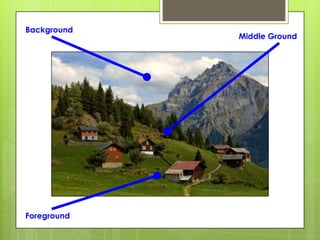
Background

Foreground

Middle Ground
Step 3: Final Drawing
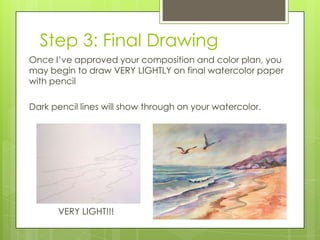
Once I’ve approved your composition and color plan, you
may begin to draw VERY LIGHTLY on final watercolor paper
with pencil

Dark pencil lines will show through on your watercolor.

VERY LIGHT!!!
Step 4: Painting




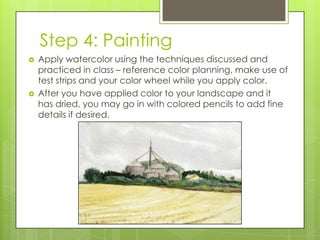
Apply watercolor using the techniques discussed and
practiced in class – reference color planning, make use of
test strips and your color wheel while you apply color.
After you have applied color to your landscape and it
has dried, you may go in with colored pencils to add fine
details if desired.
Questions

Watercolor landscape powerpoint

  • 1.
  • 2.
    Watercolor    Paint made witha watersoluble binder such as gum arabic, and thinned with water rather than oil, giving a transparent color. Traditionally used in a light to dark manner, using the white of the paper to determine values. Usually transparent, and appear luminous because the pigments are laid down in a relatively pure form with few fillers obscuring the pigment colors.
  • 3.
    Landscape  Art that depictsnatural scenery such as mountains, valleys, trees, rivers, and forests, and especially art where the main subject is a wide view.
  • 4.
  • 5.
  • 6.
  • 7.
  • 8.
  • 9.
  • 10.
  • 11.
  • 12.
  • 13.
  • 14.
  • 15.
  • 16.
  • 17.
    TASK For this projectyou will be creating a landscape painting that includes the Element of Art: Space – specifically focusing on creating depth by using foreground, middle ground and background.
  • 18.
    STEP 1: References Researchand print landscape reference images. As you look, think about what type of landscape you want to create. Things to take into consideration…  Differences in terrain, climate, vegetation, wildlife, etc.  Is there any architecture?  Is there a strong foreground, middle ground and background?
  • 19.
    Step 2: Planning Forthis project, more than any before, PLANNING is ESSENTIAL.  Use more than one reference image  Create 4 different compositional sketches in sketchbook  Think about different color options/schemes to use
  • 20.
    Step 2: Planning Whenplanning consider your use of SPACE FOREGROUND MIDDLE GROUND BACKGROUND
  • 21.
  • 22.
    Step 3: FinalDrawing Once I’ve approved your composition and color plan, you may begin to draw VERY LIGHTLY on final watercolor paper with pencil Dark pencil lines will show through on your watercolor. VERY LIGHT!!!
  • 23.
    Step 4: Painting   Applywatercolor using the techniques discussed and practiced in class – reference color planning, make use of test strips and your color wheel while you apply color. After you have applied color to your landscape and it has dried, you may go in with colored pencils to add fine details if desired.
  • 24.