A R T THE NATURE OF ART
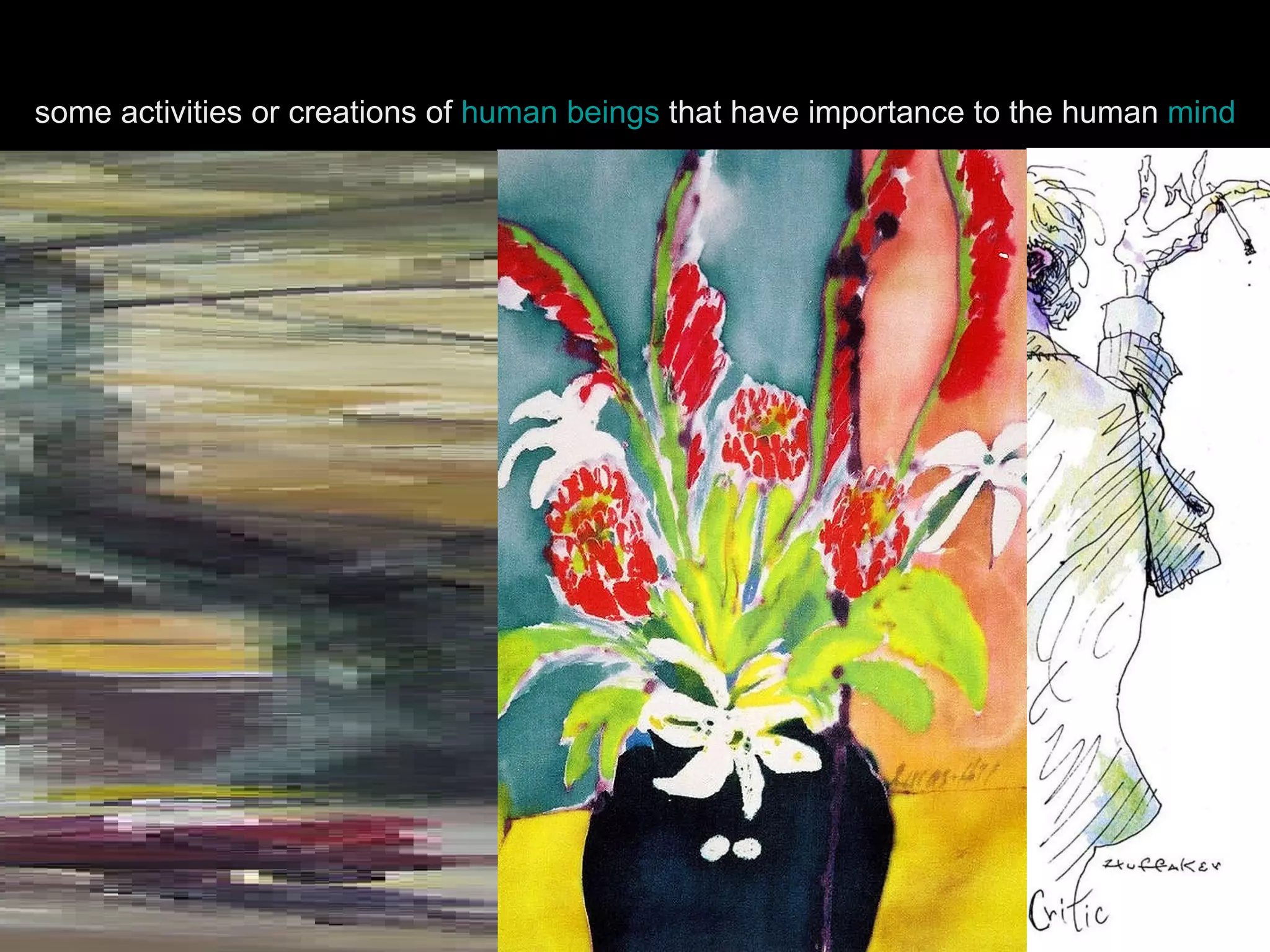
some activities or creations of  human beings  that have importance to the human  mind
The first and broadest sense of "art" means "arrangement" or "to arrange."  In this sense, art is created when someone arranges things found in the  world into a new or different design or form; or when someone arranges  colors next to each other in a painting to make an image or just to make  a pretty or interesting design. Art can also be a form of expression of emotion. The artist may feel a certain  emotion and feels there is no other way to express it than to create something that mean something to them. Most of the art created in this case is made for the artist rather than an audience.
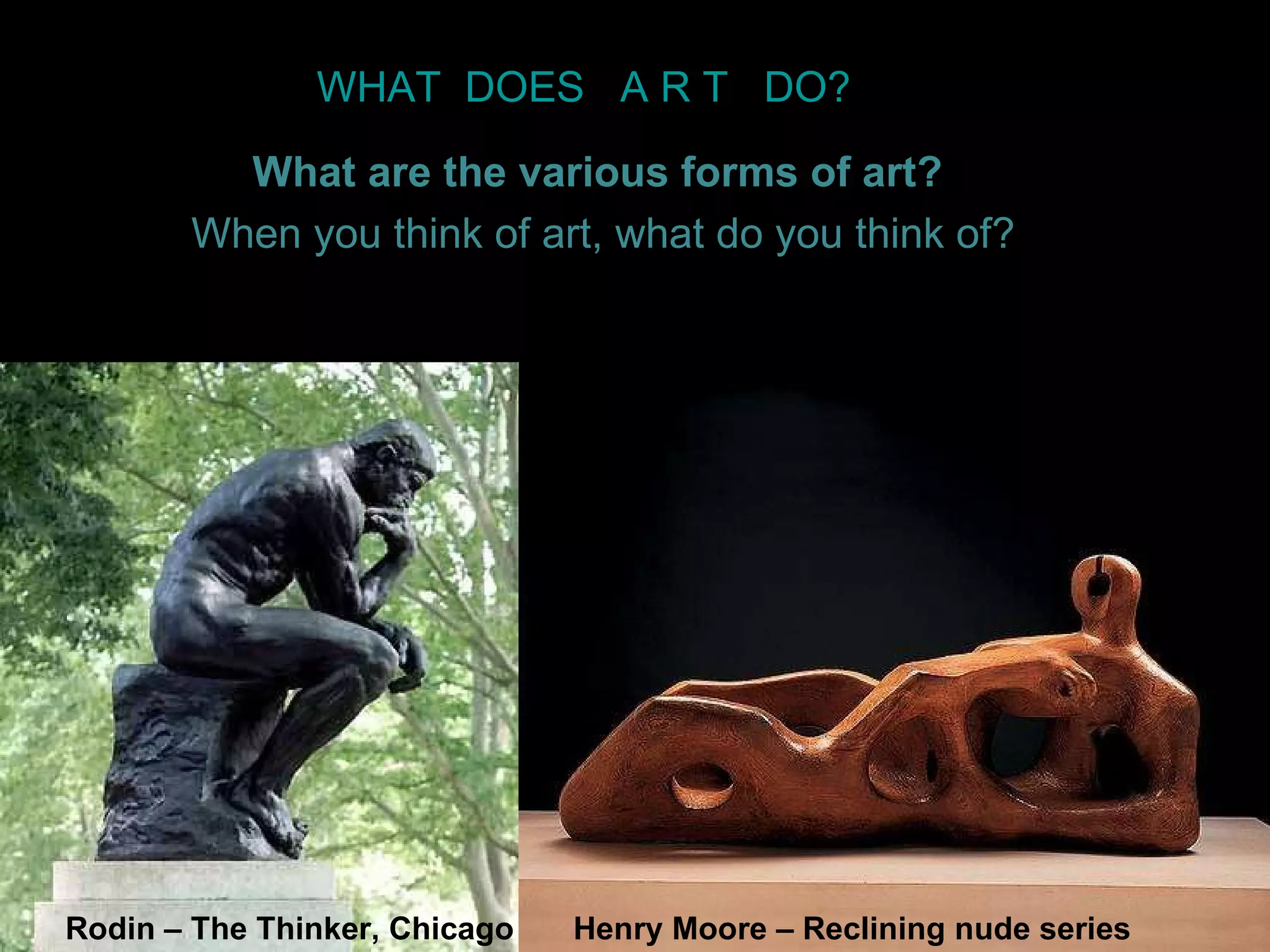
WHAT  DOES  A R T  DO? What are the various forms of art?   When you think of art, what do you think of? Rodin – The Thinker, Chicago Henry Moore – Reclining nude series
Visual Art/The Graphic Arts (expression by making  images  and  sights ): drawing ,  painting ,  sculpting ,  photography ,  filming ,  fashion   Auditory Art (expression by making  sounds ):  music ,  singing   Performing Art/The Dramatic Arts (expression using the body):  dance ,  acting ,  singing   Fine Art (expression by making something  beautiful  or appealing to the  emotions ): poetry ,  writing  ( literature )  Culinary Art (expression by making  flavors  and  tastes ):  cooking   The Mechanical Arts (expression by building objects and structures):  architecture   T Y P E S  O F  A R T
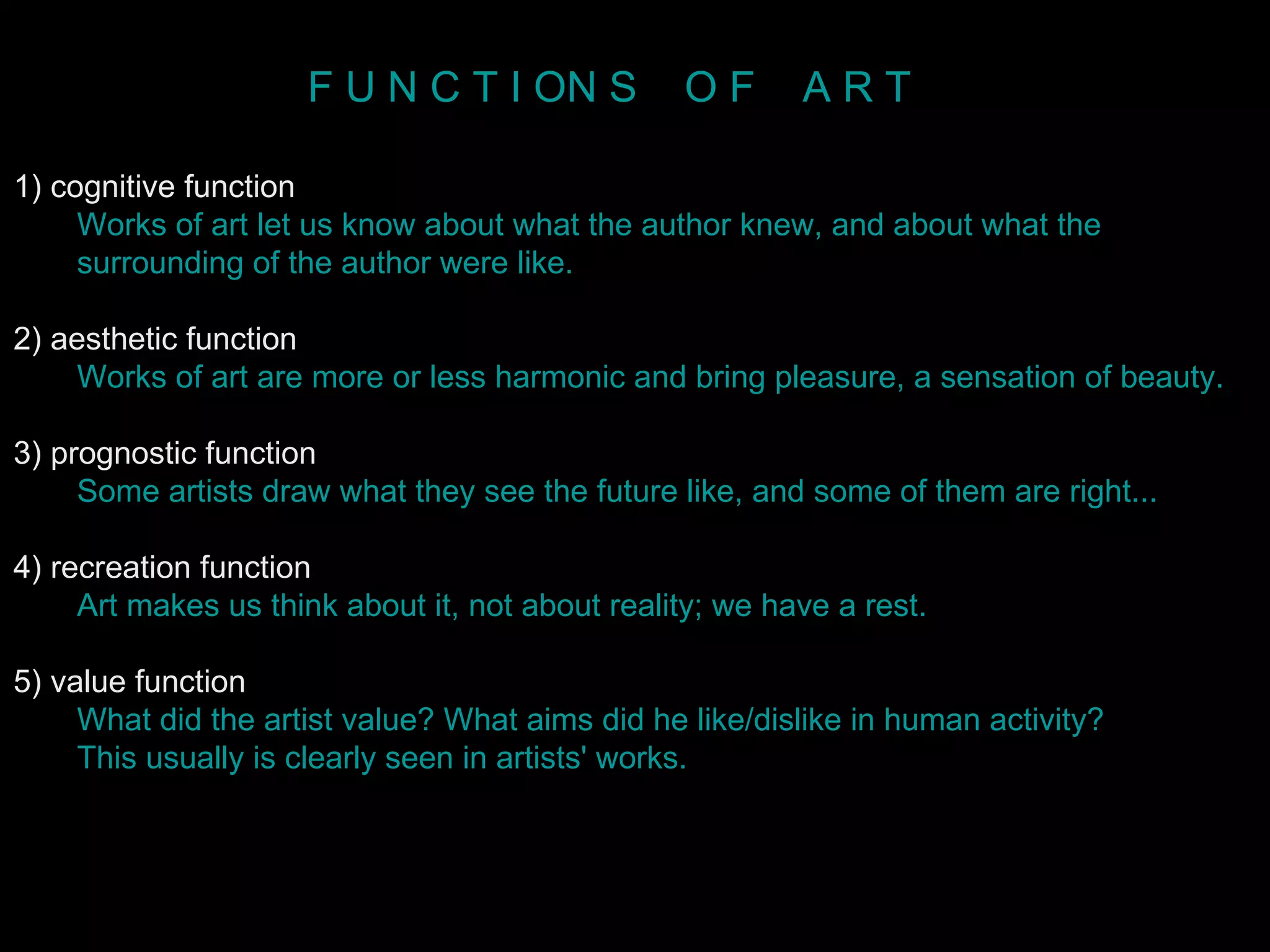
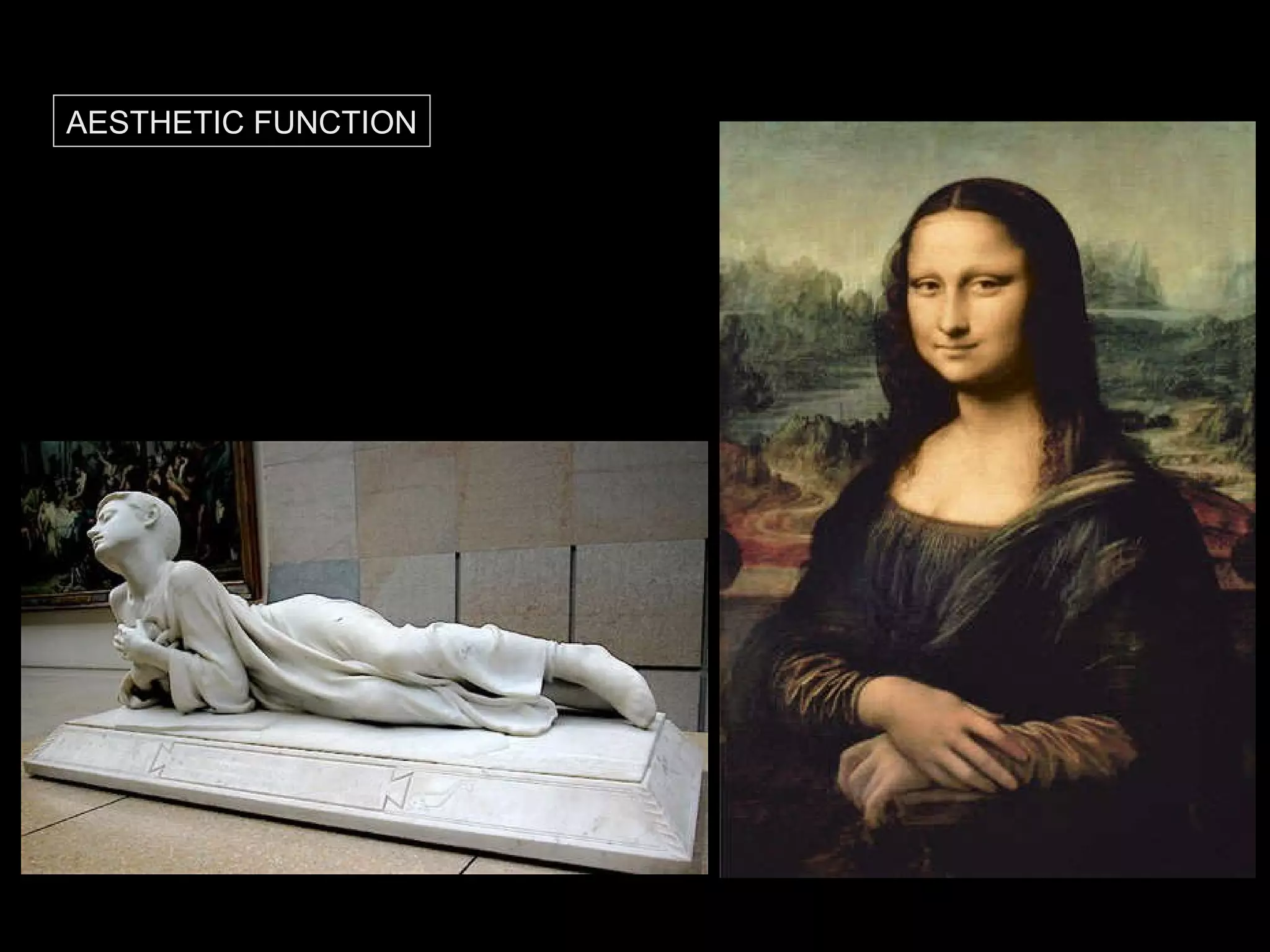
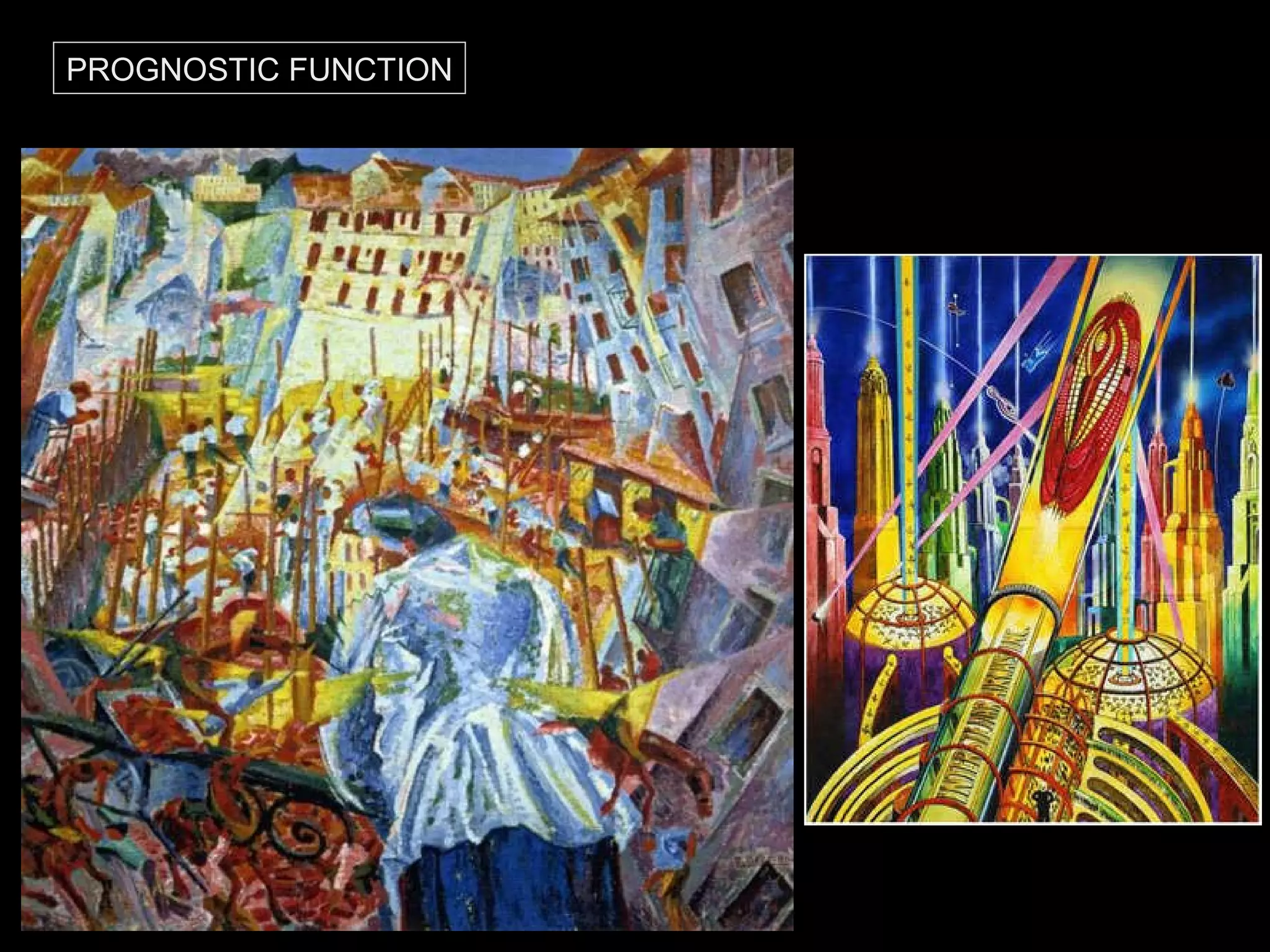
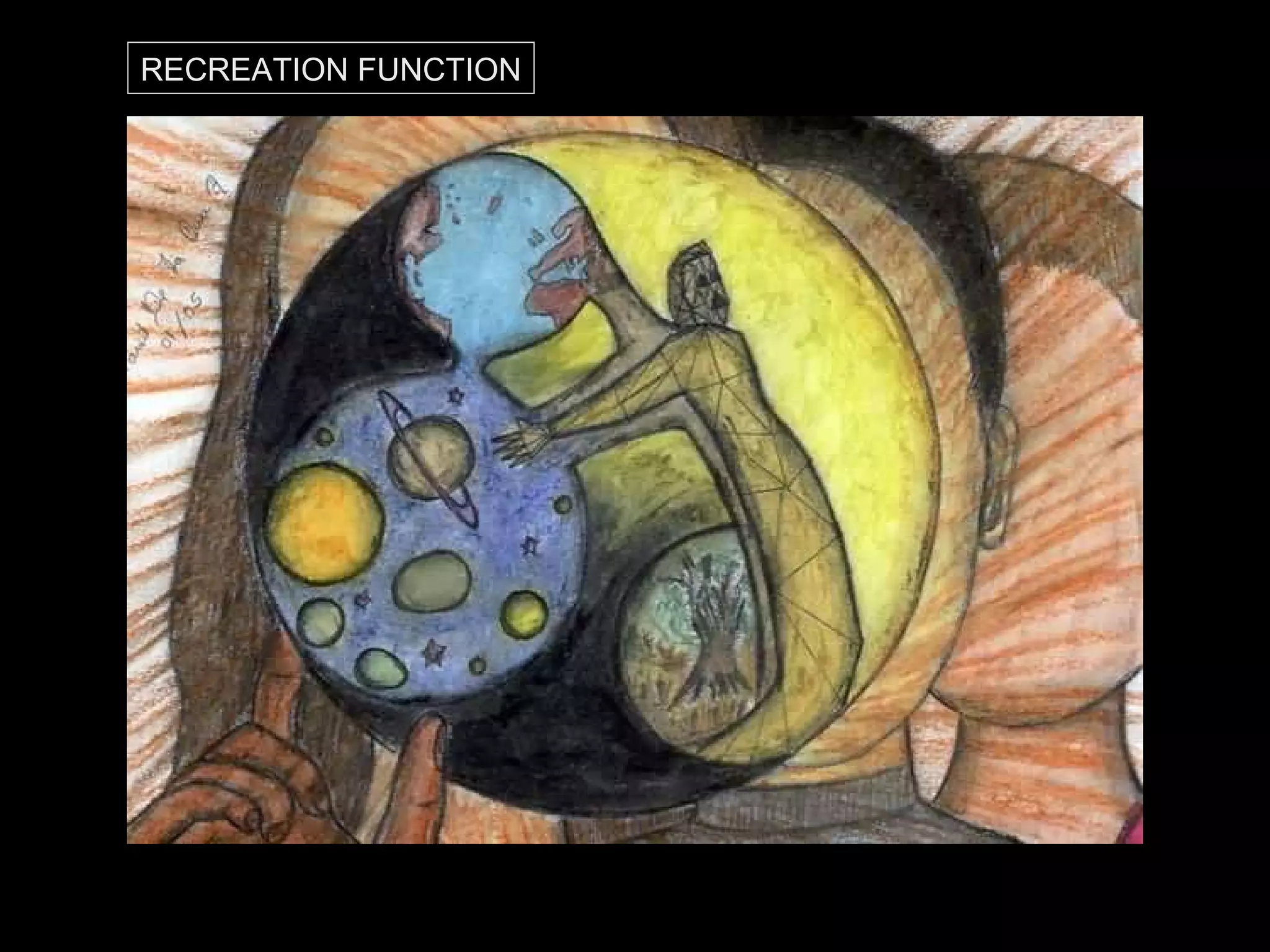
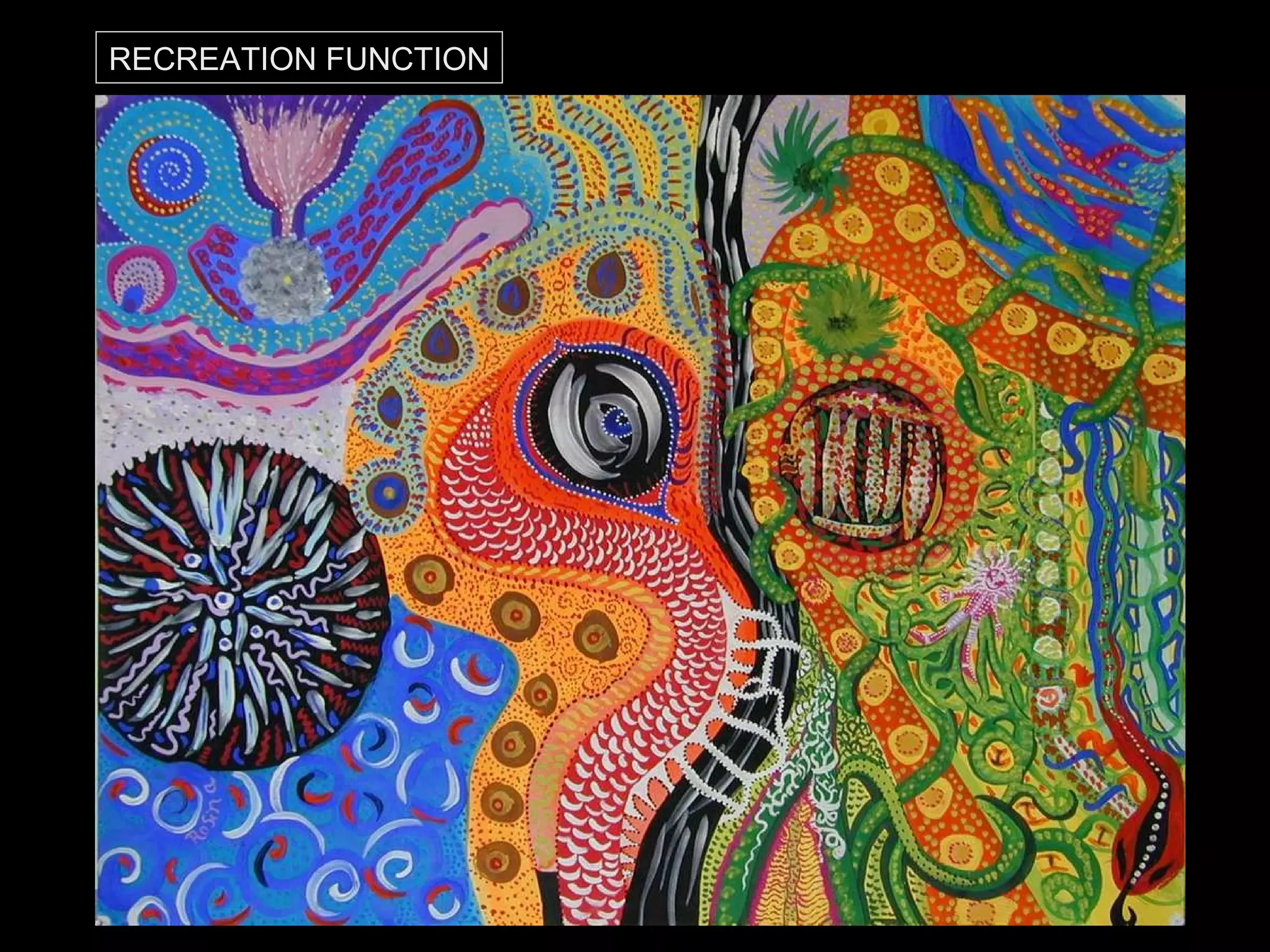
1) cognitive function Works of art let us know about what the author knew, and about what the  surrounding of the author were like.   2) aesthetic function Works of art are more or less harmonic and bring pleasure, a sensation of beauty. 3) prognostic function Some artists draw what they see the future like, and some of them are right...  4) recreation function Art makes us think about it, not about reality; we have a rest.   5) value function What did the artist value? What aims did he like/dislike in human activity?  This usually is clearly seen in artists' works.   F U N C T I ON S  O F  A R T
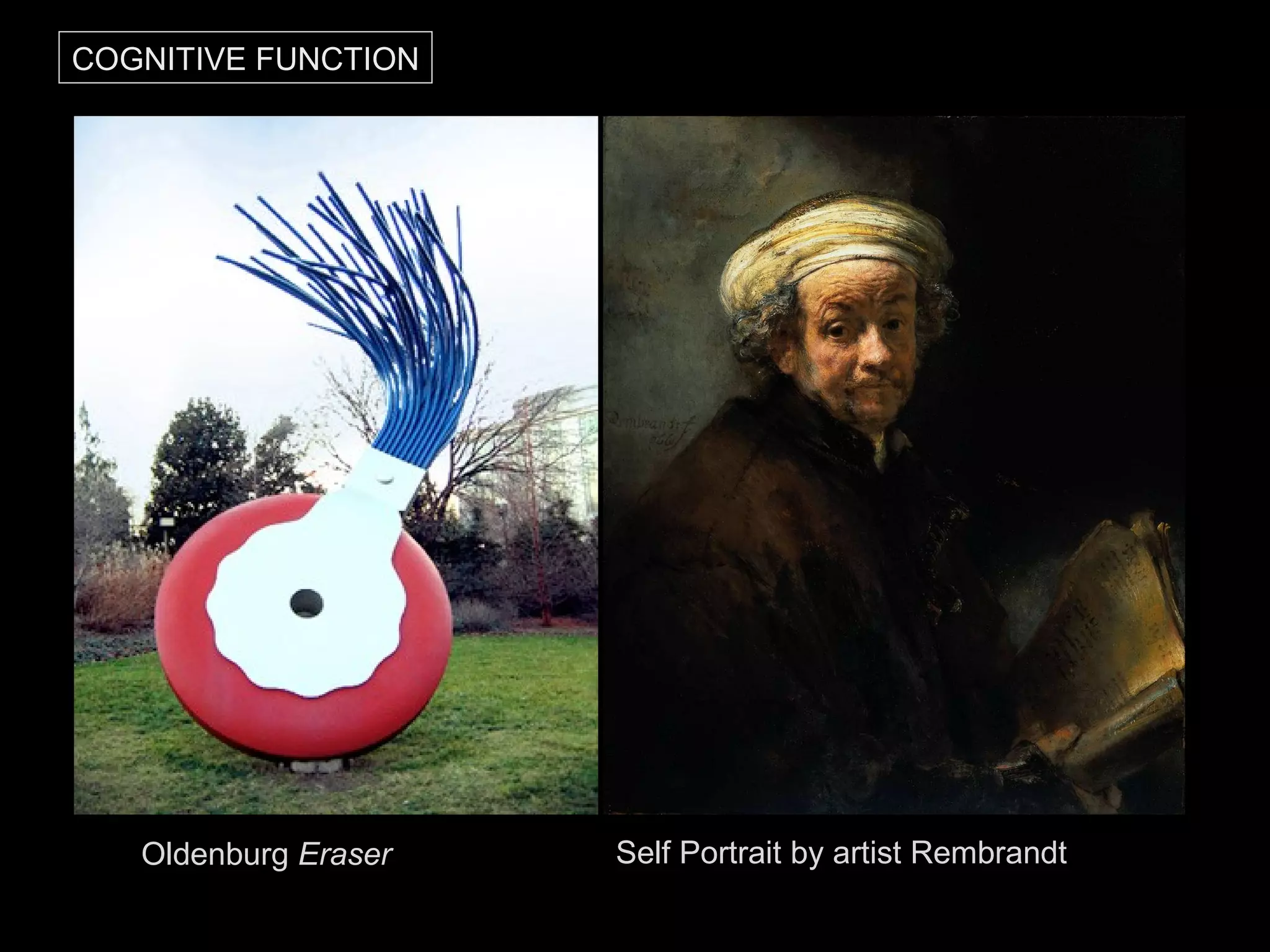
Self Portrait by artist Rembrandt Oldenburg  Eraser COGNITIVE FUNCTION
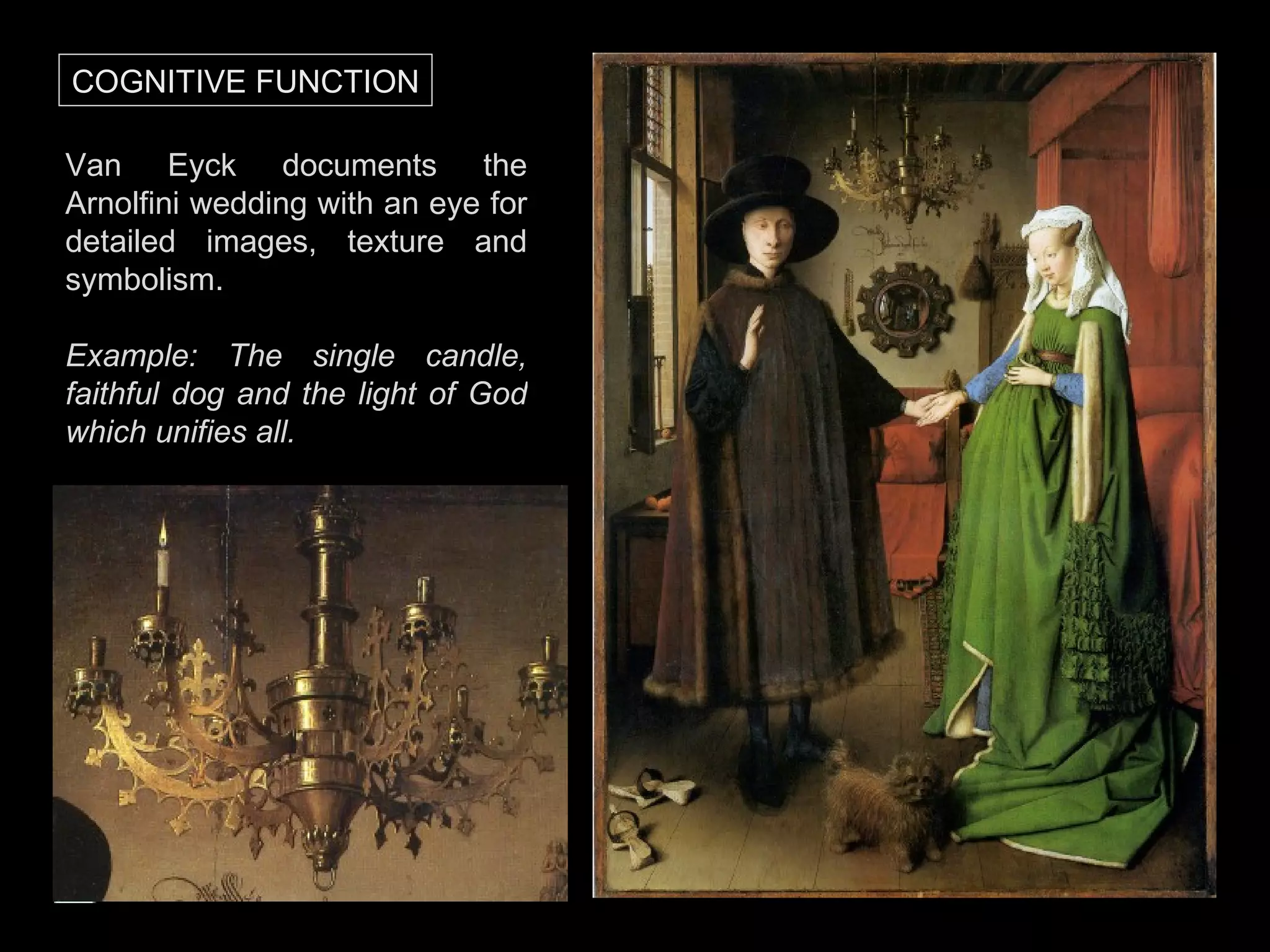
Van Eyck documents the Arnolfini wedding with an eye for detailed images, texture and symbolism. Example: The single candle, faithful dog and the light of God which unifies all. COGNITIVE FUNCTION
AESTHETIC FUNCTION
PROGNOSTIC FUNCTION
RECREATION FUNCTION
RECREATION FUNCTION
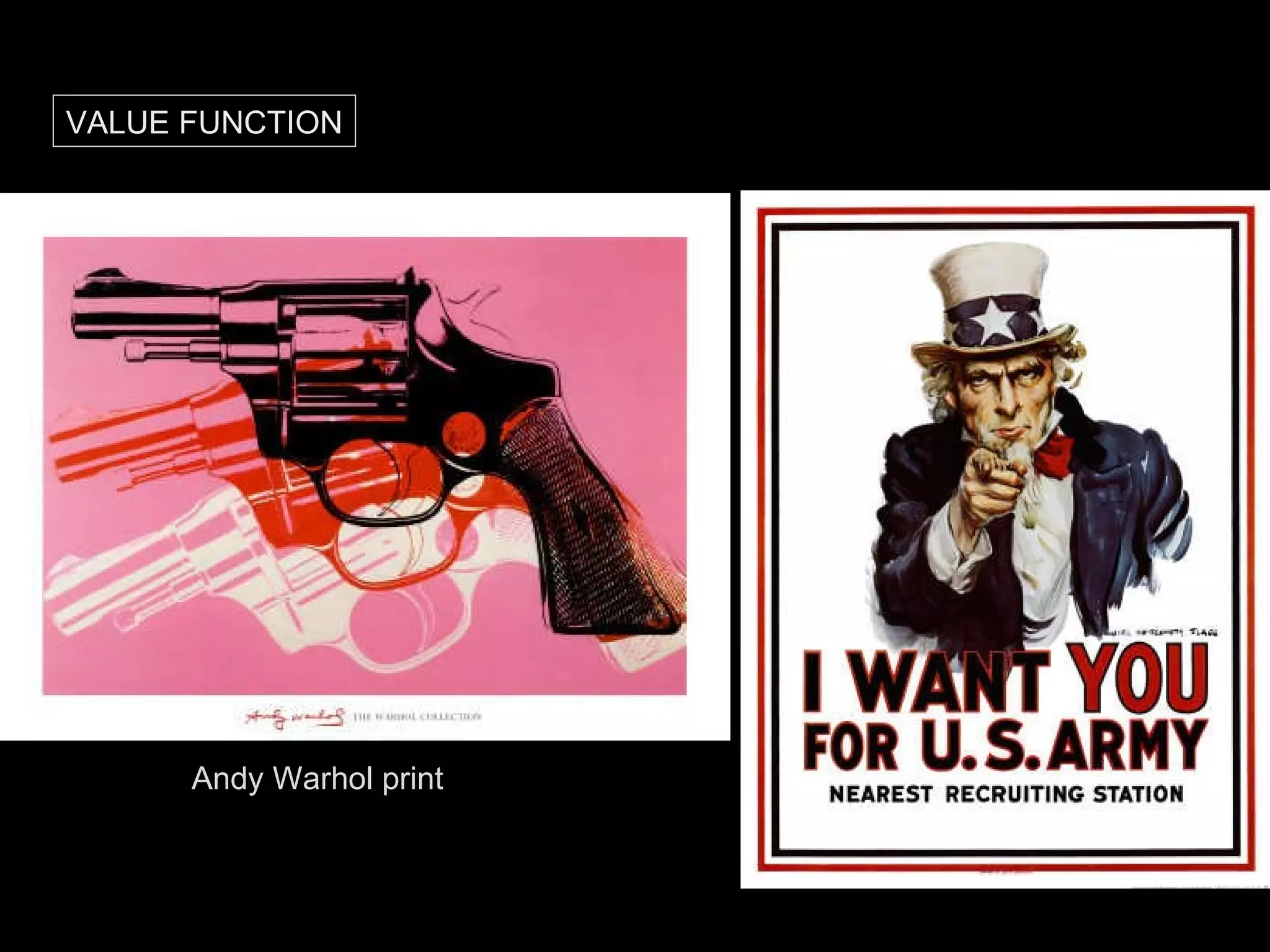
Andy Warhol print VALUE FUNCTION
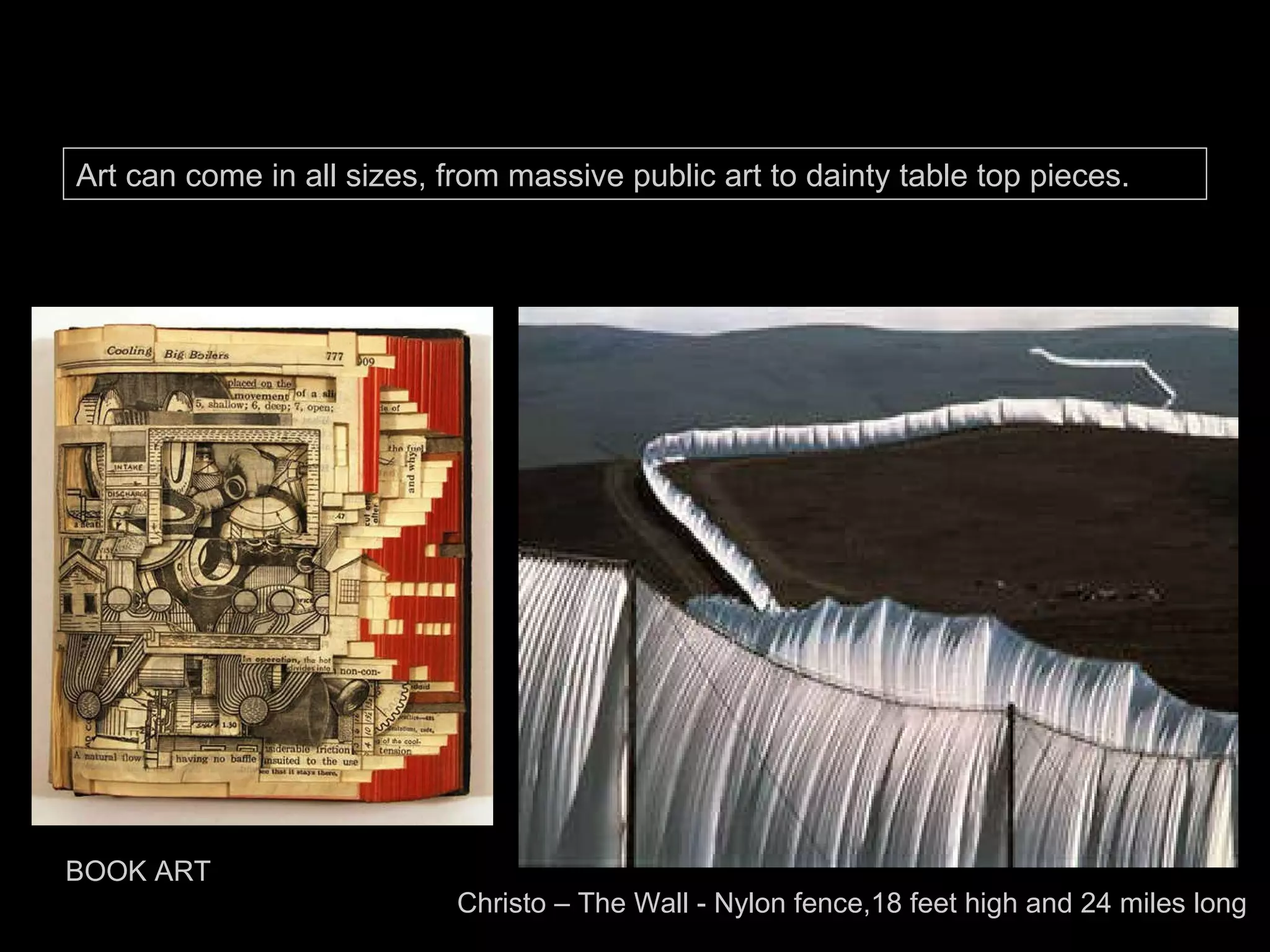
Christo – The Wall - Nylon fence,18 feet high and 24 miles long  BOOK ART Art can come in all sizes, from massive public art to dainty table top pieces.
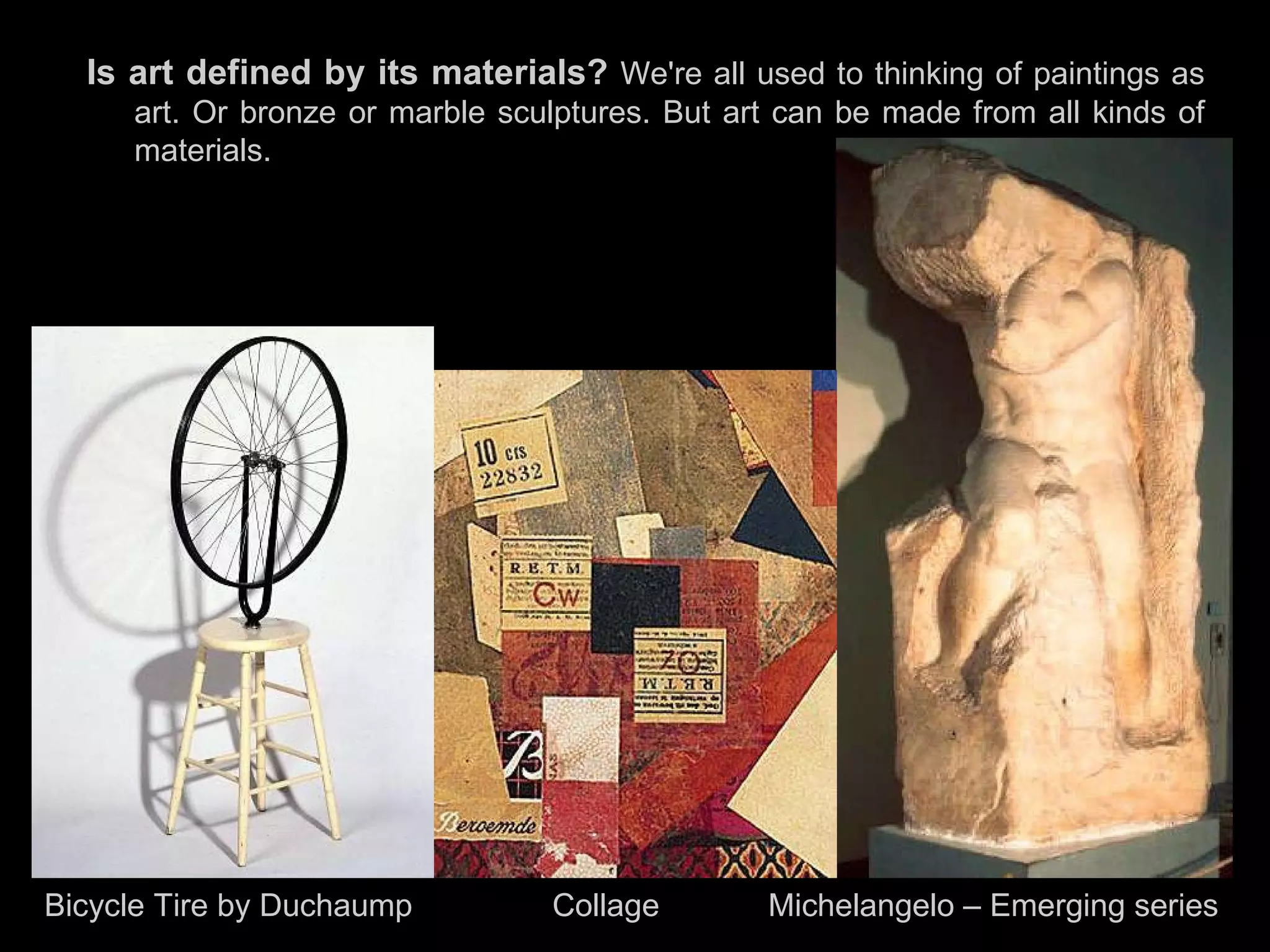
Is art defined by its materials?   We're all used to thinking of paintings as art. Or bronze or marble sculptures. But art can be made from all kinds of materials.  Bicycle Tire by Duchaump  Collage   Michelangelo – Emerging series
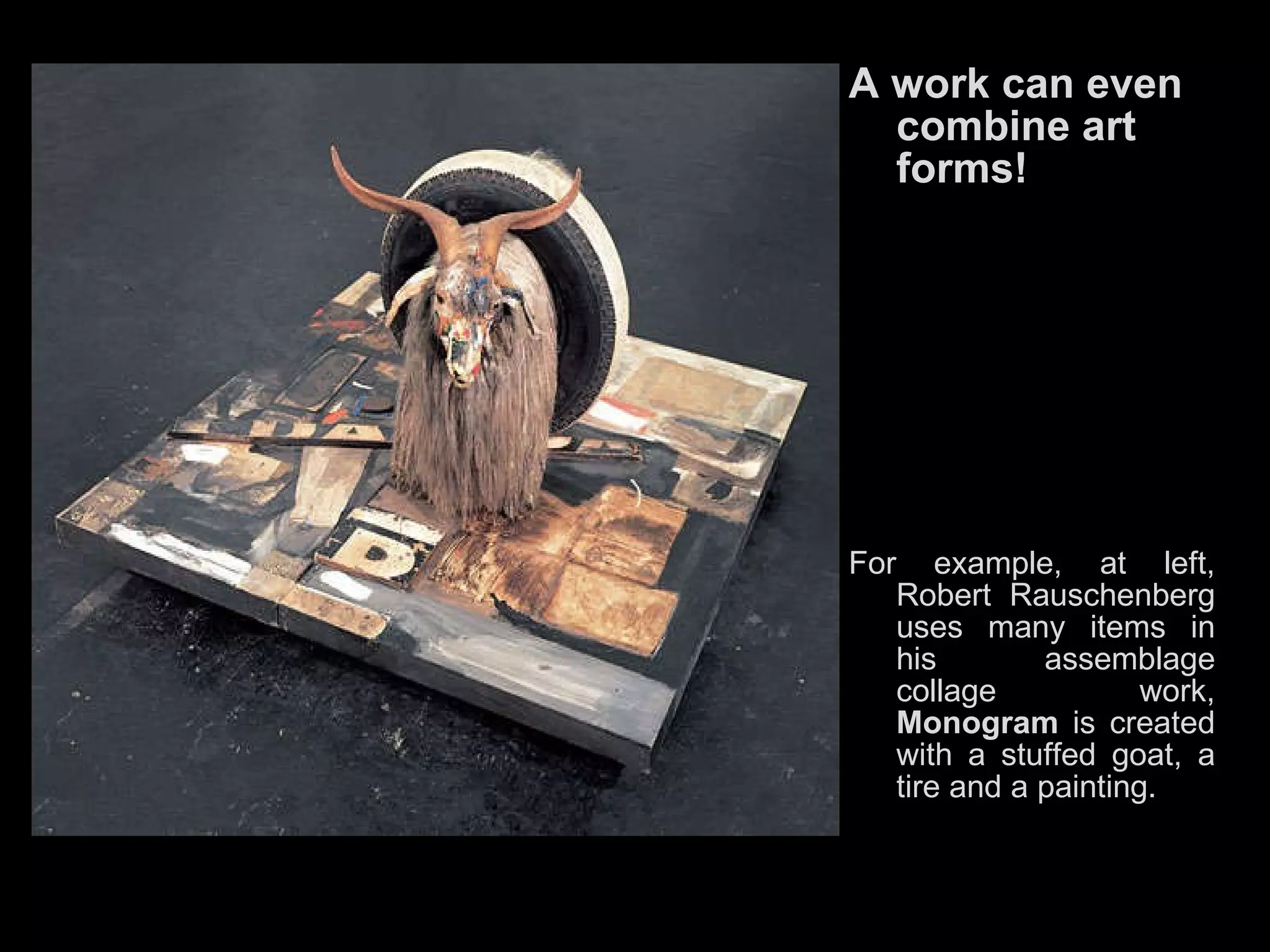
A work can even combine art forms!   For example, at left, Robert Rauschenberg uses many items in his assemblage collage work,  Monogram  is created with a stuffed goat, a tire and a painting.
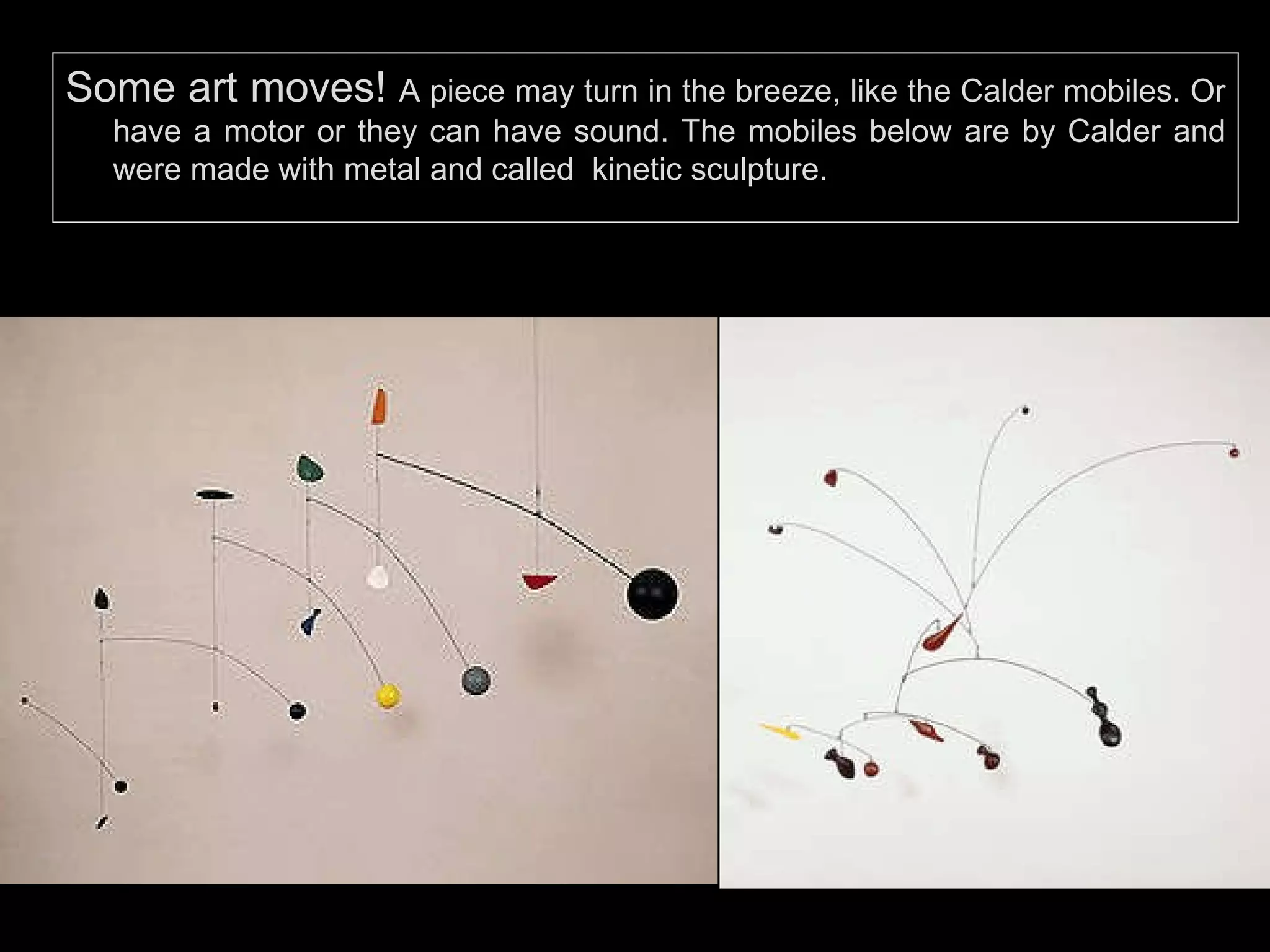
Some art moves!  A piece may turn in the breeze, like the Calder mobiles. Or have a motor or they can have sound. The mobiles below are by Calder and were made with metal and called  kinetic sculpture.
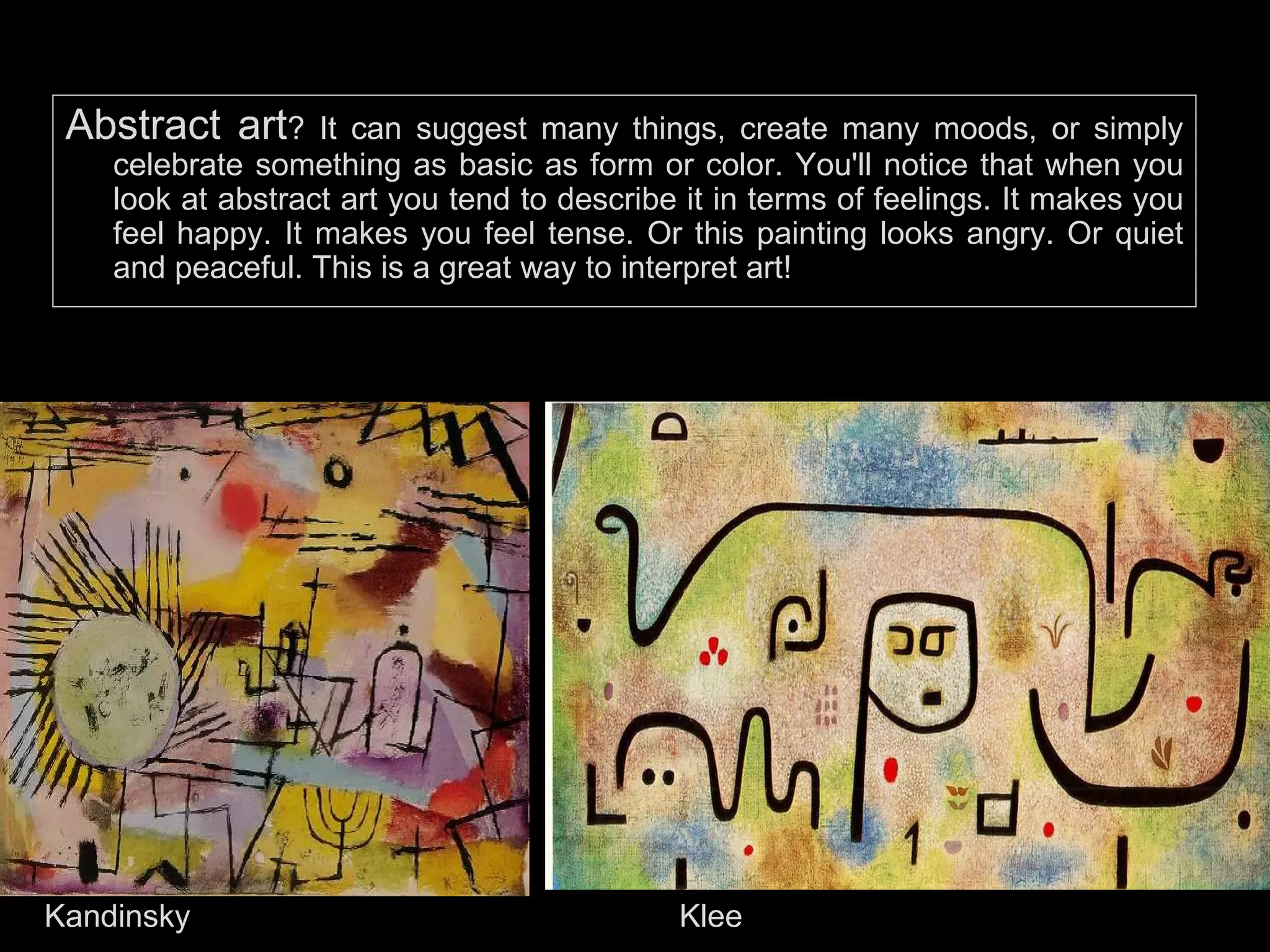
Abstract art ? It can suggest many things, create many moods, or simply celebrate something as basic as form or color. You'll notice that when you look at abstract art you tend to describe it in terms of feelings. It makes you feel happy. It makes you feel tense. Or this painting looks angry. Or quiet and peaceful. This is a great way to interpret art!  Kandinsky Klee
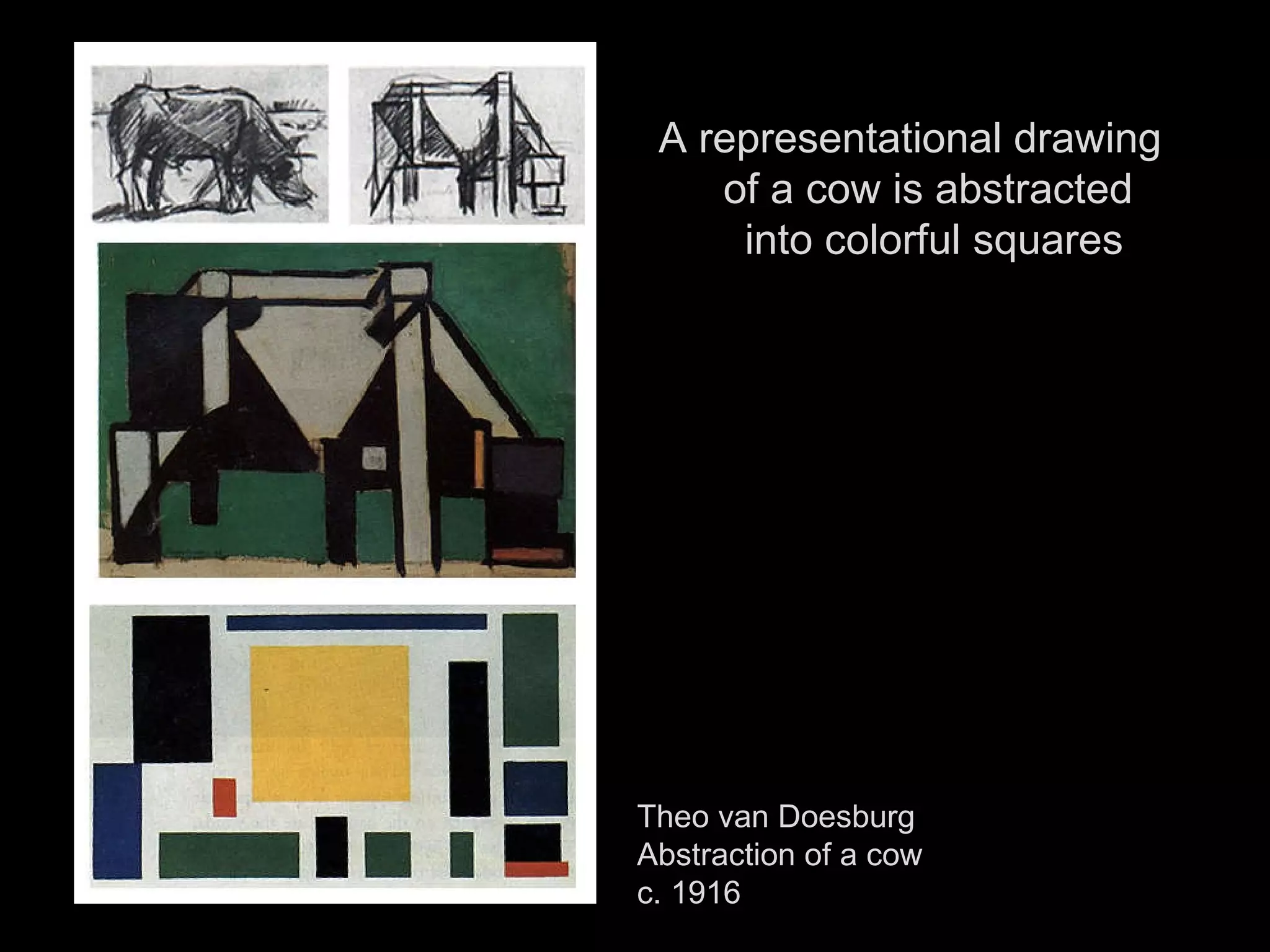
A representational drawing of a cow is abstracted  into colorful squares Theo van Doesburg Abstraction of a cow c. 1916
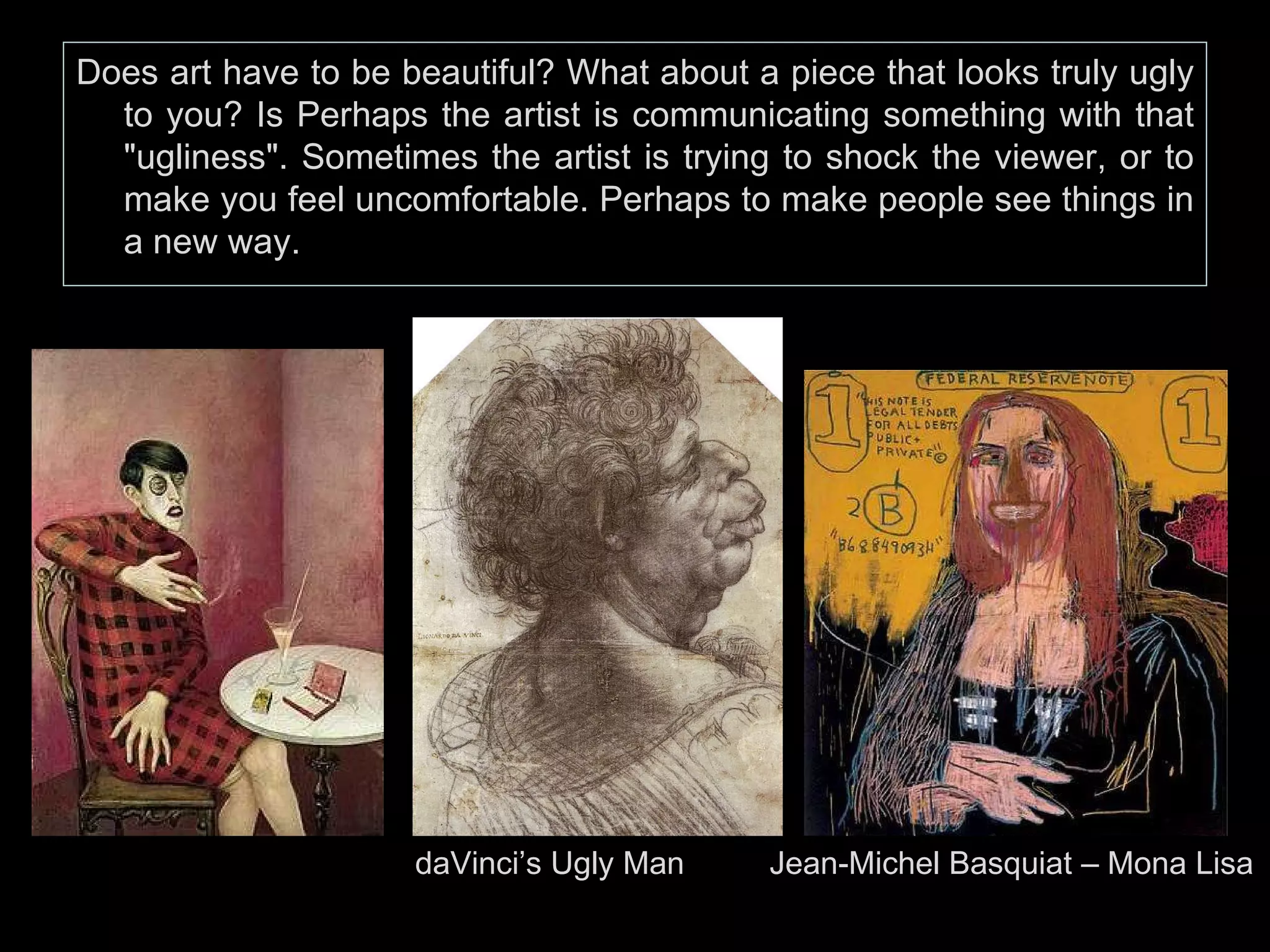
Does art have to be beautiful? What about a piece that looks truly ugly to you? Is Perhaps the artist is communicating something with that "ugliness". Sometimes the artist is trying to shock the viewer, or to make you feel uncomfortable. Perhaps to make people see things in a new way. daVinci’s Ugly Man    Jean-Michel Basquiat – Mona Lisa
ART VS ARCHITECTURE
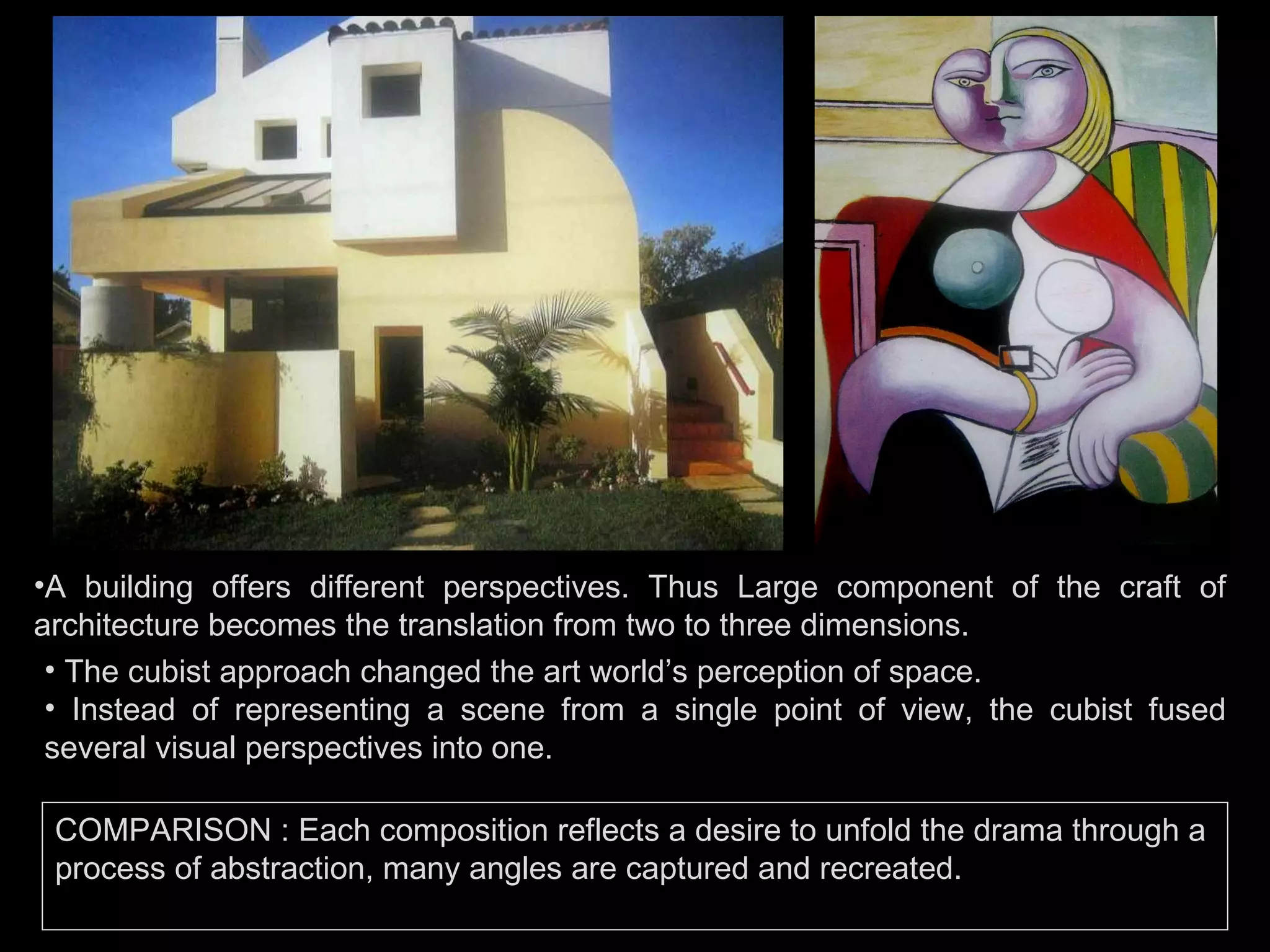
A building offers different perspectives. Thus Large component of the craft of architecture becomes the translation from two to three dimensions. The cubist approach changed the art world’s perception of space. Instead of representing a scene from a single point of view, the cubist fused several visual perspectives into one. COMPARISON :  Each composition reflects a desire to unfold the drama through a process of abstraction, many angles are captured and recreated.
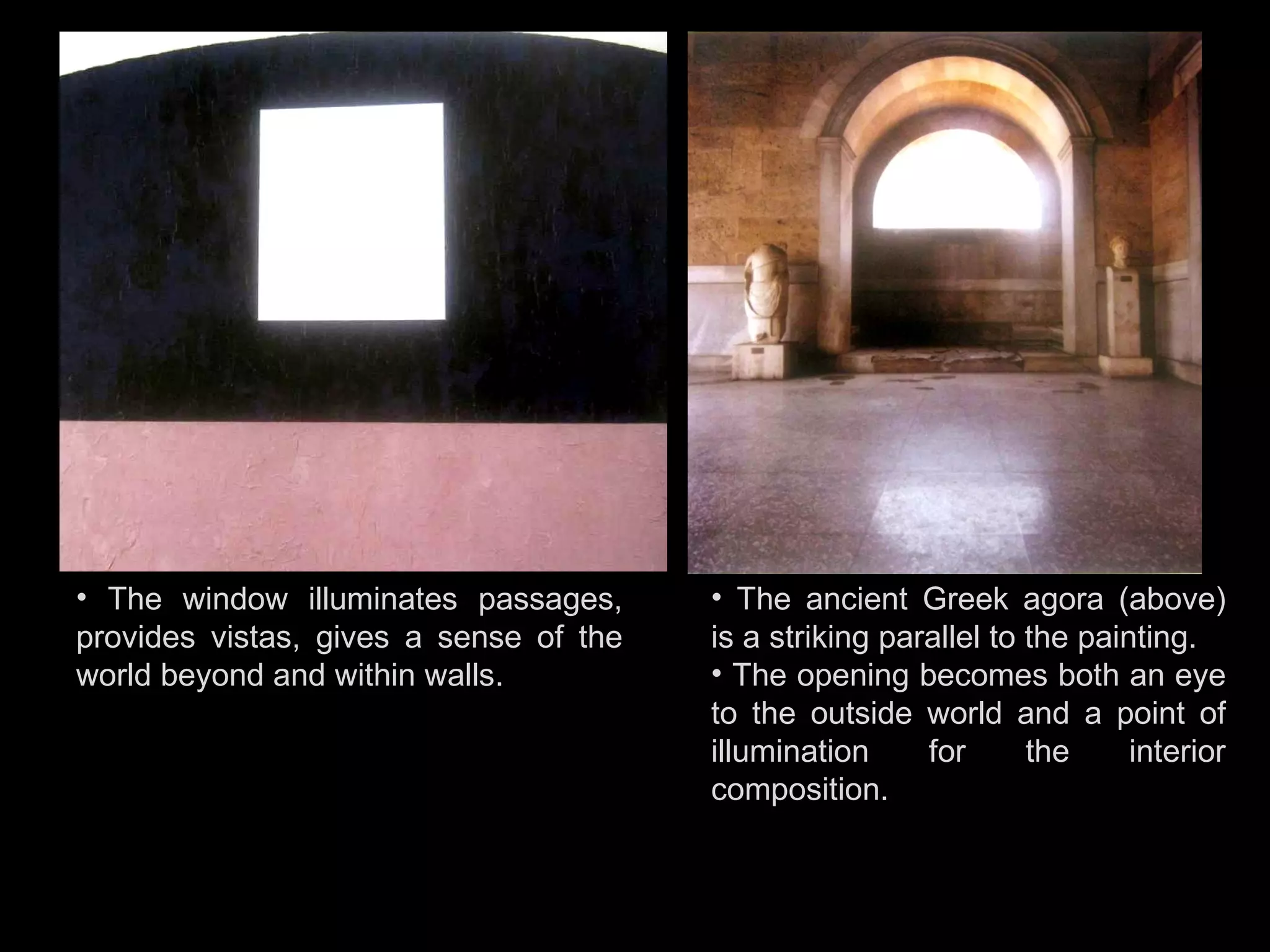
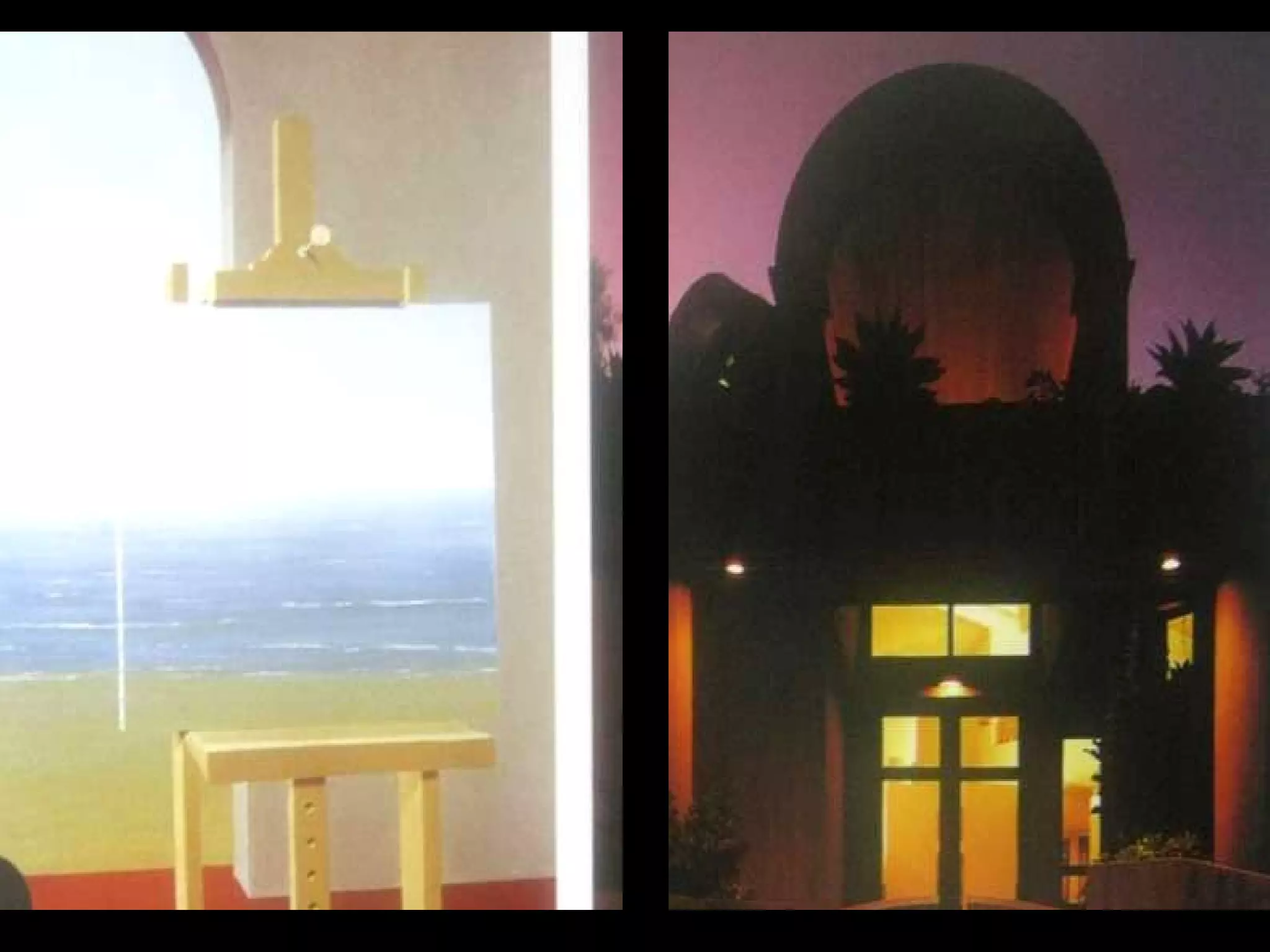
The window illuminates passages, provides vistas, gives a sense of the world beyond and within walls. The ancient Greek agora (above) is a striking parallel to the painting. The opening becomes both an eye to the outside world and a point of illumination for the interior composition.
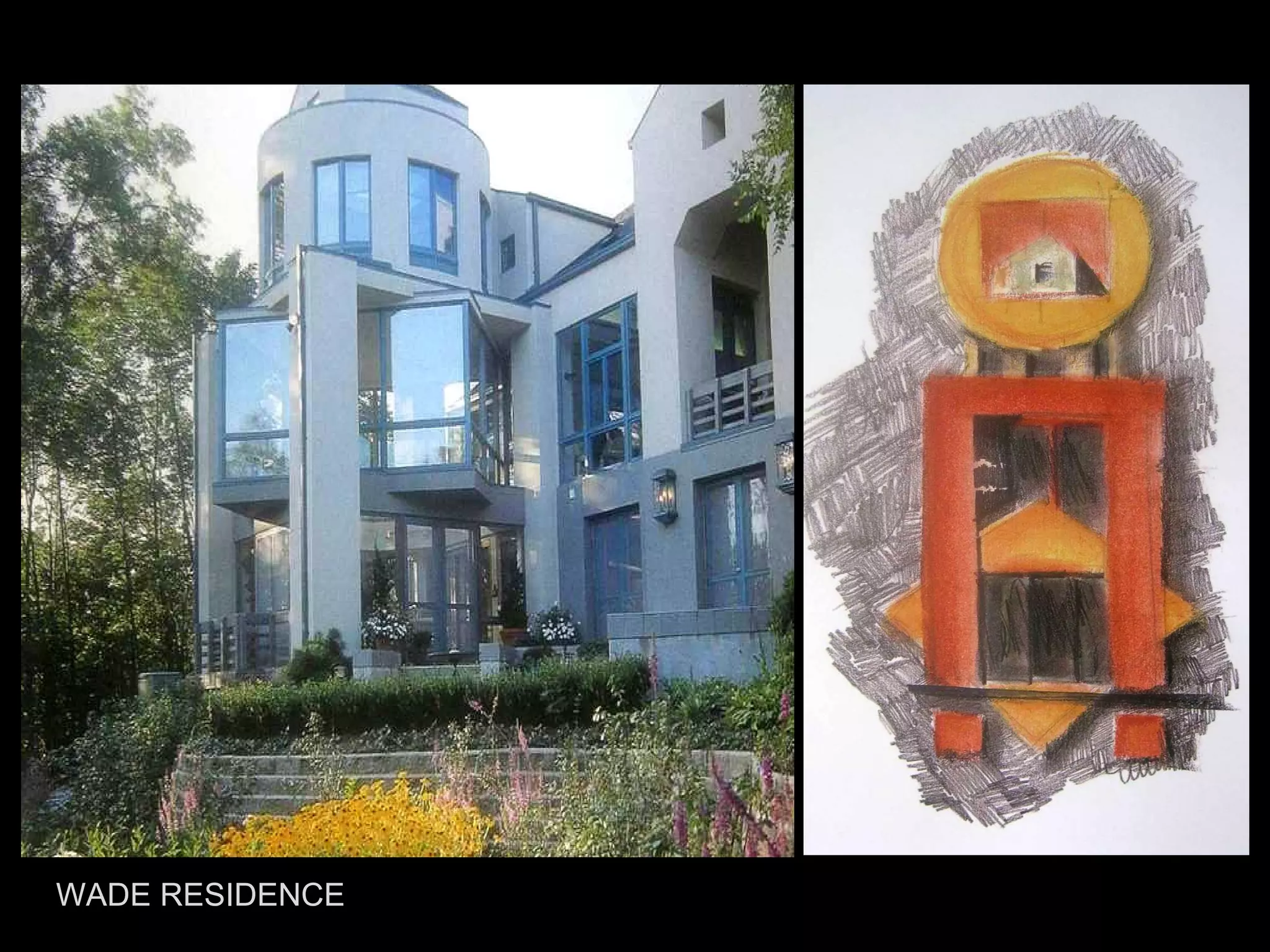
WADE RESIDENCE
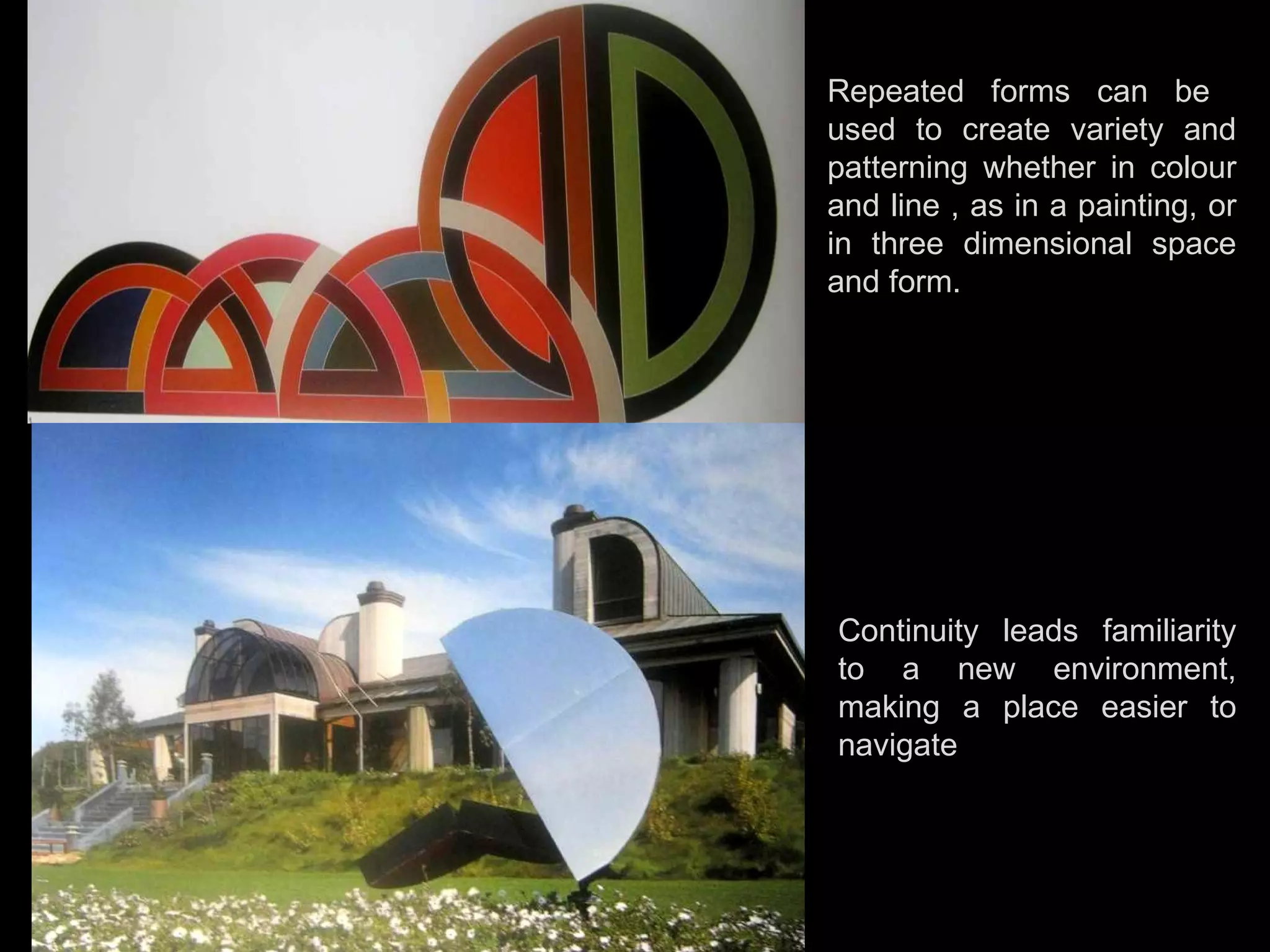
Repeated forms can be  used to create variety and patterning whether in colour and line , as in a painting, or in three dimensional space and form. Continuity leads familiarity to a new environment, making a place easier to navigate
 
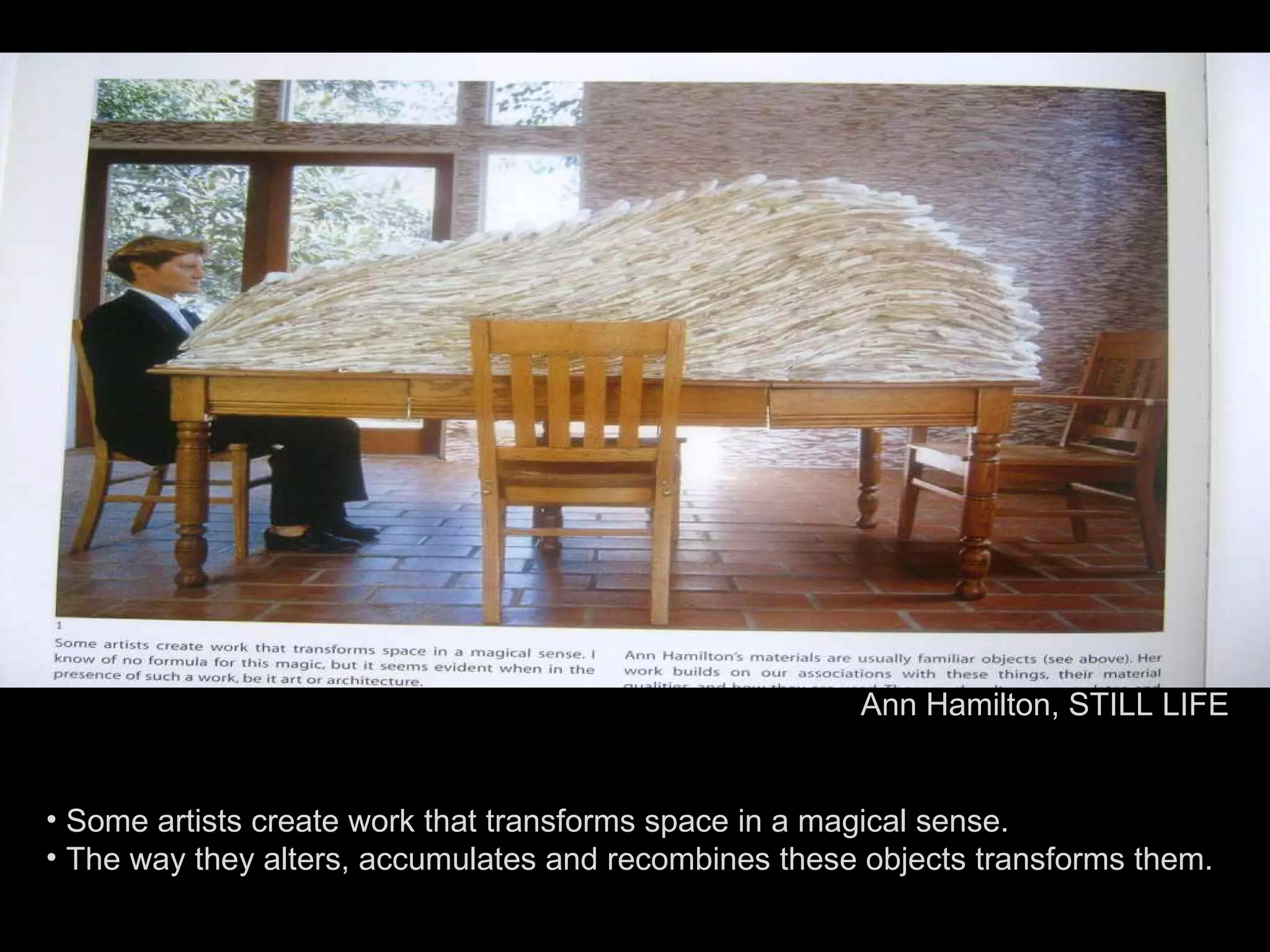
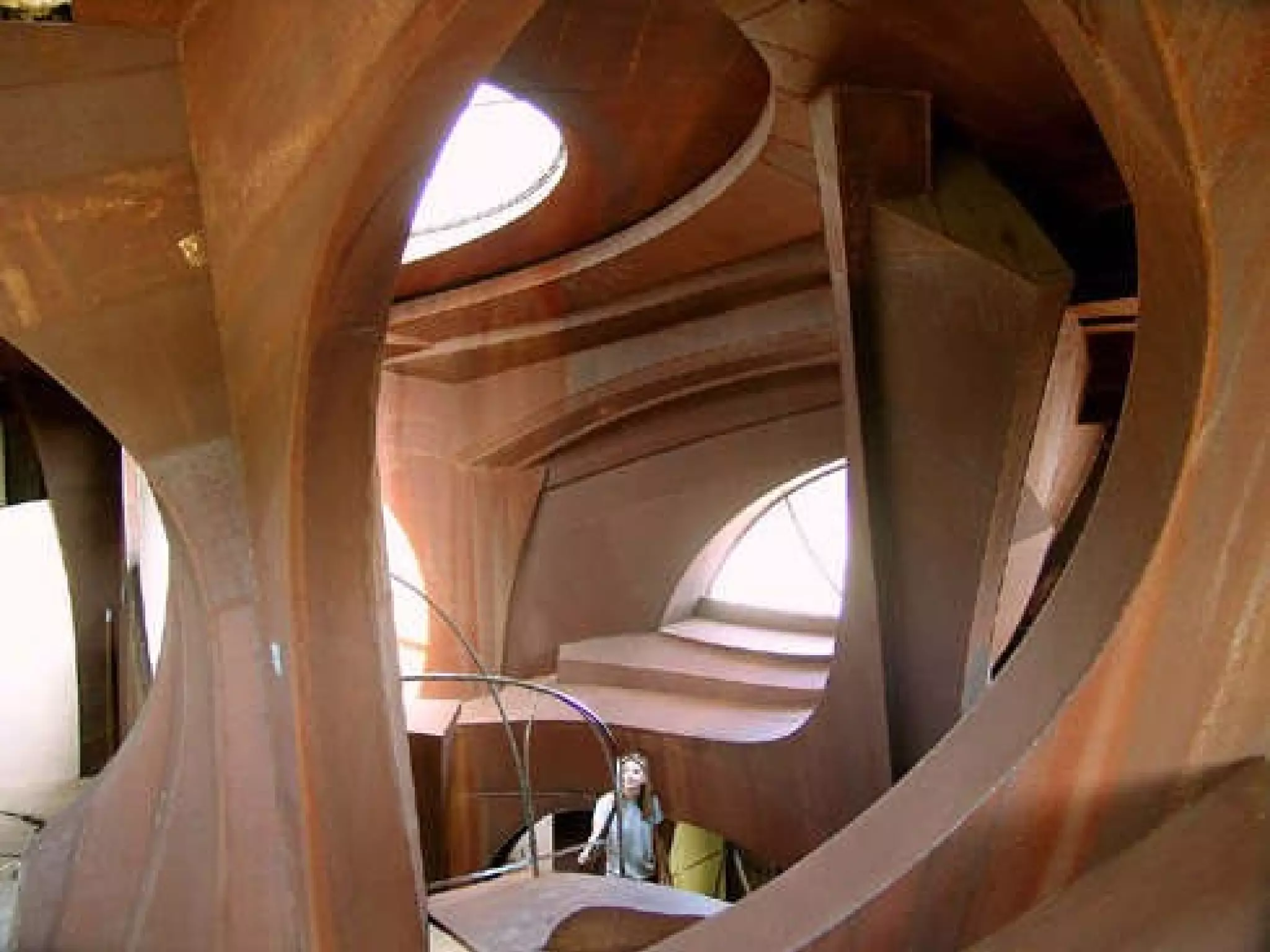
Some artists create work that transforms space in a magical sense. The way they alters, accumulates and recombines these objects transforms them. Ann Hamilton, STILL LIFE
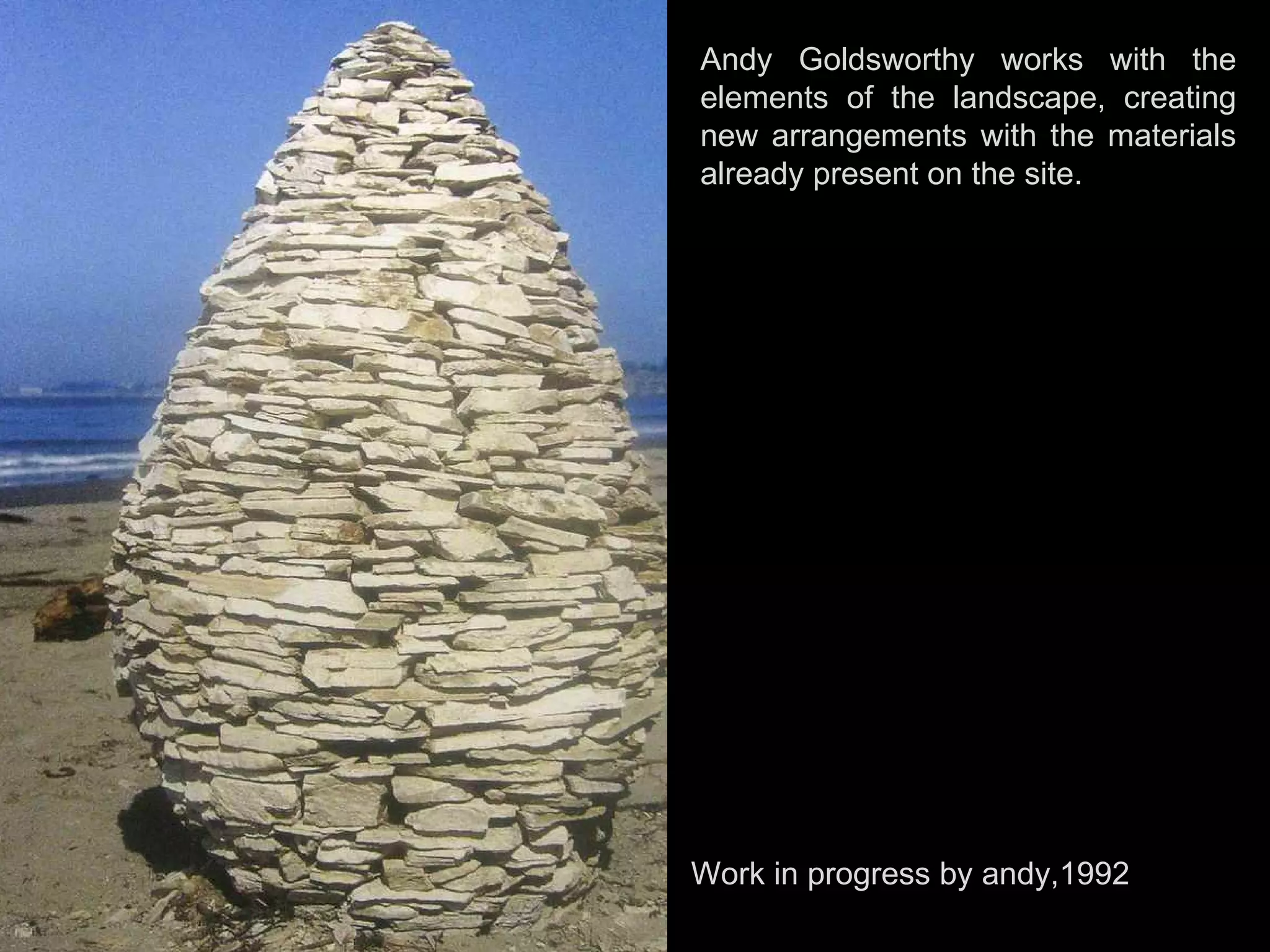
Andy Goldsworthy works with the elements of the landscape, creating new arrangements with the materials already present on the site. Work in progress by andy,1992
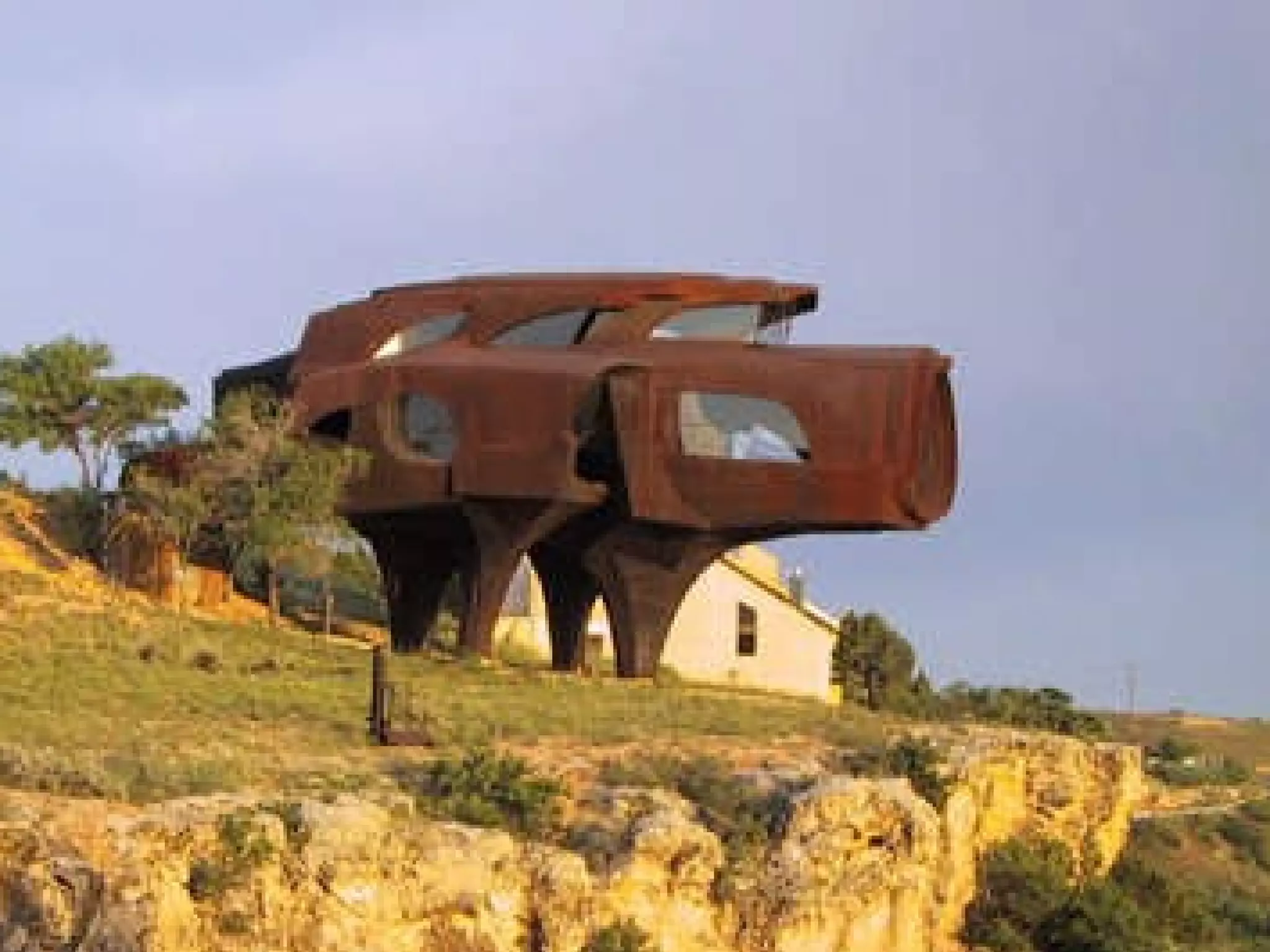
A R T vs ARCHITECTURE OPEN DISCUSSION
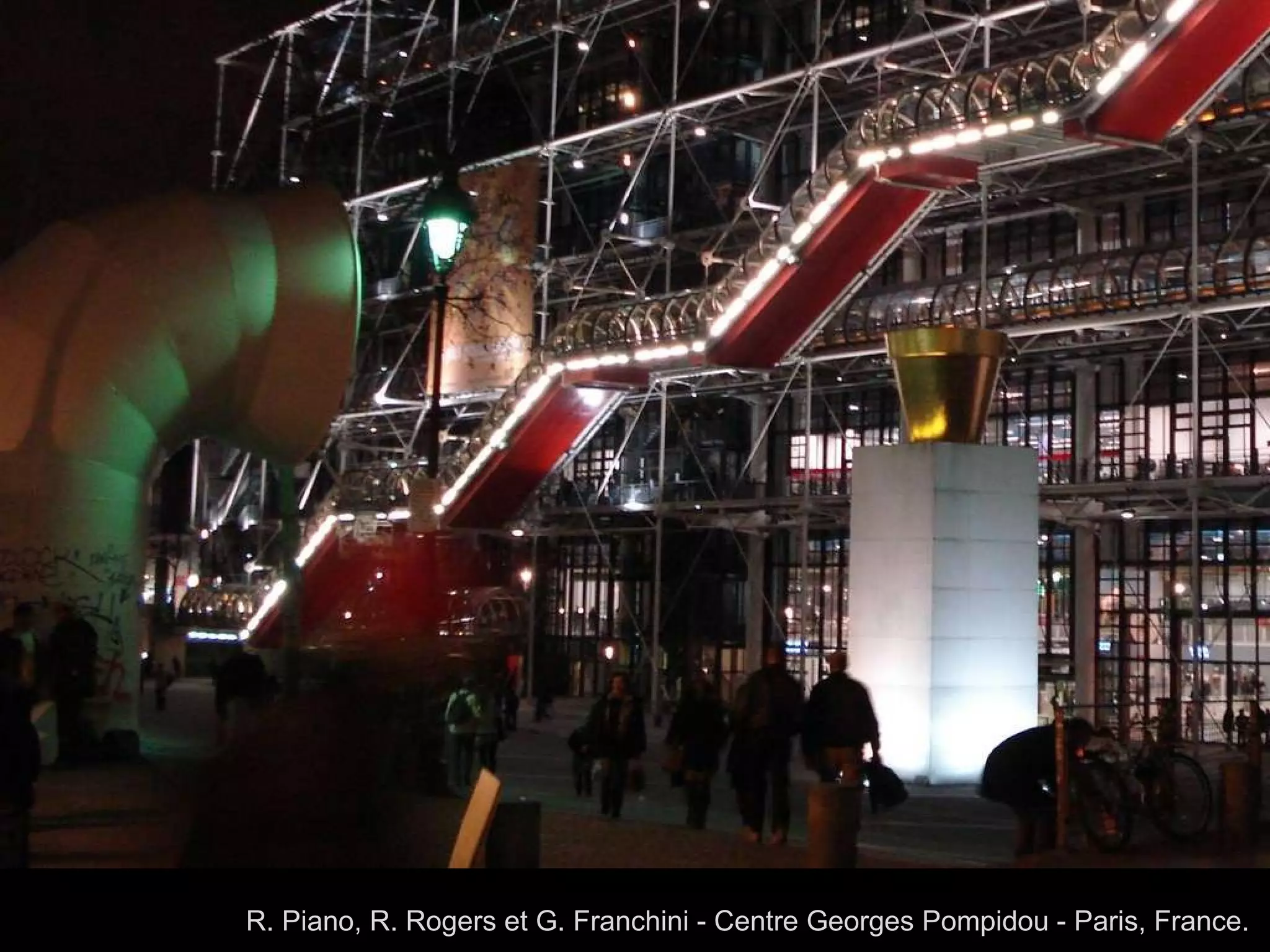
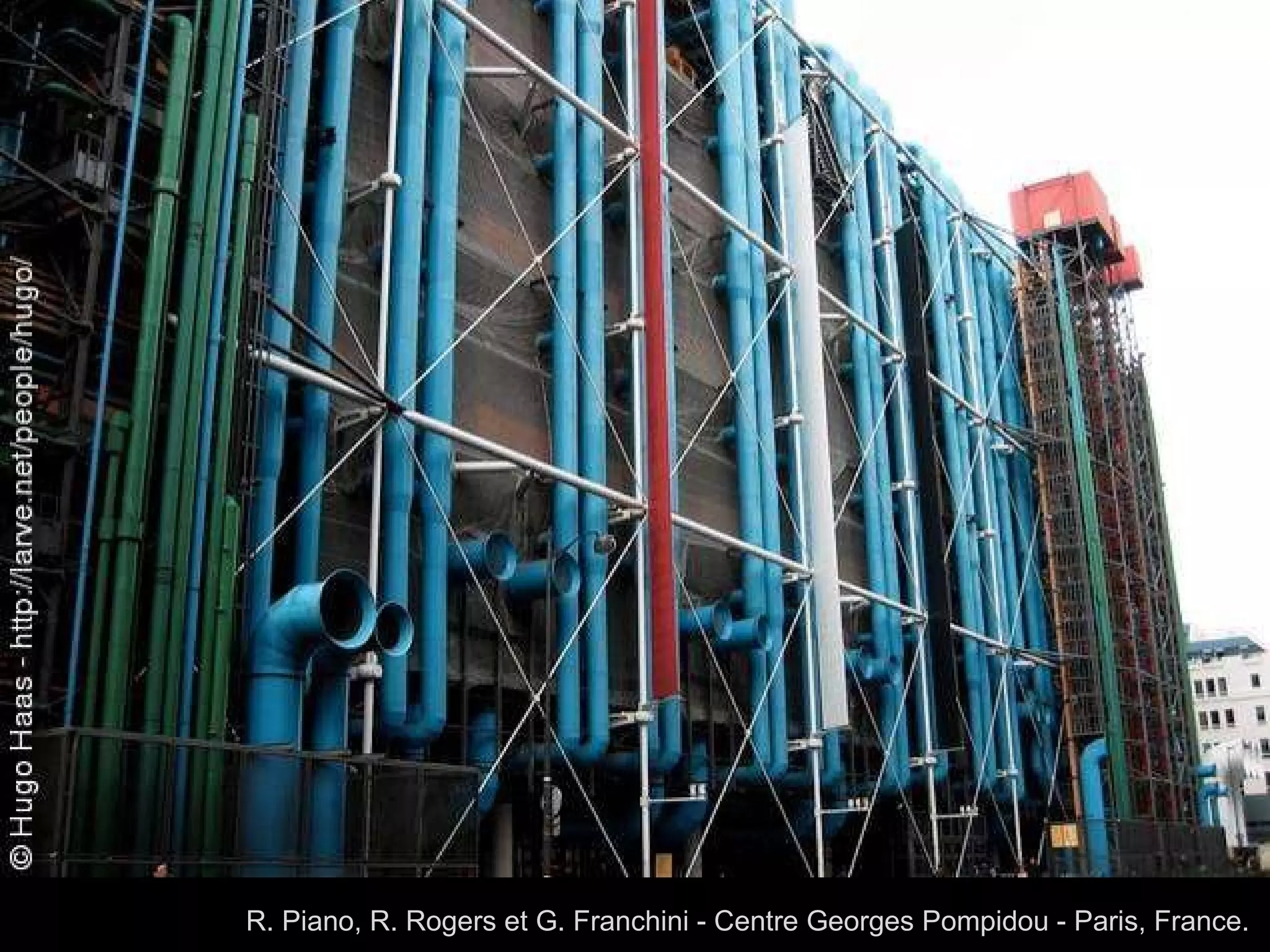
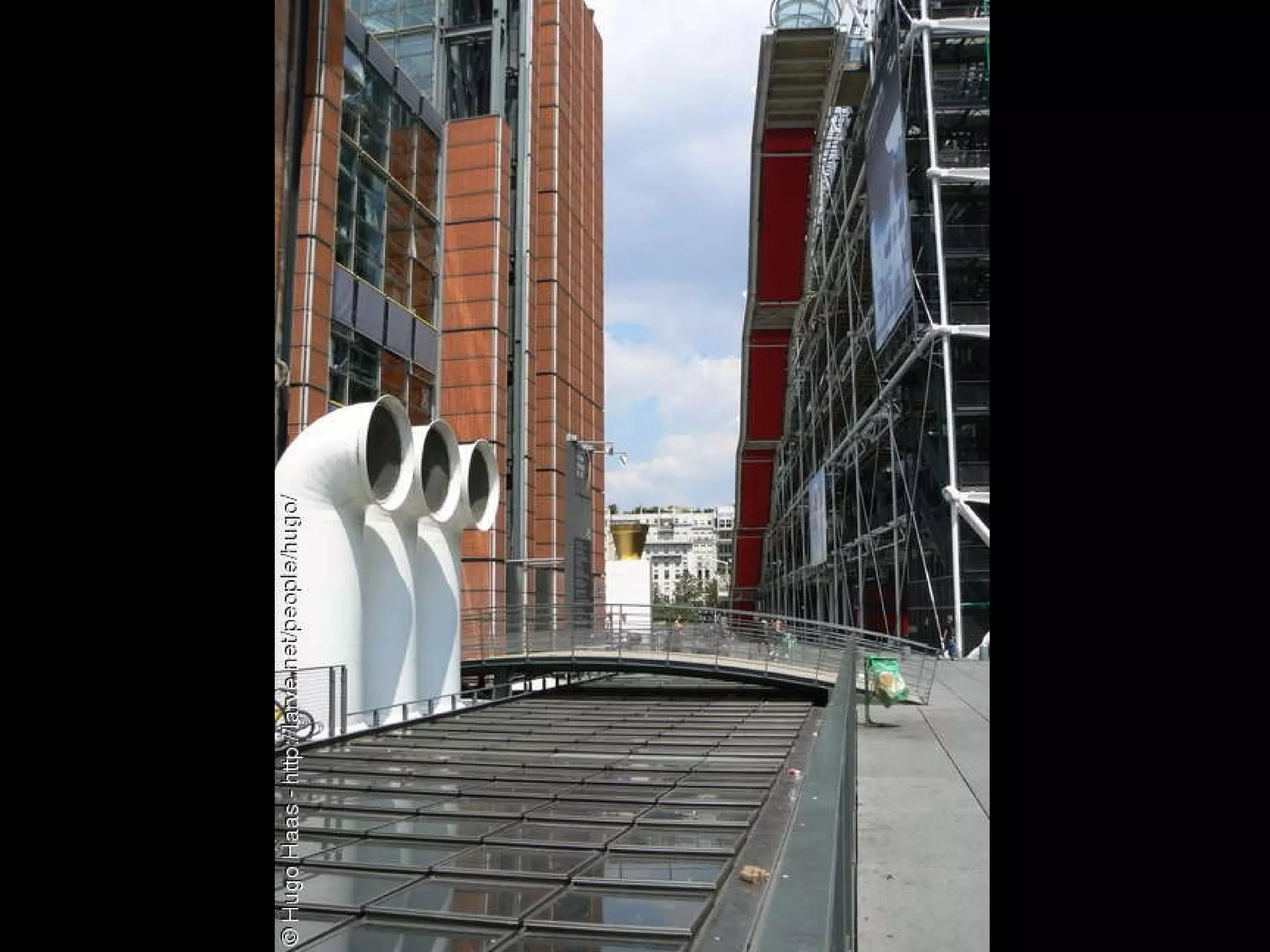
R. Piano, R. Rogers et G. Franchini - Centre Georges Pompidou - Paris, France.
 
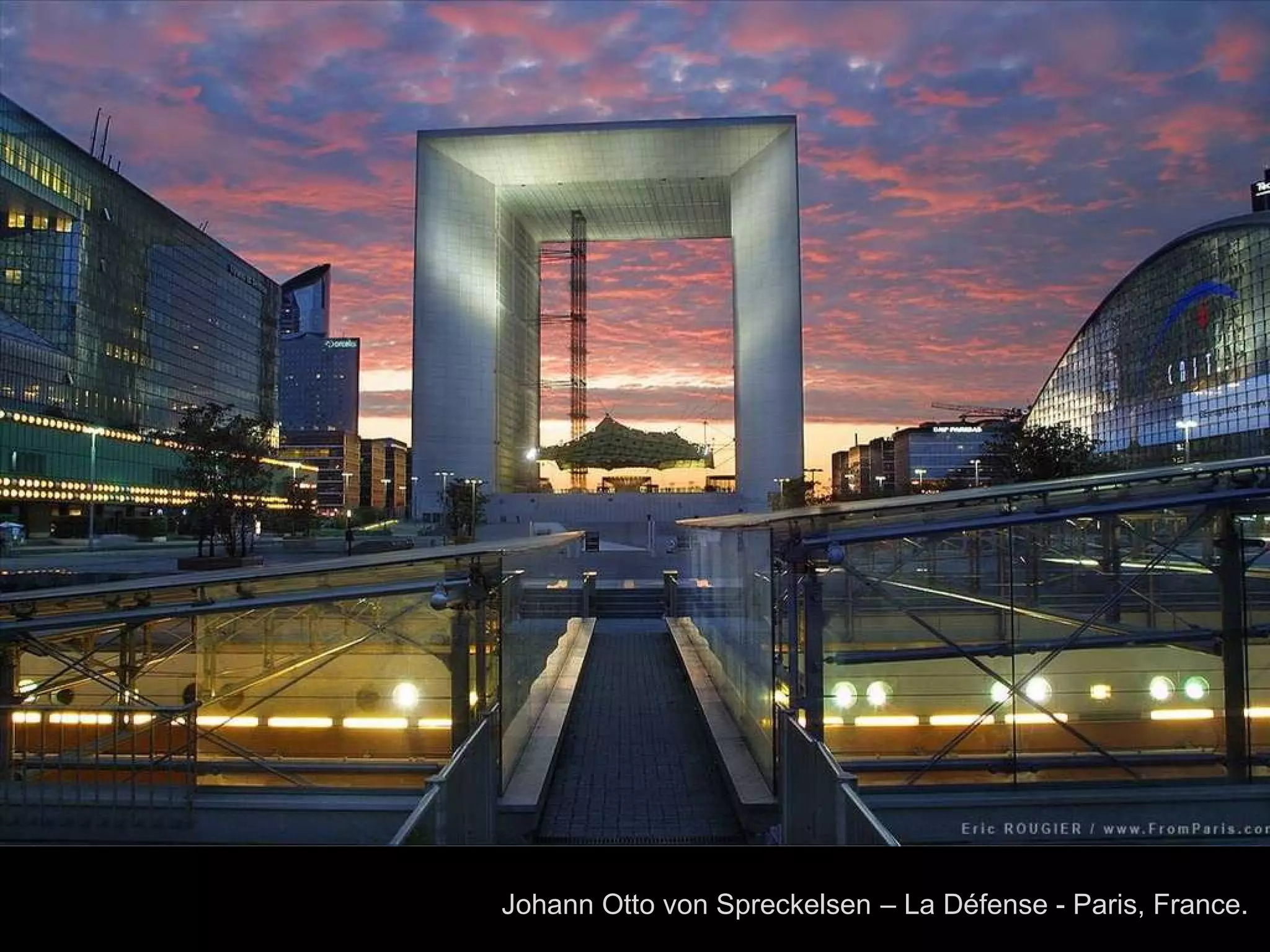
Johann Otto von Spreckelsen   – La Défense - Paris, France.
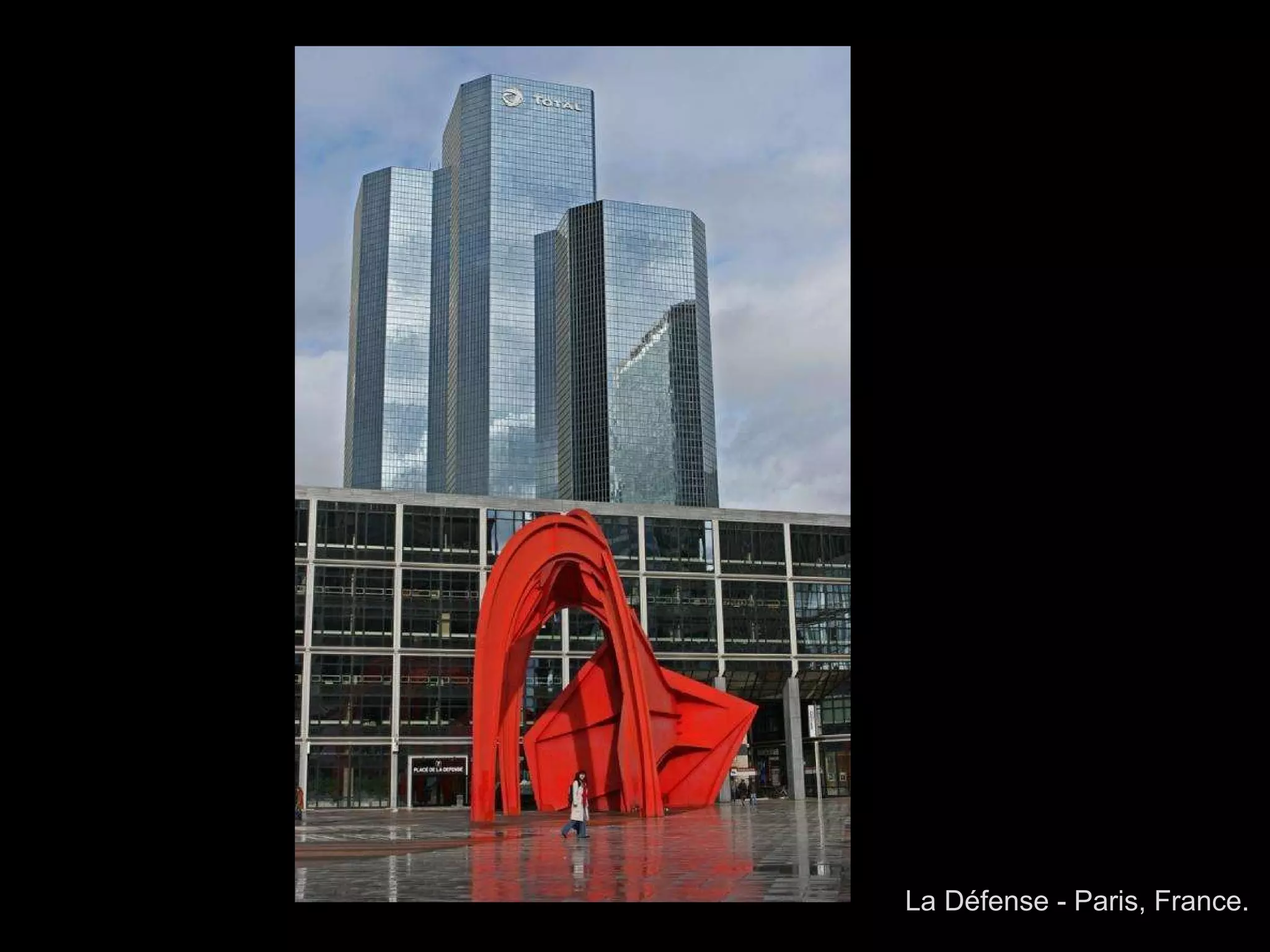
La DĂŠfense - Paris, France.
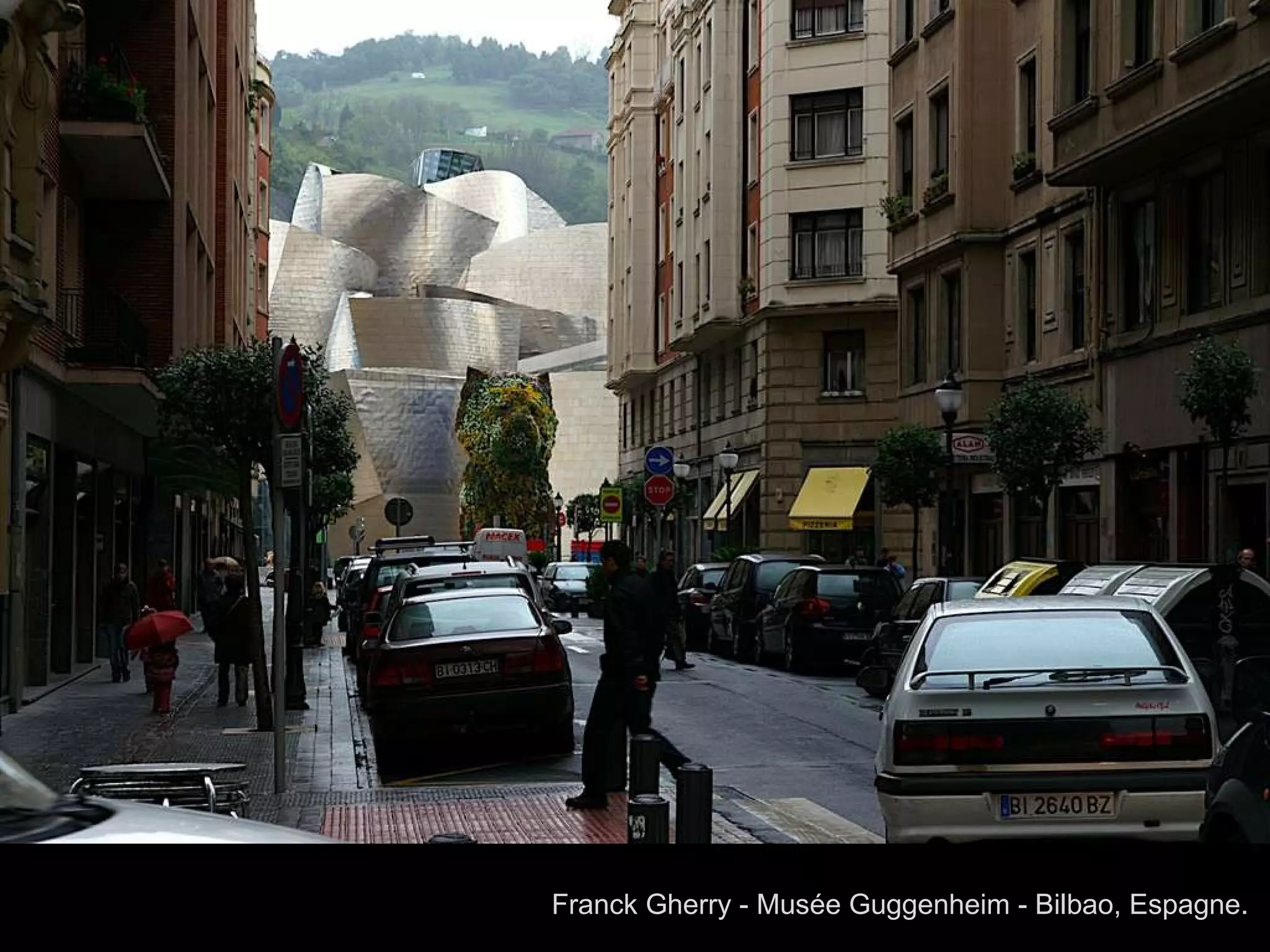
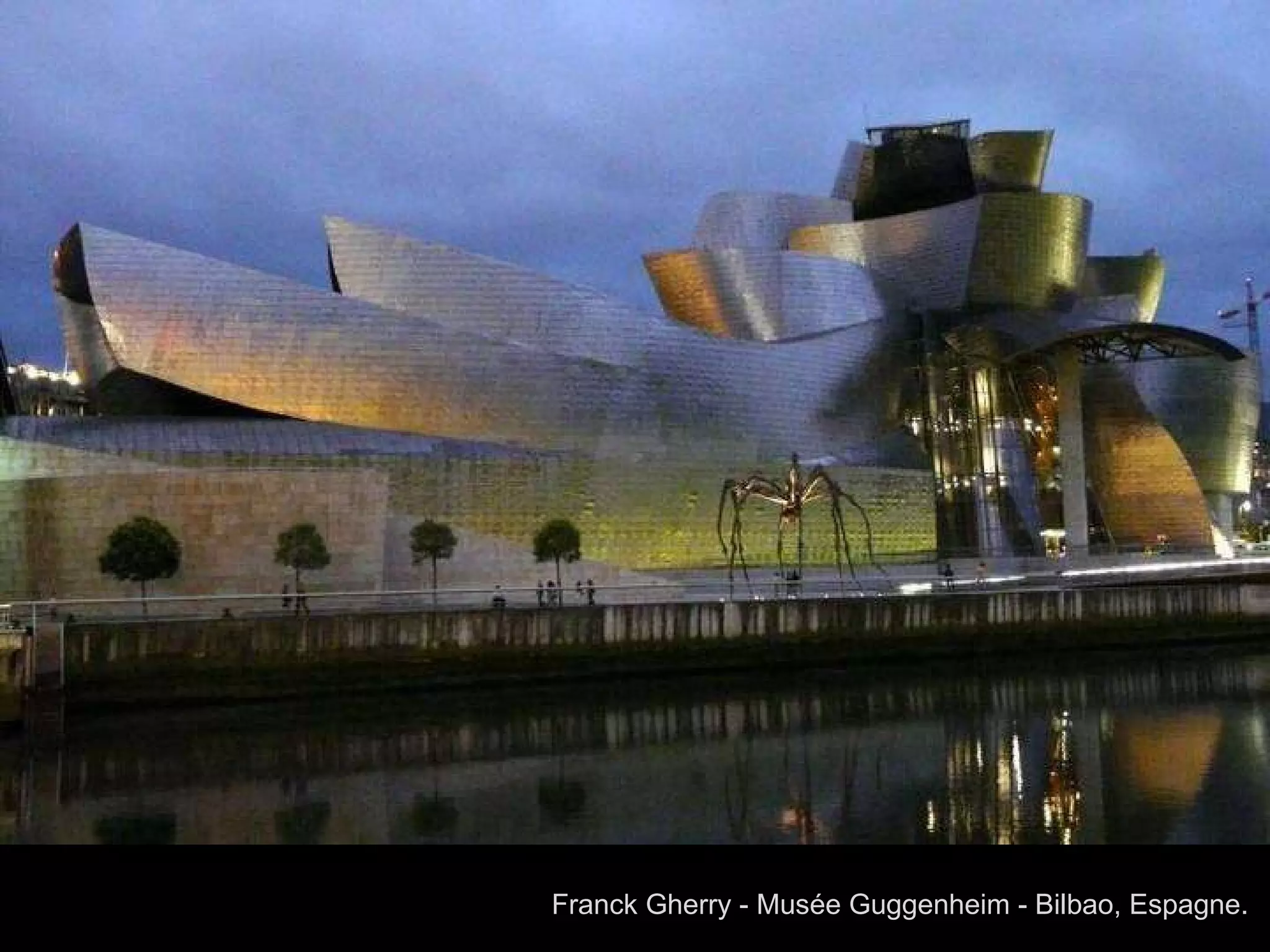
Franck Gherry - MusĂŠe Guggenheim - Bilbao, Espagne.
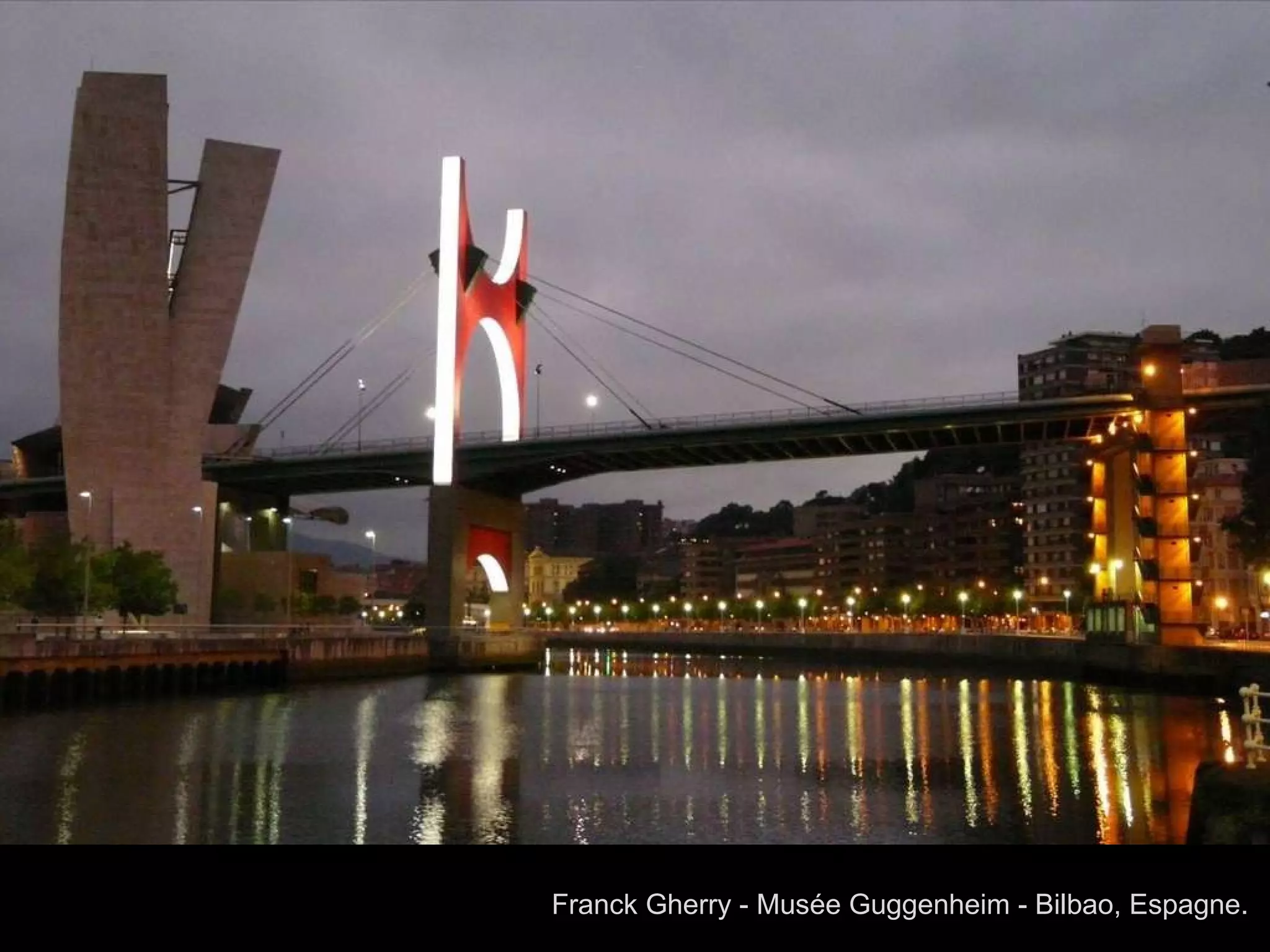
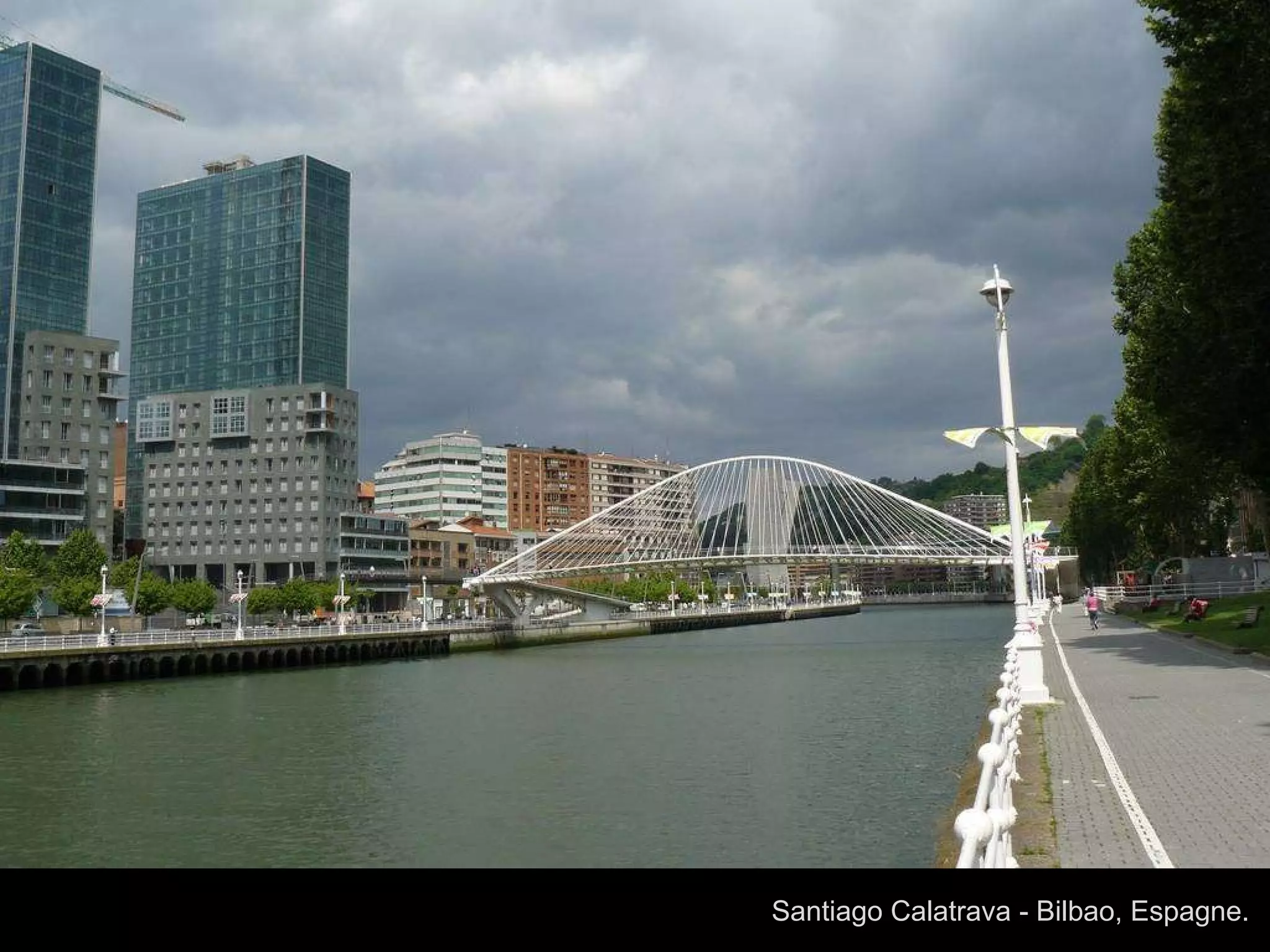
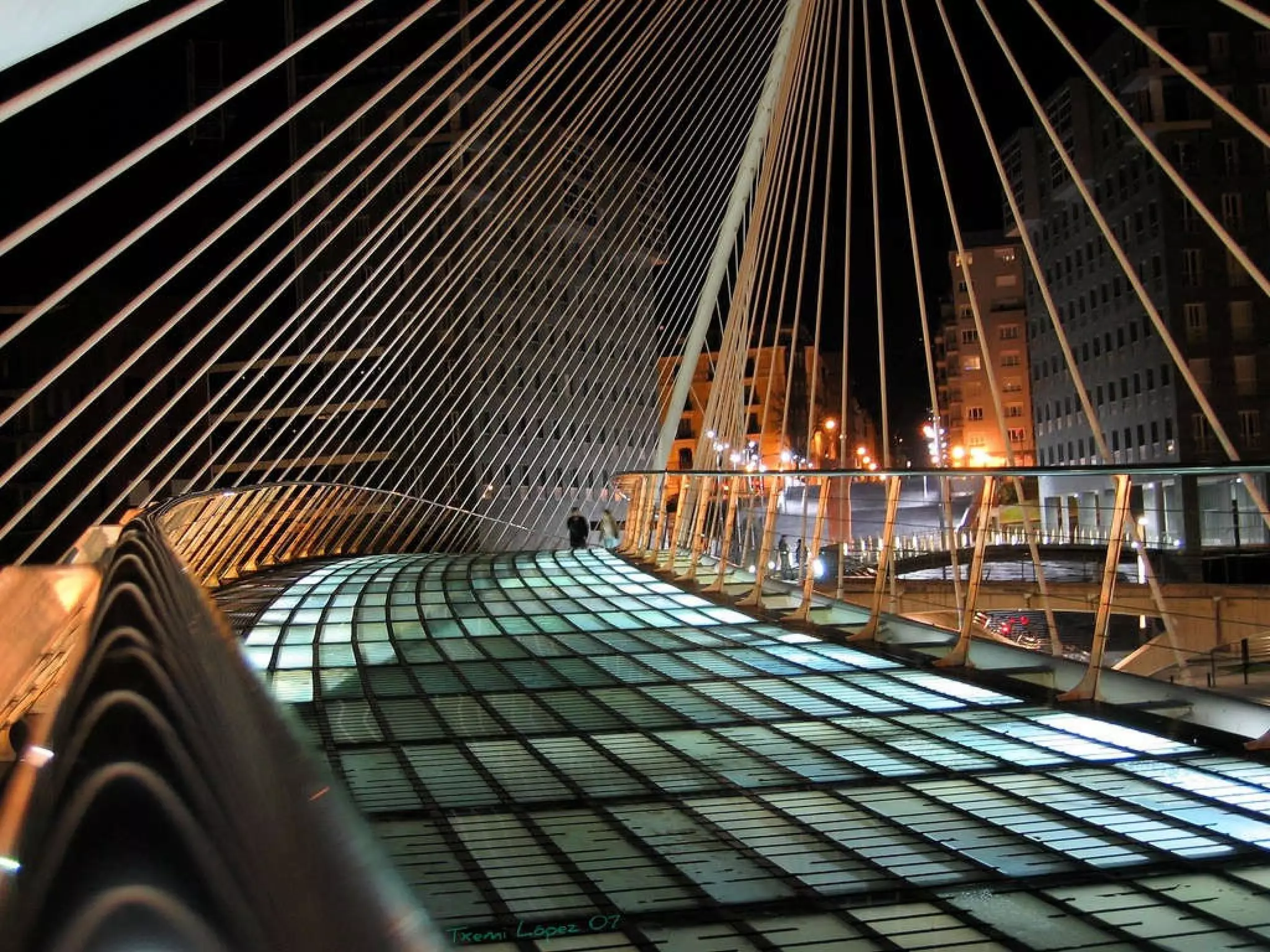
Santiago Calatrava - Bilbao, Espagne.


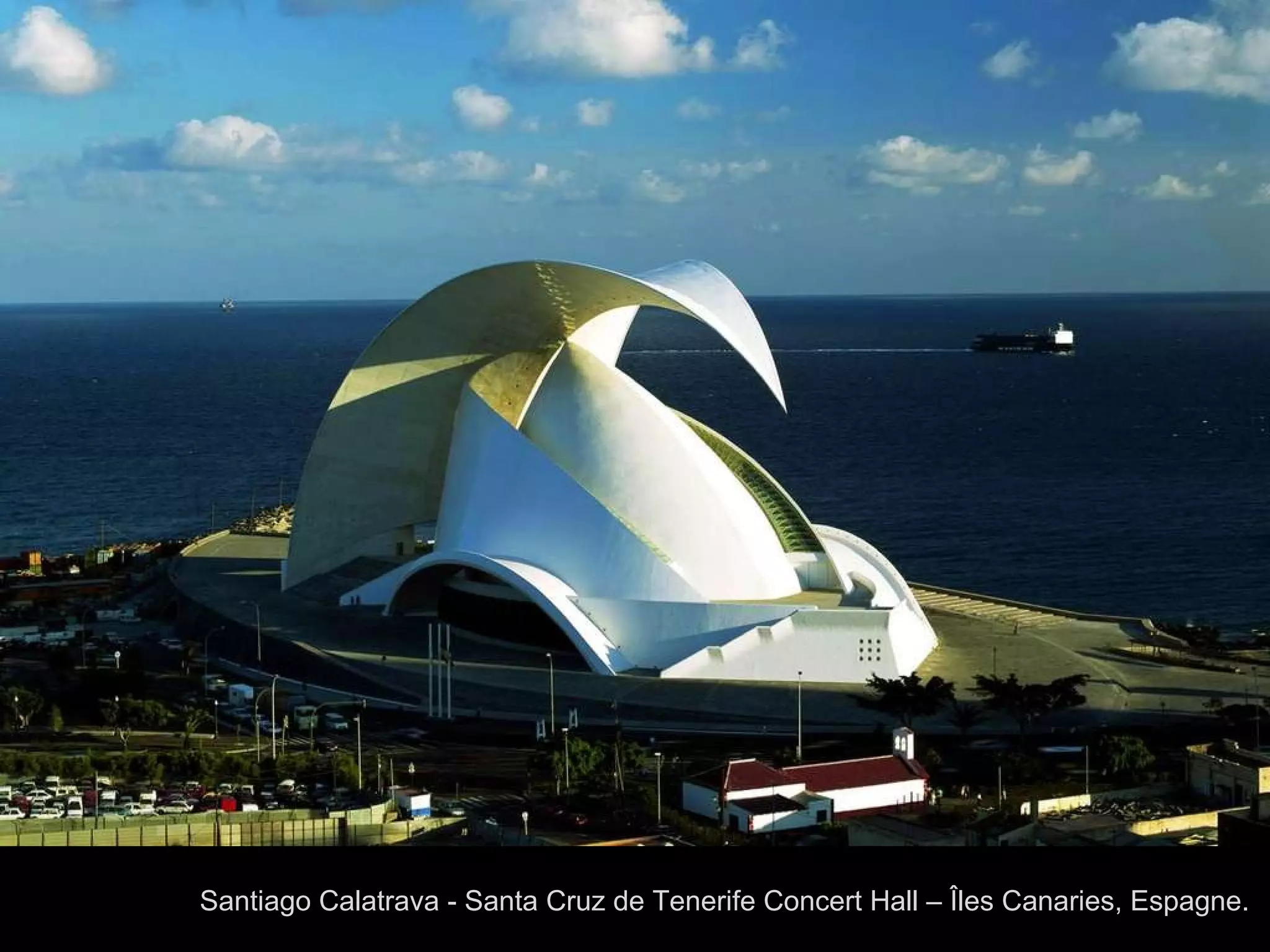
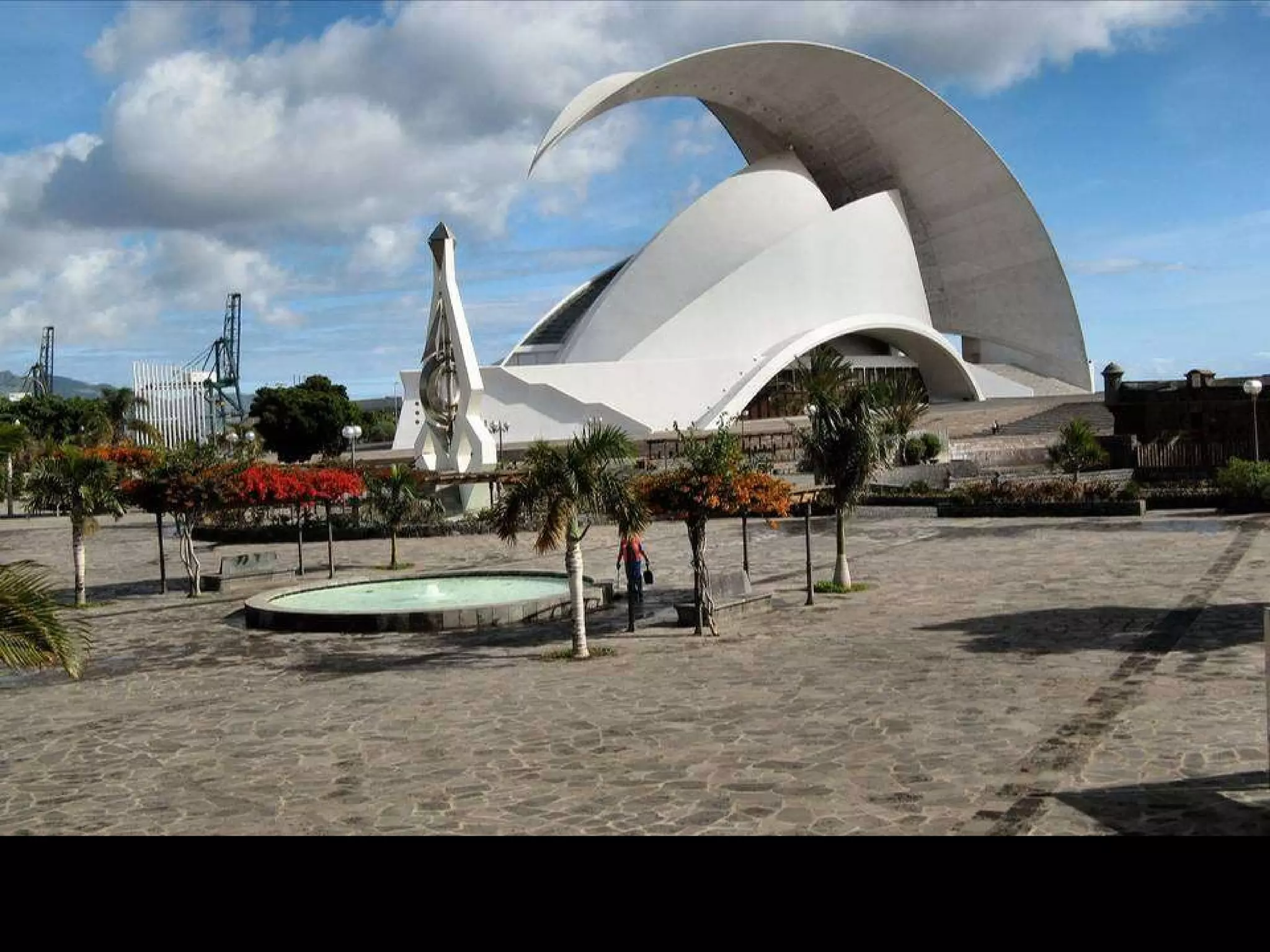
Santiago Calatrava - Santa Cruz de Tenerife Concert Hall – Îles Canaries, Espagne.
 
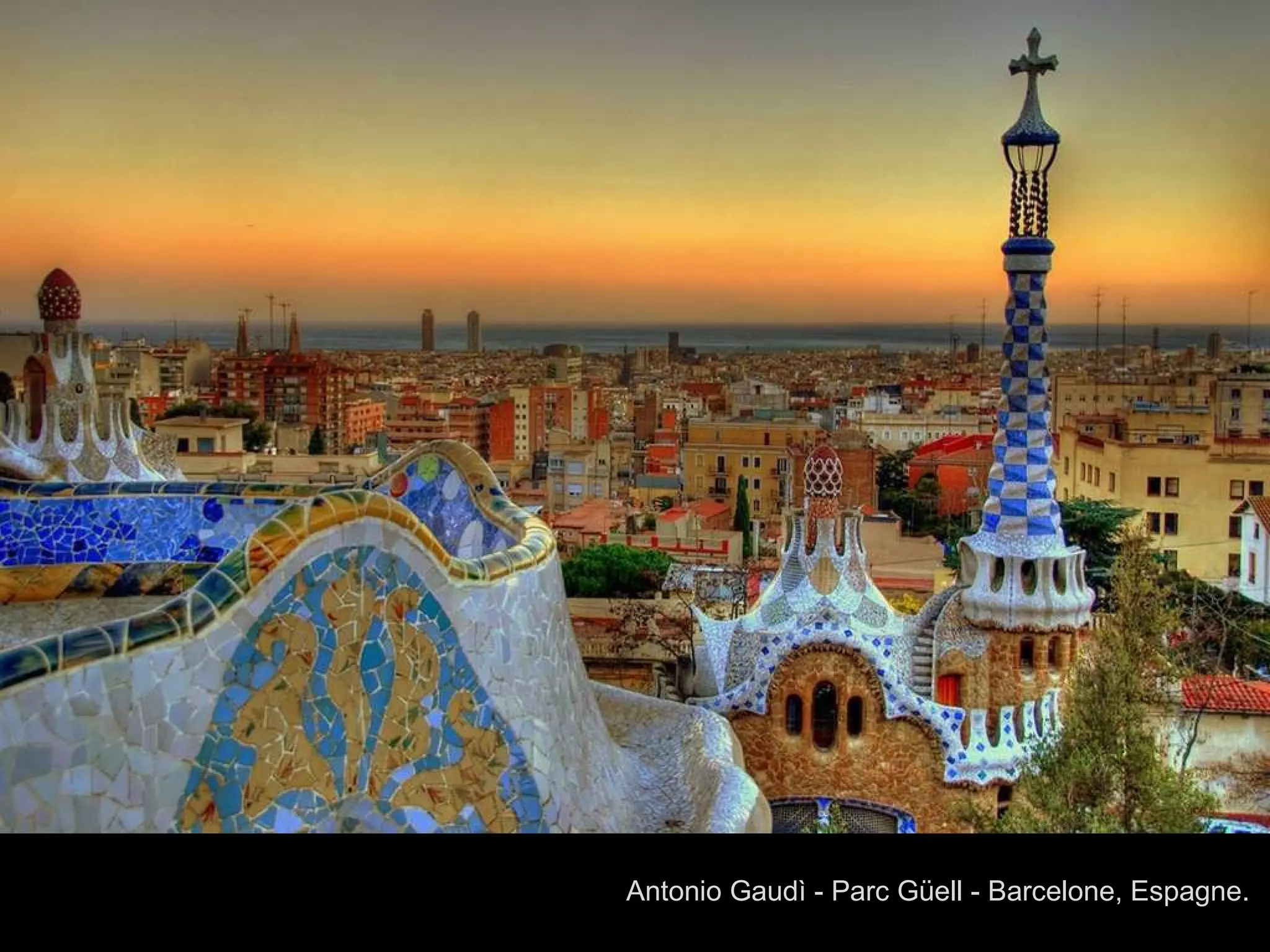
Antonio GaudĂŹ - Parc GĂźell - Barcelone, Espagne.
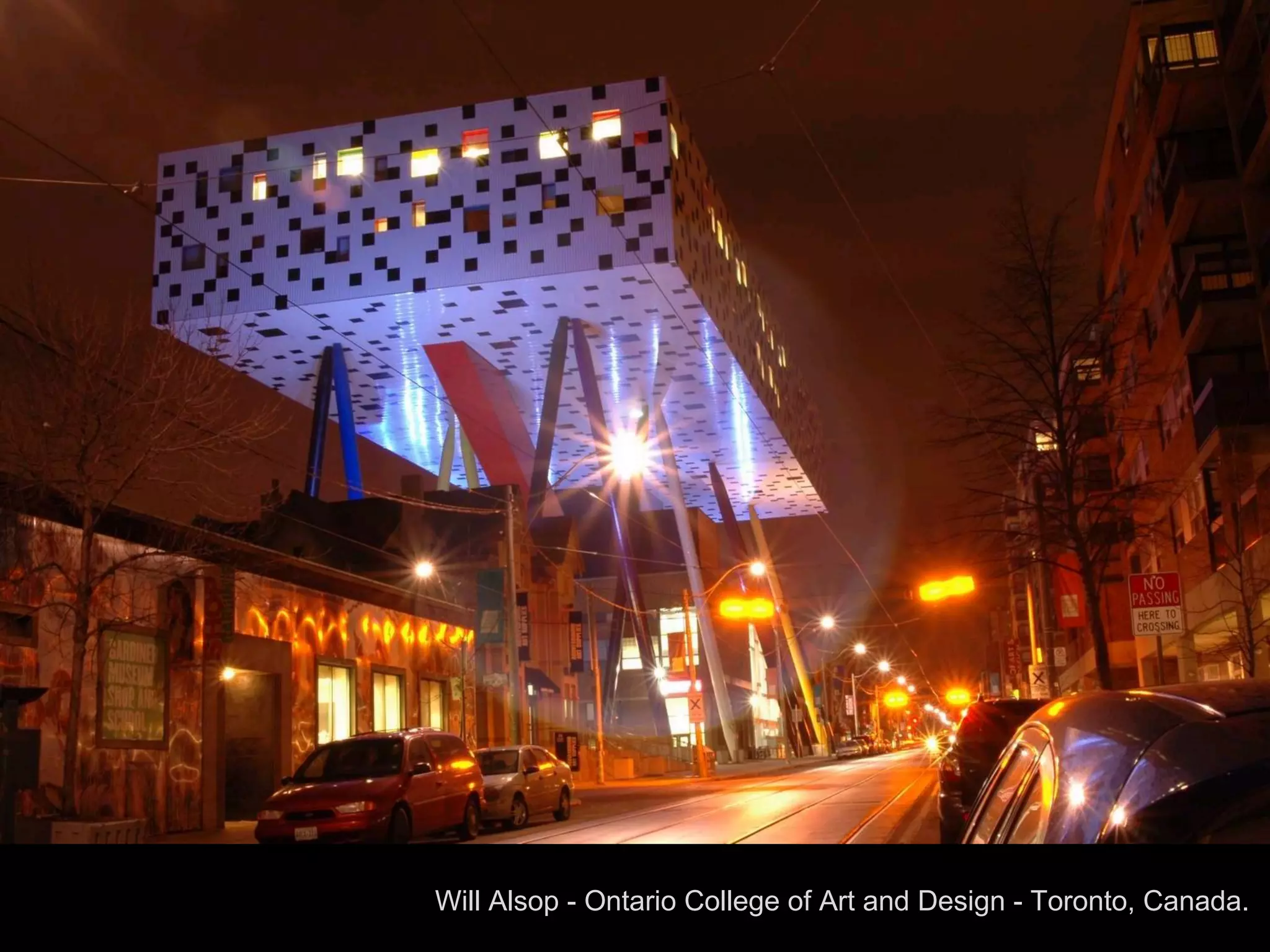
Will Alsop - Ontario College of Art and Design - Toronto, Canada.
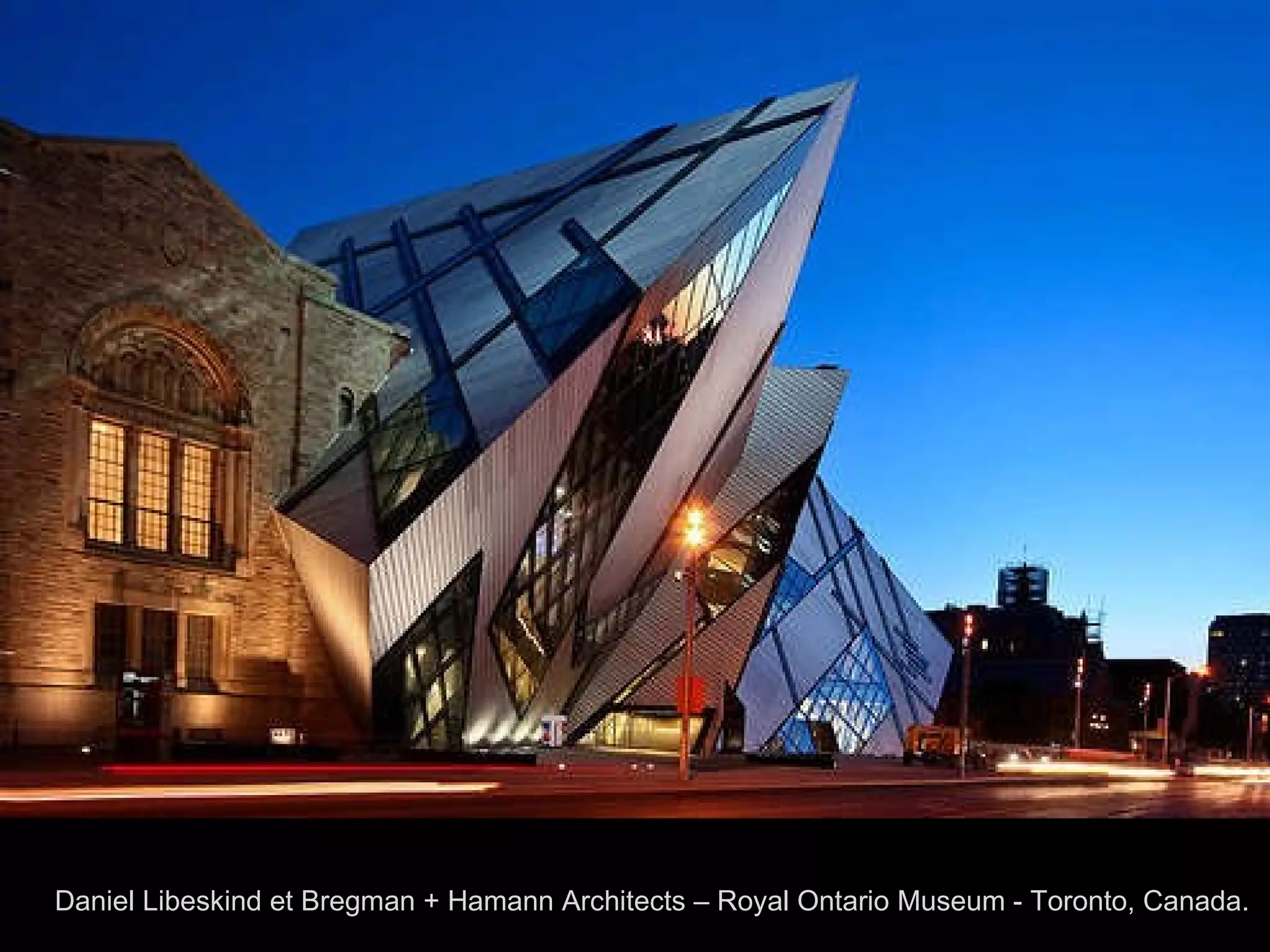
Daniel Libeskind et Bregman + Hamann Architects – Royal Ontario Museum - Toronto, Canada.
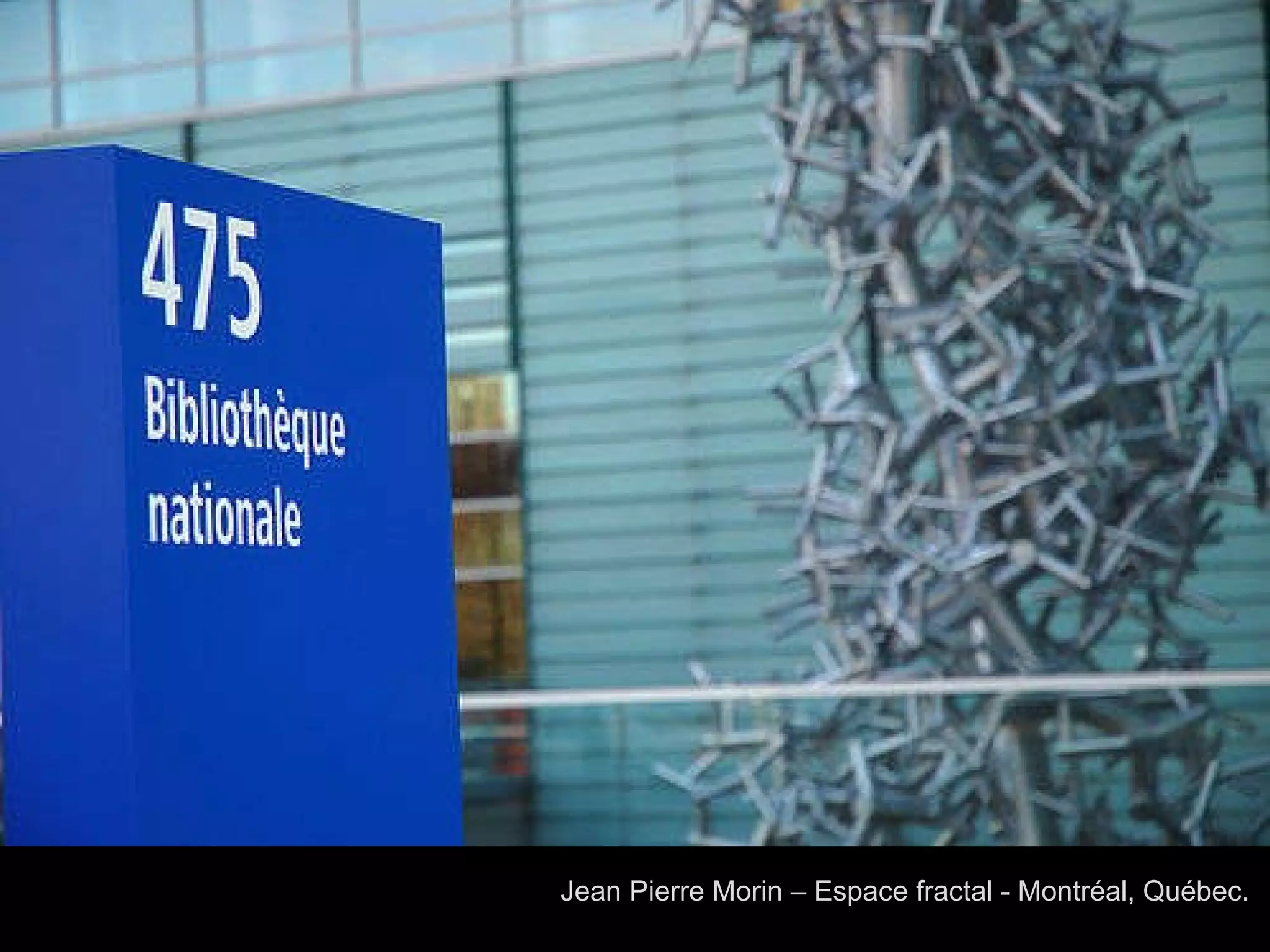
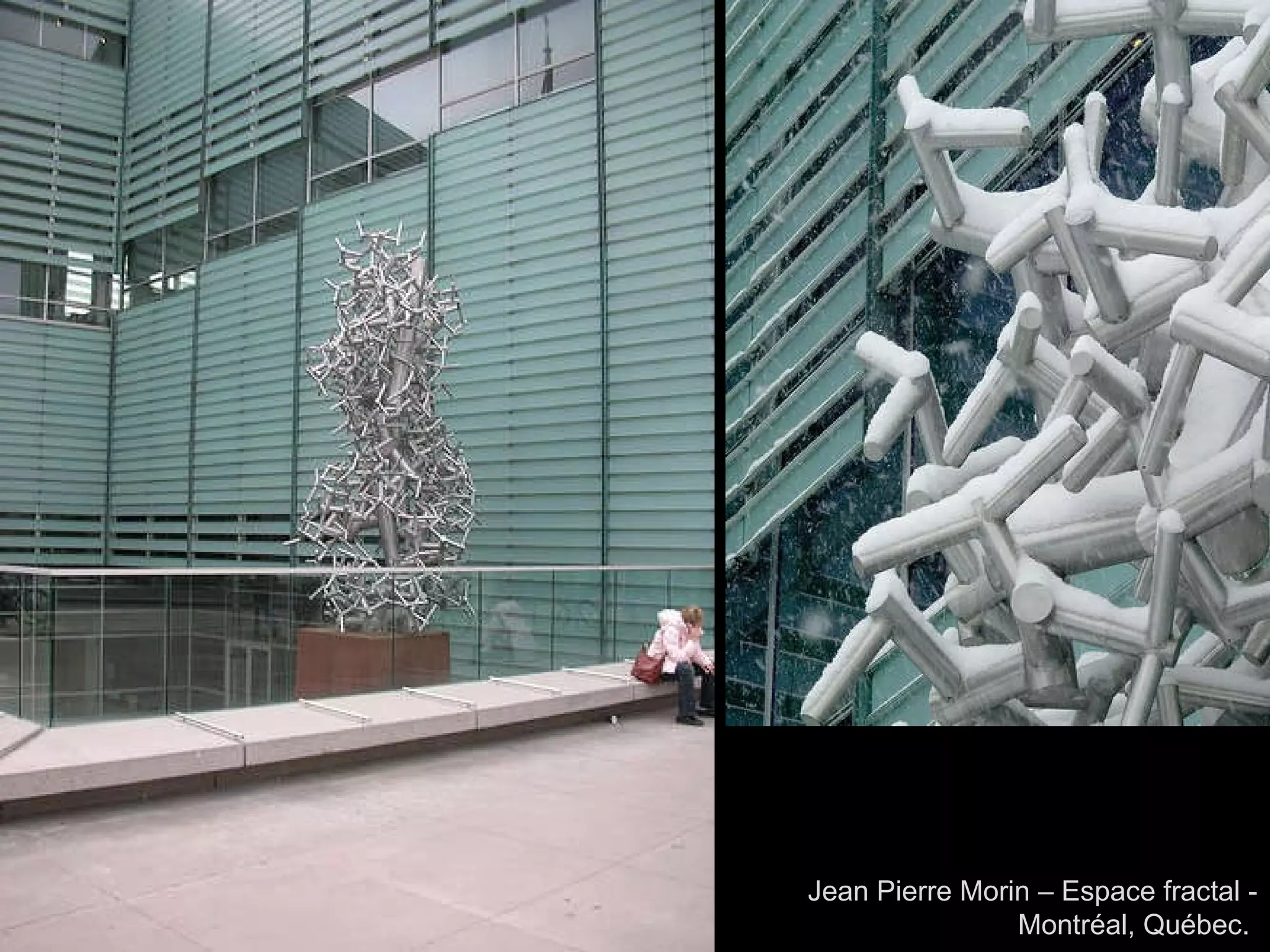
Jean Pierre Morin – Espace fractal - Montréal, Québec.
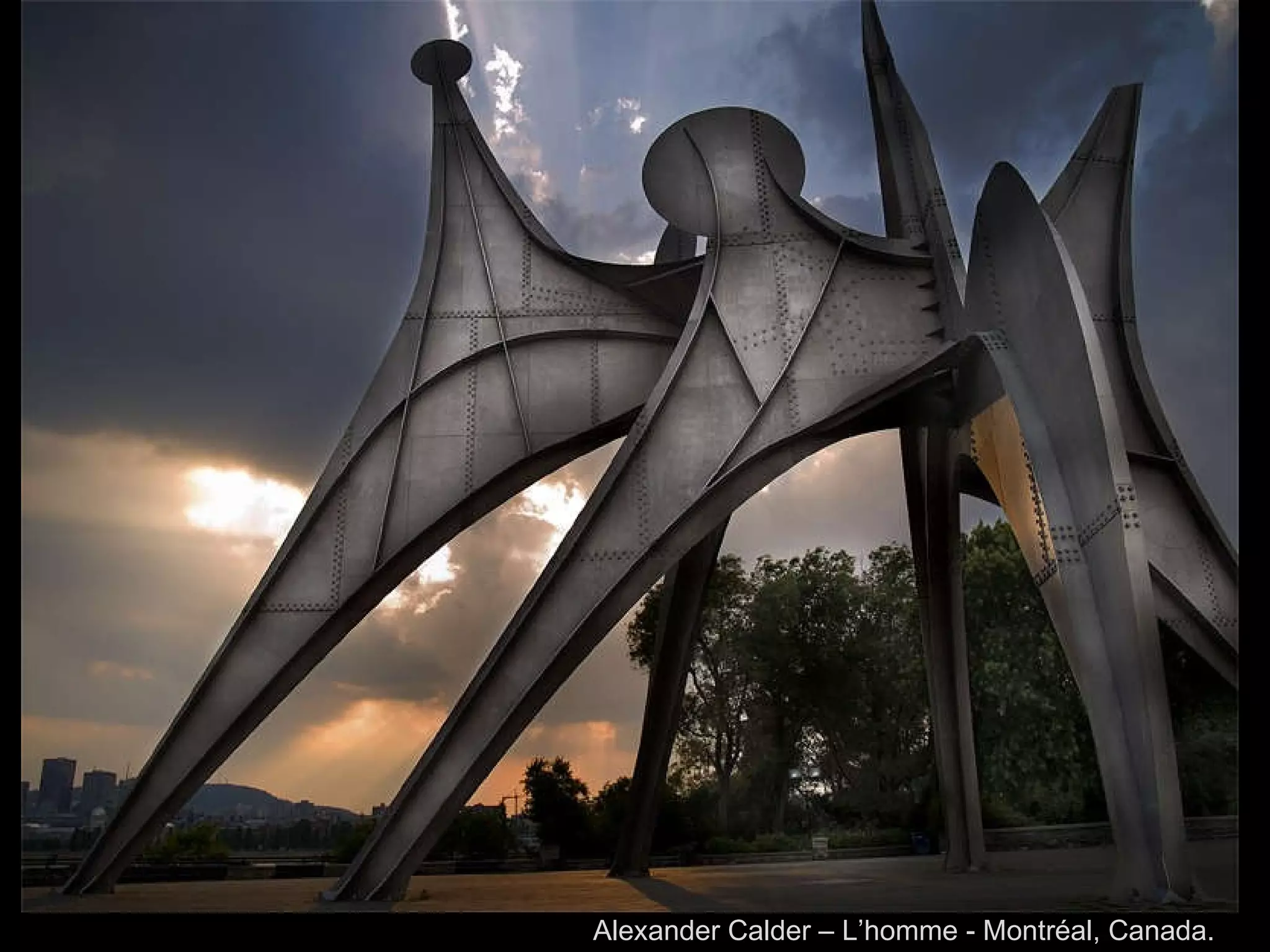
Alexander Calder – L’homme - Montréal, Canada.
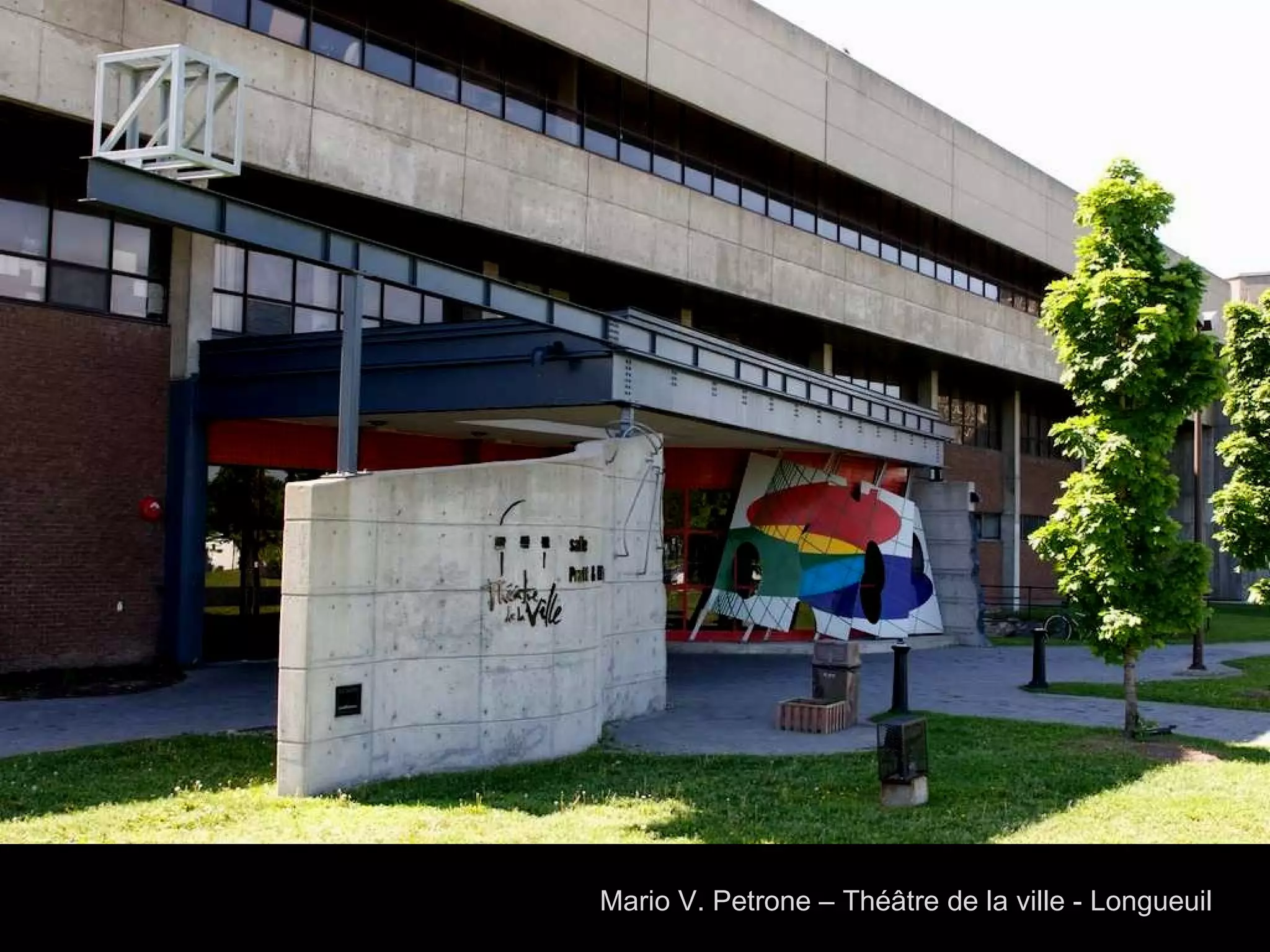
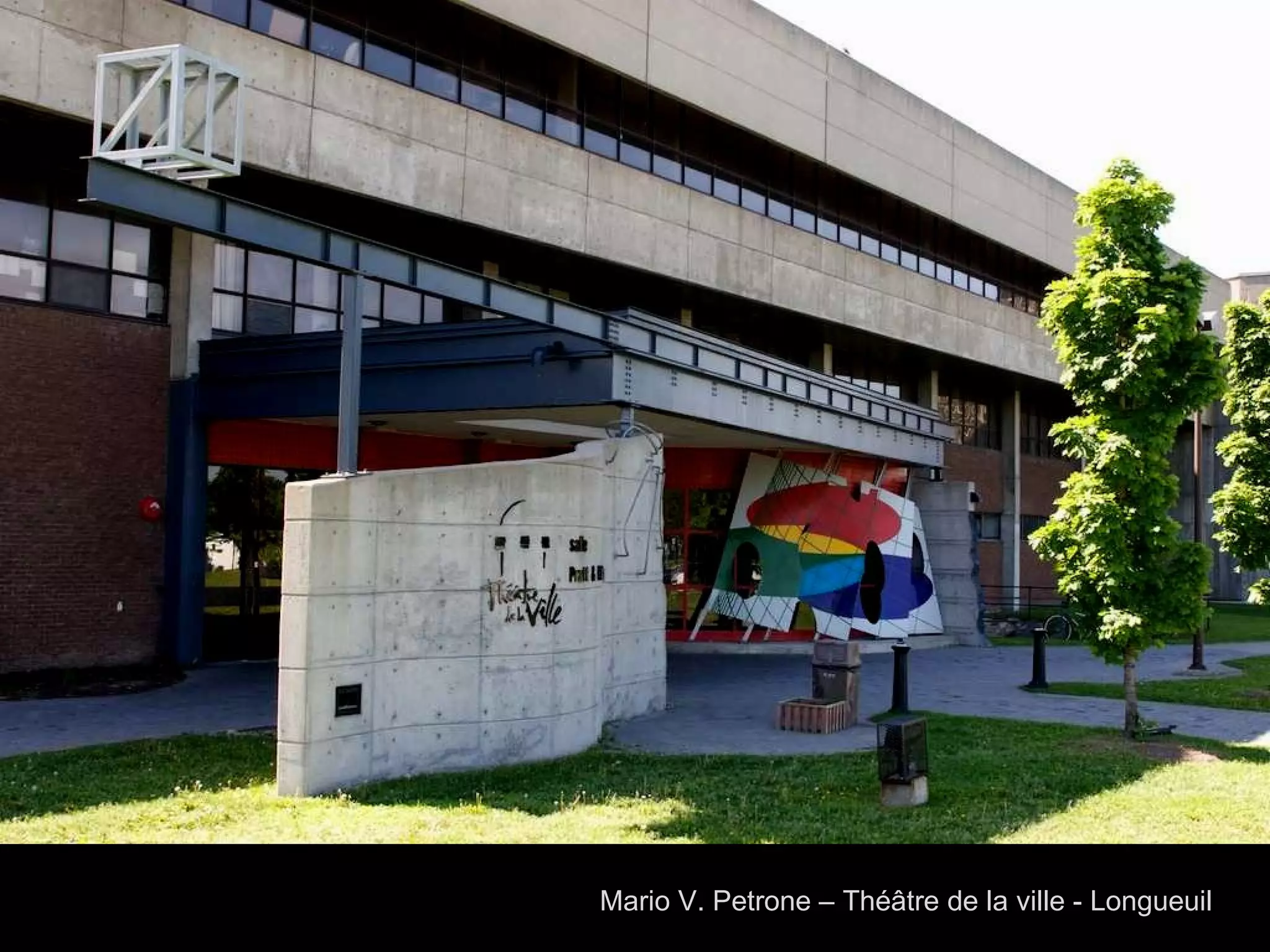
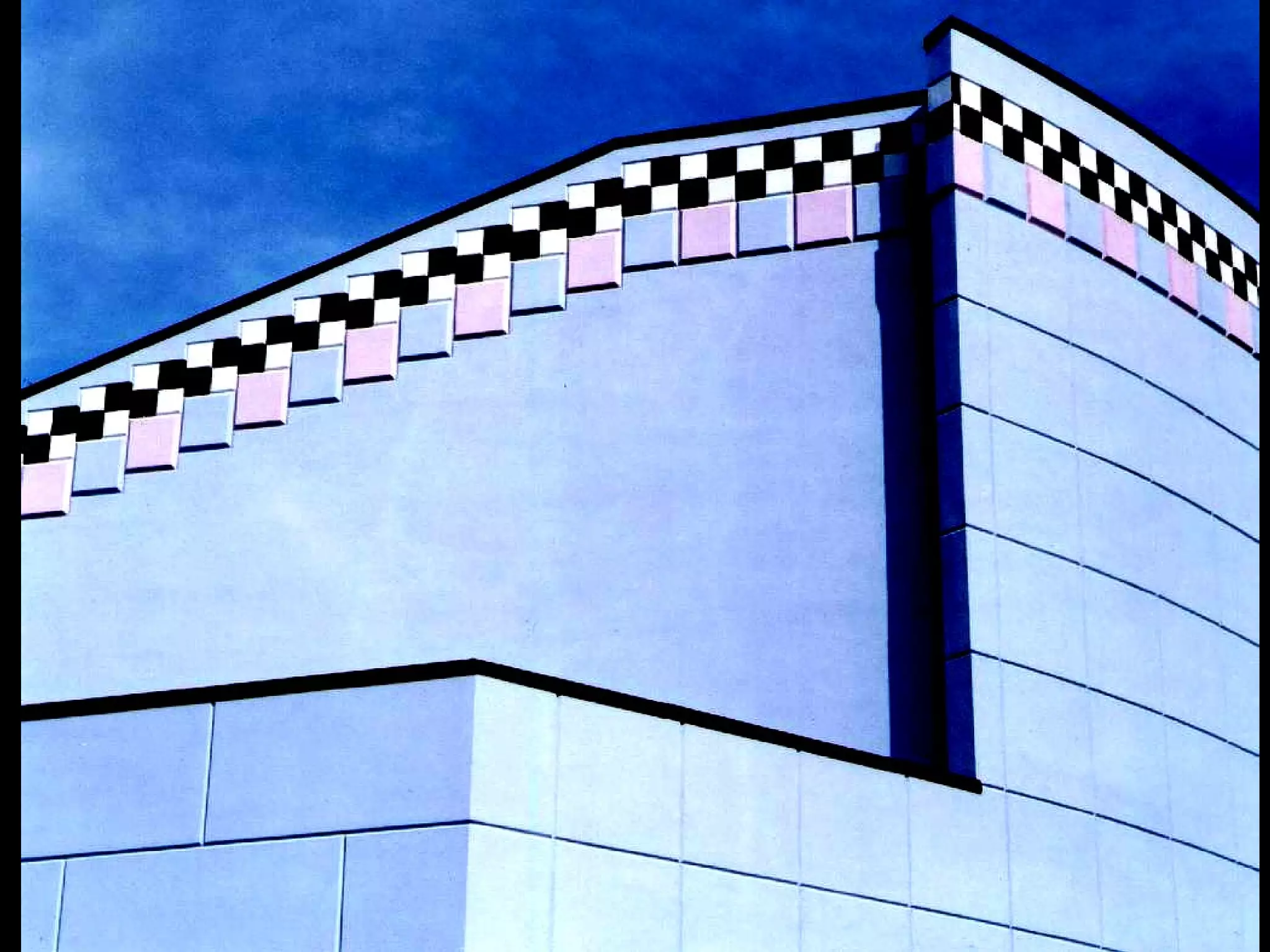
Mario V. Petrone – Théâtre de la ville - Longueuil
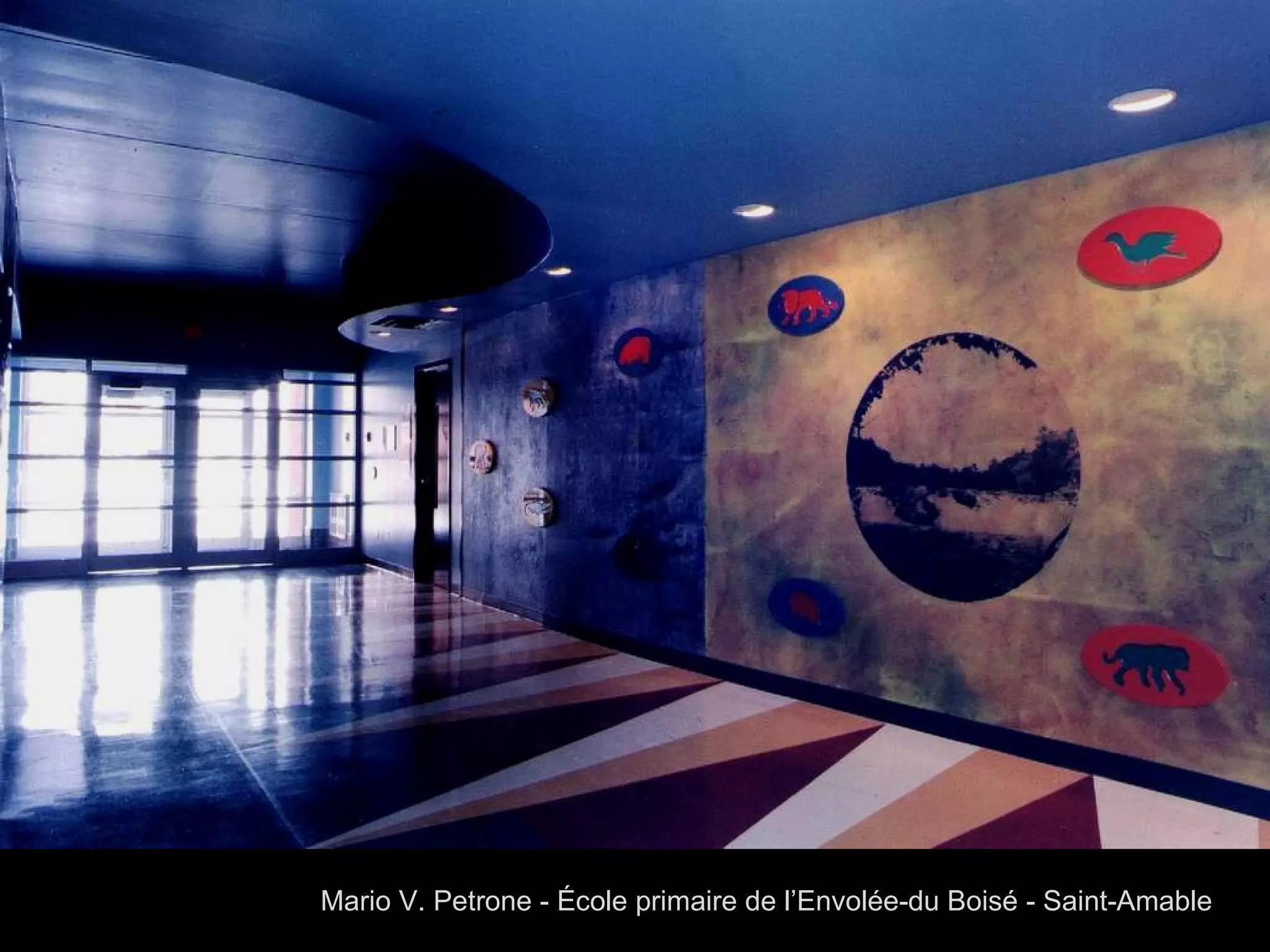
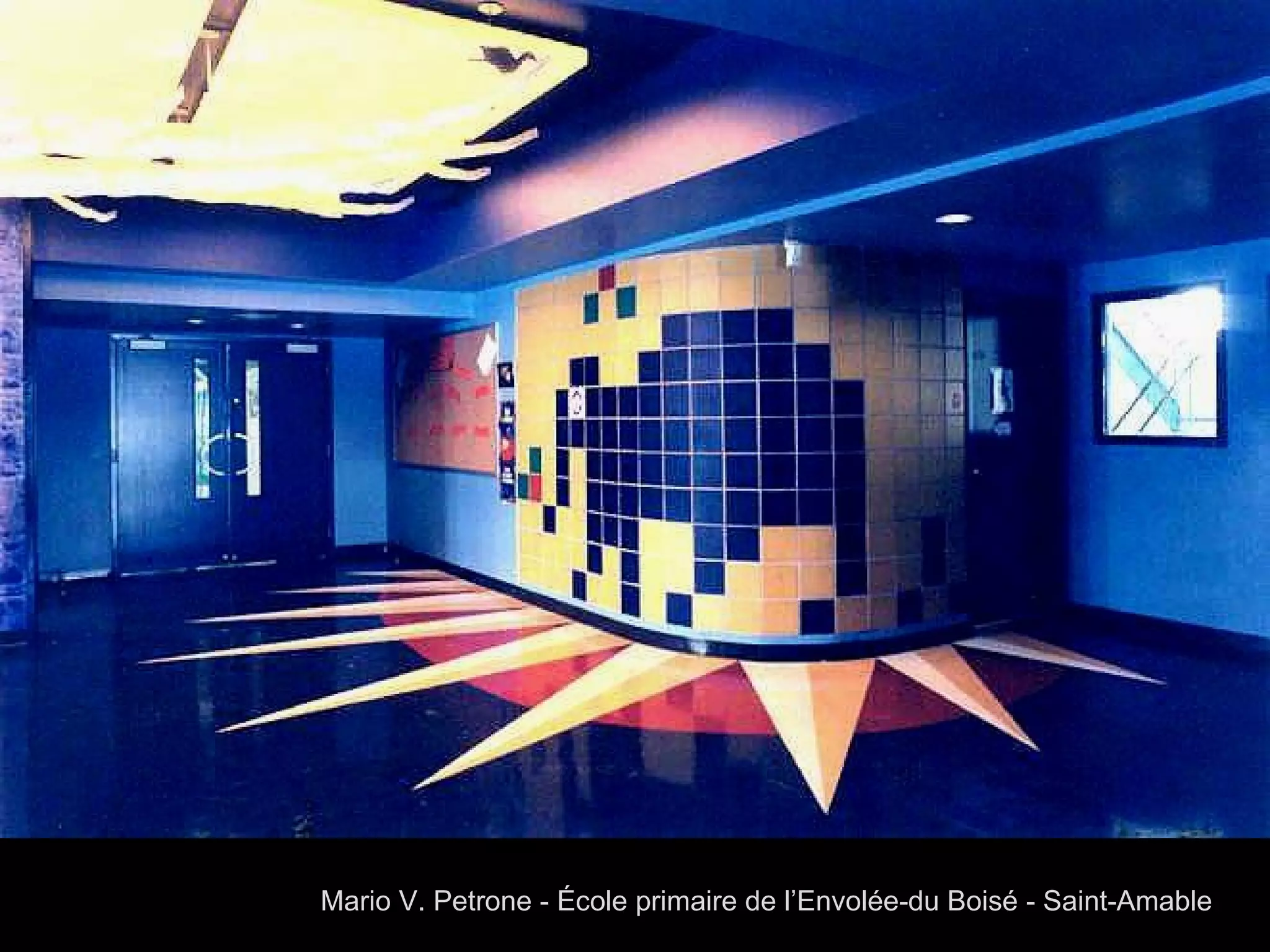
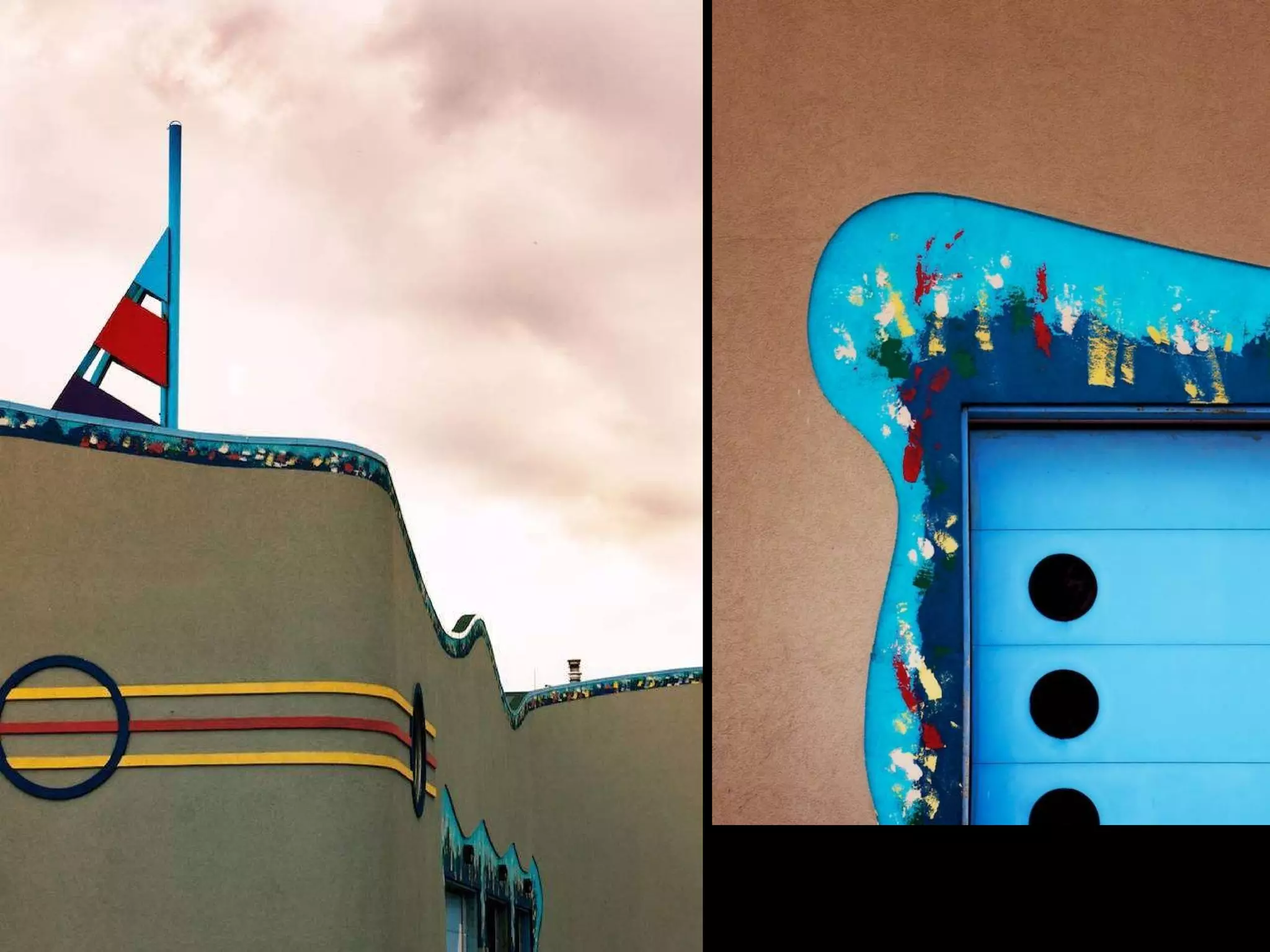
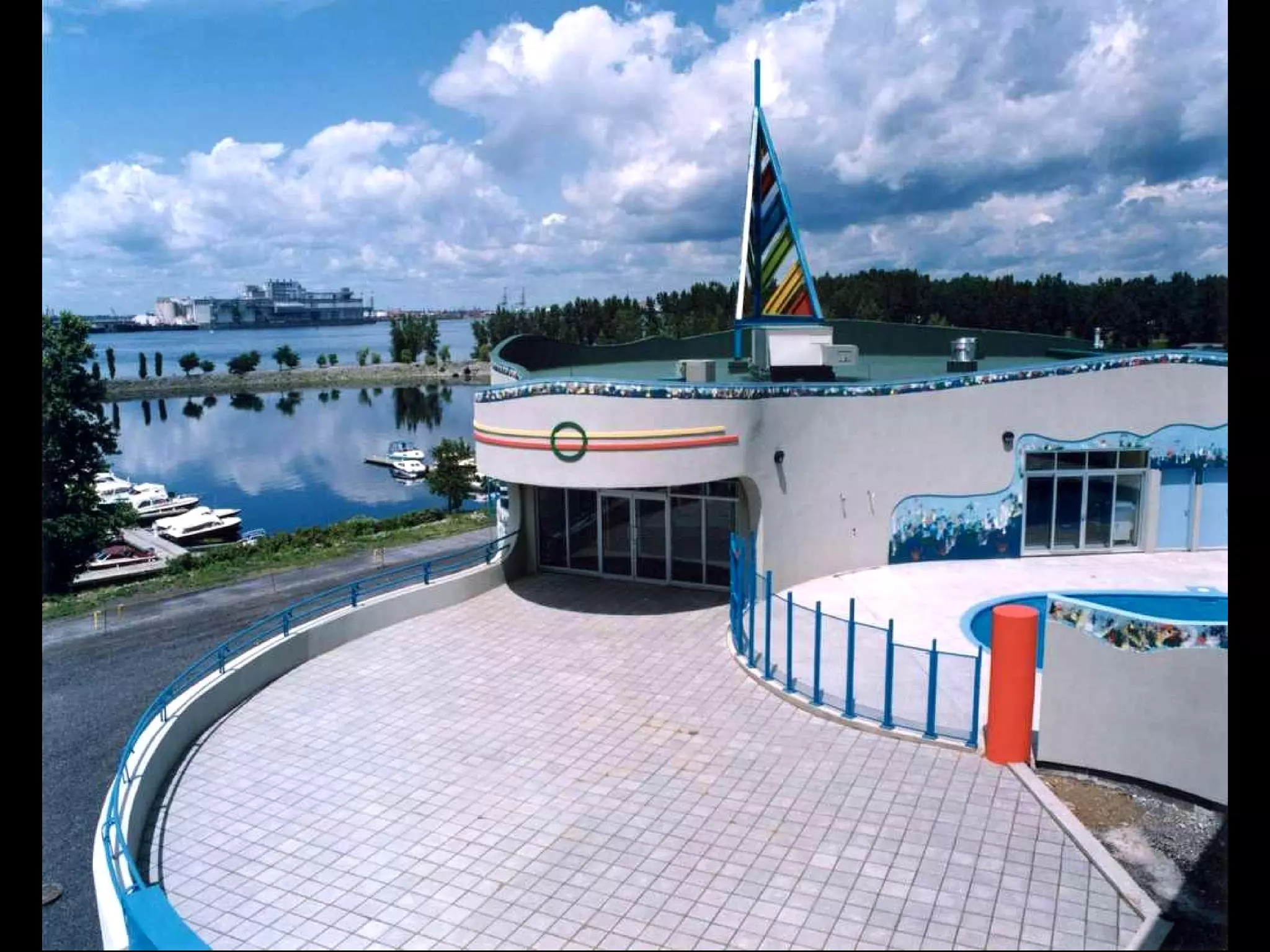
Mario V. Petrone - École primaire de l’Envolée-du Boisé - Saint-Amable
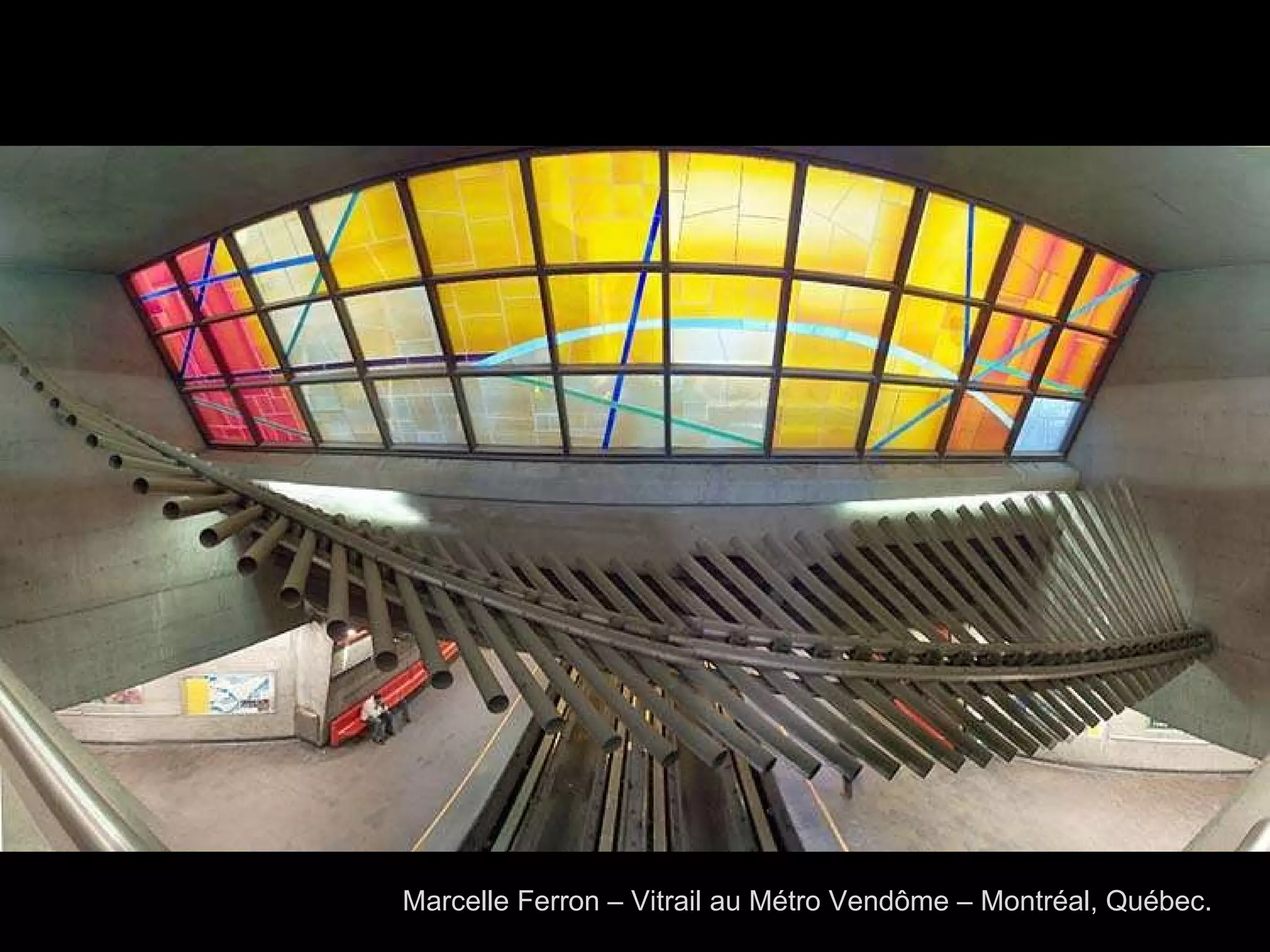
Marcelle Ferron – Vitrail au Métro Vendôme – Montréal, Québec.
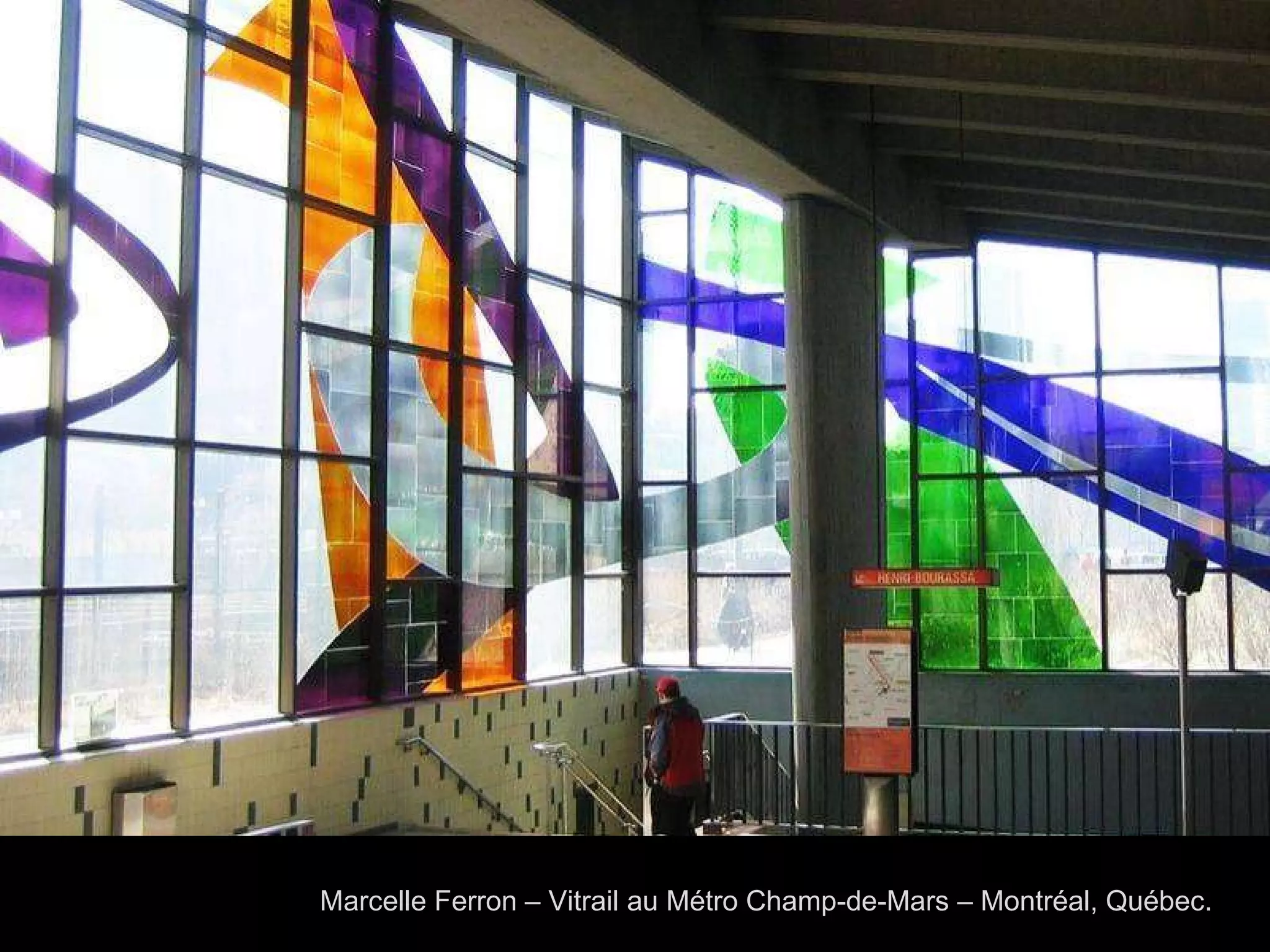
Marcelle Ferron – Vitrail au Métro Champ-de-Mars – Montréal, Québec.
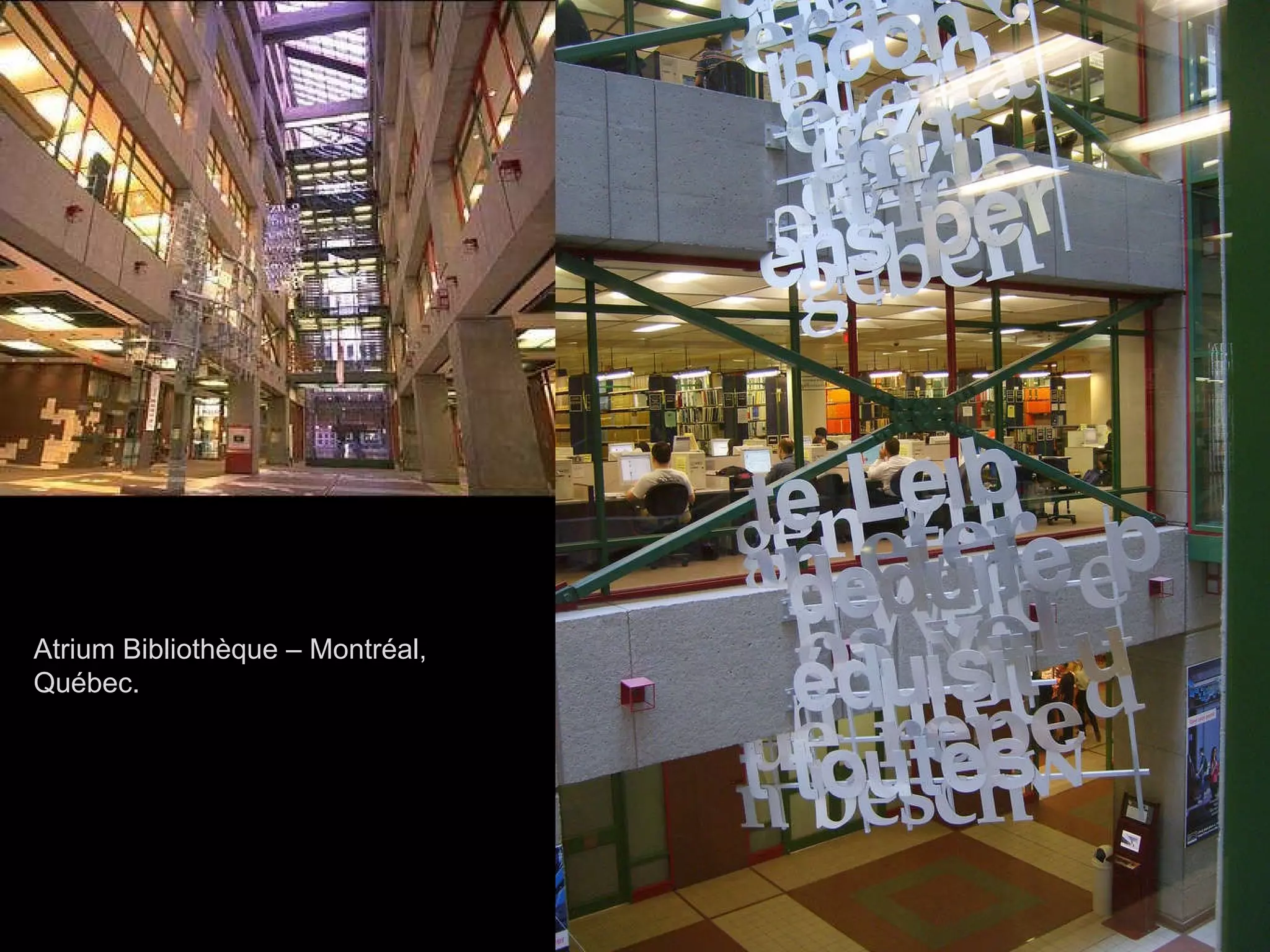
Atrium Bibliothèque – Montréal, Québec.
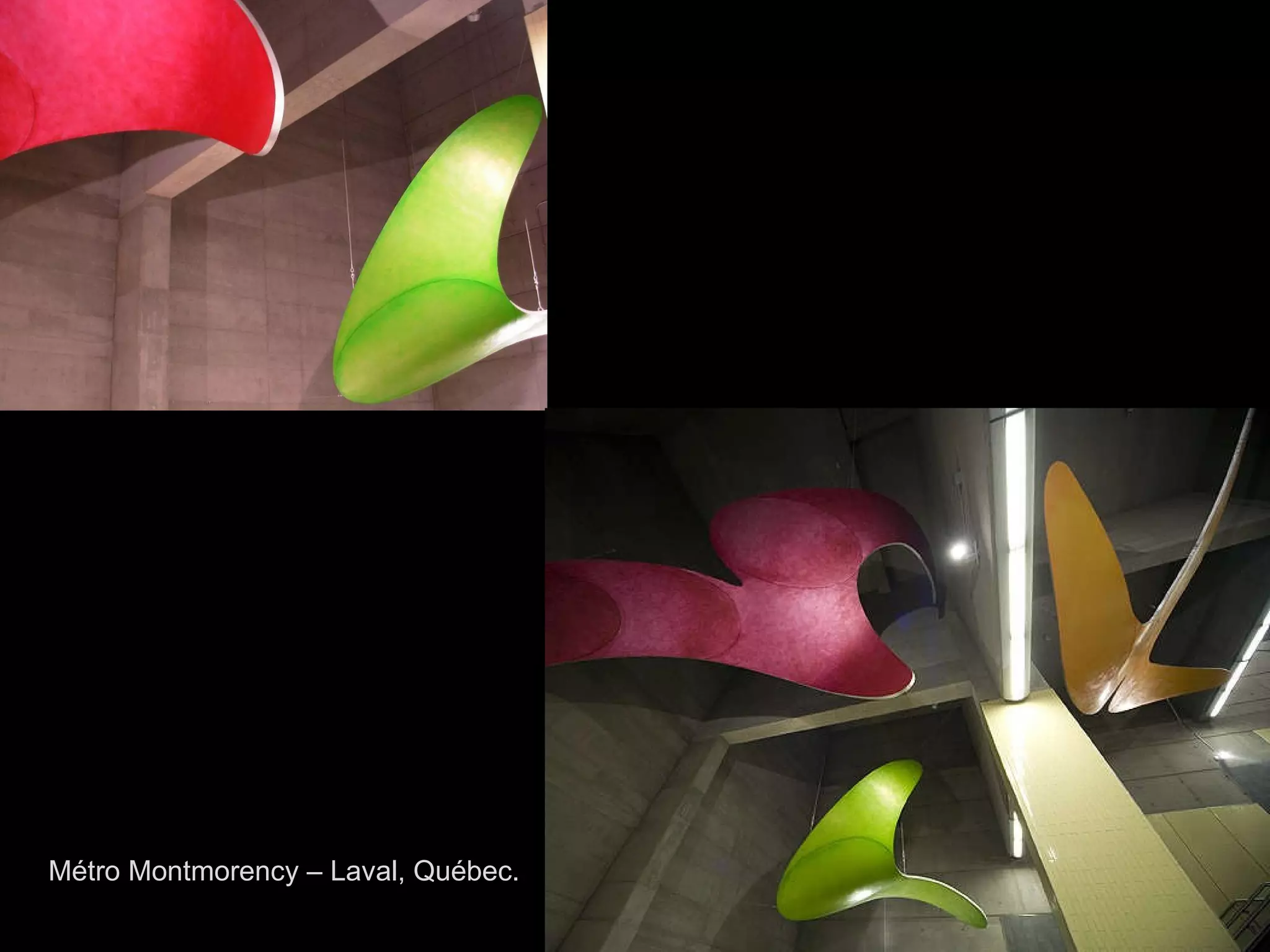
Métro Montmorency – Laval, Québec.
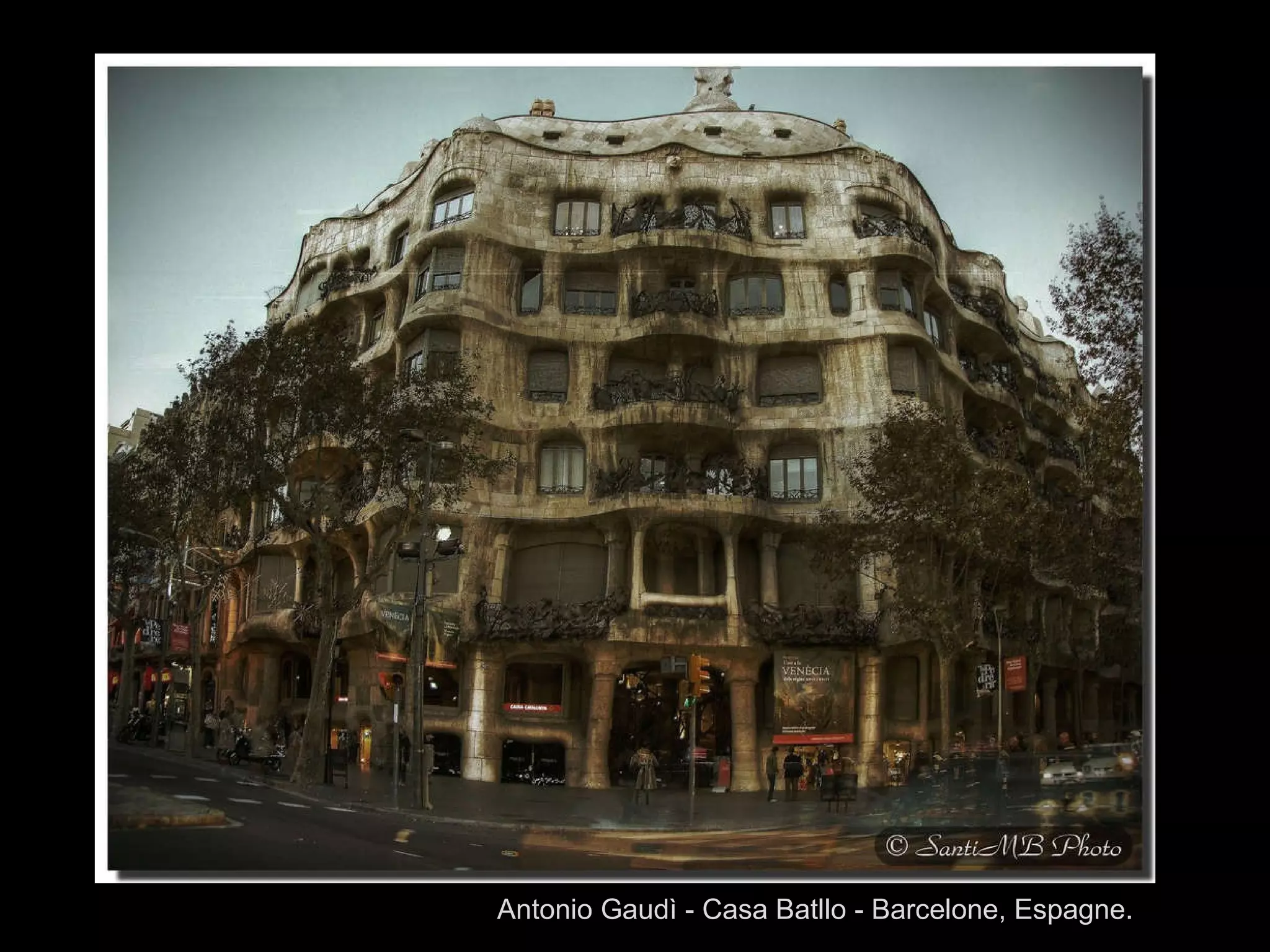
Antonio GaudĂŹ - Casa Batllo - Barcelone, Espagne.
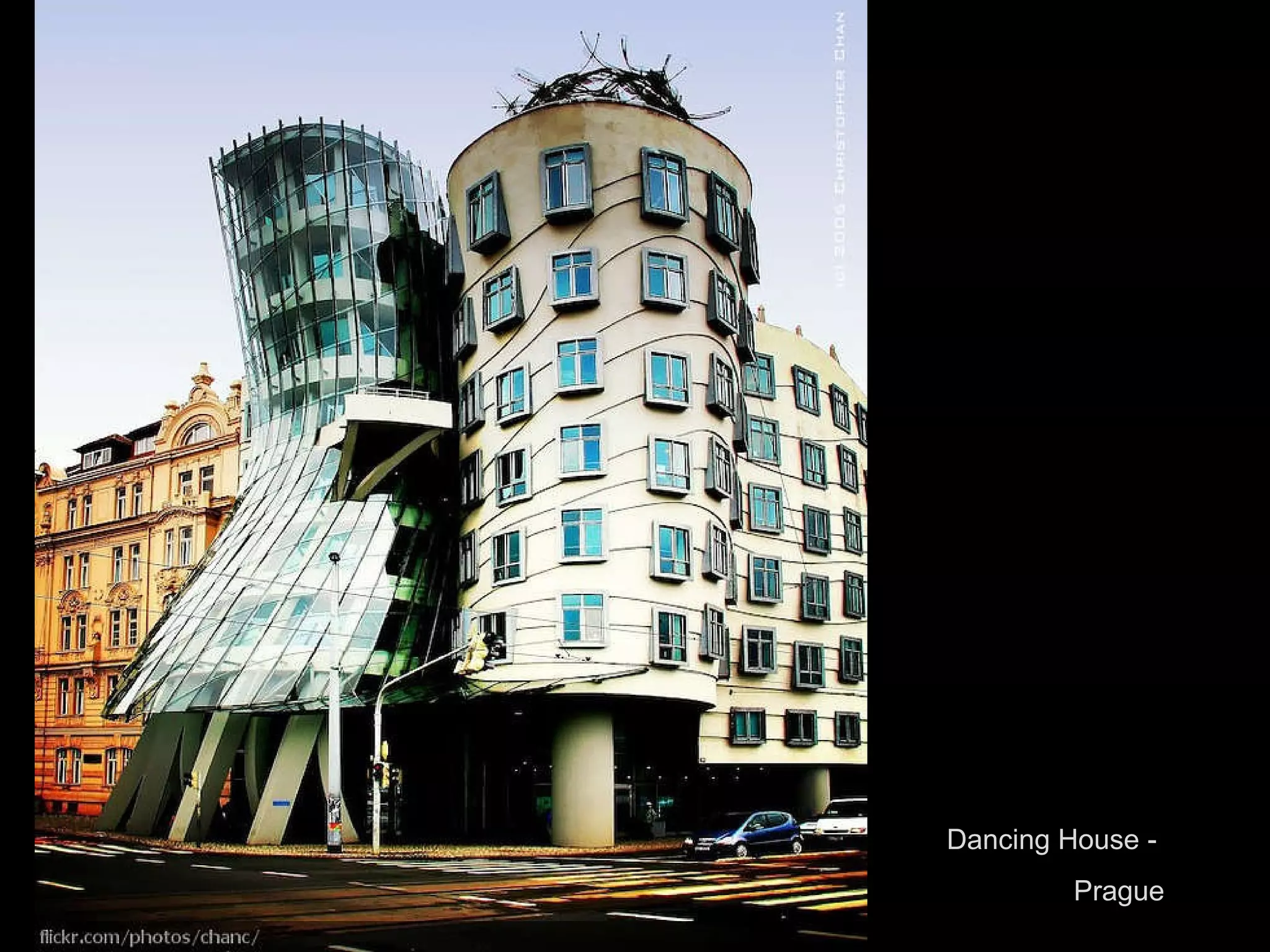
Dancing House -  Prague
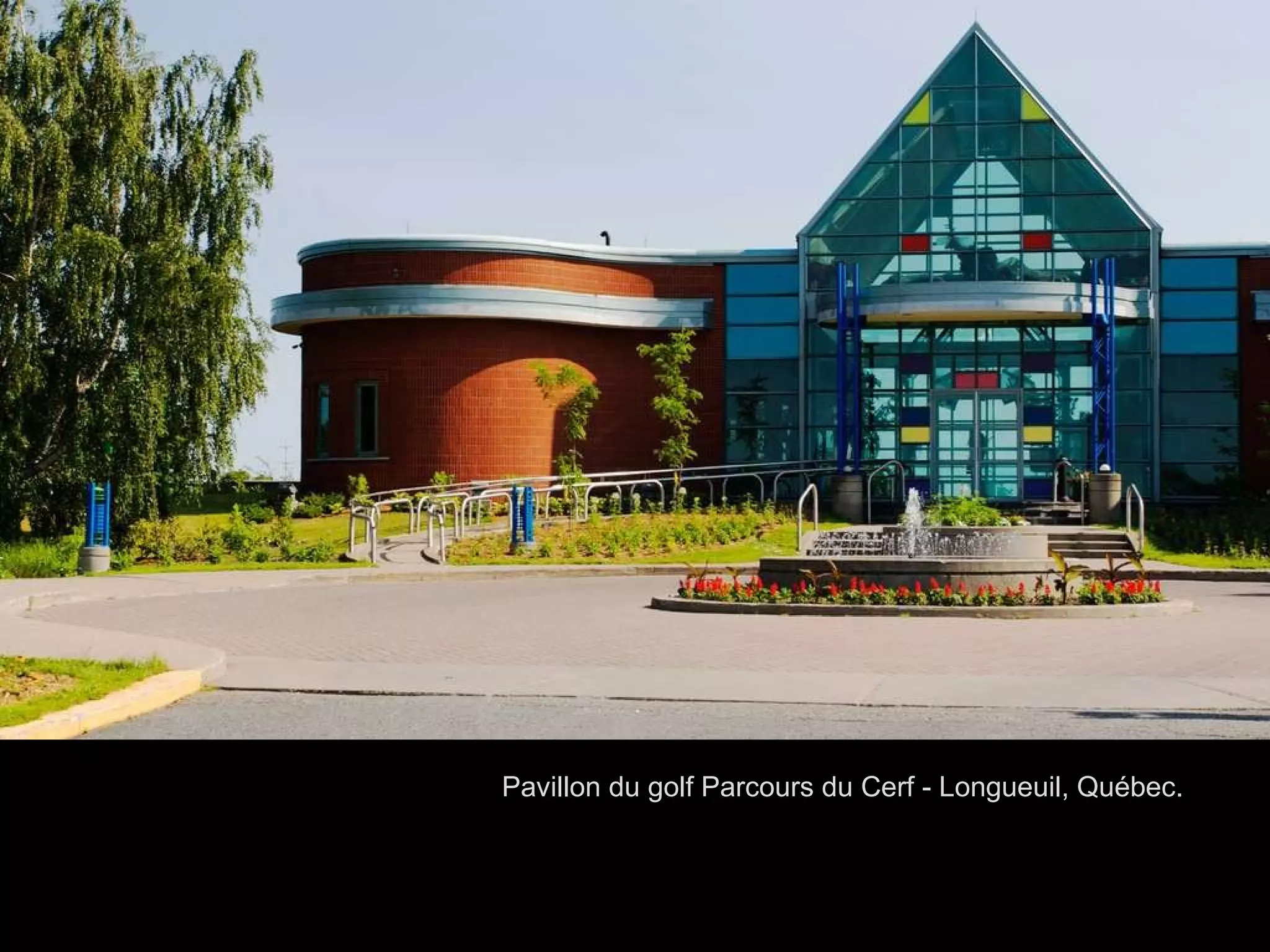
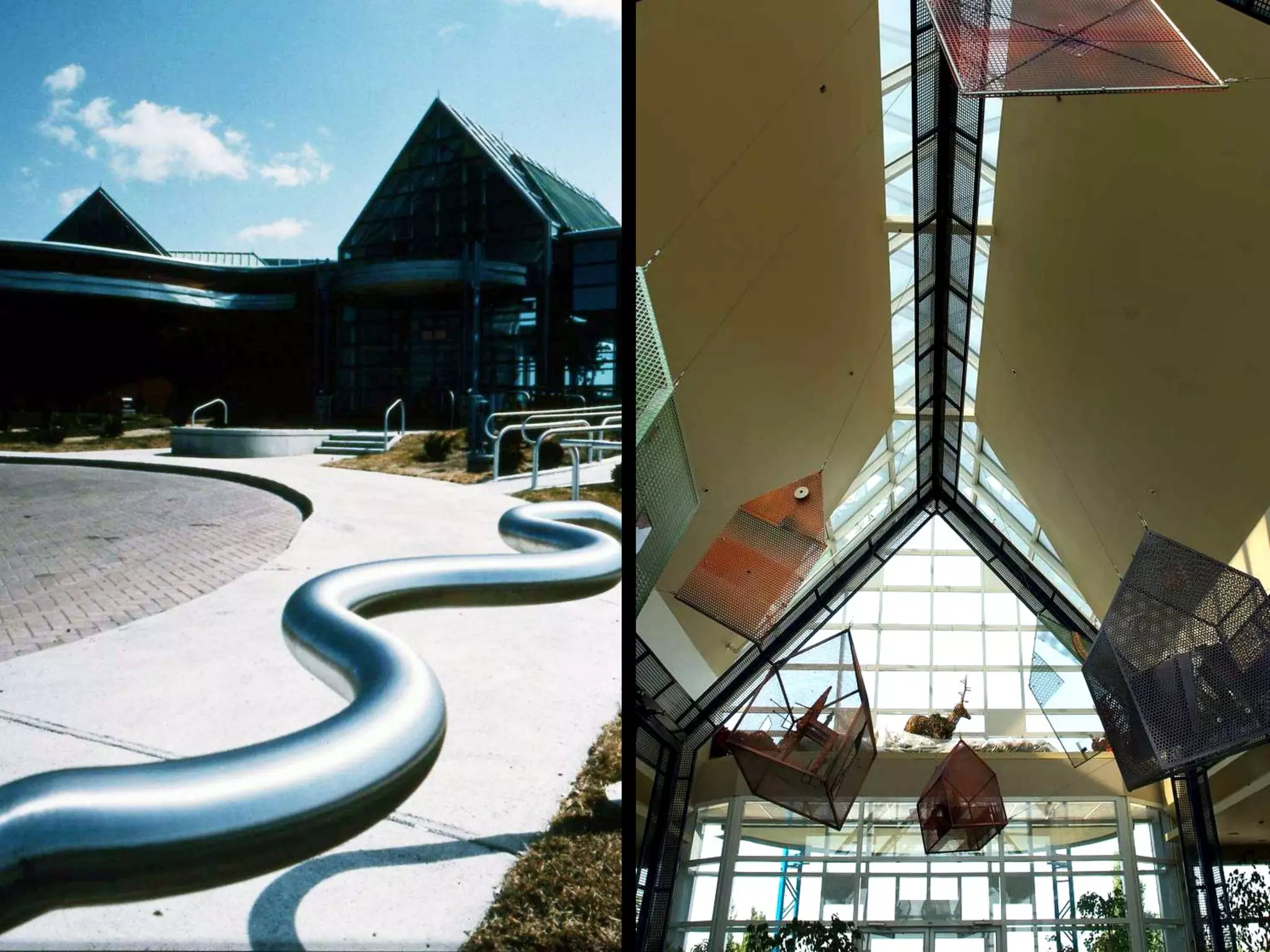
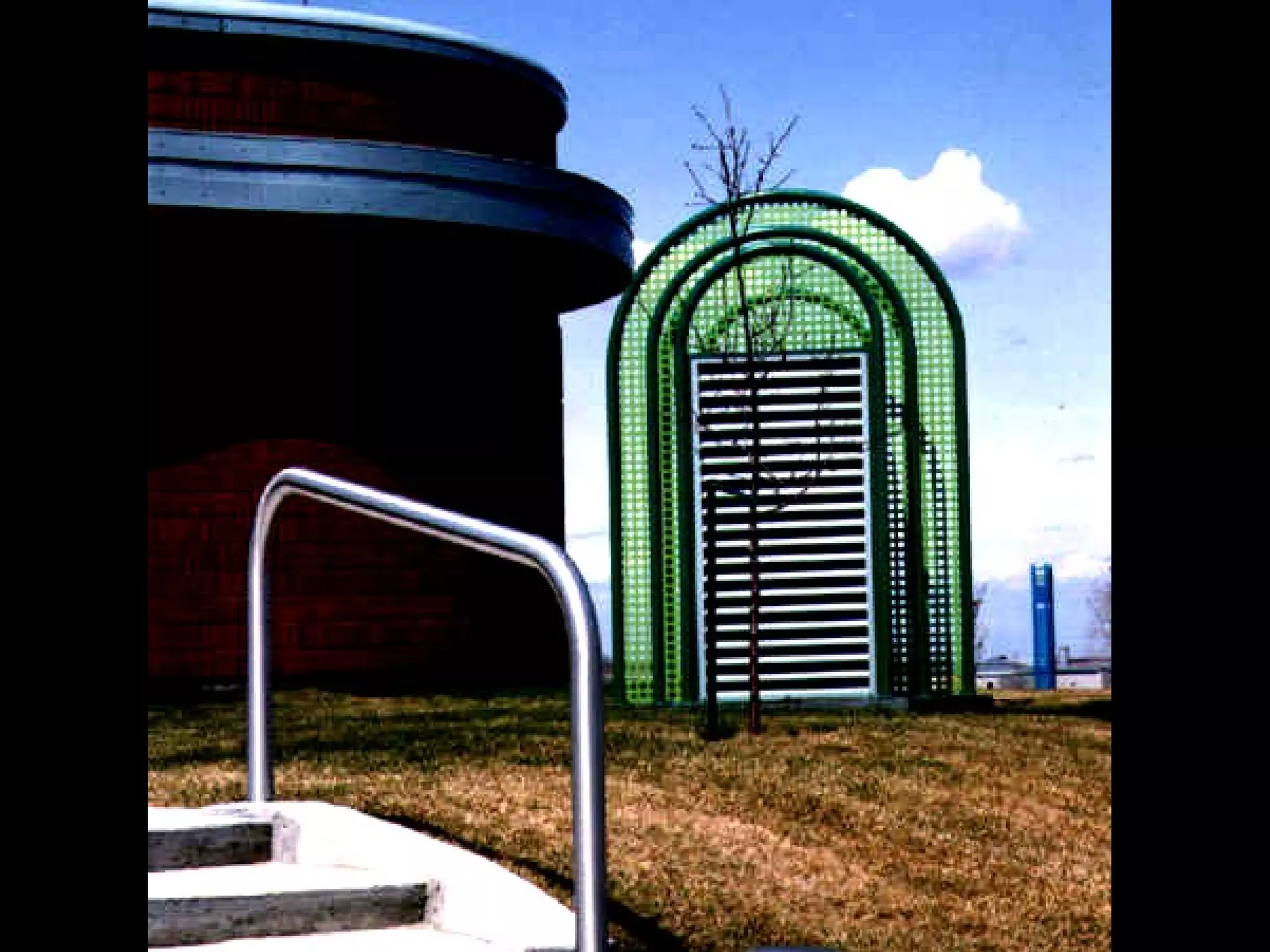
Pavillon du golf Parcours du Cerf - Longueuil, QuĂŠbec.


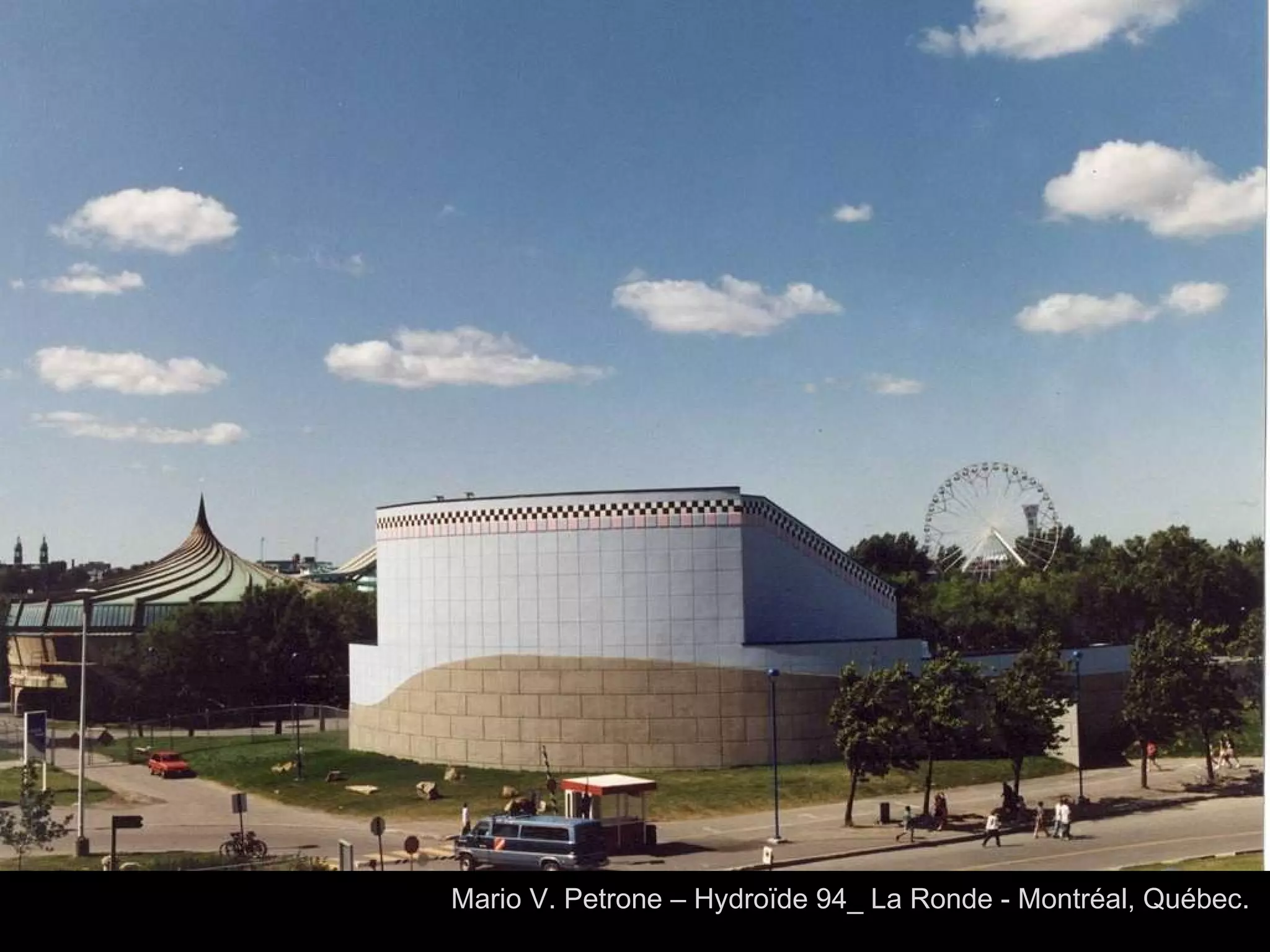
Mario V. Petrone – Hydroïde 94_ La Ronde - Montréal, Québec.
 
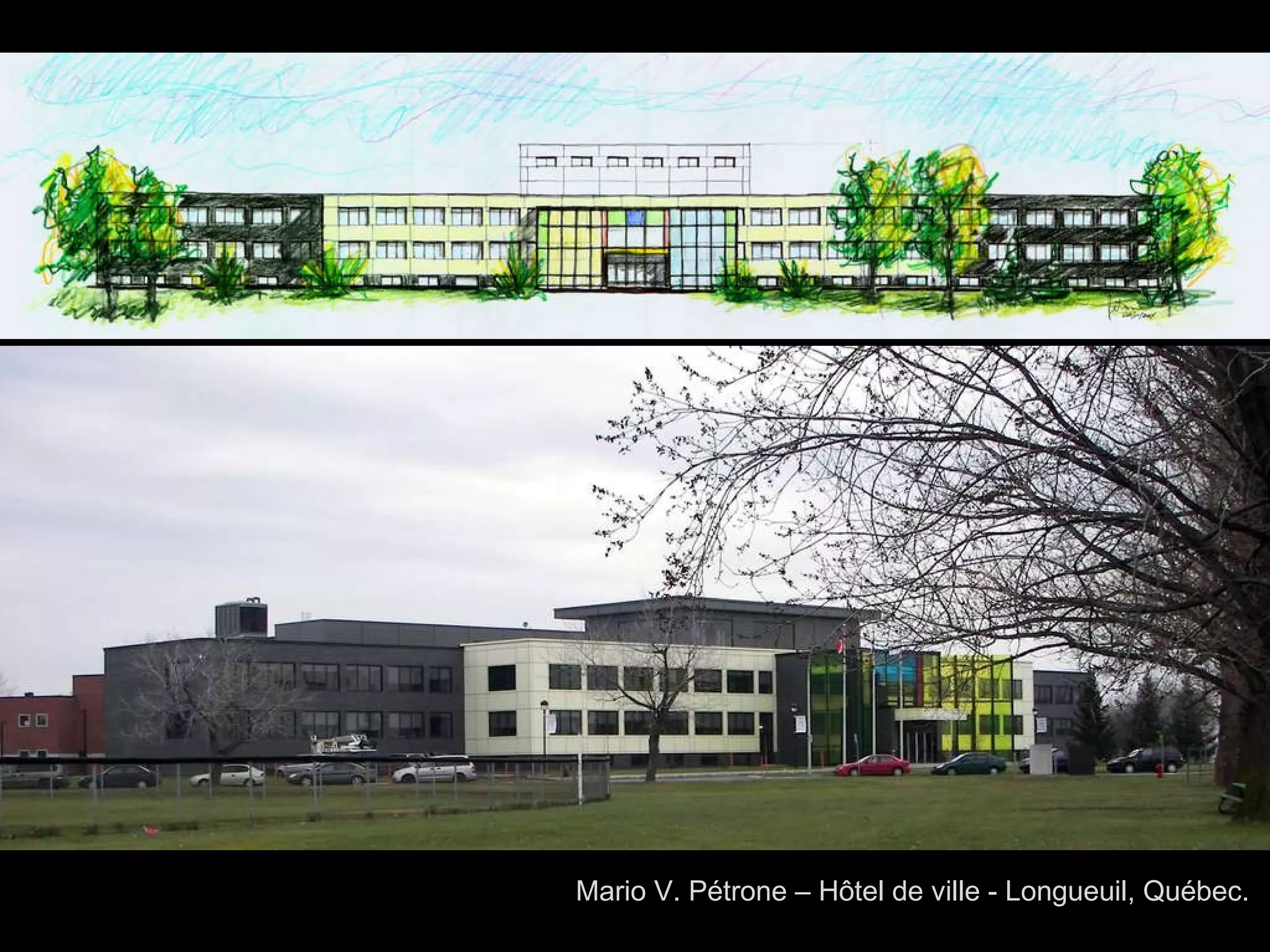
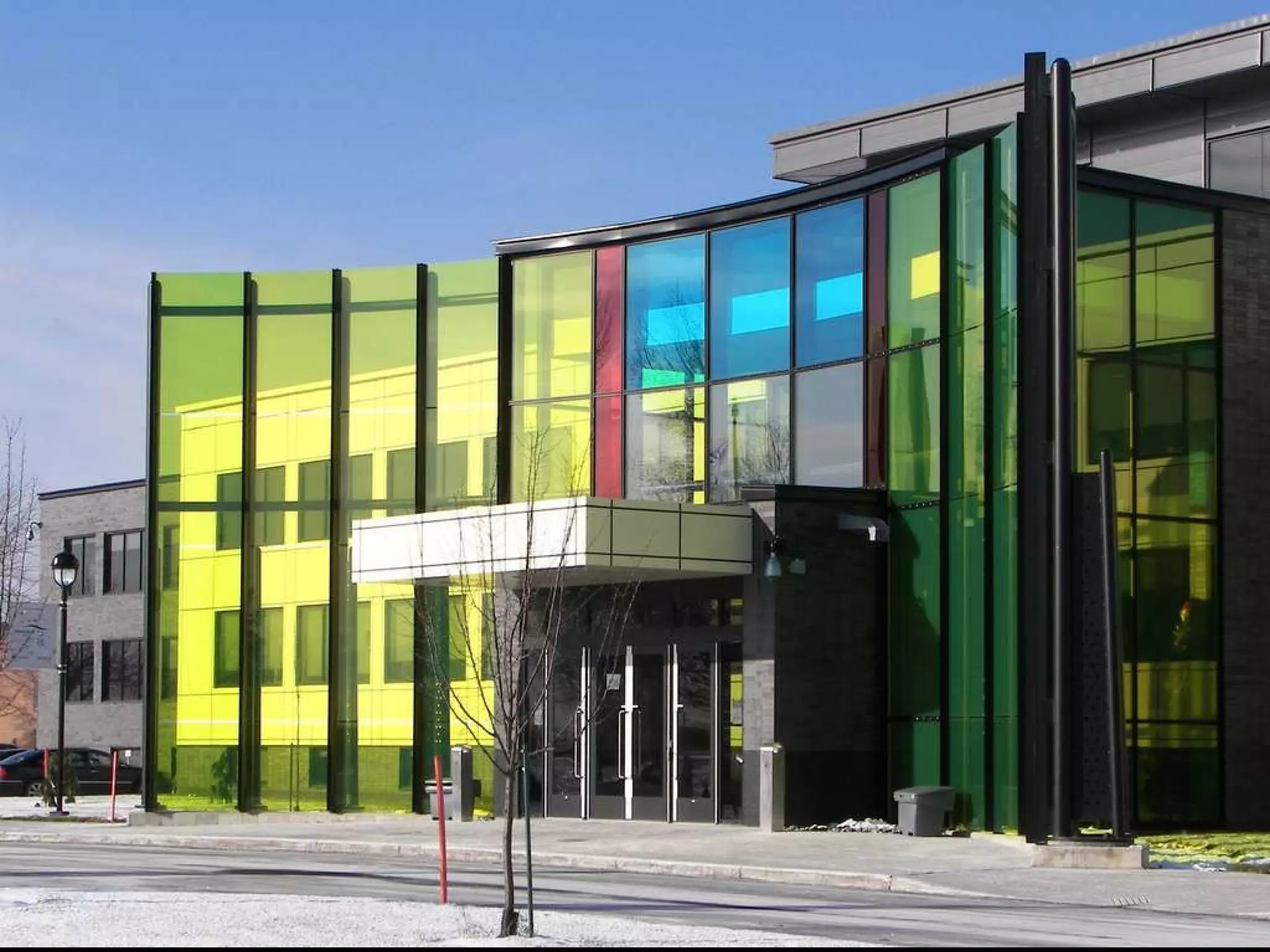
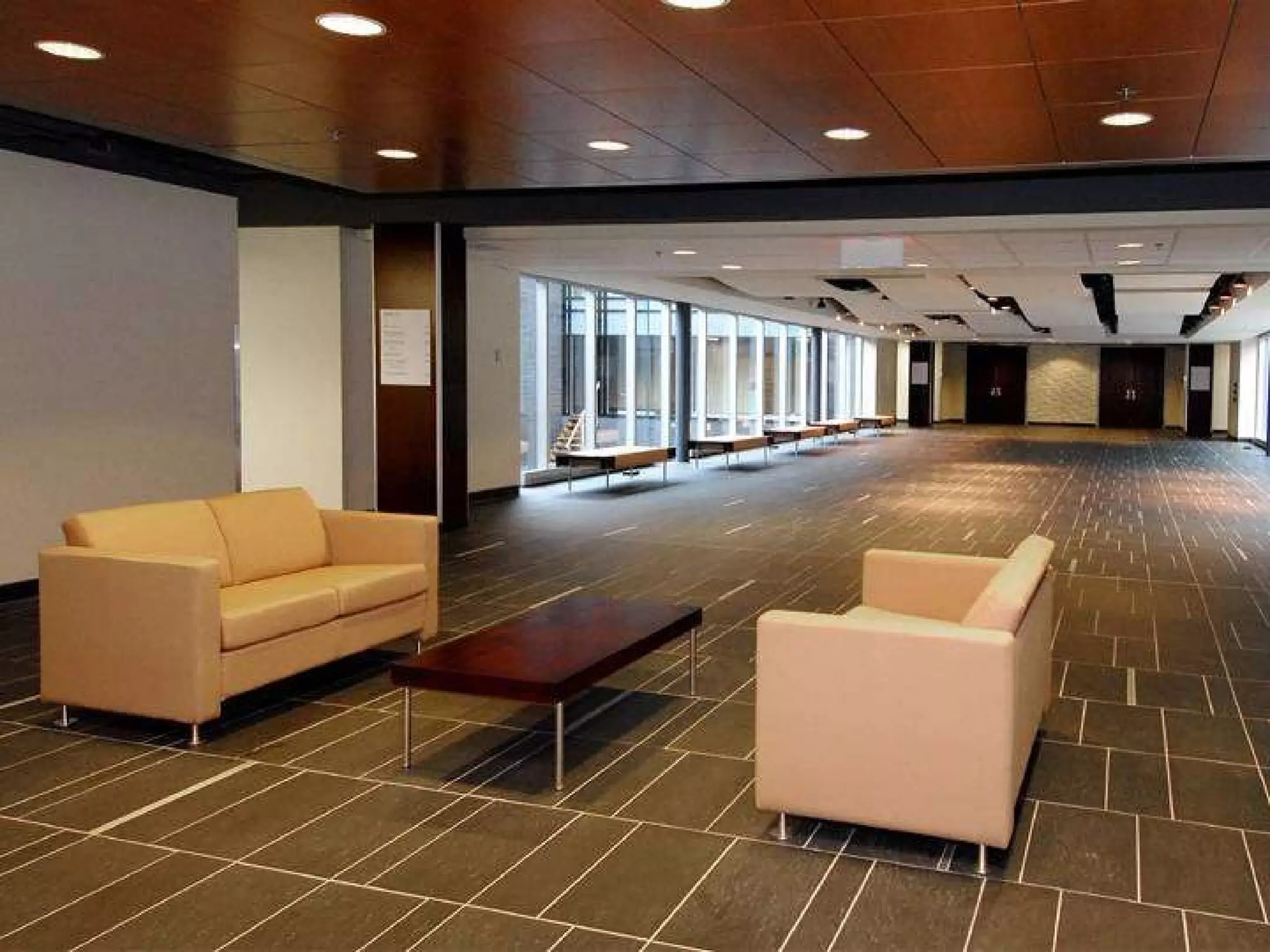
Mario V. Pétrone – Hôtel de ville - Longueuil, Québec.


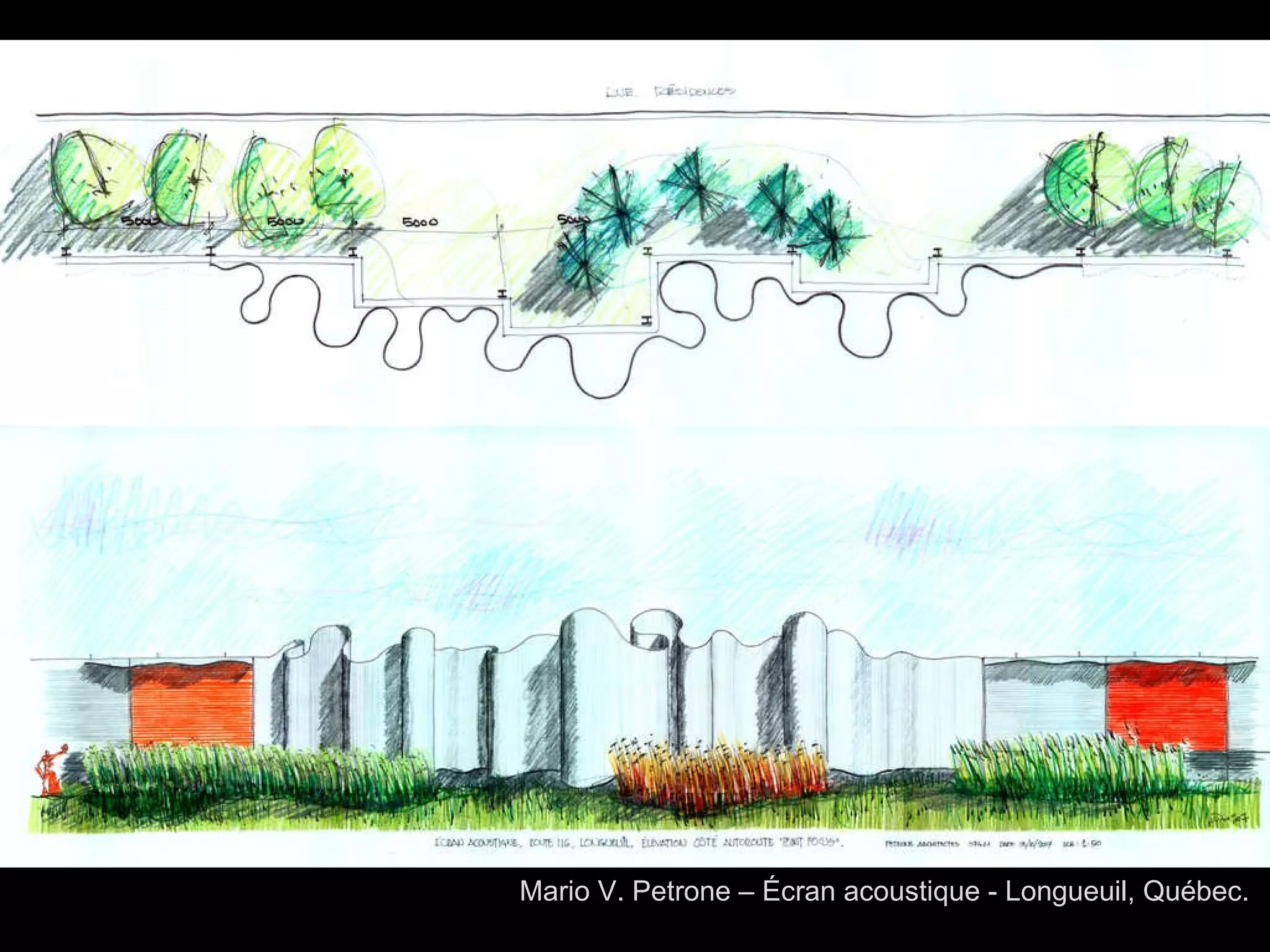
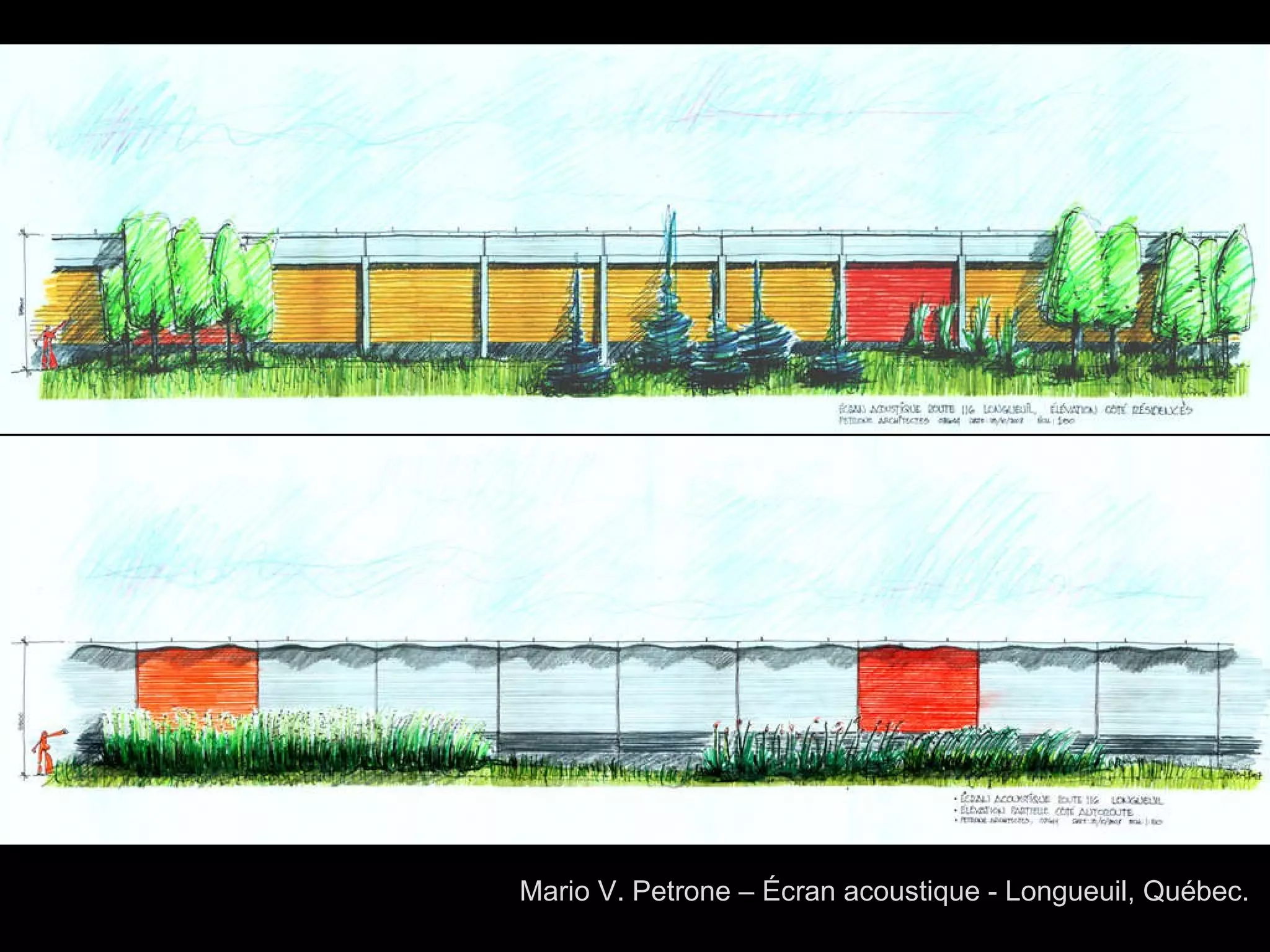
Mario V. Petrone – Écran acoustique - Longueuil, Québec.
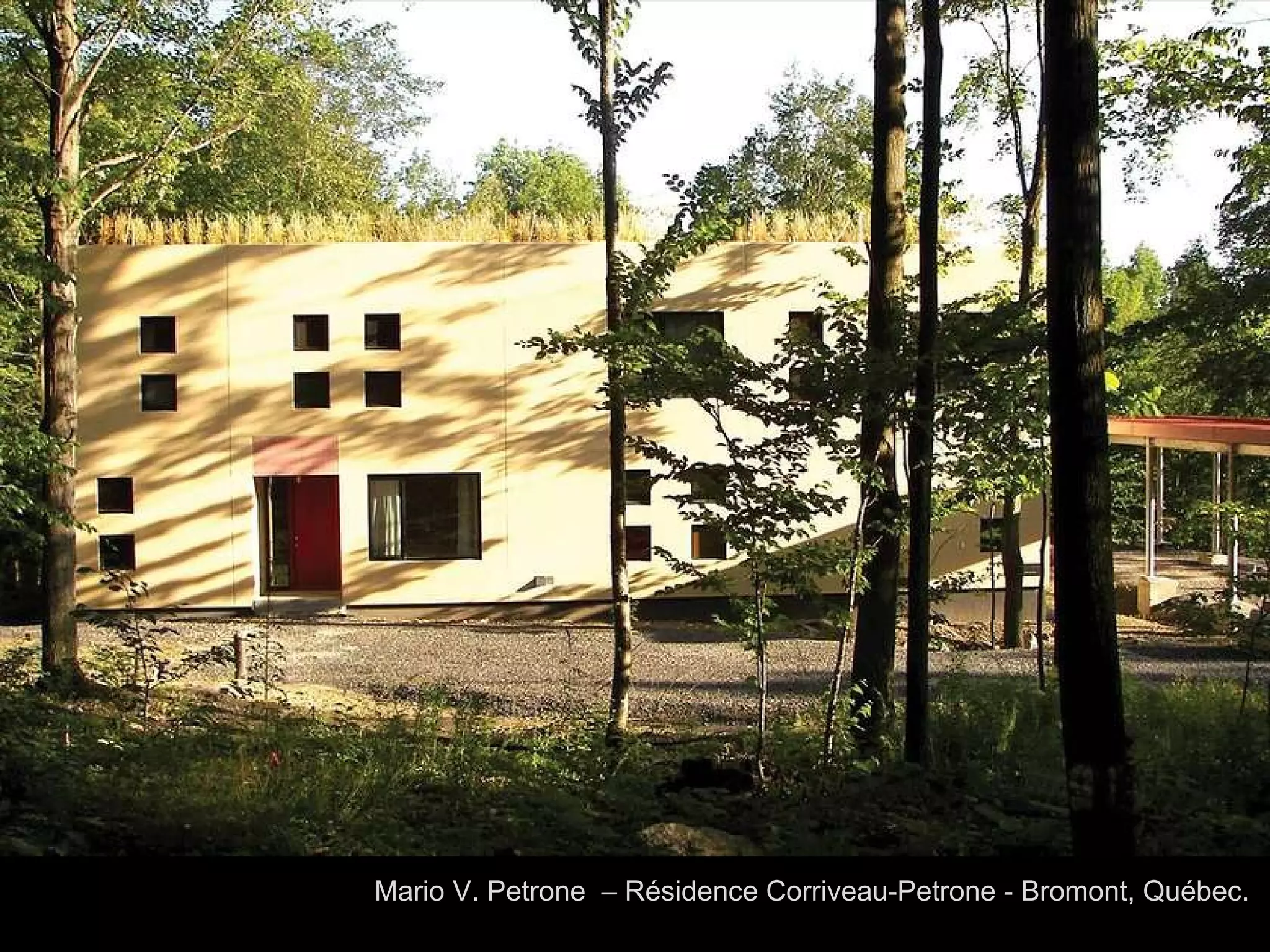
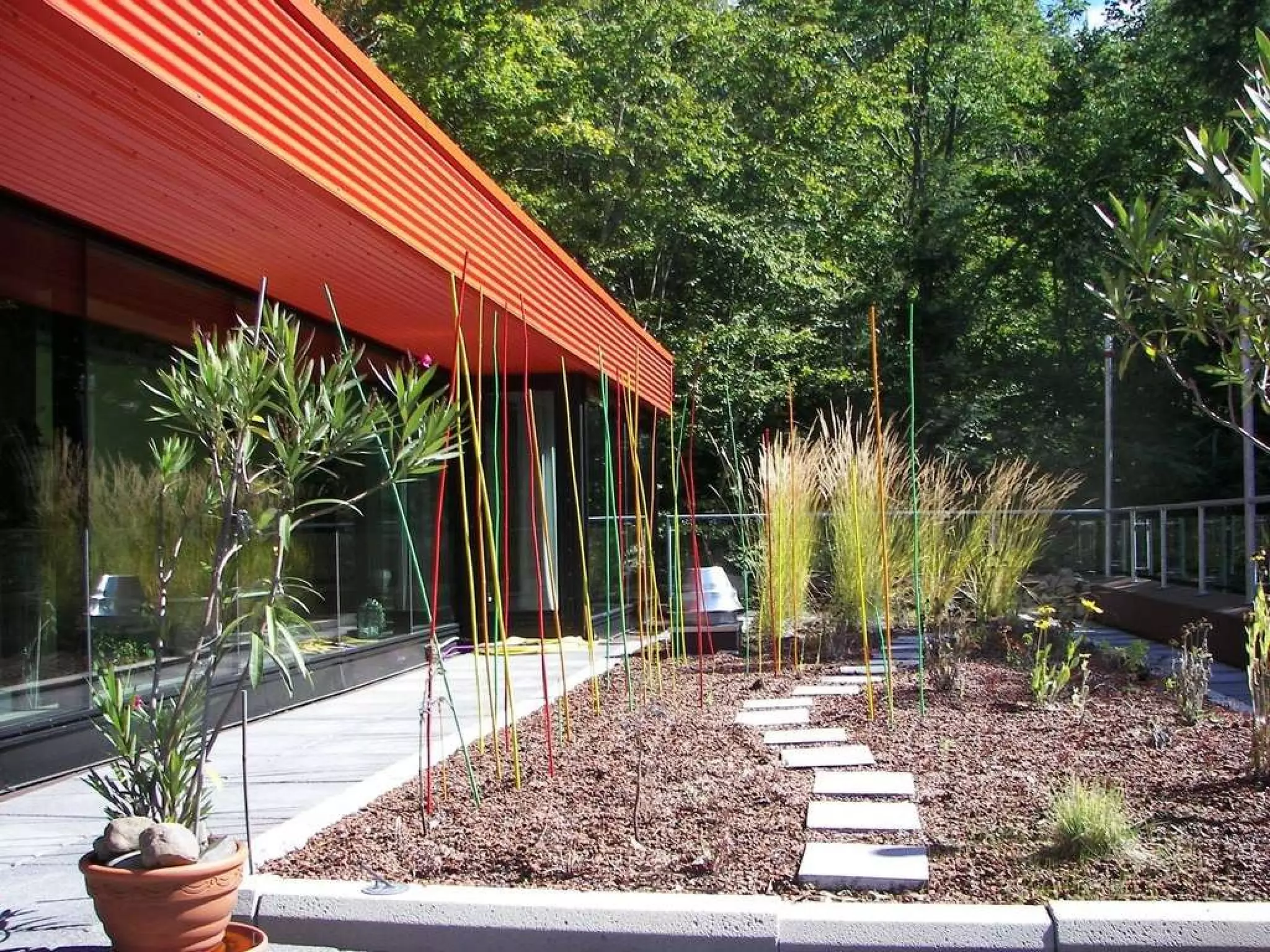
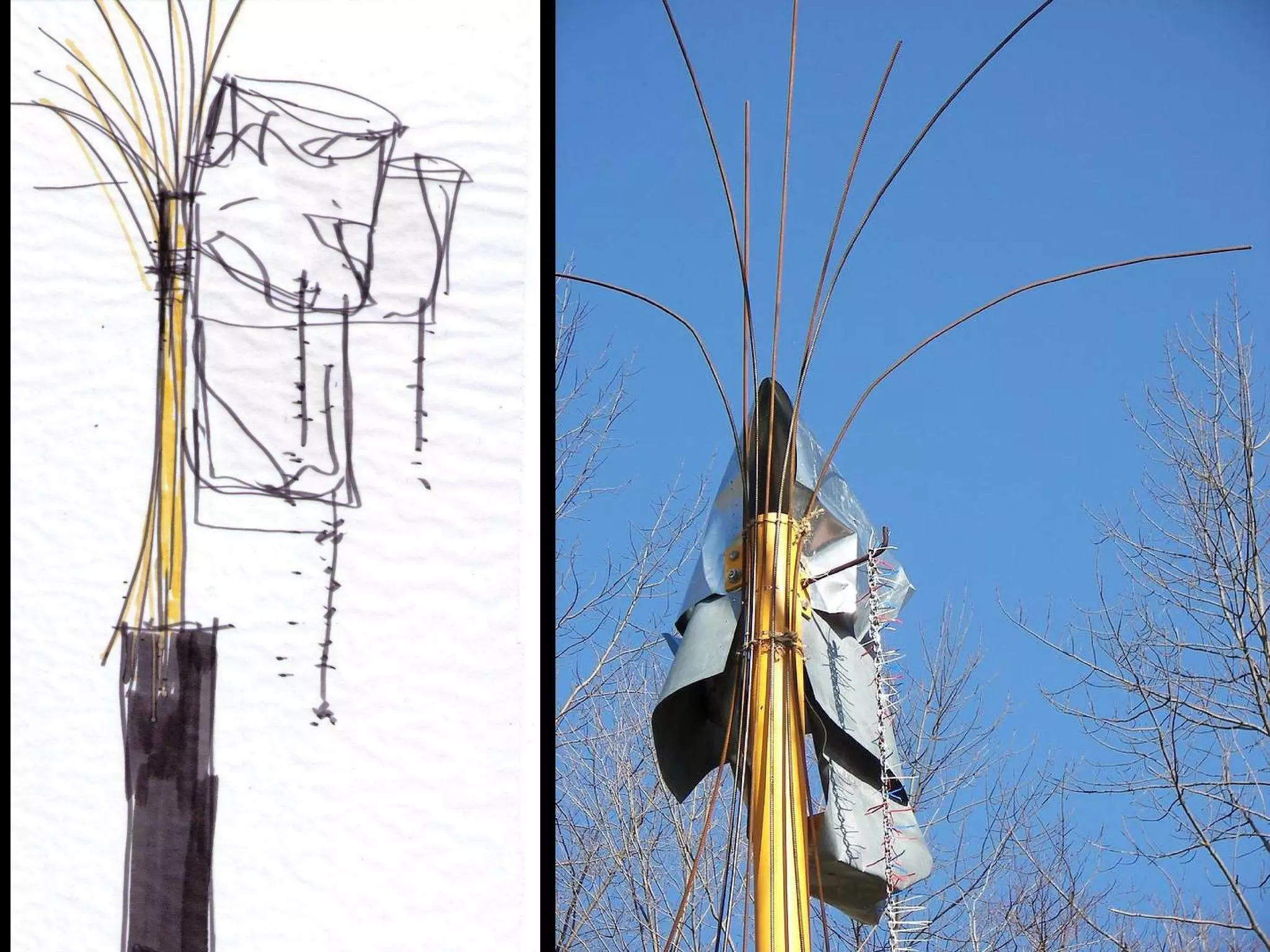
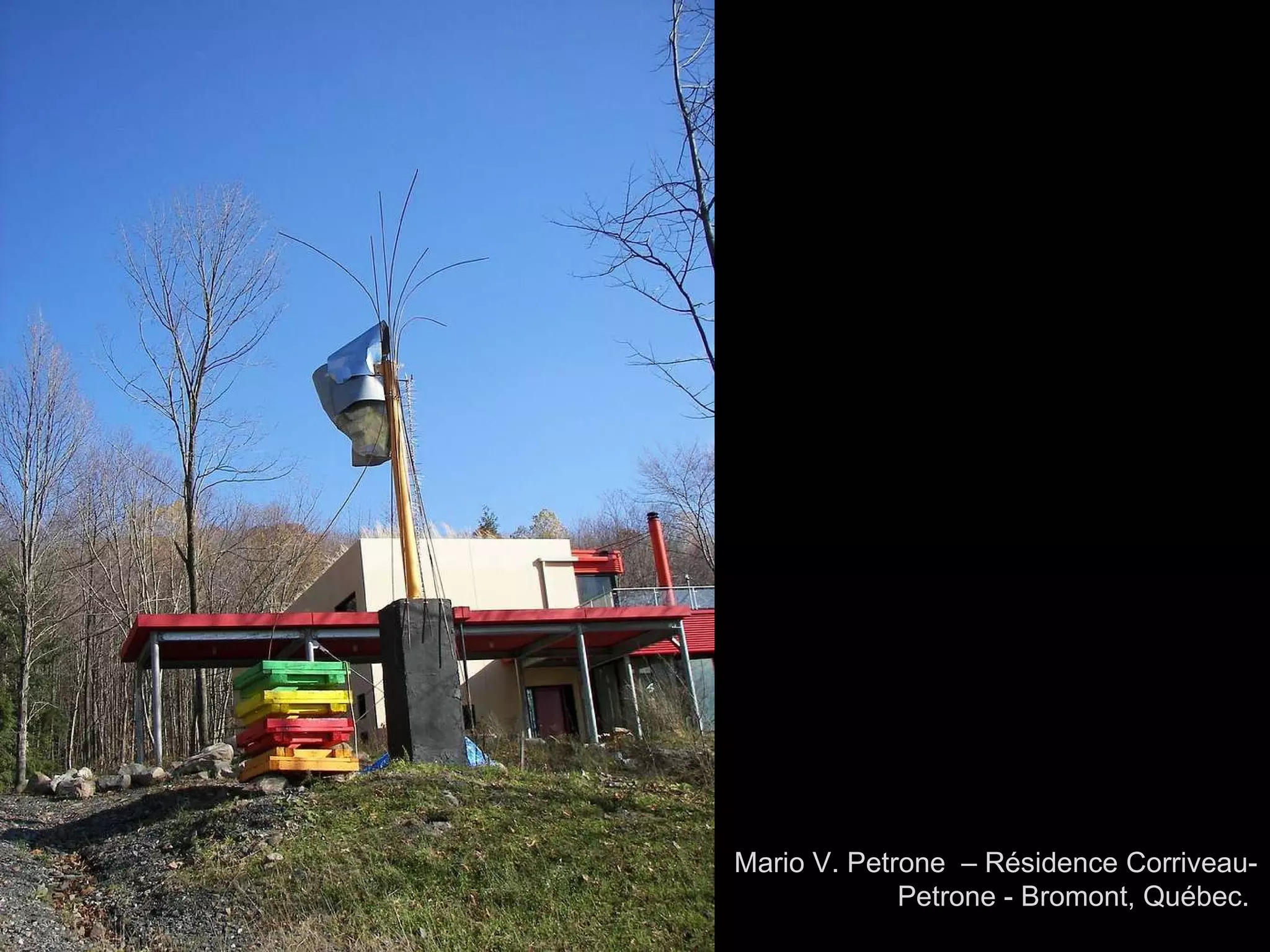
Mario V. Petrone  – Résidence Corriveau-Petrone - Bromont, Québec.


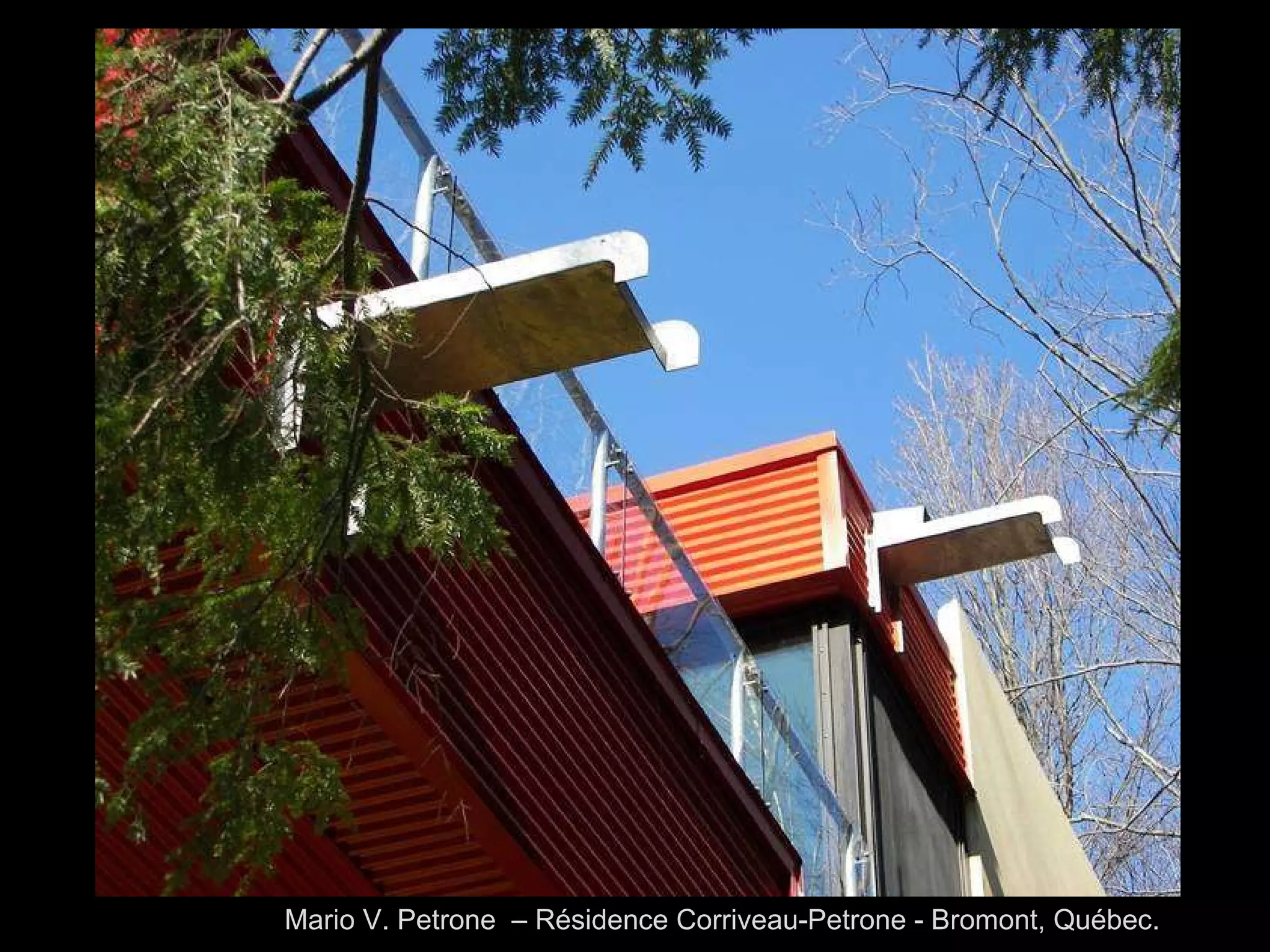
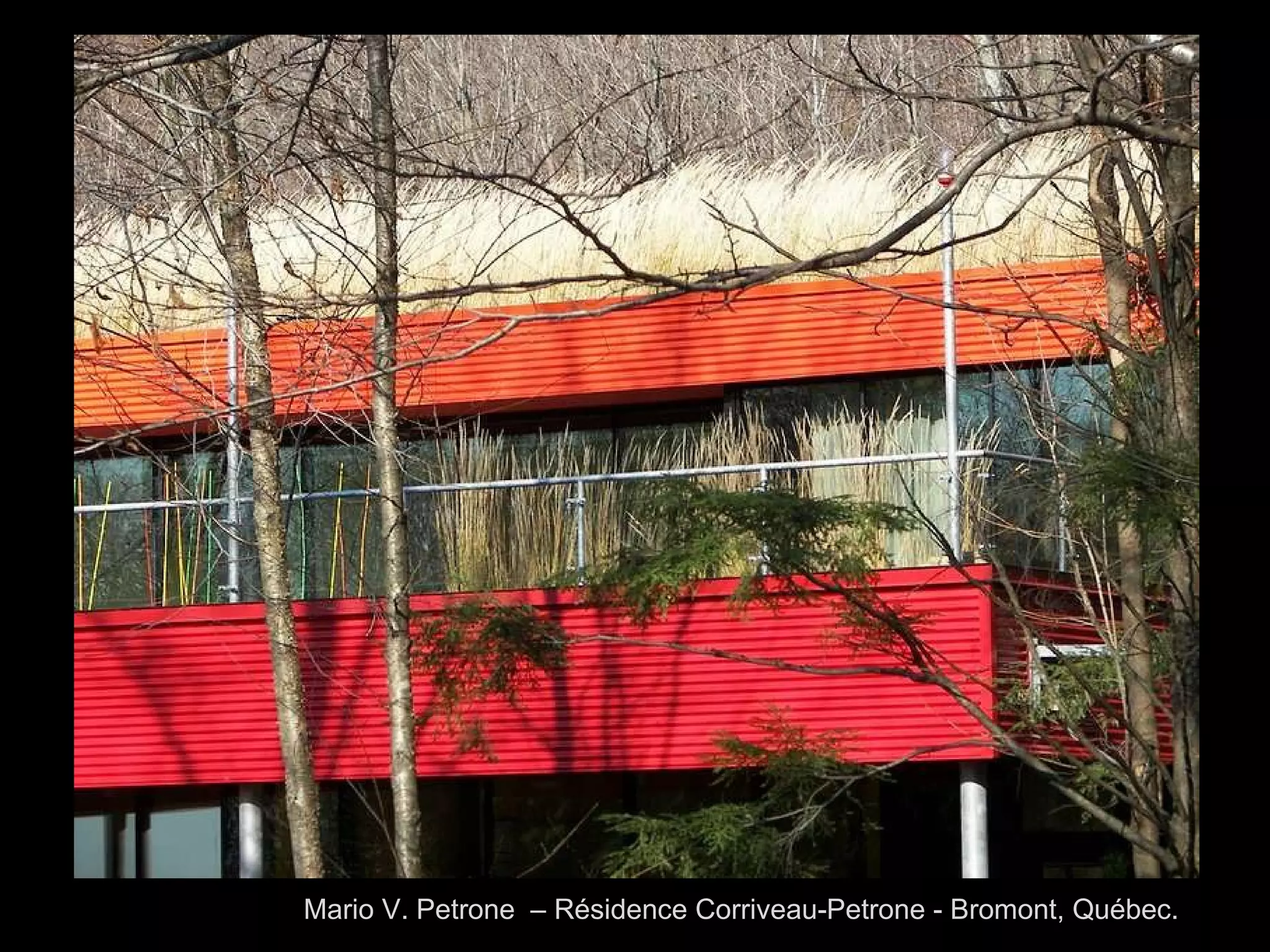
Mario V. Petrone  – Résidence Corriveau-Petrone - Bromont, Québec.
 
 
Based on that discussion, define whether these items are art with perfect examples and proper study of each example  -  printed coffee mug printed t shirt photograph film poster magazine ad brand logos Present your discussion to the class Activity #1 Continued What is Art?
Art apr one

  • 1.
    A R TTHE NATURE OF ART
  • 2.
    some activities orcreations of human beings that have importance to the human mind
  • 3.
    The first andbroadest sense of "art" means "arrangement" or "to arrange." In this sense, art is created when someone arranges things found in the world into a new or different design or form; or when someone arranges colors next to each other in a painting to make an image or just to make a pretty or interesting design. Art can also be a form of expression of emotion. The artist may feel a certain emotion and feels there is no other way to express it than to create something that mean something to them. Most of the art created in this case is made for the artist rather than an audience.
  • 4.
    WHAT DOES A R T DO? What are the various forms of art? When you think of art, what do you think of? Rodin – The Thinker, Chicago Henry Moore – Reclining nude series
  • 5.
    Visual Art/The GraphicArts (expression by making images and sights ): drawing , painting , sculpting , photography , filming , fashion Auditory Art (expression by making sounds ): music , singing Performing Art/The Dramatic Arts (expression using the body): dance , acting , singing Fine Art (expression by making something beautiful or appealing to the emotions ): poetry , writing ( literature ) Culinary Art (expression by making flavors and tastes ): cooking The Mechanical Arts (expression by building objects and structures): architecture T Y P E S O F A R T
  • 6.
    1) cognitive functionWorks of art let us know about what the author knew, and about what the surrounding of the author were like. 2) aesthetic function Works of art are more or less harmonic and bring pleasure, a sensation of beauty. 3) prognostic function Some artists draw what they see the future like, and some of them are right... 4) recreation function Art makes us think about it, not about reality; we have a rest. 5) value function What did the artist value? What aims did he like/dislike in human activity? This usually is clearly seen in artists' works. F U N C T I ON S O F A R T
  • 7.
    Self Portrait byartist Rembrandt Oldenburg Eraser COGNITIVE FUNCTION
  • 8.
    Van Eyck documentsthe Arnolfini wedding with an eye for detailed images, texture and symbolism. Example: The single candle, faithful dog and the light of God which unifies all. COGNITIVE FUNCTION
  • 9.
  • 10.
  • 11.
  • 12.
  • 13.
    Andy Warhol printVALUE FUNCTION
  • 14.
    Christo – TheWall - Nylon fence,18 feet high and 24 miles long BOOK ART Art can come in all sizes, from massive public art to dainty table top pieces.
  • 15.
    Is art definedby its materials? We're all used to thinking of paintings as art. Or bronze or marble sculptures. But art can be made from all kinds of materials. Bicycle Tire by Duchaump Collage Michelangelo – Emerging series
  • 16.
    A work caneven combine art forms! For example, at left, Robert Rauschenberg uses many items in his assemblage collage work, Monogram is created with a stuffed goat, a tire and a painting.
  • 17.
    Some art moves! A piece may turn in the breeze, like the Calder mobiles. Or have a motor or they can have sound. The mobiles below are by Calder and were made with metal and called kinetic sculpture.
  • 18.
    Abstract art ?It can suggest many things, create many moods, or simply celebrate something as basic as form or color. You'll notice that when you look at abstract art you tend to describe it in terms of feelings. It makes you feel happy. It makes you feel tense. Or this painting looks angry. Or quiet and peaceful. This is a great way to interpret art! Kandinsky Klee
  • 19.
    A representational drawingof a cow is abstracted into colorful squares Theo van Doesburg Abstraction of a cow c. 1916
  • 20.
    Does art haveto be beautiful? What about a piece that looks truly ugly to you? Is Perhaps the artist is communicating something with that "ugliness". Sometimes the artist is trying to shock the viewer, or to make you feel uncomfortable. Perhaps to make people see things in a new way. daVinci’s Ugly Man Jean-Michel Basquiat – Mona Lisa
  • 21.
  • 22.
    A building offersdifferent perspectives. Thus Large component of the craft of architecture becomes the translation from two to three dimensions. The cubist approach changed the art world’s perception of space. Instead of representing a scene from a single point of view, the cubist fused several visual perspectives into one. COMPARISON : Each composition reflects a desire to unfold the drama through a process of abstraction, many angles are captured and recreated.
  • 23.
    The window illuminatespassages, provides vistas, gives a sense of the world beyond and within walls. The ancient Greek agora (above) is a striking parallel to the painting. The opening becomes both an eye to the outside world and a point of illumination for the interior composition.
  • 24.
  • 25.
    Repeated forms canbe used to create variety and patterning whether in colour and line , as in a painting, or in three dimensional space and form. Continuity leads familiarity to a new environment, making a place easier to navigate
  • 26.
  • 27.
    Some artists creatework that transforms space in a magical sense. The way they alters, accumulates and recombines these objects transforms them. Ann Hamilton, STILL LIFE
  • 28.
    Andy Goldsworthy workswith the elements of the landscape, creating new arrangements with the materials already present on the site. Work in progress by andy,1992
  • 29.
    A R Tvs ARCHITECTURE OPEN DISCUSSION
  • 30.
    R. Piano, R.Rogers et G. Franchini - Centre Georges Pompidou - Paris, France.
  • 31.
    R. Piano, R.Rogers et G. Franchini - Centre Georges Pompidou - Paris, France.
  • 32.
  • 33.
    Johann Otto vonSpreckelsen – La Défense - Paris, France.
  • 34.
    La DĂŠfense -Paris, France.
  • 35.
    Franck Gherry -MusĂŠe Guggenheim - Bilbao, Espagne.
  • 36.
    Franck Gherry -MusĂŠe Guggenheim - Bilbao, Espagne.
  • 37.
    Franck Gherry -MusĂŠe Guggenheim - Bilbao, Espagne.
  • 38.
    Santiago Calatrava -Bilbao, Espagne.
  • 39.
  • 40.
  • 41.
  • 42.
  • 43.
    Santiago Calatrava -Santa Cruz de Tenerife Concert Hall – Îles Canaries, Espagne.
  • 44.
  • 45.
    Antonio GaudĂŹ -Parc GĂźell - Barcelone, Espagne.
  • 46.
    Will Alsop -Ontario College of Art and Design - Toronto, Canada.
  • 47.
    Daniel Libeskind etBregman + Hamann Architects – Royal Ontario Museum - Toronto, Canada.
  • 48.
    Jean Pierre Morin– Espace fractal - Montréal, Québec.
  • 49.
    Jean Pierre Morin– Espace fractal - Montréal, Québec.
  • 50.
    Alexander Calder –L’homme - Montréal, Canada.
  • 51.
    Mario V. Petrone– Théâtre de la ville - Longueuil
  • 52.
    Mario V. Petrone– Théâtre de la ville - Longueuil
  • 53.
    Mario V. Petrone- École primaire de l’Envolée-du Boisé - Saint-Amable
  • 54.
    Mario V. Petrone- École primaire de l’Envolée-du Boisé - Saint-Amable
  • 55.
    Marcelle Ferron –Vitrail au Métro Vendôme – Montréal, Québec.
  • 56.
    Marcelle Ferron –Vitrail au Métro Champ-de-Mars – Montréal, Québec.
  • 57.
    Atrium Bibliothèque –Montréal, Québec.
  • 58.
    Métro Montmorency –Laval, Québec.
  • 59.
    Antonio GaudĂŹ -Casa Batllo - Barcelone, Espagne.
  • 60.
  • 61.
    Pavillon du golfParcours du Cerf - Longueuil, QuĂŠbec.
  • 62.
  • 63.
  • 64.
  • 65.
  • 66.
  • 67.
  • 68.
    Mario V. Petrone– Hydroïde 94_ La Ronde - Montréal, Québec.
  • 69.
  • 70.
    Mario V. Pétrone– Hôtel de ville - Longueuil, Québec.
  • 71.
  • 72.
  • 73.
  • 74.
  • 75.
    Mario V. Petrone– Écran acoustique - Longueuil, Québec.
  • 76.
    Mario V. Petrone– Écran acoustique - Longueuil, Québec.
  • 77.
    Mario V. Petrone – Résidence Corriveau-Petrone - Bromont, Québec.
  • 78.
    Mario V. Petrone – Résidence Corriveau-Petrone - Bromont, Québec.
  • 79.
    Mario V. Petrone – Résidence Corriveau-Petrone - Bromont, Québec.
  • 80.
  • 81.
  • 82.
  • 83.
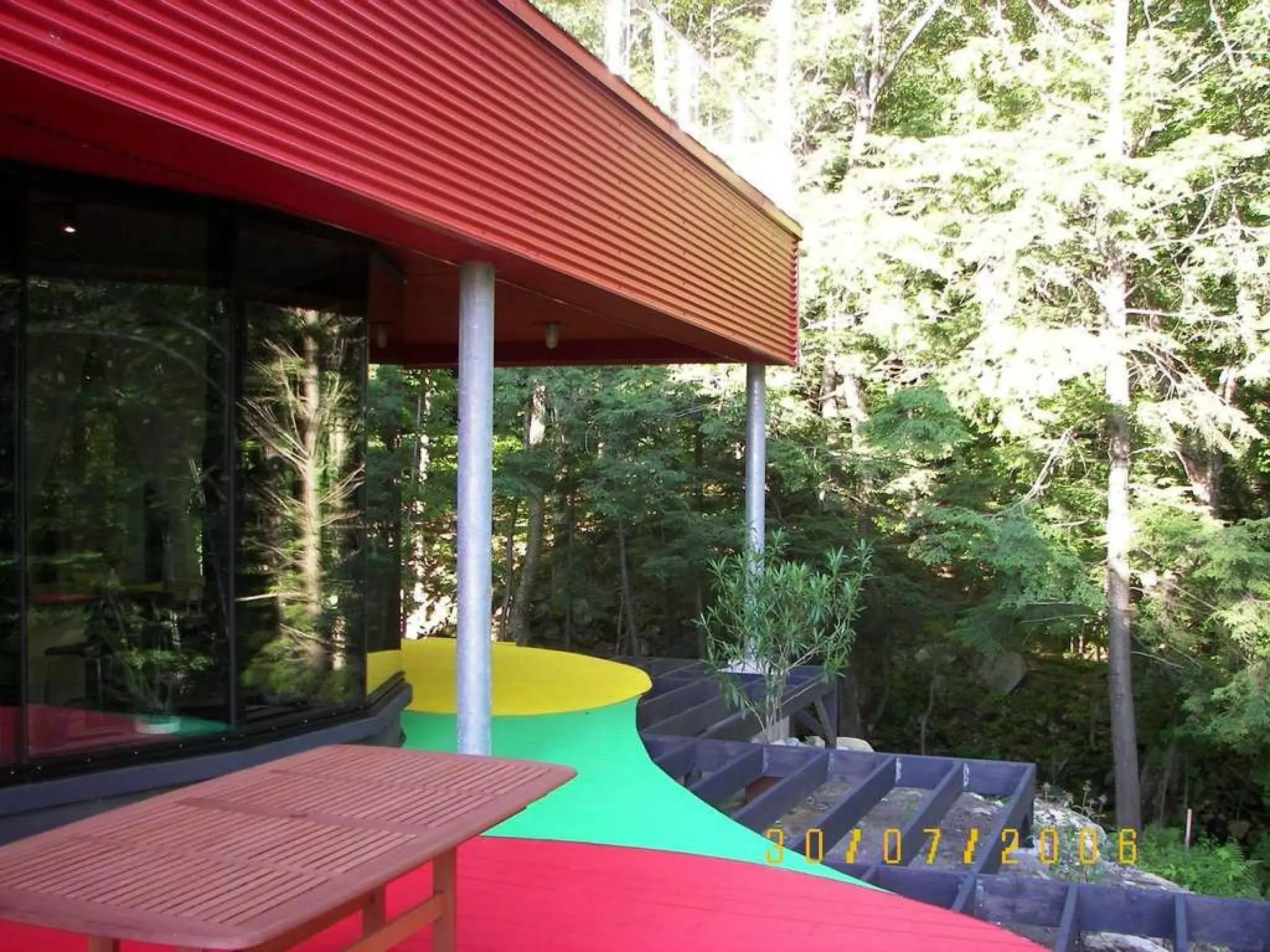
    Mario V. Petrone – Résidence Corriveau-Petrone - Bromont, Québec.
  • 84.
  • 85.
  • 86.
    Based on thatdiscussion, define whether these items are art with perfect examples and proper study of each example - printed coffee mug printed t shirt photograph film poster magazine ad brand logos Present your discussion to the class Activity #1 Continued What is Art?