2n=6 AND APPLICATION
BAY-ANG MAGPAG-ONG NATIONAL HIGH SCHOOL
Bay-ang , Batan, Aklan
SHS Department
BIOLOGY 1
Mitosis
LEARNING COMPETENCIES
1. Describe the stages of mitosis
given 2n=6;
2. Explain the significance or
application of mitosis.
LEARNING COMPETENCIES
1. Identify the stages of the cell
cycle;
2. Describe mitosis and its stages;
3. Appreciate the significance and
role of mitosis.
History of Understanding Cancer
⚫Rudolf Virchow (1821-1902) – First to recognize
leukemia in mid-1800s, believing that diseased
tissue was caused by a breakdown within the
cell and not from an invasion of foreign organisms.
⚫Louis Pasteur (1822-1895) – Proved Virchow to be
correct in late 1800s.
⚫Virchow’s understanding that cancer cells start out
normal and then become abnormal is still used
today.
⚫If cancer is the study of abnormal cell division, let’s
look at normal cell division.
Types of Normal Cell Division
⚫ There are two types of normal cell division – mitosis and
meiosis.
⚫ Mitosis is cell division which begins in the fertilized egg
(or zygote) stage and continues during the life of the
organism in one way or another. Each diploid (2n)
daughter cell is genetically identical to the diploid (2n)
parent cell.
⚫ Meiosis is cell division in the ovaries of the female and
testes of the male and involves the formation of egg
and sperm cells, respectively. Each diploid (2n)
parent cell produces haploid (n) daughter cells.
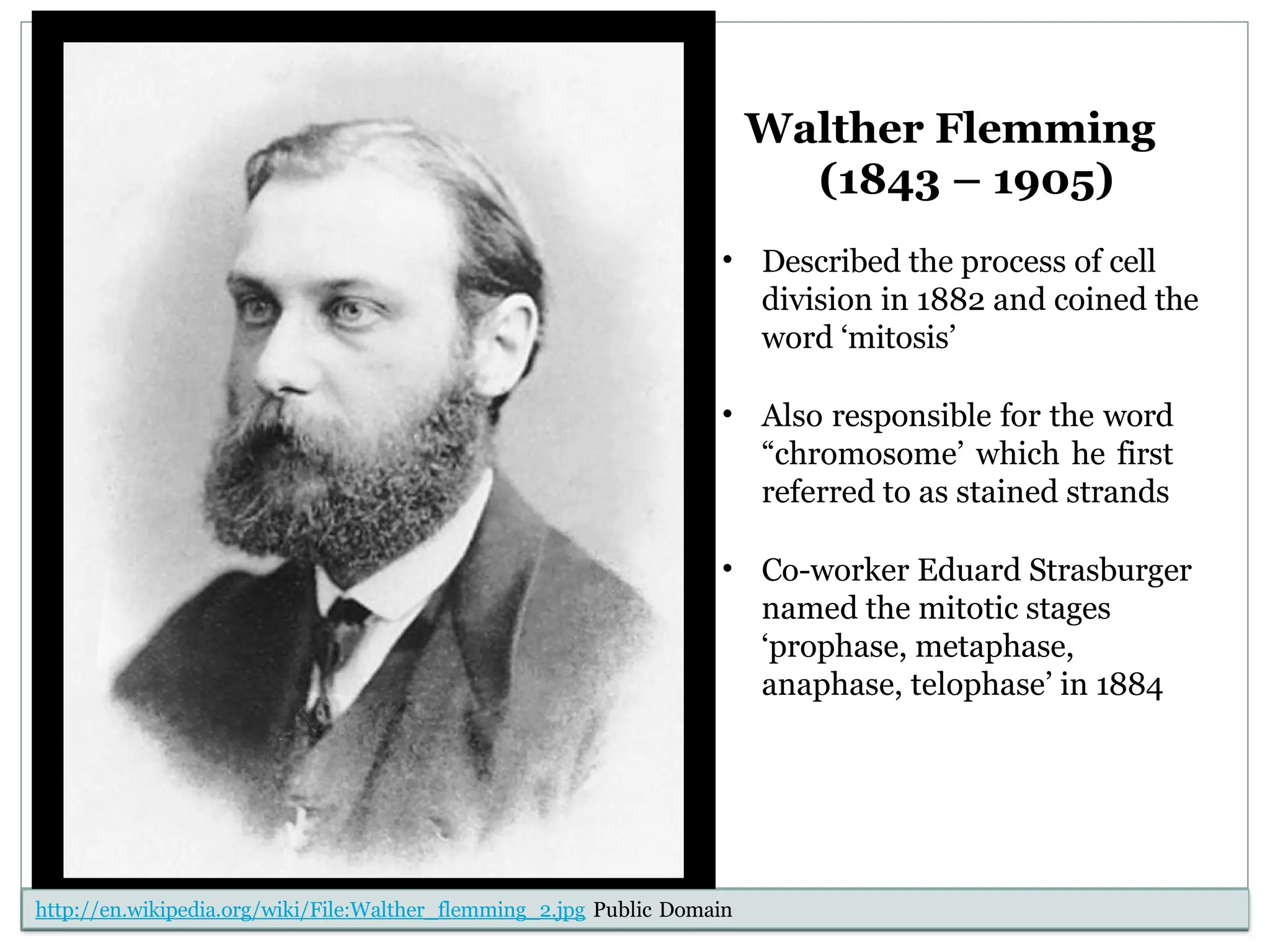
Walther Flemming
(1843 – 1905)
• Described the process of cell
division in 1882 and coined the
word ‘mitosis’
• Also responsible for the word
“chromosome’ which he first
referred to as stained strands
• Co-worker Eduard Strasburger
named the mitotic stages
‘prophase, metaphase,
anaphase, telophase’ in 1884
http://en.wikipedia.org/wiki/File:Walther_flemming_2.jpg Public Domain
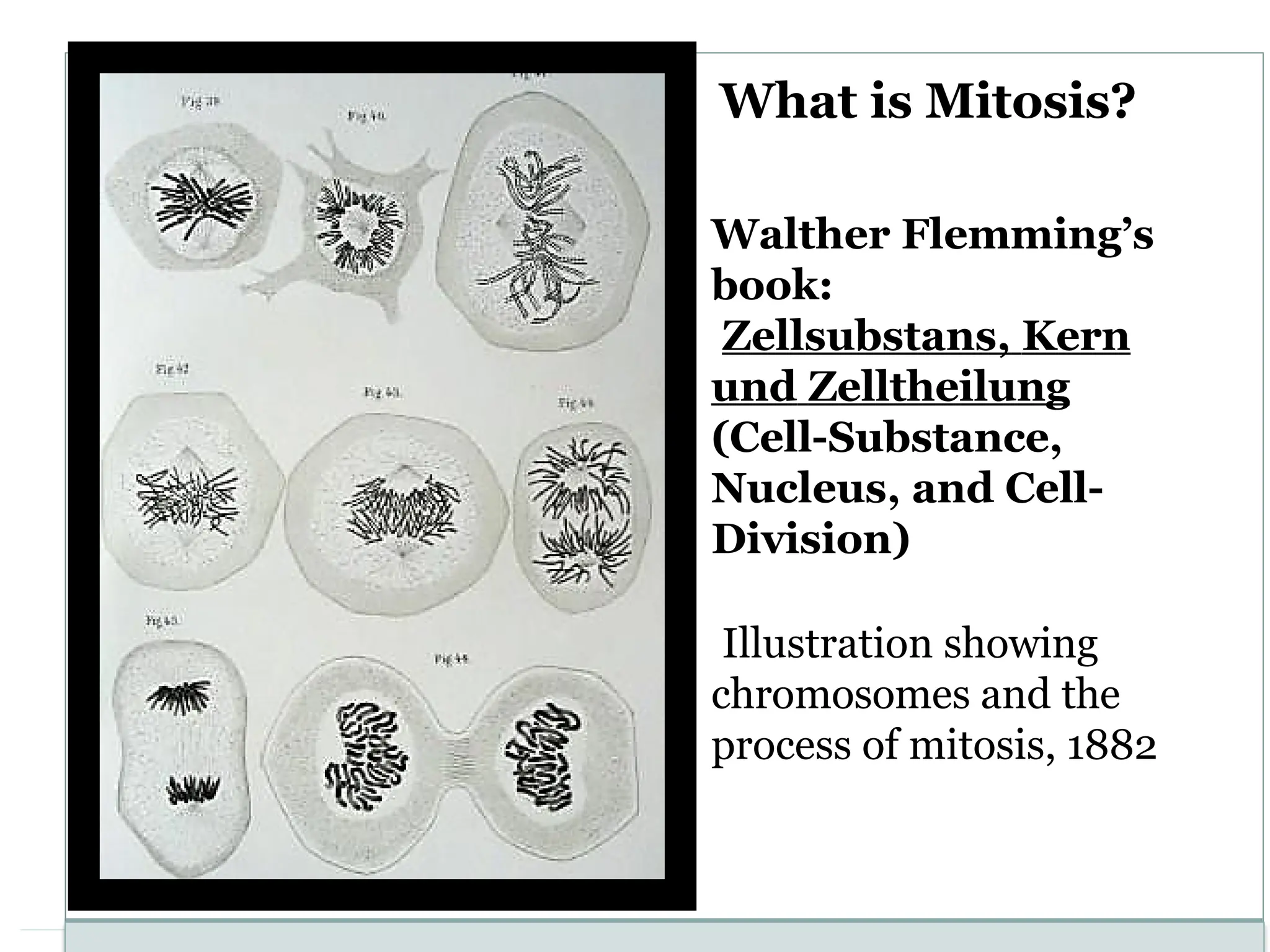
Walther Flemming’s
book:
Zellsubstans, Kern
und Zelltheilung
(Cell-Substance,
Nucleus, and Cell-
Division)
Illustration showing
chromosomes and the
process of mitosis, 1882
What is Mitosis?
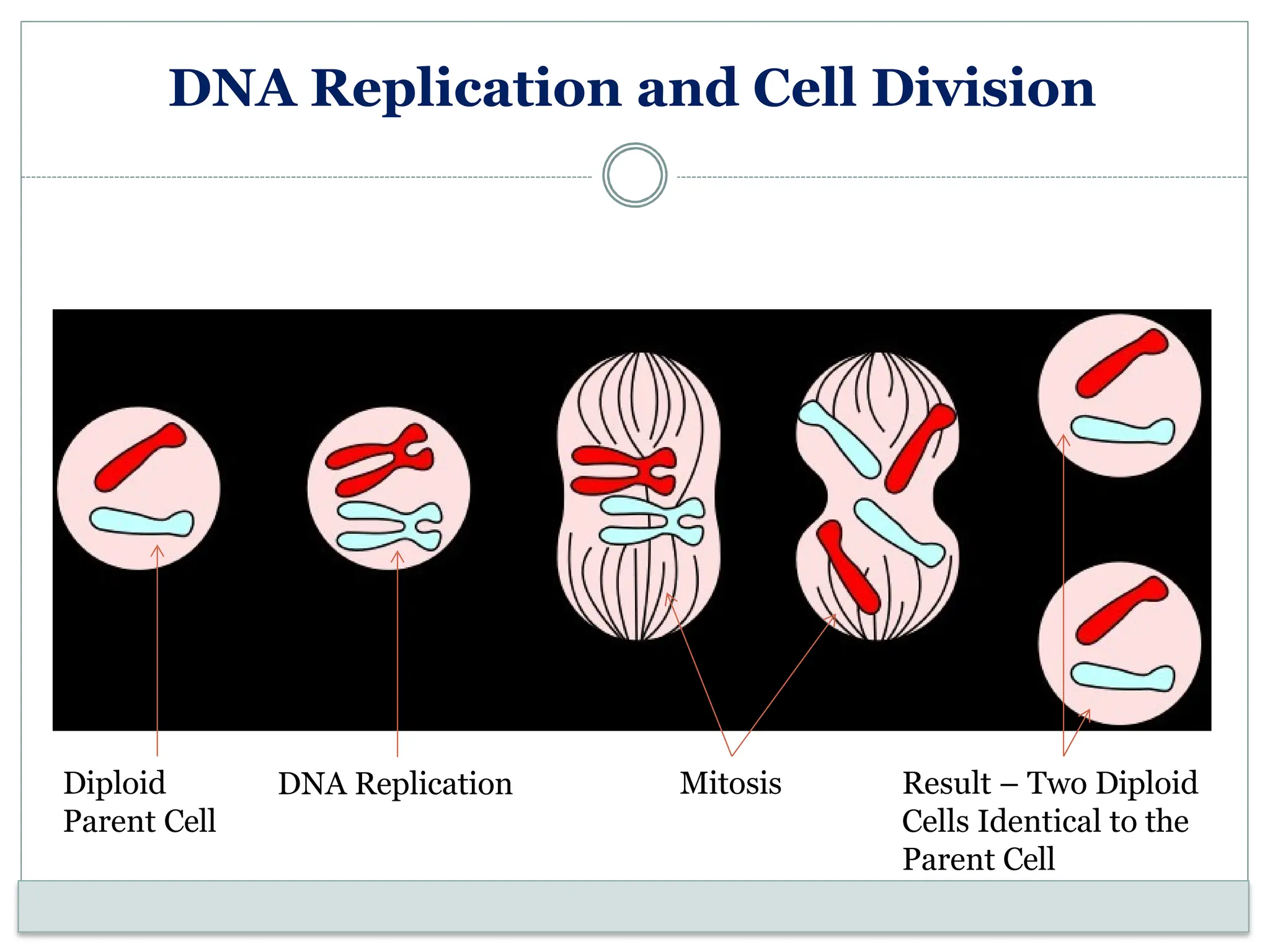
DNA Replication and Cell Division
DNA Replication Mitosis Result – Two Diploid
Cells Identical to the
Parent Cell
Diploid
Parent Cell
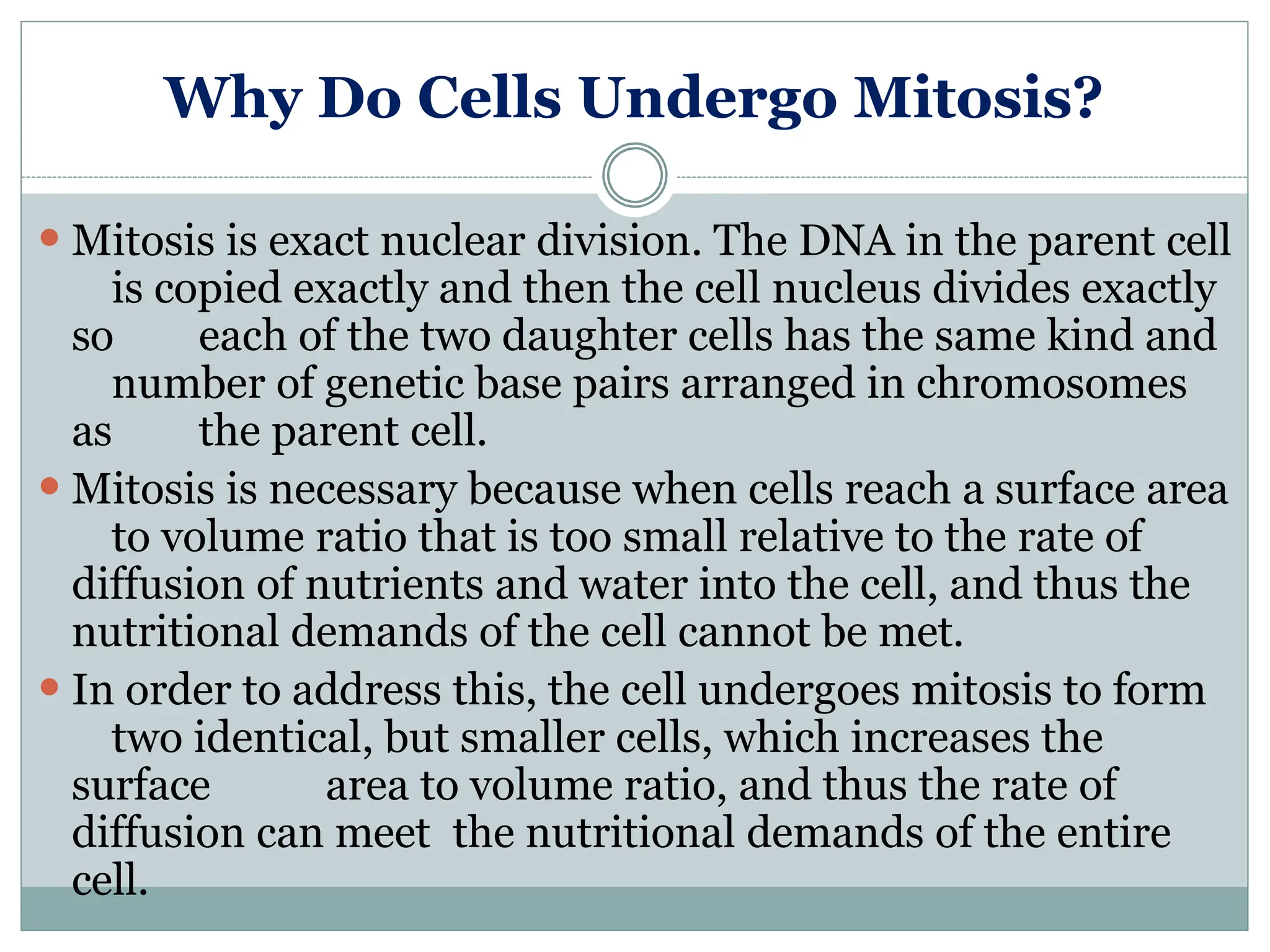
Why Do Cells Undergo Mitosis?
⚫ Mitosis is exact nuclear division. The DNA in the parent cell
is copied exactly and then the cell nucleus divides exactly
so each of the two daughter cells has the same kind and
number of genetic base pairs arranged in chromosomes
as the parent cell.
⚫ Mitosis is necessary because when cells reach a surface area
to volume ratio that is too small relative to the rate of
diffusion of nutrients and water into the cell, and thus the
nutritional demands of the cell cannot be met.
⚫ In order to address this, the cell undergoes mitosis to form
two identical, but smaller cells, which increases the
surface area to volume ratio, and thus the rate of
diffusion can meet the nutritional demands of the entire
cell.
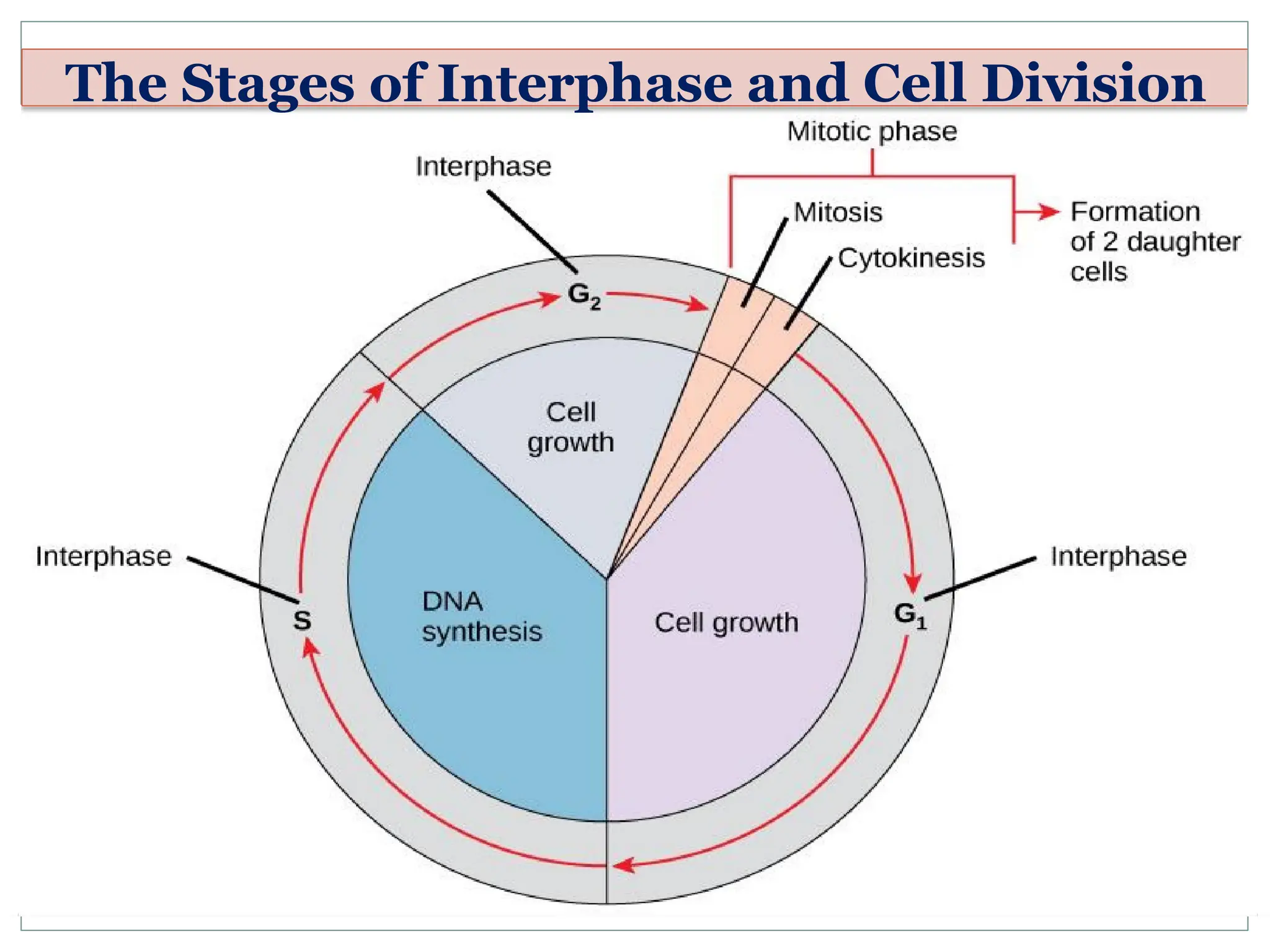
The Stages of Interphase and Cell Division
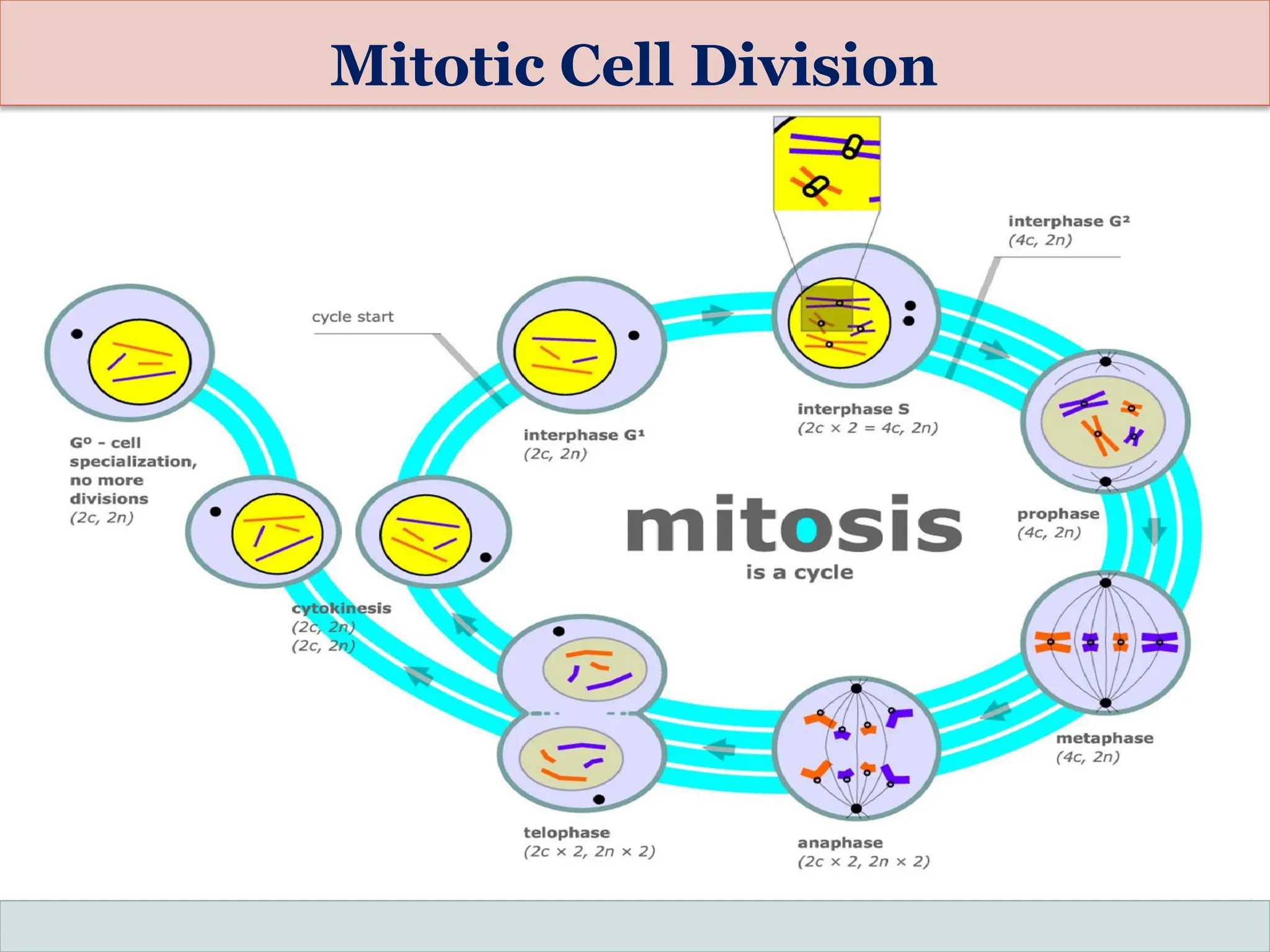
Mitotic Cell Division
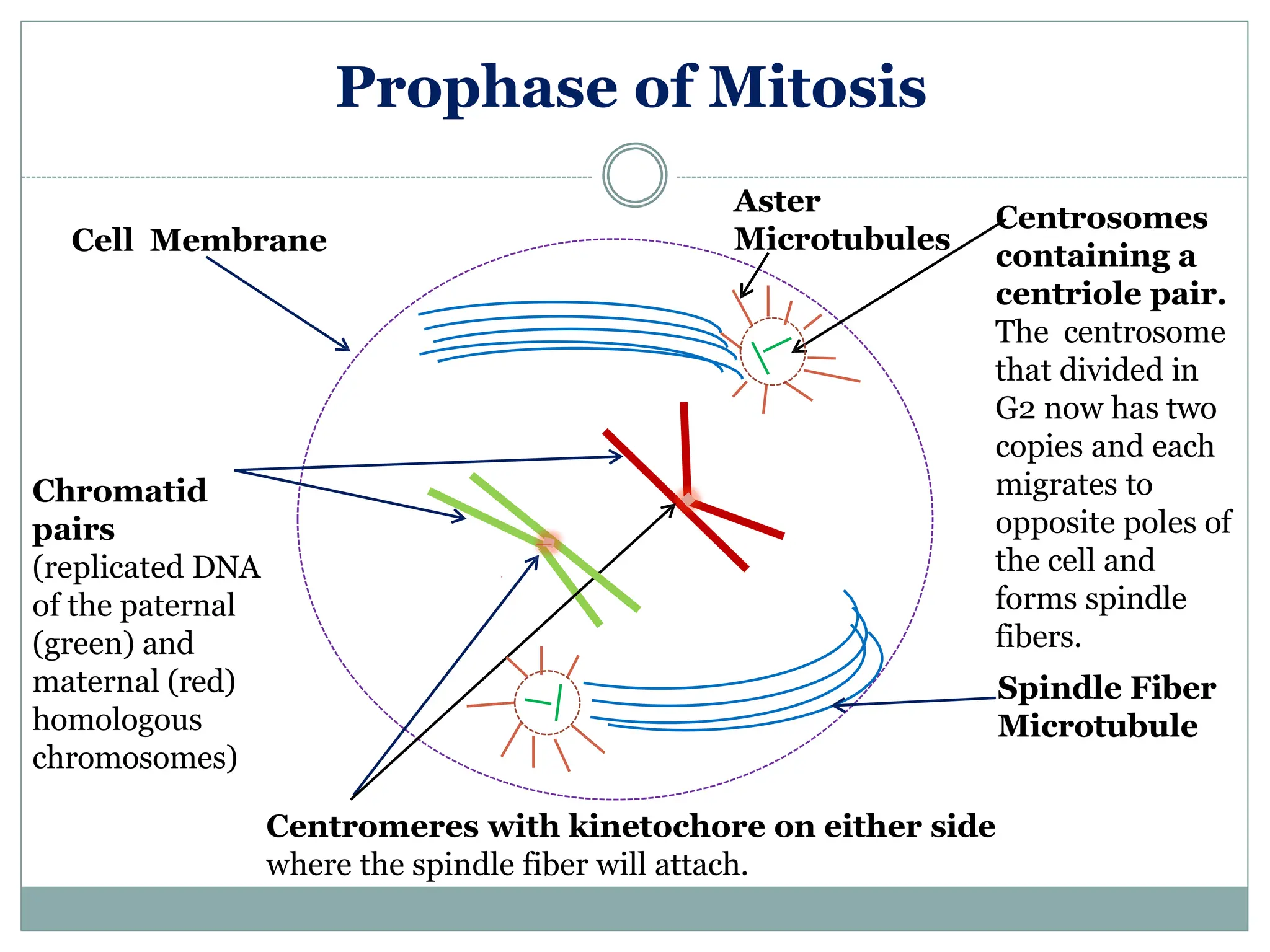
Prophase of Mitosis
Chromatid
pairs
(replicated DNA
of the paternal
(green) and
maternal (red)
homologous
chromosomes)
Centrosomes
containing a
centriole pair.
The centrosome
that divided in
G2 now has two
copies and each
migrates to
opposite poles of
the cell and
forms spindle
fibers.
Spindle Fiber
Microtubule
Cell Membrane
Aster
Microtubules
Centromeres with kinetochore on either side
where the spindle fiber will attach.
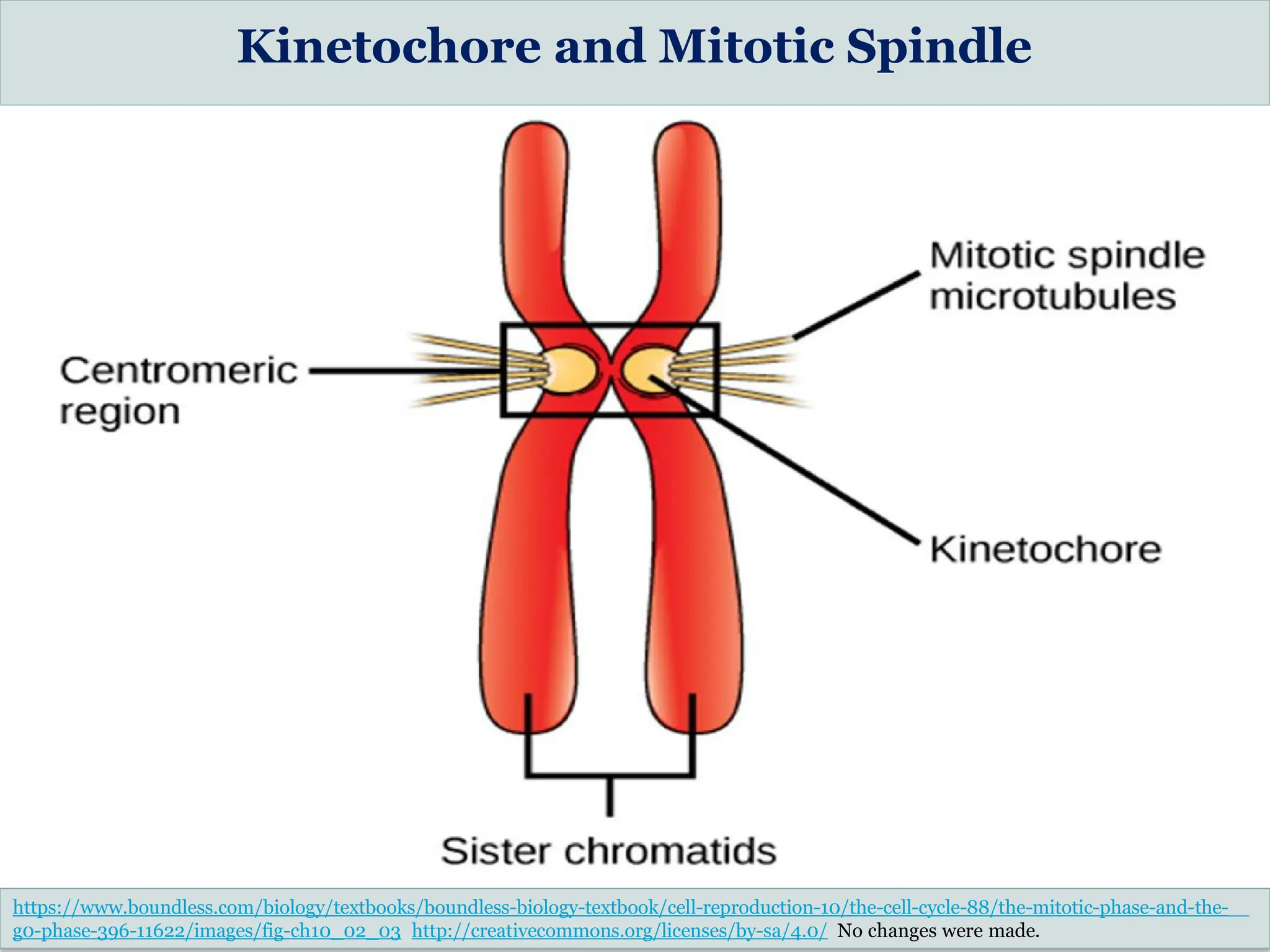
Kinetochore and Mitotic Spindle
https://www.boundless.com/biology/textbooks/boundless-biology-textbook/cell-reproduction-10/the-cell-cycle-88/the-mitotic-phase-and-the-
g0-phase-396-11622/images/fig-ch10_02_03 http://creativecommons.org/licenses/by-sa/4.0/ No changes were made.
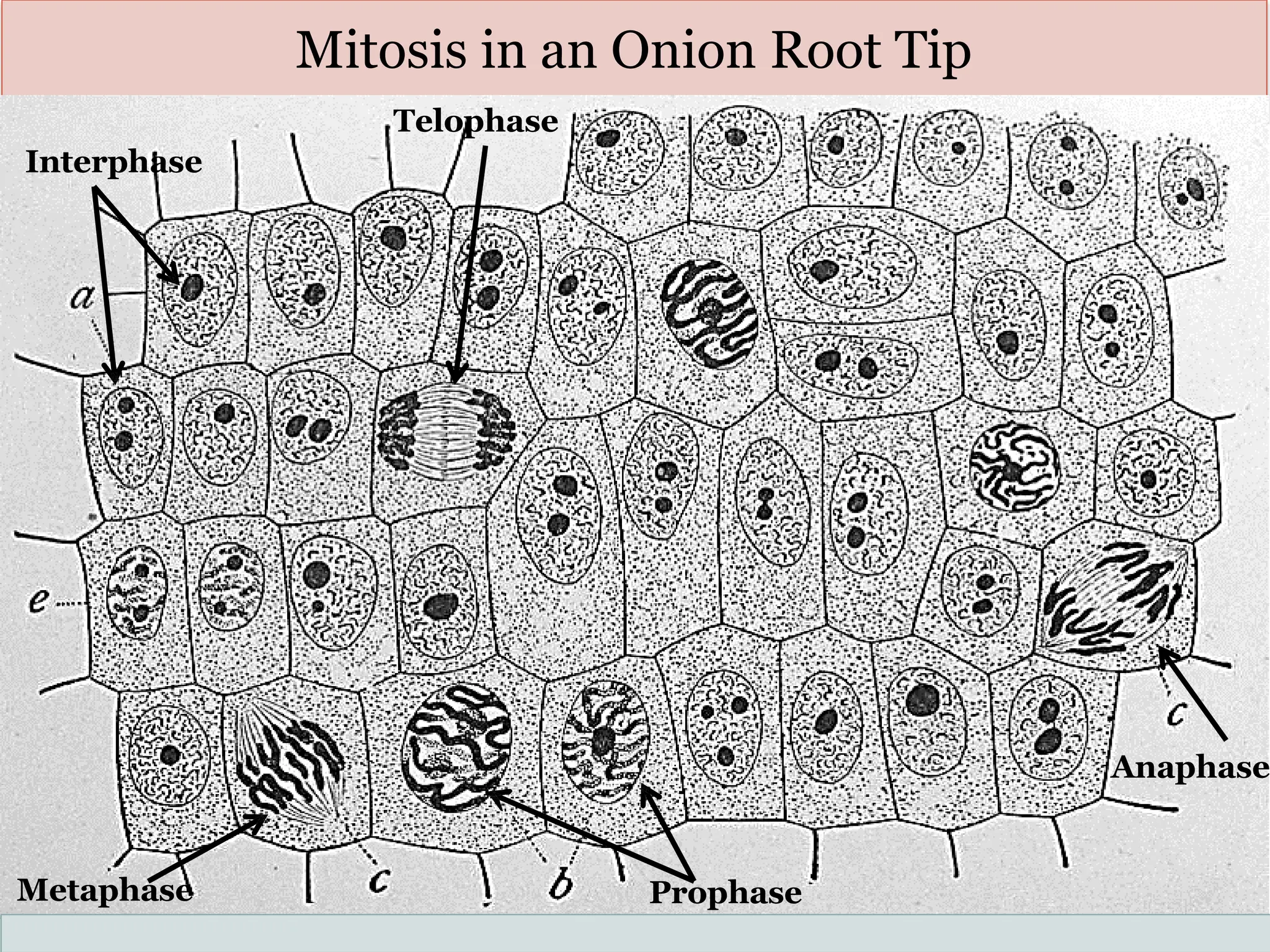
Mitosis in an Onion Root Tip
Prophase
Metaphase
Anaphase
Telophase
Interphase
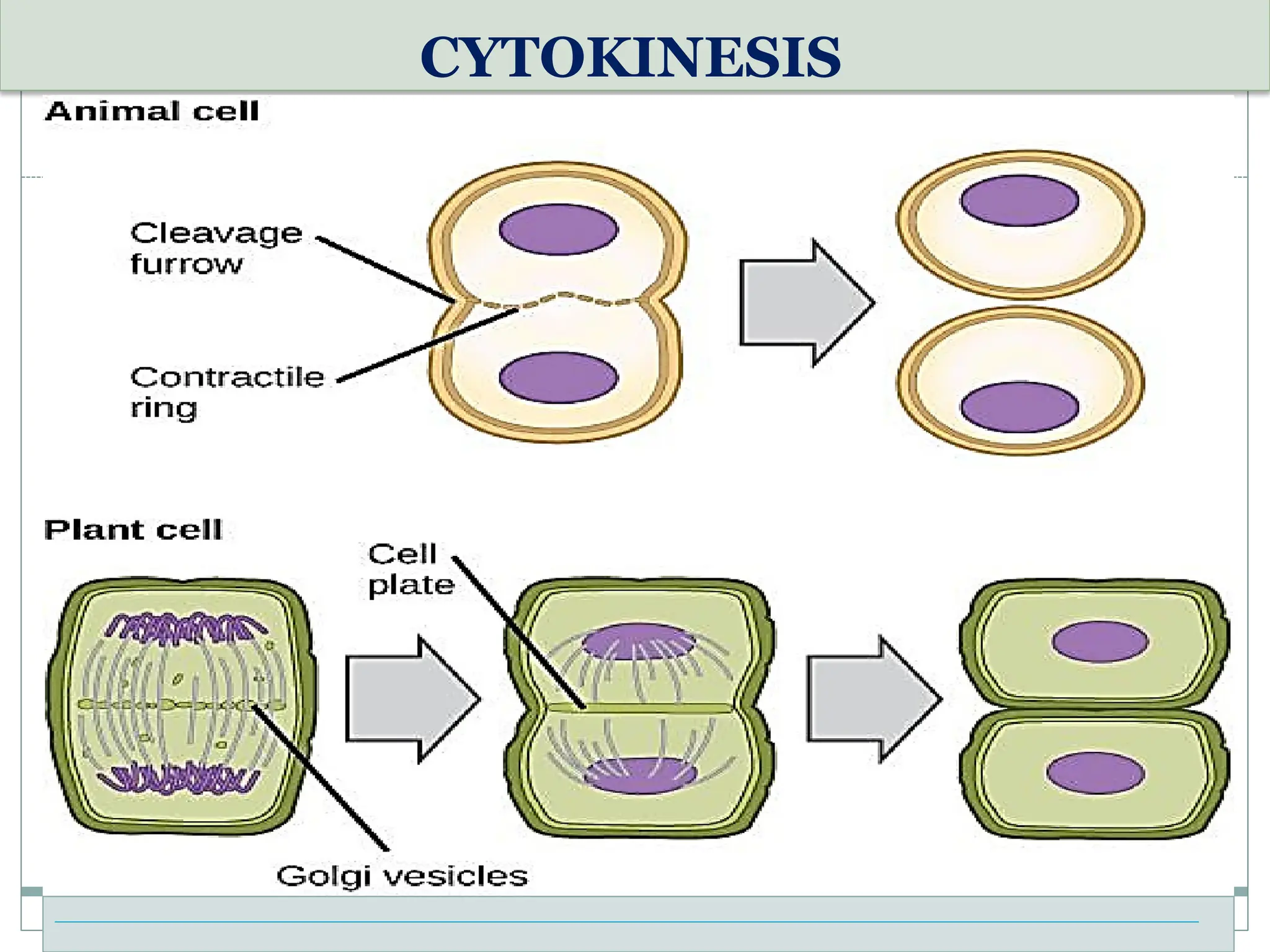
CYTOKINESIS
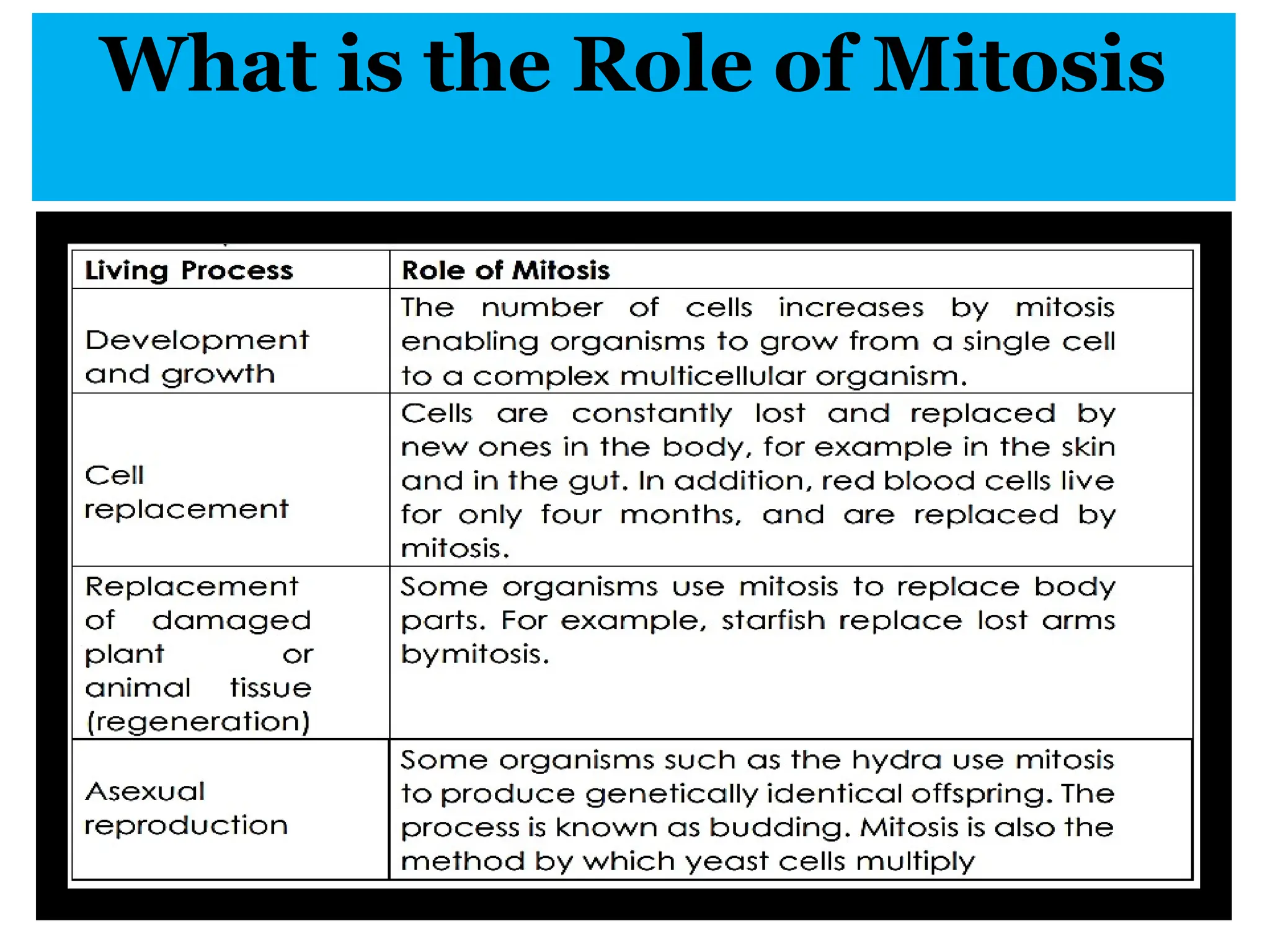
What is the Role of Mitosis
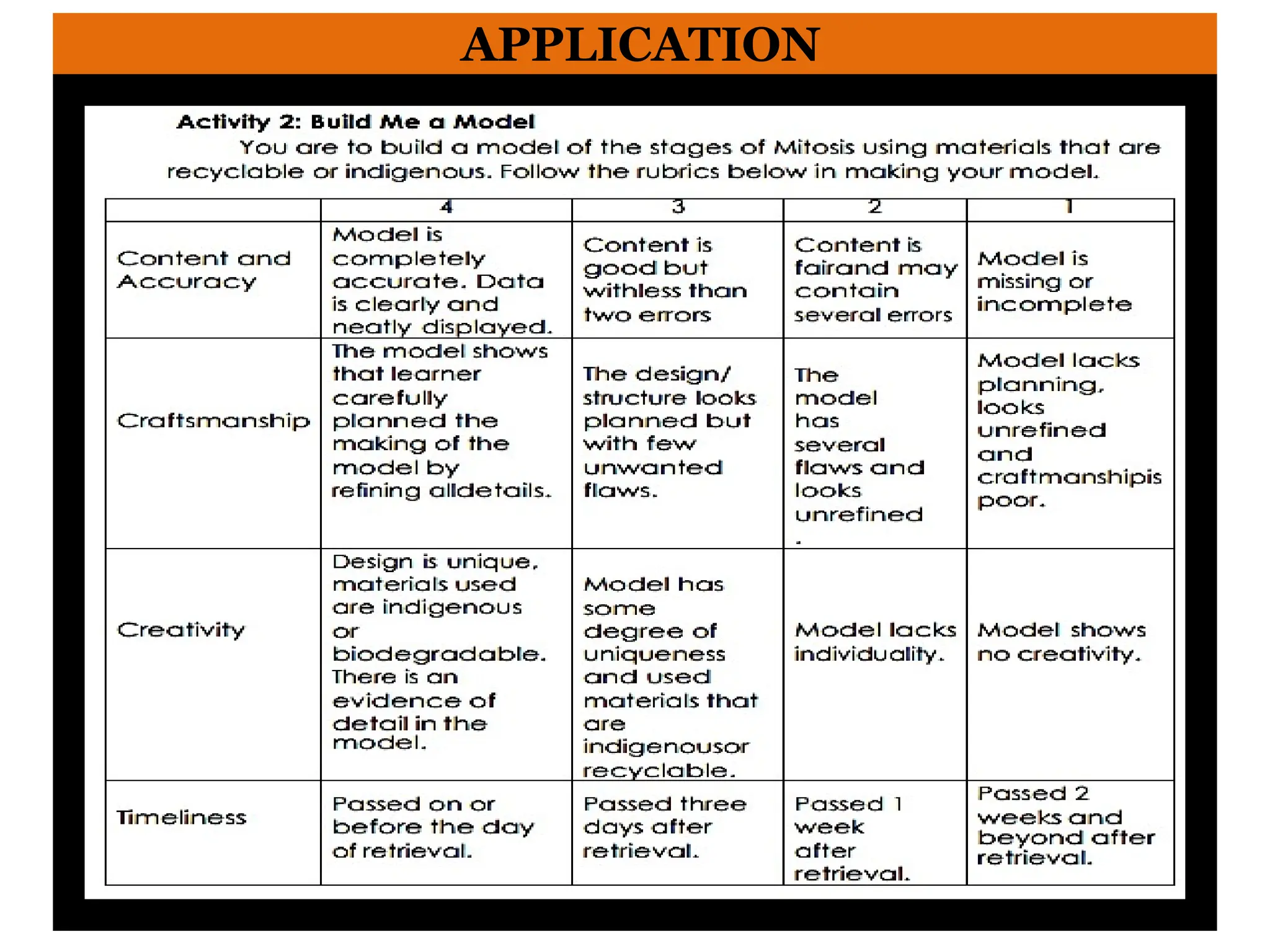
APPLICATION
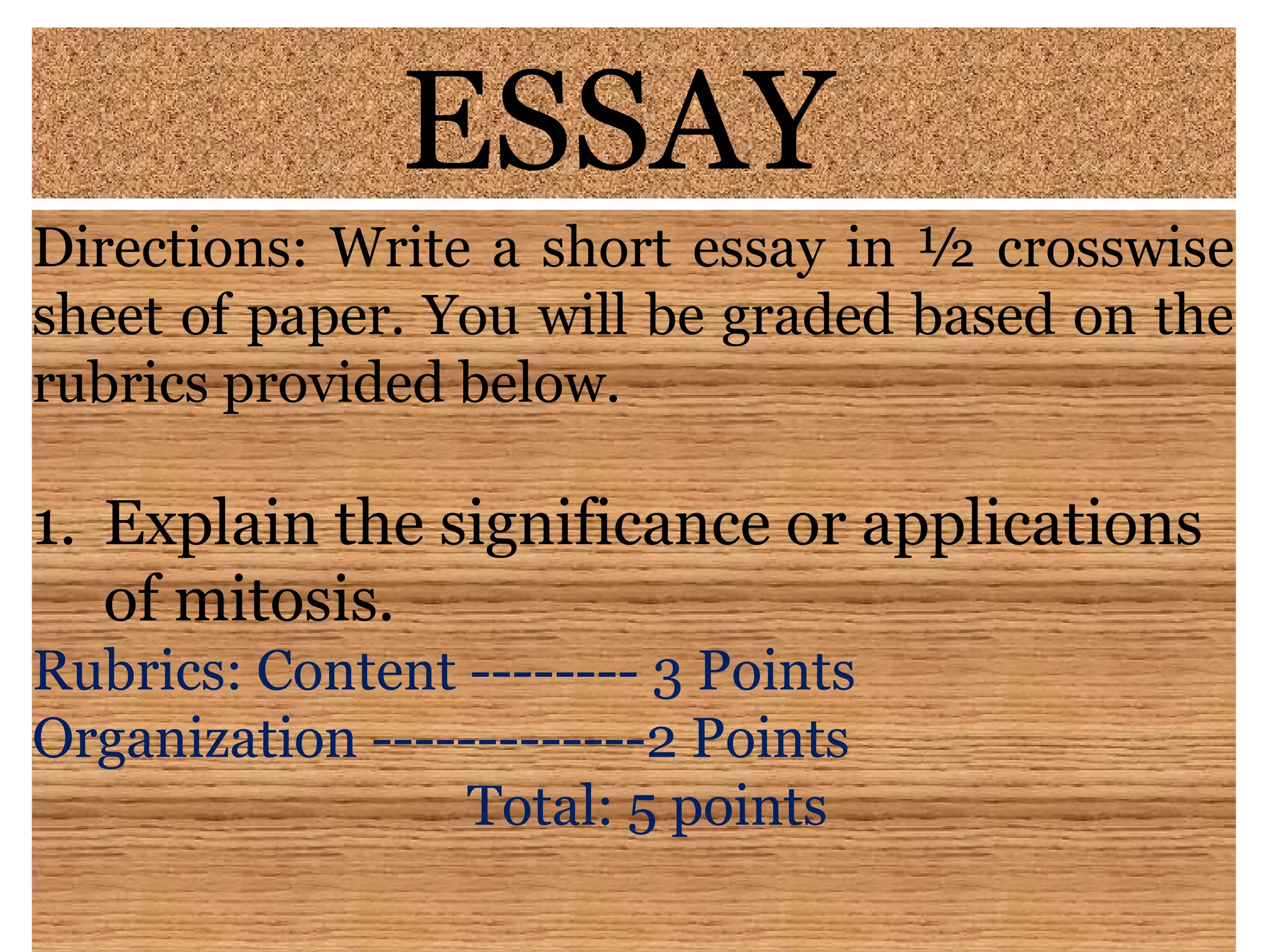
ESSAY
Directions: Write a short essay in ½ crosswise
sheet of paper. You will be graded based on the
rubrics provided below.
1. Explain the significance or applications
of mitosis.
Rubrics: Content -------- 3 Points
Organization -------------2 Points
Total: 5 points
Thank you
for
Listening!

WEEK 4- MITOSIS 2n=6 ANDAPPLICATION.pptx

  • 1.
    2n=6 AND APPLICATION BAY-ANGMAGPAG-ONG NATIONAL HIGH SCHOOL Bay-ang , Batan, Aklan SHS Department BIOLOGY 1 Mitosis
  • 2.
    LEARNING COMPETENCIES 1. Describethe stages of mitosis given 2n=6; 2. Explain the significance or application of mitosis.
  • 3.
    LEARNING COMPETENCIES 1. Identifythe stages of the cell cycle; 2. Describe mitosis and its stages; 3. Appreciate the significance and role of mitosis.
  • 4.
    History of UnderstandingCancer ⚫Rudolf Virchow (1821-1902) – First to recognize leukemia in mid-1800s, believing that diseased tissue was caused by a breakdown within the cell and not from an invasion of foreign organisms. ⚫Louis Pasteur (1822-1895) – Proved Virchow to be correct in late 1800s. ⚫Virchow’s understanding that cancer cells start out normal and then become abnormal is still used today. ⚫If cancer is the study of abnormal cell division, let’s look at normal cell division.

  • 5.
    Types of NormalCell Division ⚫ There are two types of normal cell division – mitosis and meiosis. ⚫ Mitosis is cell division which begins in the fertilized egg (or zygote) stage and continues during the life of the organism in one way or another. Each diploid (2n) daughter cell is genetically identical to the diploid (2n) parent cell. ⚫ Meiosis is cell division in the ovaries of the female and testes of the male and involves the formation of egg and sperm cells, respectively. Each diploid (2n) parent cell produces haploid (n) daughter cells.
  • 6.
    Walther Flemming (1843 –1905) • Described the process of cell division in 1882 and coined the word ‘mitosis’ • Also responsible for the word “chromosome’ which he first referred to as stained strands • Co-worker Eduard Strasburger named the mitotic stages ‘prophase, metaphase, anaphase, telophase’ in 1884 http://en.wikipedia.org/wiki/File:Walther_flemming_2.jpg Public Domain
  • 7.
    Walther Flemming’s book: Zellsubstans, Kern undZelltheilung (Cell-Substance, Nucleus, and Cell- Division) Illustration showing chromosomes and the process of mitosis, 1882 What is Mitosis?
  • 8.
    DNA Replication andCell Division DNA Replication Mitosis Result – Two Diploid Cells Identical to the Parent Cell Diploid Parent Cell
  • 9.
    Why Do CellsUndergo Mitosis? ⚫ Mitosis is exact nuclear division. The DNA in the parent cell is copied exactly and then the cell nucleus divides exactly so each of the two daughter cells has the same kind and number of genetic base pairs arranged in chromosomes as the parent cell. ⚫ Mitosis is necessary because when cells reach a surface area to volume ratio that is too small relative to the rate of diffusion of nutrients and water into the cell, and thus the nutritional demands of the cell cannot be met. ⚫ In order to address this, the cell undergoes mitosis to form two identical, but smaller cells, which increases the surface area to volume ratio, and thus the rate of diffusion can meet the nutritional demands of the entire cell.
  • 10.
    The Stages ofInterphase and Cell Division
  • 11.
  • 12.
    Prophase of Mitosis Chromatid pairs (replicatedDNA of the paternal (green) and maternal (red) homologous chromosomes) Centrosomes containing a centriole pair. The centrosome that divided in G2 now has two copies and each migrates to opposite poles of the cell and forms spindle fibers. Spindle Fiber Microtubule Cell Membrane Aster Microtubules Centromeres with kinetochore on either side where the spindle fiber will attach.
  • 13.
    Kinetochore and MitoticSpindle https://www.boundless.com/biology/textbooks/boundless-biology-textbook/cell-reproduction-10/the-cell-cycle-88/the-mitotic-phase-and-the- g0-phase-396-11622/images/fig-ch10_02_03 http://creativecommons.org/licenses/by-sa/4.0/ No changes were made.
  • 14.
    Mitosis in anOnion Root Tip Prophase Metaphase Anaphase Telophase Interphase
  • 15.
  • 16.
    What is theRole of Mitosis
  • 17.
  • 18.
    ESSAY Directions: Write ashort essay in ½ crosswise sheet of paper. You will be graded based on the rubrics provided below. 1. Explain the significance or applications of mitosis. Rubrics: Content -------- 3 Points Organization -------------2 Points Total: 5 points
  • 19.