Downloaded 315 times
- 1 / 36

- 2 / 36

- 3 / 36
- 4 / 36
- 5 / 36
- 6 / 36
 Most read
- 7 / 36
- 8 / 36
- 9 / 36
- 10 / 36
 Most read
- 11 / 36
- 12 / 36
- 13 / 36
- 14 / 36
- 15 / 36
- 16 / 36
- 17 / 36
- 18 / 36
- 19 / 36

- 20 / 36
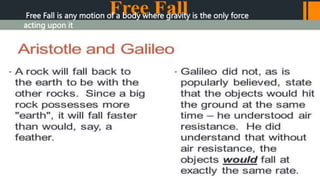
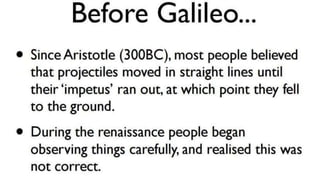

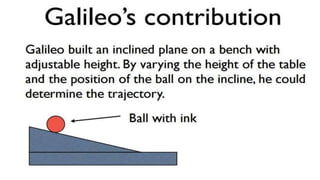
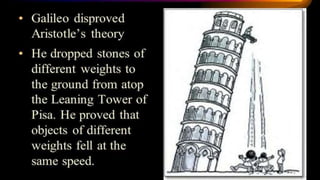
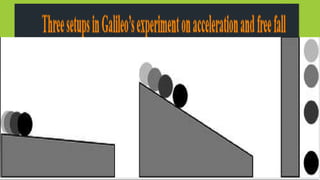

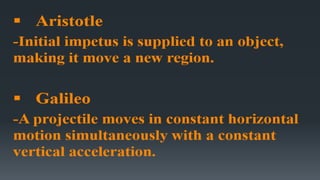

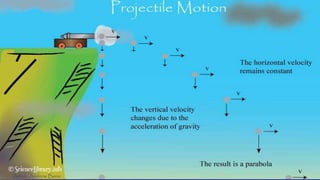
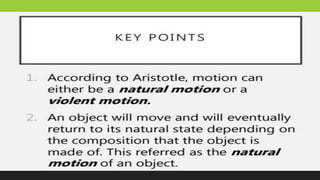
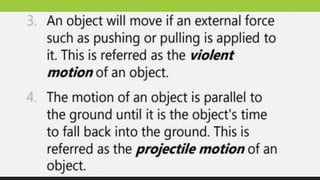
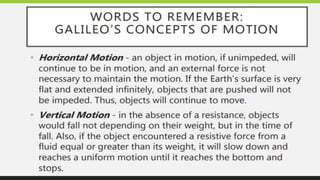
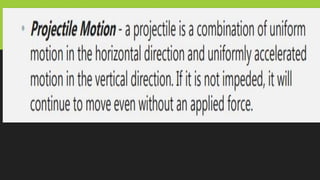

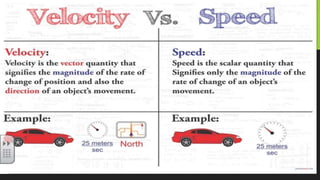
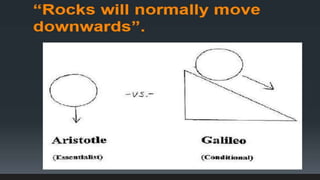
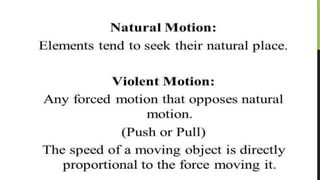
Aristotle and Galileo had differing conceptions of motion. Aristotle believed that objects require a continuous force to maintain motion, while Galileo recognized that objects in motion will remain in motion unless acted upon by an external force. The document compares and contrasts their views on vertical motion, horizontal motion, and projectile motion, explaining key concepts like free fall, velocity, acceleration, and speed. It provides an example of how a cannonball dropped from a cliff will reach the sea at the same time as one fired horizontally due to principles of projectile motion.


