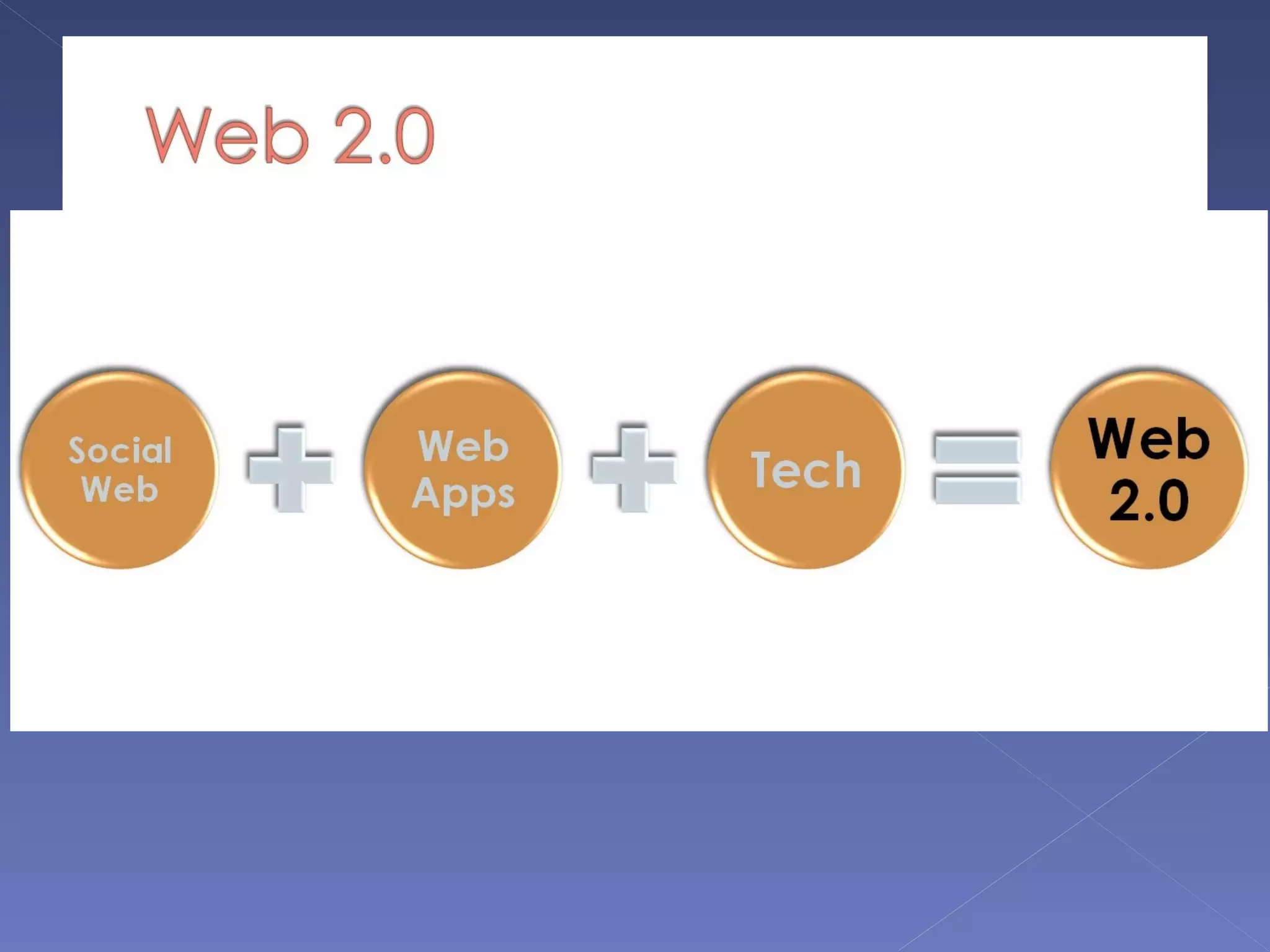
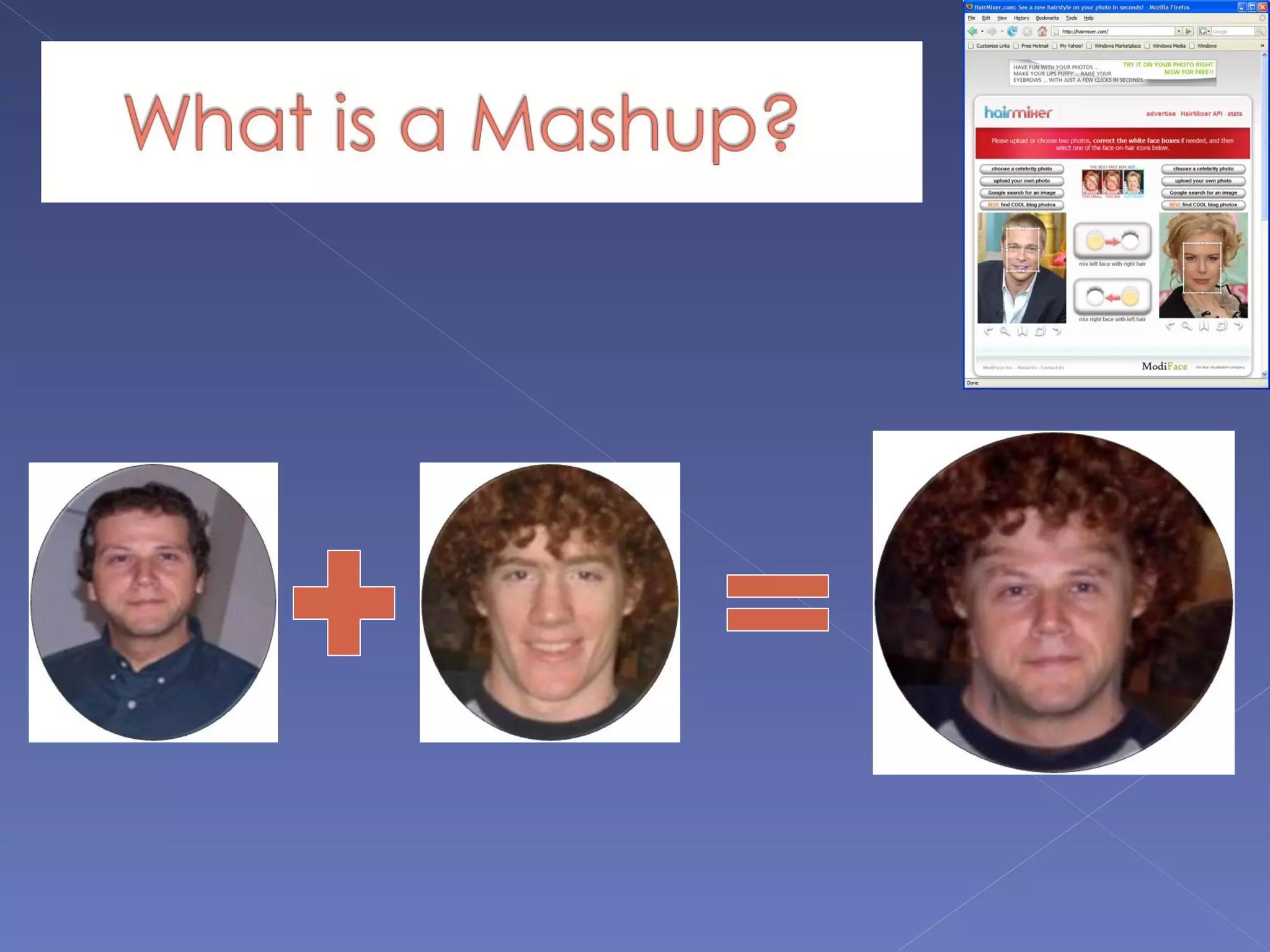
1 – What is Web 2.0 ? 2 – Social Media and Collaboration 3 – Mashups
 
How did I get the video to play within PowerPoint 2007?
 
“ Could it be that the dot-com collapse marked some kind of turning point for the Web, such that a call to action such as “Web 2.0” might make sense? We agreed that it did, and so Web 2.0 … was born.”  Tim O’Reilly (2004)
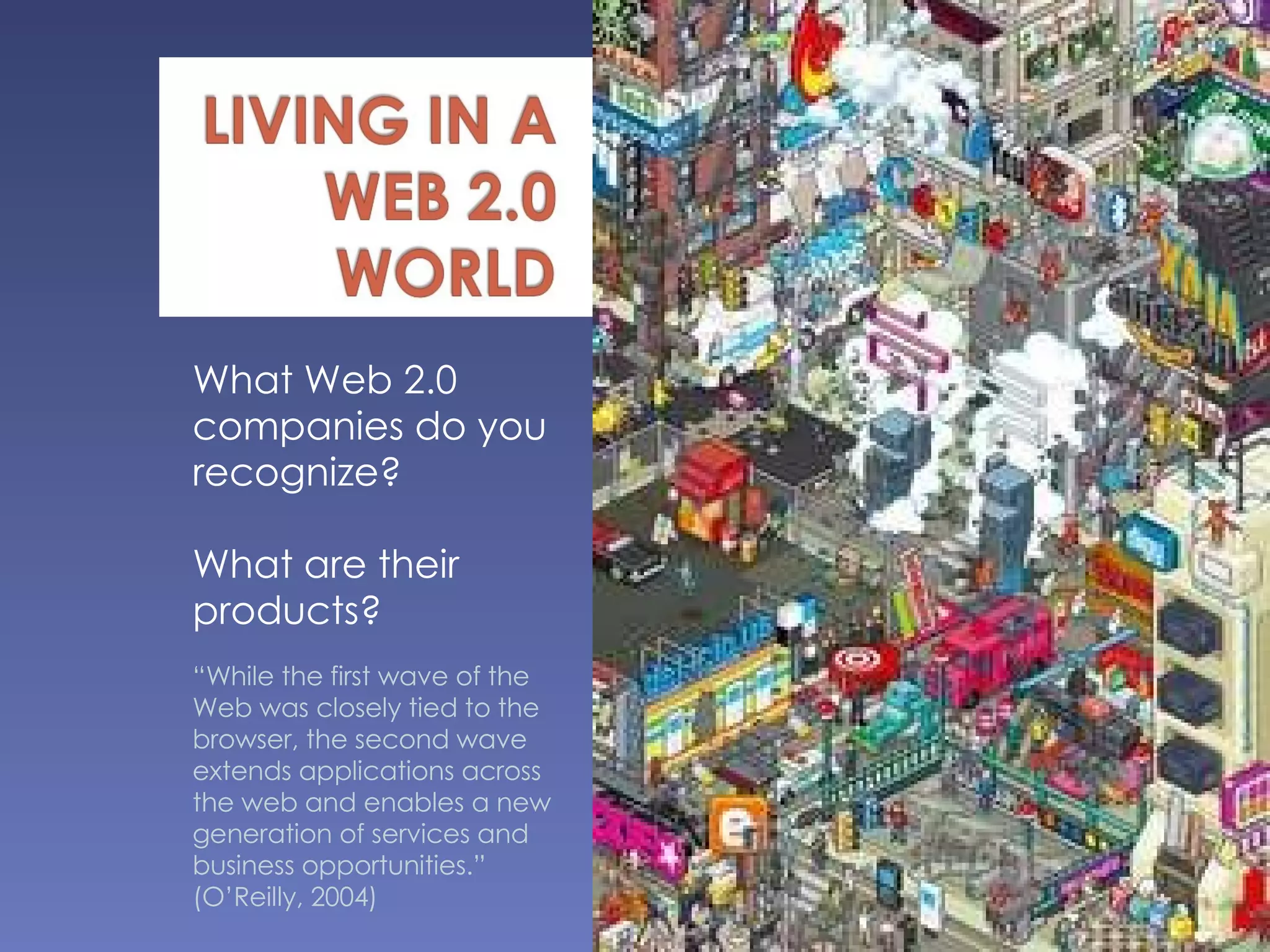
What Web 2.0 companies do you recognize? What are their products? “ While the first wave of the Web was closely tied to the browser, the second wave extends applications across the web and enables a new generation of services and business opportunities.”  (O’Reilly, 2004)
 
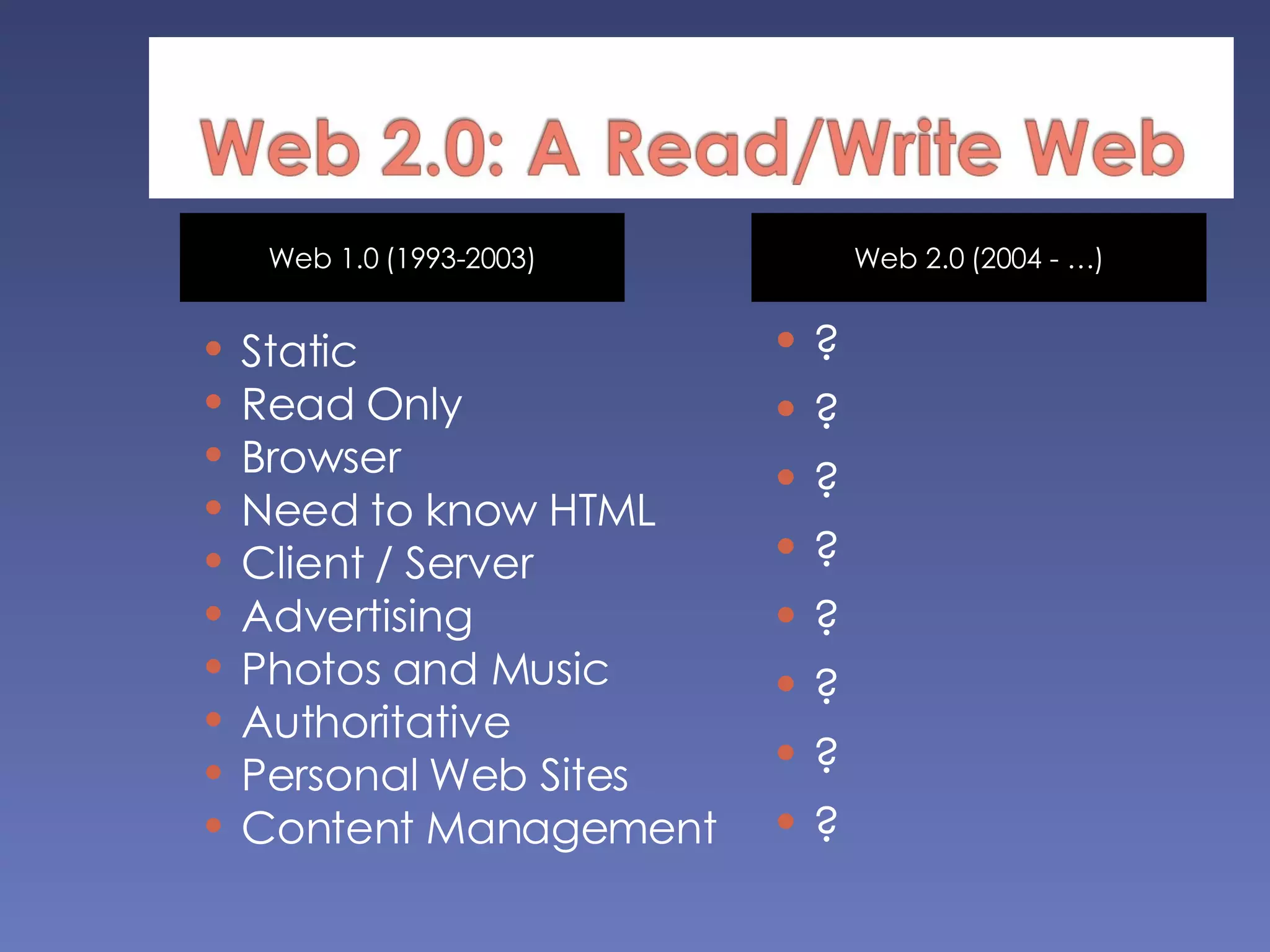
Web 1.0 (1993-2003) Web 2.0 (2004 - …) Static Read Only Browser Need to know HTML  Client / Server Advertising Photos and Music Authoritative Personal Web Sites Content Management ? ? ? ? ? ? ? ?
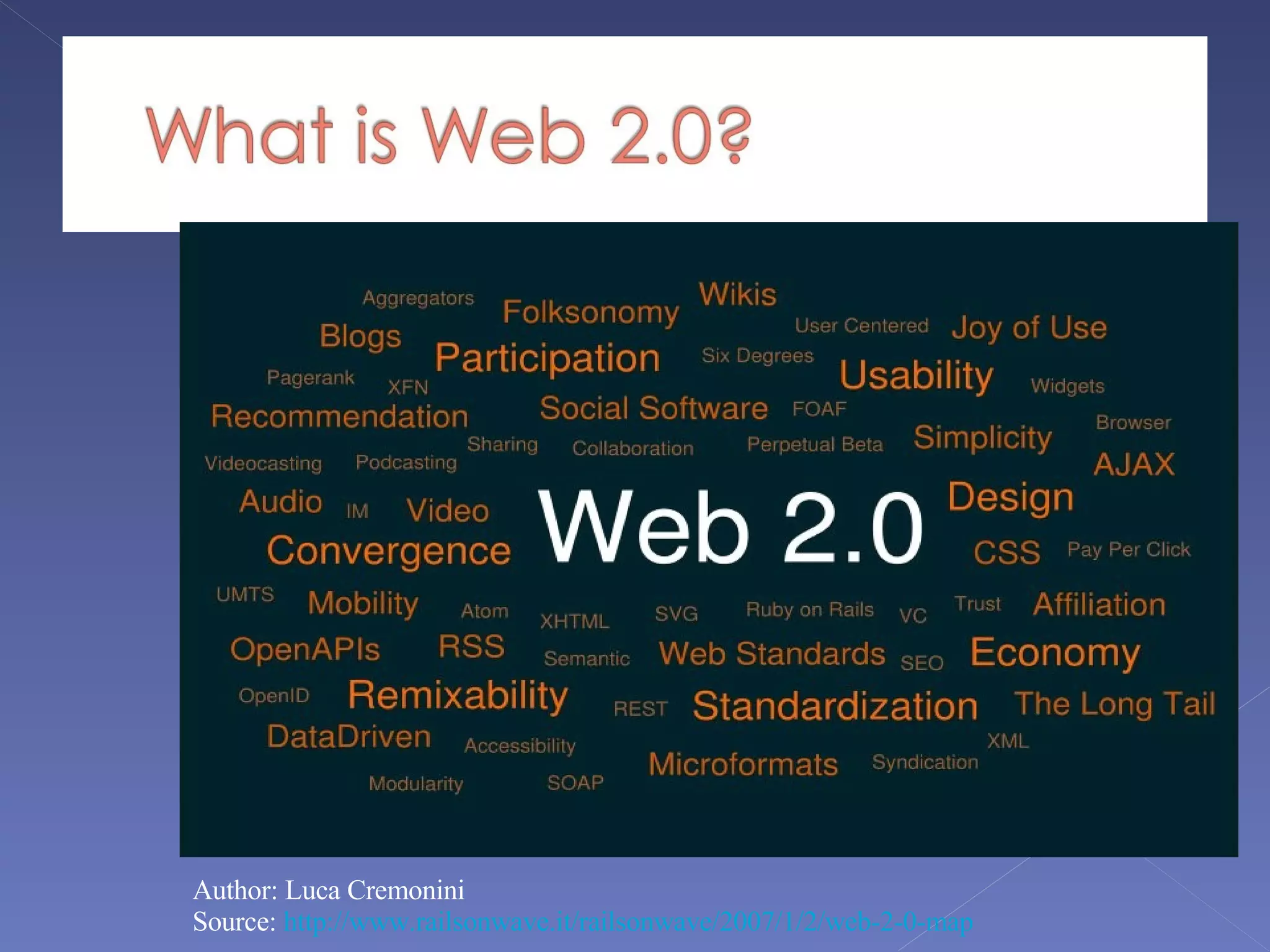
Author: Luca Cremonini  Source:  http://www.railsonwave.it/railsonwave/2007/1/2/web-2-0-map
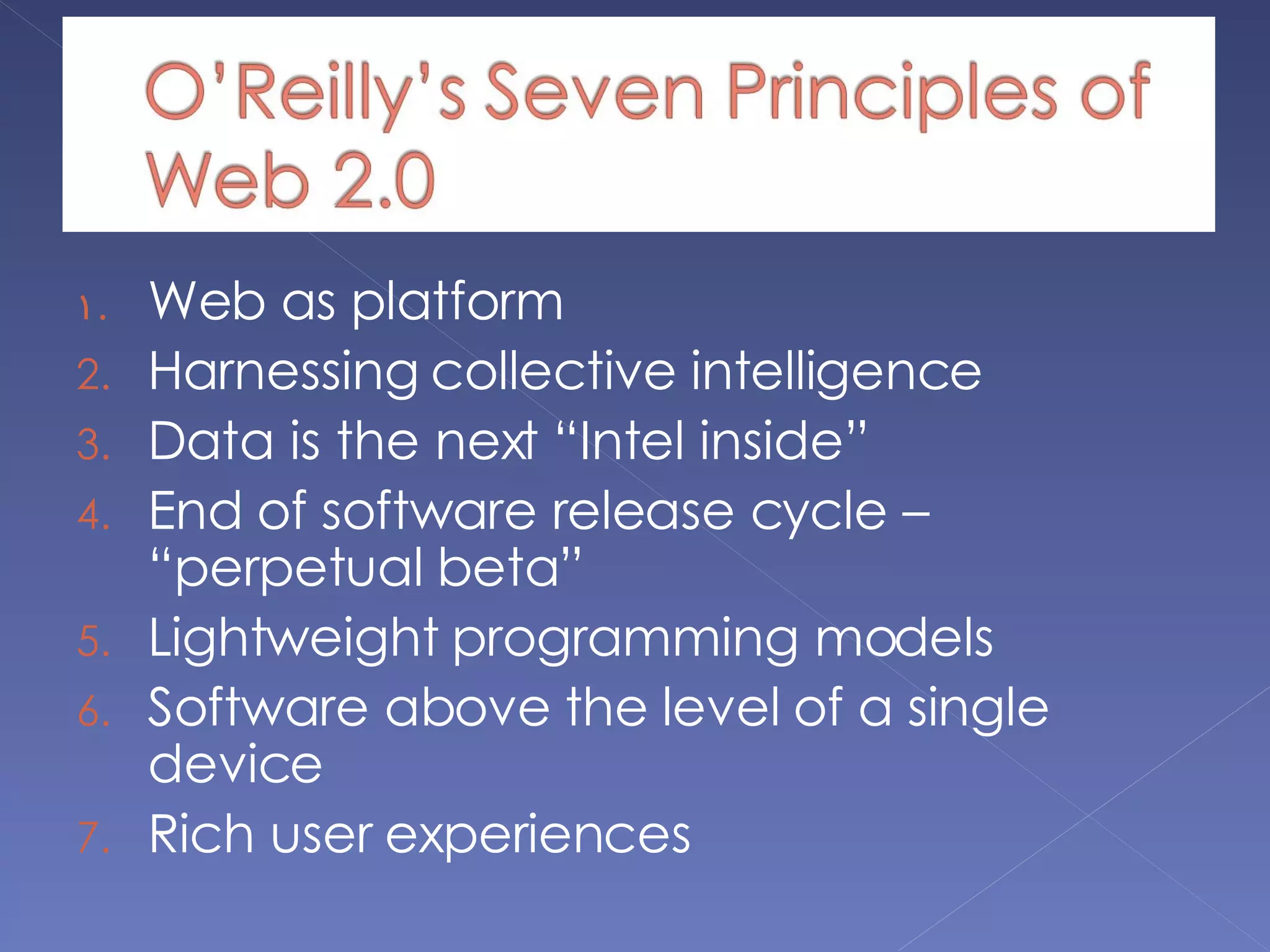
Web as platform Harnessing collective intelligence Data is the next “Intel inside” End of software release cycle – “perpetual beta” Lightweight programming models Software above the level of a single device Rich user experiences
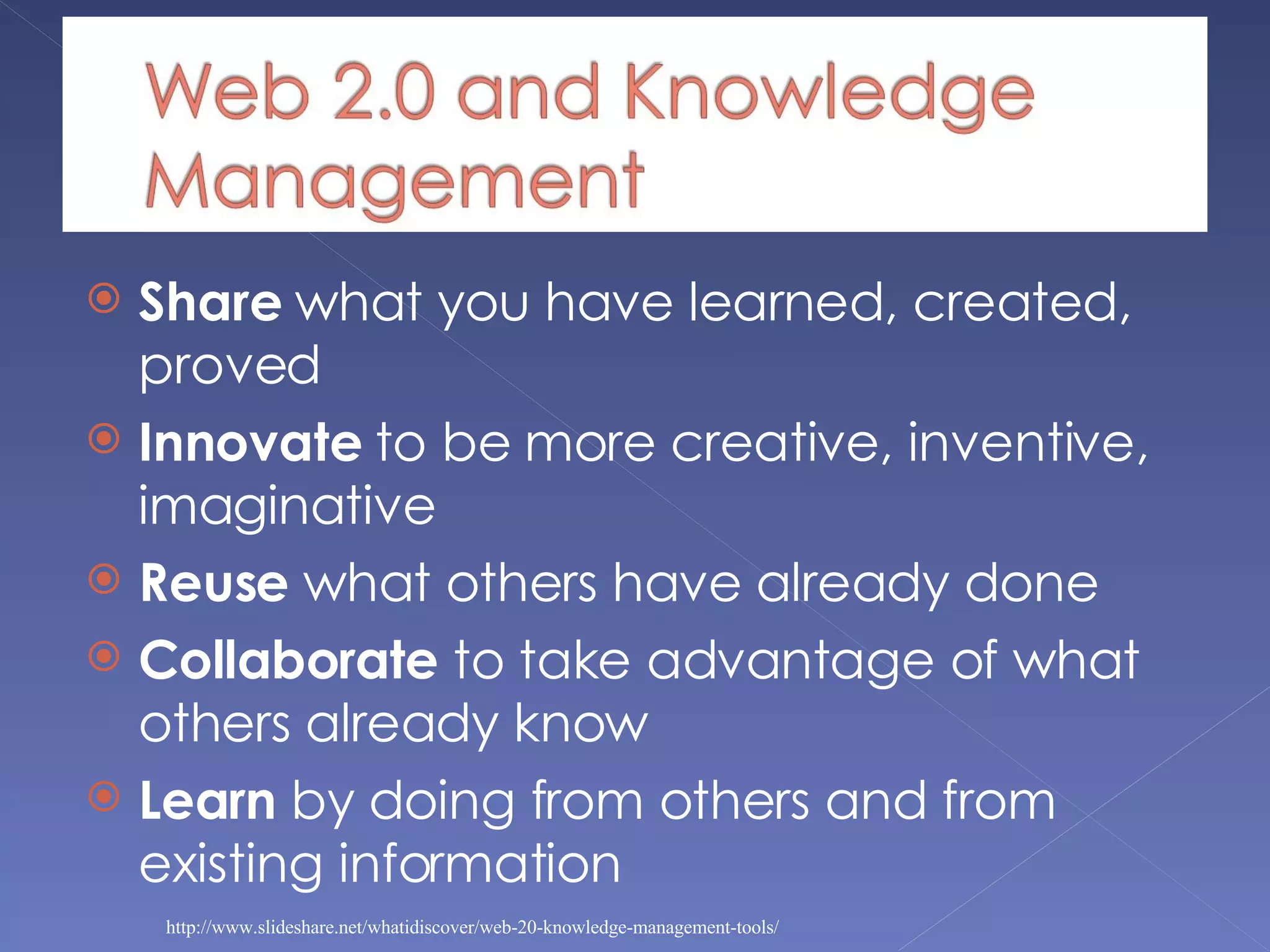
Share  what you have learned, created, proved Innovate  to be more creative, inventive, imaginative Reuse  what others have already done Collaborate  to take advantage of what others already know Learn  by doing from others and from existing information http://www.slideshare.net/whatidiscover/web-20-knowledge-management-tools/
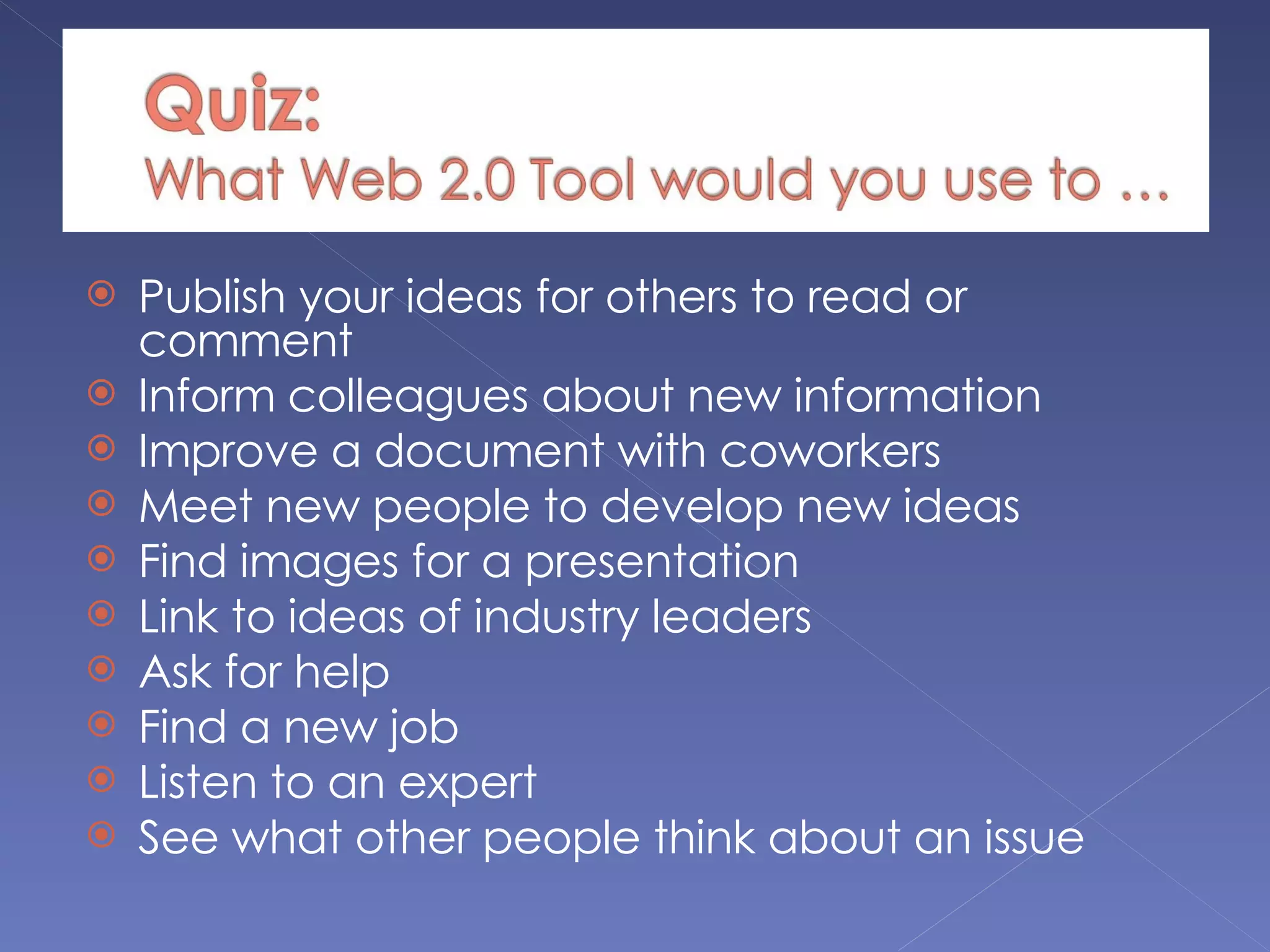
Publish your ideas for others to read or comment  Inform colleagues about new information Improve a document with coworkers Meet new people to develop new ideas Find images for a presentation Link to ideas of industry leaders Ask for help Find a new job Listen to an expert See what other people think about an issue
Managing Knowledge – take advantage of what other people know!
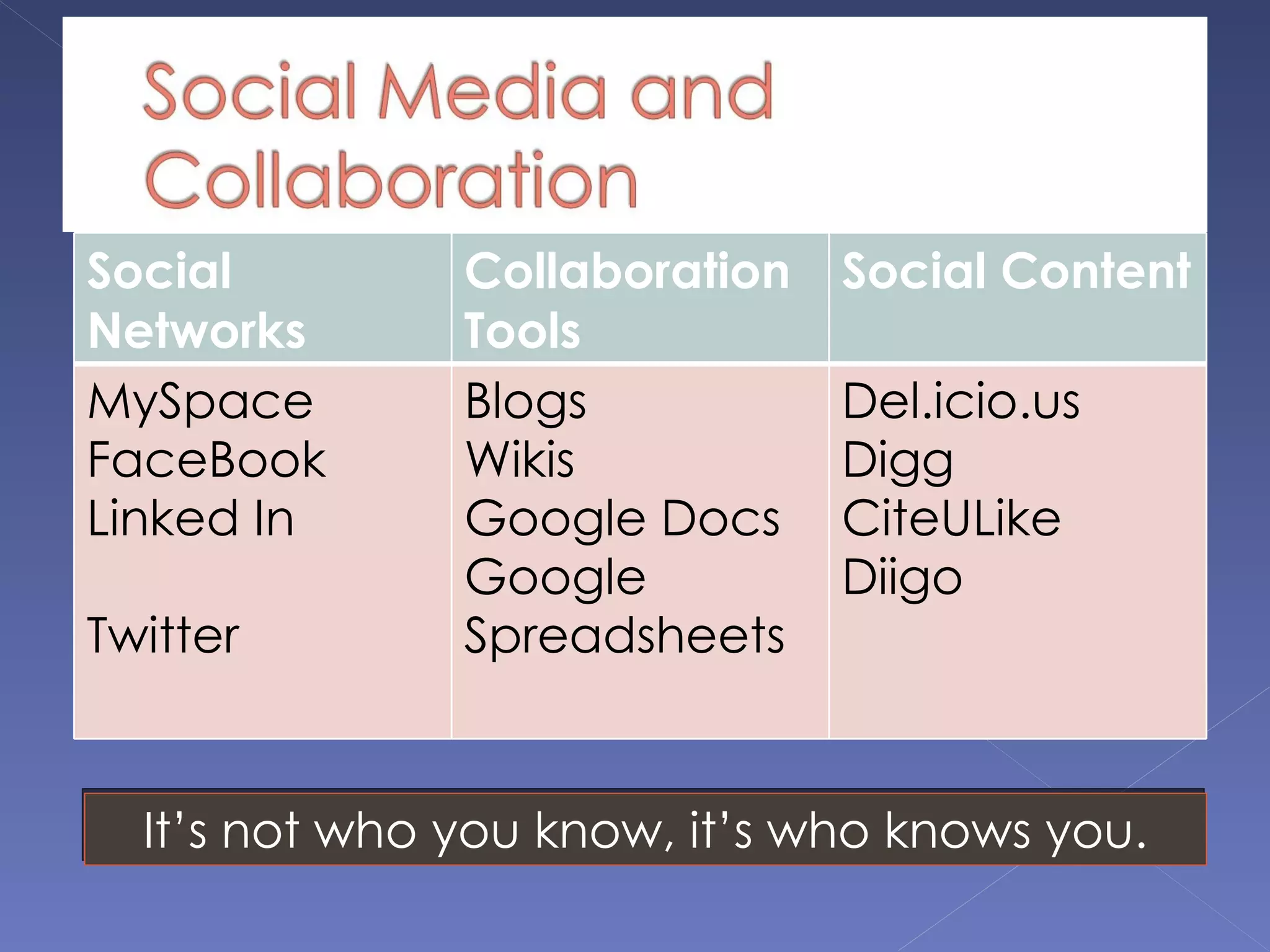
It’s not who you know, it’s who knows you. Social Networks Collaboration Tools Social Content MySpace FaceBook Linked In Twitter Blogs Wikis Google Docs Google Spreadsheets Del.icio.us Digg CiteULike Diigo
 
Physical World One book, one shelf Now, for the first time in history, we are able to arrange our concepts without the silent limitations of the physical. How might our ideas, organizations, and knowledge itself change? David Weinberger, Harvard University Digital World
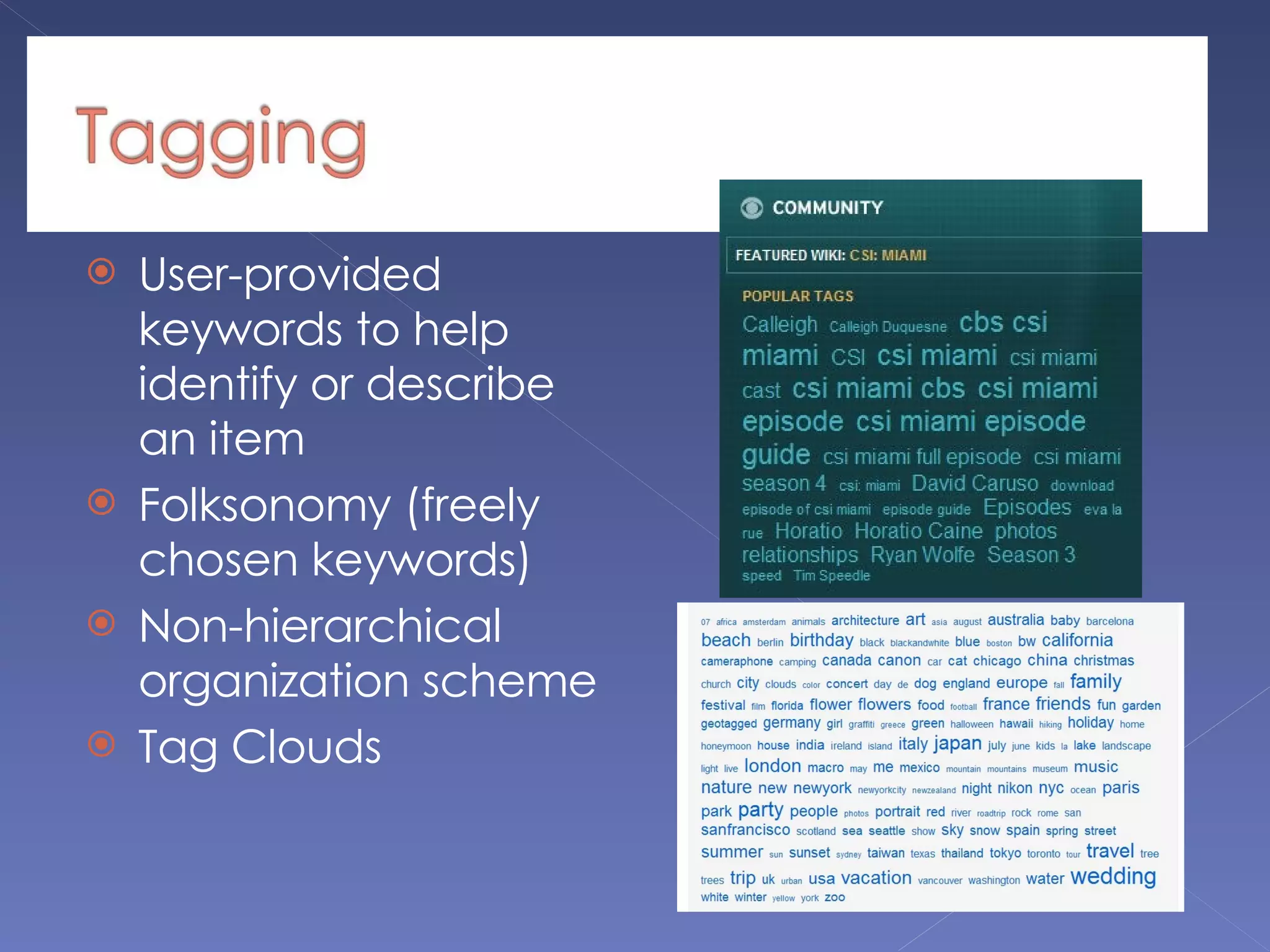
User-provided keywords to help identify or describe an item  Folksonomy (freely chosen keywords) Non-hierarchical organization scheme Tag Clouds
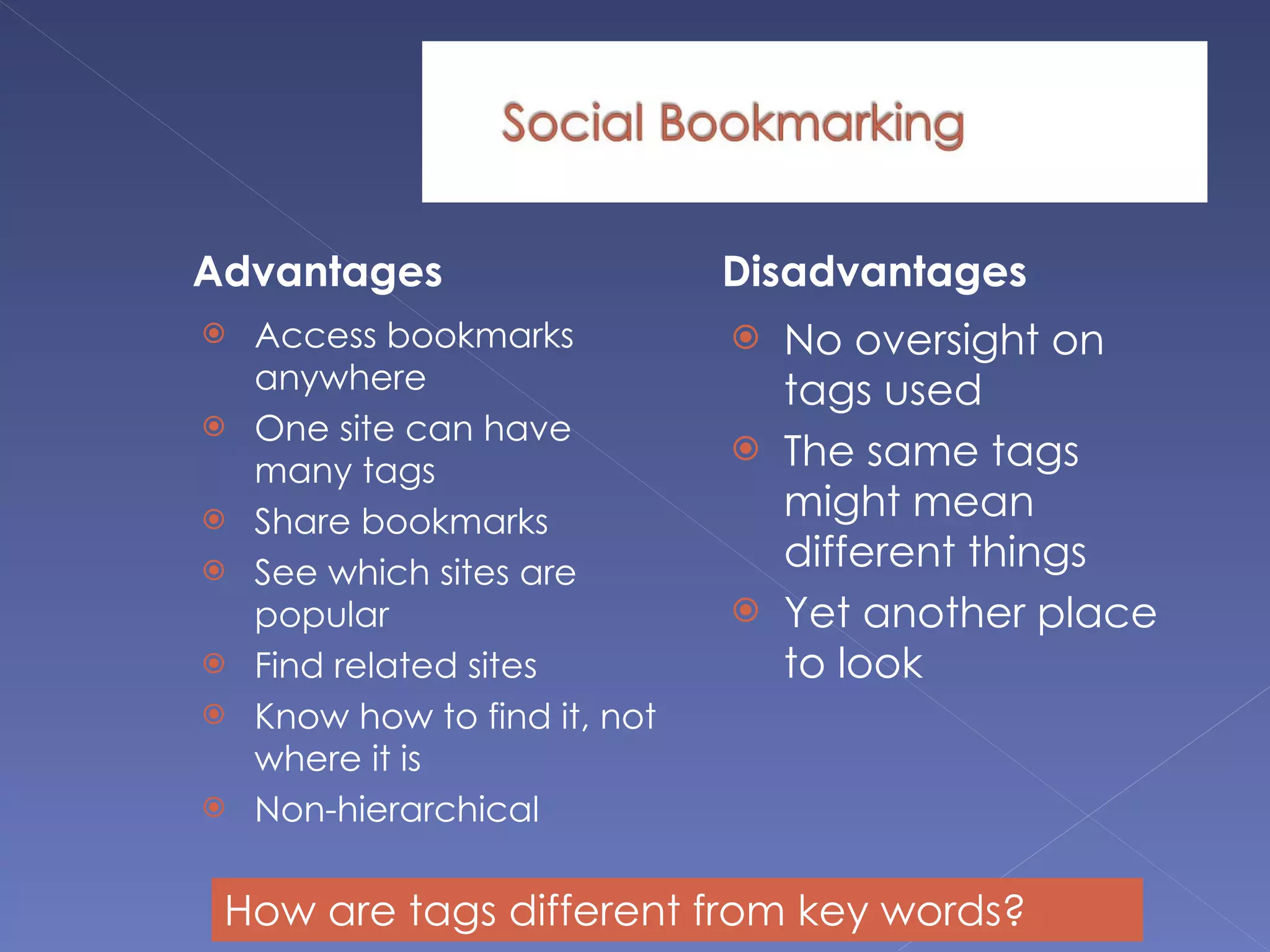
Advantages Access bookmarks anywhere One site can have many tags  Share bookmarks See which sites are popular Find related sites Know how to find it, not where it is Non-hierarchical Disadvantages No oversight on tags used The same tags might mean different things Yet another place to look How are tags different from key words?
Del.icio.us Wiki Google Docs and Spreadsheets Twitter
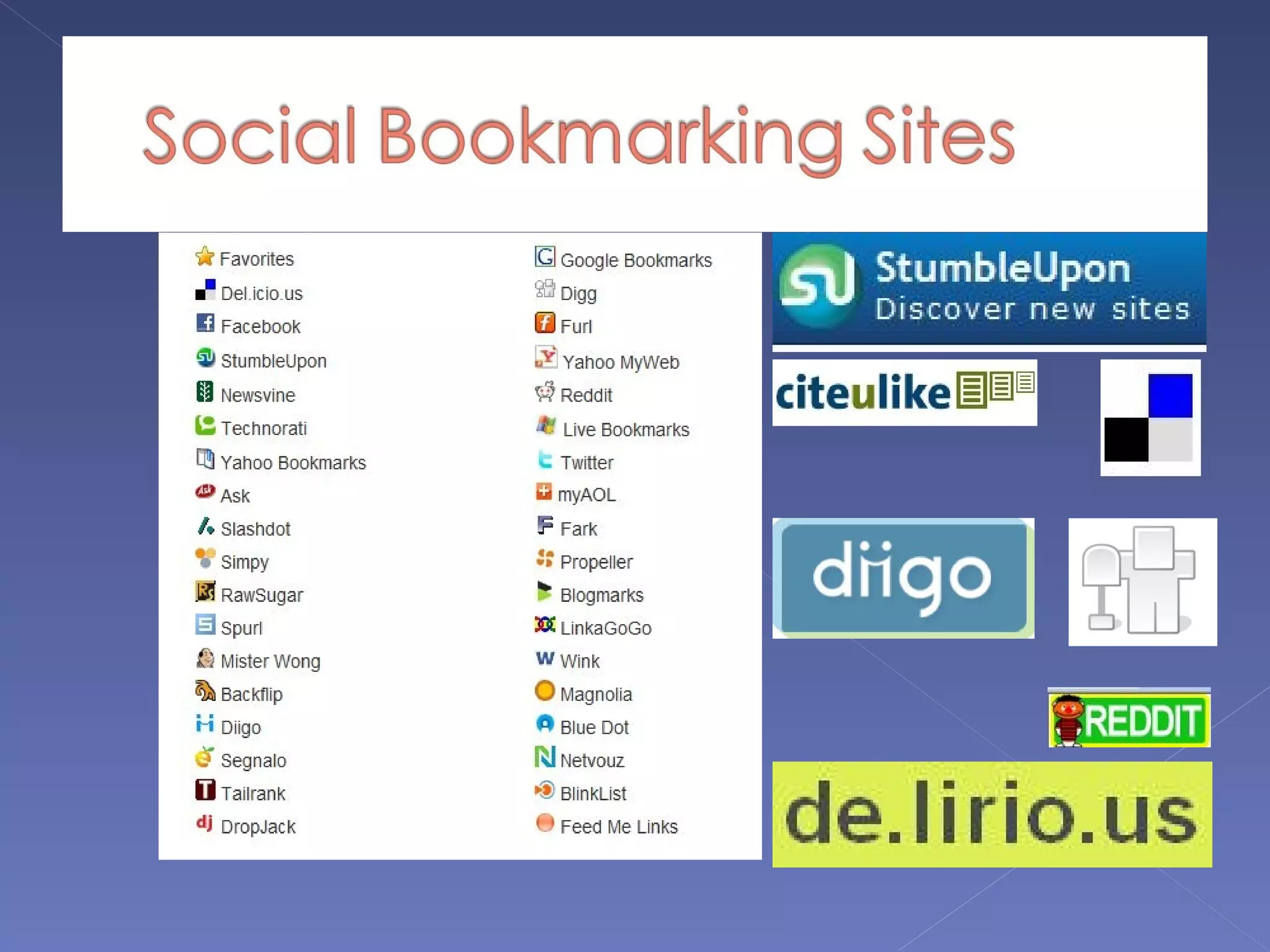
Founded in 2003, acquired by Yahoo 2005 Social Bookmarking Store bookmarks online Who else bookmarked the same article as you? Browser buttons  make it easy Tag Clouds http://del.icio.us/ username/ http://del.icio.us/ username/tagname    for:username – share a bookmark
News, video, podcast ranking Social bookmarking, blogging, RSS Users submit stories for review Most popular make it to the top DiggNation Podcast Categories Organize academic papers Tag content Store references See what others tagged similarly
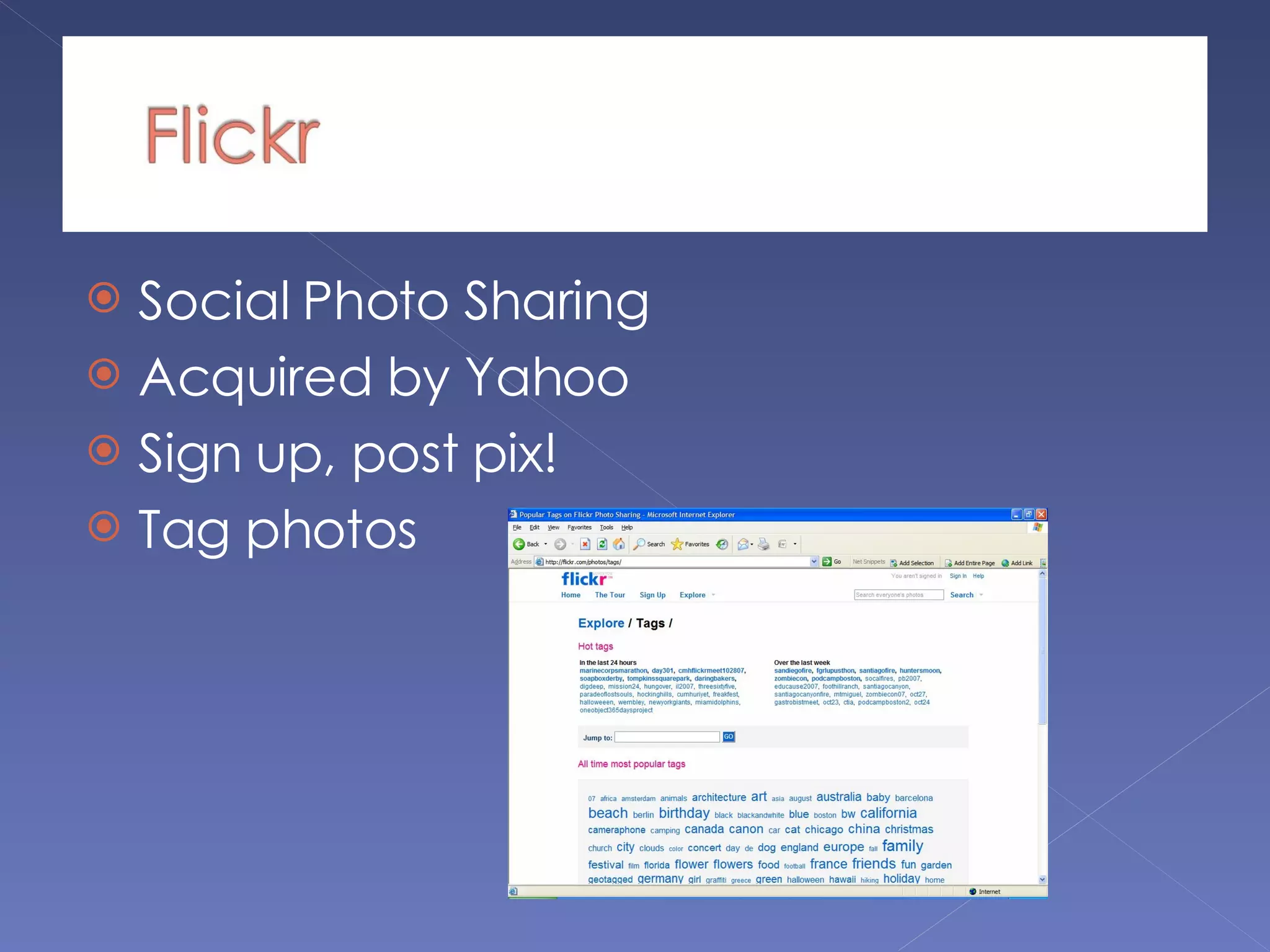
Social Photo Sharing Acquired by Yahoo Sign up, post pix! Tag photos
 
 
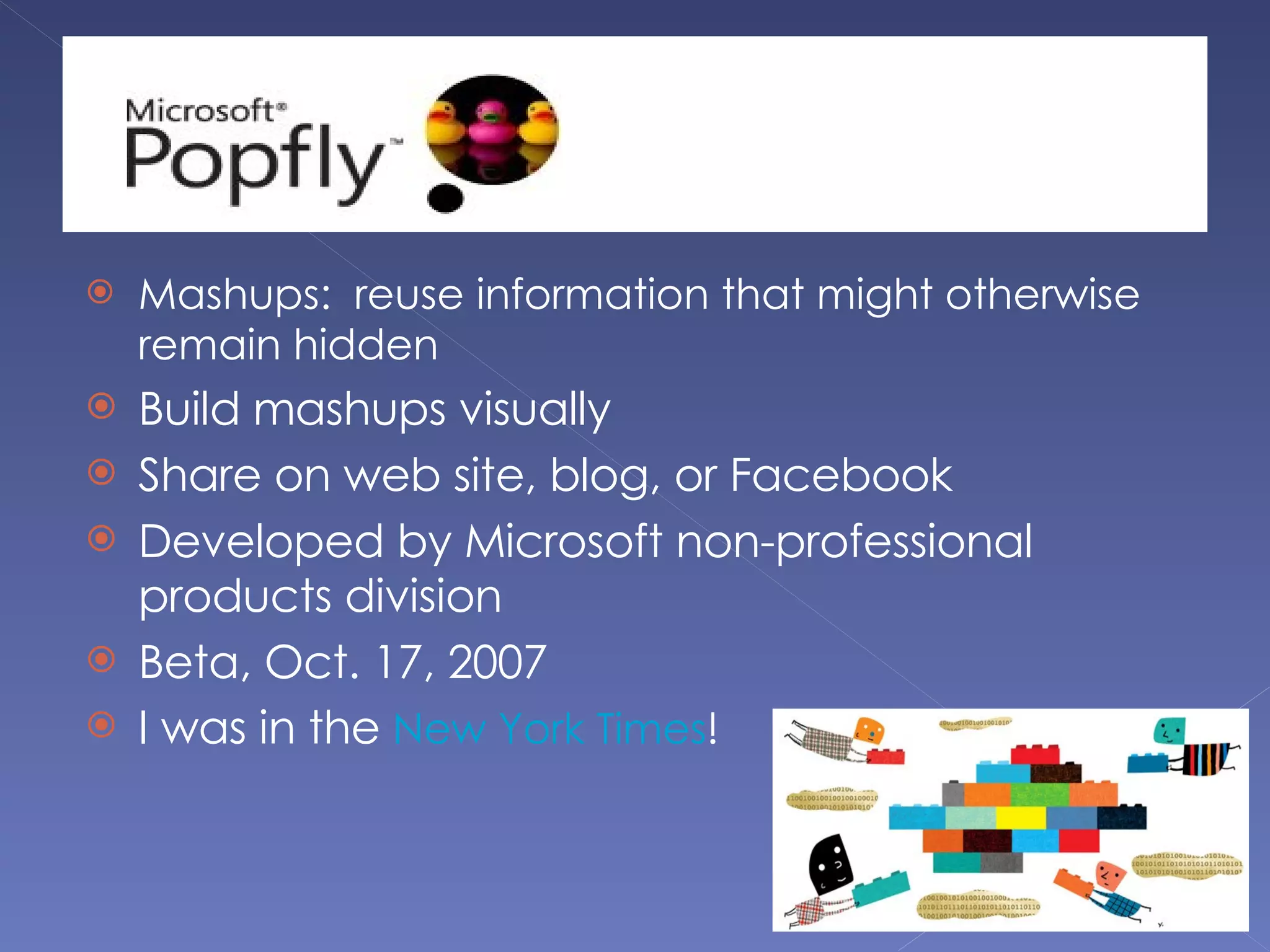
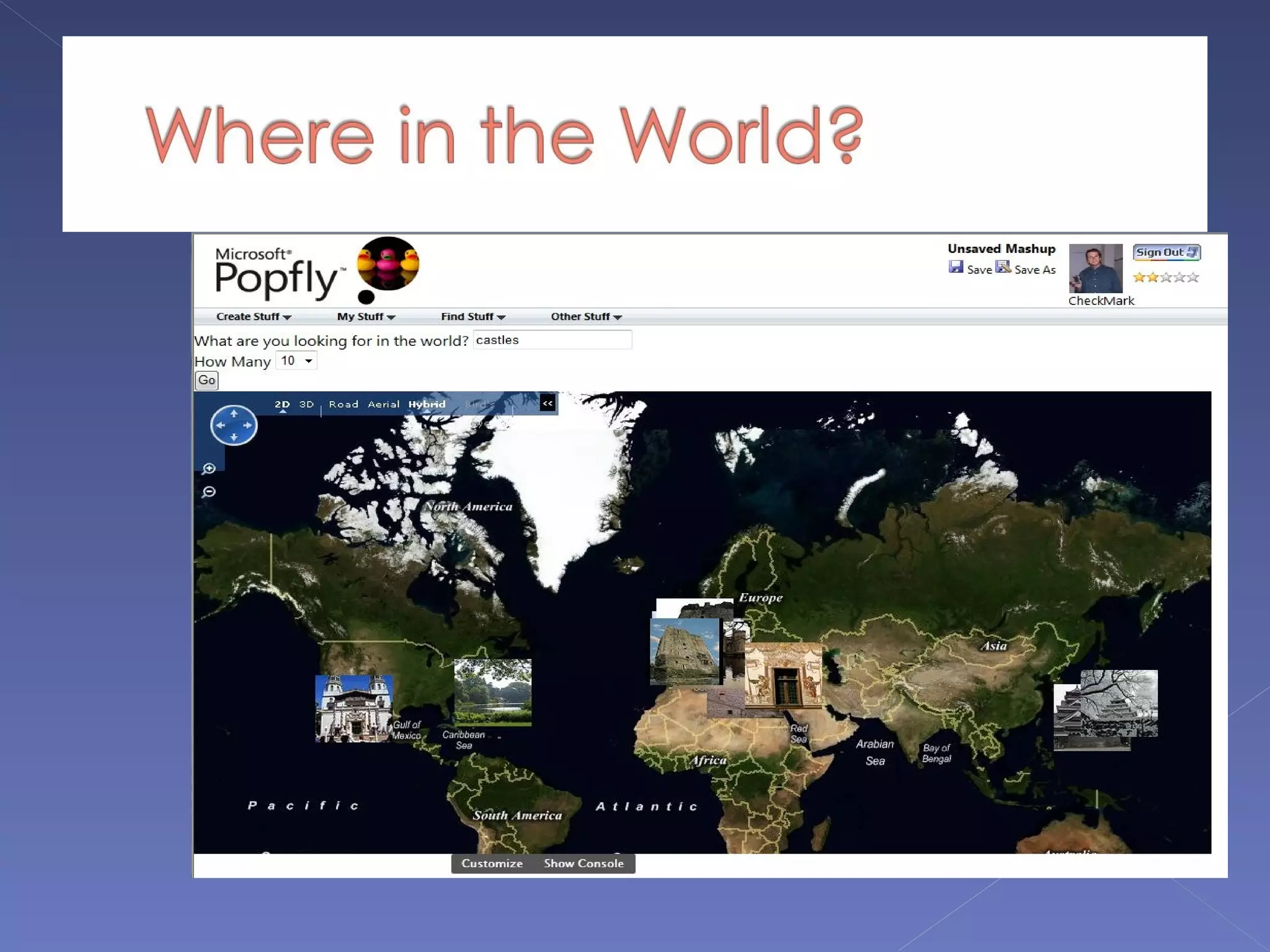
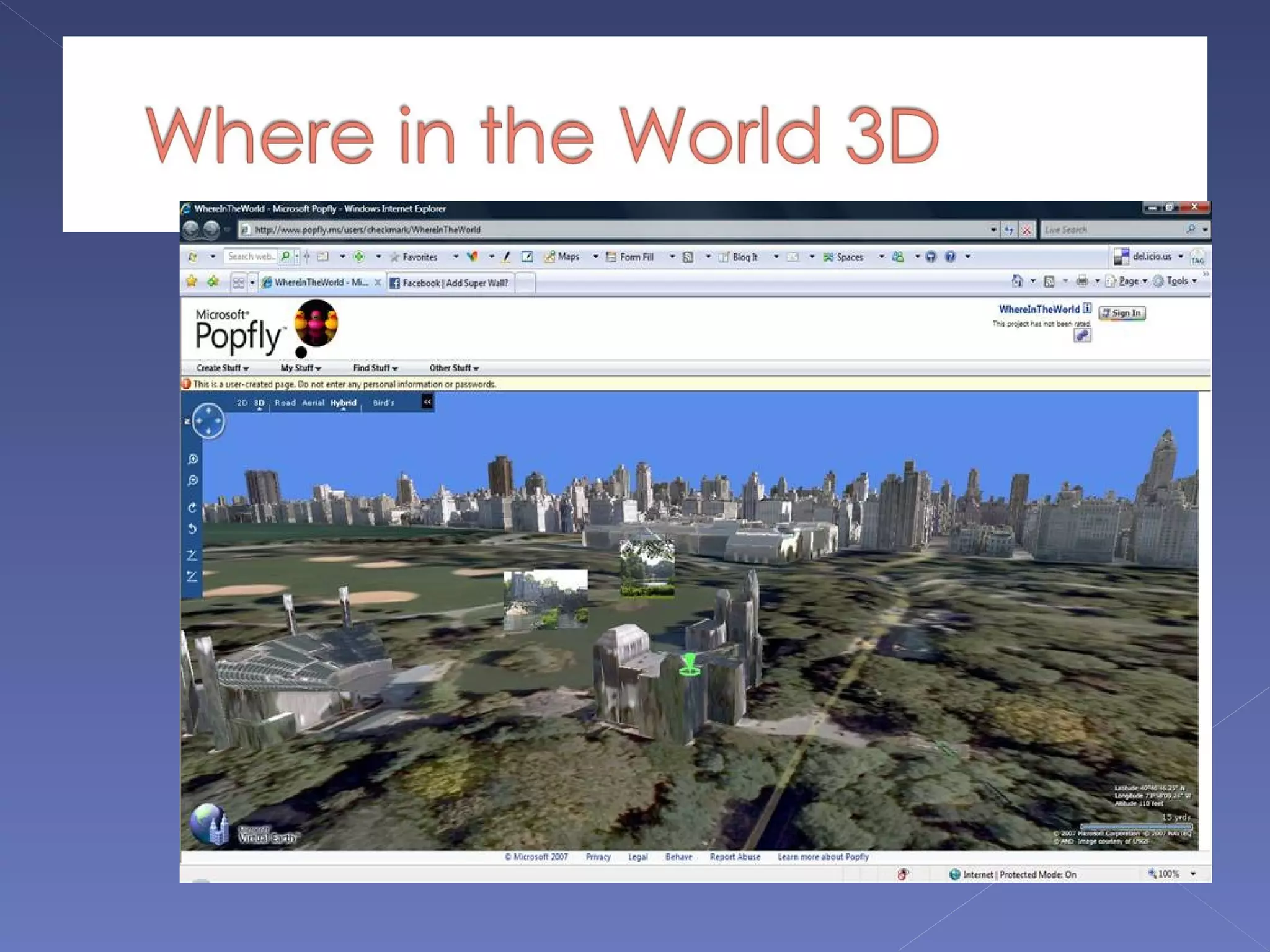
Mashups:  reuse information that might otherwise remain hidden Build mashups visually Share on web site, blog, or Facebook Developed by Microsoft non-professional products division Beta, Oct. 17, 2007 I was in the  New York Times !
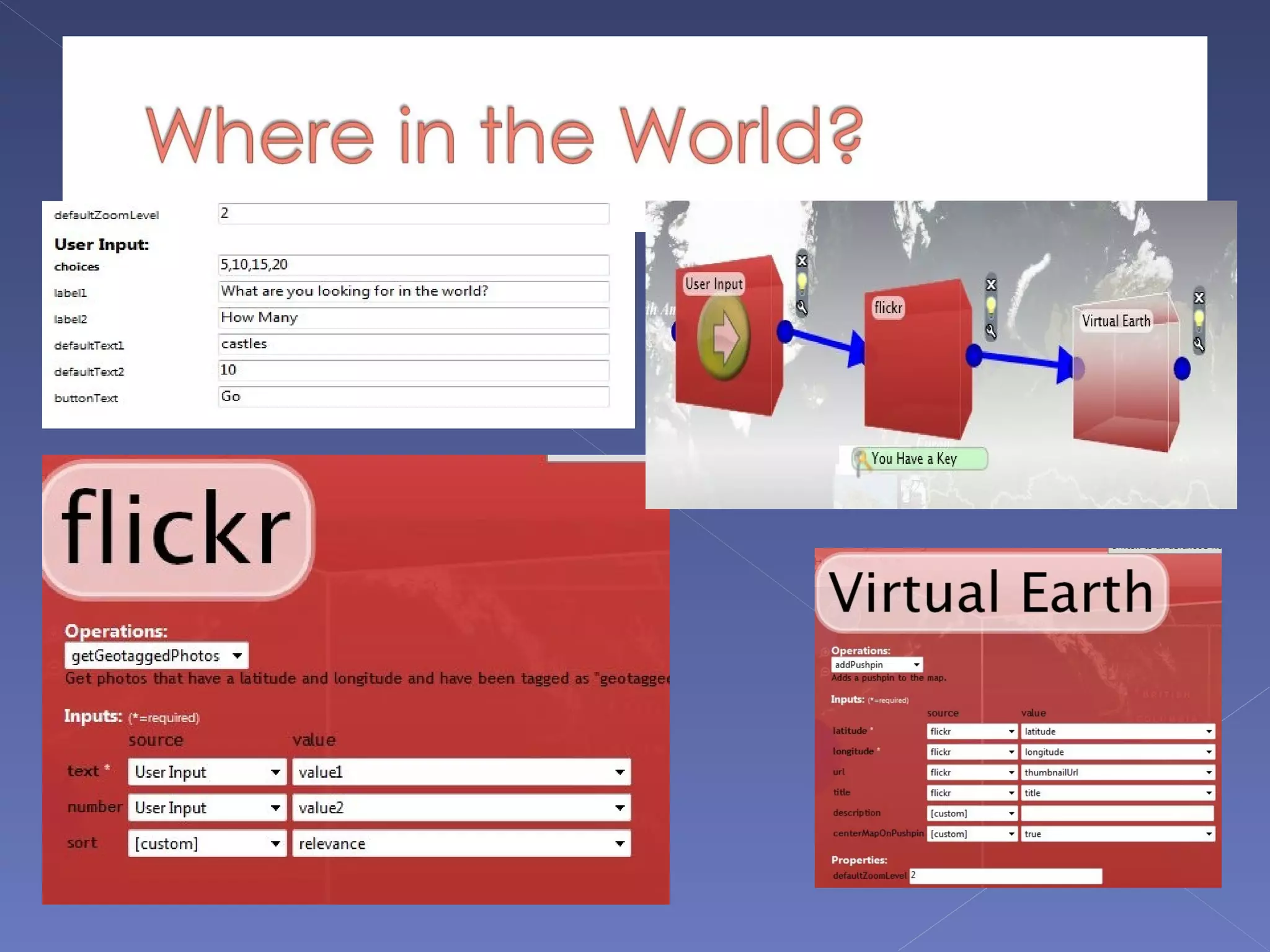
GeoTagging  adds knowledge Combining RSS Feeds Visualization: Plotting Real Estate Data


Web 2.0 Tools for Knowledge Management

  • 1.
  • 2.
    1 – Whatis Web 2.0 ? 2 – Social Media and Collaboration 3 – Mashups
  • 3.
  • 4.
    How did Iget the video to play within PowerPoint 2007?
  • 5.
  • 6.
    “ Could itbe that the dot-com collapse marked some kind of turning point for the Web, such that a call to action such as “Web 2.0” might make sense? We agreed that it did, and so Web 2.0 … was born.” Tim O’Reilly (2004)
  • 7.
    What Web 2.0companies do you recognize? What are their products? “ While the first wave of the Web was closely tied to the browser, the second wave extends applications across the web and enables a new generation of services and business opportunities.” (O’Reilly, 2004)
  • 8.
  • 9.
    Web 1.0 (1993-2003)Web 2.0 (2004 - …) Static Read Only Browser Need to know HTML Client / Server Advertising Photos and Music Authoritative Personal Web Sites Content Management ? ? ? ? ? ? ? ?
  • 10.
    Author: Luca Cremonini Source: http://www.railsonwave.it/railsonwave/2007/1/2/web-2-0-map
  • 11.
    Web as platformHarnessing collective intelligence Data is the next “Intel inside” End of software release cycle – “perpetual beta” Lightweight programming models Software above the level of a single device Rich user experiences
  • 12.
    Share whatyou have learned, created, proved Innovate to be more creative, inventive, imaginative Reuse what others have already done Collaborate to take advantage of what others already know Learn by doing from others and from existing information http://www.slideshare.net/whatidiscover/web-20-knowledge-management-tools/
  • 13.
    Publish your ideasfor others to read or comment Inform colleagues about new information Improve a document with coworkers Meet new people to develop new ideas Find images for a presentation Link to ideas of industry leaders Ask for help Find a new job Listen to an expert See what other people think about an issue
  • 14.
    Managing Knowledge –take advantage of what other people know!
  • 15.
    It’s not whoyou know, it’s who knows you. Social Networks Collaboration Tools Social Content MySpace FaceBook Linked In Twitter Blogs Wikis Google Docs Google Spreadsheets Del.icio.us Digg CiteULike Diigo
  • 16.
  • 17.
    Physical World Onebook, one shelf Now, for the first time in history, we are able to arrange our concepts without the silent limitations of the physical. How might our ideas, organizations, and knowledge itself change? David Weinberger, Harvard University Digital World
  • 18.
    User-provided keywords tohelp identify or describe an item Folksonomy (freely chosen keywords) Non-hierarchical organization scheme Tag Clouds
  • 19.
    Advantages Access bookmarksanywhere One site can have many tags Share bookmarks See which sites are popular Find related sites Know how to find it, not where it is Non-hierarchical Disadvantages No oversight on tags used The same tags might mean different things Yet another place to look How are tags different from key words?
  • 20.
    Del.icio.us Wiki GoogleDocs and Spreadsheets Twitter
  • 21.
    Founded in 2003,acquired by Yahoo 2005 Social Bookmarking Store bookmarks online Who else bookmarked the same article as you? Browser buttons make it easy Tag Clouds http://del.icio.us/ username/ http://del.icio.us/ username/tagname    for:username – share a bookmark
  • 22.
    News, video, podcastranking Social bookmarking, blogging, RSS Users submit stories for review Most popular make it to the top DiggNation Podcast Categories Organize academic papers Tag content Store references See what others tagged similarly
  • 23.
    Social Photo SharingAcquired by Yahoo Sign up, post pix! Tag photos
  • 24.
  • 25.
  • 26.
    Mashups: reuseinformation that might otherwise remain hidden Build mashups visually Share on web site, blog, or Facebook Developed by Microsoft non-professional products division Beta, Oct. 17, 2007 I was in the New York Times !
  • 27.
    GeoTagging addsknowledge Combining RSS Feeds Visualization: Plotting Real Estate Data
  • 28.
  • 29.
  • 30.
  • 31.