Web 2.0 ... Huh?! Dinesh Parisutham - Webmater & Intranet manager - PITS
A Definition?
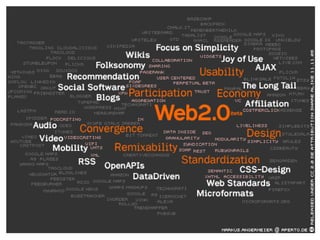
The term Web 2.0 is associated with web applications that facilitate interactive systemic biases, interoperability, user-centered design and developing the World Wide Web.  A Web 2.0 site allows users to interact and collaborate with each other in a social media dialogue as consumers of user-generated content in a virtual community, in contrast to websites where users (prosumers) are limited to the active viewing of content that they created and controlled.  Examples of Web 2.0 include social networking sites, blogs, wikis, video sharing sites, hosted services, web applications, mashups and folksonomies.
Lets continue looking...
 
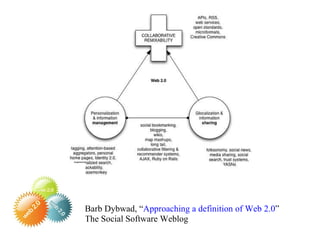
Barb Dybwad, “ Approaching a definition of Web 2.0 ” The Social Software Weblog
 
So, forget the definition Lets look at the trends What's actually happening?
 
Web 2.0 Technologies
It’s Hard to Define, But you Know it When you See it… Web Services / API’s “ Folksonomies” / Content tagging “ AJAX” RSS Cuene.com/mima Emerging Tech Apps You Know… Flickr Google Maps Blogging & Content Syndication Craigslist Linkedin, Tribes, Ryze, Friendster Some  Apps You Don’t  know Del.icio.us Upcoming.org 43Things.com Major Retailers Amazon API’s Google Adsense API Yahoo API Ebay API "[This is]  not my mom's Internet …It's changing, and it's changing because we're looking at the share-shifting—the time people are looking at TV, reading a magazine, listening to the radio—they're not replacing each other; they're coming together."  -  AOL Exec / May 2005
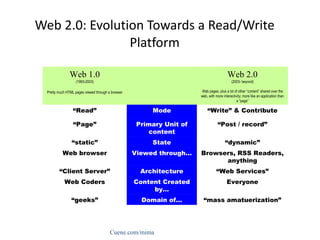
Web 2.0: Evolution Towards a Read/Write Platform Cuene.com/mima Web 1.0 (1993-2003) Pretty much HTML pages viewed through a browser Web 2.0 (2003- beyond) Web pages, plus a lot of other “content” shared over the web, with more interactivity; more like an application than a “page” “ Read” Mode “ Write” & Contribute “ Page” Primary Unit of content “ Post / record” “ static” State “ dynamic” Web browser Viewed through… Browsers, RSS Readers, anything “ Client Server” Architecture “ Web Services” Web Coders Content Created by… Everyone “ geeks” Domain of… “ mass amatuerization”
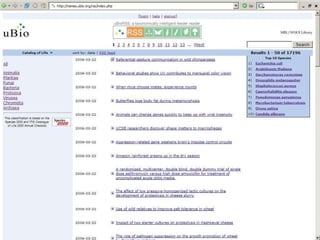
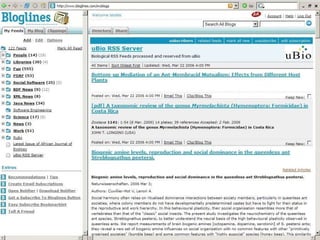
RSS : Content Syndication
 
 
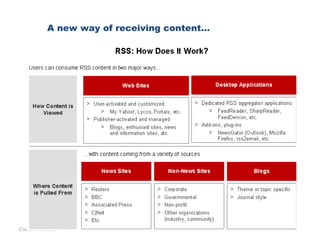
Cuene.com/mima A new way of receiving content…
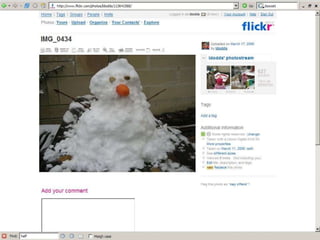
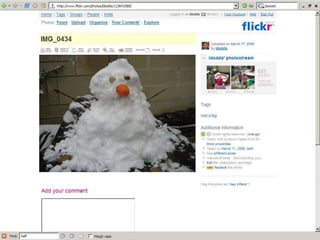
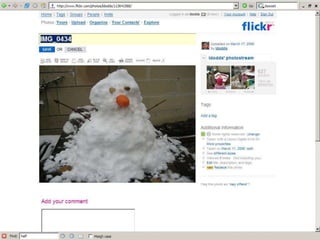
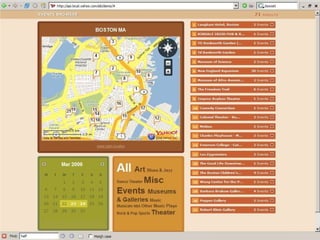
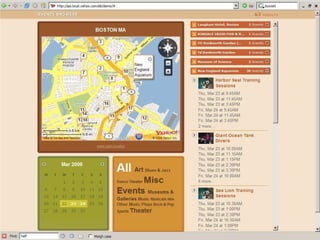
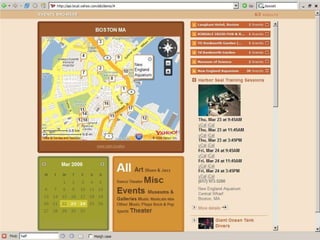
AJAX (Asynchronous Javascript and XML)


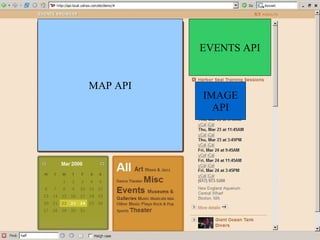
MAP API EVENTS API IMAGE API
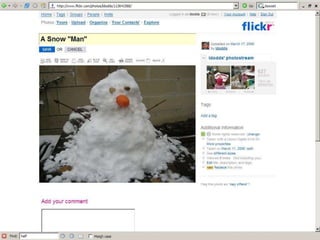
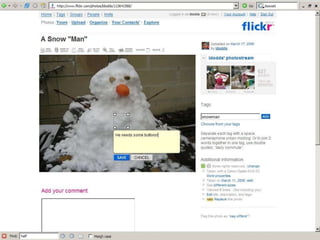
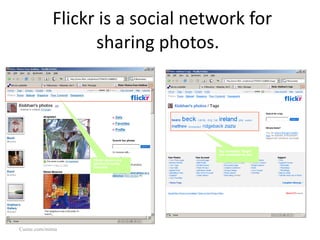
Flickr is a social network for sharing photos.  Cuene.com/mima Flickr shows me photos from my network My contacts “tags” are available to me
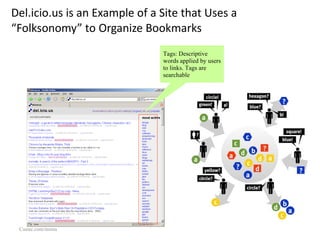
Del.icio.us is an Example of a Site that Uses a “Folksonomy” to Organize Bookmarks Cuene.com/mima Tags: Descriptive words applied by users to links. Tags are searchable A “
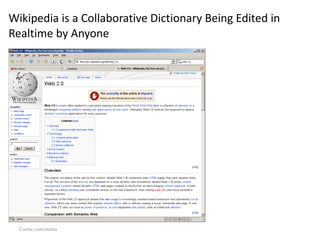
Wikipedia is a Collaborative Dictionary Being Edited in Realtime by Anyone Cuene.com/mima
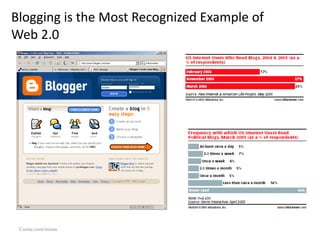
Blogging is the Most Recognized Example of Web 2.0 Cuene.com/mima
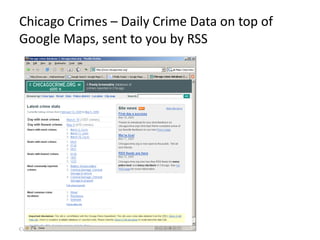
Chicago Crimes – Daily Crime Data on top of Google Maps, sent to you by RSS Cuene.com/mima
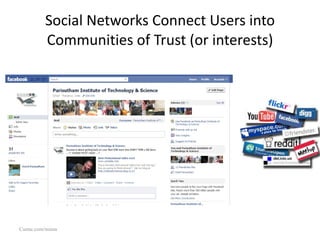
Social Networks Connect Users into Communities of Trust (or interests) Cuene.com/mima
Summing Up
Summing Up Web 2.0 hard to define, but very far from just hype Culmination of a number of web trends Importance of Open Data Allows communities to assemble unique tailored applications Importance of Users Seek and create network effects Browser as Application Platform Huge potential for new kinds of web applications

Web 2.0

  • 1.
    Web 2.0 ...Huh?! Dinesh Parisutham - Webmater & Intranet manager - PITS
  • 2.
  • 3.
    The term Web2.0 is associated with web applications that facilitate interactive systemic biases, interoperability, user-centered design and developing the World Wide Web. A Web 2.0 site allows users to interact and collaborate with each other in a social media dialogue as consumers of user-generated content in a virtual community, in contrast to websites where users (prosumers) are limited to the active viewing of content that they created and controlled. Examples of Web 2.0 include social networking sites, blogs, wikis, video sharing sites, hosted services, web applications, mashups and folksonomies.
  • 4.
  • 5.
  • 6.
    Barb Dybwad, “Approaching a definition of Web 2.0 ” The Social Software Weblog
  • 7.
  • 8.
    So, forget thedefinition Lets look at the trends What's actually happening?
  • 9.
  • 10.
  • 11.
    It’s Hard toDefine, But you Know it When you See it… Web Services / API’s “ Folksonomies” / Content tagging “ AJAX” RSS Cuene.com/mima Emerging Tech Apps You Know… Flickr Google Maps Blogging & Content Syndication Craigslist Linkedin, Tribes, Ryze, Friendster Some Apps You Don’t know Del.icio.us Upcoming.org 43Things.com Major Retailers Amazon API’s Google Adsense API Yahoo API Ebay API "[This is] not my mom's Internet …It's changing, and it's changing because we're looking at the share-shifting—the time people are looking at TV, reading a magazine, listening to the radio—they're not replacing each other; they're coming together." - AOL Exec / May 2005
  • 12.
    Web 2.0: EvolutionTowards a Read/Write Platform Cuene.com/mima Web 1.0 (1993-2003) Pretty much HTML pages viewed through a browser Web 2.0 (2003- beyond) Web pages, plus a lot of other “content” shared over the web, with more interactivity; more like an application than a “page” “ Read” Mode “ Write” & Contribute “ Page” Primary Unit of content “ Post / record” “ static” State “ dynamic” Web browser Viewed through… Browsers, RSS Readers, anything “ Client Server” Architecture “ Web Services” Web Coders Content Created by… Everyone “ geeks” Domain of… “ mass amatuerization”
  • 13.
    RSS : ContentSyndication
  • 14.
  • 15.
  • 16.
    Cuene.com/mima A newway of receiving content…
  • 17.
  • 18.
  • 19.
  • 20.
  • 21.
  • 22.
  • 23.
  • 24.
  • 25.
  • 26.
  • 27.
  • 28.
    MAP API EVENTSAPI IMAGE API
  • 29.
    Flickr is asocial network for sharing photos. Cuene.com/mima Flickr shows me photos from my network My contacts “tags” are available to me
  • 30.
    Del.icio.us is anExample of a Site that Uses a “Folksonomy” to Organize Bookmarks Cuene.com/mima Tags: Descriptive words applied by users to links. Tags are searchable A “
  • 31.
    Wikipedia is aCollaborative Dictionary Being Edited in Realtime by Anyone Cuene.com/mima
  • 32.
    Blogging is theMost Recognized Example of Web 2.0 Cuene.com/mima
  • 33.
    Chicago Crimes –Daily Crime Data on top of Google Maps, sent to you by RSS Cuene.com/mima
  • 34.
    Social Networks ConnectUsers into Communities of Trust (or interests) Cuene.com/mima
  • 35.
  • 36.
    Summing Up Web2.0 hard to define, but very far from just hype Culmination of a number of web trends Importance of Open Data Allows communities to assemble unique tailored applications Importance of Users Seek and create network effects Browser as Application Platform Huge potential for new kinds of web applications

Editor's Notes

  • #12 "[This is] not my mom's Internet," Sharkey said. "It's changing, and it's changing because we're looking at the share-shifting—the time people are looking at TV, reading a magazine, listening to the radio—they're not replacing each other; they're coming together." These numbers might not be surprising, Sharkey said, but new elements have been added to the list of late, notably that in one day 20 million pictures have been shared over the AOL network, 560,000 blogs have been updated, and 1.8 million poll votes have been cast. And then there are AOL Music Sessions videos, like the one from rap artist 50 Cent, which was streamed 6.1 million times upon its initial debut. Web users have started to control their own programming, especially the new "Generation C," short for Generation Content. This young group of users has created its own content online, through blogs, through sharing images, and by creating personalized "away" messages on AIM.
  • #33 7% said they looked at a blog in the last 24 hours…