Chapter 6
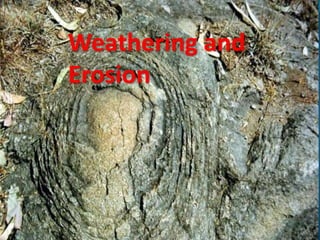
Weathering and
Erosion
Junior Cert Recap
1. What is Weathering?
2. What is Erosion?
3. Describe two types of Weathering
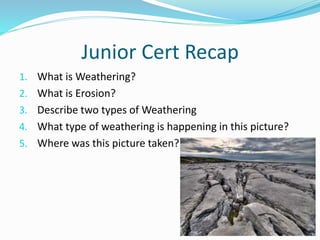
4. What type of weathering is happening in this picture?
5. Where was this picture taken?
Weathering and Erosion
 Weathering refers to the breaking down of rocks into smaller
pieces
 Erosion refers to the breaking down of rocks into their smaller
pieces and the transportation away of the rock fragments,
usually by moving wind, sea currents, rivers or glaciers.
Weathering
 Three types of weathering:
 Mechanical – breaking down of larger rock into smaller
rocks. No chemical change to rock. Example – Freeze thaw
action
 Chemical – a chemical reaction occurs in the rock causing it
to dissolve and forming new substances. Example –
Limestone dissolved by rainwater, forming calcium
carbonate in caves
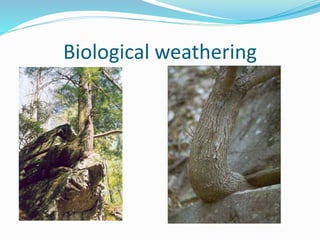
 Biological – disintegration of rocks due to the actions of
plants/animals
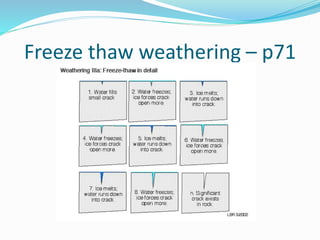
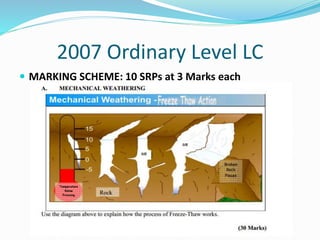
Freeze thaw weathering – p71
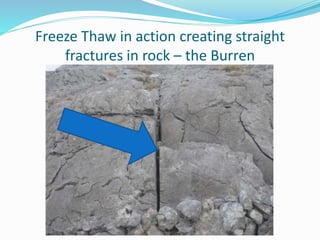
Freeze Thaw in action creating straight
fractures in rock – the Burren
Onion weathering (exfoliation)
 Surface of the rock is peeled away layer by layer – like an
onion
 Caused by heat (causing expansion) and cold (causing
contraction)
 If a rock has different minerals (e.g. Granite, sandstone) can
wear more quickly as different particles expand and contract
at different rates
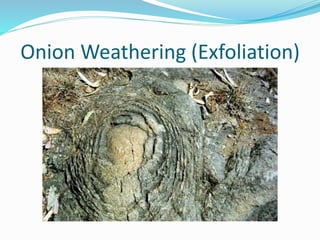
Onion Weathering (Exfoliation)
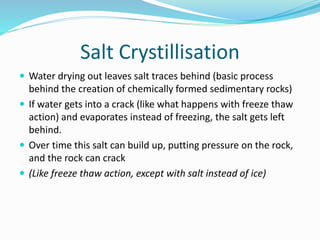
Salt Crystillisation
 Water drying out leaves salt traces behind (basic process
behind the creation of chemically formed sedimentary rocks)
 If water gets into a crack (like what happens with freeze thaw
action) and evaporates instead of freezing, the salt gets left
behind.
 Over time this salt can build up, putting pressure on the rock,
and the rock can crack
 (Like freeze thaw action, except with salt instead of ice)
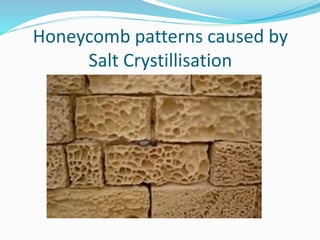
Honeycomb patterns caused by
Salt Crystillisation
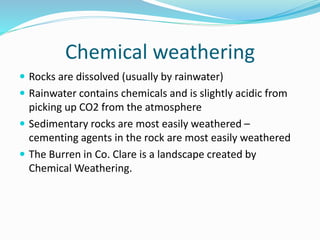
Chemical weathering
 Rocks are dissolved (usually by rainwater)
 Rainwater contains chemicals and is slightly acidic from
picking up CO2 from the atmosphere
 Sedimentary rocks are most easily weathered –
cementing agents in the rock are most easily weathered
 The Burren in Co. Clare is a landscape created by
Chemical Weathering.
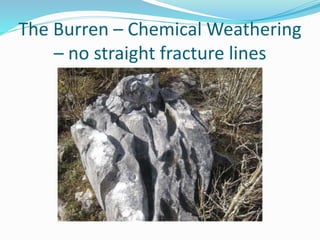
The Burren – Chemical Weathering
– no straight fracture lines
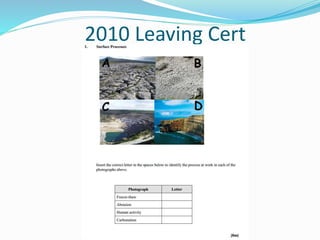
2010 Leaving Cert
Chemical Weathering (processes)
 Four processes of chemical weathering
 Carbonation (rainwater becomes acidic & dissolves rock)
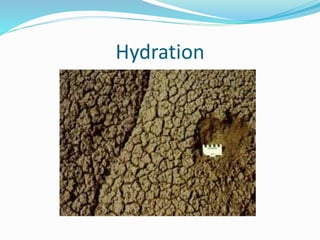
 Hydration (Minerals in rock react with water)
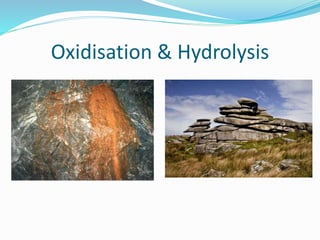
 Oxidisation (Minerals in rock react with oxygen)
 Hydrolysis (acidic water on certain minerals esp feldspar)
Hydration
Oxidisation & Hydrolysis
Biological Weathering
 The action of animals and plants
 Roots breaking up rocks
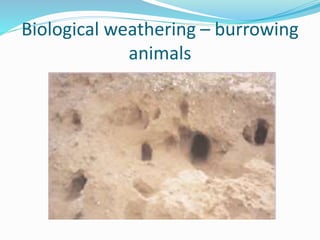
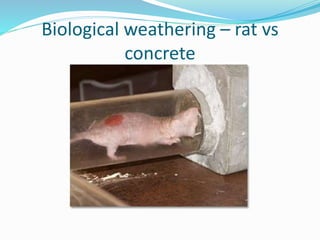
 Burrowing animals
Biological weathering
Biological weathering – burrowing
animals
Biological weathering – rat vs
concrete
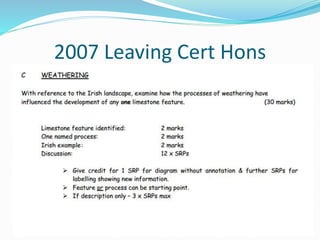
2007 Leaving Cert Hons
Erosion
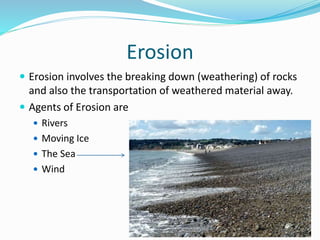
 Erosion involves the breaking down (weathering) of rocks
and also the transportation of weathered material away.
 Agents of Erosion are
 Rivers
 Moving Ice
 The Sea
 Wind
2007 Ordinary Level LC
 MARKING SCHEME: 10 SRPs at 3 Marks each
Chemical Weathering (processes)
 Write 5 SRPs on each of the following processes of chemical
weathering
 Carbonation
 Hydration
 Oxidisation
 Hydrolysis
Weathering and Erosion

Weathering and Erosion

  • 1.
  • 2.
    Junior Cert Recap 1.What is Weathering? 2. What is Erosion? 3. Describe two types of Weathering 4. What type of weathering is happening in this picture? 5. Where was this picture taken?
  • 3.
    Weathering and Erosion Weathering refers to the breaking down of rocks into smaller pieces  Erosion refers to the breaking down of rocks into their smaller pieces and the transportation away of the rock fragments, usually by moving wind, sea currents, rivers or glaciers.
  • 4.
    Weathering  Three typesof weathering:  Mechanical – breaking down of larger rock into smaller rocks. No chemical change to rock. Example – Freeze thaw action  Chemical – a chemical reaction occurs in the rock causing it to dissolve and forming new substances. Example – Limestone dissolved by rainwater, forming calcium carbonate in caves  Biological – disintegration of rocks due to the actions of plants/animals
  • 5.
  • 6.
    Freeze Thaw inaction creating straight fractures in rock – the Burren
  • 7.
    Onion weathering (exfoliation) Surface of the rock is peeled away layer by layer – like an onion  Caused by heat (causing expansion) and cold (causing contraction)  If a rock has different minerals (e.g. Granite, sandstone) can wear more quickly as different particles expand and contract at different rates
  • 8.
  • 9.
    Salt Crystillisation  Waterdrying out leaves salt traces behind (basic process behind the creation of chemically formed sedimentary rocks)  If water gets into a crack (like what happens with freeze thaw action) and evaporates instead of freezing, the salt gets left behind.  Over time this salt can build up, putting pressure on the rock, and the rock can crack  (Like freeze thaw action, except with salt instead of ice)
  • 10.
    Honeycomb patterns causedby Salt Crystillisation
  • 11.
    Chemical weathering  Rocksare dissolved (usually by rainwater)  Rainwater contains chemicals and is slightly acidic from picking up CO2 from the atmosphere  Sedimentary rocks are most easily weathered – cementing agents in the rock are most easily weathered  The Burren in Co. Clare is a landscape created by Chemical Weathering.
  • 12.
    The Burren –Chemical Weathering – no straight fracture lines
  • 14.
  • 15.
    Chemical Weathering (processes) Four processes of chemical weathering  Carbonation (rainwater becomes acidic & dissolves rock)  Hydration (Minerals in rock react with water)  Oxidisation (Minerals in rock react with oxygen)  Hydrolysis (acidic water on certain minerals esp feldspar)
  • 16.
  • 17.
  • 18.
    Biological Weathering  Theaction of animals and plants  Roots breaking up rocks  Burrowing animals
  • 19.
  • 20.
    Biological weathering –burrowing animals
  • 21.
  • 22.
  • 23.
    Erosion  Erosion involvesthe breaking down (weathering) of rocks and also the transportation of weathered material away.  Agents of Erosion are  Rivers  Moving Ice  The Sea  Wind
  • 24.
    2007 Ordinary LevelLC  MARKING SCHEME: 10 SRPs at 3 Marks each
  • 25.
    Chemical Weathering (processes) Write 5 SRPs on each of the following processes of chemical weathering  Carbonation  Hydration  Oxidisation  Hydrolysis