• Made By : Khadija Abro
VIII-B
Beacon house School System
References: International Lower secondary
Geography
Yahoo Answers
Google.com.pk
Submitted Date: 11/2/15
( All references are used for Educational
purposes only
Types Of Weathering And Erosion
Weathering
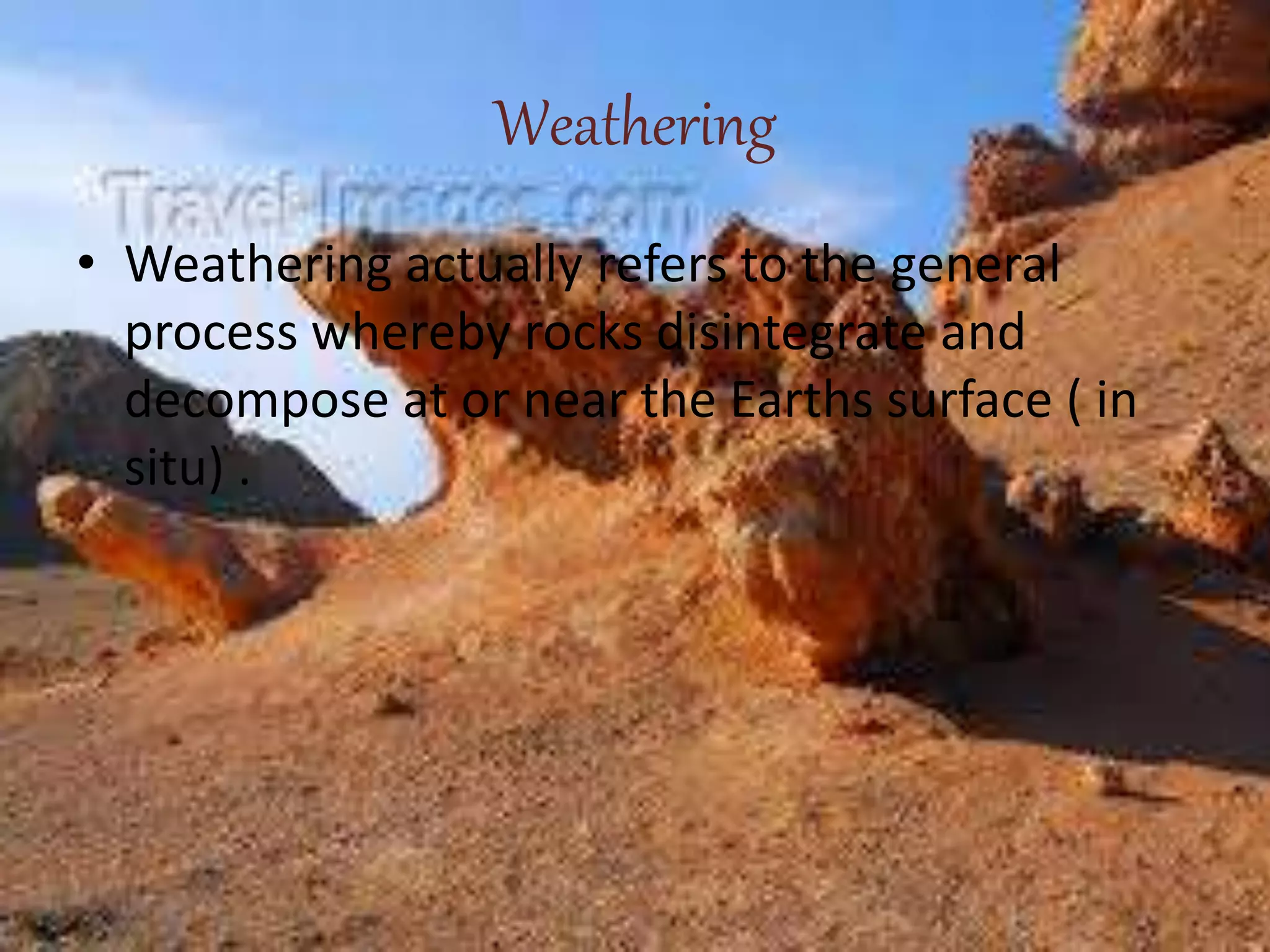
• Weathering actually refers to the general
process whereby rocks disintegrate and
decompose at or near the Earths surface ( in
situ) .
Types of Weathering
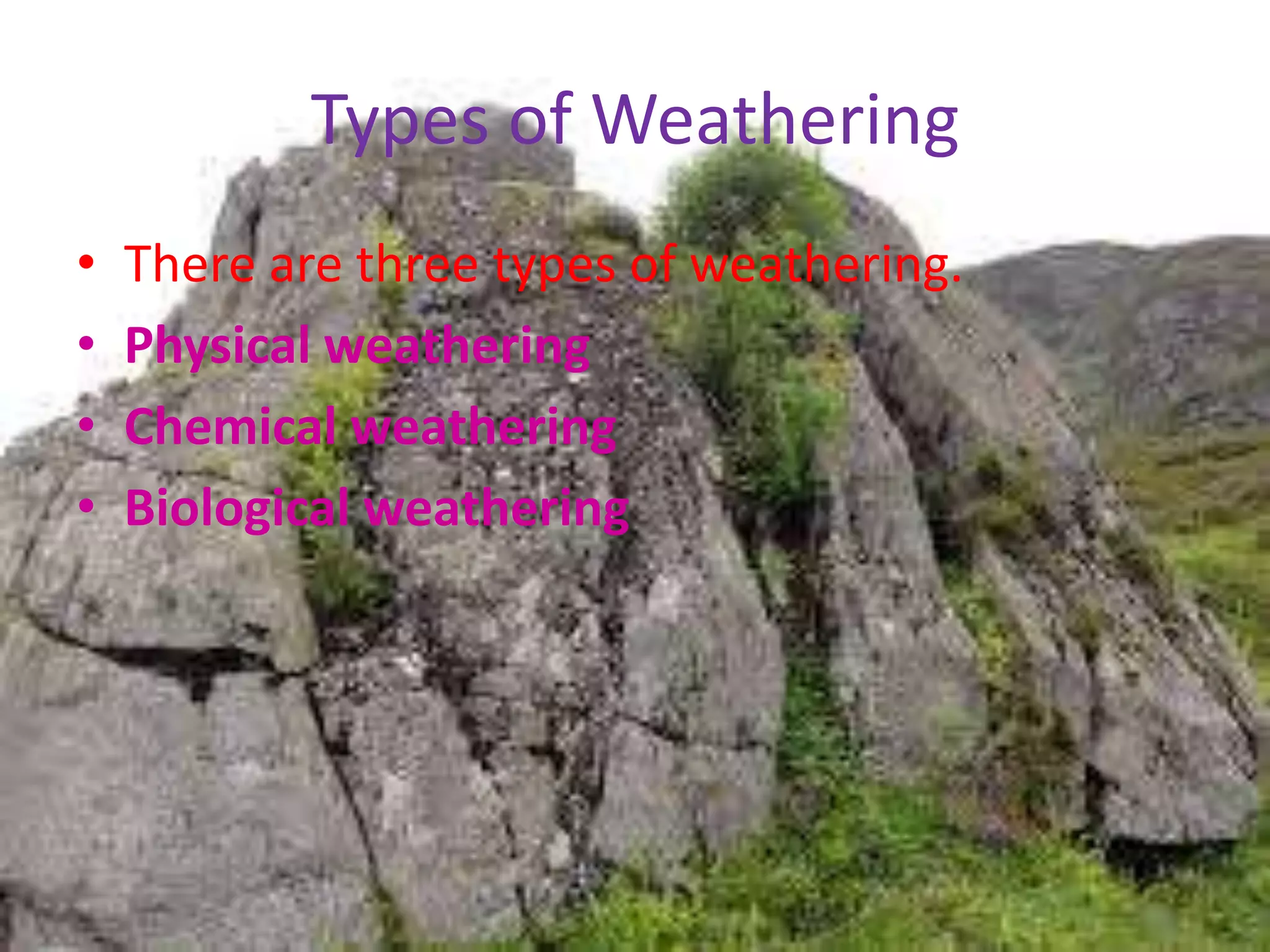
• There are three types of weathering.
• Physical weathering
• Chemical weathering
• Biological weathering
• Types Of Physical Weathering:
• Alternate Expansion and Contraction of Rocks.
• Freeze-Thaw Action Of Ice or Frost Shattering.
• Release of Pressure within rocks.
• Types Of Chemical Weathering:
• Oxidation.
• Carbonation
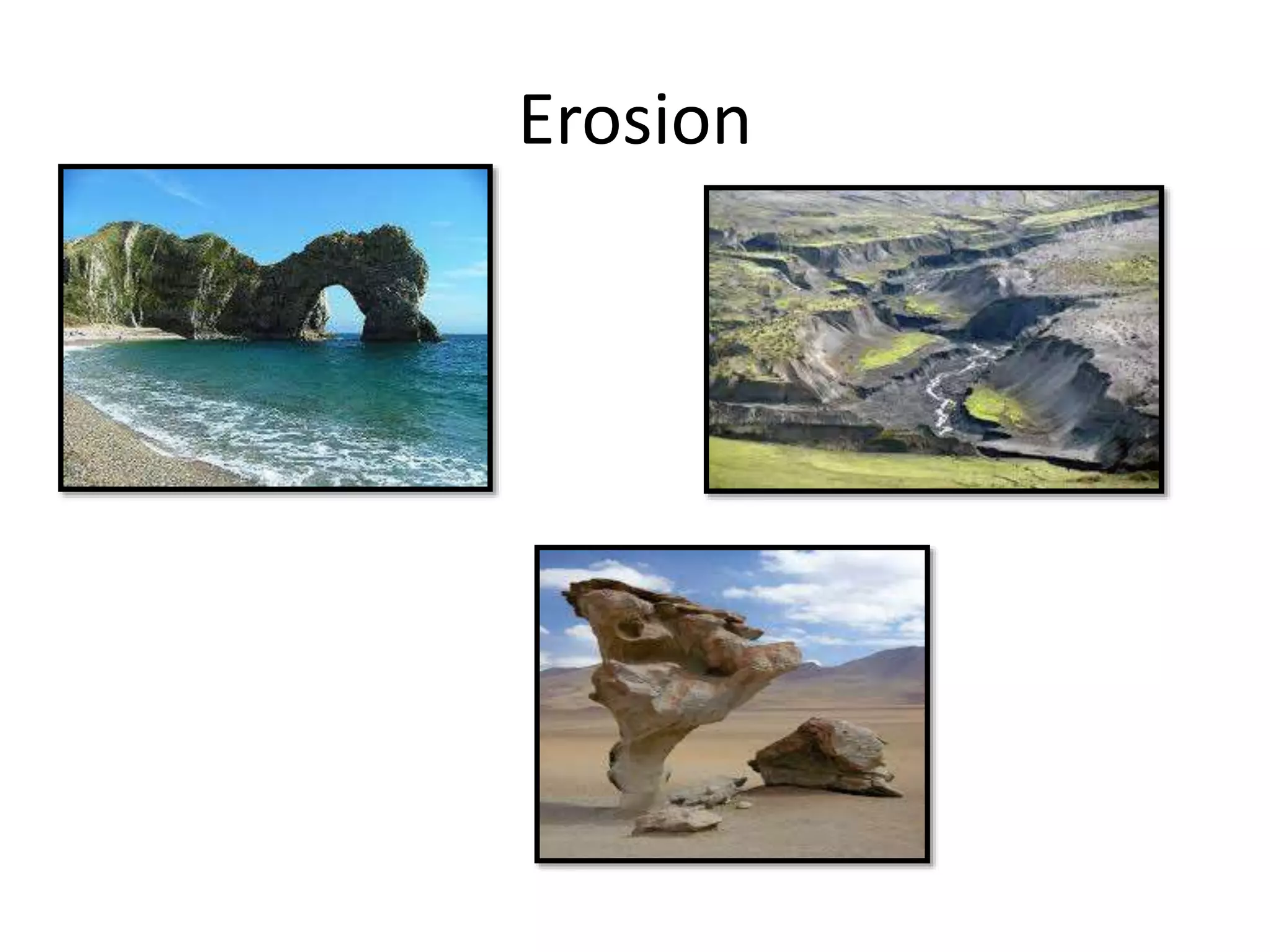
Erosion
• Erosion is the process by which the surface of
the Earth gets worn down. We can also define
Erosion as the removal of weathered materials
by natural agents such as flowing water, winds
and sea waves.
Agents Of Erosion
• Sea Waves: Rock Particles and sand carried by
waves gradually wear down the rocks to form
coastal physical features such as cliffs.
• Flowing Water: Where streams and rivers flow
across the Earths surface, flowing water
causes erosion to take place.
• Winds: Wind erosion is dominant in dry areas
such as deserts.
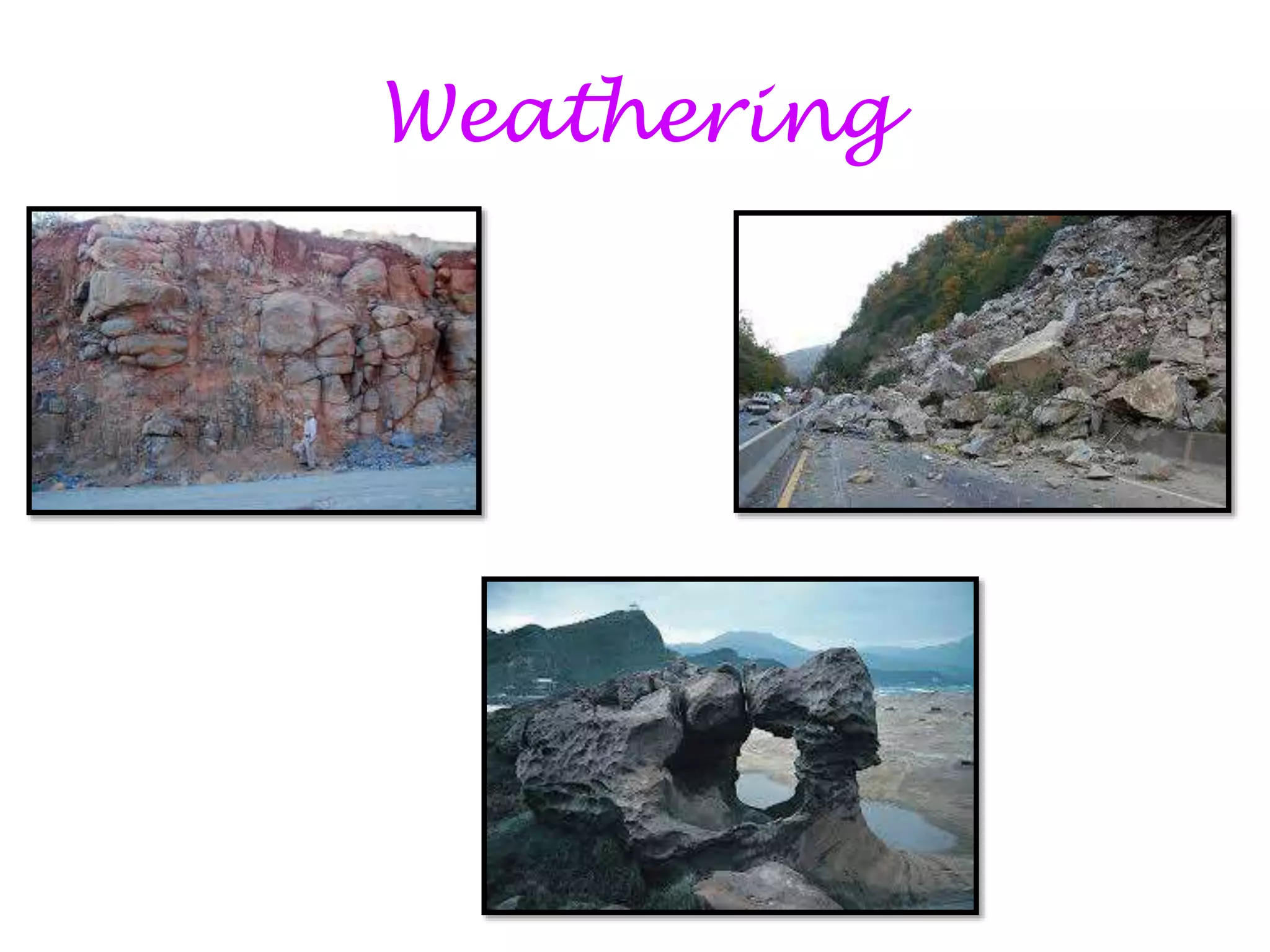
Weathering
Erosion
Impacts of Weathering and
Erosion On Human Activities
• The impacts of weathering and erosion on
humans can be categorized into positive and
negative impacts.
Positive Impacts
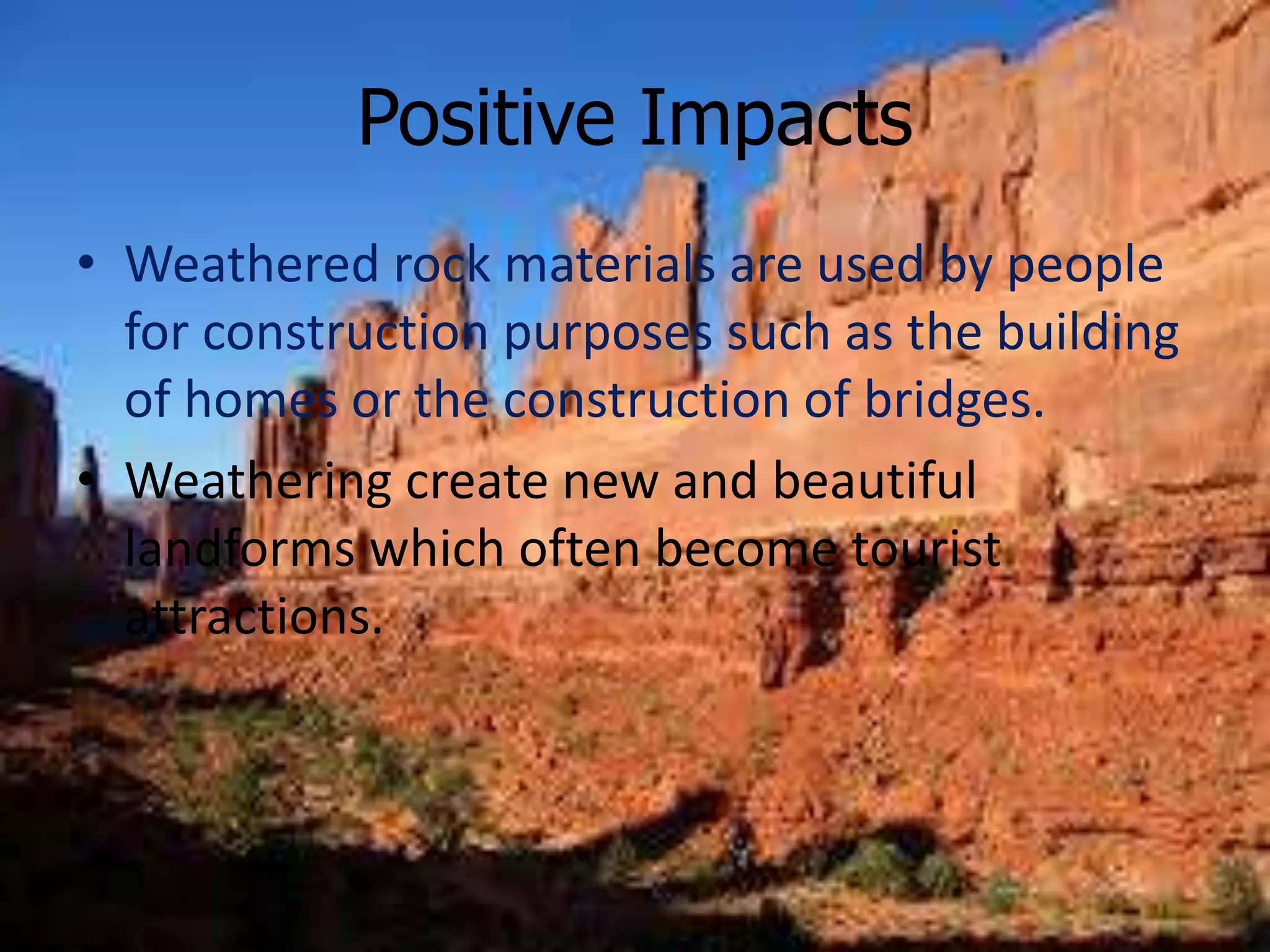
• Weathered rock materials are used by people
for construction purposes such as the building
of homes or the construction of bridges.
• Weathering create new and beautiful
landforms which often become tourist
attractions.
Negative Impacts
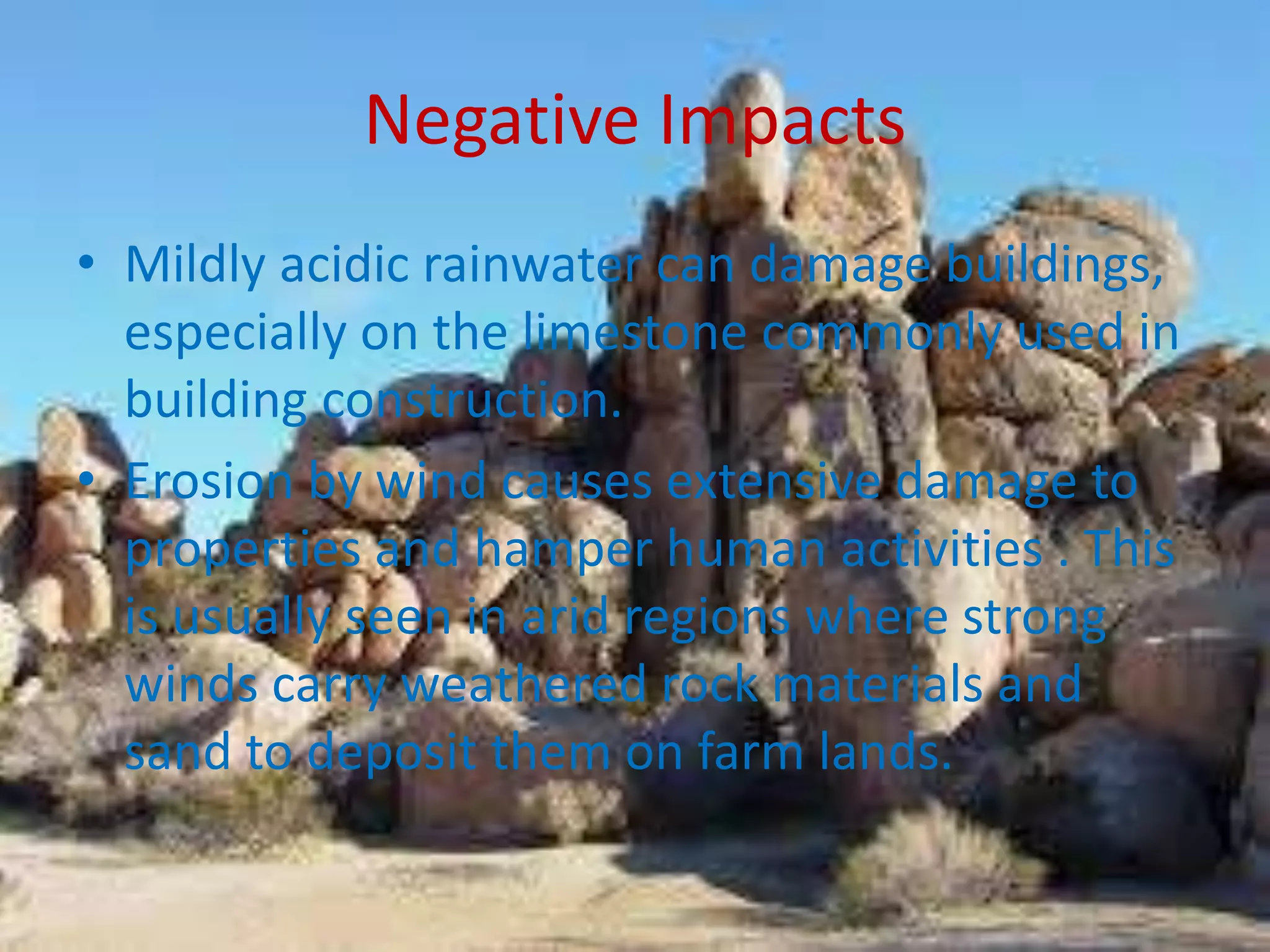
• Mildly acidic rainwater can damage buildings,
especially on the limestone commonly used in
building construction.
• Erosion by wind causes extensive damage to
properties and hamper human activities . This
is usually seen in arid regions where strong
winds carry weathered rock materials and
sand to deposit them on farm lands.
Weathering Products
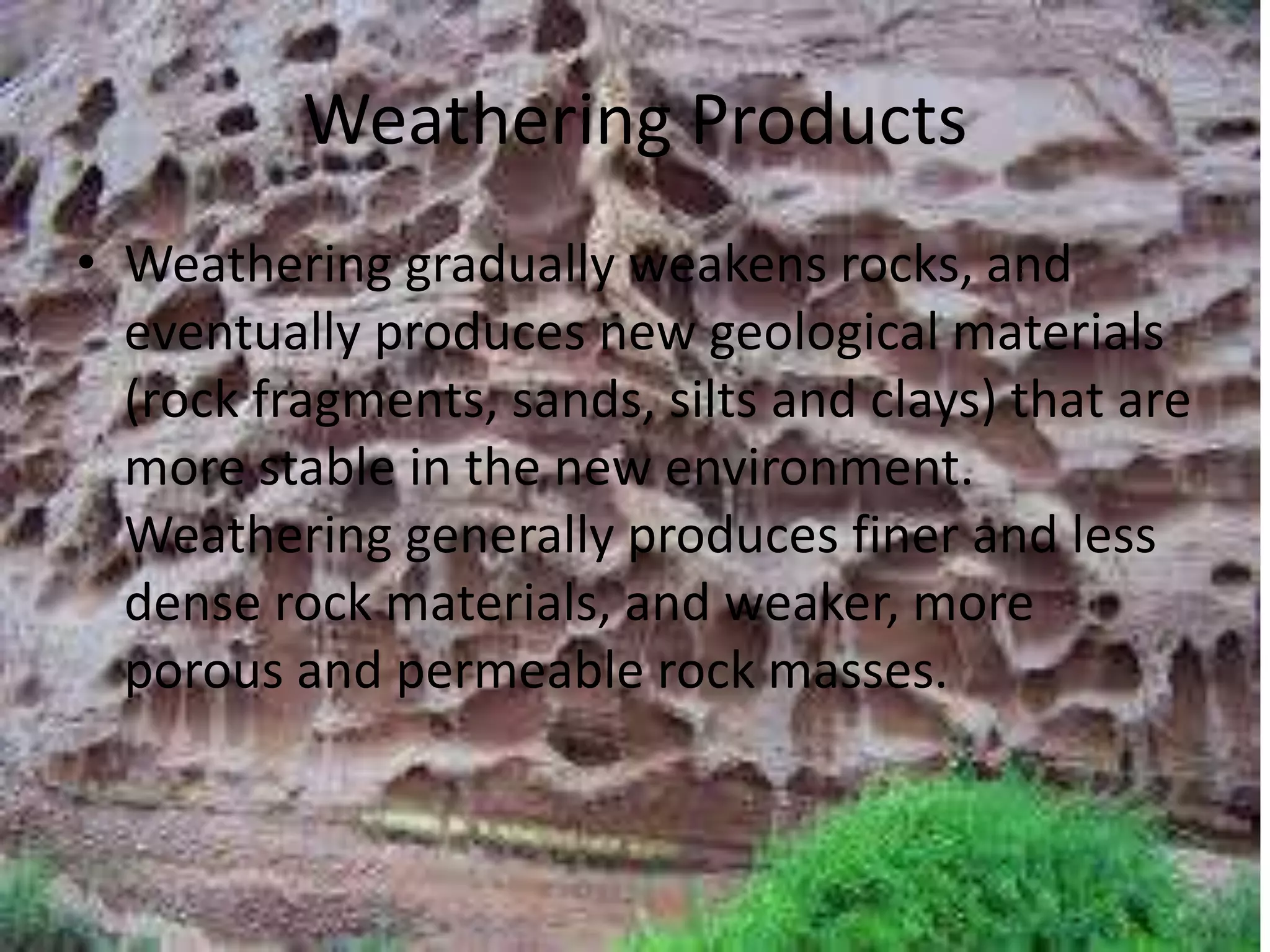
• Weathering gradually weakens rocks, and
eventually produces new geological materials
(rock fragments, sands, silts and clays) that are
more stable in the new environment.
Weathering generally produces finer and less
dense rock materials, and weaker, more
porous and permeable rock masses.
• How does chemical weathering make it easier for a rock to be
mechanically weathered?
• How does mechanical weathering make it easier for a rock to be
chemically weathered?
• How does water chemically weather rocks?
• How does oxygen chemically weather rocks?
•
At a Glance
– Weathering: The breakdown of rocks in situ.
– Erosion : The removal of weathered materials
from the area of weathering
– Types Of Weathering : Physical,Chemical,Biological
– Rate Of Weathering : Nature Of Rocks , Nature
Agents .

Types Of Weathering And Erosion

  • 1.
    • Made By: Khadija Abro VIII-B Beacon house School System References: International Lower secondary Geography Yahoo Answers Google.com.pk Submitted Date: 11/2/15 ( All references are used for Educational purposes only
  • 2.
  • 3.
    Weathering • Weathering actuallyrefers to the general process whereby rocks disintegrate and decompose at or near the Earths surface ( in situ) .
  • 4.
    Types of Weathering •There are three types of weathering. • Physical weathering • Chemical weathering • Biological weathering
  • 5.
    • Types OfPhysical Weathering: • Alternate Expansion and Contraction of Rocks. • Freeze-Thaw Action Of Ice or Frost Shattering. • Release of Pressure within rocks. • Types Of Chemical Weathering: • Oxidation. • Carbonation
  • 6.
    Erosion • Erosion isthe process by which the surface of the Earth gets worn down. We can also define Erosion as the removal of weathered materials by natural agents such as flowing water, winds and sea waves.
  • 7.
    Agents Of Erosion •Sea Waves: Rock Particles and sand carried by waves gradually wear down the rocks to form coastal physical features such as cliffs. • Flowing Water: Where streams and rivers flow across the Earths surface, flowing water causes erosion to take place. • Winds: Wind erosion is dominant in dry areas such as deserts.
  • 8.
  • 9.
  • 10.
    Impacts of Weatheringand Erosion On Human Activities • The impacts of weathering and erosion on humans can be categorized into positive and negative impacts.
  • 11.
    Positive Impacts • Weatheredrock materials are used by people for construction purposes such as the building of homes or the construction of bridges. • Weathering create new and beautiful landforms which often become tourist attractions.
  • 12.
    Negative Impacts • Mildlyacidic rainwater can damage buildings, especially on the limestone commonly used in building construction. • Erosion by wind causes extensive damage to properties and hamper human activities . This is usually seen in arid regions where strong winds carry weathered rock materials and sand to deposit them on farm lands.
  • 13.
    Weathering Products • Weatheringgradually weakens rocks, and eventually produces new geological materials (rock fragments, sands, silts and clays) that are more stable in the new environment. Weathering generally produces finer and less dense rock materials, and weaker, more porous and permeable rock masses.
  • 14.
    • How doeschemical weathering make it easier for a rock to be mechanically weathered? • How does mechanical weathering make it easier for a rock to be chemically weathered? • How does water chemically weather rocks? • How does oxygen chemically weather rocks? •
  • 15.
    At a Glance –Weathering: The breakdown of rocks in situ. – Erosion : The removal of weathered materials from the area of weathering – Types Of Weathering : Physical,Chemical,Biological – Rate Of Weathering : Nature Of Rocks , Nature Agents .