

MAKTAB DULI PENGIRAN MUDA AL-MUHTADEE BILLAH
 River rejuvenation occurs when there is a fall in sea level.

 Current sea level is known as a river's base level.

 This is the theoretical level down to which all rivers can be
  reduced by vertical erosion.

 In reality rivers never reach this theoretical level as the
  height of the land is constantly changing relative to sea
  level and vice versa.

 If sea level falls then the river becomes further away from
  its base level.
 Rejuvenation may result from causes which are dynamic,
  eustatic or isostatic in nature.All of these cause the river
  suddenly to erode its bed vertically (downcutting) faster as it
  gains gravitational potential energy. That causes effects such
  as meanders cut down as gorges, steps where the river
  suddenly starts flowing faster, and fluvial terraces derived
  from old floodplains.
 Eustatic sea level change is a GLOBAL change in sea level,
  linked directly to the temperature of the Earth. In warmer
  periods there is less ice and the water is warmer, so expands
  and sea levels rise. In colder periods the ocean water is colder
  so contracts and sea levels fall.
 When sea levels fall we get raised beaches, abandoned cliffs,
  erosion surfaces      created at the coast, and several
  adjustments made to river valleys.

 These changes to river valleys are attributable to the fact
  that the rivers graded profile is no longer in balance, and the
  gradient of the river at its mouth is now steeper because of
  the fall in sea level. In effect the water has further to fall on
  its journey from source to mouth.

 This means that there is more energy at the mouth and
  vertical erosion (which under normal conditions would occur
  at the river's source) will occur.

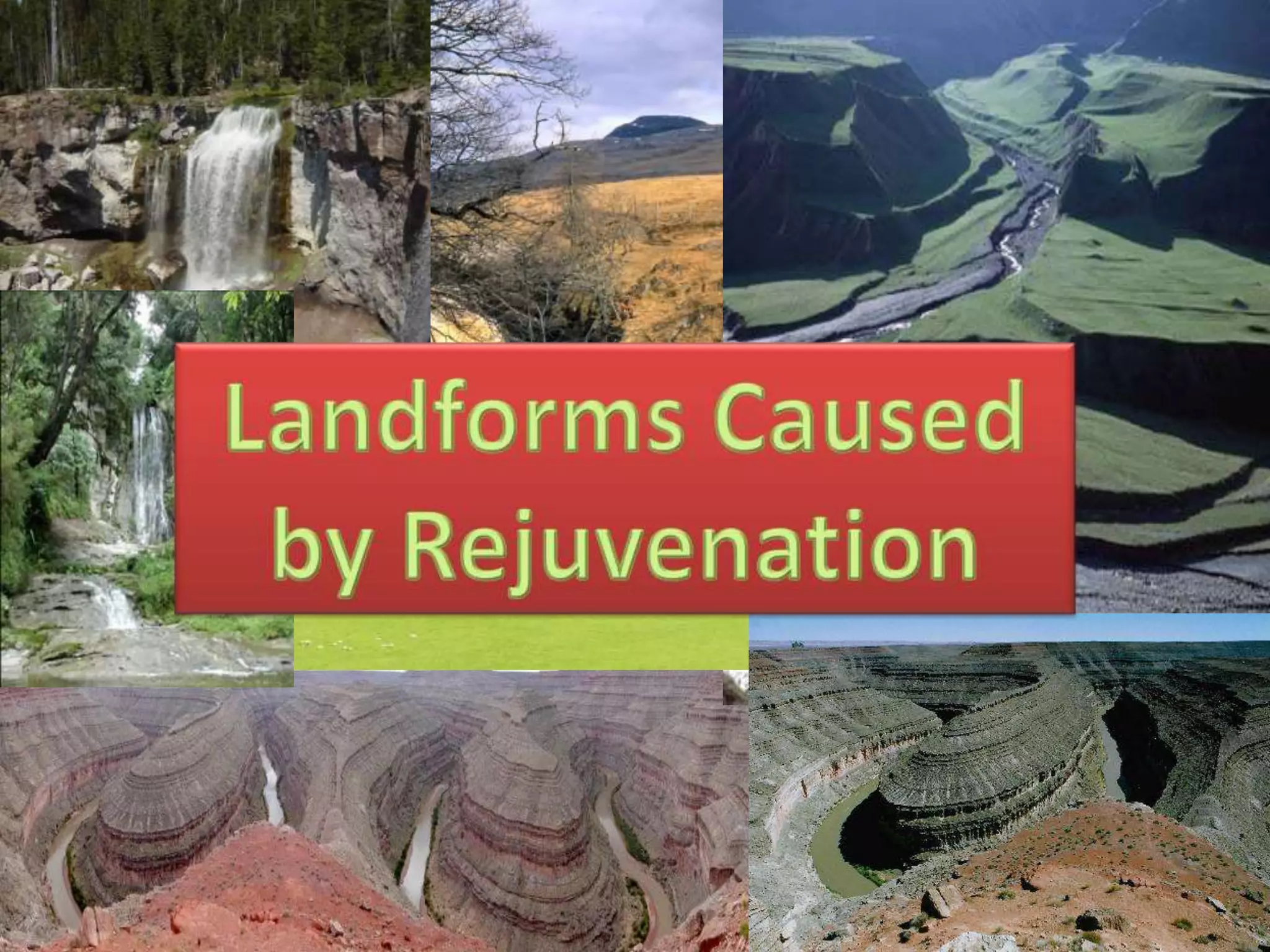
 This leads to the development of knick points, waterfalls,
  river terraces and incised meanders.
• This where the land can rise relative to the sea making it
  appear that sea level has dropped.

• Isostatic changes are local changes where the height of
  the land changes relative to the global sea level.

• An example of this can be found in glaciation. During
  glaciations the weight of ice pushing on the Earth can
  depress the crust, causing the land to fall relative to the
  level of the sea. When the ice goes in warmer periods the
  land rebounds upwards - rising relative to the level of the
  sea.

• This process is also seen in deltas where sediment loading
  depresses the Earth's surface.
Knick Points
 A fall in sea level, either isostatic or eustatic will result in a negative change in
  the base level of rivers and streams.

 This increases the energy of the river to carry out vertical erosion and
  disrupts the graded profile of the river as it attempts to erode down to the
  new base level.

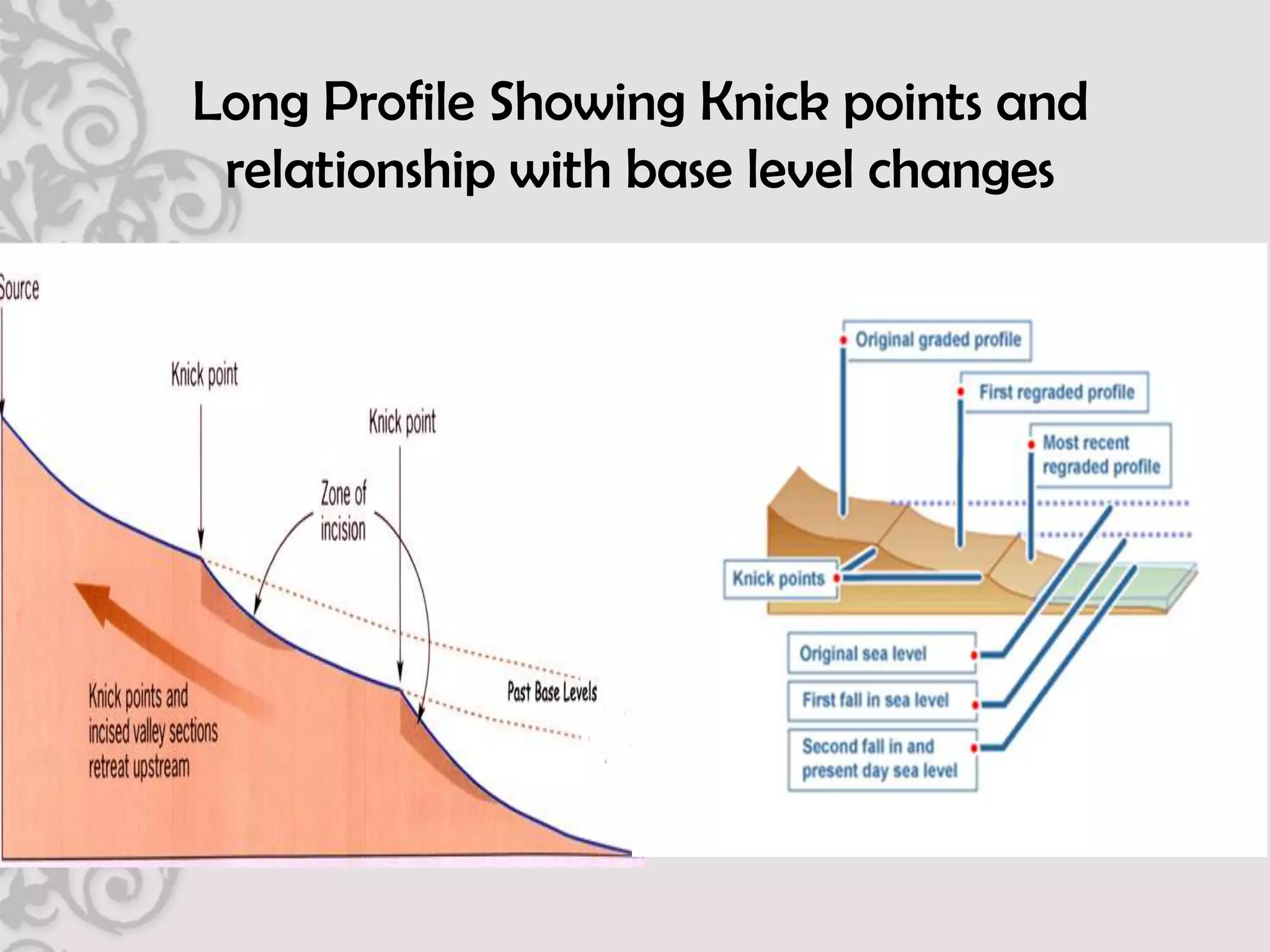
 Knick points appear on a rivers long profile and are, almost, like the steps
  down a river takes to reach the new base level. They relate to the extent to
  which a river has created a new profile in response to the new base level.

 They can be identified by a break in slope and so are often marked by a
  waterfall

 They reflect the process of headward erosion as well as vertical erosion as
  the river has a renewed ability to erode vertically

 Knick points often form waterfalls and, in areas where they form but there is
  no alteration in rock type, they clearly show rejuvenation has occured as
  waterfalls normally form due to differential erosion resulting in undercutting.
Long Profile Showing Knick points and
 relationship with base level changes
River Terraces
A river terrace is a remnant or remains of a past
 floodplain, which is now left at a higher level
 after a river has been rejuvenated.

The process of river rejuvenation gives the
 channel more gravitational potential energy
 which allows more vertical erosion. This allows
 the river to cut its channel down through the
 former floodplain alluvial deposits (sands and
 gravels) and leaves the river surrounded by the
 old floodplain above.
 There are two types of river terraces, paired and unpaired, and they are
  the remains of the former floodplain which has been abandoned because
  the river has eroded too deeply for the floodplain to be accessed. London
  sits on river terraces and by looking at terraces it is possible to work out
  how many relative falls in base level have occurred.

 Paired:
 they are on the same level on each side of the channel and so indicate
  rapid down cutting

 Unpaired:
 occur when the fall in base level is slower
 the terraces will be present on different sides of the channel at different
  levels. This is because lateral erosion, through meander migration (so
  mainly hydraulic action and abrasion), has had time to occur.
River Terraces and Paired Terraces
Incised/Enclosed Meanders
 They are formed when the pattern of the river is maintained as the river
  increases its downcutting. The channel is deeply incised into the soft
  alluvium and even into the solid rock.

 There are two types of incised meanders, ingrown and entrenched and
  they can be found in areas like the Grand Canyon.

 Ingrown meanders:
 form when lateral erosion operates too (therefore indicates a more
  gradual drop in base level) and so the valley floor is deepened which
  means that the channel only occupies part of it.
 they have an asymmetrical cross section

 Entrenched meanders:
 created, purely, by vertical erosion (their presense indicates a rapid fall in
  base level) and often form in hard rock areas.
 they are deep cut and gorge like they have a symmetrical cross section
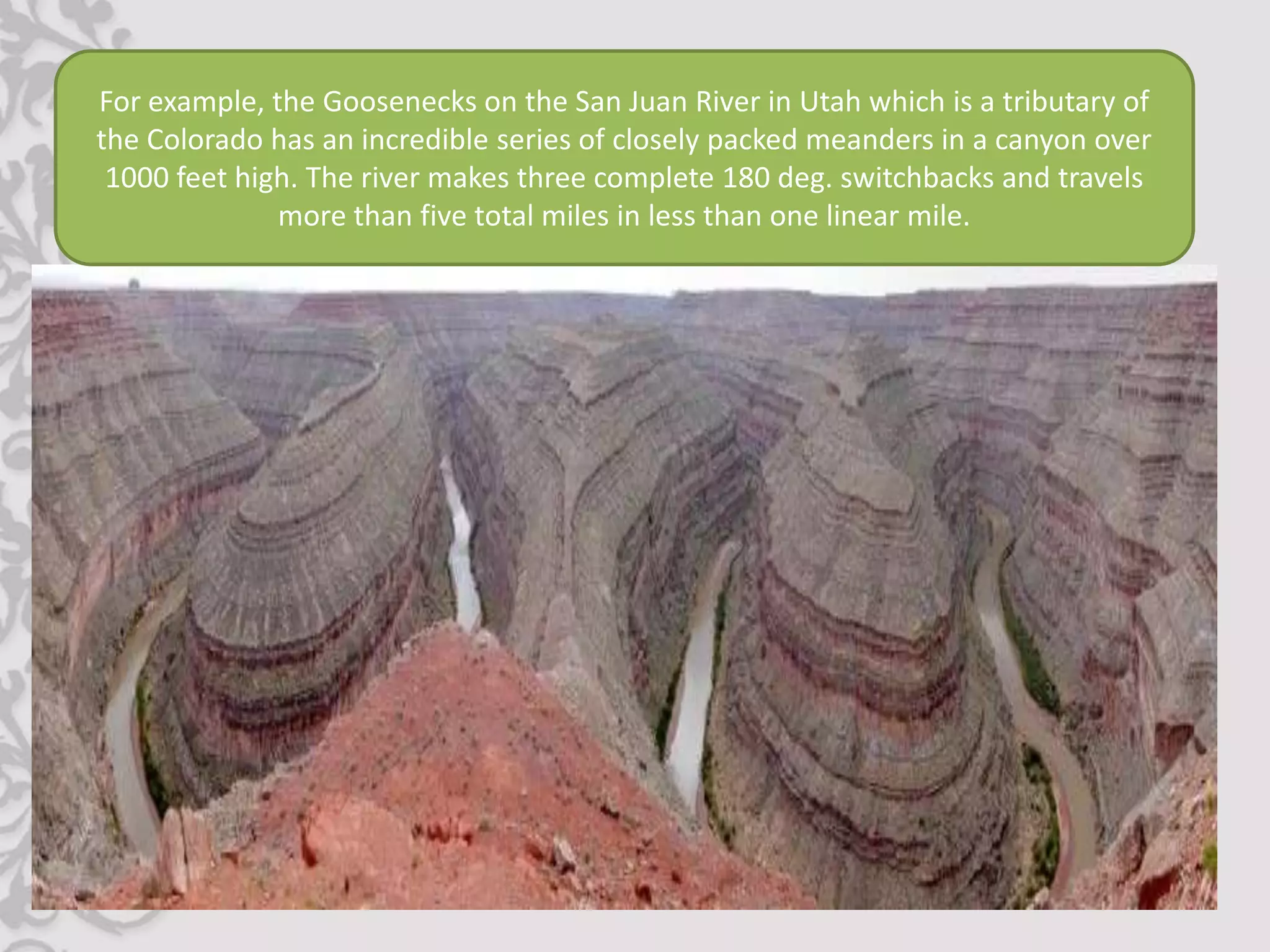
For example, the Goosenecks on the San Juan River in Utah which is a tributary of
the Colorado has an incredible series of closely packed meanders in a canyon over
 1000 feet high. The river makes three complete 180 deg. switchbacks and travels
              more than five total miles in less than one linear mile.
THANK YOU!

River Rejuvination

  • 1.
    MAKTAB DULI PENGIRANMUDA AL-MUHTADEE BILLAH
  • 2.
     River rejuvenationoccurs when there is a fall in sea level.  Current sea level is known as a river's base level.  This is the theoretical level down to which all rivers can be reduced by vertical erosion.  In reality rivers never reach this theoretical level as the height of the land is constantly changing relative to sea level and vice versa.  If sea level falls then the river becomes further away from its base level.
  • 3.
     Rejuvenation mayresult from causes which are dynamic, eustatic or isostatic in nature.All of these cause the river suddenly to erode its bed vertically (downcutting) faster as it gains gravitational potential energy. That causes effects such as meanders cut down as gorges, steps where the river suddenly starts flowing faster, and fluvial terraces derived from old floodplains.
  • 5.
     Eustatic sealevel change is a GLOBAL change in sea level, linked directly to the temperature of the Earth. In warmer periods there is less ice and the water is warmer, so expands and sea levels rise. In colder periods the ocean water is colder so contracts and sea levels fall.
  • 6.
     When sealevels fall we get raised beaches, abandoned cliffs, erosion surfaces created at the coast, and several adjustments made to river valleys.  These changes to river valleys are attributable to the fact that the rivers graded profile is no longer in balance, and the gradient of the river at its mouth is now steeper because of the fall in sea level. In effect the water has further to fall on its journey from source to mouth.  This means that there is more energy at the mouth and vertical erosion (which under normal conditions would occur at the river's source) will occur.  This leads to the development of knick points, waterfalls, river terraces and incised meanders.
  • 7.
    • This wherethe land can rise relative to the sea making it appear that sea level has dropped. • Isostatic changes are local changes where the height of the land changes relative to the global sea level. • An example of this can be found in glaciation. During glaciations the weight of ice pushing on the Earth can depress the crust, causing the land to fall relative to the level of the sea. When the ice goes in warmer periods the land rebounds upwards - rising relative to the level of the sea. • This process is also seen in deltas where sediment loading depresses the Earth's surface.
  • 10.
    Knick Points  Afall in sea level, either isostatic or eustatic will result in a negative change in the base level of rivers and streams.  This increases the energy of the river to carry out vertical erosion and disrupts the graded profile of the river as it attempts to erode down to the new base level.  Knick points appear on a rivers long profile and are, almost, like the steps down a river takes to reach the new base level. They relate to the extent to which a river has created a new profile in response to the new base level.  They can be identified by a break in slope and so are often marked by a waterfall  They reflect the process of headward erosion as well as vertical erosion as the river has a renewed ability to erode vertically  Knick points often form waterfalls and, in areas where they form but there is no alteration in rock type, they clearly show rejuvenation has occured as waterfalls normally form due to differential erosion resulting in undercutting.
  • 11.
    Long Profile ShowingKnick points and relationship with base level changes
  • 12.
    River Terraces A riverterrace is a remnant or remains of a past floodplain, which is now left at a higher level after a river has been rejuvenated. The process of river rejuvenation gives the channel more gravitational potential energy which allows more vertical erosion. This allows the river to cut its channel down through the former floodplain alluvial deposits (sands and gravels) and leaves the river surrounded by the old floodplain above.
  • 13.
     There aretwo types of river terraces, paired and unpaired, and they are the remains of the former floodplain which has been abandoned because the river has eroded too deeply for the floodplain to be accessed. London sits on river terraces and by looking at terraces it is possible to work out how many relative falls in base level have occurred.  Paired:  they are on the same level on each side of the channel and so indicate rapid down cutting  Unpaired:  occur when the fall in base level is slower  the terraces will be present on different sides of the channel at different levels. This is because lateral erosion, through meander migration (so mainly hydraulic action and abrasion), has had time to occur.
  • 14.
    River Terraces andPaired Terraces
  • 15.
    Incised/Enclosed Meanders  Theyare formed when the pattern of the river is maintained as the river increases its downcutting. The channel is deeply incised into the soft alluvium and even into the solid rock.  There are two types of incised meanders, ingrown and entrenched and they can be found in areas like the Grand Canyon.  Ingrown meanders:  form when lateral erosion operates too (therefore indicates a more gradual drop in base level) and so the valley floor is deepened which means that the channel only occupies part of it.  they have an asymmetrical cross section  Entrenched meanders:  created, purely, by vertical erosion (their presense indicates a rapid fall in base level) and often form in hard rock areas.  they are deep cut and gorge like they have a symmetrical cross section
  • 16.
    For example, theGoosenecks on the San Juan River in Utah which is a tributary of the Colorado has an incredible series of closely packed meanders in a canyon over 1000 feet high. The river makes three complete 180 deg. switchbacks and travels more than five total miles in less than one linear mile.
  • 17.