Weathering
Miss Johnstone’s Expectations
 Arriving and leaving the classroom
 Presentation
 Underline your titles
 Always put the date
 Draw in pencil
 Draw a line under previous lessons work and carry on
Learning Objectives
 To be able to define weathering.
 To be able to identify the three different types
of weathering.
 To be able to explain the three types of
weathering.
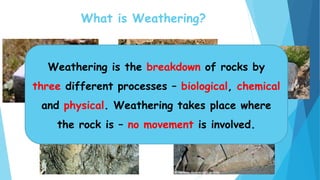
What is Weathering?
Weathering is the breakdown of rocks by
three different processes – biological, chemical
and physical. Weathering takes place where
the rock is – no movement is involved.
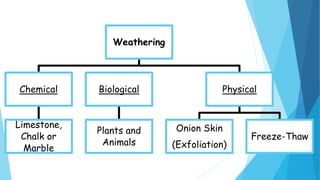
Weathering
Chemical
Limestone,
Chalk or
Marble
Biological
Plants and
Animals
Physical
Onion Skin
(Exfoliation)
Freeze-Thaw
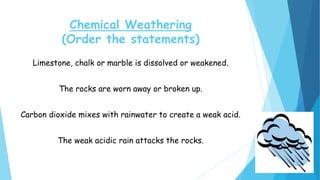
Chemical Weathering
(Order the statements)
Limestone, chalk or marble is dissolved or weakened.
The rocks are worn away or broken up.
Carbon dioxide mixes with rainwater to create a weak acid.
The weak acidic rain attacks the rocks.
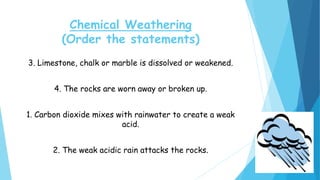
Chemical Weathering
(Order the statements)
3. Limestone, chalk or marble is dissolved or weakened.
4. The rocks are worn away or broken up.
1. Carbon dioxide mixes with rainwater to create a weak
acid.
2. The weak acidic rain attacks the rocks.
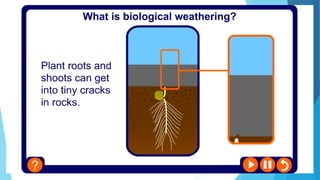
Biological Weathering - Animals
Biological Weathering
(Order the Statements)
Animals dig under the rocks.
Rocks collapse or fall apart.
Rocks are undercut and cracks are widened.
Plants grow into cracks in the rocks.
Rocks loosened and broken up.
Biological Weathering
(Order the Statements)
2. Animals dig under the rocks.
5. Rocks collapse or fall apart.
3. Rocks are undercut and cracks are widened.
1. Plants grow into cracks in the rocks.
4. Rocks loosened and broken up.
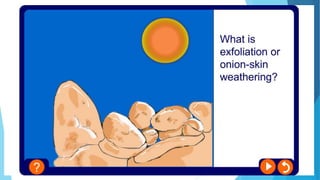
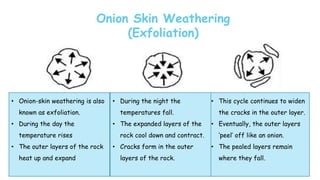
Onion Skin Weathering
(Exfoliation)
• Onion-skin weathering is also
known as exfoliation.
• During the day the
temperature rises
• The outer layers of the rock
heat up and expand
• This cycle continues to widen
the cracks in the outer layer.
• Eventually, the outer layers
‘peel’ off like an onion.
• The pealed layers remain
where they fall.
• During the night the
temperatures fall.
• The expanded layers of the
rock cool down and contract.
• Cracks form in the outer
layers of the rock.
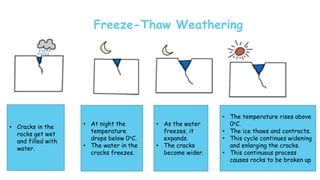
Freeze-Thaw Weathering
• Cracks in the
rocks get wet
and filled with
water.
• At night the
temperature
drops below 0oC.
• The water in the
cracks freezes.
• As the water
freezes, it
expands.
• The cracks
become wider.
• The temperature rises above
0oC.
• The ice thaws and contracts.
• This cycle continues widening
and enlarging the cracks.
• This continuous process
causes rocks to be broken up
For both chemical and physical
weathering
(You can leave biological)
1. At what temperature and
rainfall levels does the
strongest chemical or physical
weathering occur?
2. Suggest a country where this
might be, i.e. the Sahara
Desert will have very strong
onion skin weathering.
Due: Tuesday 3rd February
Weathering
Weathering

Weathering

  • 1.
  • 2.
    Miss Johnstone’s Expectations Arriving and leaving the classroom  Presentation  Underline your titles  Always put the date  Draw in pencil  Draw a line under previous lessons work and carry on
  • 3.
    Learning Objectives  Tobe able to define weathering.  To be able to identify the three different types of weathering.  To be able to explain the three types of weathering.
  • 4.
    What is Weathering? Weatheringis the breakdown of rocks by three different processes – biological, chemical and physical. Weathering takes place where the rock is – no movement is involved.
  • 5.
  • 7.
    Chemical Weathering (Order thestatements) Limestone, chalk or marble is dissolved or weakened. The rocks are worn away or broken up. Carbon dioxide mixes with rainwater to create a weak acid. The weak acidic rain attacks the rocks.
  • 8.
    Chemical Weathering (Order thestatements) 3. Limestone, chalk or marble is dissolved or weakened. 4. The rocks are worn away or broken up. 1. Carbon dioxide mixes with rainwater to create a weak acid. 2. The weak acidic rain attacks the rocks.
  • 10.
  • 11.
    Biological Weathering (Order theStatements) Animals dig under the rocks. Rocks collapse or fall apart. Rocks are undercut and cracks are widened. Plants grow into cracks in the rocks. Rocks loosened and broken up.
  • 12.
    Biological Weathering (Order theStatements) 2. Animals dig under the rocks. 5. Rocks collapse or fall apart. 3. Rocks are undercut and cracks are widened. 1. Plants grow into cracks in the rocks. 4. Rocks loosened and broken up.
  • 14.
    Onion Skin Weathering (Exfoliation) •Onion-skin weathering is also known as exfoliation. • During the day the temperature rises • The outer layers of the rock heat up and expand • This cycle continues to widen the cracks in the outer layer. • Eventually, the outer layers ‘peel’ off like an onion. • The pealed layers remain where they fall. • During the night the temperatures fall. • The expanded layers of the rock cool down and contract. • Cracks form in the outer layers of the rock.
  • 16.
    Freeze-Thaw Weathering • Cracksin the rocks get wet and filled with water. • At night the temperature drops below 0oC. • The water in the cracks freezes. • As the water freezes, it expands. • The cracks become wider. • The temperature rises above 0oC. • The ice thaws and contracts. • This cycle continues widening and enlarging the cracks. • This continuous process causes rocks to be broken up
  • 17.
    For both chemicaland physical weathering (You can leave biological) 1. At what temperature and rainfall levels does the strongest chemical or physical weathering occur? 2. Suggest a country where this might be, i.e. the Sahara Desert will have very strong onion skin weathering. Due: Tuesday 3rd February