
Daisy Mae A. Valeroso
Wave
 In deep water, wave is a forward
motion of energy, not water.
Water does not move with the

wave.
Wave
 The most common cause of the wave is

wind.
 The wind is the forward movement of
oceans water due to the oscillation of
water particles by the frictional drag of
wind over the water’s surface.
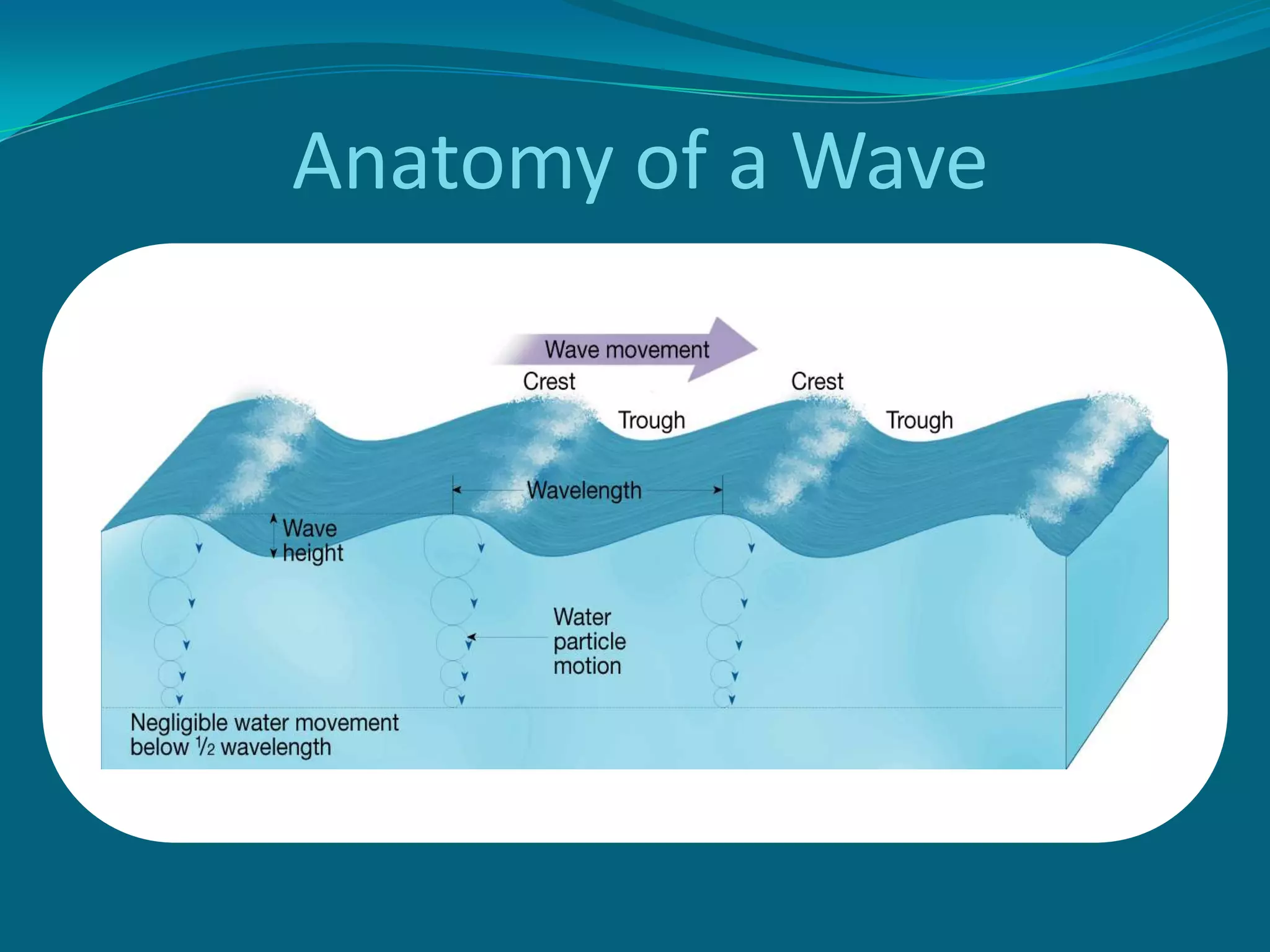
Anatomy of a Wave
Wave Parts:
 crest- highest point
 trough- valley between two waves,

lowest point
Wave Characteristics:
 Most ocean waves obtain their energy and

motion from the wind.
 The wave height is the vertical distance
between the trough and crest.
 The wavelength is the horizontal distance
between two successive crests or two
successive troughs.
Wave Characteristics:
• The wave period is the time it takes one full

wave—one wavelength—to pass a fixed position.
• Fetch is the distance that the wind has traveled
across open water.
• The height, length, and period that are eventually
achieved by a wave depend on three factors: wind
speed, length of time the wind has blown, and
fetch.
Wave Motion
 Circular orbital motion allows energy

to move forward through the water
while the individual water particles
that transmit the wave move around
in a circle.
Breaking Waves
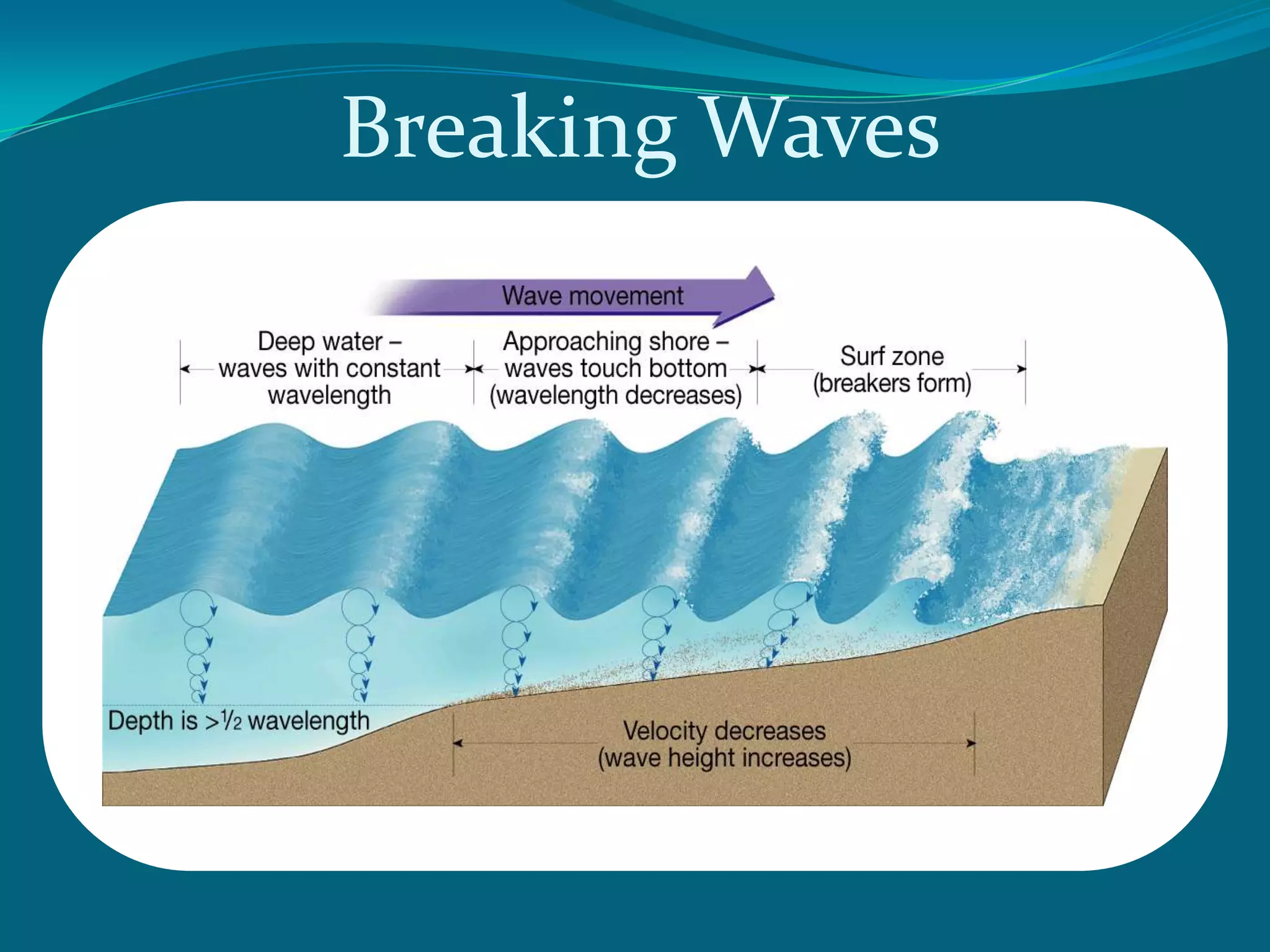
 Changes occur as a wave moves onto shore.
 As the waves touch bottom, wave speed

decreases. The decrease in wave speed
results in a decrease in wavelength and an
increase in wave height.
Breaking Waves
Waves
 Wave trains are waves travel in groups.
 Wake is a small wave trains caused by a

boat’s movement .
 Tidal waves and tsunami are caused by
undersea earthquakes or sharp motions in
the seafloor.
 Swells are regular patterns of smooth
rounded waves in the open sea.
Thank You
for Watching.

WAVES

  • 1.
    Daisy Mae A.Valeroso
  • 2.
    Wave  In deepwater, wave is a forward motion of energy, not water. Water does not move with the wave.
  • 3.
    Wave  The mostcommon cause of the wave is wind.  The wind is the forward movement of oceans water due to the oscillation of water particles by the frictional drag of wind over the water’s surface.
  • 4.
  • 5.
    Wave Parts:  crest-highest point  trough- valley between two waves, lowest point
  • 6.
    Wave Characteristics:  Mostocean waves obtain their energy and motion from the wind.  The wave height is the vertical distance between the trough and crest.  The wavelength is the horizontal distance between two successive crests or two successive troughs.
  • 7.
    Wave Characteristics: • Thewave period is the time it takes one full wave—one wavelength—to pass a fixed position. • Fetch is the distance that the wind has traveled across open water. • The height, length, and period that are eventually achieved by a wave depend on three factors: wind speed, length of time the wind has blown, and fetch.
  • 8.
    Wave Motion  Circularorbital motion allows energy to move forward through the water while the individual water particles that transmit the wave move around in a circle.
  • 9.
    Breaking Waves  Changesoccur as a wave moves onto shore.  As the waves touch bottom, wave speed decreases. The decrease in wave speed results in a decrease in wavelength and an increase in wave height.
  • 10.
  • 11.
    Waves  Wave trainsare waves travel in groups.  Wake is a small wave trains caused by a boat’s movement .  Tidal waves and tsunami are caused by undersea earthquakes or sharp motions in the seafloor.  Swells are regular patterns of smooth rounded waves in the open sea.
  • 12.