
Submitted by
vivek mishra
1009020110
Most industrial processes require that certain variables such as flow,
  temperature, level or pressure should remain at or near some reference value,
  called SET POINT. The device that serves to maintain a process variable value
  at the set point is called a CONTROLLER.
  A Controller is a device that receives data from a measurement instrument,
  compares that data to a programmed set point, and, if necessary, signals a
  control element to take corrective action.
   Controllers may perform complex mathematical functions to compare
  Activities a set of data to setpoint or they may perform simple addition or
  subtraction functions to make comparisons. Controllers always have an ability
  to receive input, to perform a mathematical function with the input, and to
  produce an output signal.
 Controllersterminology
 Types of controllers & differences
 problems
 Process controls
 Self-powered controls
 Pneumatic and electro-mechanical controls
 Electronic controls
 Direct digital control (DDC)
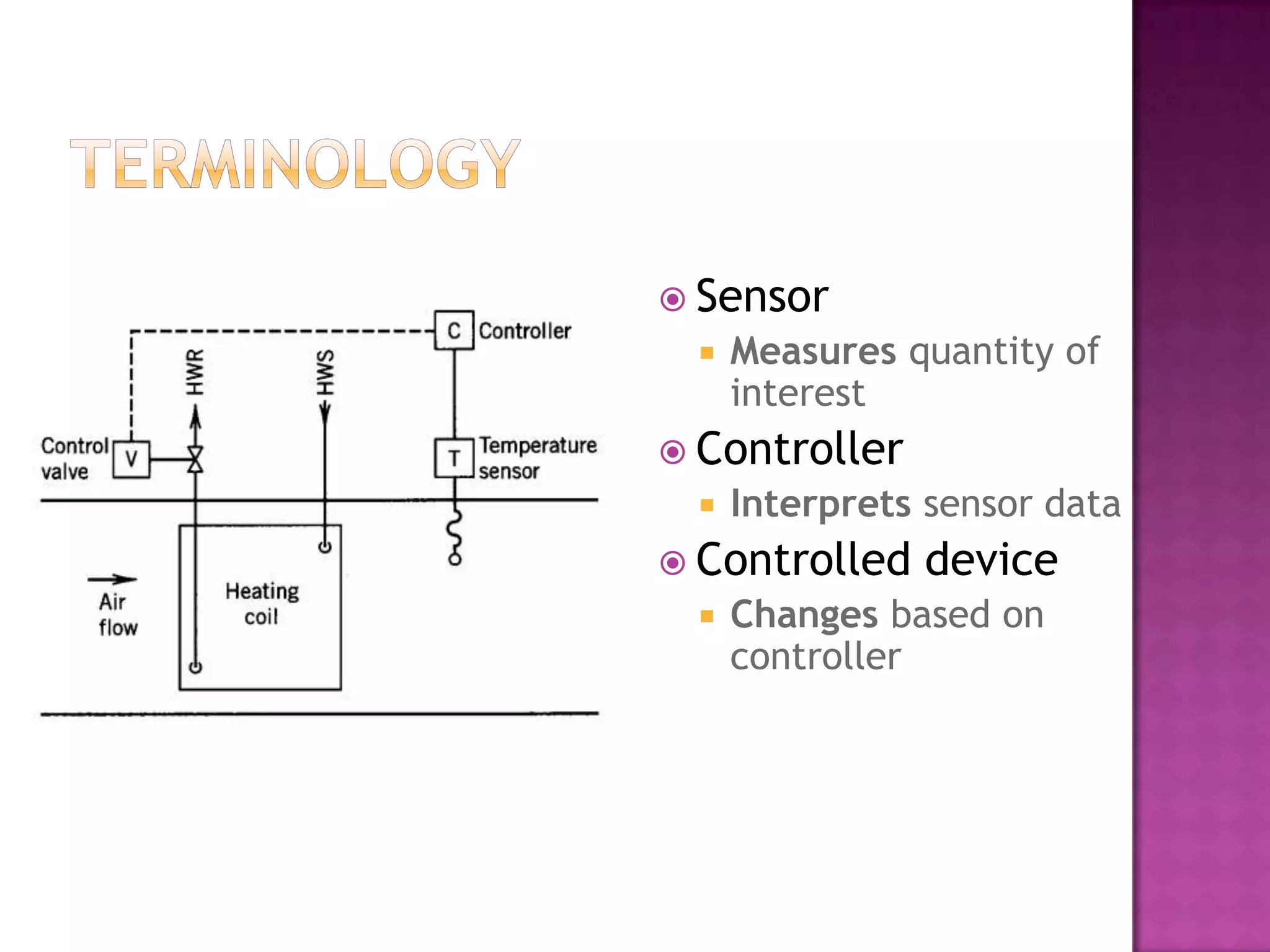
 Sensor
    Measures quantity of
     interest
 Controller
    Interprets sensor data
 Controlled   device
    Changes based on
     controller
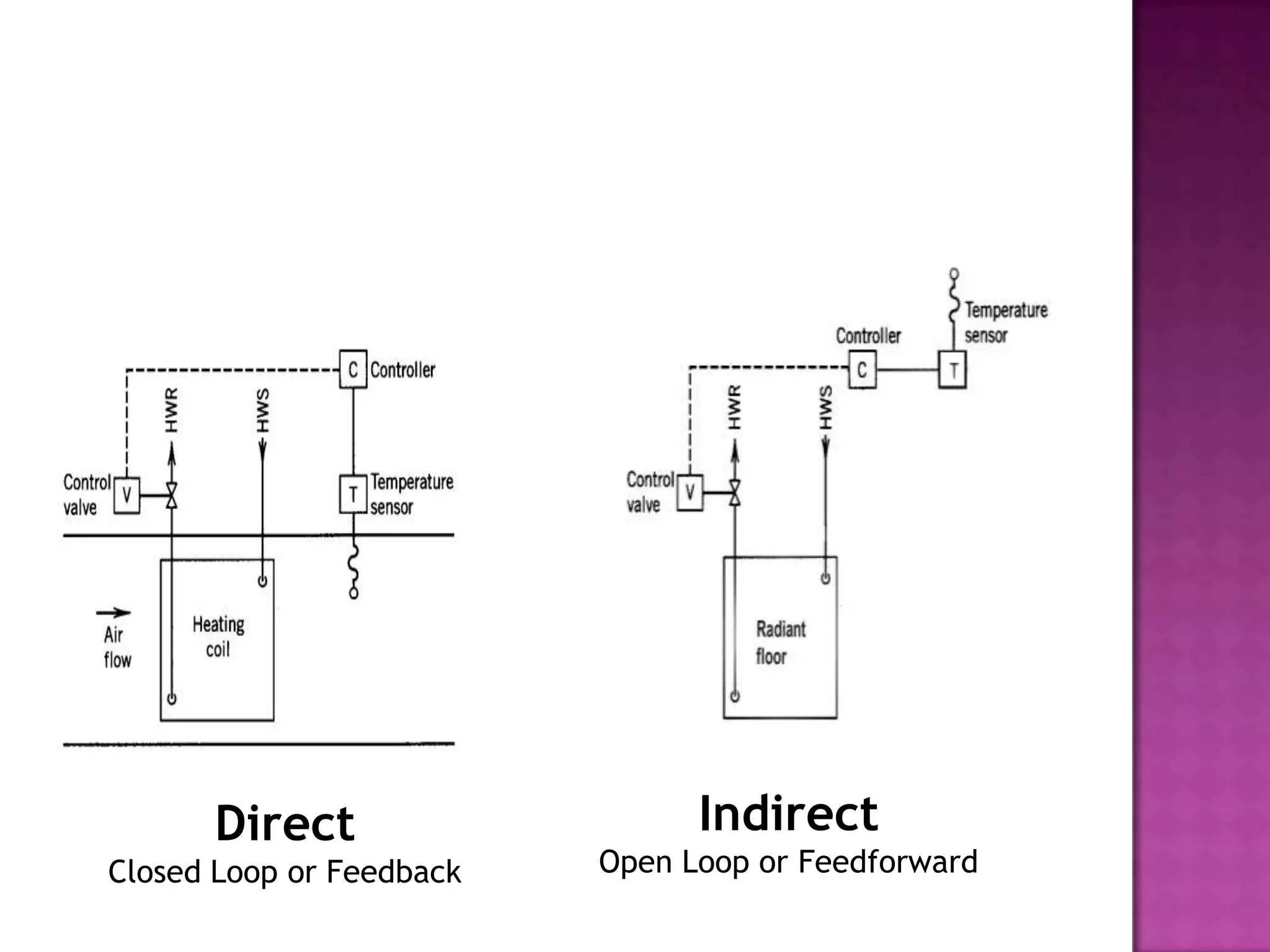
Direct                    Indirect
Closed Loop or Feedback   Open Loop or Feedforward
 Process  control is
 a statistics and engineering discipline that
 deals
 with architectures, mechanisms and algorith
 ms for maintaining the output of a
 specific process within a desired range
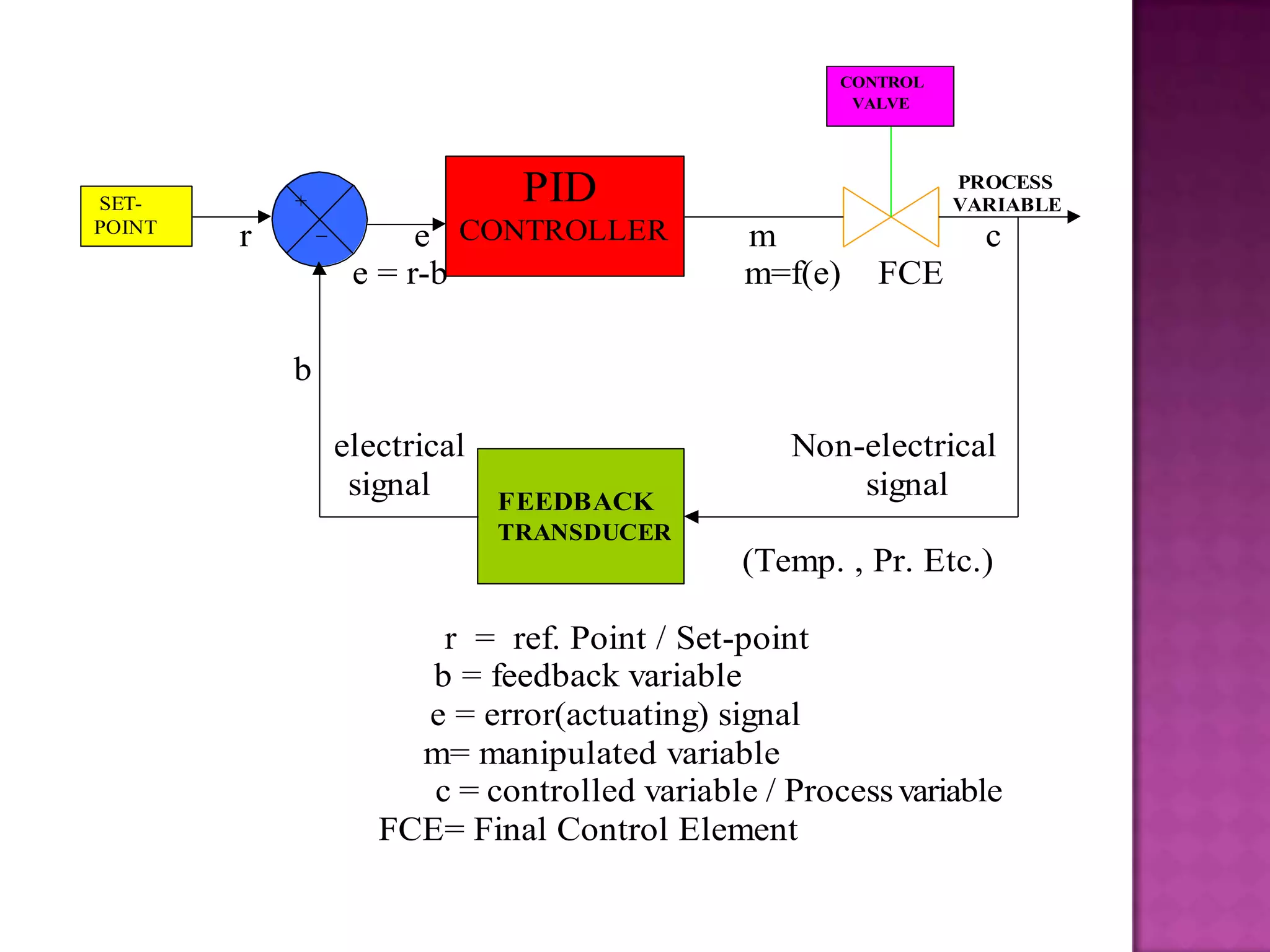
CONTROL
                                                         VALVE


SET-        +                     PID                             PROCESS
                                                                  VARIABLE
                _
POINT
        r                 e CONTROLLER           m                  c
                     e = r-b                     m=f(e)    FCE

            b

                    electrical                      Non-electrical
                     signal      FEEDBACK
                                                        signal
                                 TRANSDUCER
                                                 (Temp. , Pr. Etc.)

                           r = ref. Point / Set-point
                          b = feedback variable
                         e = error(actuating) signal
                         m= manipulated variable
                          c = controlled variable / Process variable
                       FCE= Final Control Element
 Set   Point
    Desired sensor value
 Control   Point
    Current sensor value
 Error   or Offset
    Difference between control point and set point
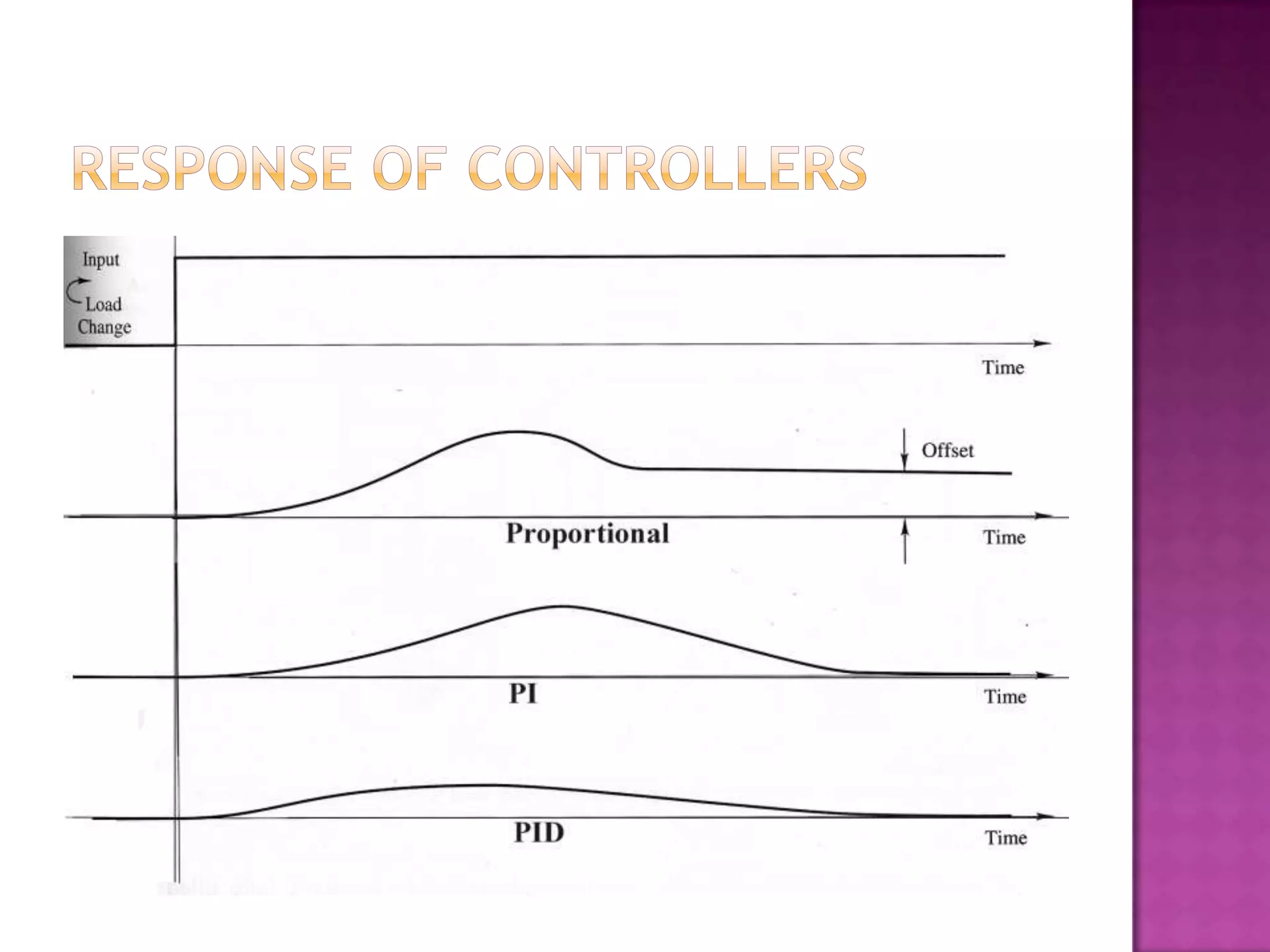
 mainly   three types
     Proportional
     PI
     PID
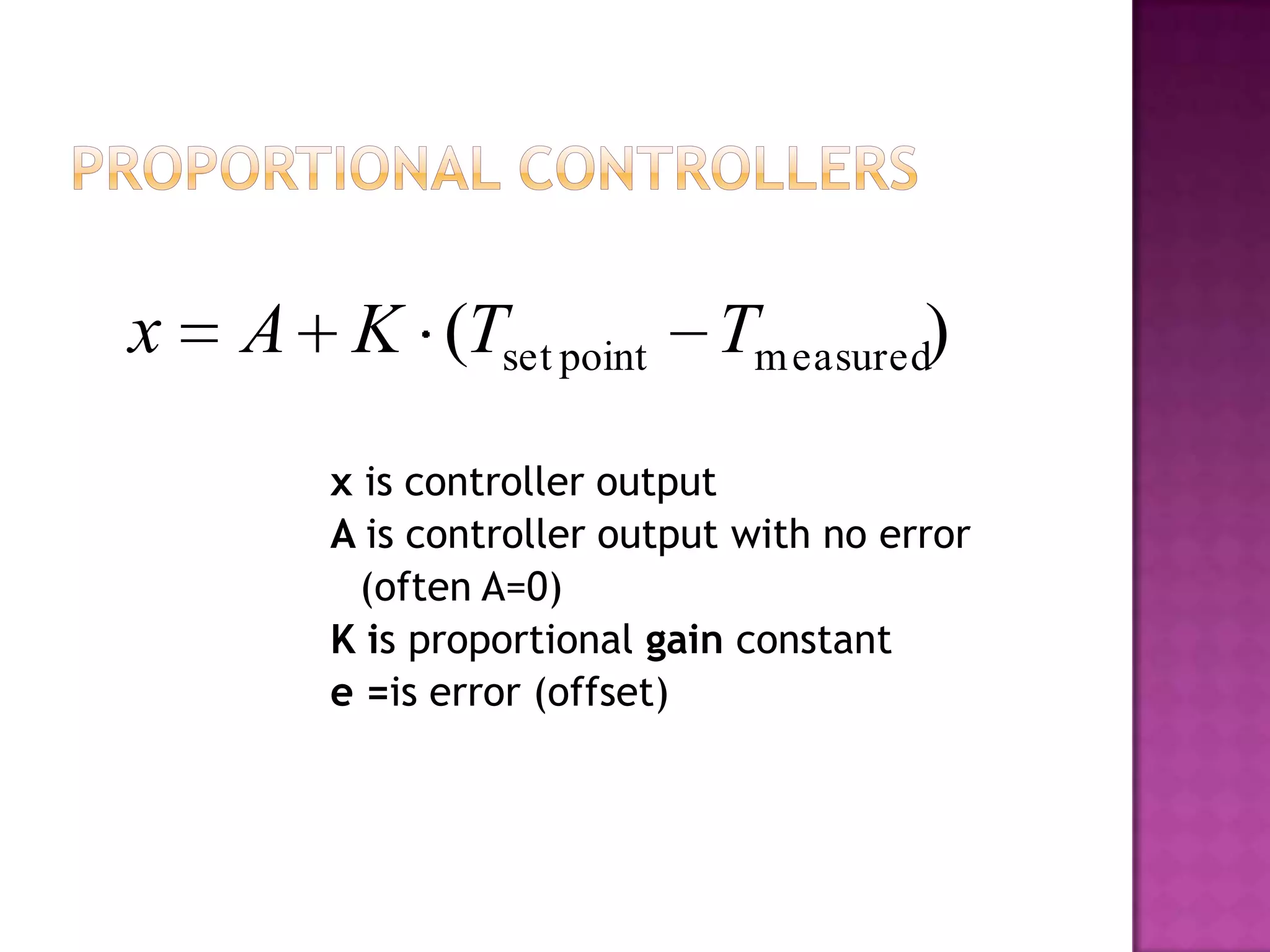
x   A K (Tset point Tm easured)

       x is controller output
       A is controller output with no error
         (often A=0)
       K is proportional gain constant
       e =is error (offset)
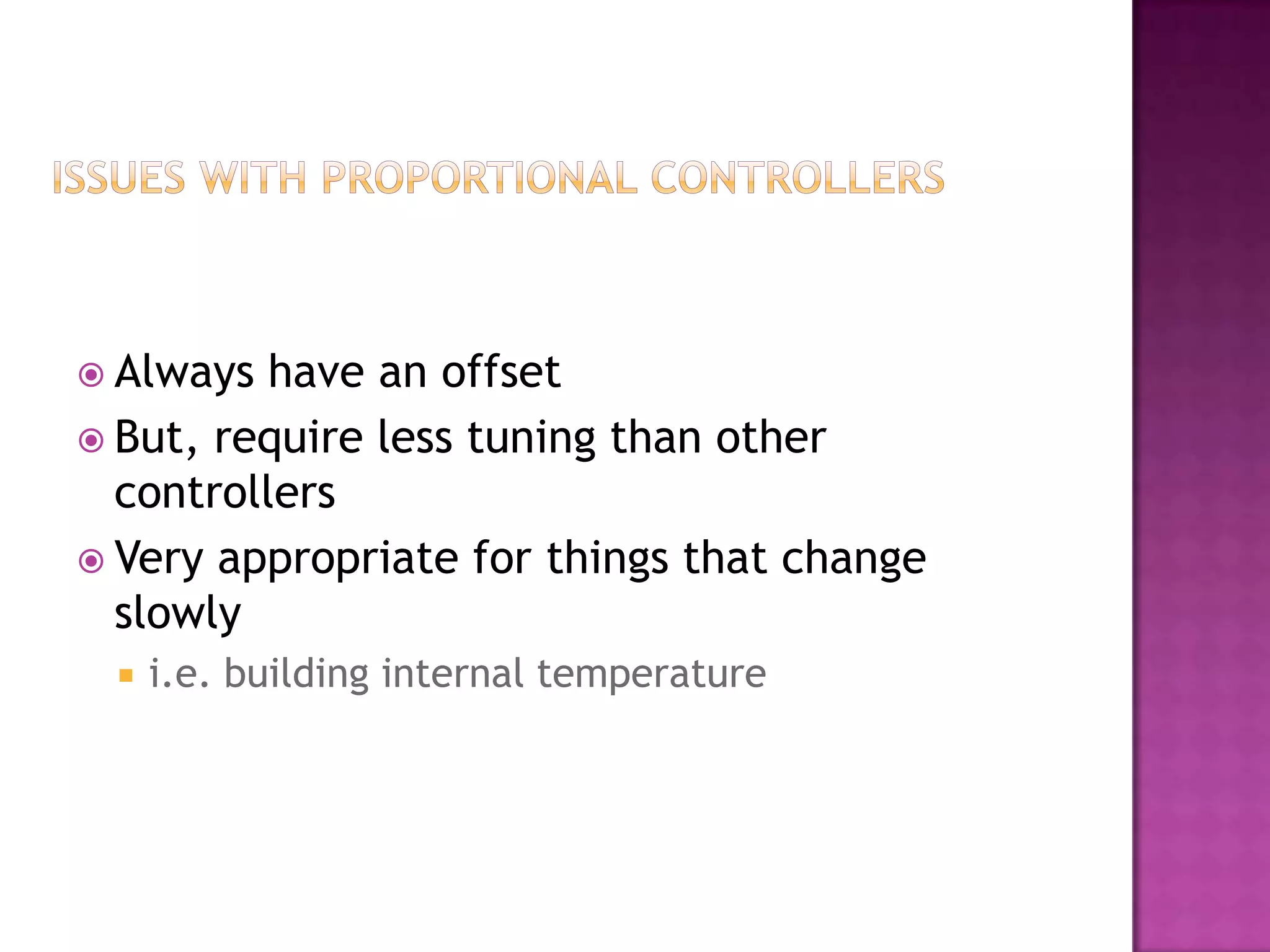
 Always  have an offset
 But, require less tuning than other
  controllers
 Very appropriate for things that change
  slowly
    i.e. building internal temperature
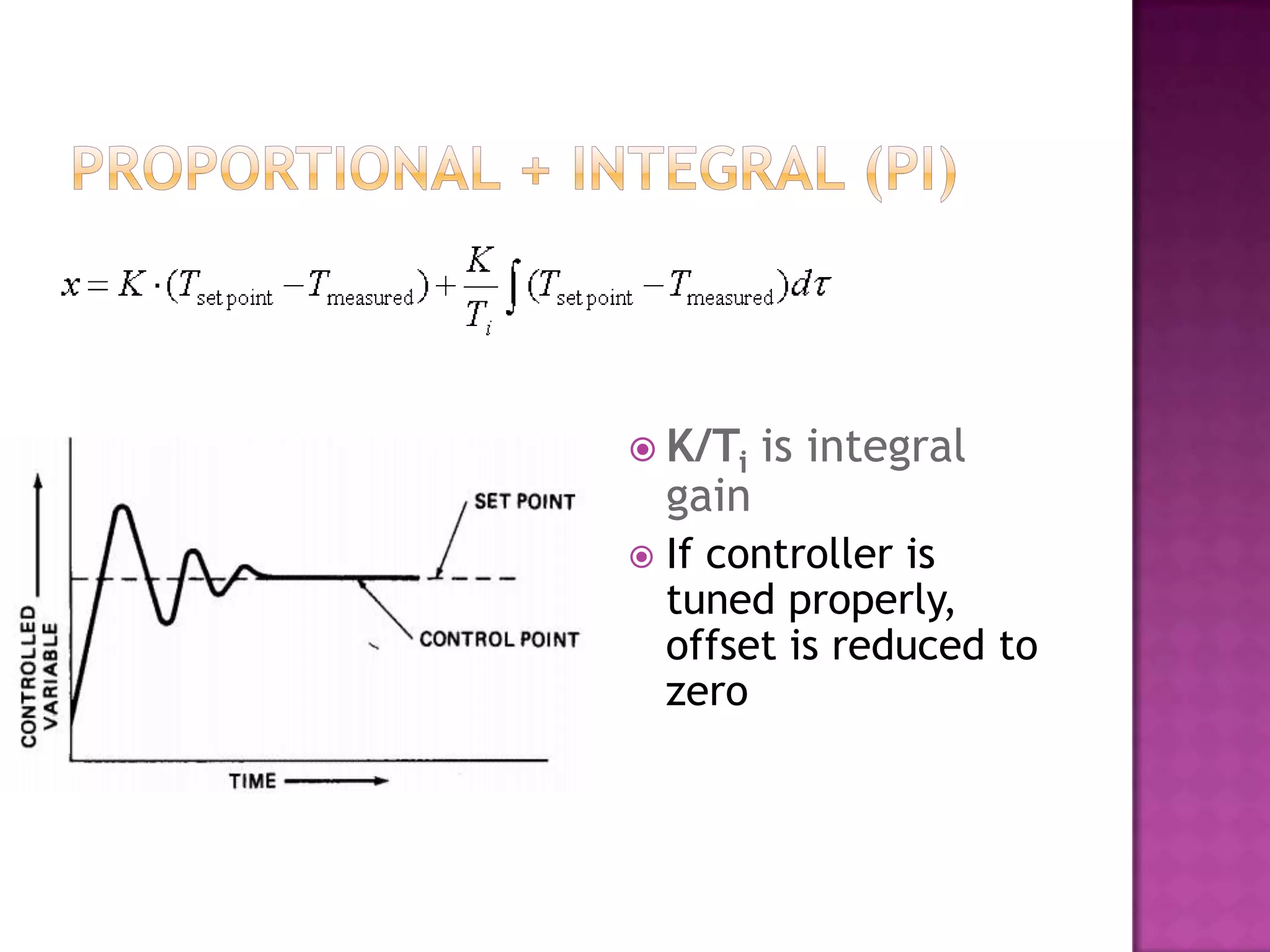
 K/Ti     is integral
    gain
   If controller is
    tuned properly,
    offset is reduced to
    zero
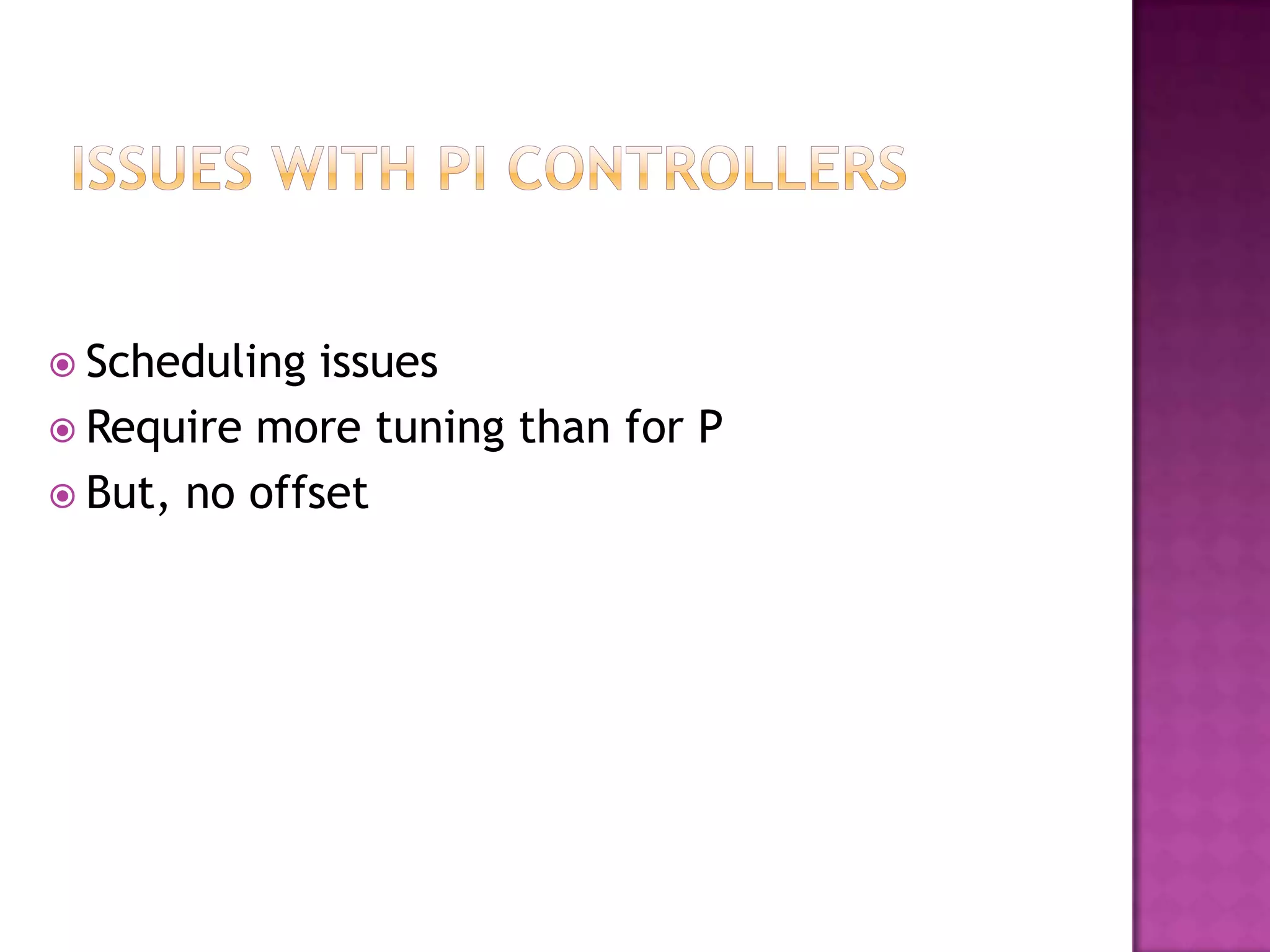
 Scheduling  issues
 Require more tuning than for P
 But, no offset
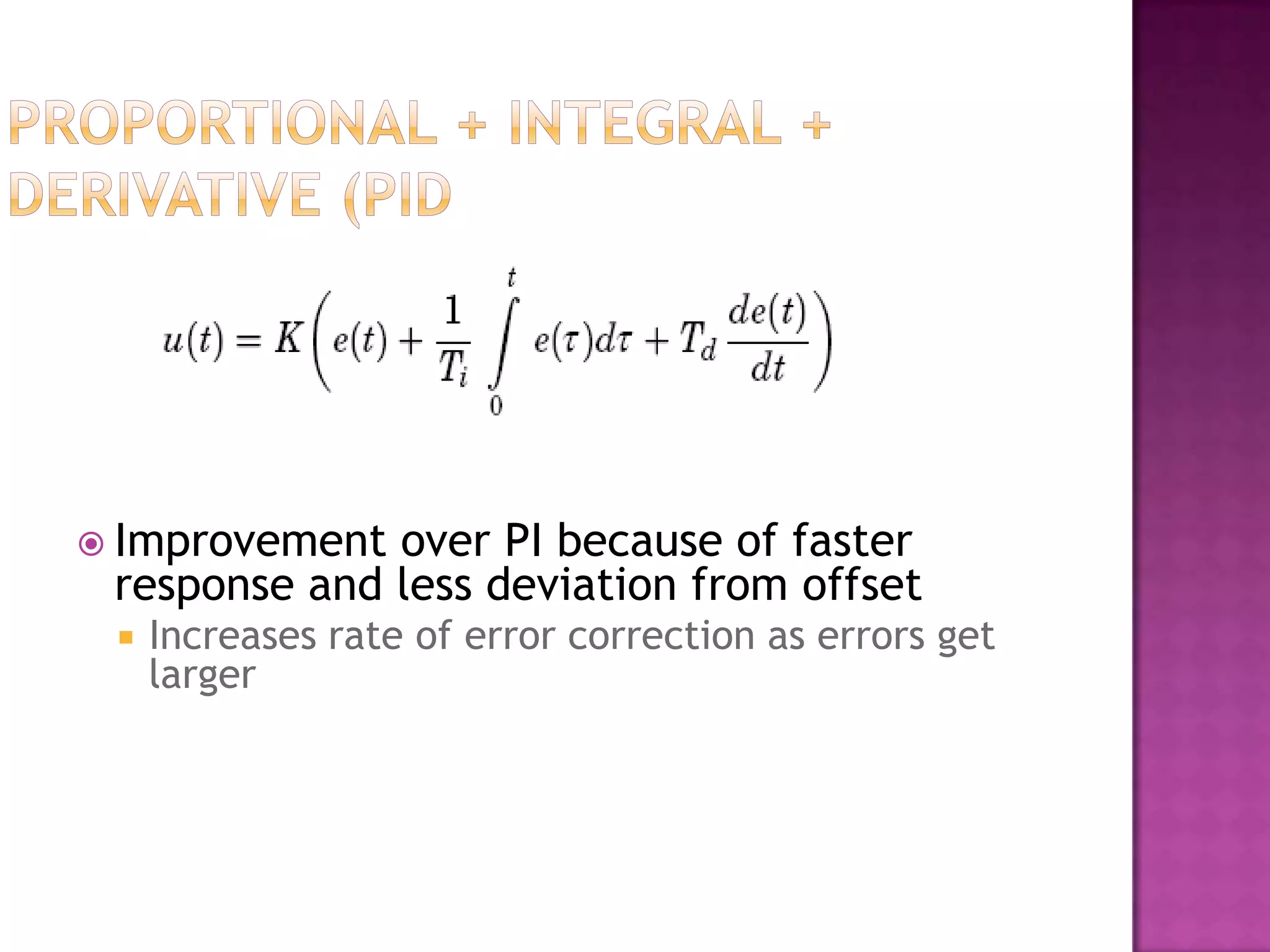
 Improvement over PI because of faster
 response and less deviation from offset
    Increases rate of error correction as errors get
     larger
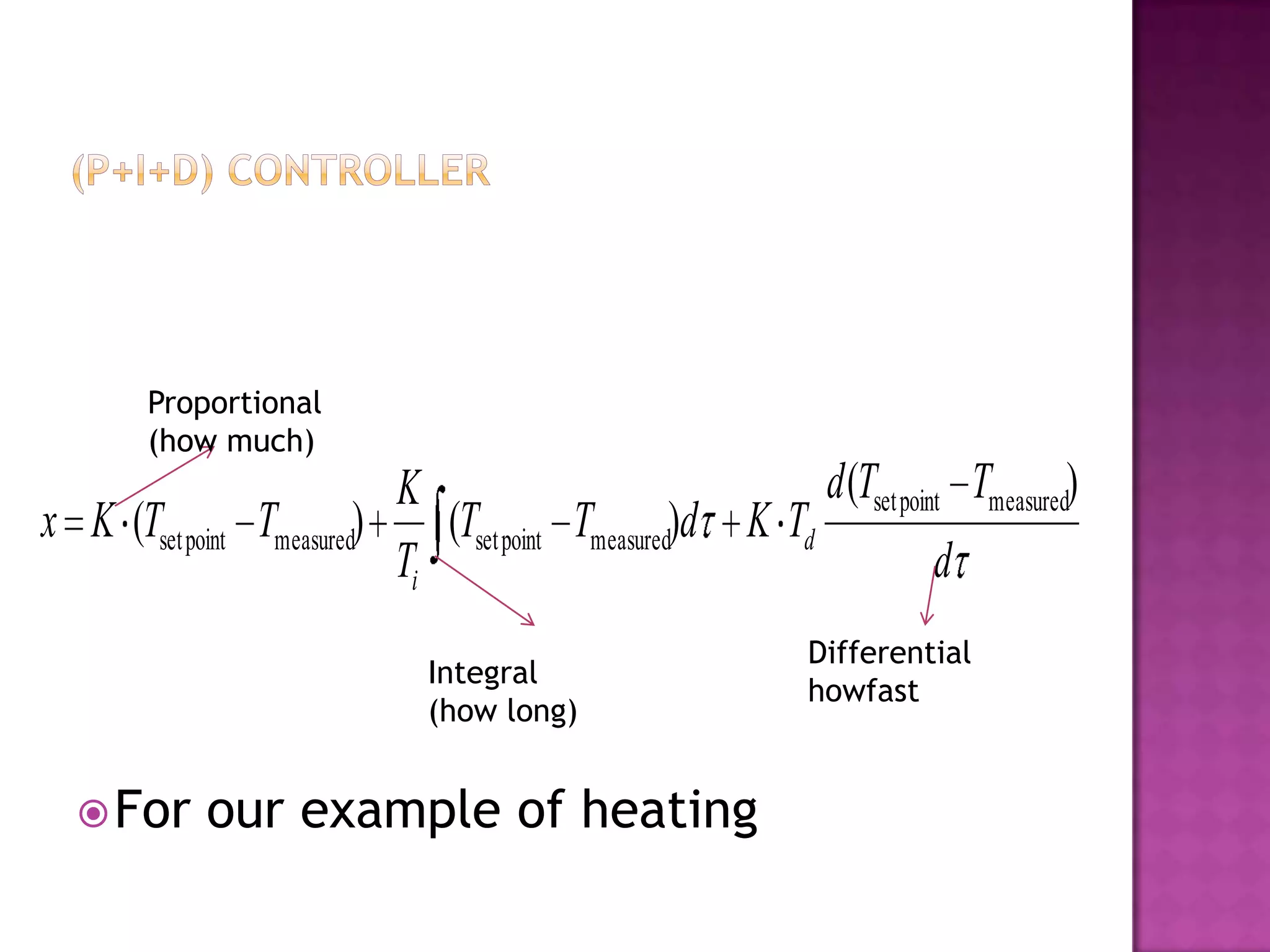
Proportional
        (how much)
                             K                               d (Tset point Tmeasured)
x K (Tset point   Tmeasured)    (Tset point Tmeasured)d K Td
                             Ti                                          d
                                                              Differential
                               Integral
                                                              howfast
                               (how long)


   For      our example of heating
 PIDcontrol can be costly to implement and
  support.

 It requires frequent valve- and damper-
  position readjustment and this nearly
  continuous repositioning shortens actuator
  life, adds to maintenance costs, and makes
  control stability a question.
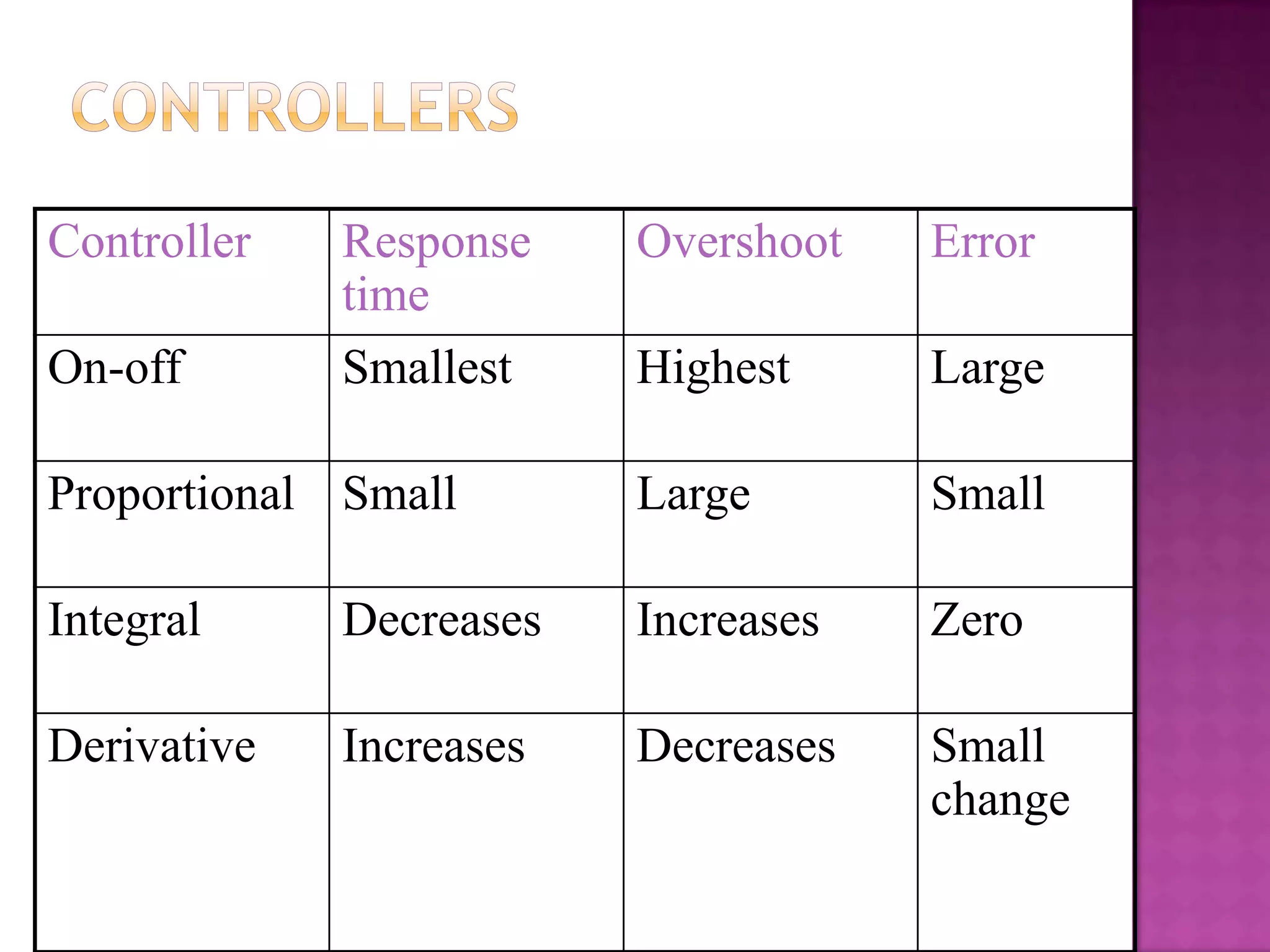
Controller   Response    Overshoot   Error
             time
On-off       Smallest    Highest     Large

Proportional Small       Large       Small

Integral     Decreases   Increases   Zero

Derivative   Increases   Decreases   Small
                                     change
These controllers made the beginning in old generation
  automatic process control. Today also these are
  extensively used in industrial process controls due to
  their inherent flame/explosion proof characteristics
  as no electric currents are used/ generated.
  Pneumatic Controllers come as Panel mounting type
  and also field mounting type with weather proof
  enclosures.
There are two basic components of pneumatic
  controllers :
 Displacement sensing device (Flapper Nozzle system)
 Pneumatic Relays
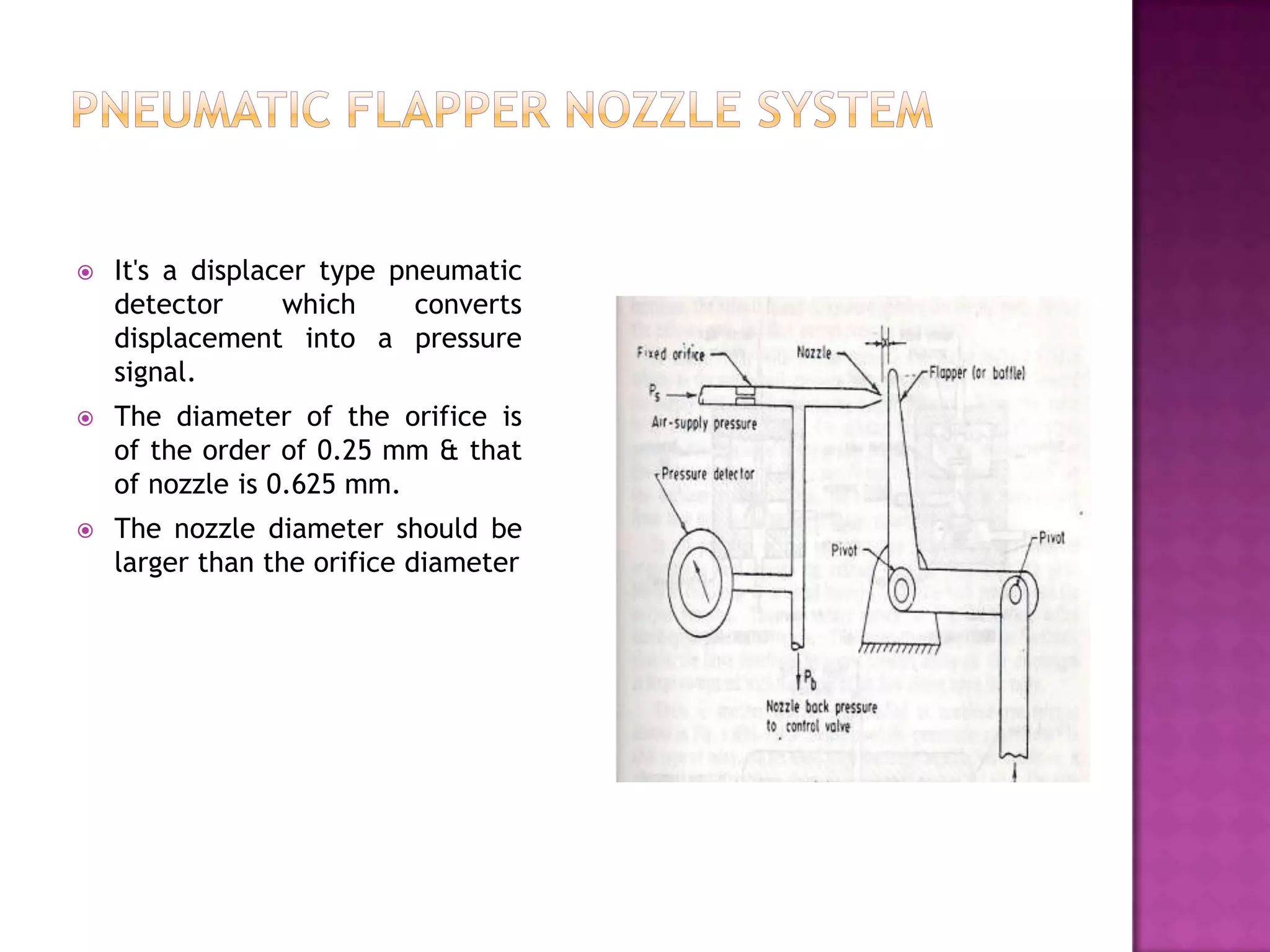
   It's a displacer type pneumatic
    detector      which     converts
    displacement into a pressure
    signal.
   The diameter of the orifice is
    of the order of 0.25 mm & that
    of nozzle is 0.625 mm.
   The nozzle diameter should be
    larger than the orifice diameter
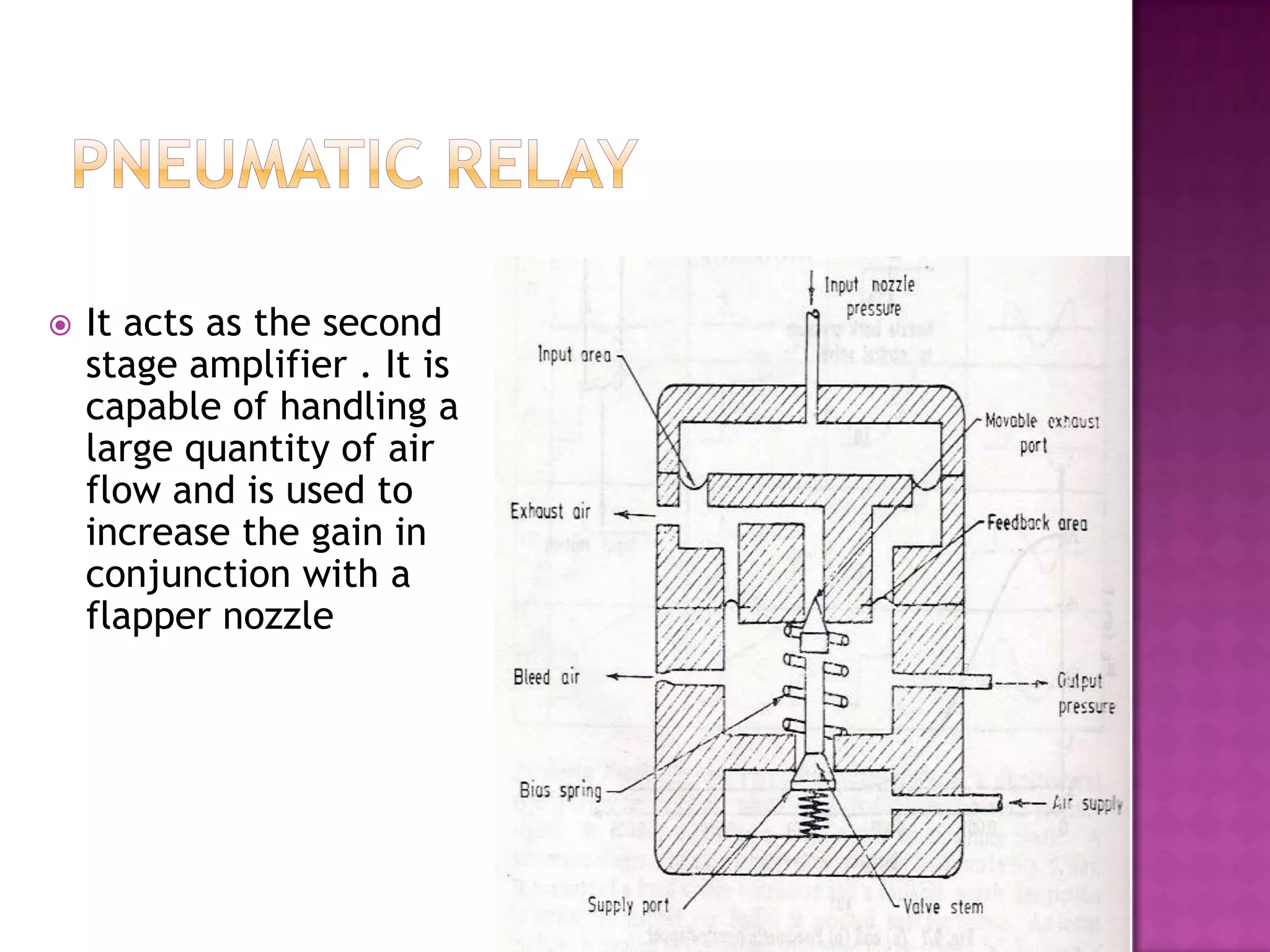
   It acts as the second
    stage amplifier . It is
    capable of handling a
    large quantity of air
    flow and is used to
    increase the gain in
    conjunction with a
    flapper nozzle
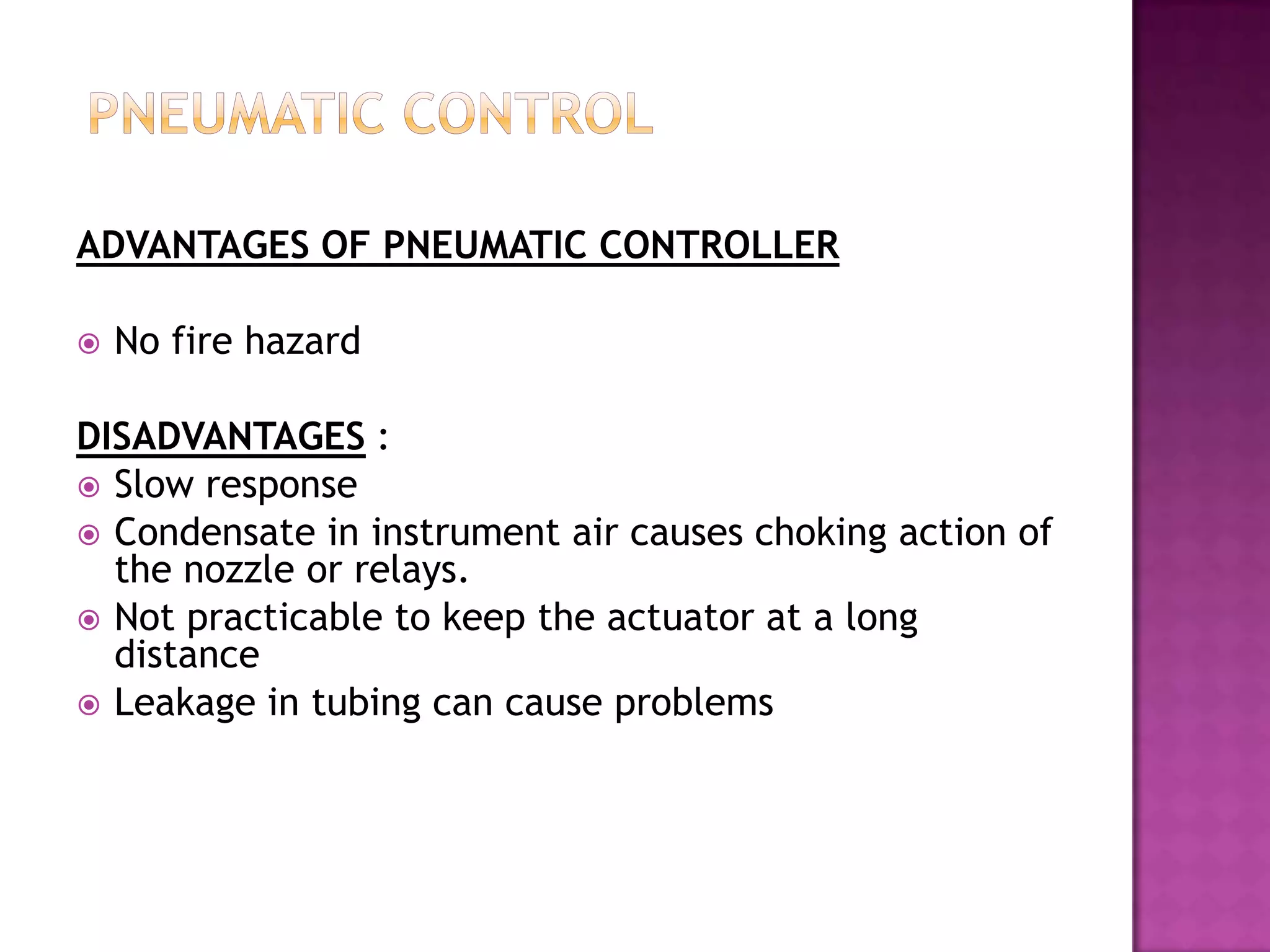
ADVANTAGES OF PNEUMATIC CONTROLLER

   No fire hazard

DISADVANTAGES :
 Slow response
 Condensate in instrument air causes choking action of
  the nozzle or relays.
 Not practicable to keep the actuator at a long
  distance
 Leakage in tubing can cause problems
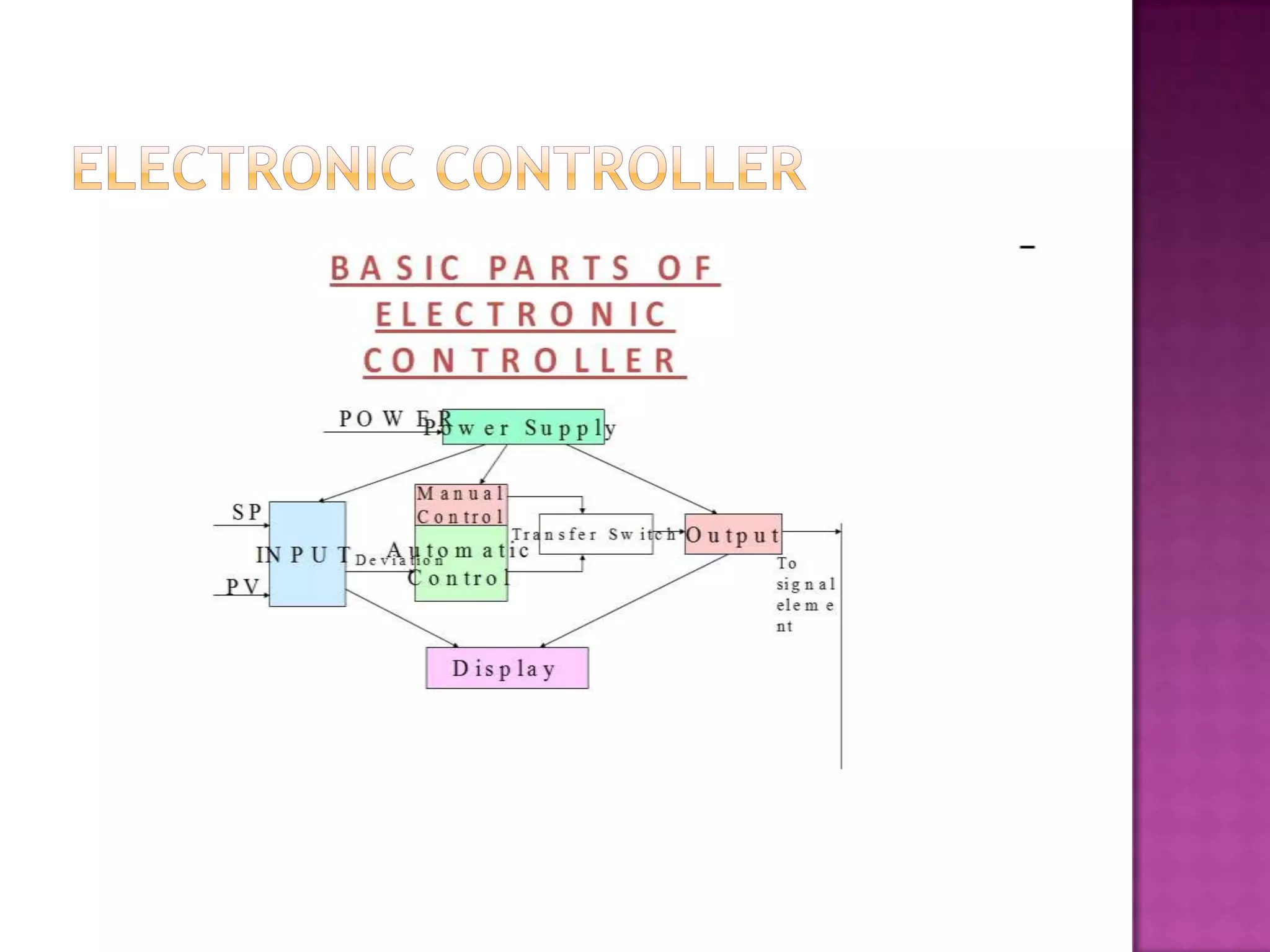
 Electroniccontroller use electric power to
 actuate the final control element. These
 types of controllers have a wide range of
 applications in modern process industries.
   Digital control is a branch of control theory that
    uses digital computers to act as system controllers.
    Depending on the requirements, a digital control
    system can take the form of a microcontroller to
    an ASIC to a standard desktop computer. Since a
    digital computer is a discrete system, the Laplace
    transform is replaced with the Z-transform.
   Digital systems are more precise and more
    extensible. They are usually able to work over much
    longer distances as well. An example of extensibility
    might be the ability to hook one up to the internet,
    to extended event history recording, or for alerting
    over pagers or cell phones.
    Additionally, depending on the type of control
    system, it may be less expensive to install and/or
    maintain.
Vivek mishra197

Vivek mishra197

  • 1.
  • 2.
    Most industrial processesrequire that certain variables such as flow, temperature, level or pressure should remain at or near some reference value, called SET POINT. The device that serves to maintain a process variable value at the set point is called a CONTROLLER. A Controller is a device that receives data from a measurement instrument, compares that data to a programmed set point, and, if necessary, signals a control element to take corrective action. Controllers may perform complex mathematical functions to compare Activities a set of data to setpoint or they may perform simple addition or subtraction functions to make comparisons. Controllers always have an ability to receive input, to perform a mathematical function with the input, and to produce an output signal.
  • 3.
     Controllersterminology  Typesof controllers & differences  problems
  • 4.
     Process controls Self-powered controls  Pneumatic and electro-mechanical controls  Electronic controls  Direct digital control (DDC)
  • 5.
     Sensor  Measures quantity of interest  Controller  Interprets sensor data  Controlled device  Changes based on controller
  • 6.
    Direct Indirect Closed Loop or Feedback Open Loop or Feedforward
  • 7.
     Process control is a statistics and engineering discipline that deals with architectures, mechanisms and algorith ms for maintaining the output of a specific process within a desired range
  • 8.
    CONTROL VALVE SET- + PID PROCESS VARIABLE _ POINT r e CONTROLLER m c e = r-b m=f(e) FCE b electrical Non-electrical signal FEEDBACK signal TRANSDUCER (Temp. , Pr. Etc.) r = ref. Point / Set-point b = feedback variable e = error(actuating) signal m= manipulated variable c = controlled variable / Process variable FCE= Final Control Element
  • 9.
     Set Point  Desired sensor value  Control Point  Current sensor value  Error or Offset  Difference between control point and set point
  • 10.
     mainly three types  Proportional  PI  PID
  • 11.
    x A K (Tset point Tm easured) x is controller output A is controller output with no error (often A=0) K is proportional gain constant e =is error (offset)
  • 12.
     Always have an offset  But, require less tuning than other controllers  Very appropriate for things that change slowly  i.e. building internal temperature
  • 13.
     K/Ti is integral gain  If controller is tuned properly, offset is reduced to zero
  • 14.
     Scheduling issues  Require more tuning than for P  But, no offset
  • 15.
     Improvement overPI because of faster response and less deviation from offset  Increases rate of error correction as errors get larger
  • 16.
    Proportional (how much) K d (Tset point Tmeasured) x K (Tset point Tmeasured) (Tset point Tmeasured)d K Td Ti d Differential Integral howfast (how long)  For our example of heating
  • 17.
     PIDcontrol canbe costly to implement and support.  It requires frequent valve- and damper- position readjustment and this nearly continuous repositioning shortens actuator life, adds to maintenance costs, and makes control stability a question.
  • 18.
    Controller Response Overshoot Error time On-off Smallest Highest Large Proportional Small Large Small Integral Decreases Increases Zero Derivative Increases Decreases Small change
  • 20.
    These controllers madethe beginning in old generation automatic process control. Today also these are extensively used in industrial process controls due to their inherent flame/explosion proof characteristics as no electric currents are used/ generated. Pneumatic Controllers come as Panel mounting type and also field mounting type with weather proof enclosures. There are two basic components of pneumatic controllers :  Displacement sensing device (Flapper Nozzle system)  Pneumatic Relays
  • 21.
    It's a displacer type pneumatic detector which converts displacement into a pressure signal.  The diameter of the orifice is of the order of 0.25 mm & that of nozzle is 0.625 mm.  The nozzle diameter should be larger than the orifice diameter
  • 22.
    It acts as the second stage amplifier . It is capable of handling a large quantity of air flow and is used to increase the gain in conjunction with a flapper nozzle
  • 23.
    ADVANTAGES OF PNEUMATICCONTROLLER  No fire hazard DISADVANTAGES :  Slow response  Condensate in instrument air causes choking action of the nozzle or relays.  Not practicable to keep the actuator at a long distance  Leakage in tubing can cause problems
  • 24.
     Electroniccontroller useelectric power to actuate the final control element. These types of controllers have a wide range of applications in modern process industries.
  • 26.
    Digital control is a branch of control theory that uses digital computers to act as system controllers. Depending on the requirements, a digital control system can take the form of a microcontroller to an ASIC to a standard desktop computer. Since a digital computer is a discrete system, the Laplace transform is replaced with the Z-transform.
  • 27.
    Digital systems are more precise and more extensible. They are usually able to work over much longer distances as well. An example of extensibility might be the ability to hook one up to the internet, to extended event history recording, or for alerting over pagers or cell phones. Additionally, depending on the type of control system, it may be less expensive to install and/or maintain.