P.I.D. CONTROLLER
BY NAYAN SHREE
DEPARTMENT OF ELECTRICAL ENGINEERING
ROLL NO:- 15/EE/69
HALDIA INSTITUTE OF TECHNOLOGY
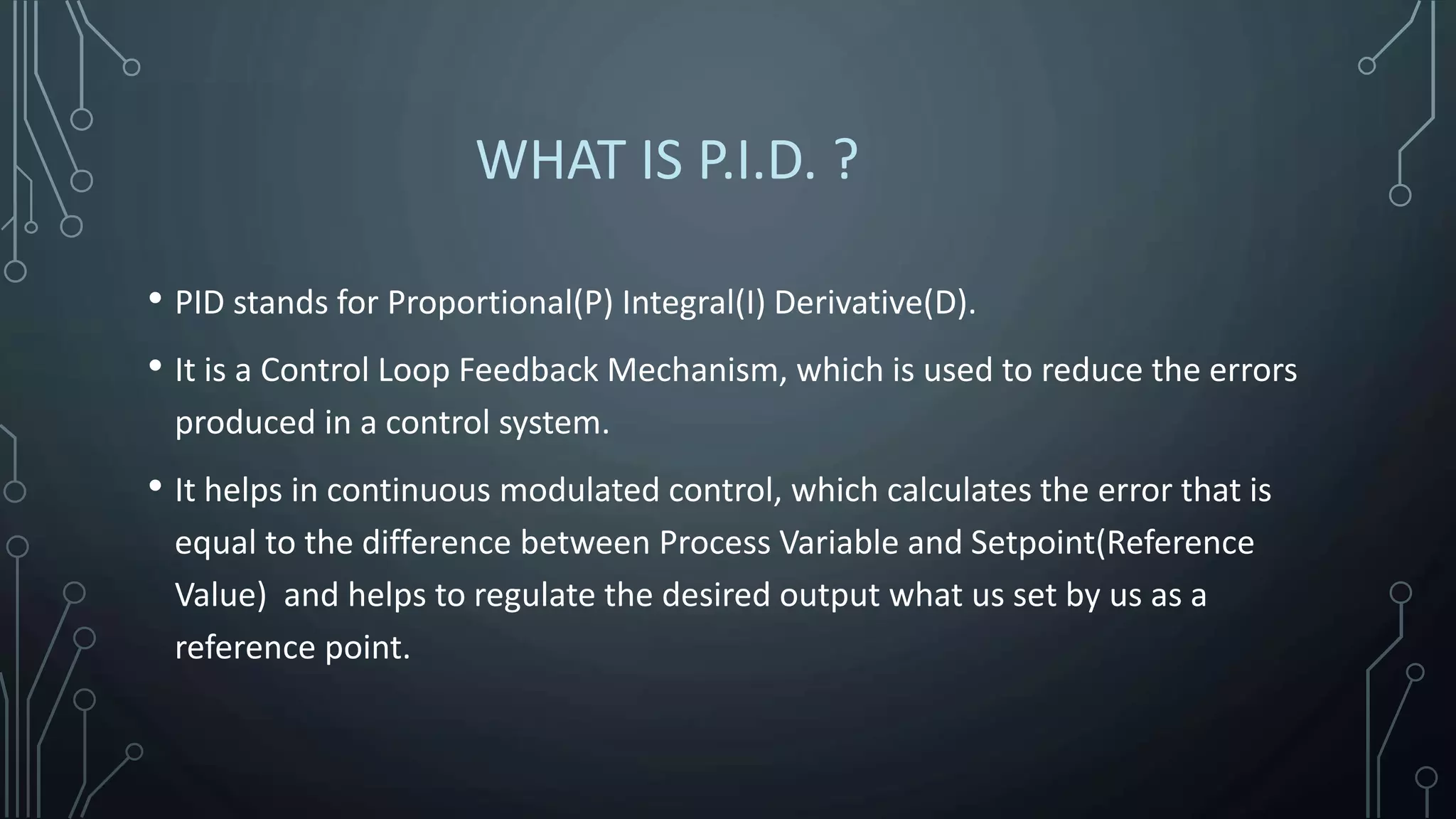
WHAT IS P.I.D. ?
• PID stands for Proportional(P) Integral(I) Derivative(D).
• It is a Control Loop Feedback Mechanism, which is used to reduce the errors
produced in a control system.
• It helps in continuous modulated control, which calculates the error that is
equal to the difference between Process Variable and Setpoint(Reference
Value) and helps to regulate the desired output what us set by us as a
reference point.
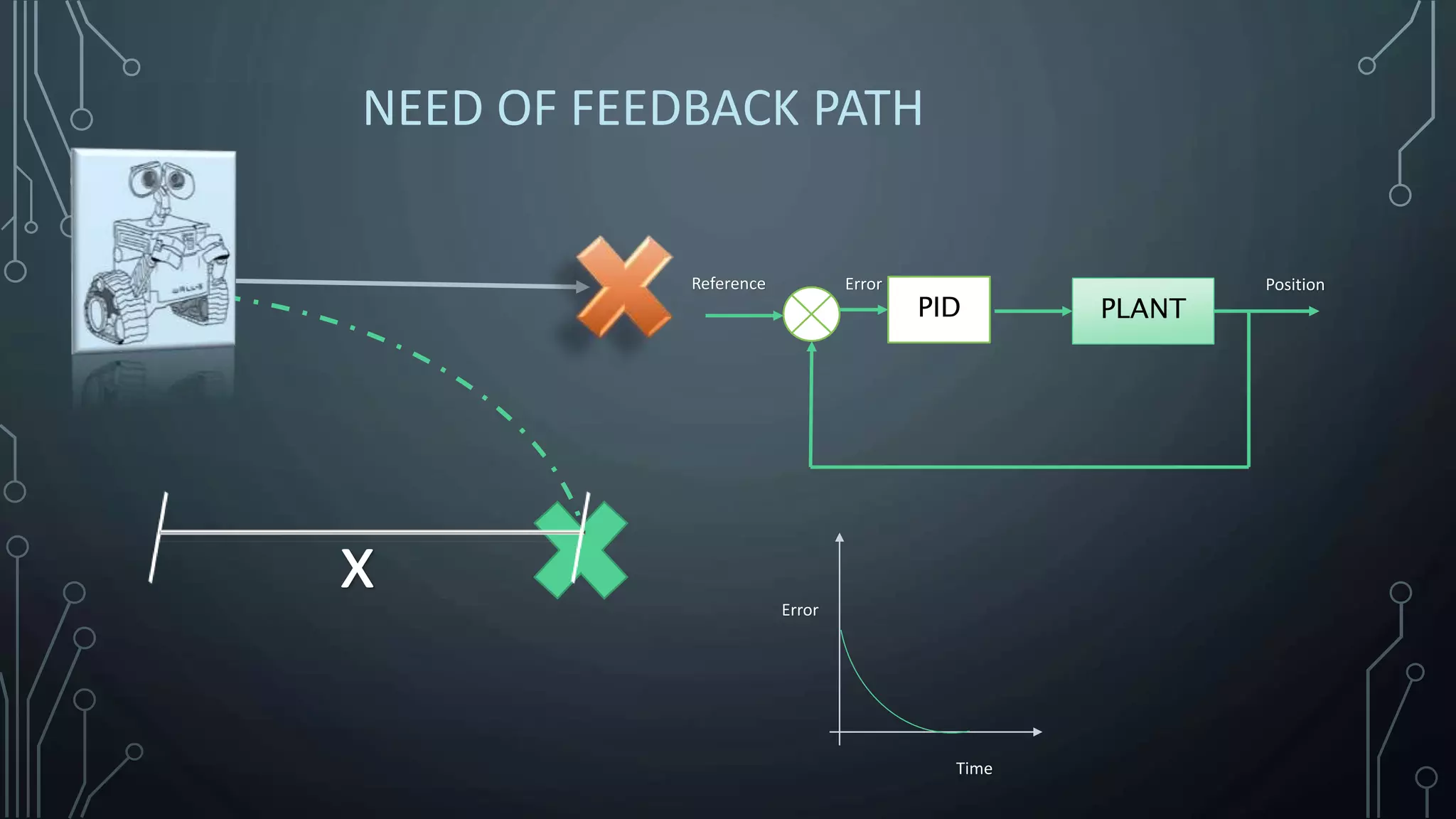
NEED OF FEEDBACK PATH
x
PID PLANT
Reference Error Position
Error
Time
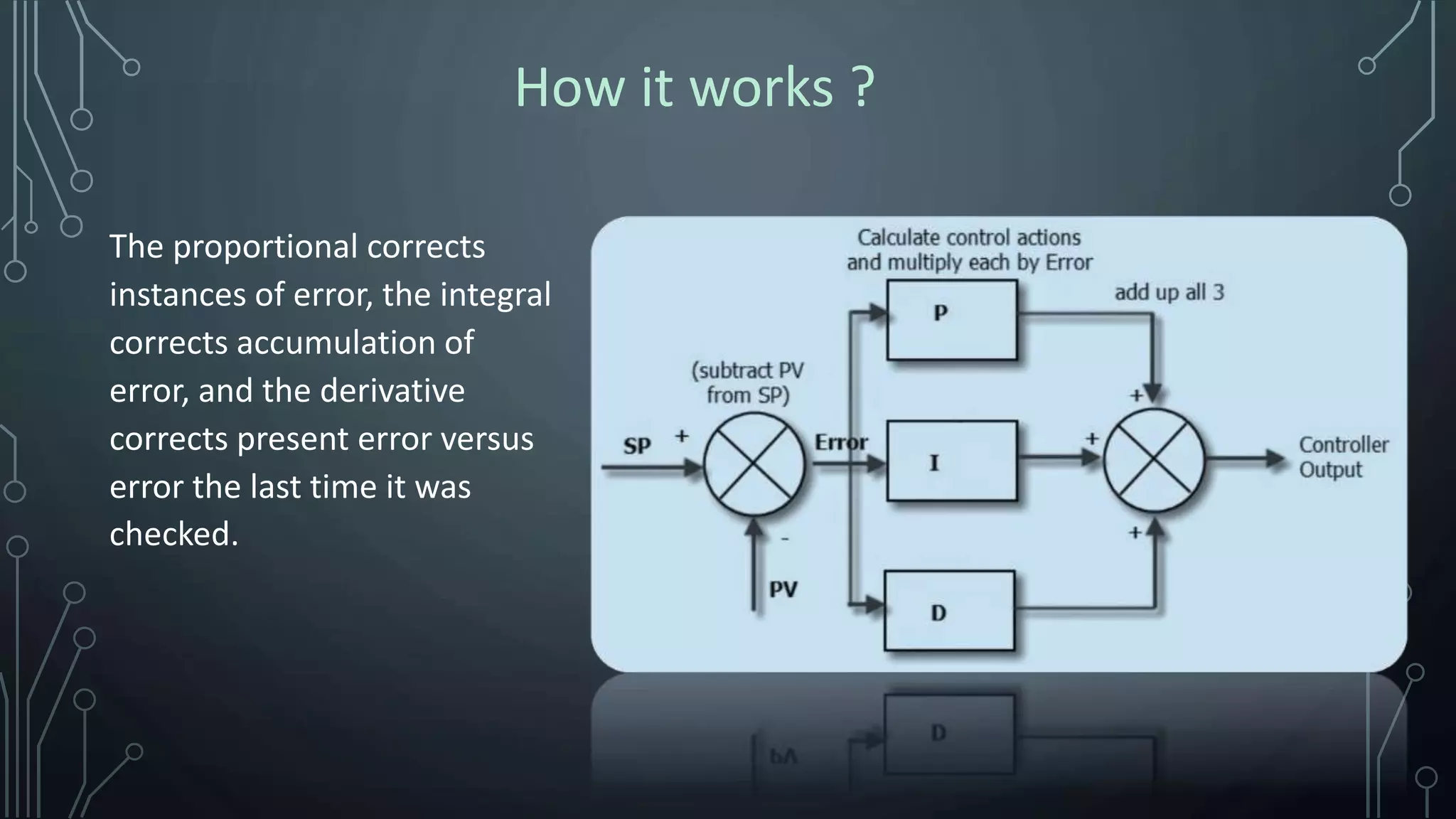
The proportional corrects
instances of error, the integral
corrects accumulation of
error, and the derivative
corrects present error versus
error the last time it was
checked.
How it works ?
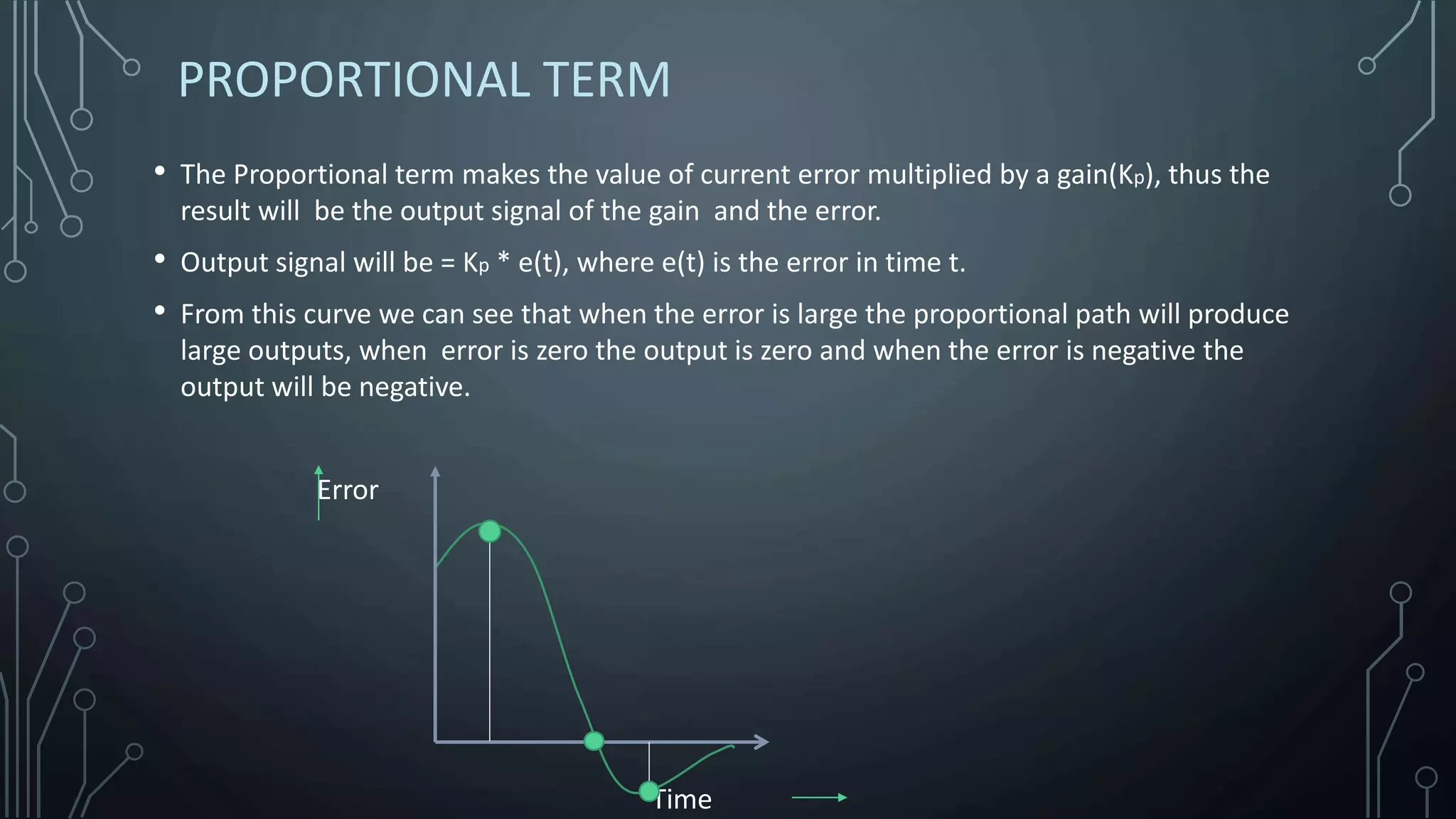
PROPORTIONAL TERM
• The Proportional term makes the value of current error multiplied by a gain(Kp), thus the
result will be the output signal of the gain and the error.
• Output signal will be = Kp * e(t), where e(t) is the error in time t.
• From this curve we can see that when the error is large the proportional path will produce
large outputs, when error is zero the output is zero and when the error is negative the
output will be negative.
Error
Time
INTEGRAL TERM
• The integral makes the current error signal value and duration multiplied
with a gain(Ki).
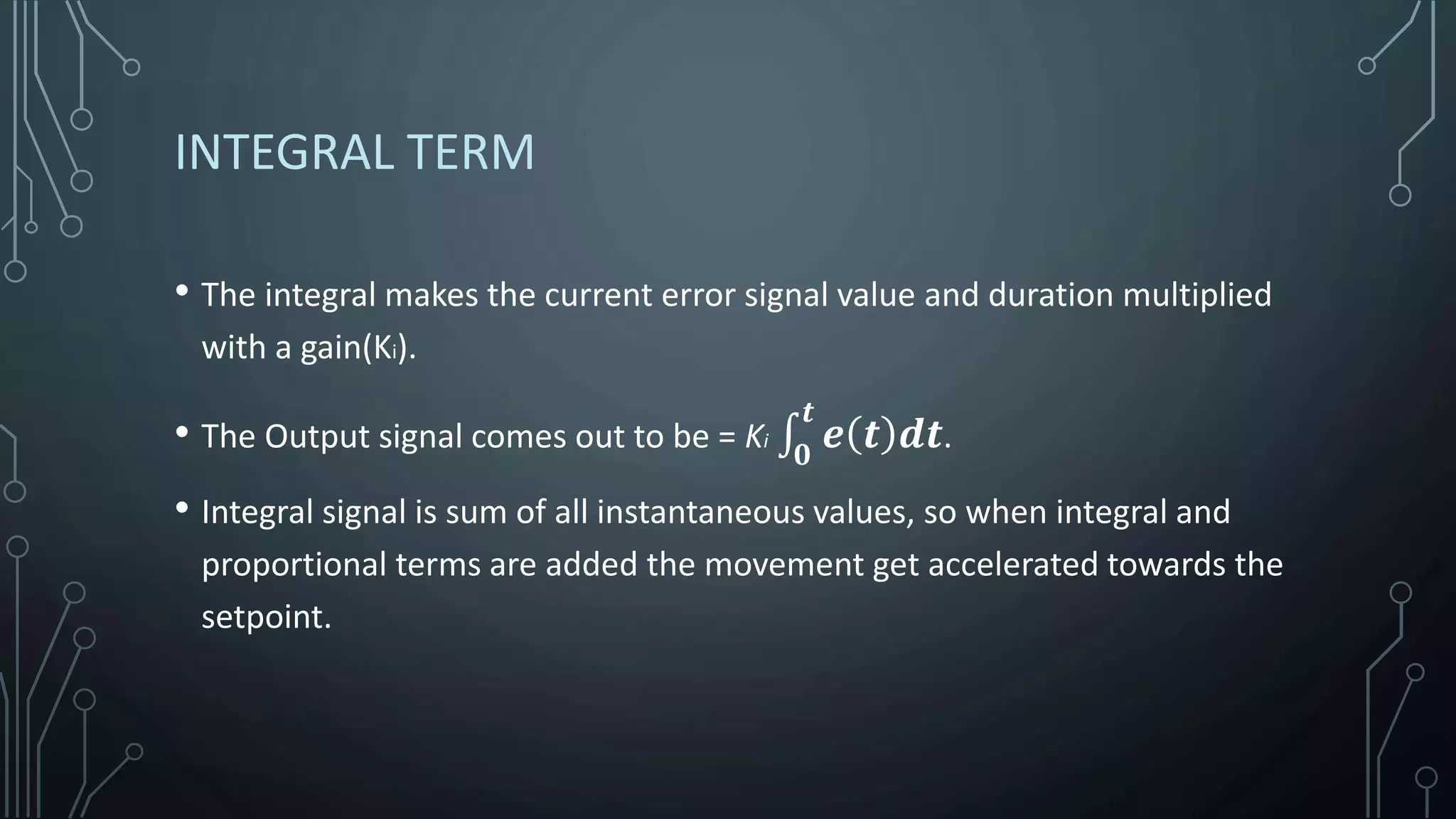
• The Output signal comes out to be = Ki
𝟎
𝒕
𝒆 𝒕 𝒅𝒕.
• Integral signal is sum of all instantaneous values, so when integral and
proportional terms are added the movement get accelerated towards the
setpoint.
DEREVATIVE TERM
• Derivative term is the instantaneous value of the error at a particular
moment multiplied with a gain(Kd).
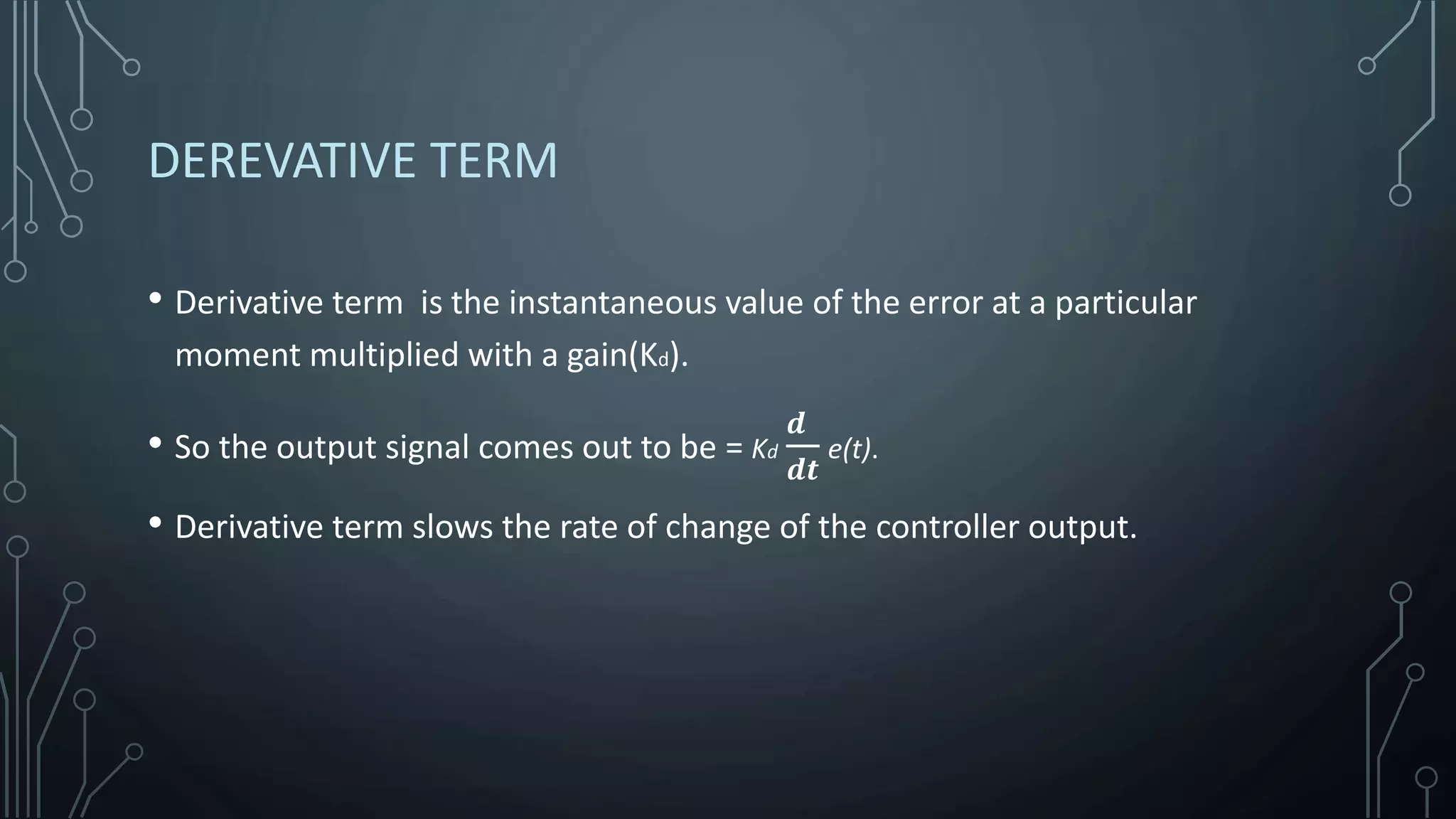
• So the output signal comes out to be = Kd
𝒅
𝒅𝒕
e(t).
• Derivative term slows the rate of change of the controller output.
• PID is simple, efficient, and effective, so from the earlier ages it is considered as the
best controller.
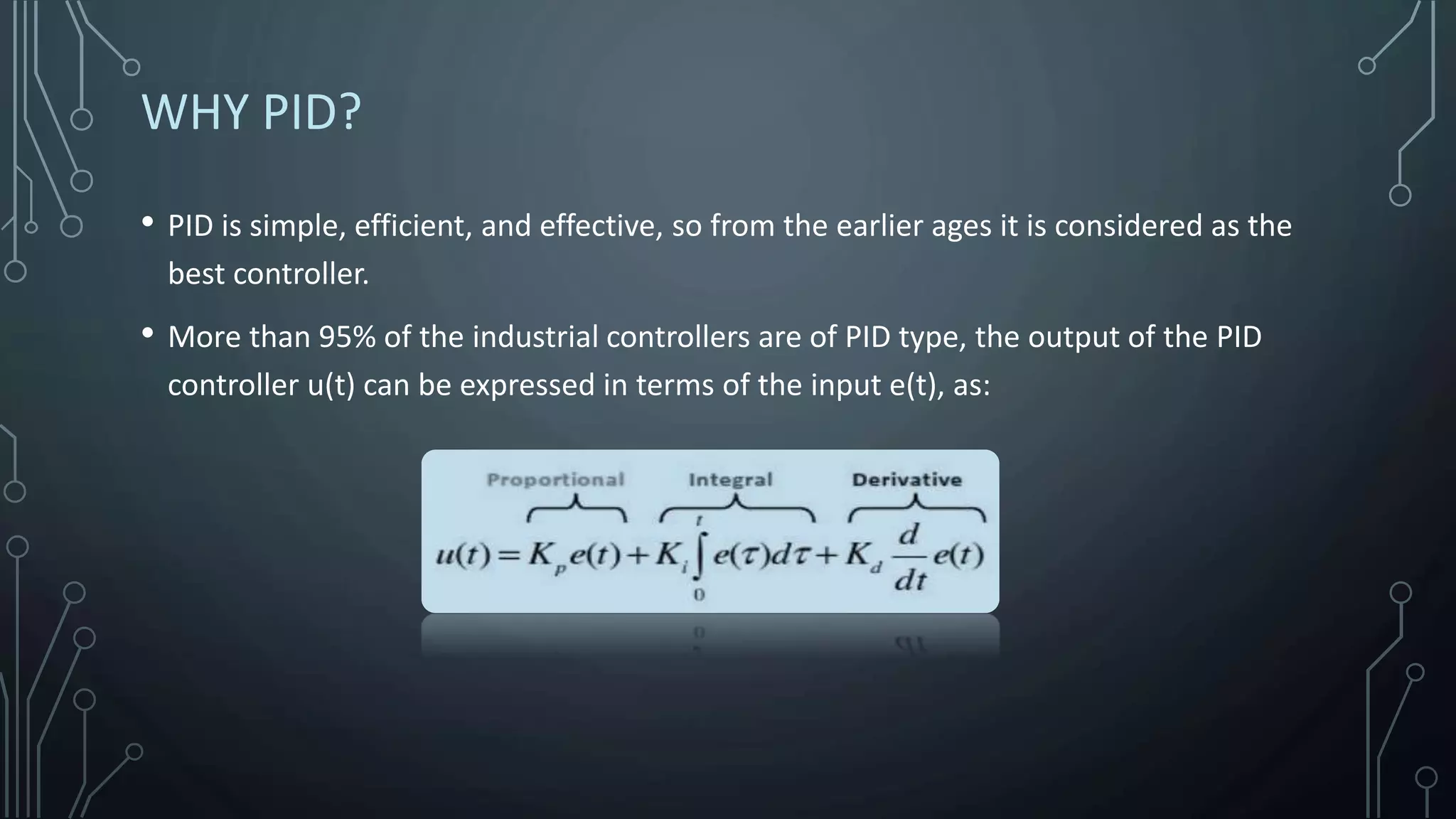
• More than 95% of the industrial controllers are of PID type, the output of the PID
controller u(t) can be expressed in terms of the input e(t), as:
WHY PID?
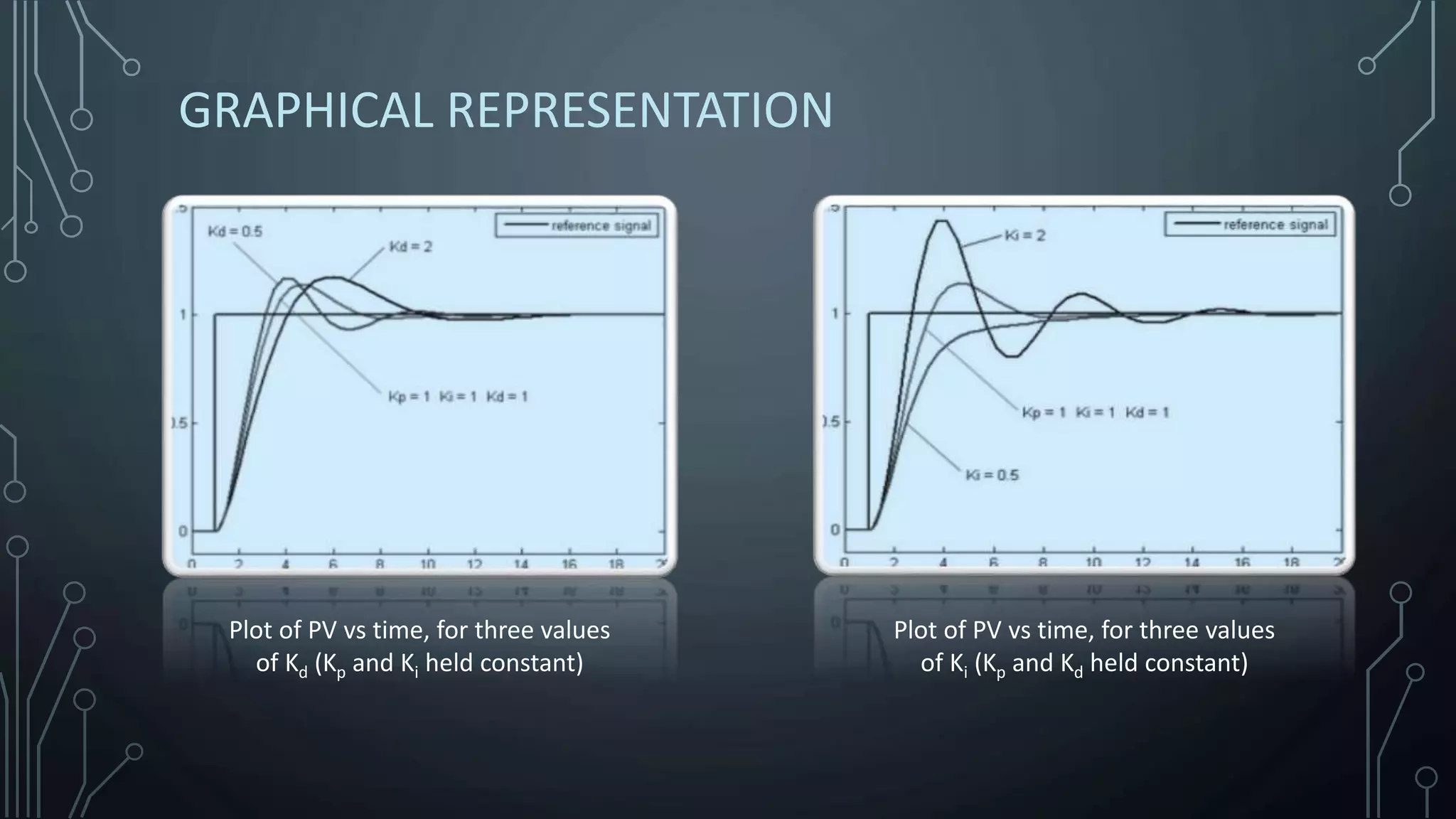
GRAPHICAL REPRESENTATION
Plot of PV vs time, for three values
of Ki (Kp and Kd held constant)
Plot of PV vs time, for three values
of Kd (Kp and Ki held constant)
APPLICATIONS
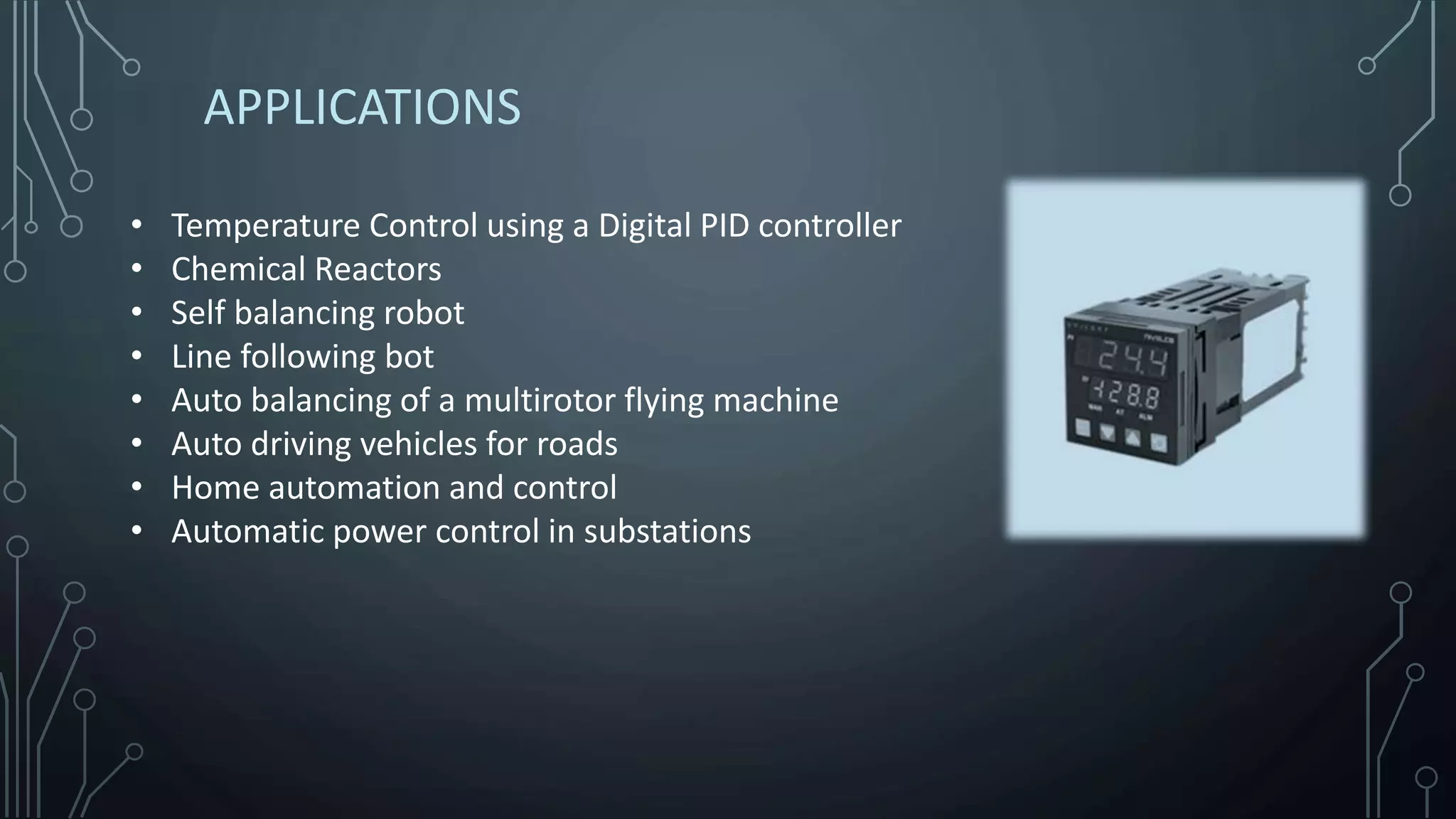
• Temperature Control using a Digital PID controller
• Chemical Reactors
• Self balancing robot
• Line following bot
• Auto balancing of a multirotor flying machine
• Auto driving vehicles for roads
• Home automation and control
• Automatic power control in substations
References :- Wikipedia, NPTEL, google

Pid controller

  • 1.
    P.I.D. CONTROLLER BY NAYANSHREE DEPARTMENT OF ELECTRICAL ENGINEERING ROLL NO:- 15/EE/69 HALDIA INSTITUTE OF TECHNOLOGY
  • 2.
    WHAT IS P.I.D.? • PID stands for Proportional(P) Integral(I) Derivative(D). • It is a Control Loop Feedback Mechanism, which is used to reduce the errors produced in a control system. • It helps in continuous modulated control, which calculates the error that is equal to the difference between Process Variable and Setpoint(Reference Value) and helps to regulate the desired output what us set by us as a reference point.
  • 3.
    NEED OF FEEDBACKPATH x PID PLANT Reference Error Position Error Time
  • 4.
    The proportional corrects instancesof error, the integral corrects accumulation of error, and the derivative corrects present error versus error the last time it was checked. How it works ?
  • 5.
    PROPORTIONAL TERM • TheProportional term makes the value of current error multiplied by a gain(Kp), thus the result will be the output signal of the gain and the error. • Output signal will be = Kp * e(t), where e(t) is the error in time t. • From this curve we can see that when the error is large the proportional path will produce large outputs, when error is zero the output is zero and when the error is negative the output will be negative. Error Time
  • 6.
    INTEGRAL TERM • Theintegral makes the current error signal value and duration multiplied with a gain(Ki). • The Output signal comes out to be = Ki 𝟎 𝒕 𝒆 𝒕 𝒅𝒕. • Integral signal is sum of all instantaneous values, so when integral and proportional terms are added the movement get accelerated towards the setpoint.
  • 7.
    DEREVATIVE TERM • Derivativeterm is the instantaneous value of the error at a particular moment multiplied with a gain(Kd). • So the output signal comes out to be = Kd 𝒅 𝒅𝒕 e(t). • Derivative term slows the rate of change of the controller output.
  • 8.
    • PID issimple, efficient, and effective, so from the earlier ages it is considered as the best controller. • More than 95% of the industrial controllers are of PID type, the output of the PID controller u(t) can be expressed in terms of the input e(t), as: WHY PID?
  • 9.
    GRAPHICAL REPRESENTATION Plot ofPV vs time, for three values of Ki (Kp and Kd held constant) Plot of PV vs time, for three values of Kd (Kp and Ki held constant)
  • 10.
    APPLICATIONS • Temperature Controlusing a Digital PID controller • Chemical Reactors • Self balancing robot • Line following bot • Auto balancing of a multirotor flying machine • Auto driving vehicles for roads • Home automation and control • Automatic power control in substations
  • 11.