Viruses & Bacteria
What are Viruses

A virus is a non-cellular particle made
  up of genetic material and protein
      that can invade living cells.
T4 Bacteriophage
Herpes Virus
Escherichia Coli Bacterium


E. coli is a bacterium. That is a crude cell, it is not a virus
because viruses are protein containers with DNA cores or
                        RNA cores.
E. Coli and the
       Bacteriophage


What it looks like in real life
The Structure Of a Virus
   Viruses are
    composed of a core
    of nucleic acid
   The Nucleic acid core
    is surrounded by a
    protein coat called a
    capsid
   The Nucleic core is
    either made up of
    DNA or RNA but
    never both
Cycle of Lytic and Lysogenic
Vaccines
► Viruses grown on chicken embryos are
  attenuated vaccines
► Another type of vaccine is made by heat
  killing the virus
Retrovirus

   Change DNA
    into RNA.
   Example of a
    Retrovirus is
    HIV
A typical, "minimal" retrovirus
consists of:
•an outer envelope which
was derived from the plasma
membrane of its host
•many copies of an envelope
protein embedded in the lipid
bilayer of its envelope
•a capsid; a protein shell
containing
•two molecules of RNA and
•molecules of the enzyme
reverse transcriptase
Bacteria Cell
Prokaryotes
   Cells that do not have a
    nucleus
   Exist almost every where on
    earth
   Grow in numbers so great you
    can see them with the unaided
    eye
   Are placed in either the
    Eubacteria or the
    Archebacteria Kingdoms
   Make up the smaller of the two
    kingdoms
Eubacteria
Make up the larger of
the two prokaryote
kingdoms
Generally are
surrounded by a cell
wall composed of
complex
carbohydrates
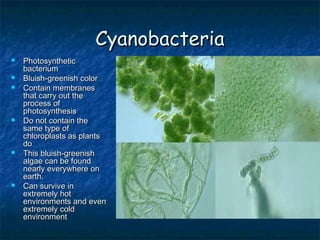
Cyanobacteria
   Photosynthetic
    bacterium
   Bluish-greenish color
   Contain membranes
    that carry out the
    process of
    photosynthesis
   Do not contain the
    same type of
    chloroplasts as plants
    do
   This bluish-greenish
    algae can be found
    nearly everywhere on
    earth.
   Can survive in
    extremely hot
    environments and even
    extremely cold
    environment
Archaebacteria
 Lack important
  carbohydrate found
  in cell walls
 Have different lipids
  in their cell
  membrane
 Different types of
  ribosomes
 Very different gene
  sequences
 Archaebacteria can
  live in extremely
  harsh environments
 They do not require
  oxygen and can live
  in extremely salty
  environments as well
  as extremely hot
  environments.
Identifying Prokaryotes
Cell Shape
Cell Wall
Movement
Bacterium Shapes
   Cocci~ Sphere shaped
    bacteria
   Bacillus~ Rod shaped bacteria
   Spirrillium ~ Spiral shaped
    bacteria
   Flagella~ Leg-like structures
    that help to propel the
    bacterium.
Gram + and Gram – Bacterium
         Cell Walls
Cellular Walls
   Chemical nature of a cell wall can be determined
    by Gram Staining
   By finding out what color the cell produces when
    it is gram stained you can figure out the type of
    carbohydrates in the cell wall
Movement

• Flagella ~ Tail like structure
  the whips around to propel the
  bacterium
• Cillia ~ Miniature flagella
  surround the cell that help to
  “swim”
• Non motile ~ Sticky cillia like
  structures that keep the
  bacterium from moving
Flagella
Bacteria and their
ener g y
    Autotrophs
    Chemotrophs
    Heterotrophs
Autotrophs
   Make their own
    energy
   Using Solar energy
   Eg. Cyanobacteria
Chemotrophs
   Make own Energy
   Using Chemical energy
   Eg. Archaebacteria
Heterotrophs
   Obtain food
   By eating
   Eg. E-coli
Bacteria Respiration
   Obligate Anaerobes      Live without Oxygen
   Facultative             Can live with or
    Anaerobes                without oxygen
                            Cannot live without
   Obligate Aerobes         oxygen.
Bacteria Reproduction
   Binary Fission
   Conjugation
   Spore Formation
Cellular organism copies it’s genetic information then splits into
two identical daughter cells
Conjugation
   A type of Bacteria
    Sex
   Two organism swap
    genetic information,
    that contains the
    information such as a
    resistance to penicillin
Spore Formation: Endospore
 A type of dormant cell
 Exhibit no signs of life
 Highly resistant to
  environmental stresses such
  as:
       -High temperatures
       -Irradiation
       -Strong acids
       -Disinfectants
 Endospores are formed by
  vegetative cells in response to
  environmental signals that
  indicate a limiting factor for
  vegetative growth, such as
  exhaustion of an essential
  nutrient.
Symbiosis
   Close relationship
    between to species in
    which at least one
    species benefits from
    the other
   Live together for LIFE
Parasitism
   Bacteria exploit the
    host cell, injuring
    them
   Eg. Mychobacterium
    tuberculosis
Mutualism
   Symbiosis in which two
    of the species live
    together in such a way
    that both benefit from
    the relationship
   Eg. E-coli
Nitrogen Fixations
Process by which nitrogen in the
atmosphere is converted into a form that
can be used by living things
THE END
This powerpoint was kindly donated to
www.worldofteaching.com


http://www.worldofteaching.com is home to over a
thousand powerpoints submitted by teachers. This is a
completely free site and requires no registration. Please
visit and I hope it will help in your teaching.

Viruses

  • 1.
  • 2.
    What are Viruses Avirus is a non-cellular particle made up of genetic material and protein that can invade living cells.
  • 3.
  • 4.
  • 5.
    Escherichia Coli Bacterium E.coli is a bacterium. That is a crude cell, it is not a virus because viruses are protein containers with DNA cores or RNA cores.
  • 6.
    E. Coli andthe Bacteriophage What it looks like in real life
  • 7.
    The Structure Ofa Virus  Viruses are composed of a core of nucleic acid  The Nucleic acid core is surrounded by a protein coat called a capsid  The Nucleic core is either made up of DNA or RNA but never both
  • 8.
    Cycle of Lyticand Lysogenic
  • 9.
    Vaccines ► Viruses grownon chicken embryos are attenuated vaccines ► Another type of vaccine is made by heat killing the virus
  • 10.
    Retrovirus  Change DNA into RNA.  Example of a Retrovirus is HIV
  • 11.
    A typical, "minimal"retrovirus consists of: •an outer envelope which was derived from the plasma membrane of its host •many copies of an envelope protein embedded in the lipid bilayer of its envelope •a capsid; a protein shell containing •two molecules of RNA and •molecules of the enzyme reverse transcriptase
  • 12.
  • 13.
    Prokaryotes  Cells that do not have a nucleus  Exist almost every where on earth  Grow in numbers so great you can see them with the unaided eye  Are placed in either the Eubacteria or the Archebacteria Kingdoms  Make up the smaller of the two kingdoms
  • 15.
    Eubacteria Make up thelarger of the two prokaryote kingdoms Generally are surrounded by a cell wall composed of complex carbohydrates
  • 16.
    Cyanobacteria  Photosynthetic bacterium  Bluish-greenish color  Contain membranes that carry out the process of photosynthesis  Do not contain the same type of chloroplasts as plants do  This bluish-greenish algae can be found nearly everywhere on earth.  Can survive in extremely hot environments and even extremely cold environment
  • 17.
    Archaebacteria  Lack important carbohydrate found in cell walls  Have different lipids in their cell membrane  Different types of ribosomes  Very different gene sequences  Archaebacteria can live in extremely harsh environments  They do not require oxygen and can live in extremely salty environments as well as extremely hot environments.
  • 18.
  • 19.
    Bacterium Shapes  Cocci~ Sphere shaped bacteria  Bacillus~ Rod shaped bacteria  Spirrillium ~ Spiral shaped bacteria  Flagella~ Leg-like structures that help to propel the bacterium.
  • 20.
    Gram + andGram – Bacterium Cell Walls
  • 21.
    Cellular Walls  Chemical nature of a cell wall can be determined by Gram Staining  By finding out what color the cell produces when it is gram stained you can figure out the type of carbohydrates in the cell wall
  • 22.
    Movement • Flagella ~Tail like structure the whips around to propel the bacterium • Cillia ~ Miniature flagella surround the cell that help to “swim” • Non motile ~ Sticky cillia like structures that keep the bacterium from moving
  • 23.
  • 25.
    Bacteria and their energ y  Autotrophs  Chemotrophs  Heterotrophs
  • 26.
    Autotrophs  Make their own energy  Using Solar energy  Eg. Cyanobacteria
  • 27.
    Chemotrophs  Make own Energy  Using Chemical energy  Eg. Archaebacteria
  • 28.
    Heterotrophs  Obtain food  By eating  Eg. E-coli
  • 29.
    Bacteria Respiration  Obligate Anaerobes  Live without Oxygen  Facultative  Can live with or Anaerobes without oxygen  Cannot live without  Obligate Aerobes oxygen.
  • 30.
    Bacteria Reproduction  Binary Fission  Conjugation  Spore Formation
  • 31.
    Cellular organism copiesit’s genetic information then splits into two identical daughter cells
  • 32.
    Conjugation  A type of Bacteria Sex  Two organism swap genetic information, that contains the information such as a resistance to penicillin
  • 33.
    Spore Formation: Endospore A type of dormant cell  Exhibit no signs of life  Highly resistant to environmental stresses such as: -High temperatures -Irradiation -Strong acids -Disinfectants  Endospores are formed by vegetative cells in response to environmental signals that indicate a limiting factor for vegetative growth, such as exhaustion of an essential nutrient.
  • 34.
    Symbiosis  Close relationship between to species in which at least one species benefits from the other  Live together for LIFE
  • 35.
    Parasitism  Bacteria exploit the host cell, injuring them  Eg. Mychobacterium tuberculosis
  • 36.
    Mutualism  Symbiosis in which two of the species live together in such a way that both benefit from the relationship  Eg. E-coli
  • 37.
    Nitrogen Fixations Process bywhich nitrogen in the atmosphere is converted into a form that can be used by living things
  • 38.
  • 39.
    This powerpoint waskindly donated to www.worldofteaching.com http://www.worldofteaching.com is home to over a thousand powerpoints submitted by teachers. This is a completely free site and requires no registration. Please visit and I hope it will help in your teaching.