“Mycoplasma”
Seminar presented by
Ashish Diwakar
M.Sc.Microbiology II Semester
School of Studies in Microbiology
Vagdevi Bhavan,
Vikram University,Ujjain (M.P.)
Synopsis
• Introduction of Mycoplasma
• History of Mycoplasma
• Morphology of Mycoplasma
• Chemical composition of mycoplasma
• Classification of Mycoplasma
• Reproduction of Mcoplasma
• Structure of Mycoplasma
• Pathogenecity of mycoplasma
• Treatment
• Conclusion
• References
Introduction
• Unicellular Prokaryote
• Gram-Positive Bacteria
• Lack cell wall- Pleomorphic
• Osmotic Shock / Detergent-Sensitive
• Antibiotics-Tetracyclin / Chloremphenicol-Sensitive
• They are the smallest bacteria capable of autonomous growth
• Facultative anaerobes / obligate anaerobes
• Low G+C%, 23-41%
• Mostly require sterol for their growth
• (but some genera do not require sterol – such as
Acholeplasma, Asteroleplasma, Mesoplasma)
History
• Discovered by Pasture in 1843.
• Isolated from pleural fluid of cattle.
• It was called as Mycoplasma mycoides.
• Nocard & Roux first cultured Mycoplasma in1898.
• In 1929, Nowak called them PPLO.
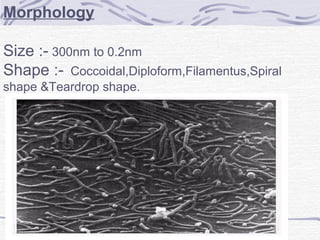
Morphology
Size :- 300nm to 0.2nm
Shape :- Coccoidal,Diploform,Filamentus,Spiral
shape &Teardrop shape.
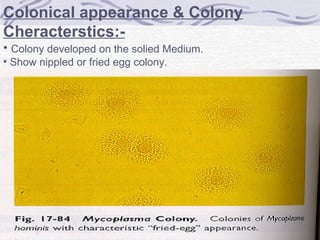
Colonical appearance & Colony
Cheracterstics:-
• Colony developed on the solied Medium.
• Show nippled or fried egg colony.
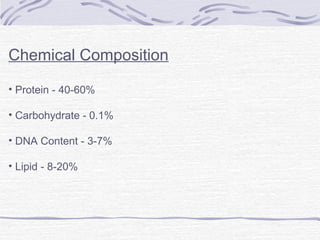
Chemical Composition
• Protein - 40-60%
• Carbohydrate - 0.1%
• DNA Content - 3-7%
• Lipid - 8-20%
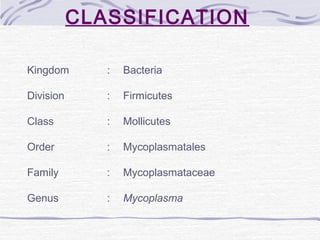
CLASSIFICATION
Kingdom : Bacteria
Division : Firmicutes
Class : Mollicutes
Order : Mycoplasmatales
Family : Mycoplasmataceae
Genus : Mycoplasma
Reproduction of Mycoplasma
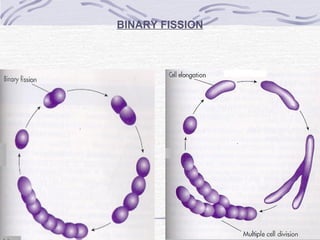
Binary fission
Budding or Round body formation
Filamentous formation
BINARY FISSION
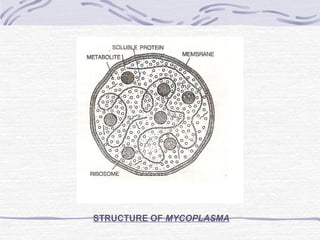
STRUCTURE OF MYCOPLASMA
Pathogenesity
• Extra cellular parasite
• It Causes infection in Respiratory tract & Urinogenital tract
• In Respiratory tract Cause Pneumonia
• In Urinogenital tract Cause Male sterility
Diseases Causeing Mechenism of
Mycoplasma
Attachment :-
Host cell - Have - Glycoprotein
Penetration:-
• Mucosa membrane penetrate
• Attach on epithelial cells
• Growth on epithelial cells
• And destroy epithelial cells
• Cause Pneumonia
Treatment:-
• Tetracyclin / Chloramphenicol / Erythromycin
Conclusion
• Mycoplasma are peculier type of bacteria
• as they requiring sterol for growth
• They are cell wall less
• some are pathogenic (humen diseses)
• some are cattle/plants/insects parasite also
References
Willey J.M.,L.M.Sherwood & C.J. Woolverton
(2008) Prescott, Harly & Klein’s
Microbiology,Seventh Edition,MC Graw Hill,
Page no.571
PELCZAR M.J.,E.C.S. CHAN & N.R. KRIEG
2007 Microbiology Fifth Edition,MC Graw
Hill,Page no.281,805
Madigan,M.T.,Martinko,J.M.and Parker,
(2000) Brock Biology of Microorganisms,Sixth
Edition Prentice Hall International Inc.

Mycoplasma

  • 1.
    “Mycoplasma” Seminar presented by AshishDiwakar M.Sc.Microbiology II Semester School of Studies in Microbiology Vagdevi Bhavan, Vikram University,Ujjain (M.P.)
  • 2.
    Synopsis • Introduction ofMycoplasma • History of Mycoplasma • Morphology of Mycoplasma • Chemical composition of mycoplasma • Classification of Mycoplasma • Reproduction of Mcoplasma • Structure of Mycoplasma • Pathogenecity of mycoplasma • Treatment • Conclusion • References
  • 3.
    Introduction • Unicellular Prokaryote •Gram-Positive Bacteria • Lack cell wall- Pleomorphic • Osmotic Shock / Detergent-Sensitive • Antibiotics-Tetracyclin / Chloremphenicol-Sensitive • They are the smallest bacteria capable of autonomous growth • Facultative anaerobes / obligate anaerobes • Low G+C%, 23-41% • Mostly require sterol for their growth • (but some genera do not require sterol – such as Acholeplasma, Asteroleplasma, Mesoplasma)
  • 4.
    History • Discovered byPasture in 1843. • Isolated from pleural fluid of cattle. • It was called as Mycoplasma mycoides. • Nocard & Roux first cultured Mycoplasma in1898. • In 1929, Nowak called them PPLO.
  • 5.
    Morphology Size :- 300nmto 0.2nm Shape :- Coccoidal,Diploform,Filamentus,Spiral shape &Teardrop shape.
  • 6.
    Colonical appearance &Colony Cheracterstics:- • Colony developed on the solied Medium. • Show nippled or fried egg colony.
  • 7.
    Chemical Composition • Protein- 40-60% • Carbohydrate - 0.1% • DNA Content - 3-7% • Lipid - 8-20%
  • 8.
    CLASSIFICATION Kingdom : Bacteria Division: Firmicutes Class : Mollicutes Order : Mycoplasmatales Family : Mycoplasmataceae Genus : Mycoplasma
  • 9.
    Reproduction of Mycoplasma Binaryfission Budding or Round body formation Filamentous formation
  • 10.
  • 11.
  • 12.
    Pathogenesity • Extra cellularparasite • It Causes infection in Respiratory tract & Urinogenital tract • In Respiratory tract Cause Pneumonia • In Urinogenital tract Cause Male sterility Diseases Causeing Mechenism of Mycoplasma Attachment :- Host cell - Have - Glycoprotein
  • 13.
    Penetration:- • Mucosa membranepenetrate • Attach on epithelial cells • Growth on epithelial cells • And destroy epithelial cells • Cause Pneumonia Treatment:- • Tetracyclin / Chloramphenicol / Erythromycin
  • 14.
    Conclusion • Mycoplasma arepeculier type of bacteria • as they requiring sterol for growth • They are cell wall less • some are pathogenic (humen diseses) • some are cattle/plants/insects parasite also
  • 15.
    References Willey J.M.,L.M.Sherwood &C.J. Woolverton (2008) Prescott, Harly & Klein’s Microbiology,Seventh Edition,MC Graw Hill, Page no.571 PELCZAR M.J.,E.C.S. CHAN & N.R. KRIEG 2007 Microbiology Fifth Edition,MC Graw Hill,Page no.281,805 Madigan,M.T.,Martinko,J.M.and Parker, (2000) Brock Biology of Microorganisms,Sixth Edition Prentice Hall International Inc.