CLASSIFICATION OF VIRUS
R.JEEVA
ASSISTANT PROFESSOR
DEPARTMENT OF MICROBIOLOGY
VIRUS
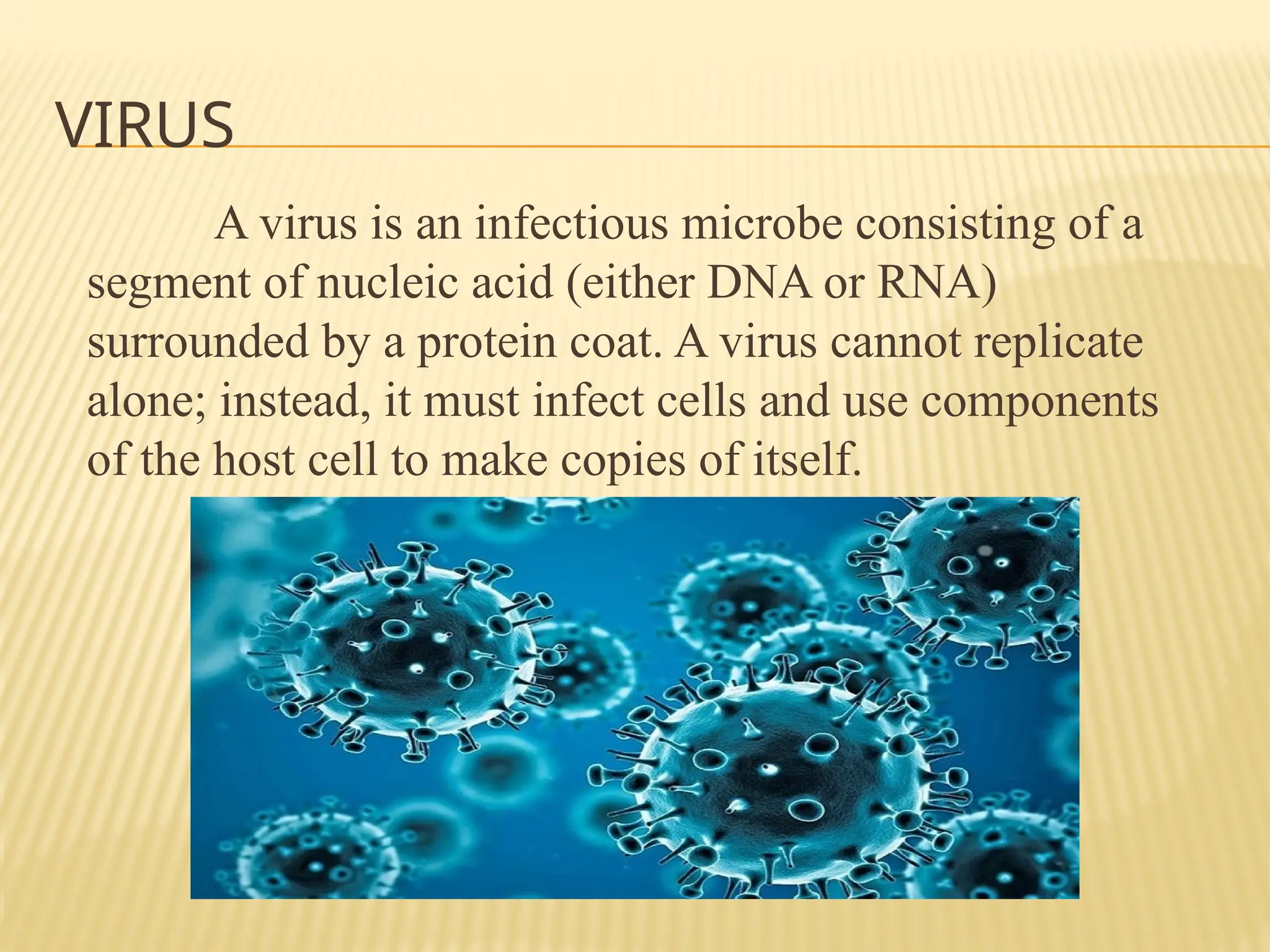
A virus is an infectious microbe consisting of a
segment of nucleic acid (either DNA or RNA)
surrounded by a protein coat. A virus cannot replicate
alone; instead, it must infect cells and use components
of the host cell to make copies of itself.
VIRUS CLASSIFICATION
 Virus classification is the process of naming
viruses and placing them into a taxonomic
system similar to the classification systems
used for cellular organisms.
 Viruses are classified by phenotypic
characteristics, such as morphology,
nucleic acid type, mode of replication,
host organisms, and the type of disease they
cause.
ICTV CLASSIFICAION
ICTV – International committee on taxonomy
nomenclature virus. It includes,
Orders – 09
Families – 131
Sub families – 46
Genera – 803
Species – 4,853
ICTV CLASSIFICATION
The
International Committee on Taxonomy of Viruses began to
devise and implement rules for the naming and
classification of viruses early in the 1970s, an effort that
continues to the present.
The ICTV is the only body charged by the
International Union of Microbiological Societies with the
task of developing, refining, and maintaining a universal
virus taxonomy, following the methods set out in the
International Code of Virus Classification and
Nomenclature.
The system shares many features with the
classification system of cellular organisms, such as
taxon structure. However, some differences exist, such
as the universal use of italics for all taxonomic names,
unlike in the
International Code of Nomenclature for algae, fungi, an
d
plants.
The ICTV has gradually added many higher-level
taxa using relationships in protein folds. All four realms
defined in the 2019 release are defined by the presence
of a protein of a certain structural family.
LHT CLASSIFICATION
It is based on chemical and physical
characters like nucleic acid (DNA or RNA),
Symmetry (Helical or Icosahedral or Complex),
presence of envelope, diameter of capsid,
number of capsomers.
This classification was approved by the
Provisional Committee on Nomenclature of
Virus (PNVC) of the International Association of
Microbiological Societies in 1962.
It is as follows: Phylum Vira (divided into 2
subphyla)
1. Subphylum Deoxyvira (DNA viruses)
2. 1.1.Class Deoxybinala (dual symmetry) Order
Urovirales Family Phagoviridae
3. 1.2.Class Deoxyhelica (Helical symmetry)
Order Chitovirales Family Poxviridae
 1.3.Class Deoxycubica (cubical symmetry)
Order Peplovirales (mantle viruses)
Family Herpesviridae (162 capsomeres)
Order Haplovirales (no envelope)
Family Iridoviridae (812 capsomeres)
Family Adenoviridae (252 capsomeres)
Family Papiloviridae (72 capsomeres)
Family Parvoviridae (32 capsomeres)
Family Microviridae (12 capsomeres)
2. Subphylum Ribovira (RNA viruses)
Order : Togovirales
Family : Arboviridae
Order : Lymovirales
Family : Napoviridae
Family : Reoviridae
2.2.Class Ribohelica (helical symmetry)
Order :Sagovirales
Family :Stomataviridae
Family :Paramyxoviridae
Family :Myxoviridae
Order Rhabdovirales
Suborder Flexiviridales (Plant viruses)
Family Mesoviridae
Family Peptoviridae
Suborder Rigidovirales (Plant viruses)
Family Pachyviridae (20 nm)
Family Protoviridae (15 nm)
Family Dolichoviridae (12-13 nm)
BALTIMORE CLASSIFICATION
 Classified by David Baltimore in 1971.
Classified seven groups based on,
Nucleic acid (DNA/RNA).
Strand (double/single).
Sense (positive/negative).
Methods of replication.
SEVEN GROUPS ARE GIVEN BELOW :
1. Double stranded DNA
2. Single stranded positive (+) sense DNA
3. Double stranded RNA
4. Single stranded positive (+) sense RNA
5. Single stranded negative (-) sense RNA
6. Single stranded positive (+) sense RNA with
DNA intermediated
7. Double stranded DNA with RNA intermediate
Double stranded DNA
Include viruses are, Adenoviruses,Herpesviruses, Poxviruses,
etc..
Replicate in nucleus – Ex: Adenoviruses.
Replicate in cytoplasm – Ex: Poxviruses.
SS (+) sense DNA
Involving the formation of a (-)sense strand.
Replication occurs in nucleus. Ex: Parvovirus.
Double stranded RNA
Have segmented genome.
Each genome is transcribed separately produce
monocistronic mRNA. Ex: Reoviruse , Pirnavirus.
SS (+) sense RNA
Polycistronic mRNA - Ex: Picrnovirus , Hepatitis A. 
Complex transcription – Ex : togaviruses
SS (-) sense RNA
Segmented - Ex : Orhomxoviruses.
Non segmented – Ex : Rhabdoviruses.
SS (+) sense RNA with DNA intermediate
Does not serves as mRNA.
template for reverse transcription .
Ex : Retroviruses
DS RNA with DNA intermediate
Ex : Hepadnaviruses.
THANK YOU

Classification of virus ICTV,LHT,Baltimore

  • 1.
    CLASSIFICATION OF VIRUS R.JEEVA ASSISTANTPROFESSOR DEPARTMENT OF MICROBIOLOGY
  • 2.
    VIRUS A virus isan infectious microbe consisting of a segment of nucleic acid (either DNA or RNA) surrounded by a protein coat. A virus cannot replicate alone; instead, it must infect cells and use components of the host cell to make copies of itself.
  • 3.
    VIRUS CLASSIFICATION  Virusclassification is the process of naming viruses and placing them into a taxonomic system similar to the classification systems used for cellular organisms.  Viruses are classified by phenotypic characteristics, such as morphology, nucleic acid type, mode of replication, host organisms, and the type of disease they cause.
  • 4.
    ICTV CLASSIFICAION ICTV –International committee on taxonomy nomenclature virus. It includes, Orders – 09 Families – 131 Sub families – 46 Genera – 803 Species – 4,853
  • 5.
    ICTV CLASSIFICATION The International Committeeon Taxonomy of Viruses began to devise and implement rules for the naming and classification of viruses early in the 1970s, an effort that continues to the present. The ICTV is the only body charged by the International Union of Microbiological Societies with the task of developing, refining, and maintaining a universal virus taxonomy, following the methods set out in the International Code of Virus Classification and Nomenclature.
  • 6.
    The system sharesmany features with the classification system of cellular organisms, such as taxon structure. However, some differences exist, such as the universal use of italics for all taxonomic names, unlike in the International Code of Nomenclature for algae, fungi, an d plants. The ICTV has gradually added many higher-level taxa using relationships in protein folds. All four realms defined in the 2019 release are defined by the presence of a protein of a certain structural family.
  • 7.
    LHT CLASSIFICATION It isbased on chemical and physical characters like nucleic acid (DNA or RNA), Symmetry (Helical or Icosahedral or Complex), presence of envelope, diameter of capsid, number of capsomers. This classification was approved by the Provisional Committee on Nomenclature of Virus (PNVC) of the International Association of Microbiological Societies in 1962.
  • 8.
    It is asfollows: Phylum Vira (divided into 2 subphyla) 1. Subphylum Deoxyvira (DNA viruses) 2. 1.1.Class Deoxybinala (dual symmetry) Order Urovirales Family Phagoviridae 3. 1.2.Class Deoxyhelica (Helical symmetry) Order Chitovirales Family Poxviridae
  • 9.
     1.3.Class Deoxycubica(cubical symmetry) Order Peplovirales (mantle viruses) Family Herpesviridae (162 capsomeres) Order Haplovirales (no envelope) Family Iridoviridae (812 capsomeres) Family Adenoviridae (252 capsomeres) Family Papiloviridae (72 capsomeres) Family Parvoviridae (32 capsomeres) Family Microviridae (12 capsomeres)
  • 10.
    2. Subphylum Ribovira(RNA viruses) Order : Togovirales Family : Arboviridae Order : Lymovirales Family : Napoviridae Family : Reoviridae 2.2.Class Ribohelica (helical symmetry) Order :Sagovirales Family :Stomataviridae Family :Paramyxoviridae Family :Myxoviridae
  • 11.
    Order Rhabdovirales Suborder Flexiviridales(Plant viruses) Family Mesoviridae Family Peptoviridae Suborder Rigidovirales (Plant viruses) Family Pachyviridae (20 nm) Family Protoviridae (15 nm) Family Dolichoviridae (12-13 nm)
  • 12.
    BALTIMORE CLASSIFICATION  Classifiedby David Baltimore in 1971. Classified seven groups based on, Nucleic acid (DNA/RNA). Strand (double/single). Sense (positive/negative). Methods of replication.
  • 13.
    SEVEN GROUPS AREGIVEN BELOW : 1. Double stranded DNA 2. Single stranded positive (+) sense DNA 3. Double stranded RNA 4. Single stranded positive (+) sense RNA 5. Single stranded negative (-) sense RNA 6. Single stranded positive (+) sense RNA with DNA intermediated 7. Double stranded DNA with RNA intermediate
  • 14.
    Double stranded DNA Includeviruses are, Adenoviruses,Herpesviruses, Poxviruses, etc.. Replicate in nucleus – Ex: Adenoviruses. Replicate in cytoplasm – Ex: Poxviruses. SS (+) sense DNA Involving the formation of a (-)sense strand. Replication occurs in nucleus. Ex: Parvovirus. Double stranded RNA Have segmented genome. Each genome is transcribed separately produce monocistronic mRNA. Ex: Reoviruse , Pirnavirus. SS (+) sense RNA Polycistronic mRNA - Ex: Picrnovirus , Hepatitis A.  Complex transcription – Ex : togaviruses
  • 15.
    SS (-) senseRNA Segmented - Ex : Orhomxoviruses. Non segmented – Ex : Rhabdoviruses. SS (+) sense RNA with DNA intermediate Does not serves as mRNA. template for reverse transcription . Ex : Retroviruses DS RNA with DNA intermediate Ex : Hepadnaviruses.
  • 16.