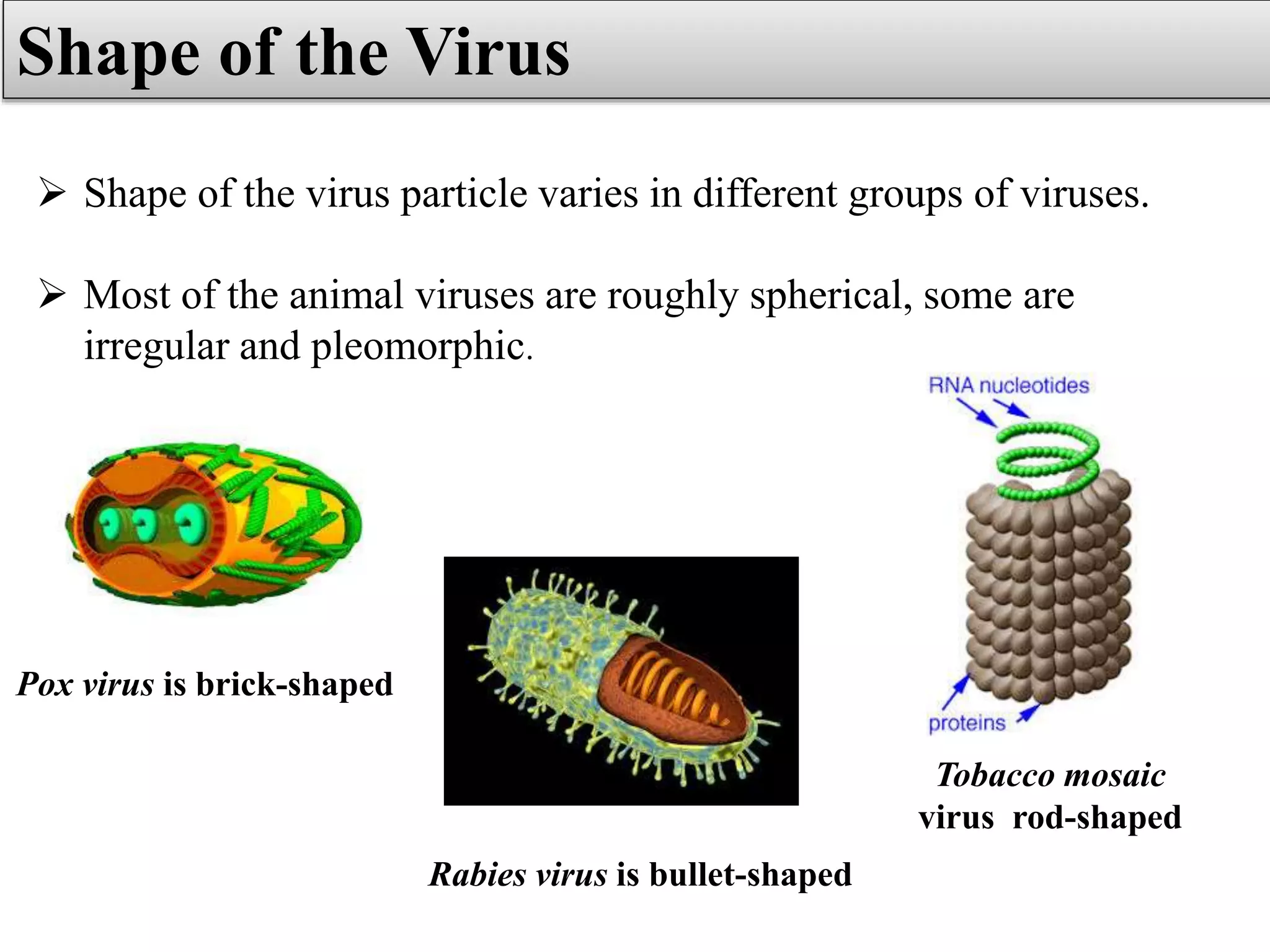
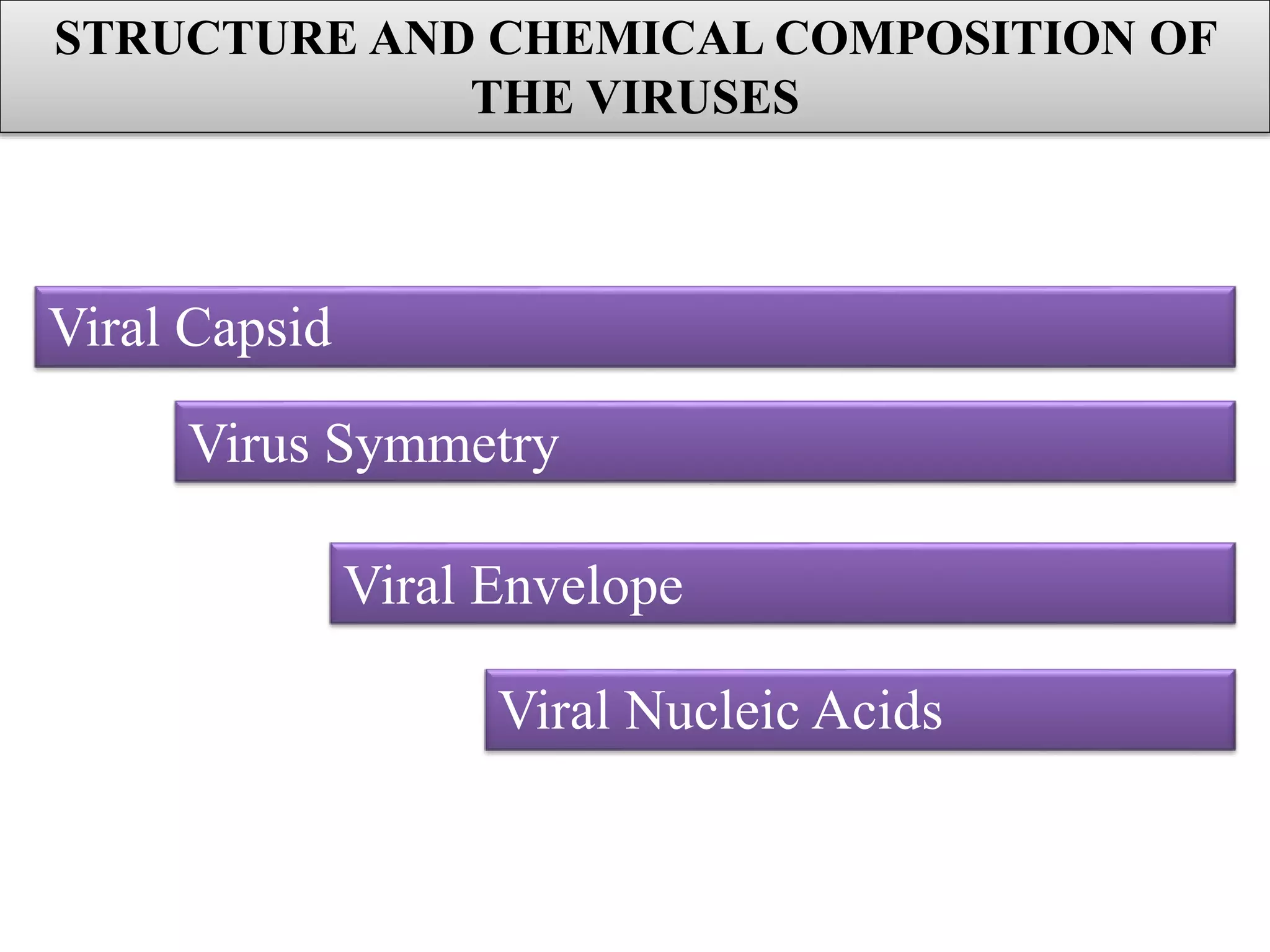
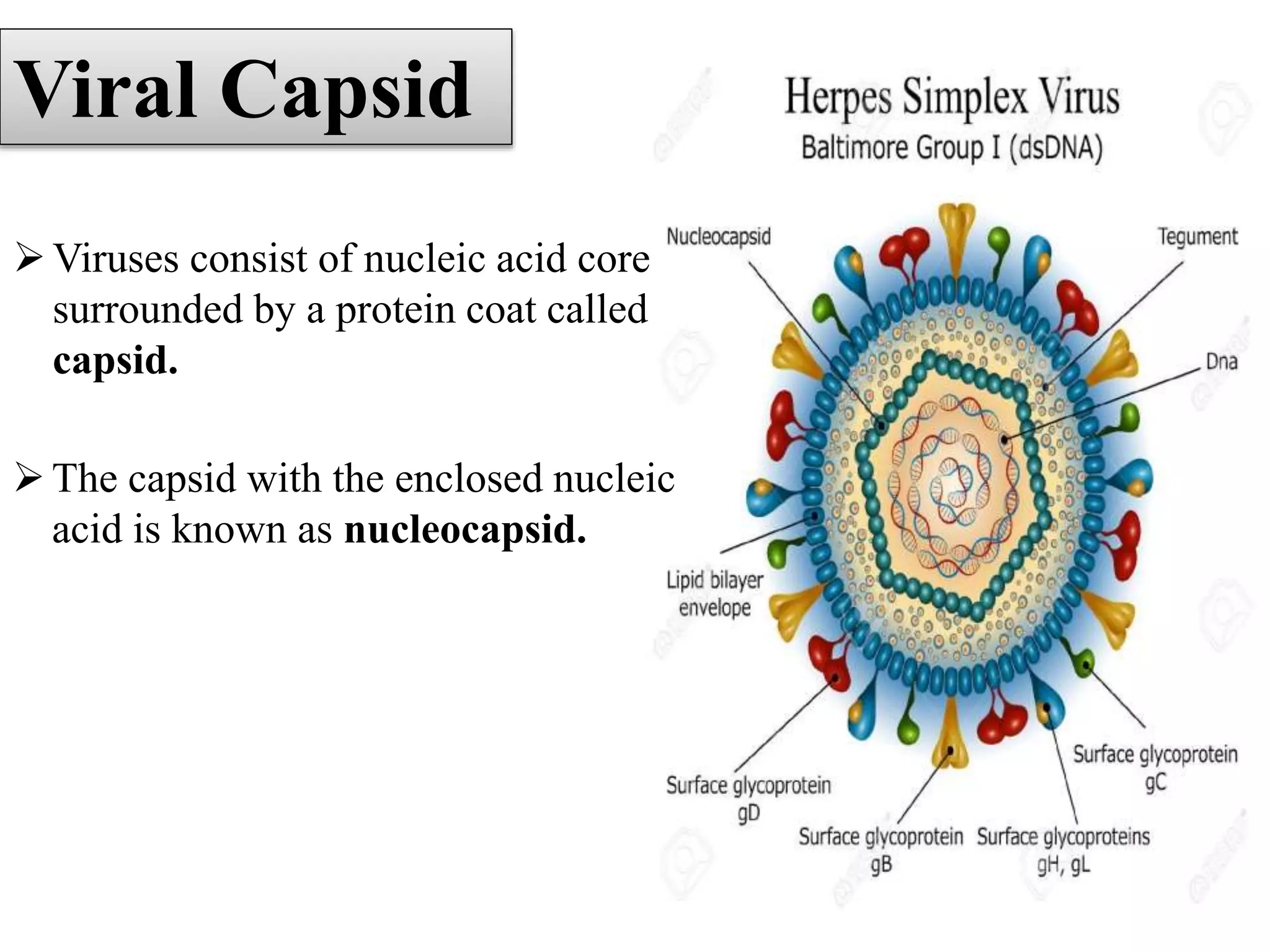
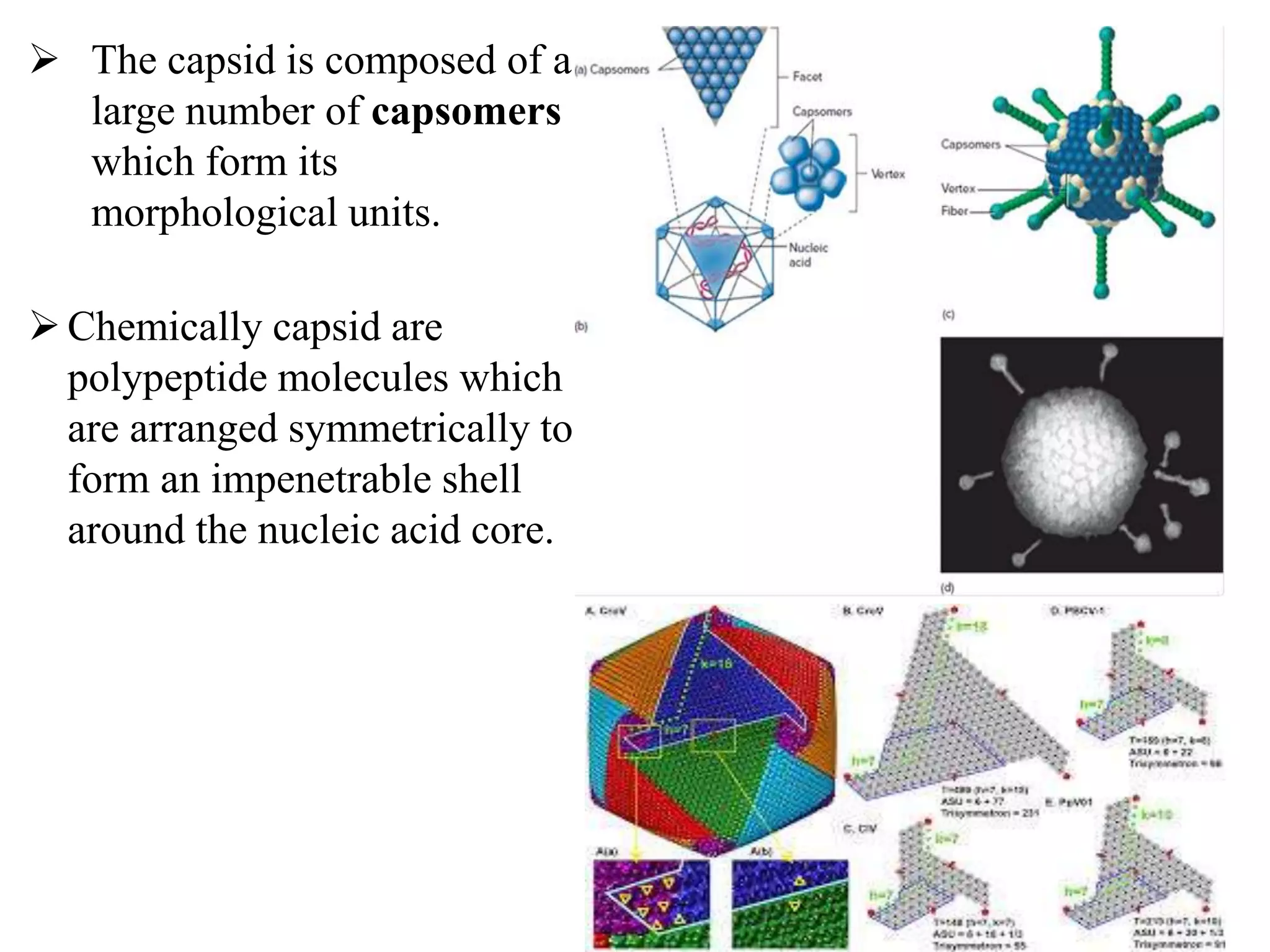
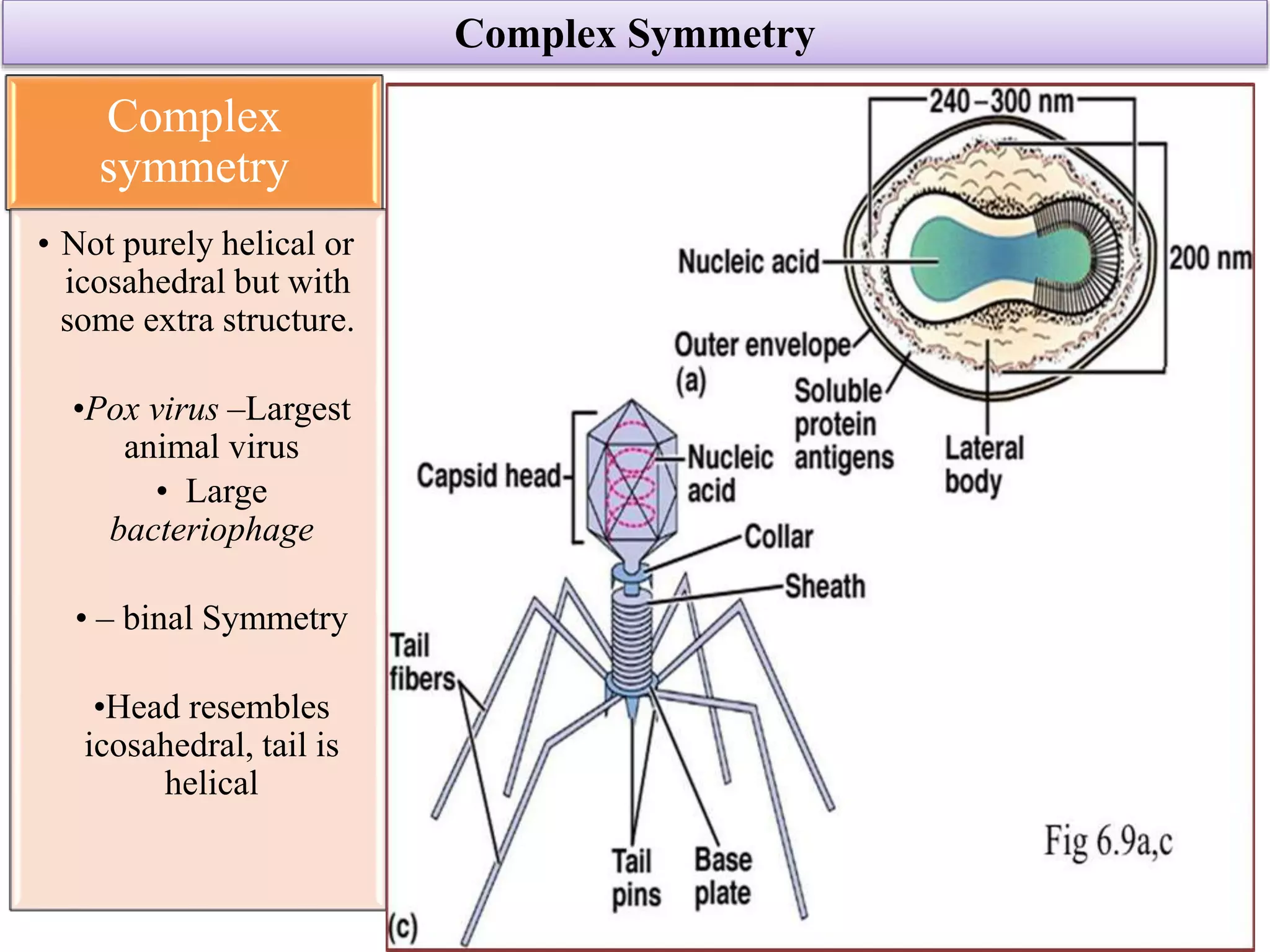
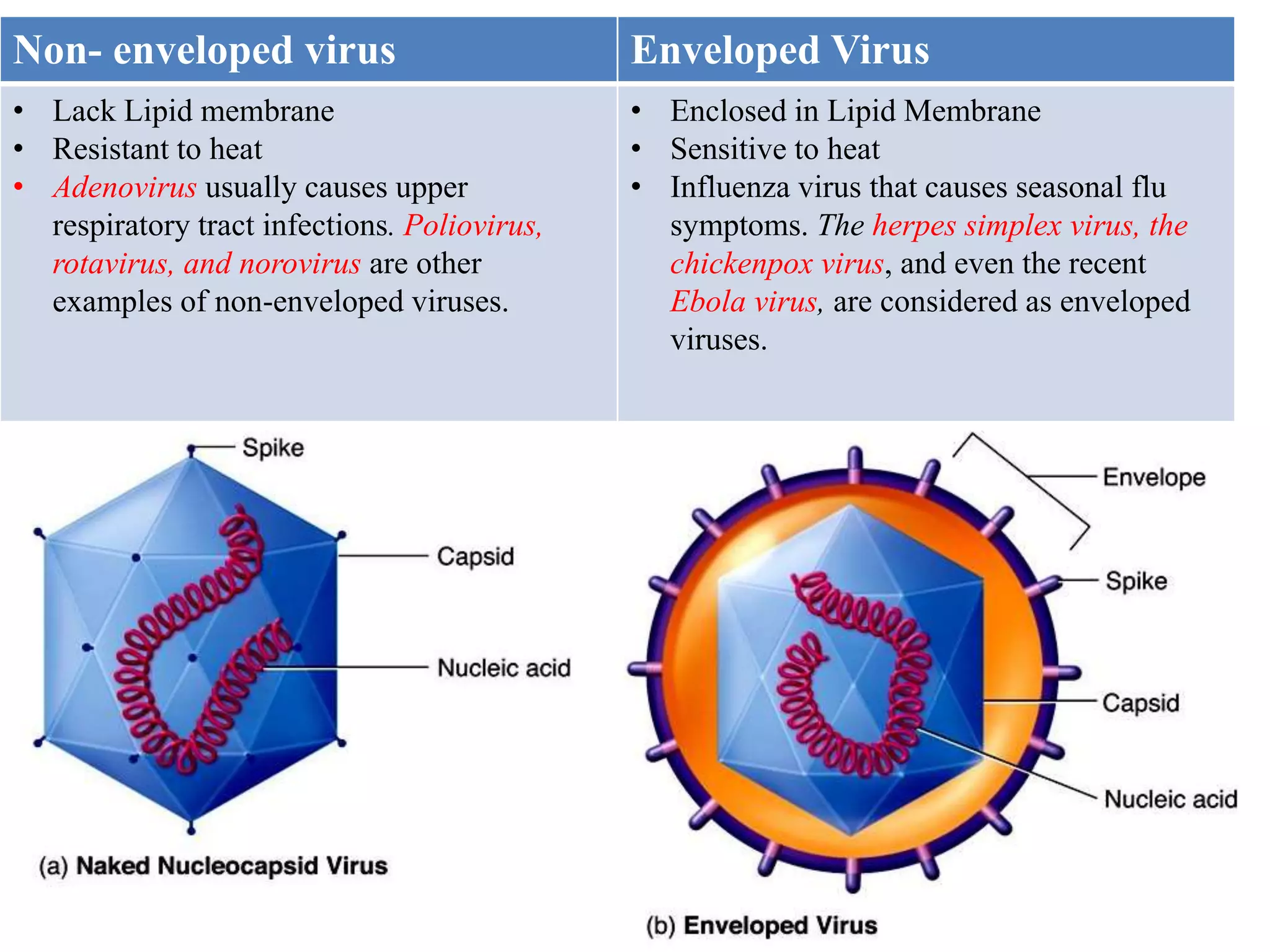
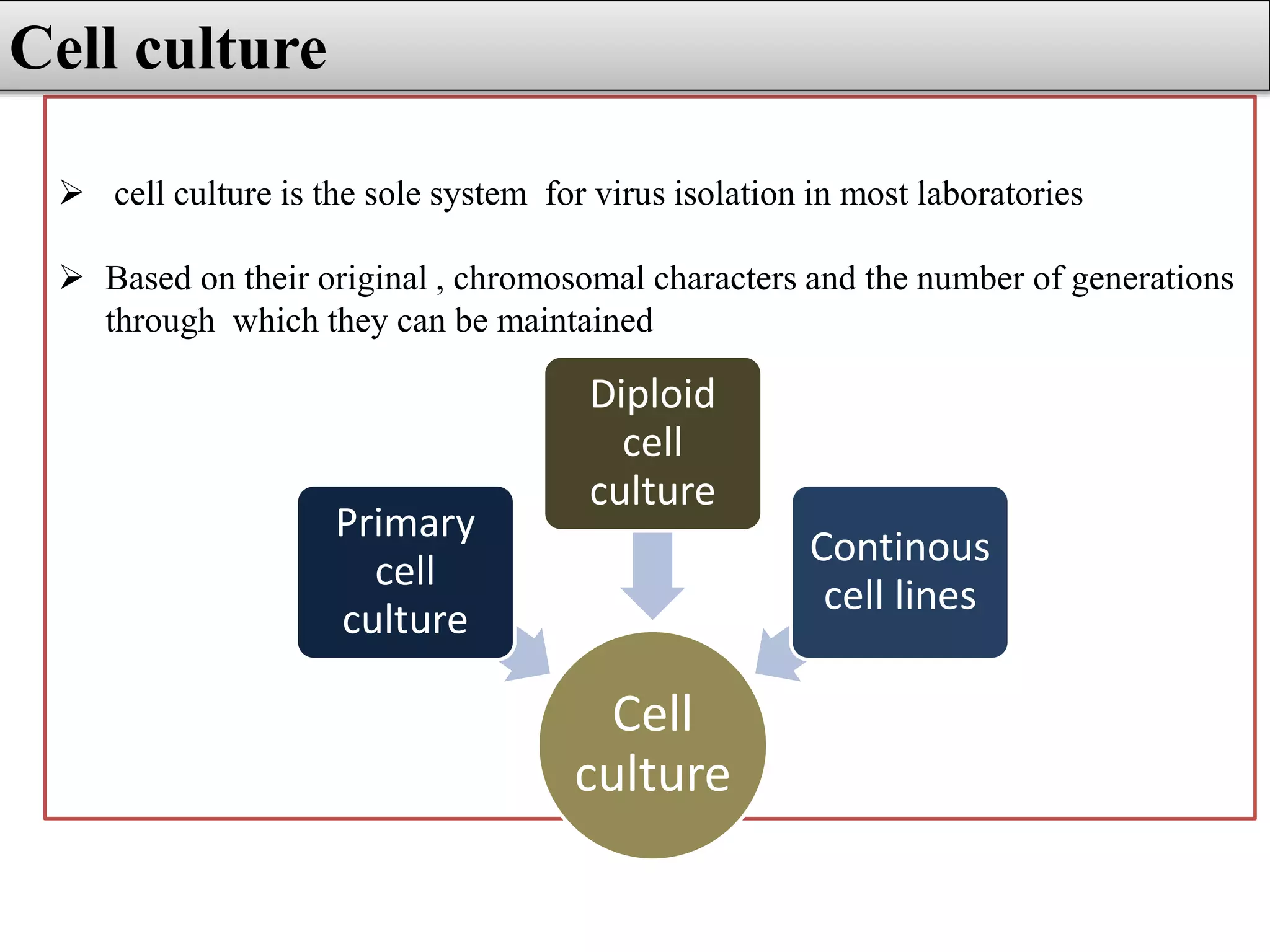
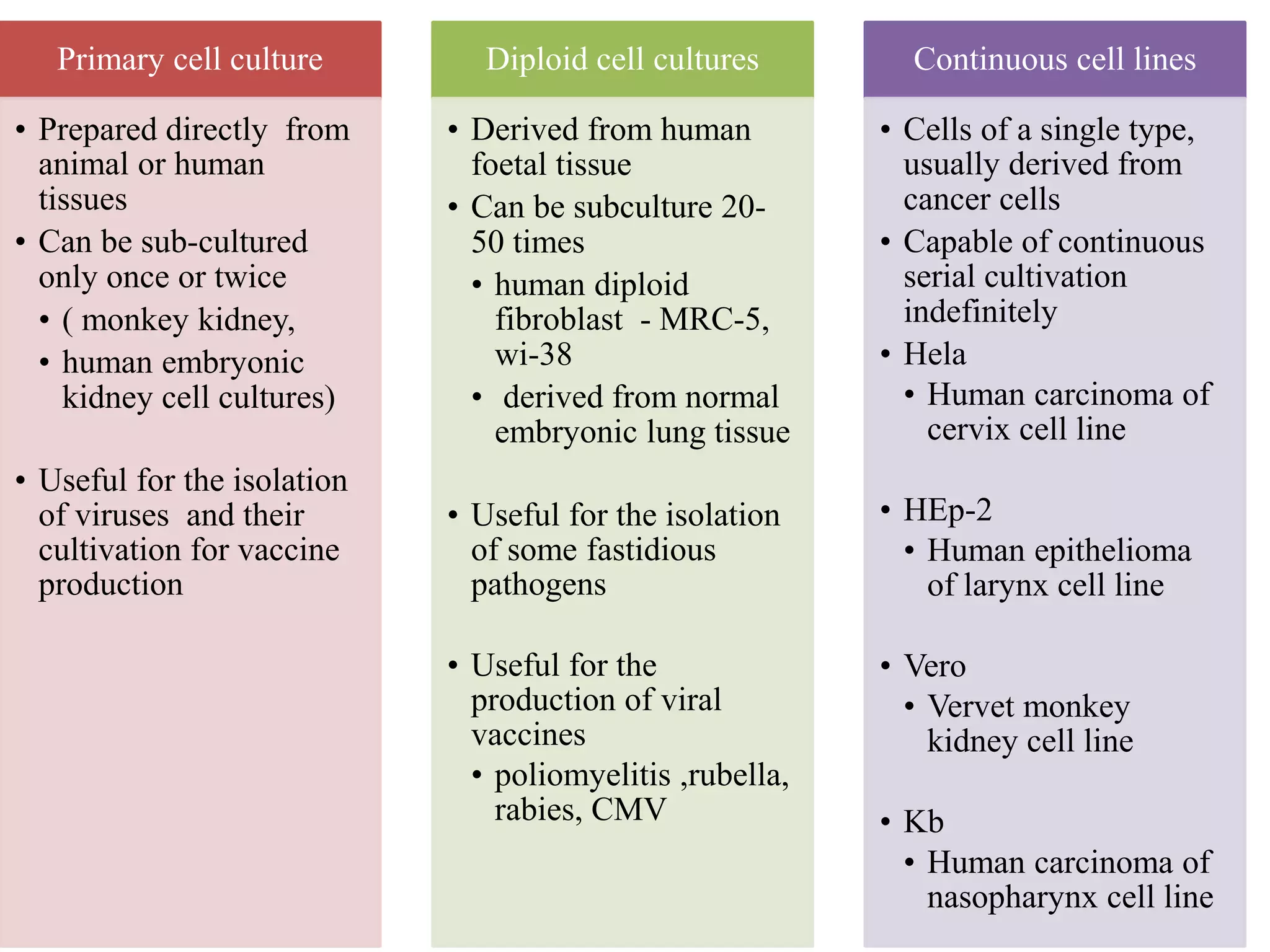
This seminar presentation summarizes the general characteristics and classification of viruses. It defines viruses as obligate intracellular parasites that are too small to be seen by optical microscopes and must replicate inside host cells. Viruses do not have cellular organization and contain either DNA or RNA, but not both. They lack the enzymes for protein and nucleic acid synthesis and are dependent on host cell machinery for replication. Viruses come in various shapes and sizes and have capsids made of protein that surround their nucleic acid cores. Their capsids exhibit different symmetries and some viruses have envelopes. Viruses are cultivated using techniques like animal inoculation, embryonated egg culture, and cell culture.















![1. introduction to_virology[1]](https://cdn.slidesharecdn.com/ss_thumbnails/1-210814125616-thumbnail.jpg?width=640&height=640&fit=bounds)


