Postoperative Cognitive Dysfunction
(POCD) in the elderly
By Ajay
Moderator: Dr YOGA
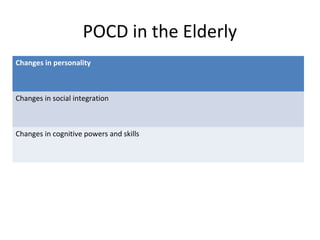
POCD in the Elderly
Changes in personality
Changes in social integration
Changes in cognitive powers and skills
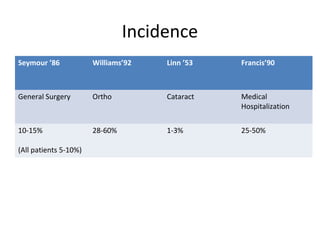
Incidence
Seymour ’86 Williams’92 Linn ’53 Francis’90
General Surgery Ortho Cataract Medical
Hospitalization
10-15%
(All patients 5-10%)
28-60% 1-3% 25-50%
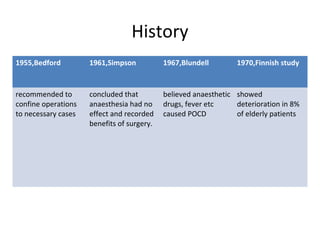
History
1955,Bedford 1961,Simpson 1967,Blundell 1970,Finnish study
recommended to
confine operations
to necessary cases
concluded that
anaesthesia had no
effect and recorded
benefits of surgery.
believed anaesthetic
drugs, fever etc
caused POCD
showed
deterioration in 8%
of elderly patients
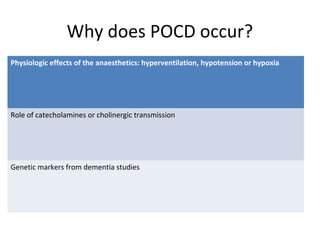
Why does POCD occur?
Physiologic effects of the anaesthetics: hyperventilation, hypotension or hypoxia
Role of catecholamines or cholinergic transmission
Genetic markers from dementia studies
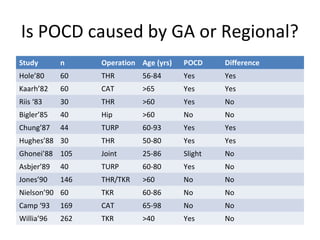
Is POCD caused by GA or Regional?
Study n Operation Age (yrs) POCD Difference
Hole’80 60 THR 56-84 Yes Yes
Kaarh’82 60 CAT >65 Yes Yes
Riis ‘83 30 THR >60 Yes No
Bigler’85 40 Hip >60 No No
Chung’87 44 TURP 60-93 Yes Yes
Hughes’88 30 THR 50-80 Yes Yes
Ghonei’88 105 Joint 25-86 Slight No
Asbjer’89 40 TURP 60-80 Yes No
Jones’90 146 THR/TKR >60 No No
Nielson’90 60 TKR 60-86 No No
Camp ‘93 169 CAT 65-98 No No
Willia’96 262 TKR >40 Yes No
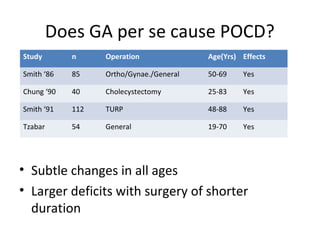
Does GA per se cause POCD?
• Subtle changes in all ages
• Larger deficits with surgery of shorter
duration
Study n Operation Age(Yrs) Effects
Smith ‘86 85 Ortho/Gynae./General 50-69 Yes
Chung ‘90 40 Cholecystectomy 25-83 Yes
Smith ‘91 112 TURP 48-88 Yes
Tzabar 54 General 19-70 Yes
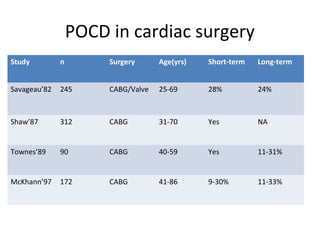
POCD in cardiac surgery
Study n Surgery Age(yrs) Short-term Long-term
Savageau’82 245 CABG/Valve 25-69 28% 24%
Shaw’87 312 CABG 31-70 Yes NA
Townes’89 90 CABG 40-59 Yes 11-31%
McKhann’97 172 CABG 41-86 9-30% 11-33%
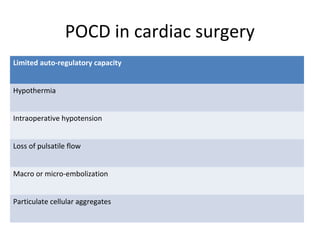
POCD in cardiac surgery
Limited auto-regulatory capacity
Hypothermia
Intraoperative hypotension
Loss of pulsatile flow
Macro or micro-embolization
Particulate cellular aggregates
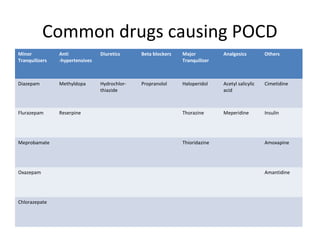
Common drugs causing POCD
Minor
Tranquilizers
Anti
-hypertensives
Diuretics Beta blockers Major
Tranquilizer
Analgesics Others
Diazepam Methyldopa Hydrochlor-
thiazide
Propranolol Haloperidol Acetyl salicylic
acid
Cimetidine
Flurazepam Reserpine Thorazine Meperidine Insulin
Meprobamate Thioridazine Amoxapine
Oxazepam Amantidine
Chlorazepate
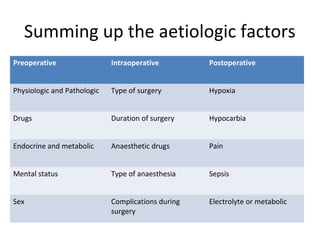
Summing up the aetiologic factors
Preoperative Intraoperative Postoperative
Physiologic and Pathologic Type of surgery Hypoxia
Drugs Duration of surgery Hypocarbia
Endocrine and metabolic Anaesthetic drugs Pain
Mental status Type of anaesthesia Sepsis
Sex Complications during
surgery
Electrolyte or metabolic
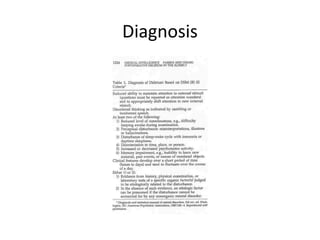
Diagnosis
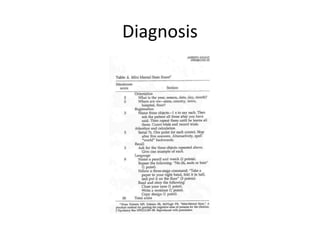
Diagnosis
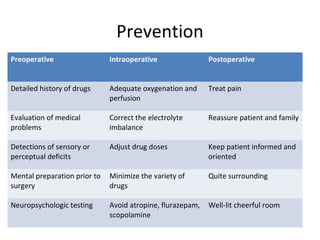
Prevention
Preoperative Intraoperative Postoperative
Detailed history of drugs Adequate oxygenation and
perfusion
Treat pain
Evaluation of medical
problems
Correct the electrolyte
imbalance
Reassure patient and family
Detections of sensory or
perceptual deficits
Adjust drug doses Keep patient informed and
oriented
Mental preparation prior to
surgery
Minimize the variety of
drugs
Quite surrounding
Neuropsychologic testing Avoid atropine, flurazepam,
scopolamine
Well-lit cheerful room
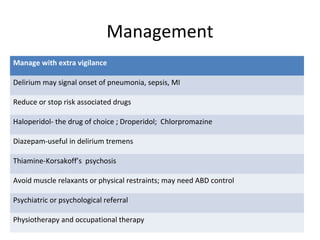
Management
Manage with extra vigilance
Delirium may signal onset of pneumonia, sepsis, MI
Reduce or stop risk associated drugs
Haloperidol- the drug of choice ; Droperidol; Chlorpromazine
Diazepam-useful in delirium tremens
Thiamine-Korsakoff’s psychosis
Avoid muscle relaxants or physical restraints; may need ABD control
Psychiatric or psychological referral
Physiotherapy and occupational therapy
References
C. Dodds and J.Allision. Postoperative deficit in the elderly surgical patient.BJA 1998
Smita S. Parikh and Frances Chung.Postoperative Delirium in the Elderly.Anesth Anal
1995
Khwaja et al.Preoperative Factors Associated with Postoperative Changes in Confusion
Assessment.Anesth Anal 2002
Thank you very much!

Postoperative cognitive dysfunction (pocd) in the (1)

  • 1.
    Postoperative Cognitive Dysfunction (POCD)in the elderly By Ajay Moderator: Dr YOGA
  • 2.
    POCD in theElderly Changes in personality Changes in social integration Changes in cognitive powers and skills
  • 3.
    Incidence Seymour ’86 Williams’92Linn ’53 Francis’90 General Surgery Ortho Cataract Medical Hospitalization 10-15% (All patients 5-10%) 28-60% 1-3% 25-50%
  • 4.
    History 1955,Bedford 1961,Simpson 1967,Blundell1970,Finnish study recommended to confine operations to necessary cases concluded that anaesthesia had no effect and recorded benefits of surgery. believed anaesthetic drugs, fever etc caused POCD showed deterioration in 8% of elderly patients
  • 5.
    Why does POCDoccur? Physiologic effects of the anaesthetics: hyperventilation, hypotension or hypoxia Role of catecholamines or cholinergic transmission Genetic markers from dementia studies
  • 6.
    Is POCD causedby GA or Regional? Study n Operation Age (yrs) POCD Difference Hole’80 60 THR 56-84 Yes Yes Kaarh’82 60 CAT >65 Yes Yes Riis ‘83 30 THR >60 Yes No Bigler’85 40 Hip >60 No No Chung’87 44 TURP 60-93 Yes Yes Hughes’88 30 THR 50-80 Yes Yes Ghonei’88 105 Joint 25-86 Slight No Asbjer’89 40 TURP 60-80 Yes No Jones’90 146 THR/TKR >60 No No Nielson’90 60 TKR 60-86 No No Camp ‘93 169 CAT 65-98 No No Willia’96 262 TKR >40 Yes No
  • 7.
    Does GA perse cause POCD? • Subtle changes in all ages • Larger deficits with surgery of shorter duration Study n Operation Age(Yrs) Effects Smith ‘86 85 Ortho/Gynae./General 50-69 Yes Chung ‘90 40 Cholecystectomy 25-83 Yes Smith ‘91 112 TURP 48-88 Yes Tzabar 54 General 19-70 Yes
  • 8.
    POCD in cardiacsurgery Study n Surgery Age(yrs) Short-term Long-term Savageau’82 245 CABG/Valve 25-69 28% 24% Shaw’87 312 CABG 31-70 Yes NA Townes’89 90 CABG 40-59 Yes 11-31% McKhann’97 172 CABG 41-86 9-30% 11-33%
  • 9.
    POCD in cardiacsurgery Limited auto-regulatory capacity Hypothermia Intraoperative hypotension Loss of pulsatile flow Macro or micro-embolization Particulate cellular aggregates
  • 10.
    Common drugs causingPOCD Minor Tranquilizers Anti -hypertensives Diuretics Beta blockers Major Tranquilizer Analgesics Others Diazepam Methyldopa Hydrochlor- thiazide Propranolol Haloperidol Acetyl salicylic acid Cimetidine Flurazepam Reserpine Thorazine Meperidine Insulin Meprobamate Thioridazine Amoxapine Oxazepam Amantidine Chlorazepate
  • 11.
    Summing up theaetiologic factors Preoperative Intraoperative Postoperative Physiologic and Pathologic Type of surgery Hypoxia Drugs Duration of surgery Hypocarbia Endocrine and metabolic Anaesthetic drugs Pain Mental status Type of anaesthesia Sepsis Sex Complications during surgery Electrolyte or metabolic
  • 12.
  • 13.
  • 14.
    Prevention Preoperative Intraoperative Postoperative Detailedhistory of drugs Adequate oxygenation and perfusion Treat pain Evaluation of medical problems Correct the electrolyte imbalance Reassure patient and family Detections of sensory or perceptual deficits Adjust drug doses Keep patient informed and oriented Mental preparation prior to surgery Minimize the variety of drugs Quite surrounding Neuropsychologic testing Avoid atropine, flurazepam, scopolamine Well-lit cheerful room
  • 15.
    Management Manage with extravigilance Delirium may signal onset of pneumonia, sepsis, MI Reduce or stop risk associated drugs Haloperidol- the drug of choice ; Droperidol; Chlorpromazine Diazepam-useful in delirium tremens Thiamine-Korsakoff’s psychosis Avoid muscle relaxants or physical restraints; may need ABD control Psychiatric or psychological referral Physiotherapy and occupational therapy
  • 16.
    References C. Dodds andJ.Allision. Postoperative deficit in the elderly surgical patient.BJA 1998 Smita S. Parikh and Frances Chung.Postoperative Delirium in the Elderly.Anesth Anal 1995 Khwaja et al.Preoperative Factors Associated with Postoperative Changes in Confusion Assessment.Anesth Anal 2002
  • 17.