ATLS UPDATE
ACUTE BURN
MANAGEMENTDr Awaneesh Katiyar
(M.Ch. Senior Resident)
Trauma Surgery and Critical Care
All India Institute of Medical Sciences, Rishikesh, UK.
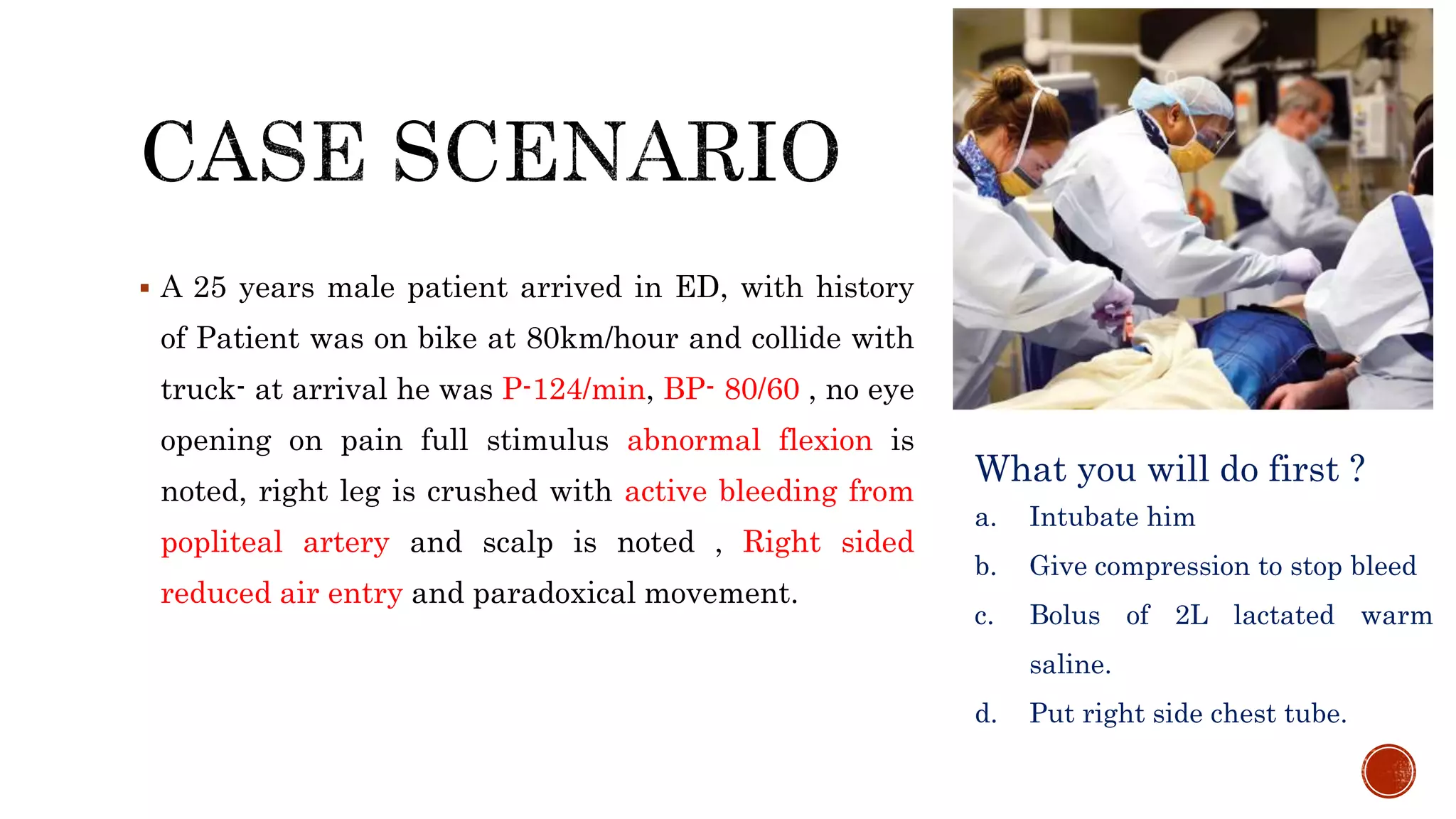
 A 25 years male patient arrived in ED, with history
of Patient was on bike at 80km/hour and collide with
truck- at arrival he was P-124/min, BP- 80/60 , no eye
opening on pain full stimulus abnormal flexion is
noted, right leg is crushed with active bleeding from
popliteal artery and scalp is noted , Right sided
reduced air entry and paradoxical movement.
What you will do first ?
a. Intubate him
b. Give compression to stop bleed
c. Bolus of 2L lactated warm
saline.
d. Put right side chest tube.
 Preparation
A – laryngoscope, ET tube, bougie, Suction machine drugs, c- collar
B- chest tube kit with water seal
C- warm saline, wide bore cannula,
Adjunct – Spo2 probe , BP , FAST machine , catheter, RT and
 Triage – red / yellow / green (multiple causalities / mass causalities)
1. Life or limb – red
2. Walking wounded – green
3. Rest goes to yellow
 Primary survey with immediate resuscitation of life threatening injuries
1. A-Secure airway / c-collar
2. B-Assess breathing n Ventilate the patient
3. C-Control bleeding and shock – 1 litre warm saline
with wide bore / tranexa1gm
4. D- neurological disability
 Adjuncts to primary survey
Rule of 2 in trauma
1. 2- things to monitor – Spo2 / BP
2. 2 – tubes – catheter / RT
3. 2- X-rays – CXR/PXR
4. 2- Test – ABG/blood group
5. 2- machine`s – Xrays / FAST
 Secondary survey – head to toe examination and patient history.
1. Head
2. Neck
3. Maxillofacial
4. Chest
5. Abdomen and pelvis
6. Lower extremity
7. Upper extremity
8. Spine
9. Soft tissue
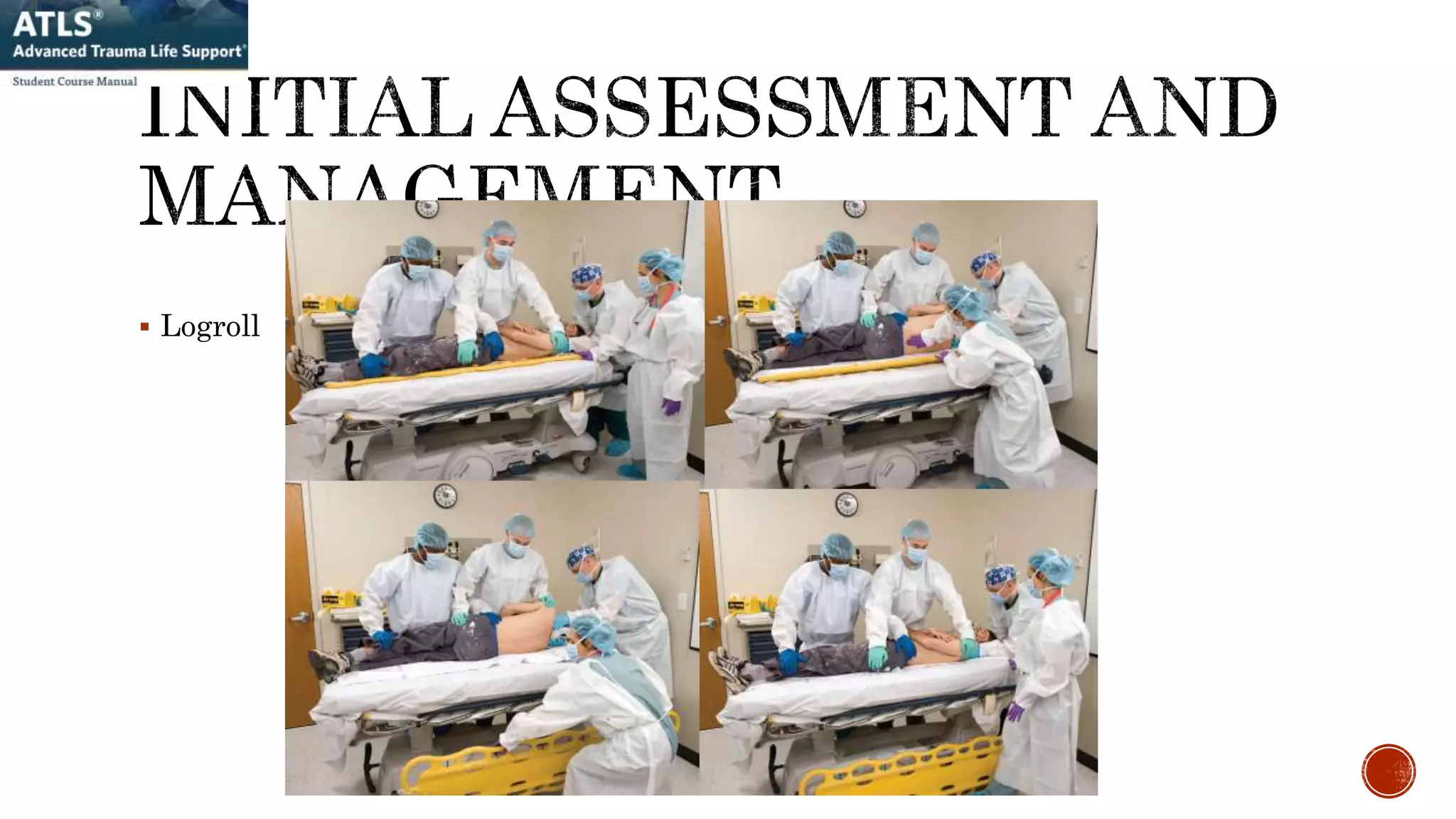
 Logroll
 Post- resuscitation care and re-evaluation.
 Definitive care
 Airway maintenance and restriction of cervical spine motion
 Breathing and ventilation
 Circulation with hemorrhage control
 Disability ( assessment of neurologic status)
 Exposure/ Environment control
A B C D
 Airway – kills in seconds
 Breathing – takes minutes
 Circulation – bleeding kills in hours
 Disability (neurological)– hours to days ( except brain stem)
 A 25 years male patient arrived in ED, with history
of Patient was on bike at 80km/hour and collide with
truck- at arrival he was P-124/min, BP- 80/60 , no eye
opening on pain full stimulus abnormal flexion is
noted, right leg is crushed with active bleeding from
popliteal artery and scalp is noted , Right sided
reduced air entry and paradoxical movement.
What you will do first ?
a. Intubate him
b. Give compression to stop bleed
c. Bolus of 2L lactated warm
saline.
d. Put right side chest tube.
10 SECONDS
 asking the patient for his or her name,
 asking what happened to you?
• Able to phonate- airway is normal
• Able complete sentence – breathing normal
• Well oriented – circulation normal with no
neurological deficit
A
Chin lift Jaw-thrust
• Cuffed Tube below vocal cords.
• Inflated.
• Connected to O2 source.
• Supported with ventilation.
1. Needle cricothyroidotomy
2. Surgical cricothyroidotomy
3. Tracheostomy
1. Needle cricothyroidotomy
2. Surgical cricothyroidotomy
3. Tracheostomy
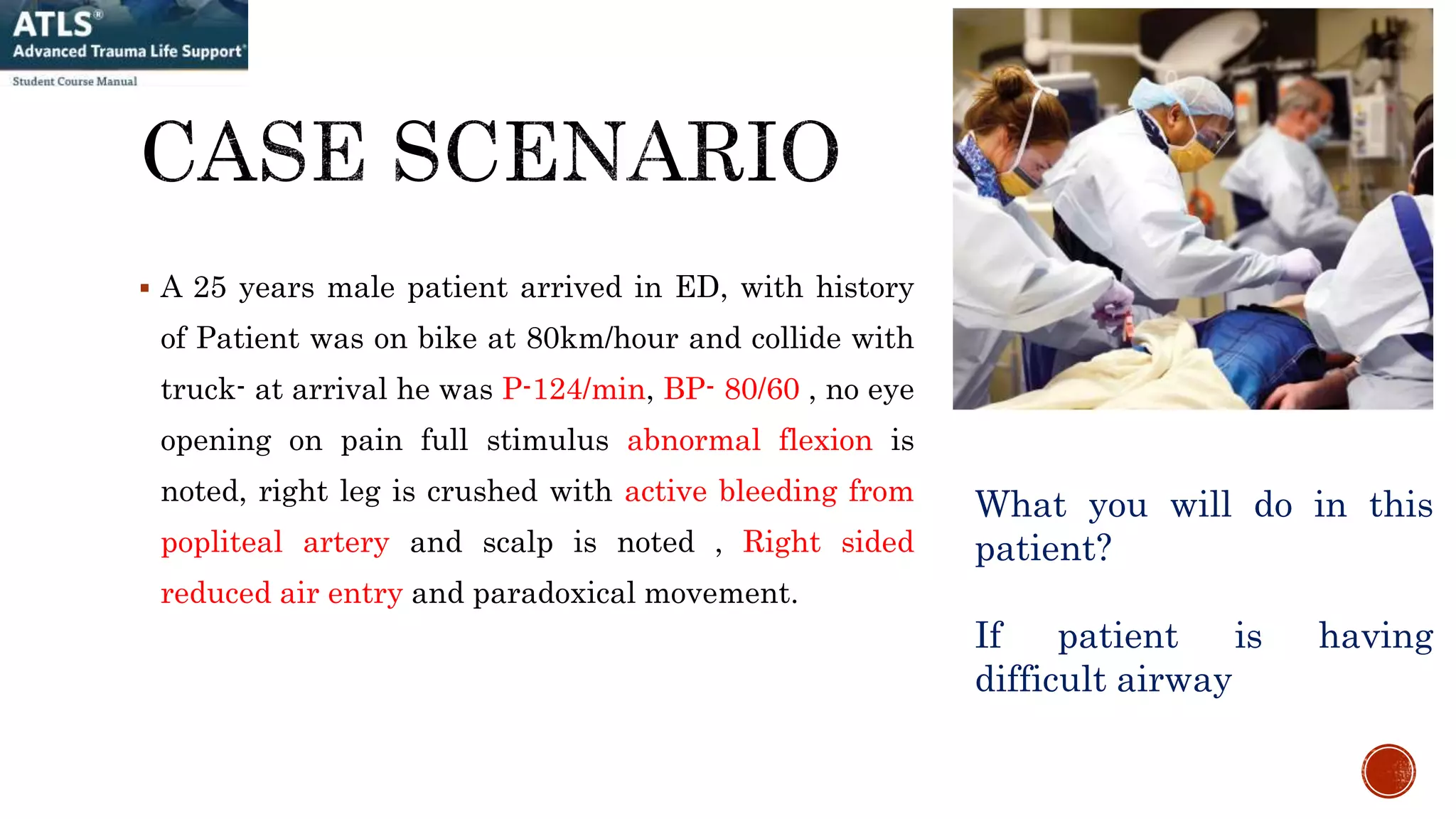
 A 25 years male patient arrived in ED, with history
of Patient was on bike at 80km/hour and collide with
truck- at arrival he was P-124/min, BP- 80/60 , no eye
opening on pain full stimulus abnormal flexion is
noted, right leg is crushed with active bleeding from
popliteal artery and scalp is noted , Right sided
reduced air entry and paradoxical movement.
What you will do in this
patient?
If patient is having
difficult airway
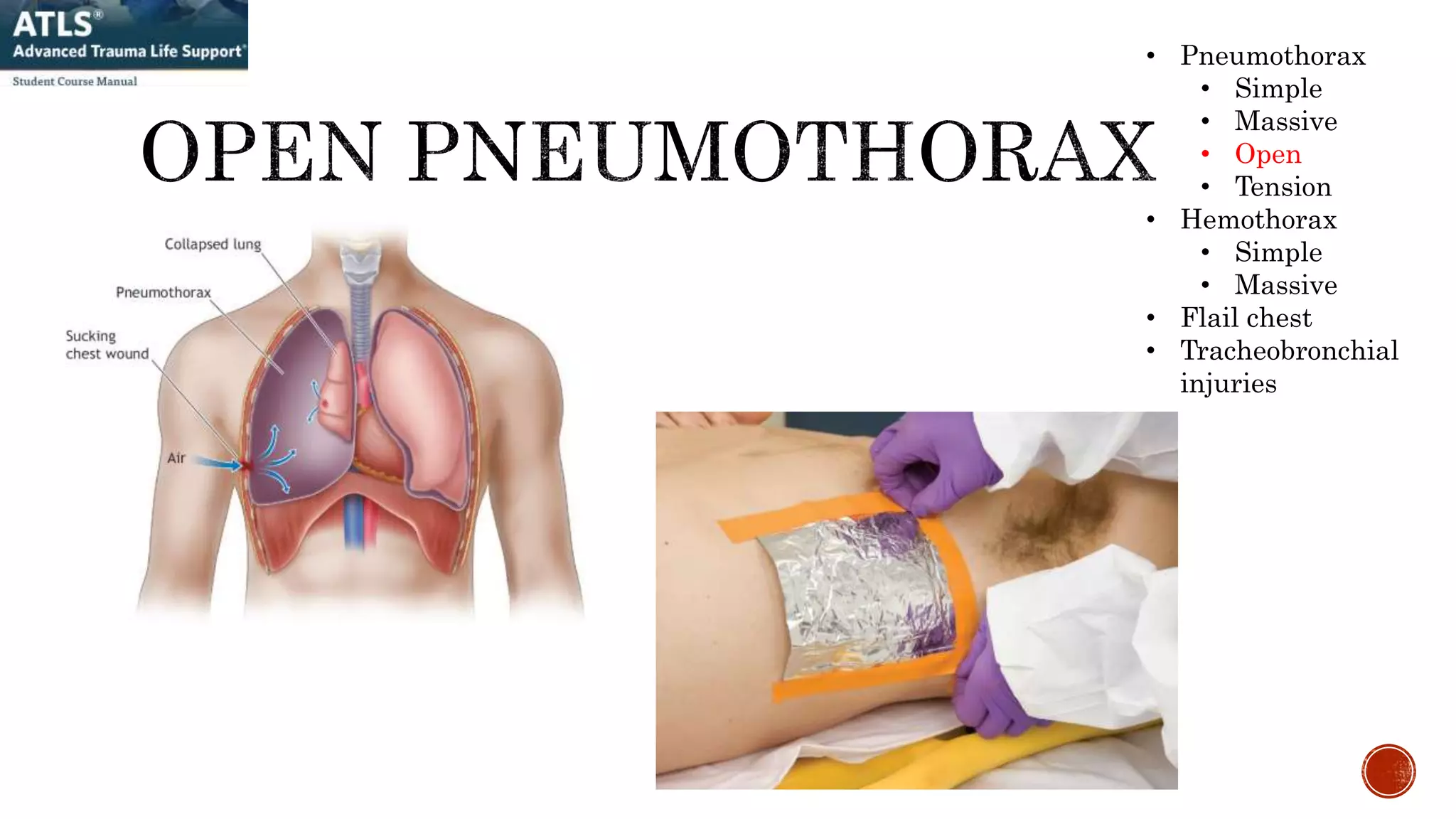
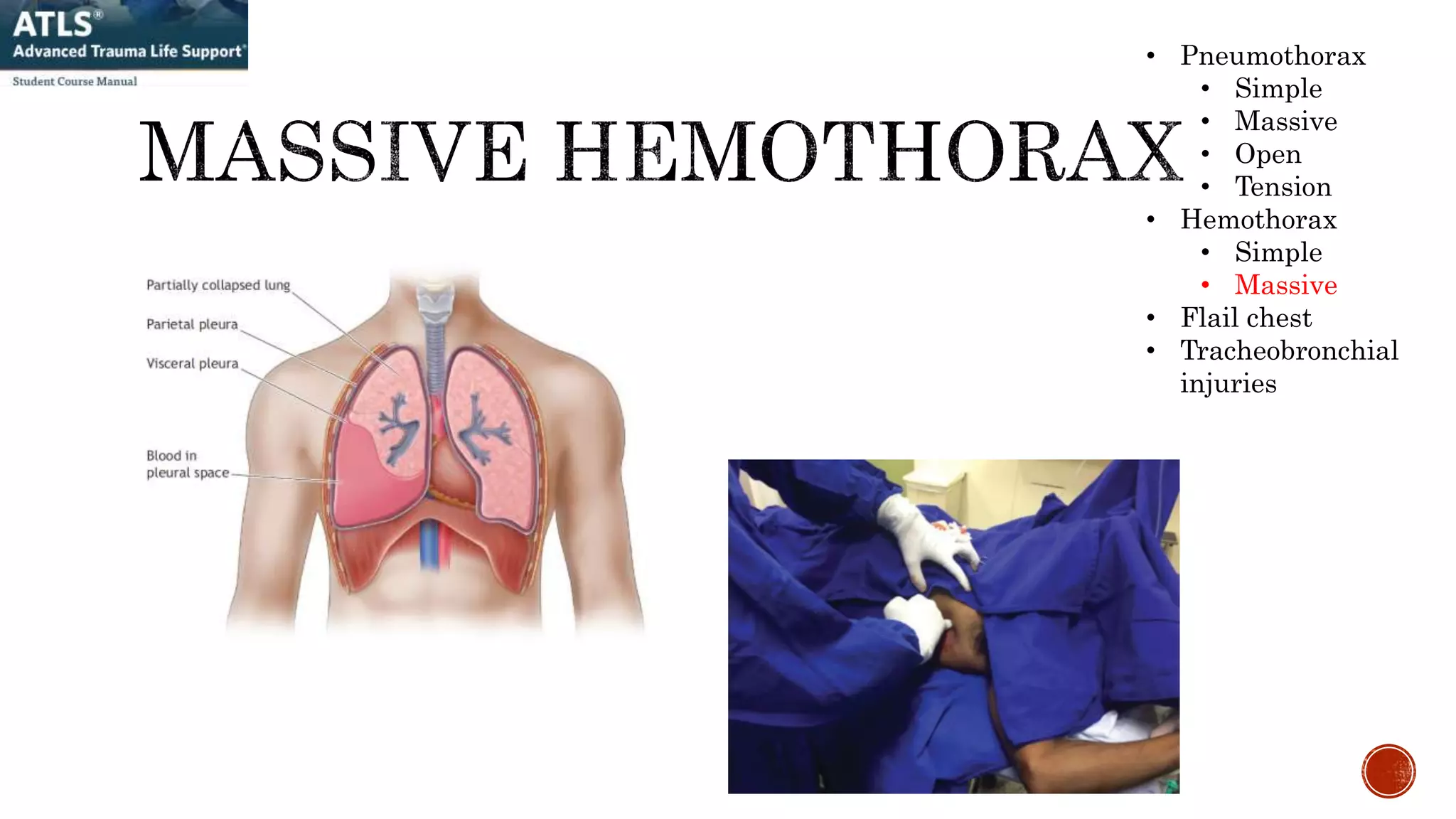
• Pneumothorax
• Simple
• Massive
• Open
• Tension
• Hemothorax
• Simple
• Massive
• Flail chest
• Tracheobronchial
injuries
• Pneumothorax
• Simple
• Massive
• Open
• Tension
• Hemothorax
• Simple
• Massive
• Flail chest
• Tracheobronchial
injuries
• Pneumothorax
• Simple
• Massive
• Open
• Tension
• Hemothorax
• Simple
• Massive
• Flail chest
• Tracheobronchial
injuries
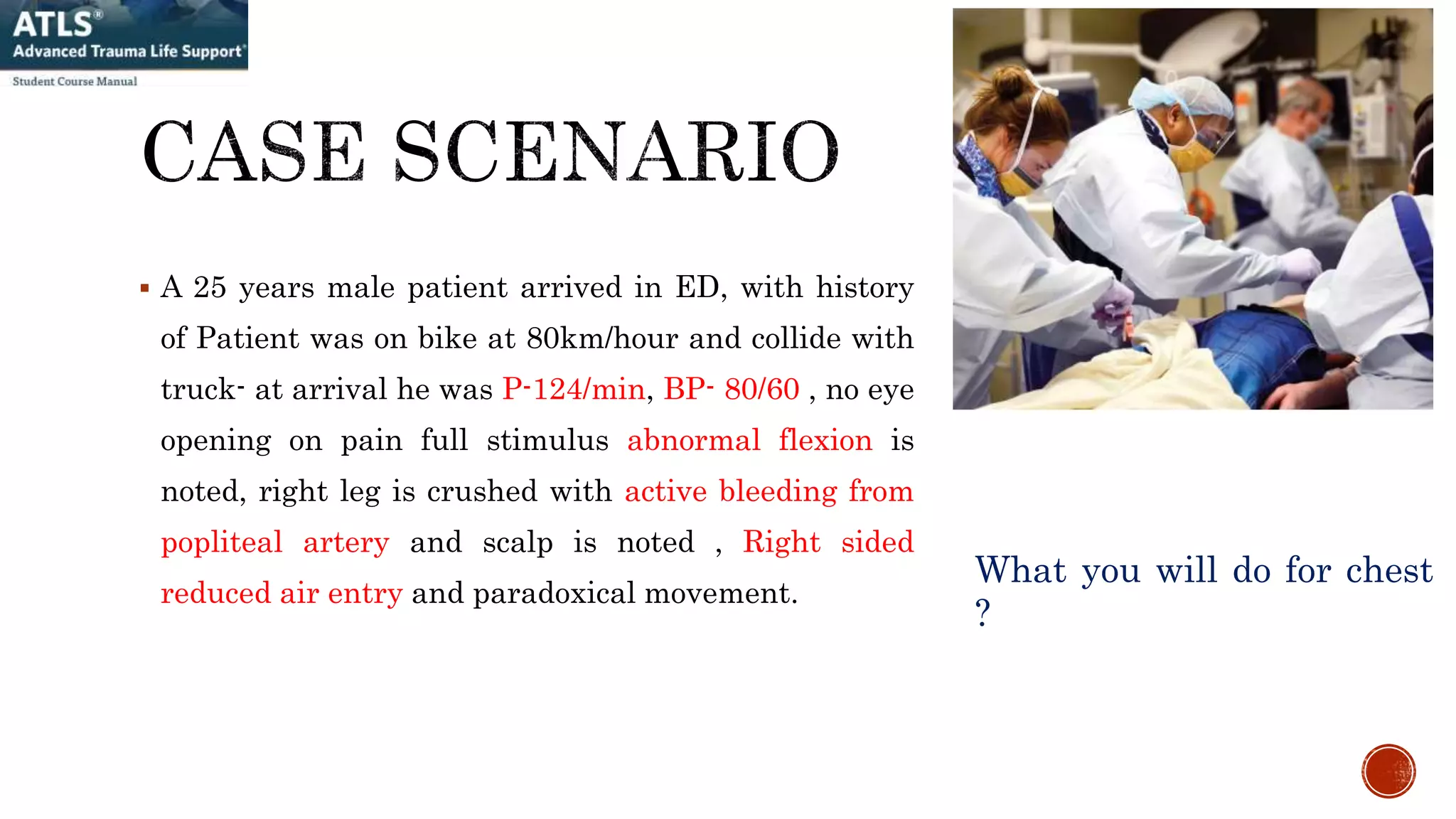
 A 25 years male patient arrived in ED, with history
of Patient was on bike at 80km/hour and collide with
truck- at arrival he was P-124/min, BP- 80/60 , no eye
opening on pain full stimulus abnormal flexion is
noted, right leg is crushed with active bleeding from
popliteal artery and scalp is noted , Right sided
reduced air entry and paradoxical movement.
What you will do for chest
?
1. Pericardium
2. Hepato-renal pouch
3. Lieno-renal pouch
4. Pelvic cavity
Blood on floor and four more
 Minimum 3
 Maximum 15
 <8 severe
 9-12 moderate
 >13 mild
 Motor - prognostic
Injuries to the musculoskeletal system
are common in trauma patients. The
delayed recognition and treatment of
these injuries can result in life-
threatening hemorrhage or limb loss.
 External bleeding
 Change in pulse quality
 Ankle/ brachial index
 Signs of vascular injury - soft/hard
 Stepwise approach of bleeding control.
 Manual pressure , bandage pressure dressing,
manual tourniquet/ pneumatic
 250mmHg upper limb / 400mmHg in lower limb.
 Should be kept for 1hour.
 Multiple injuries - intensive resuscitation and/or emergency surgery for extremity
or other injuries is not a candidate for replantation.
 Re-implantation is usually performed in isolated injury.
 Wash with RL – wrap with moist gauze – then moist towel – plastic bag –
insulated chest with crushed ice(avoid freezing).
 Traumatic Rhabdomyolysis
 Acute tubular necrosis – AKI
 Shock further leads to death
 Assessment
 Amber color urine
 Myo-globinuria
 S. Creatine Kinase-> 10KU/L
 Associated Metabolic acidosis,
hyperkalemia, hycalcemia, further
DIC.
 Management
 Initiate early and aggressive IV fluids.
Which is critical to renal protection
Alkalinization of urine and osmotic
diuresis
Early diagnosis
active treatment - prevent mortality
 Increased pressure within a musculo-
fascial compartment causes ischemia
and subsequent necrosis.
 Increase in compartment content
 Decrease in size of compartment.
 Tight dressing ,
 Crush injury/ hemotoma ,
 Prolong external pressure,
 Reperfusion ,
 Burn,
 Excessive exercise.
Signs and symptoms
 Pain greater than expected and out of proportion to the
stimulus or injury
 Pain on passive stretch of the affected muscle
 Tense swelling of the affected compartment
 Paresthesias or altered sensation distal to the affected
compartment
Delayed diagnosis
 Neurological deficit
 Muscle necrosis
 Ischemic contracture
 Infection
 Delayed healing
 Untreated –
amputation
Absence of distal pulse and delayed capillary refilling
Weakness and paralysis
Compartment syndrome is a clinical diagnosis. Pressure
measurements are only an adjunct to aid in its diagnosis.
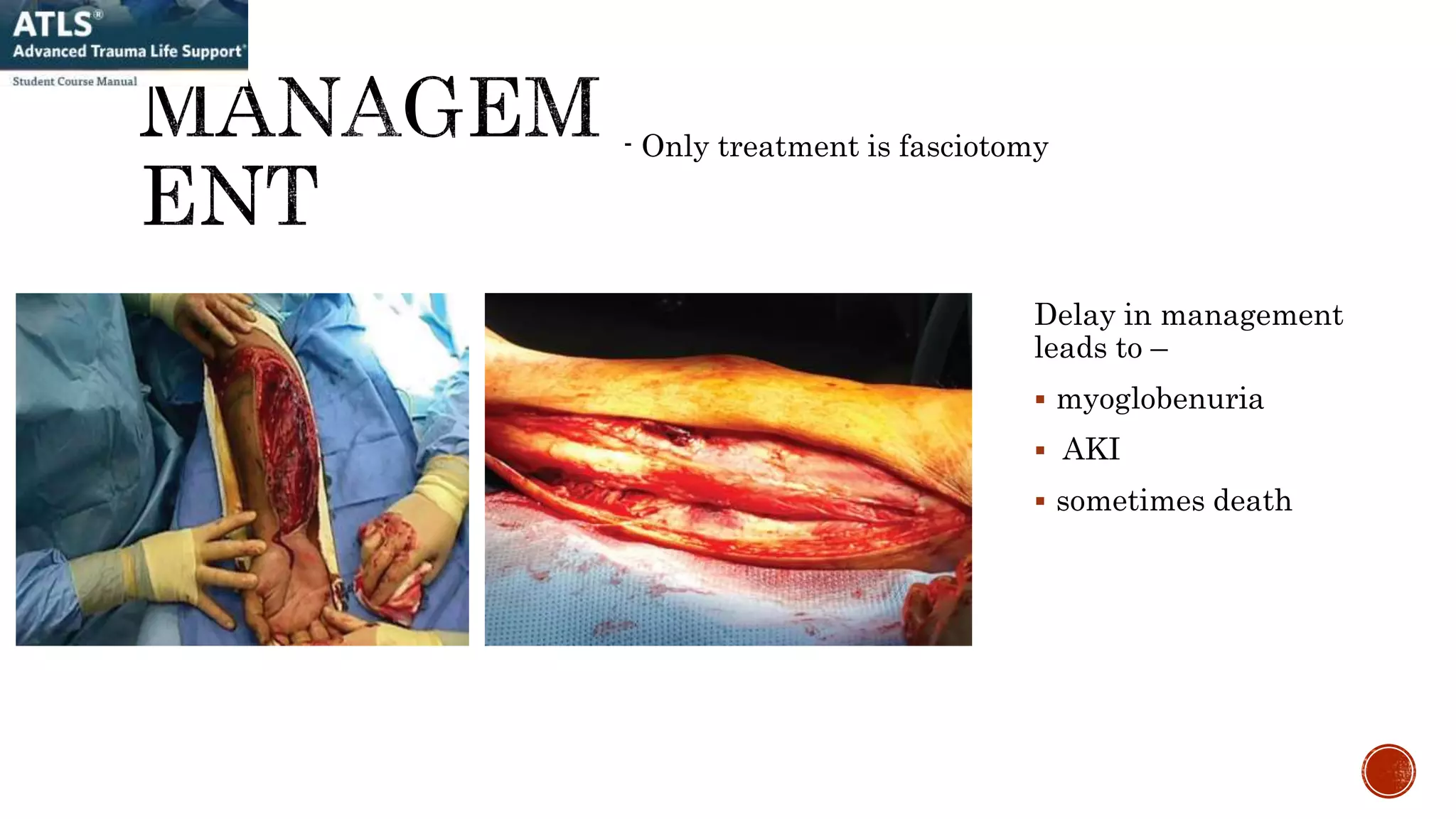
- Only treatment is fasciotomy
Delay in management
leads to –
 myoglobenuria
 AKI
 sometimes death
The most significant difference
between burns and other injuries
is that the consequences of burn
injury are directly linked to the
extent of the inflammatory
response to the injury.
A
B C D EPrimary survey-
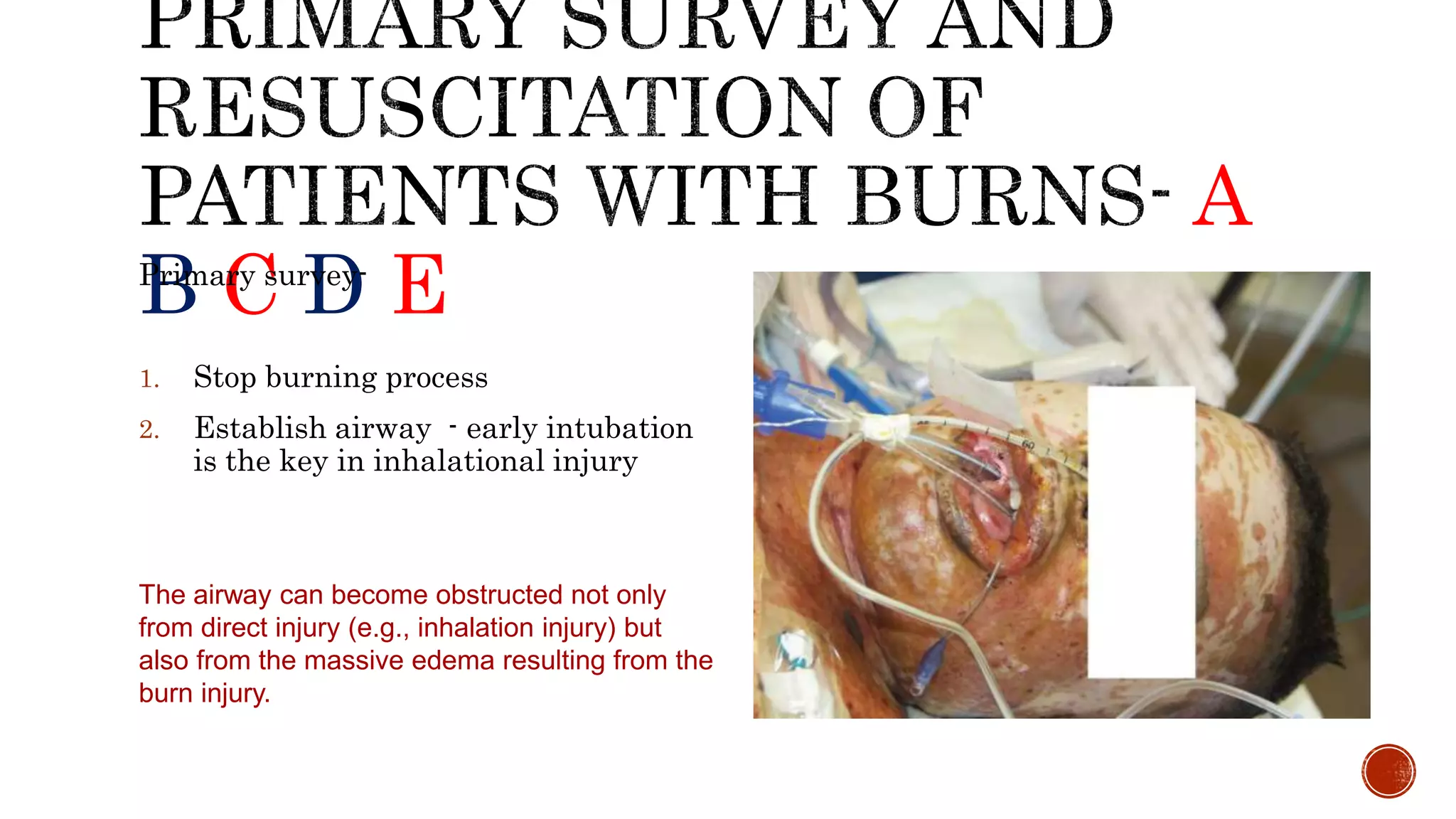
1. Stop burning process
2. Establish airway - early intubation
is the key in inhalational injury
The airway can become obstructed not only
from direct injury (e.g., inhalation injury) but
also from the massive edema resulting from the
burn injury.
ABLS
 Signs of respiratory compromise
 Decreased level of consciousness
where airway protective reflexes are
impaired
 Anticipated patient transfer of large
burn with airway issue without
qualified personnel to intubate en
route
 Signs of airway obstruction
 Extent of the burn (total body
surface area burn > 40%–50%)
 Extensive and deep facial burns
 Burns inside the mouth
 Significant edema or risk for
edema
 Difficulty swallowing
Direct thermal injury to the lower airway is very rare
Exposure to superheated steam or ignition of inhaled
flammable gases.
Breathing concerns arise from three general causes:
hypoxia,
carbon monoxide poisoning,
smoke inhalation injury.
 Inhalation injury,
 Poor compliance due to
circumferential chest burns,
 thoracic trauma unrelated to the
thermal injury.
MANAGEMENT
 Administer supplemental oxygen with or
without intubation.
Breathing concerns
1. Hypoxia,
2. CO poisoning,
3. smoke inhalation
injury.
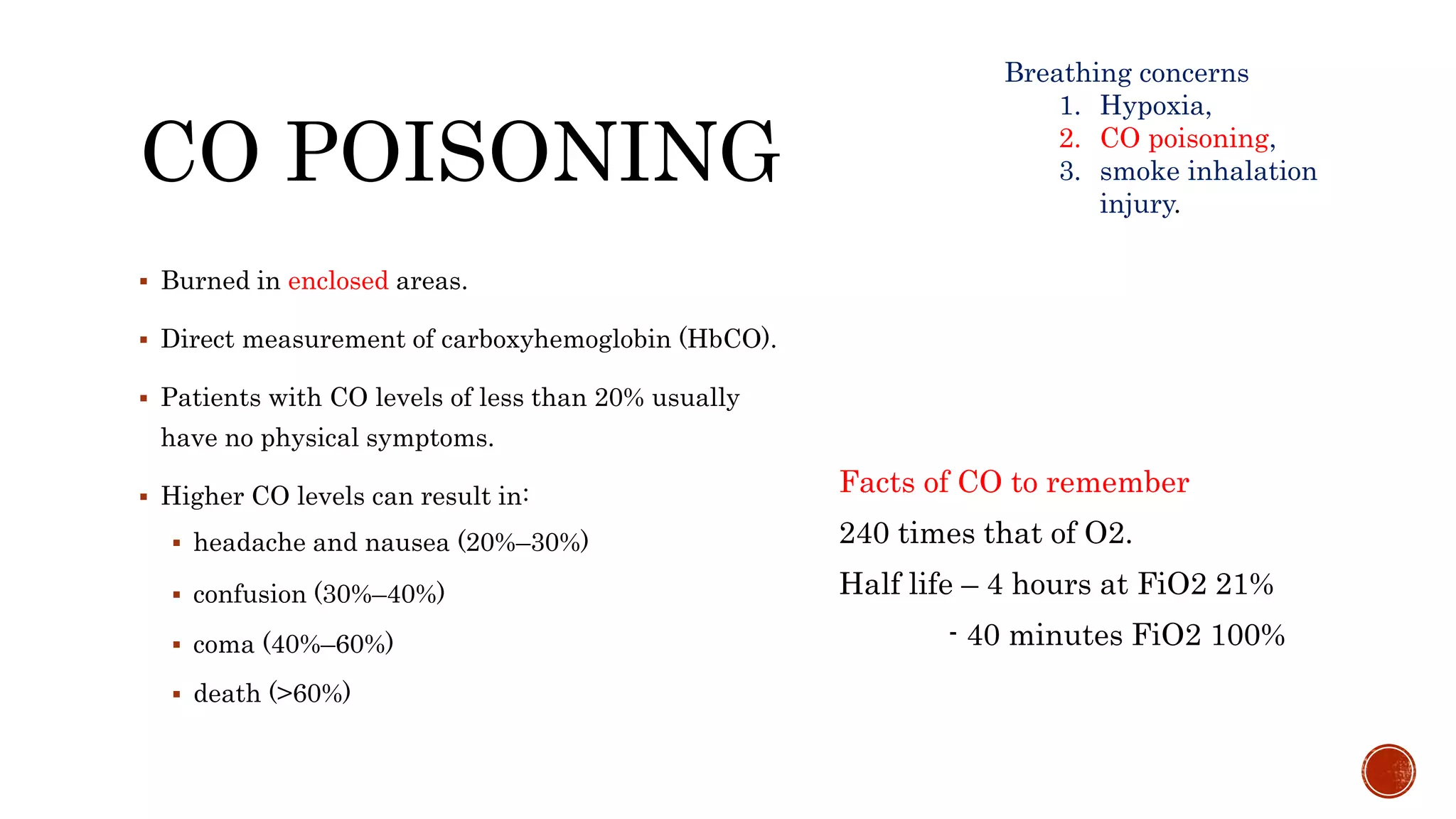
CO POISONING
 Burned in enclosed areas.
 Direct measurement of carboxyhemoglobin (HbCO).
 Patients with CO levels of less than 20% usually
have no physical symptoms.
 Higher CO levels can result in:
 headache and nausea (20%–30%)
 confusion (30%–40%)
 coma (40%–60%)
 death (>60%)
Breathing concerns
1. Hypoxia,
2. CO poisoning,
3. smoke inhalation
injury.
Facts of CO to remember
240 times that of O2.
Half life – 4 hours at FiO2 21%
- 40 minutes FiO2 100%
Important Facts
1. Spo2 monitor not reliable in CO poisoning
2. Cherry red skin – rare
3. Stridor may be late – sign
4. Before transfer to burn center – always evaluate airway and consider for
intubation if needed.
5. Intubate with – appropriate size tube
(use endotracheal tubes at least 7.5 mm ID or larger in an adult and size 4.5 mm
ID ETT in a child.)
ABA - 2 Criteria to diagnose
1. Exposure to the combustible agent
2. Exposure of smoke to lower airway below
vocal cards – seen in bronchodcopy
Breathing concerns
1. Hypoxia,
2. CO poisoning,
3. smoke inhalation
injury.
Mortality increases to double in
inhalational injury with burn as compare
to isolated burn
high likelihood – inhalational injury
 Adult >20% burn
 <10/>50 years of age > 10% burn
Investigation
 Chest x-ray and
 Arterial blood gas determination.
Management –
 Early airway management.
 Avoid hypoxia
Breathing concerns
1. Hypoxia,
2. CO poisoning,
3. smoke inhalation
injury.
CIRCULATION
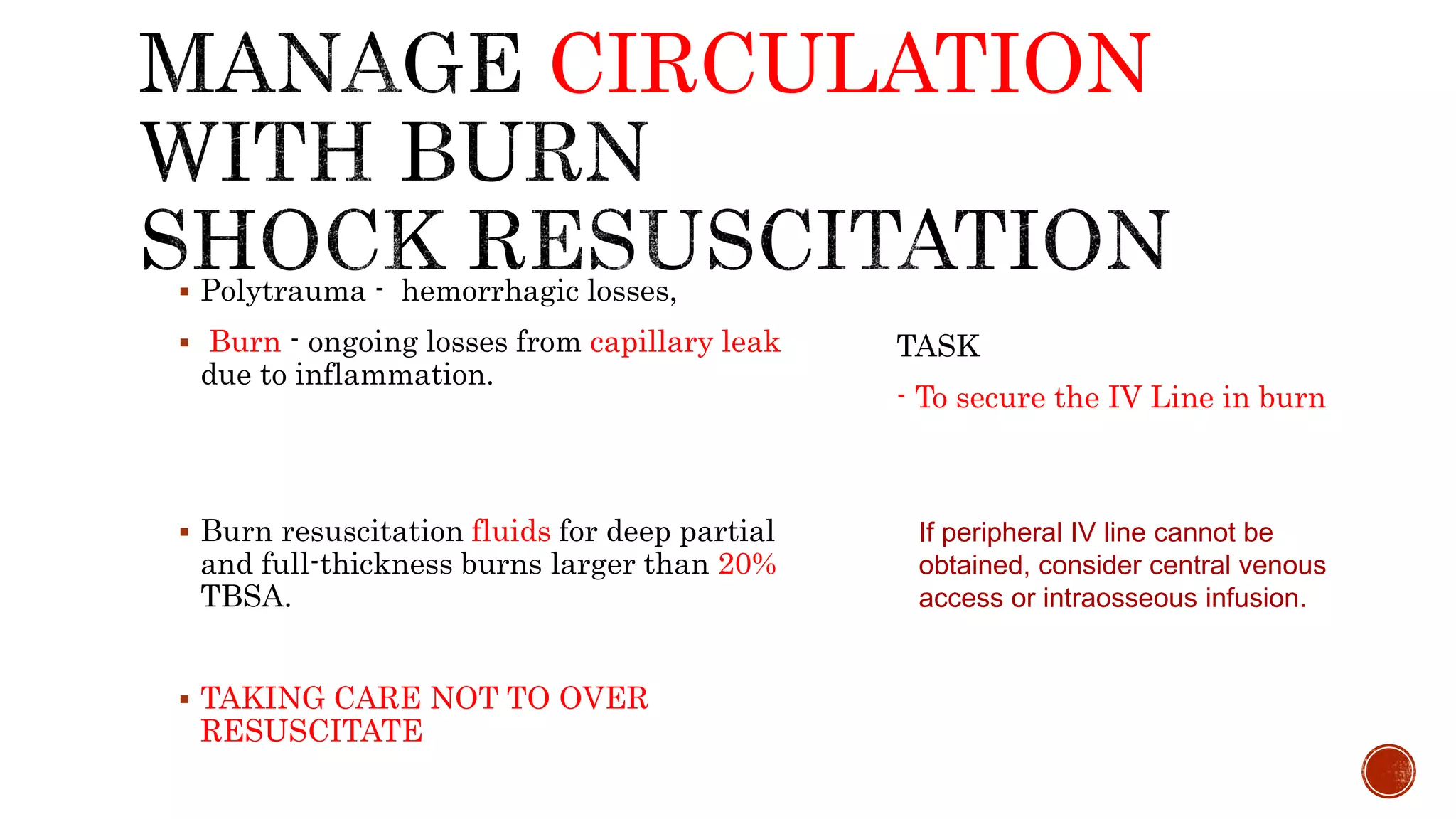
 Polytrauma - hemorrhagic losses,
 Burn - ongoing losses from capillary leak
due to inflammation.
 Burn resuscitation fluids for deep partial
and full-thickness burns larger than 20%
TBSA.
 TAKING CARE NOT TO OVER
RESUSCITATE
TASK
- To secure the IV Line in burn
If peripheral IV line cannot be
obtained, consider central venous
access or intraosseous infusion.
Goal – to maintain perfusion of the
tissue and avoid over fluid
resuscitation.
Which fluid ?
How much fluid?
Its less or over or enough!
 All Adult or children >30 kg - Warmed isotonic lactated ringer’s solution
 Childen <30 kg - D5LR
 Which fluid ?
 How much fluid?
 Its less or over or enough!
 Which fluid ?
 How much fluid?
 Its less or over or enough!
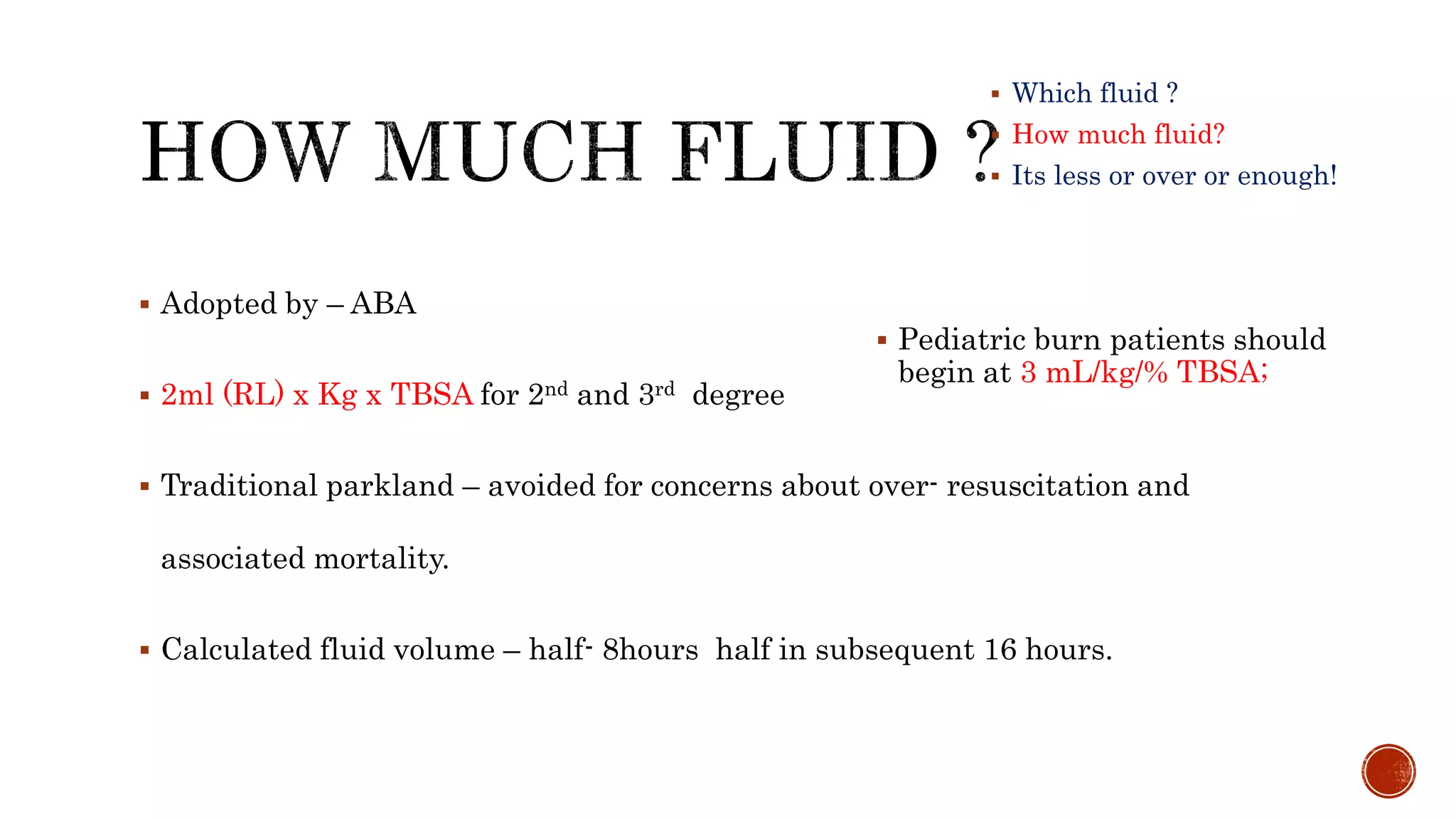
 Adopted by – ABA
 2ml (RL) x Kg x TBSA for 2nd and 3rd degree
 Traditional parkland – avoided for concerns about over- resuscitation and
associated mortality.
 Calculated fluid volume – half- 8hours half in subsequent 16 hours.
 Pediatric burn patients should
begin at 3 mL/kg/% TBSA;
ITS LESS OR
OVER OR
ENOUGH
 Which fluid ?
 How much fluid?
 Its less or over or enough!
Rule of Nine
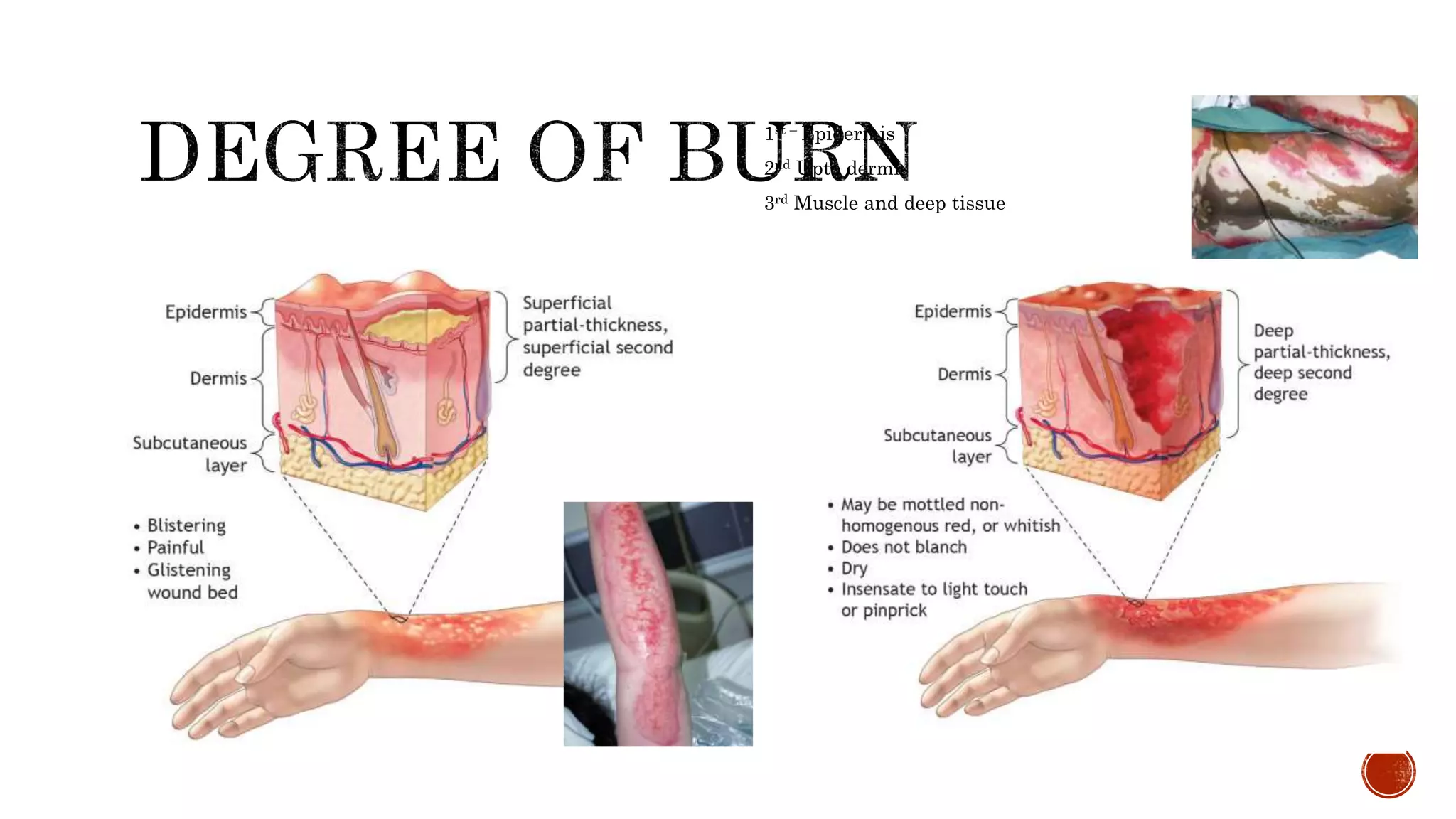
1st – Epidermis
2nd Upto dermis
3rd Muscle and deep tissue
 Gently cover the wound
 Do not break blisters or apply an antiseptic agent.
 Remove any previously applied medication before using antibacterial topical
agents.
 Do not apply cold water to a patient with extensive burns (i.e., > 10% TBSA)
 A fresh burn is a clean area that must be protected from contamination.
 Early diagnosis of compartment and immediate fasciotomy
 Consider for adequate pain relief, antibiotics and tetanus prophylaxis.
CASE SCENARIO
23years male (100kg) sustained
2nd degree burn almost 80% burn
while working in the factory ?
What you will do first ?
 Airway -
 Breathing
 Circulation – fluid
 Exposure and wound care
 Identify life and limb threatening injuries – immediate react on it.
 ABCDE – universal
 Identification and simultaneous management is the key.
 Always keep in the mind –
- life is always important over limb,
- limb over disability or cost
THANK YOU
Or Mail me @
drawaneeshkatiyar@gmail.com
Asking questions?make you wise.

Atls review and burn

  • 1.
    ATLS UPDATE ACUTE BURN MANAGEMENTDrAwaneesh Katiyar (M.Ch. Senior Resident) Trauma Surgery and Critical Care All India Institute of Medical Sciences, Rishikesh, UK.
  • 2.
     A 25years male patient arrived in ED, with history of Patient was on bike at 80km/hour and collide with truck- at arrival he was P-124/min, BP- 80/60 , no eye opening on pain full stimulus abnormal flexion is noted, right leg is crushed with active bleeding from popliteal artery and scalp is noted , Right sided reduced air entry and paradoxical movement. What you will do first ? a. Intubate him b. Give compression to stop bleed c. Bolus of 2L lactated warm saline. d. Put right side chest tube.
  • 3.
     Preparation A –laryngoscope, ET tube, bougie, Suction machine drugs, c- collar B- chest tube kit with water seal C- warm saline, wide bore cannula, Adjunct – Spo2 probe , BP , FAST machine , catheter, RT and
  • 4.
     Triage –red / yellow / green (multiple causalities / mass causalities) 1. Life or limb – red 2. Walking wounded – green 3. Rest goes to yellow
  • 5.
     Primary surveywith immediate resuscitation of life threatening injuries 1. A-Secure airway / c-collar 2. B-Assess breathing n Ventilate the patient 3. C-Control bleeding and shock – 1 litre warm saline with wide bore / tranexa1gm 4. D- neurological disability
  • 6.
     Adjuncts toprimary survey Rule of 2 in trauma 1. 2- things to monitor – Spo2 / BP 2. 2 – tubes – catheter / RT 3. 2- X-rays – CXR/PXR 4. 2- Test – ABG/blood group 5. 2- machine`s – Xrays / FAST
  • 7.
     Secondary survey– head to toe examination and patient history. 1. Head 2. Neck 3. Maxillofacial 4. Chest 5. Abdomen and pelvis 6. Lower extremity 7. Upper extremity 8. Spine 9. Soft tissue
  • 8.
  • 9.
     Post- resuscitationcare and re-evaluation.  Definitive care
  • 10.
     Airway maintenanceand restriction of cervical spine motion  Breathing and ventilation  Circulation with hemorrhage control  Disability ( assessment of neurologic status)  Exposure/ Environment control
  • 11.
    A B CD  Airway – kills in seconds  Breathing – takes minutes  Circulation – bleeding kills in hours  Disability (neurological)– hours to days ( except brain stem)
  • 12.
     A 25years male patient arrived in ED, with history of Patient was on bike at 80km/hour and collide with truck- at arrival he was P-124/min, BP- 80/60 , no eye opening on pain full stimulus abnormal flexion is noted, right leg is crushed with active bleeding from popliteal artery and scalp is noted , Right sided reduced air entry and paradoxical movement. What you will do first ? a. Intubate him b. Give compression to stop bleed c. Bolus of 2L lactated warm saline. d. Put right side chest tube.
  • 14.
    10 SECONDS  askingthe patient for his or her name,  asking what happened to you? • Able to phonate- airway is normal • Able complete sentence – breathing normal • Well oriented – circulation normal with no neurological deficit
  • 15.
  • 18.
    • Cuffed Tubebelow vocal cords. • Inflated. • Connected to O2 source. • Supported with ventilation.
  • 19.
    1. Needle cricothyroidotomy 2.Surgical cricothyroidotomy 3. Tracheostomy
  • 20.
    1. Needle cricothyroidotomy 2.Surgical cricothyroidotomy 3. Tracheostomy
  • 21.
     A 25years male patient arrived in ED, with history of Patient was on bike at 80km/hour and collide with truck- at arrival he was P-124/min, BP- 80/60 , no eye opening on pain full stimulus abnormal flexion is noted, right leg is crushed with active bleeding from popliteal artery and scalp is noted , Right sided reduced air entry and paradoxical movement. What you will do in this patient? If patient is having difficult airway
  • 22.
    • Pneumothorax • Simple •Massive • Open • Tension • Hemothorax • Simple • Massive • Flail chest • Tracheobronchial injuries
  • 23.
    • Pneumothorax • Simple •Massive • Open • Tension • Hemothorax • Simple • Massive • Flail chest • Tracheobronchial injuries
  • 24.
    • Pneumothorax • Simple •Massive • Open • Tension • Hemothorax • Simple • Massive • Flail chest • Tracheobronchial injuries
  • 26.
     A 25years male patient arrived in ED, with history of Patient was on bike at 80km/hour and collide with truck- at arrival he was P-124/min, BP- 80/60 , no eye opening on pain full stimulus abnormal flexion is noted, right leg is crushed with active bleeding from popliteal artery and scalp is noted , Right sided reduced air entry and paradoxical movement. What you will do for chest ?
  • 27.
    1. Pericardium 2. Hepato-renalpouch 3. Lieno-renal pouch 4. Pelvic cavity Blood on floor and four more
  • 30.
     Minimum 3 Maximum 15  <8 severe  9-12 moderate  >13 mild  Motor - prognostic
  • 31.
    Injuries to themusculoskeletal system are common in trauma patients. The delayed recognition and treatment of these injuries can result in life- threatening hemorrhage or limb loss.
  • 32.
     External bleeding Change in pulse quality  Ankle/ brachial index  Signs of vascular injury - soft/hard
  • 33.
     Stepwise approachof bleeding control.  Manual pressure , bandage pressure dressing, manual tourniquet/ pneumatic  250mmHg upper limb / 400mmHg in lower limb.  Should be kept for 1hour.
  • 34.
     Multiple injuries- intensive resuscitation and/or emergency surgery for extremity or other injuries is not a candidate for replantation.  Re-implantation is usually performed in isolated injury.  Wash with RL – wrap with moist gauze – then moist towel – plastic bag – insulated chest with crushed ice(avoid freezing).
  • 35.
     Traumatic Rhabdomyolysis Acute tubular necrosis – AKI  Shock further leads to death  Assessment  Amber color urine  Myo-globinuria  S. Creatine Kinase-> 10KU/L  Associated Metabolic acidosis, hyperkalemia, hycalcemia, further DIC.  Management  Initiate early and aggressive IV fluids. Which is critical to renal protection Alkalinization of urine and osmotic diuresis Early diagnosis active treatment - prevent mortality
  • 36.
     Increased pressurewithin a musculo- fascial compartment causes ischemia and subsequent necrosis.  Increase in compartment content  Decrease in size of compartment.  Tight dressing ,  Crush injury/ hemotoma ,  Prolong external pressure,  Reperfusion ,  Burn,  Excessive exercise.
  • 37.
    Signs and symptoms Pain greater than expected and out of proportion to the stimulus or injury  Pain on passive stretch of the affected muscle  Tense swelling of the affected compartment  Paresthesias or altered sensation distal to the affected compartment Delayed diagnosis  Neurological deficit  Muscle necrosis  Ischemic contracture  Infection  Delayed healing  Untreated – amputation Absence of distal pulse and delayed capillary refilling Weakness and paralysis Compartment syndrome is a clinical diagnosis. Pressure measurements are only an adjunct to aid in its diagnosis.
  • 38.
    - Only treatmentis fasciotomy Delay in management leads to –  myoglobenuria  AKI  sometimes death
  • 39.
    The most significantdifference between burns and other injuries is that the consequences of burn injury are directly linked to the extent of the inflammatory response to the injury.
  • 40.
    A B C DEPrimary survey- 1. Stop burning process 2. Establish airway - early intubation is the key in inhalational injury The airway can become obstructed not only from direct injury (e.g., inhalation injury) but also from the massive edema resulting from the burn injury.
  • 41.
    ABLS  Signs ofrespiratory compromise  Decreased level of consciousness where airway protective reflexes are impaired  Anticipated patient transfer of large burn with airway issue without qualified personnel to intubate en route  Signs of airway obstruction  Extent of the burn (total body surface area burn > 40%–50%)  Extensive and deep facial burns  Burns inside the mouth  Significant edema or risk for edema  Difficulty swallowing
  • 42.
    Direct thermal injuryto the lower airway is very rare Exposure to superheated steam or ignition of inhaled flammable gases. Breathing concerns arise from three general causes: hypoxia, carbon monoxide poisoning, smoke inhalation injury.
  • 43.
     Inhalation injury, Poor compliance due to circumferential chest burns,  thoracic trauma unrelated to the thermal injury. MANAGEMENT  Administer supplemental oxygen with or without intubation. Breathing concerns 1. Hypoxia, 2. CO poisoning, 3. smoke inhalation injury.
  • 44.
    CO POISONING  Burnedin enclosed areas.  Direct measurement of carboxyhemoglobin (HbCO).  Patients with CO levels of less than 20% usually have no physical symptoms.  Higher CO levels can result in:  headache and nausea (20%–30%)  confusion (30%–40%)  coma (40%–60%)  death (>60%) Breathing concerns 1. Hypoxia, 2. CO poisoning, 3. smoke inhalation injury. Facts of CO to remember 240 times that of O2. Half life – 4 hours at FiO2 21% - 40 minutes FiO2 100%
  • 45.
    Important Facts 1. Spo2monitor not reliable in CO poisoning 2. Cherry red skin – rare 3. Stridor may be late – sign 4. Before transfer to burn center – always evaluate airway and consider for intubation if needed. 5. Intubate with – appropriate size tube (use endotracheal tubes at least 7.5 mm ID or larger in an adult and size 4.5 mm ID ETT in a child.)
  • 46.
    ABA - 2Criteria to diagnose 1. Exposure to the combustible agent 2. Exposure of smoke to lower airway below vocal cards – seen in bronchodcopy Breathing concerns 1. Hypoxia, 2. CO poisoning, 3. smoke inhalation injury. Mortality increases to double in inhalational injury with burn as compare to isolated burn high likelihood – inhalational injury  Adult >20% burn  <10/>50 years of age > 10% burn
  • 47.
    Investigation  Chest x-rayand  Arterial blood gas determination. Management –  Early airway management.  Avoid hypoxia Breathing concerns 1. Hypoxia, 2. CO poisoning, 3. smoke inhalation injury.
  • 48.
    CIRCULATION  Polytrauma -hemorrhagic losses,  Burn - ongoing losses from capillary leak due to inflammation.  Burn resuscitation fluids for deep partial and full-thickness burns larger than 20% TBSA.  TAKING CARE NOT TO OVER RESUSCITATE TASK - To secure the IV Line in burn If peripheral IV line cannot be obtained, consider central venous access or intraosseous infusion.
  • 49.
    Goal – tomaintain perfusion of the tissue and avoid over fluid resuscitation. Which fluid ? How much fluid? Its less or over or enough!
  • 50.
     All Adultor children >30 kg - Warmed isotonic lactated ringer’s solution  Childen <30 kg - D5LR  Which fluid ?  How much fluid?  Its less or over or enough!
  • 51.
     Which fluid?  How much fluid?  Its less or over or enough!  Adopted by – ABA  2ml (RL) x Kg x TBSA for 2nd and 3rd degree  Traditional parkland – avoided for concerns about over- resuscitation and associated mortality.  Calculated fluid volume – half- 8hours half in subsequent 16 hours.  Pediatric burn patients should begin at 3 mL/kg/% TBSA;
  • 52.
    ITS LESS OR OVEROR ENOUGH  Which fluid ?  How much fluid?  Its less or over or enough!
  • 53.
  • 54.
    1st – Epidermis 2ndUpto dermis 3rd Muscle and deep tissue
  • 55.
     Gently coverthe wound  Do not break blisters or apply an antiseptic agent.  Remove any previously applied medication before using antibacterial topical agents.  Do not apply cold water to a patient with extensive burns (i.e., > 10% TBSA)  A fresh burn is a clean area that must be protected from contamination.  Early diagnosis of compartment and immediate fasciotomy  Consider for adequate pain relief, antibiotics and tetanus prophylaxis.
  • 56.
    CASE SCENARIO 23years male(100kg) sustained 2nd degree burn almost 80% burn while working in the factory ? What you will do first ?
  • 57.
     Airway - Breathing  Circulation – fluid  Exposure and wound care
  • 58.
     Identify lifeand limb threatening injuries – immediate react on it.  ABCDE – universal  Identification and simultaneous management is the key.  Always keep in the mind – - life is always important over limb, - limb over disability or cost
  • 59.
    THANK YOU Or Mailme @ drawaneeshkatiyar@gmail.com Asking questions?make you wise.