Vacuum bag molding
• Vacuum bag molding
• Also known as vacuum bagging.
• Open mold techniques for thermoset composites.


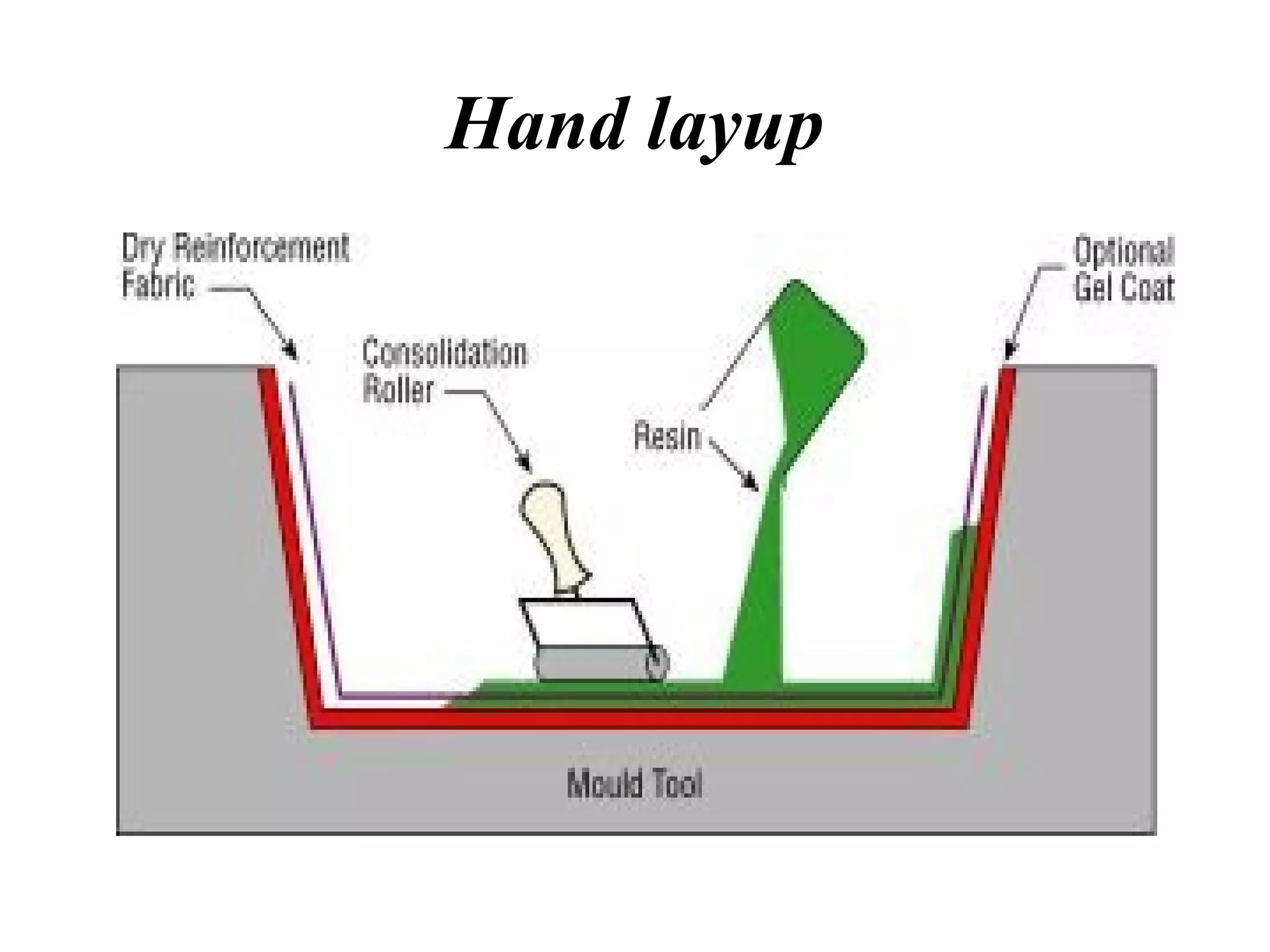
• Hand lay-up: The application of reinforcement along
  with a polyester or epoxy resin by hand.
• Vacuum bagging: The use of a vacuum bag to apply
  an even pressure over the composite to consolidate
  the material.
Hand layup
Hand Layup
Hand Layup
What is vacuum bagging?
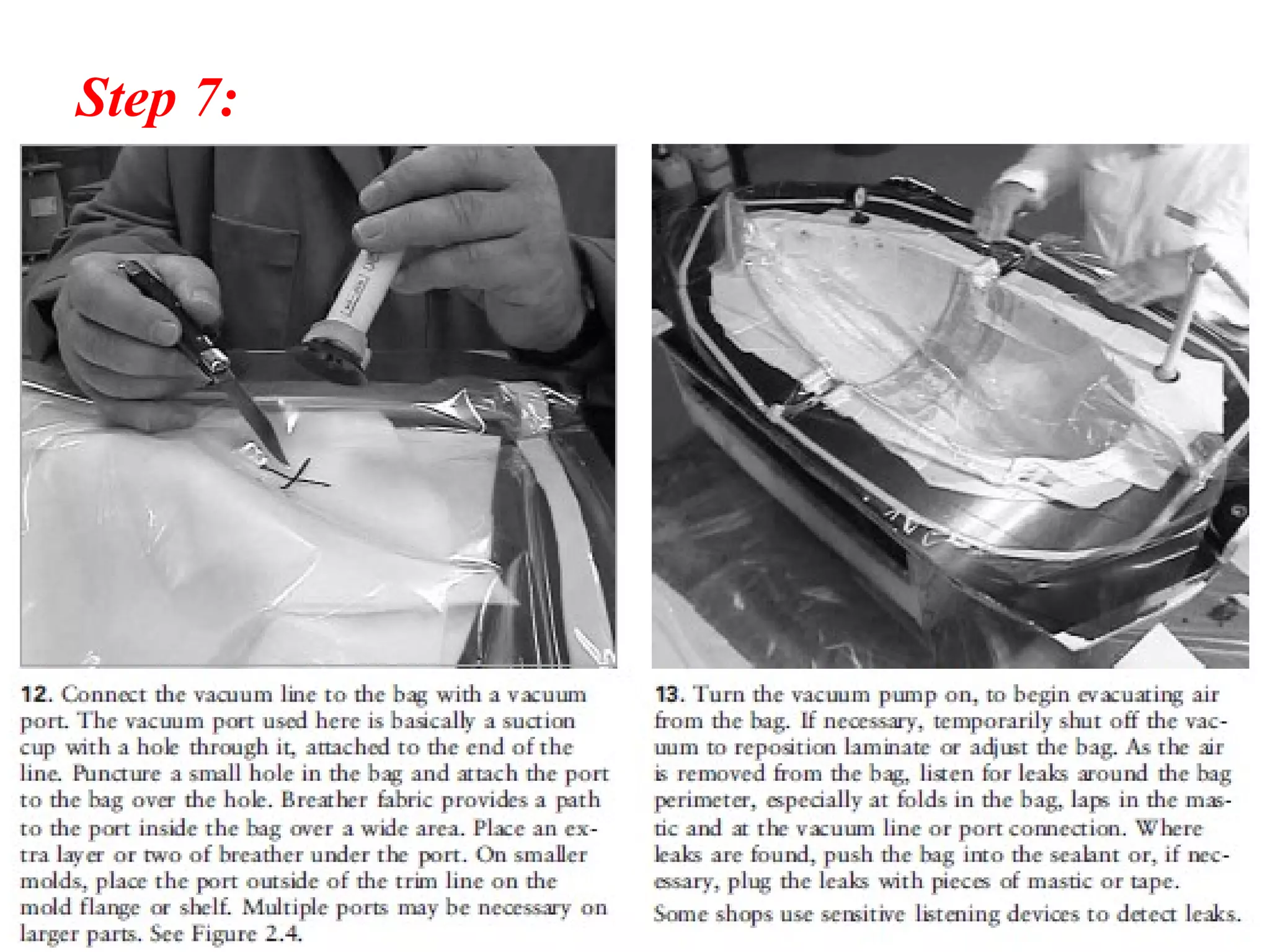
•Vacuum bagging (or vacuum bag laminating) is a
clamping method that uses atmospheric pressure to
hold the adhesive or resin-coated components of a
lamination in place until the adhesive cures.
•(When discussing composites, “resin” generally refers
to the resin system— mixed or cured resin.)
Vacuum Bagging - Advantages
•   Even Clamping pressure
•   Control of resin content
•   Custom shapes
•   Efficient laminating
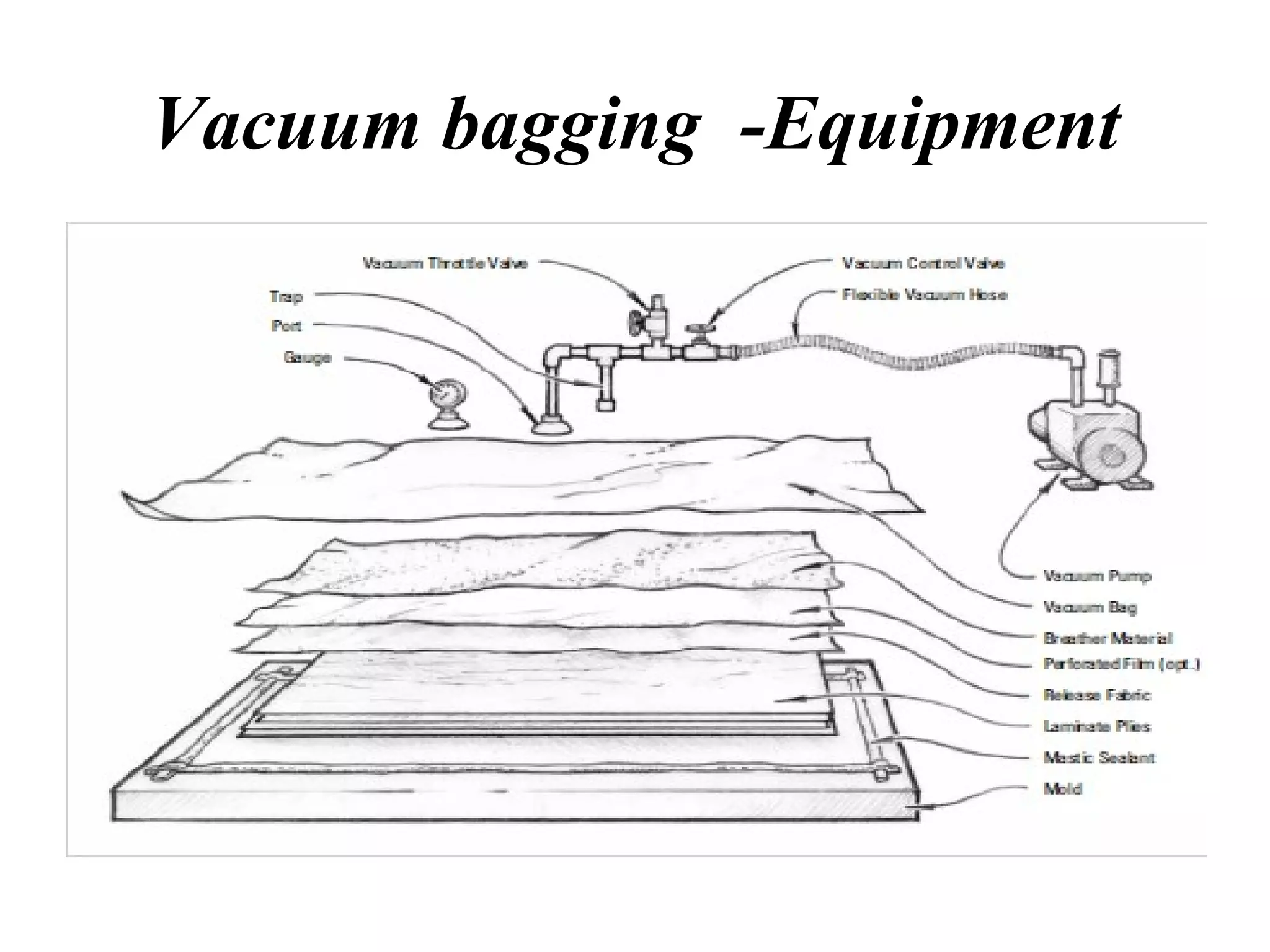
Vacuum bagging -Equipment
Vacuum Bagging - Materials
•   Release fabric
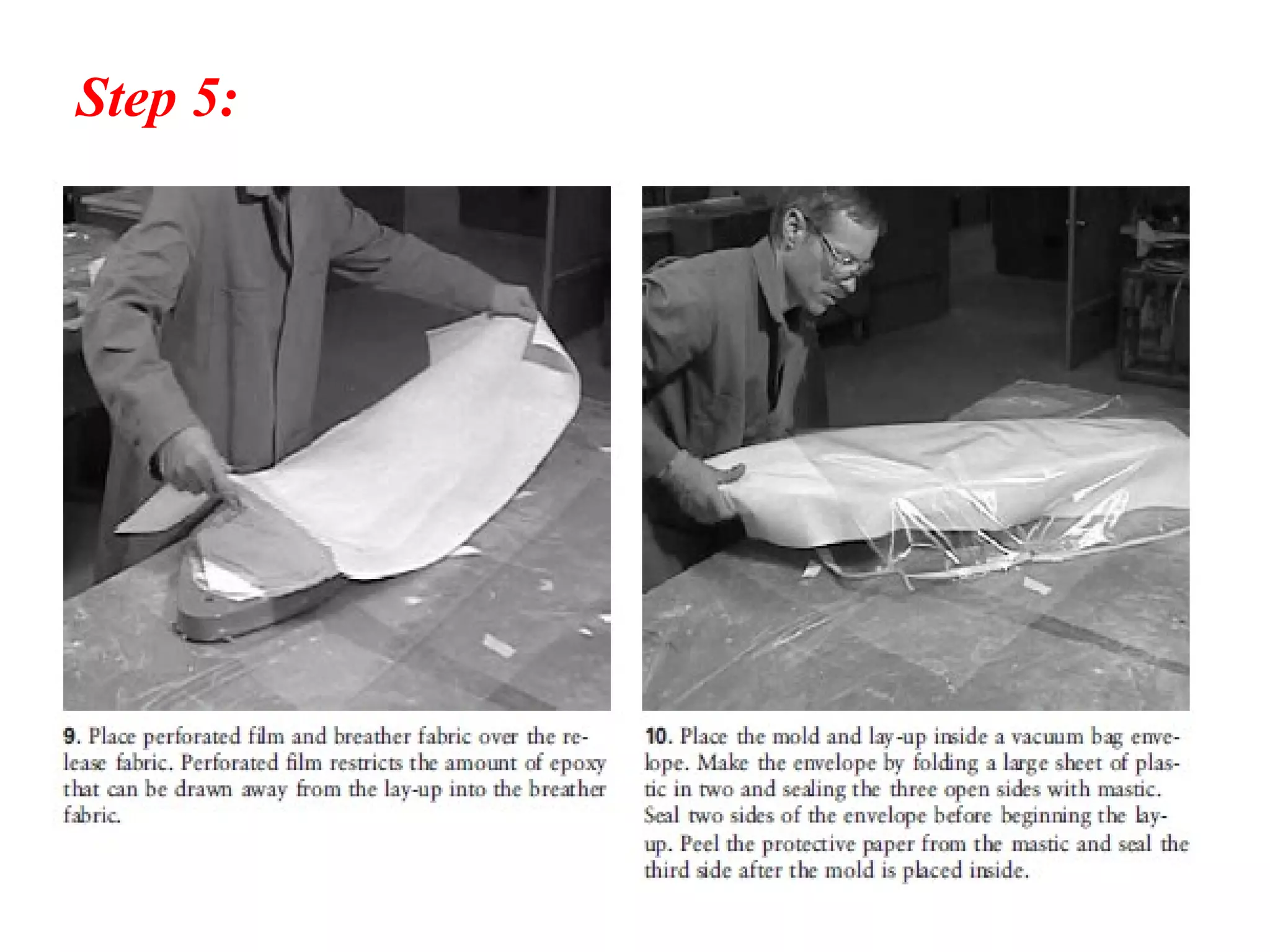
•   Perforated film
•   Breather Material
•   Vacuum bag
•   Mastic sealant
•   Plumbing system
•   Mold release
Release fabric:
•Smooth woven fabric – not bond to epoxy.
•Used to separate breather and laminate.
•Excess epoxy can wick through release fabric.


Perforated film:
•Used in conjunction with release fabric.
•This film helps to hold the resin in laminate, when high
vacuum pressure is used with slow curing resin system
(or) thin laminates.
Breather material:
•(or) bleeder cloth.
•Allows air from all parts of the envelope – to be drawn
to a port (or) manifold by providing slight air space
between the bag and laminate.


Vacuum bag:
•If vacuum pressure less than 5psi(10 hg) at room
temperature – 6mil polyethylene plastic can be used.
•Clear plastic material is preferable as compared to
opaque - for easy inspection
• For high pressure and temperature applications –
  specially manufactured vacuum bags can be used.
• Vacuum bag should always larger than mould.


Mastic sealant:
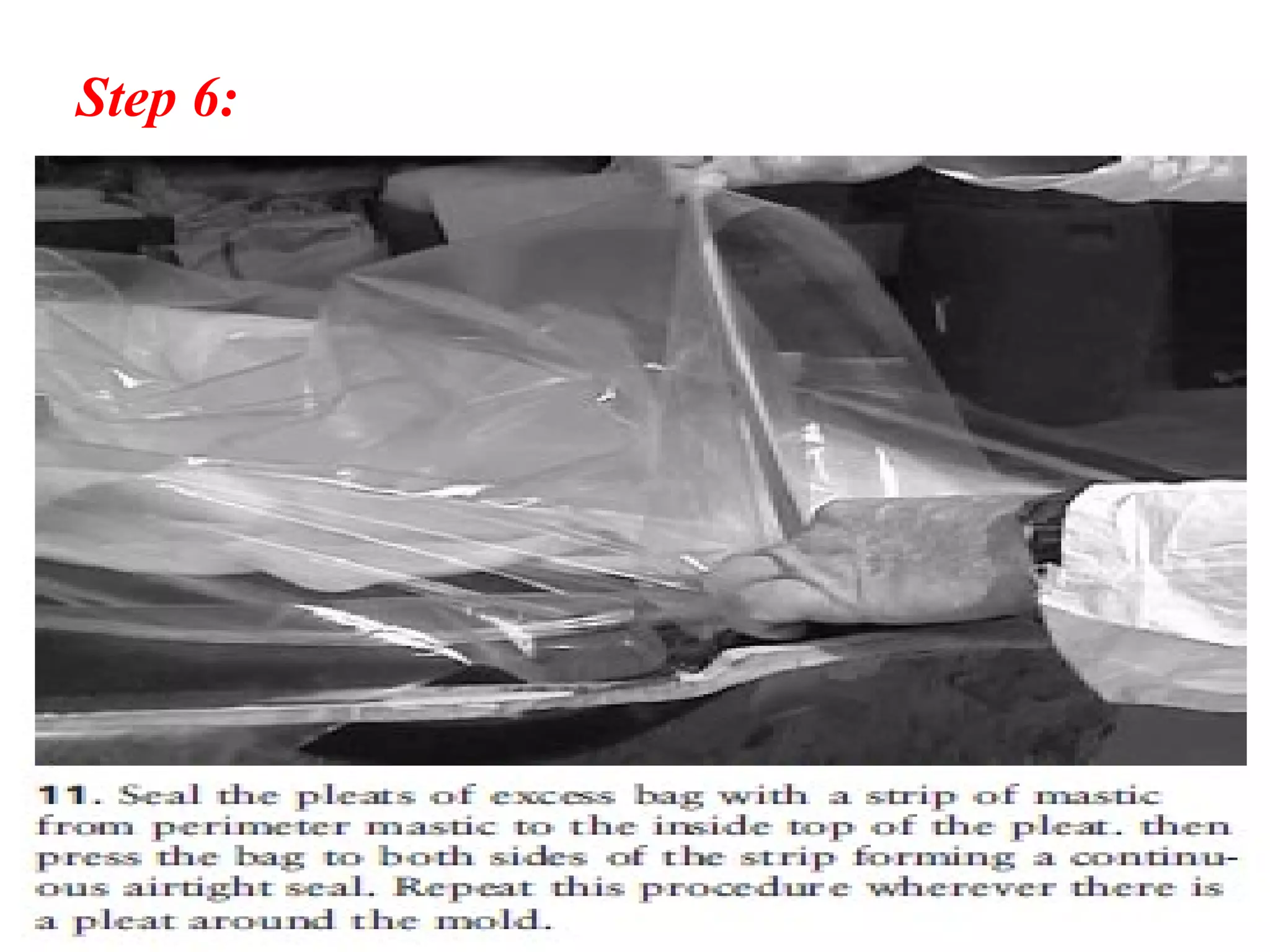
• Provide a continuous air tight sealant between bag
  and mold.
• Also used to seal the point where the manifold enters
  the bag and to repair leaks in the bag.
Plumbing system:
•Provides an airtight passage from vacuum envelope to
vacuum pump – allowing pump to remove air.
•A basic system consists of flexible (or) rigid hose pipe,
a trap, a port that connects pipe to the envelope.
•Vacuum hose designed specially for this.

•Vacuum port connects the exhaust tubing to vacuum
bag.
•Control valve – control of airflow at the envelope.
• Trap incorporated into the line as close as possible to
  the envelope.
• Vacuum gauge – is necessary to monitor the level.
  The reading of negative pressure inside the bag is
  equal to the net pressure of the atmospheric pressing
  on the outside of the bag.
Mold release:
•Necessary to prevent epoxy from sticking.
•Three types of mold release:
4.Carnauba based paste wax

•(usually 5 layers for new mold and atleast one layer
before each new part is molded)
•Also use PVA in wax.
•Fine detail gloss level obtained by the use of wax.
2. Semi permanent formulation:
          •Liquid release system.
          •Fine detail and gloss level are obtained as
well as texture.
          3. General contaminant variety:
          •Grease, vaseline, toilet bowl wax, hair spray,
hair gel.
Example: Step 1
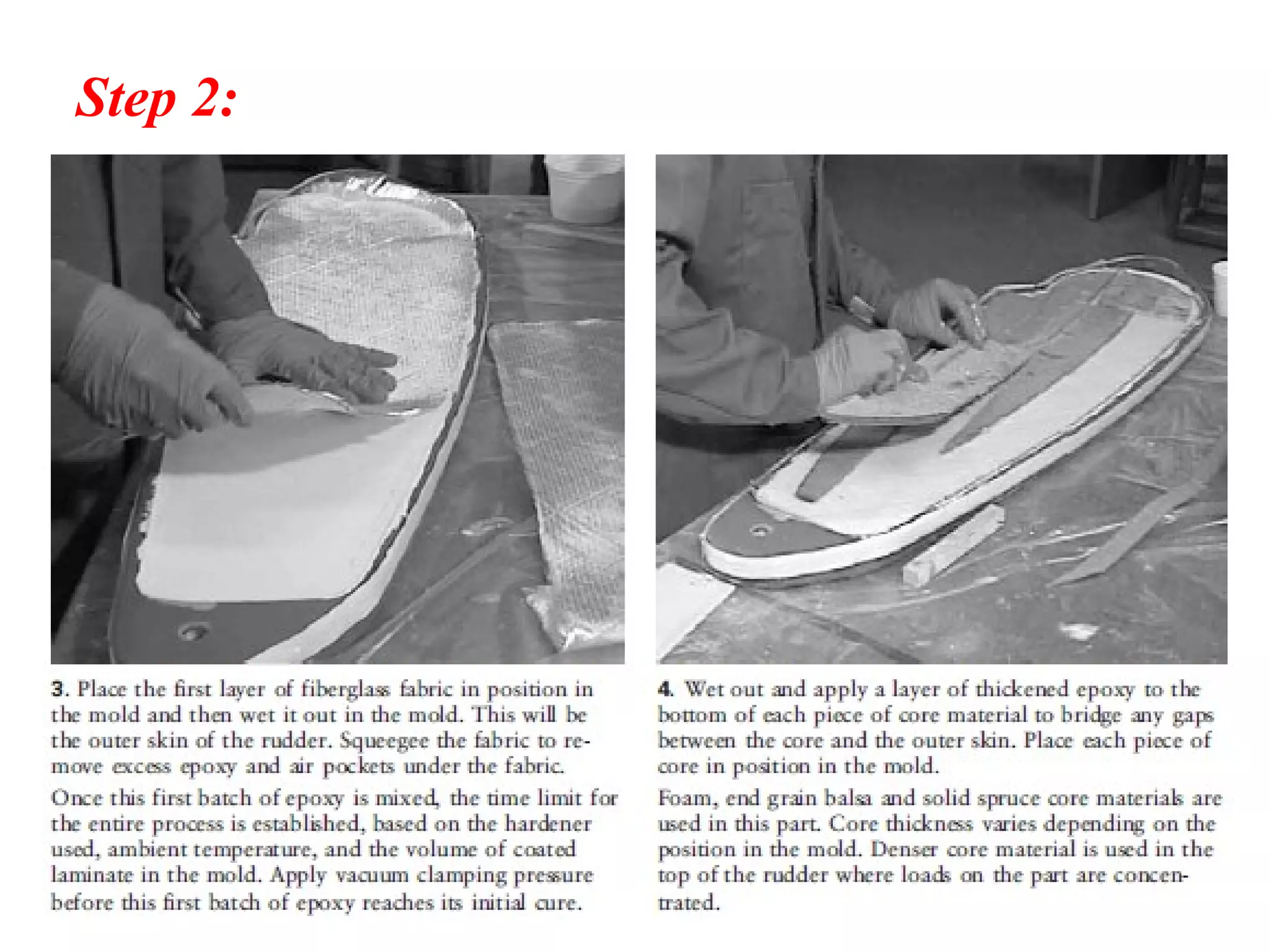
Step 2:
Step 3:
Step 4:
Step 5:
Step 6:
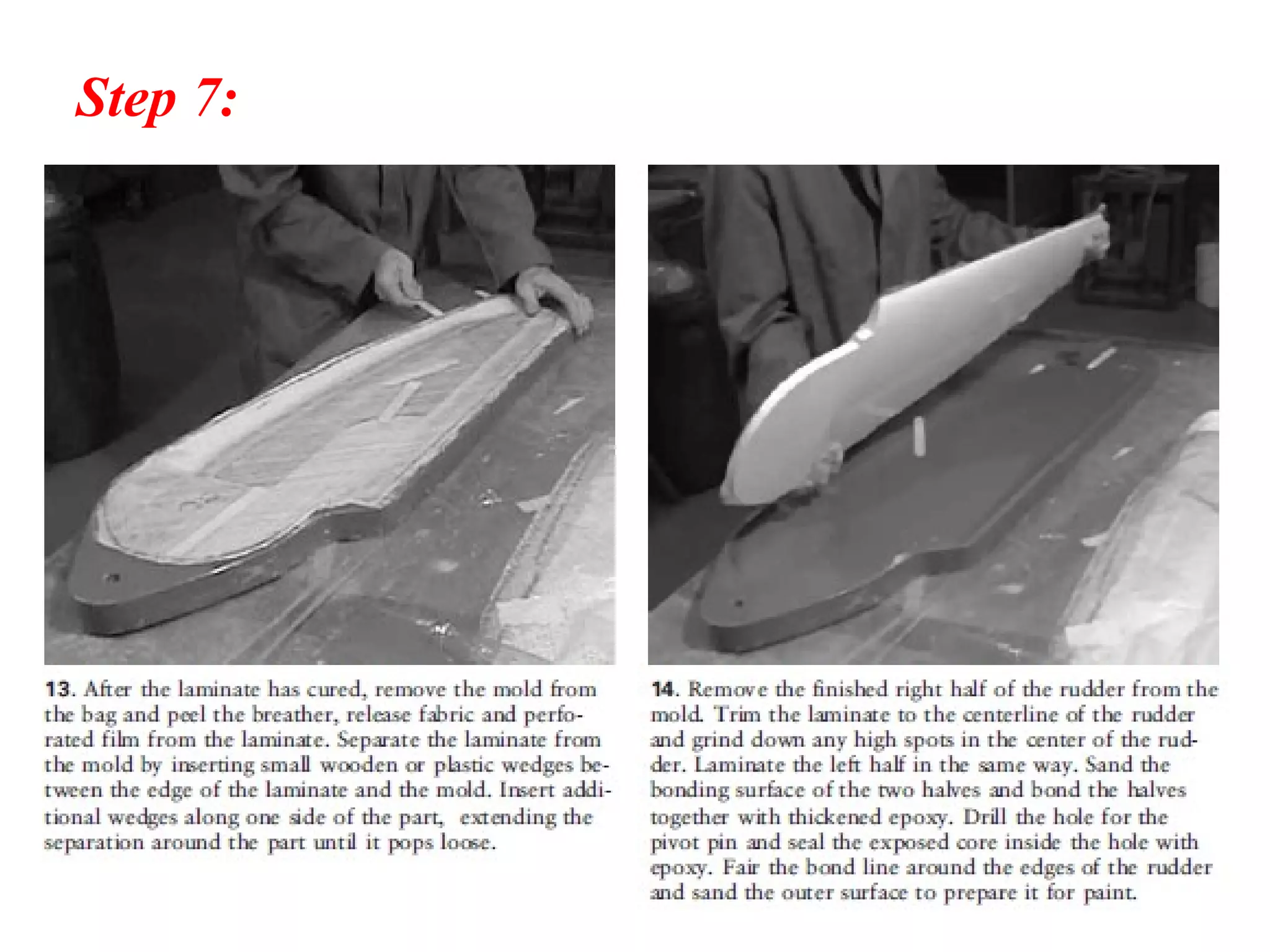
Step 7:
Step 8:
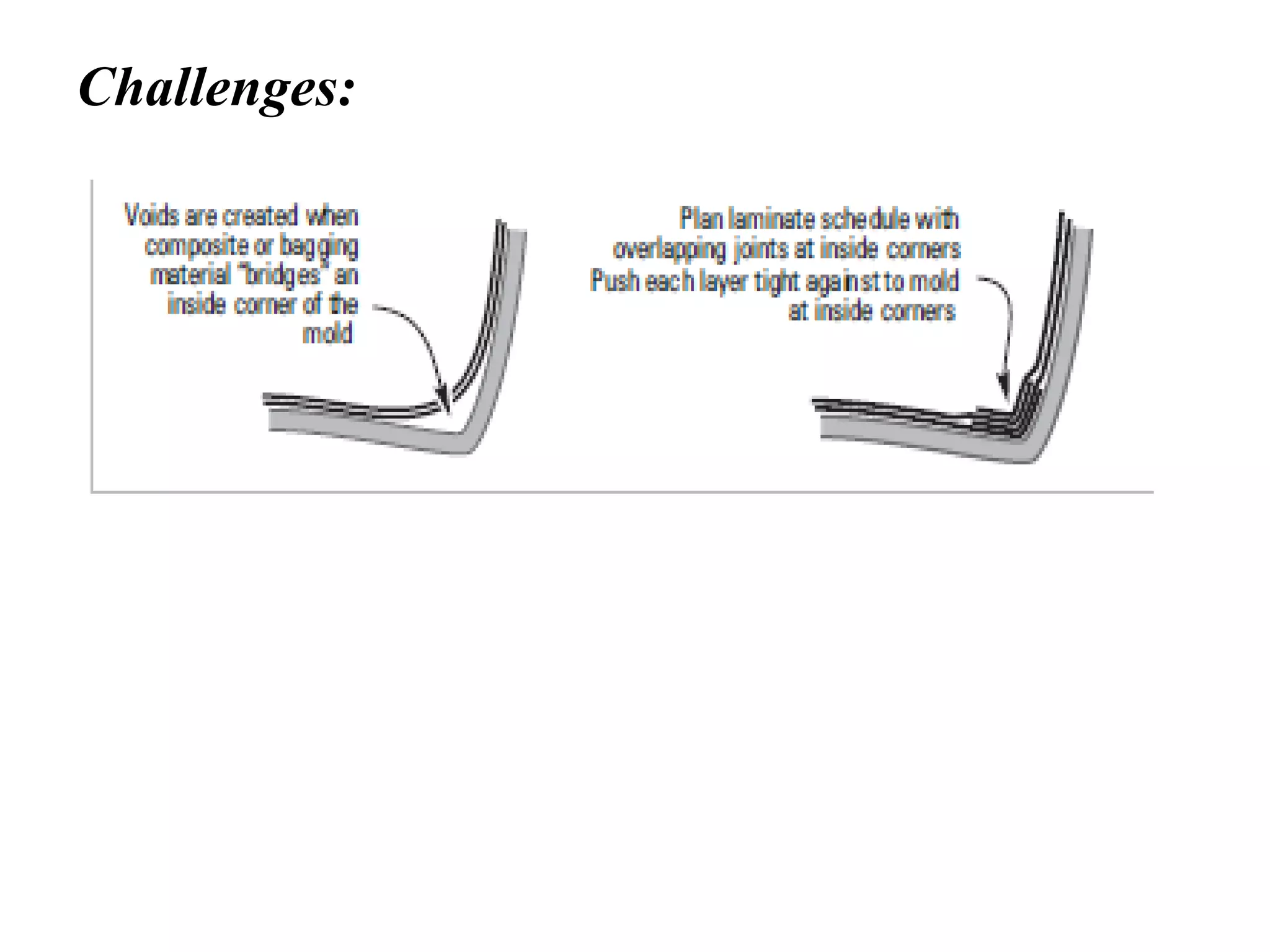
Challenges:
Example 2: Step 1
Step 2:
Step 3:
Step 4:
Step 5:
Step 6:
Step 7:

Vacuum bag molding

  • 1.
  • 2.
    • Vacuum bagmolding • Also known as vacuum bagging. • Open mold techniques for thermoset composites. • Hand lay-up: The application of reinforcement along with a polyester or epoxy resin by hand. • Vacuum bagging: The use of a vacuum bag to apply an even pressure over the composite to consolidate the material.
  • 3.
  • 4.
  • 5.
  • 6.
    What is vacuumbagging? •Vacuum bagging (or vacuum bag laminating) is a clamping method that uses atmospheric pressure to hold the adhesive or resin-coated components of a lamination in place until the adhesive cures. •(When discussing composites, “resin” generally refers to the resin system— mixed or cured resin.)
  • 8.
    Vacuum Bagging -Advantages • Even Clamping pressure • Control of resin content • Custom shapes • Efficient laminating
  • 9.
  • 10.
    Vacuum Bagging -Materials • Release fabric • Perforated film • Breather Material • Vacuum bag • Mastic sealant • Plumbing system • Mold release
  • 11.
    Release fabric: •Smooth wovenfabric – not bond to epoxy. •Used to separate breather and laminate. •Excess epoxy can wick through release fabric. Perforated film: •Used in conjunction with release fabric. •This film helps to hold the resin in laminate, when high vacuum pressure is used with slow curing resin system (or) thin laminates.
  • 12.
    Breather material: •(or) bleedercloth. •Allows air from all parts of the envelope – to be drawn to a port (or) manifold by providing slight air space between the bag and laminate. Vacuum bag: •If vacuum pressure less than 5psi(10 hg) at room temperature – 6mil polyethylene plastic can be used. •Clear plastic material is preferable as compared to opaque - for easy inspection
  • 13.
    • For highpressure and temperature applications – specially manufactured vacuum bags can be used. • Vacuum bag should always larger than mould. Mastic sealant: • Provide a continuous air tight sealant between bag and mold. • Also used to seal the point where the manifold enters the bag and to repair leaks in the bag.
  • 14.
    Plumbing system: •Provides anairtight passage from vacuum envelope to vacuum pump – allowing pump to remove air. •A basic system consists of flexible (or) rigid hose pipe, a trap, a port that connects pipe to the envelope. •Vacuum hose designed specially for this. •Vacuum port connects the exhaust tubing to vacuum bag. •Control valve – control of airflow at the envelope.
  • 15.
    • Trap incorporatedinto the line as close as possible to the envelope. • Vacuum gauge – is necessary to monitor the level. The reading of negative pressure inside the bag is equal to the net pressure of the atmospheric pressing on the outside of the bag.
  • 16.
    Mold release: •Necessary toprevent epoxy from sticking. •Three types of mold release: 4.Carnauba based paste wax •(usually 5 layers for new mold and atleast one layer before each new part is molded) •Also use PVA in wax. •Fine detail gloss level obtained by the use of wax.
  • 17.
    2. Semi permanentformulation: •Liquid release system. •Fine detail and gloss level are obtained as well as texture. 3. General contaminant variety: •Grease, vaseline, toilet bowl wax, hair spray, hair gel.
  • 21.
  • 22.
  • 23.
  • 24.
  • 25.
  • 26.
  • 27.
  • 28.
  • 29.
  • 30.
  • 31.
  • 32.
  • 33.
  • 34.
  • 35.
  • 36.