TEXTILE COMPOSITES	Waqas Younus ParachaSenior Research AssistantTextile Research and Innovation Centre (TRIC) Textile Institute of Pakistan
TYPES OF ENGINEERING MATERIALS.The basic types of engineering materials are: METALS.POLYMERS (Plastics).CERAMICS.COMPOSITES.
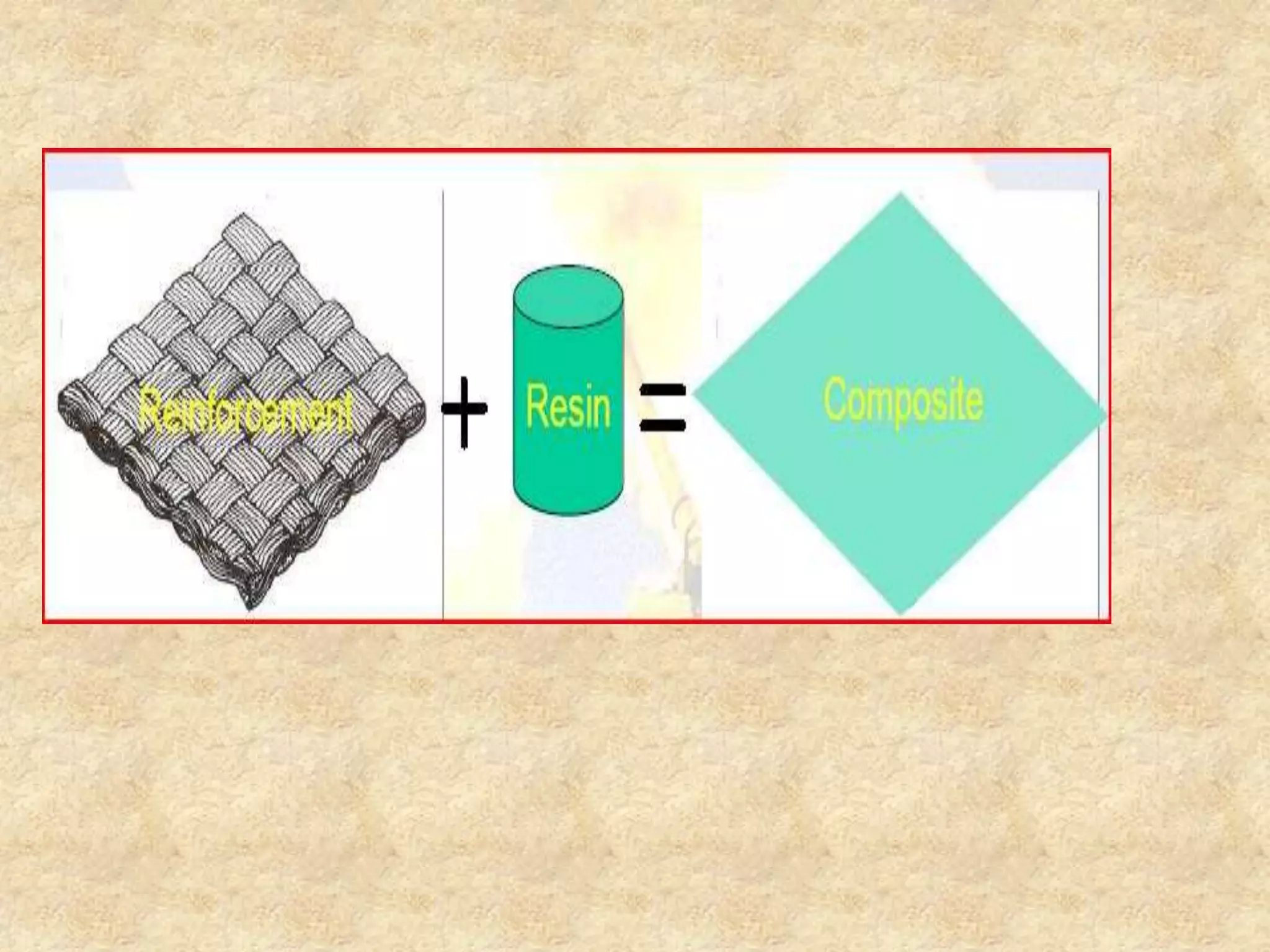
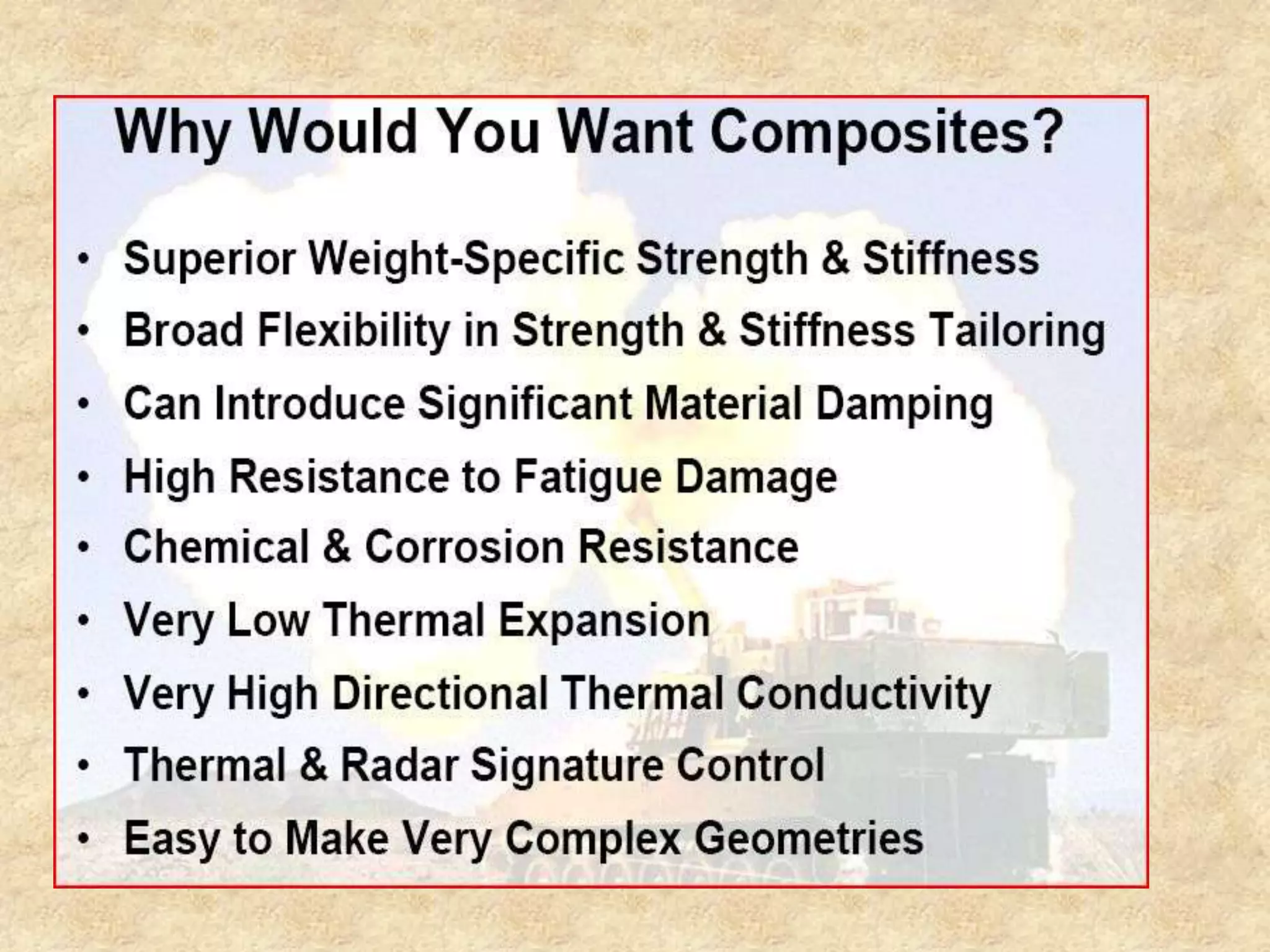
What is a composite?The term "composite" can be used in several different ways, and the definition can range from general to very specific. A broad definition of a composite is: "Two or more dissimilar materials which when combined are stronger than the individual materials."
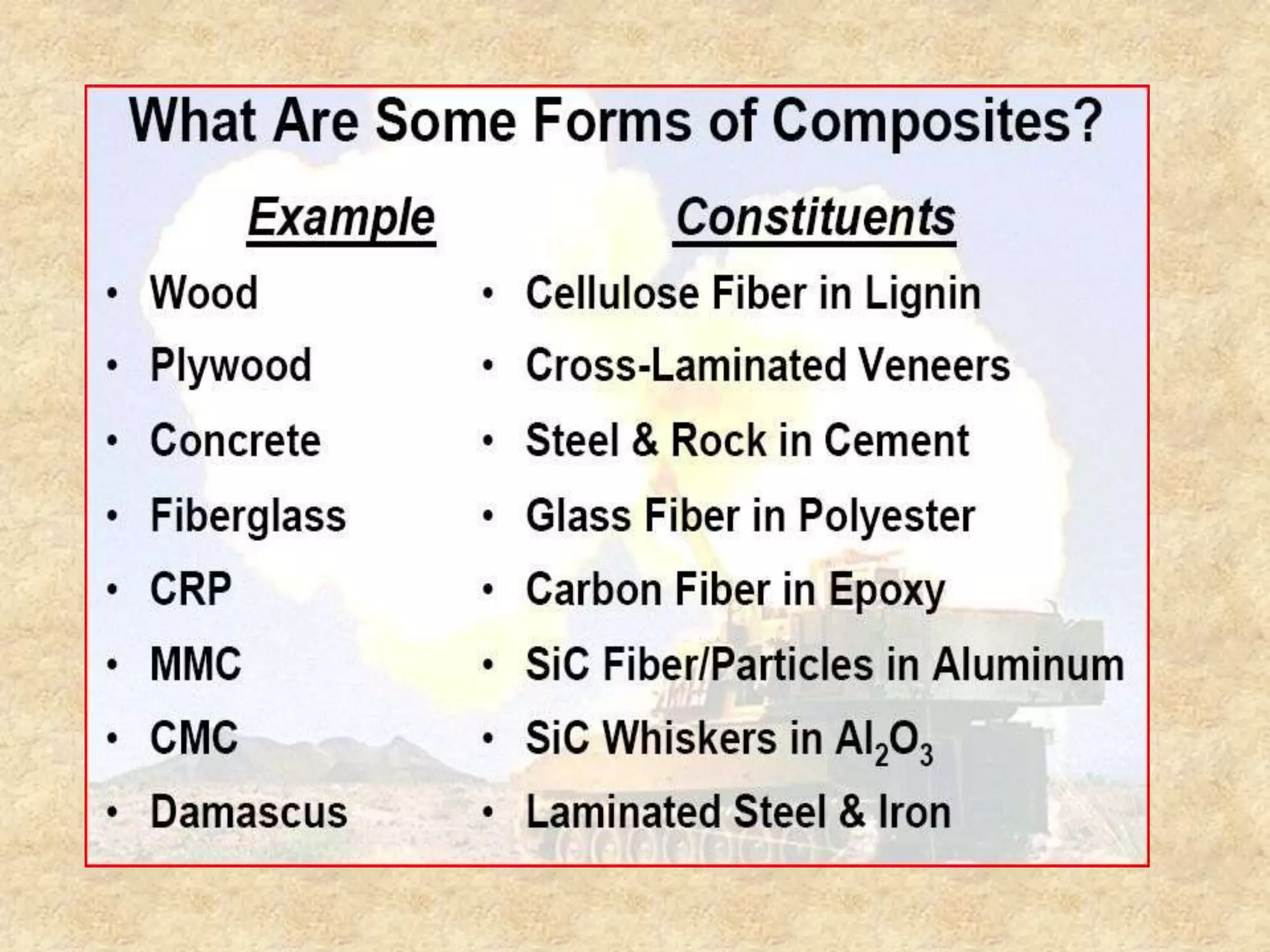
What is a composite? While the broad definition of composites is accurate, it is too general. Composite materials (or composites for short) are engineered materials made from two or more constituent materials with significantly different mechanical properties and which remain separate and distinct within the finished structure.
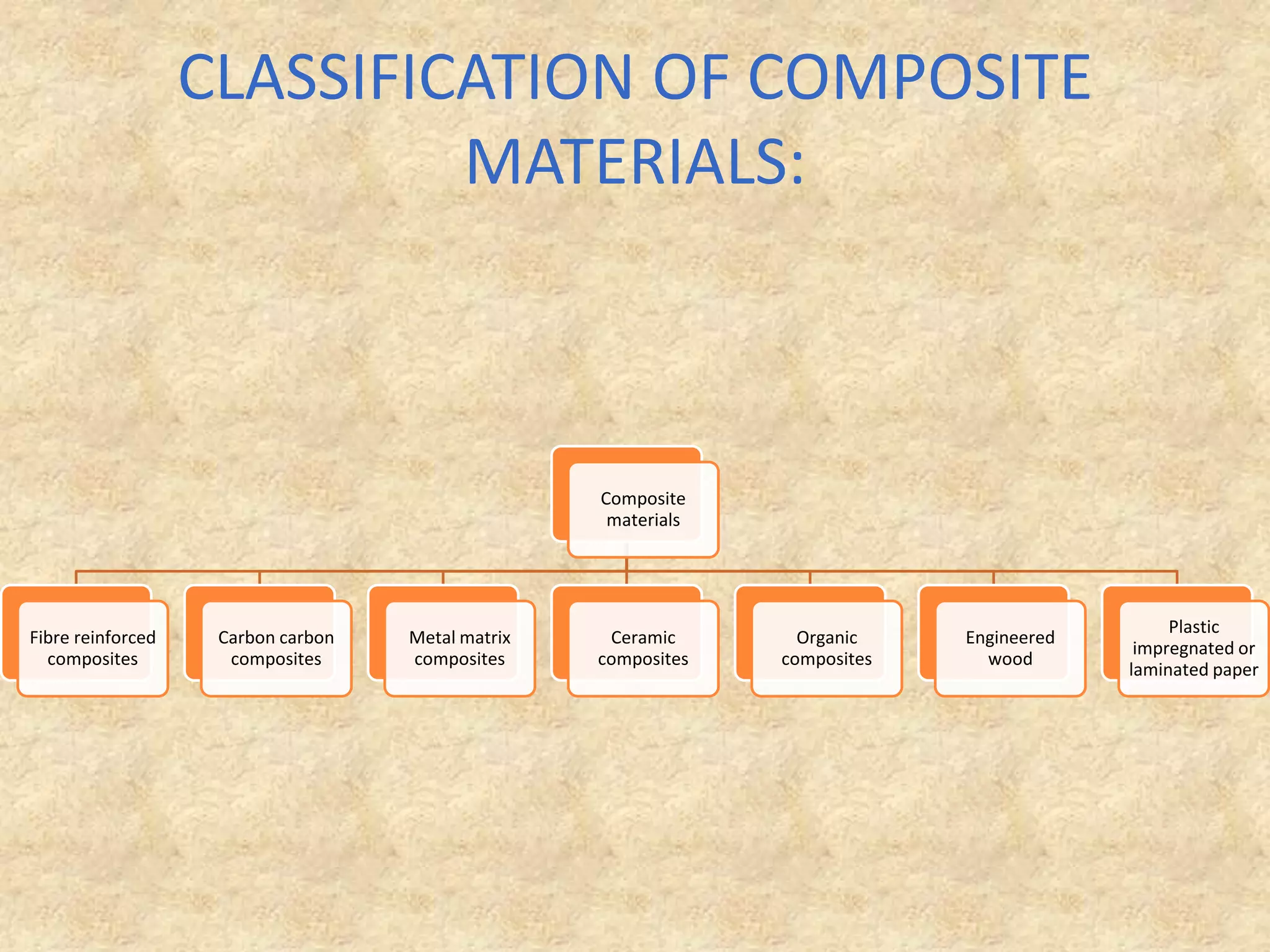
CLASSIFICATION OF COMPOSITE MATERIALS:
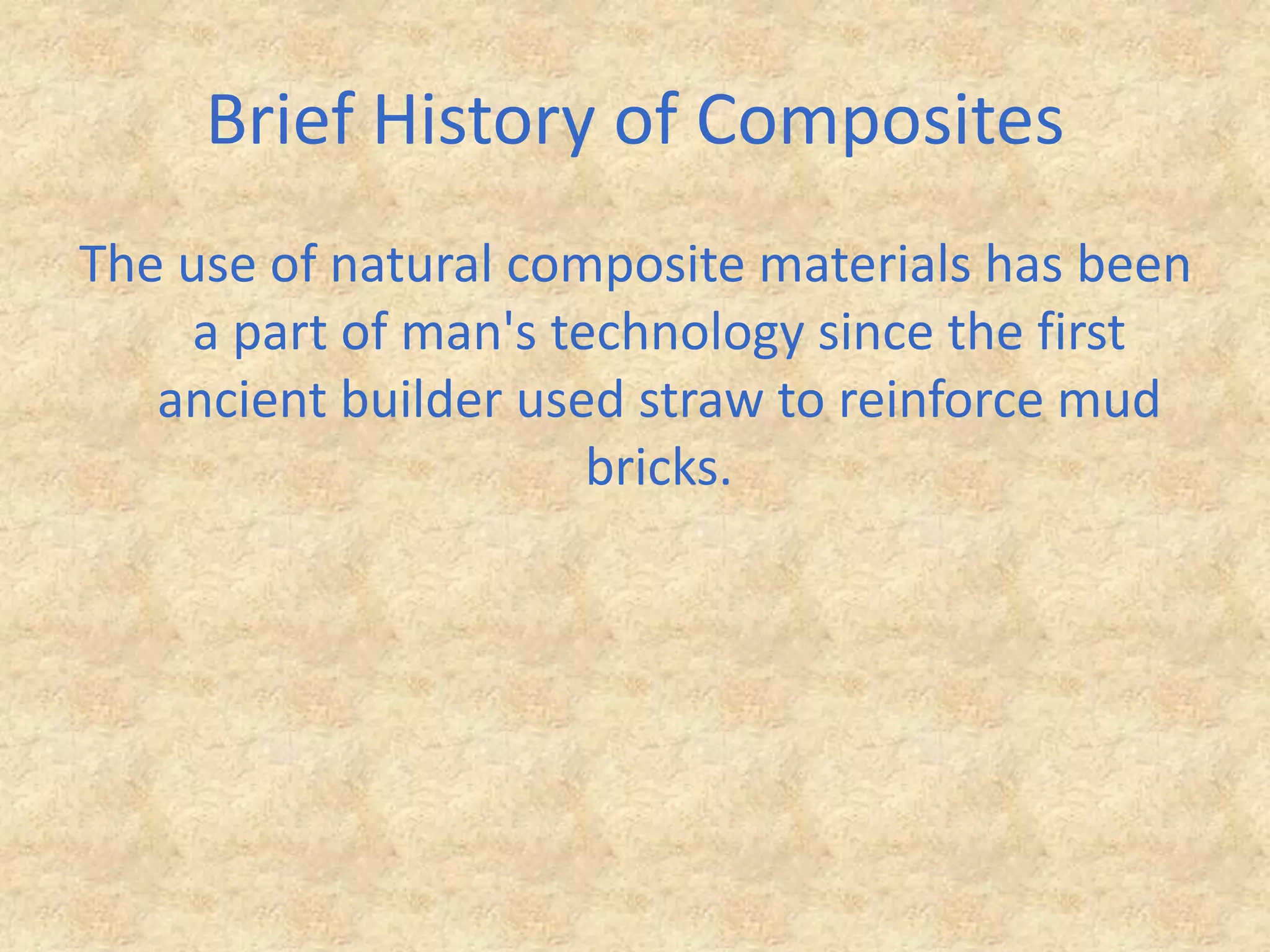
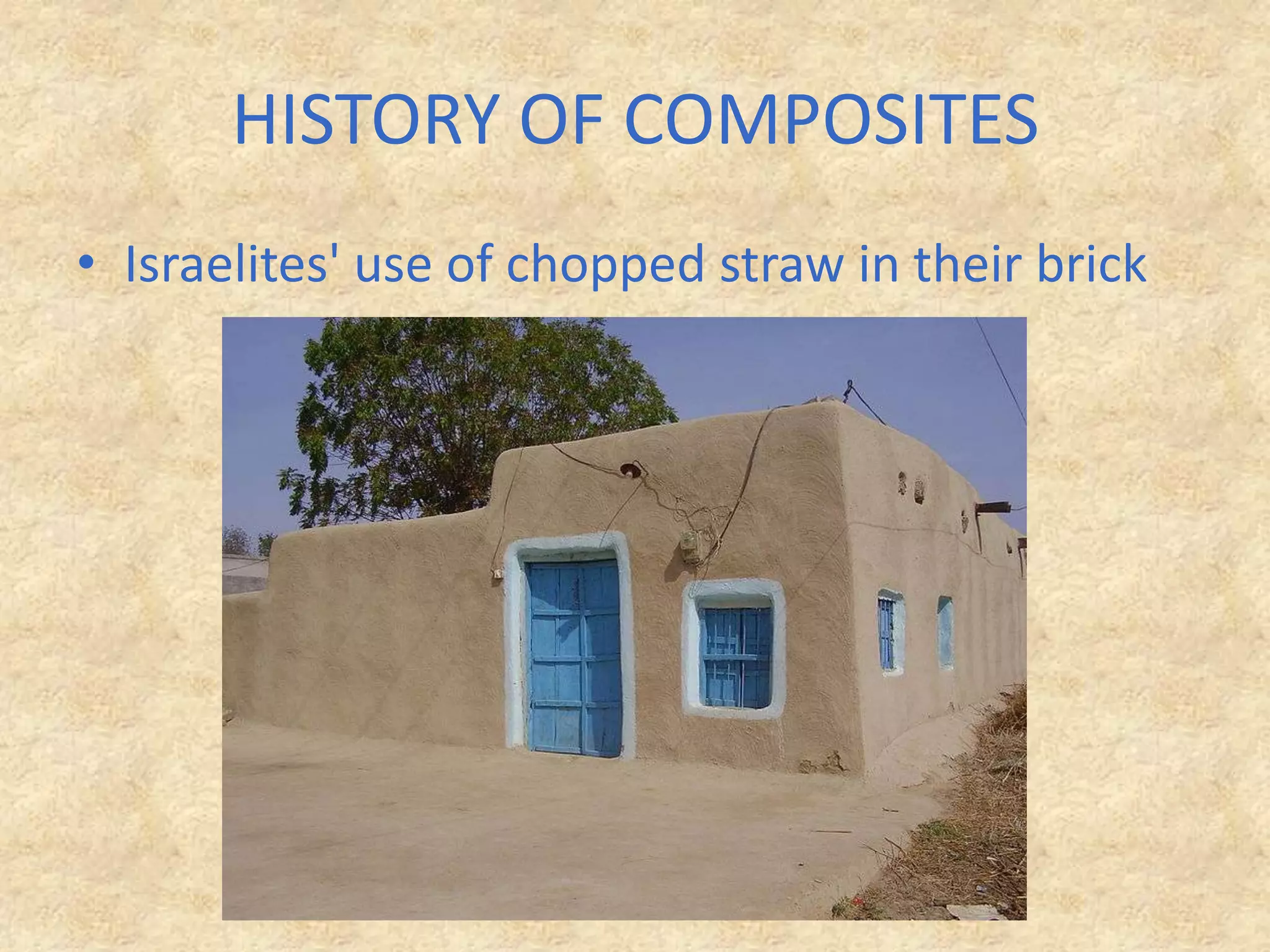
Brief History of CompositesThe use of natural composite materials has been a part of man's technology since the first ancient builder used straw to reinforce mud bricks.
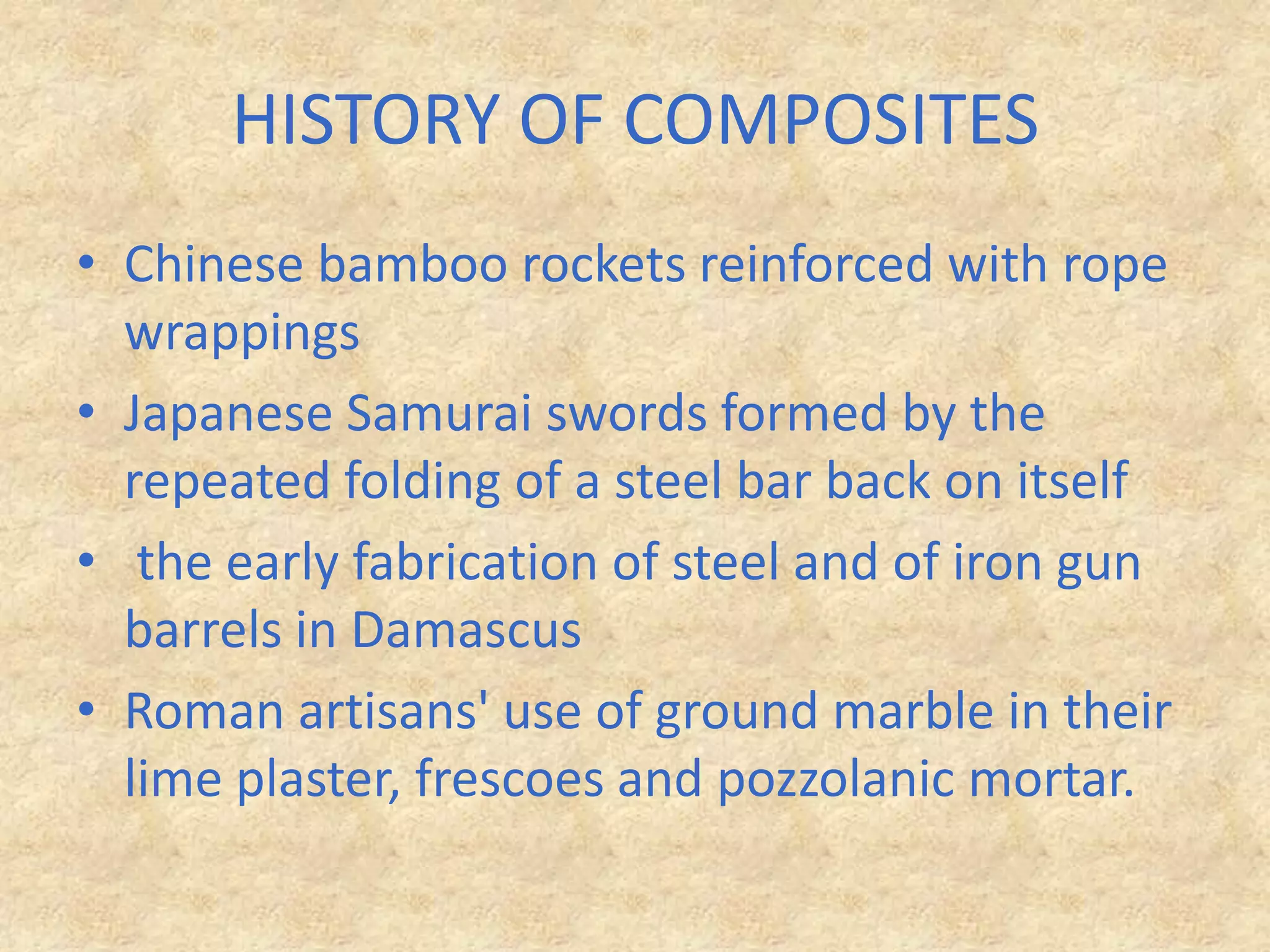
HISTORY OF COMPOSITESIsraelites' use of chopped straw in their brick
HISTORY OF COMPOSITESthe Egyptian sarcophagi fashioned from glued and laminated wood veneer and also their use of cloth tape soaked in resin for mummy embalming
The Etruscan "Sarcophagus of the Spouses", at the National Etruscan Museum
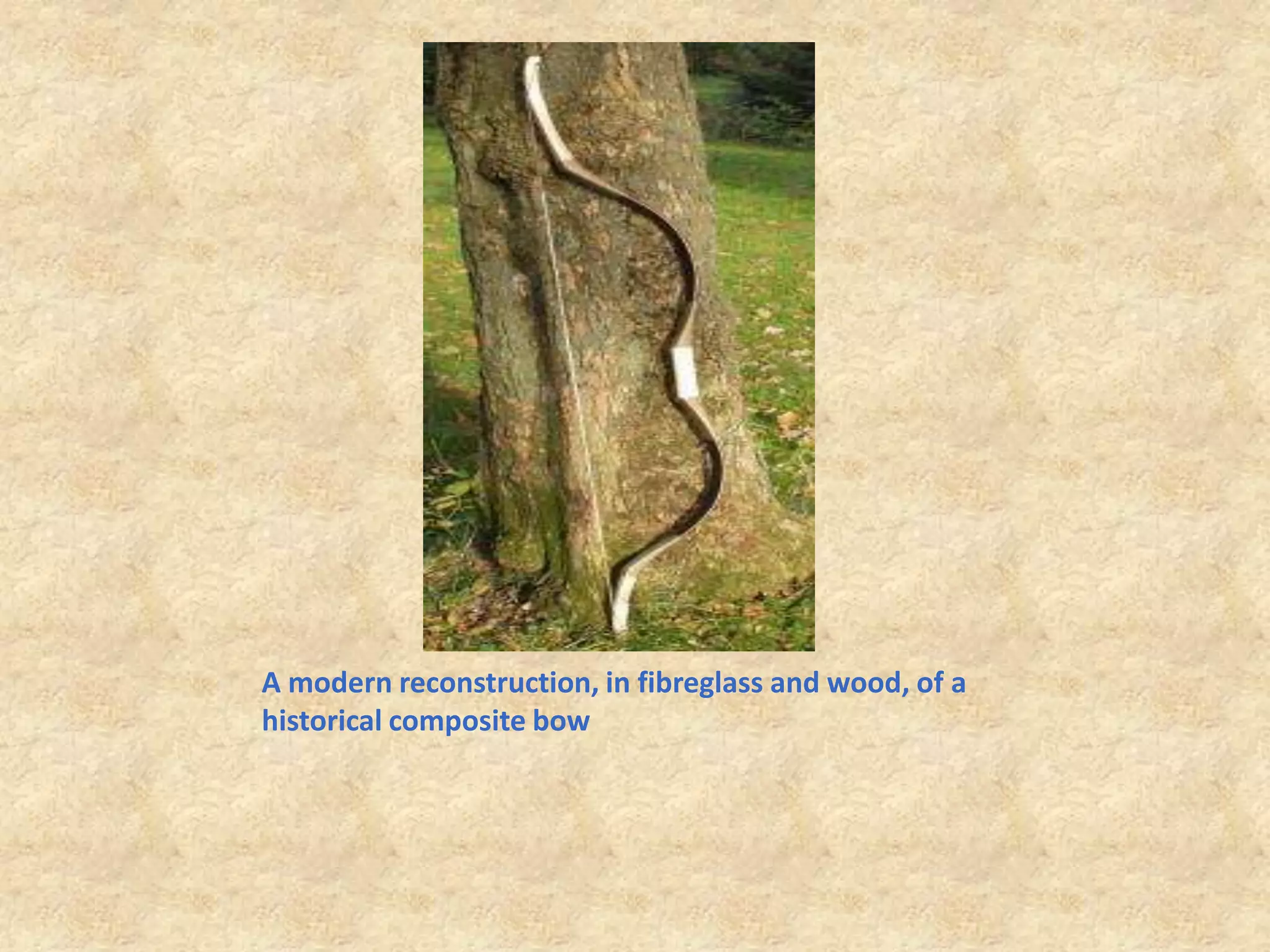
HISTORY OF COMPOSITESthe Mongol warriors' high-performance, recurved archery bows of bullock tendon, horn, bamboo strips, silk and pine resin, which are 80% as strong as our modern fiberglass bows
A modern reconstruction, in fibreglass and wood, of a historical composite bow
HISTORY OF COMPOSITESChinese bamboo rockets reinforced with rope wrappingsJapanese Samurai swords formed by the repeated folding of a steel bar back on itself the early fabrication of steel and of iron gun barrels in DamascusRoman artisans' use of ground marble in their lime plaster, frescoes and pozzolanic mortar.
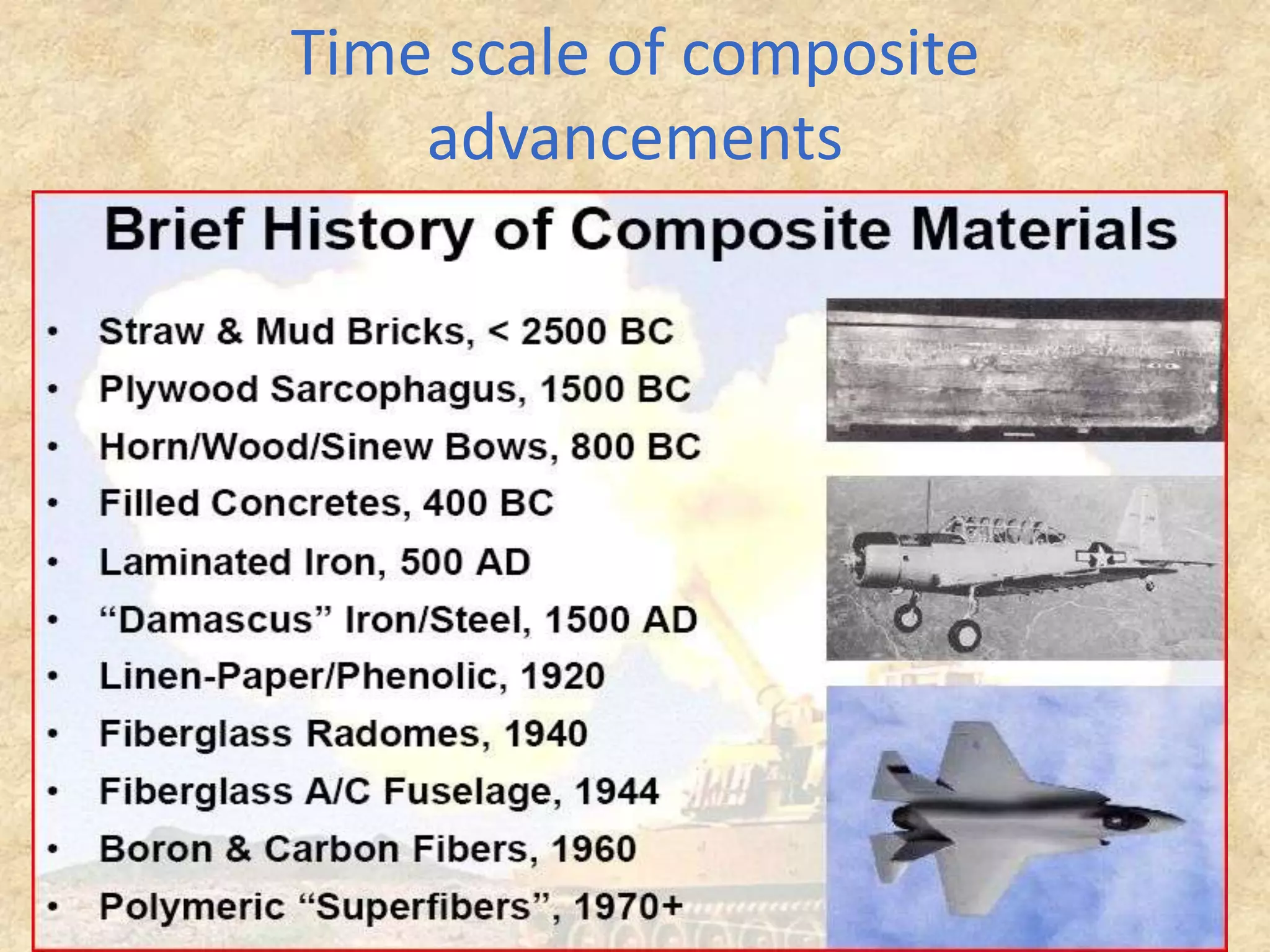
Time scale of composite advancements
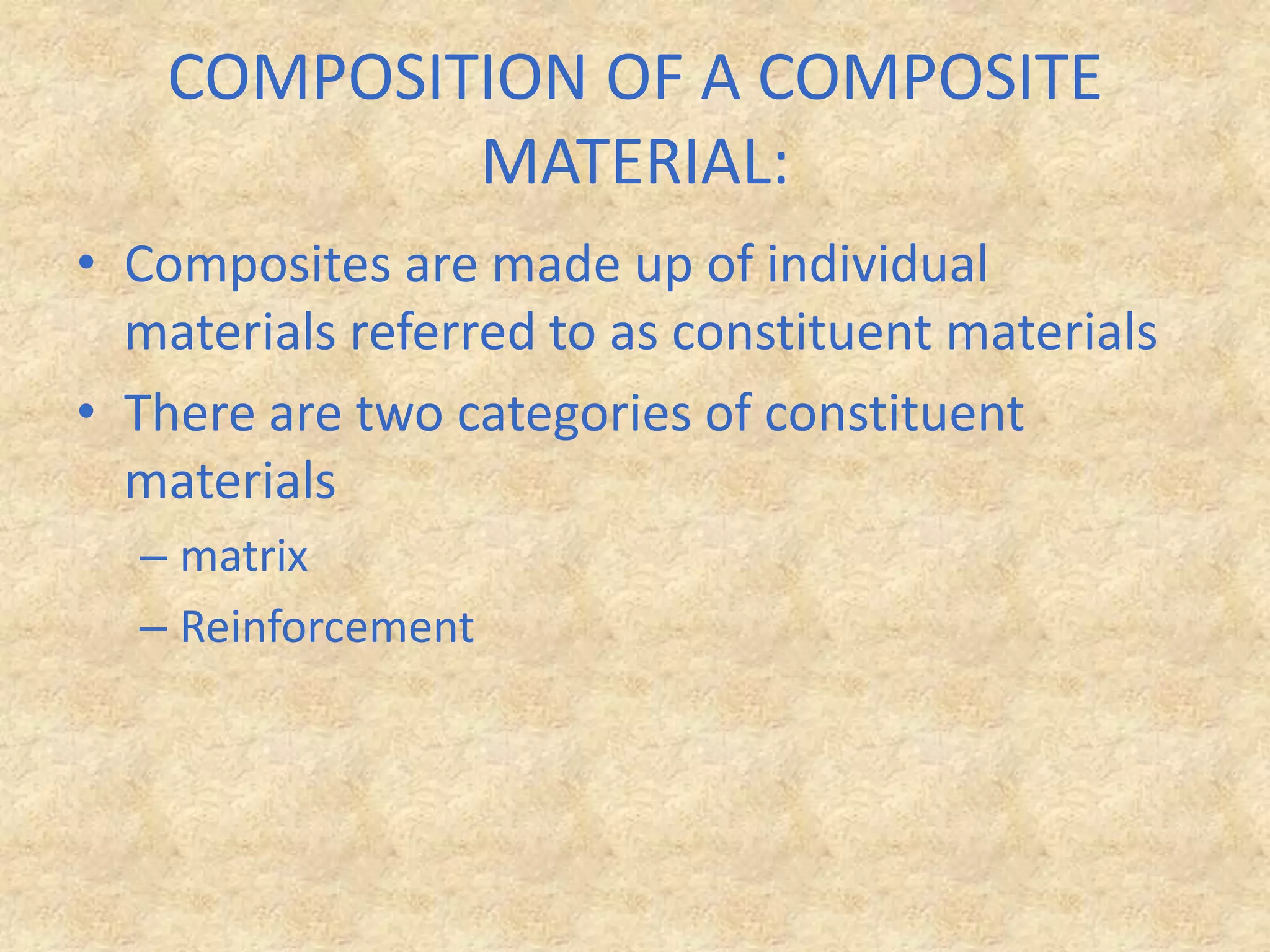
COMPOSITION OF A COMPOSITE MATERIAL: Composites are made up of individual materials referred to as constituent materialsThere are two categories of constituent materialsmatrix Reinforcement
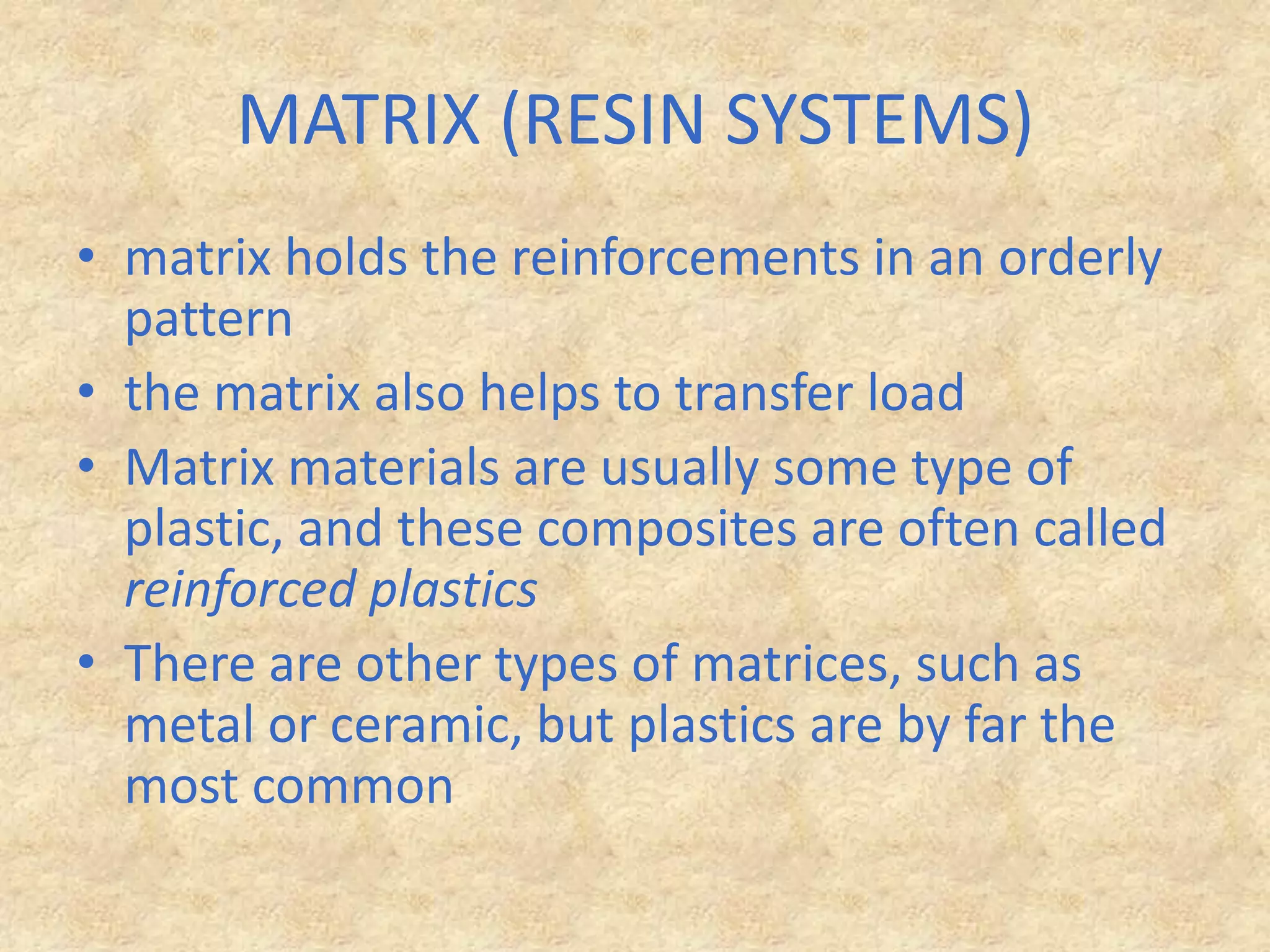
MATRIX (RESIN SYSTEMS) matrix holds the reinforcements in an orderly patternthe matrix also helps to transfer load Matrix materials are usually some type of plastic, and these composites are often called reinforced plasticsThere are other types of matrices, such as metal or ceramic, but plastics are by far the most common
MATRIX (RESIN SYSTEMS) The choice of a resin system for use in any component depends on a number of its characteristics., with the following probably being the most important for most composite structures:1.      Adhesive Properties2.      Mechanical Properties3.      Micro-Cracking resistance4.      Fatigue Resistance5.      Degradation from Water Ingress
TYPES OF  MATRIX (RESIN SYSTEMS)Most commonly used resin systems are: Polyester resinsVinyl ester resinsEpoxy resins
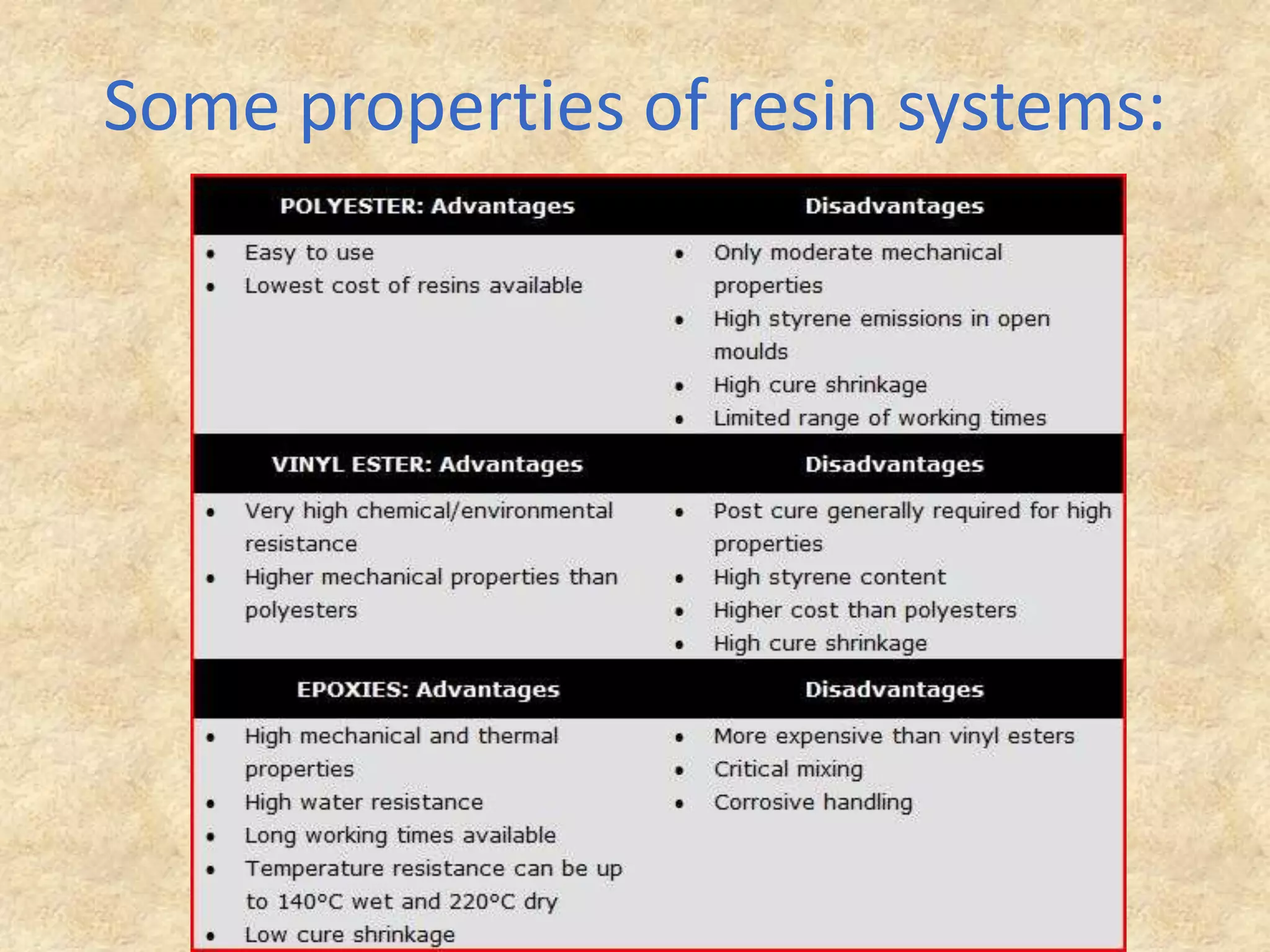
Some properties of resin systems:
REINFORCEMENTSThe role of the reinforcement in a composite material is fundamentally one of increasing the mechanical properties All of the different fibres used in composites have different properties and so affect the properties of the composite in different ways
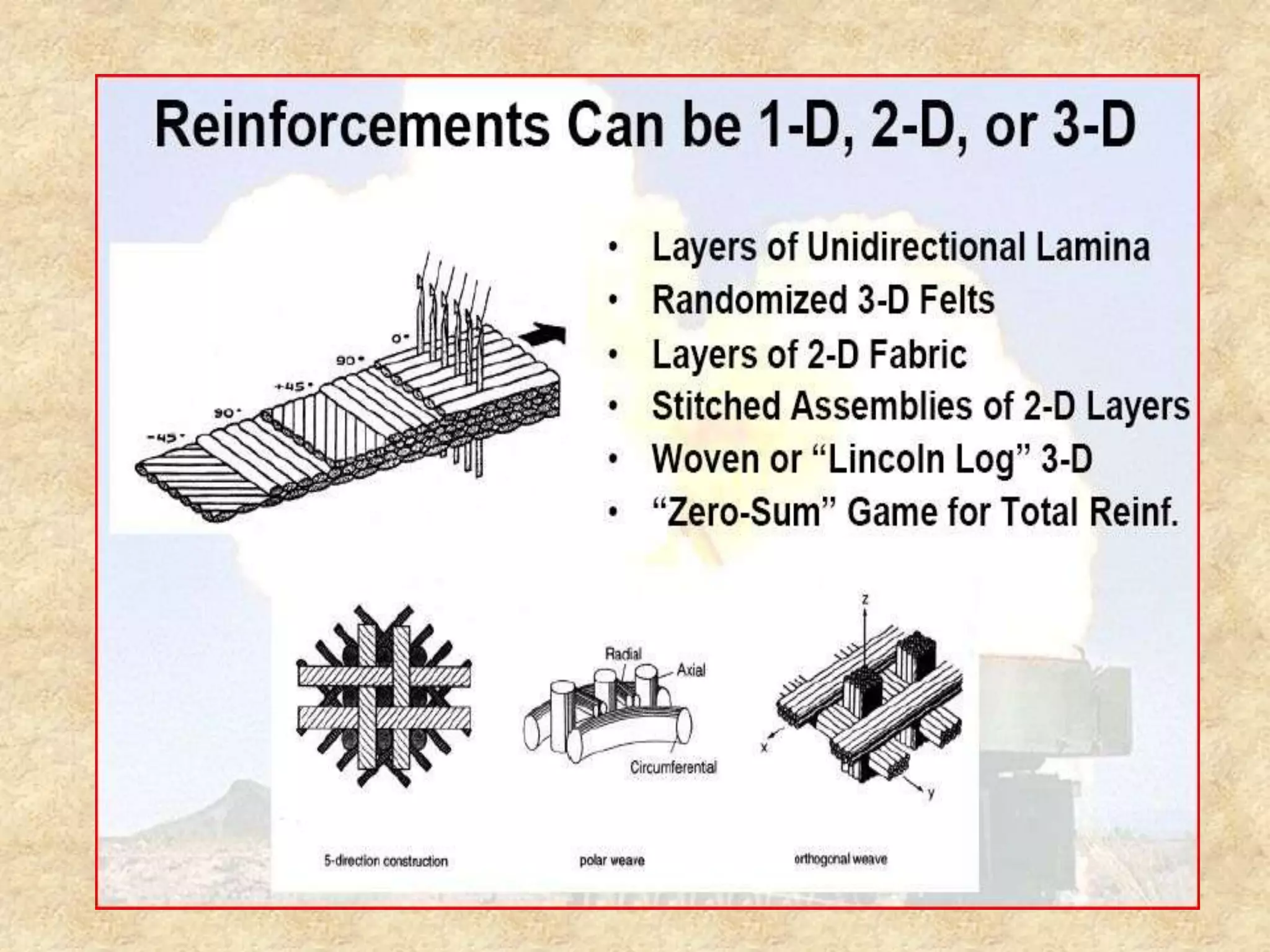
REINFORCEMENTSindividual fibres or fibre bundles can only be used on their own in a few processes such as filament winding. For most other applications, the fibres need to be arranged into some form of sheet, known as a fabric, to make handling possible.
These fabrics can be made through different textile techniques such as braiding, weaving, knitting and sometimes even Non wovens can be used as reinforcements.Therefore the utilization of all these textile techniques gave rise to the name TEXTILE COMPOSITES.
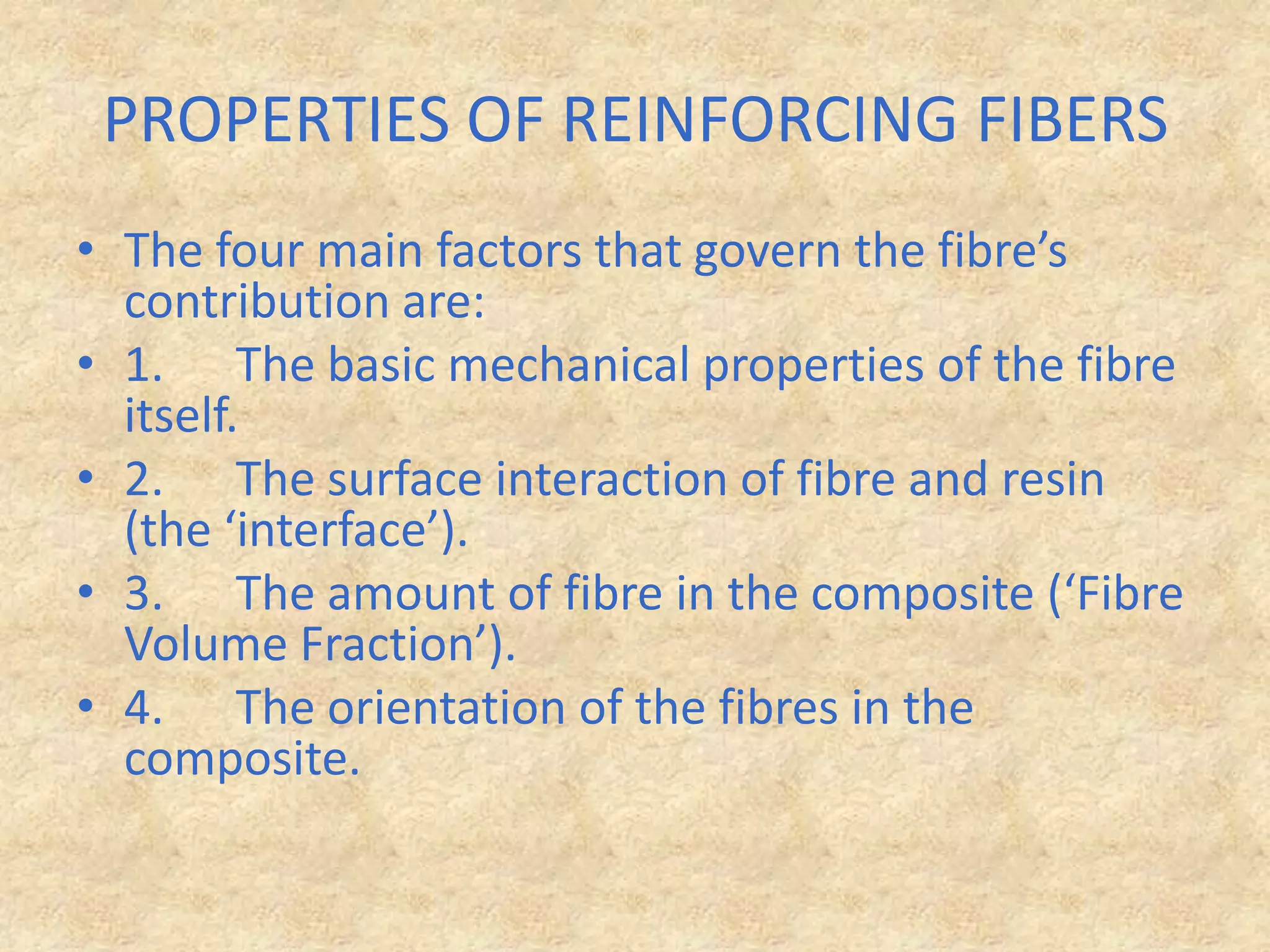
PROPERTIES OF REINFORCING FIBERSThe four main factors that govern the fibre’s contribution are:1.      The basic mechanical properties of the fibre itself.2.      The surface interaction of fibre and resin (the ‘interface’).3.      The amount of fibre in the composite (‘Fibre Volume Fraction’).4.      The orientation of the fibres in the composite.
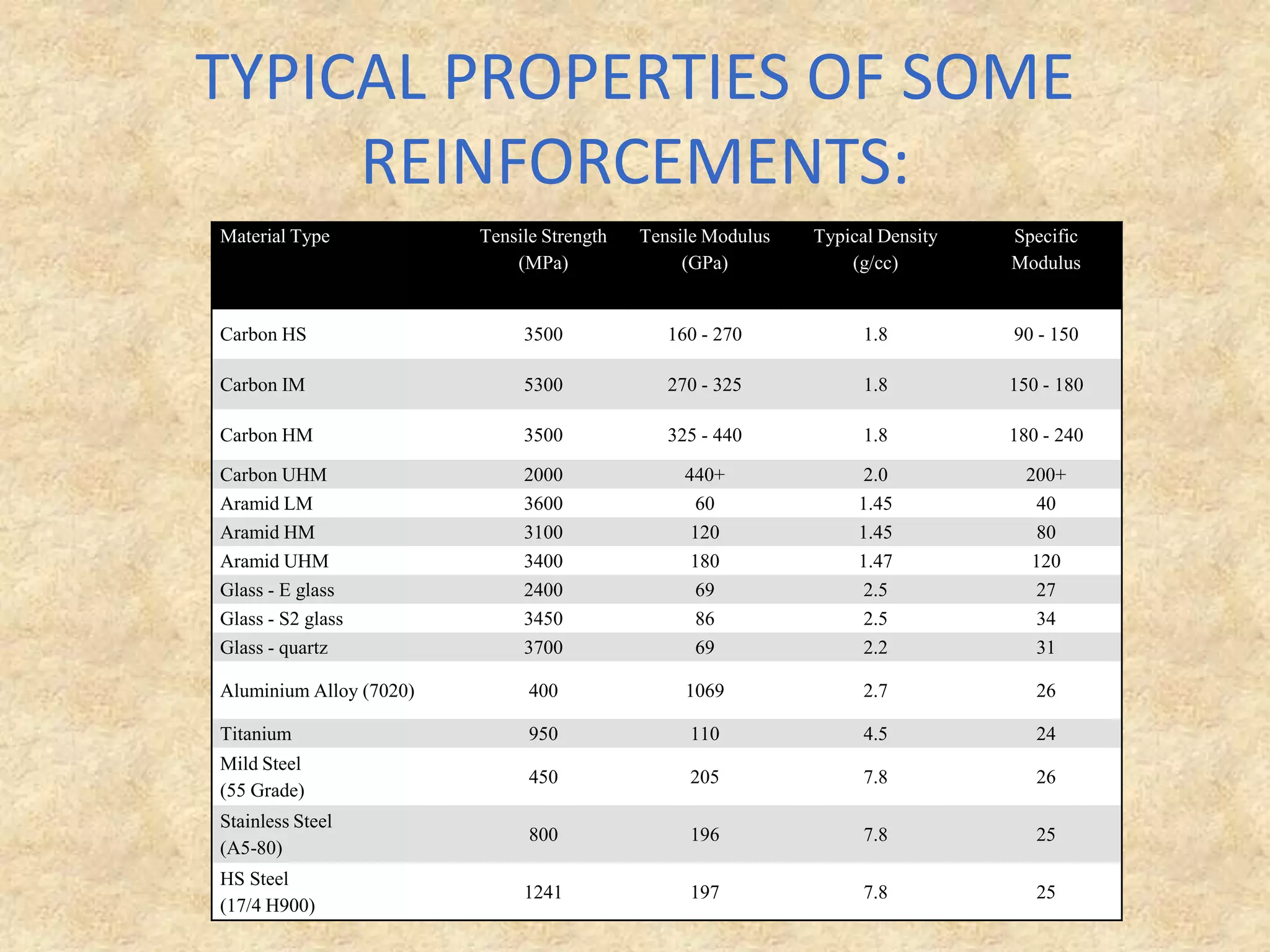
TYPICAL PROPERTIES OF SOME REINFORCEMENTS:
WAYS TO MANUFACTURE A COMPOSITE MATERIALEngineered composite materials must be formed to shapeThe matrix material can be introduced to the reinforcement before or after the reinforcement material is placed into the mold cavity or onto the mold surfaceThe matrix material experiences a melding event, after which the part shape is essentially set
Depending upon the nature of the matrix material, this melding event can occur in various ways such as chemical polymerization or solidification from the melted state.In general, the reinforcing and matrix materials are combined, compacted and processed to undergo a melding eventAfter the melding event, the part shape is essentially set
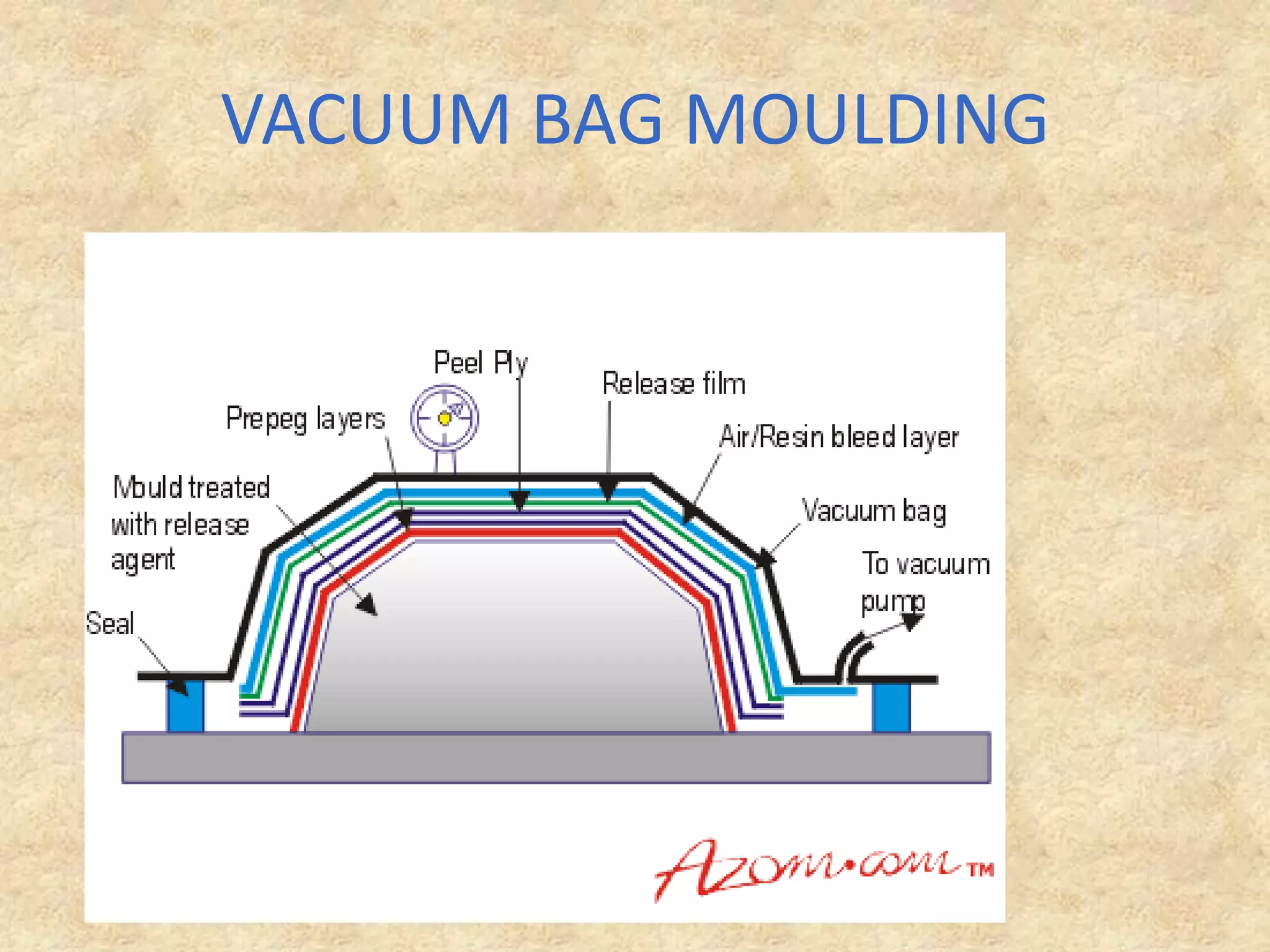
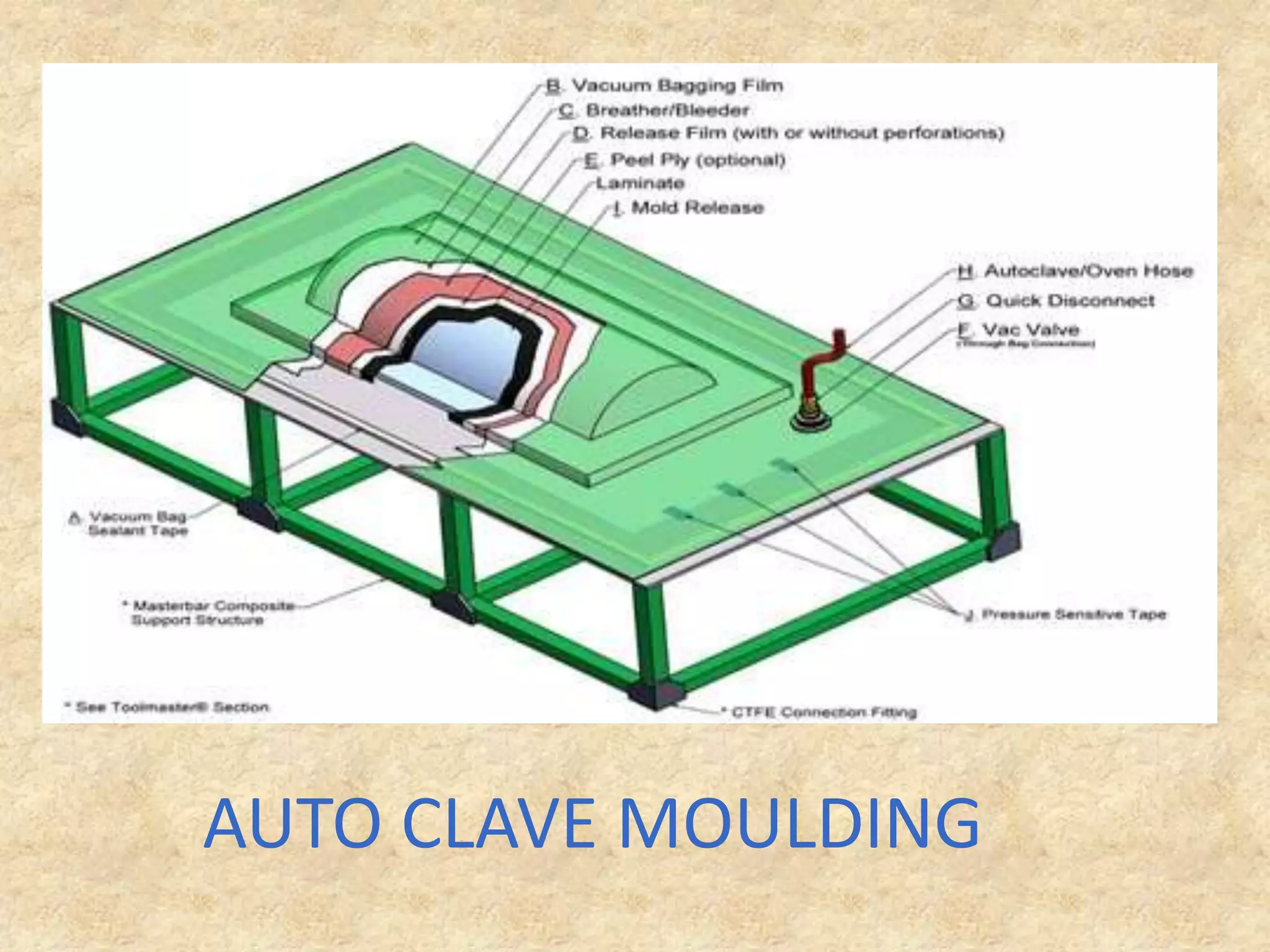
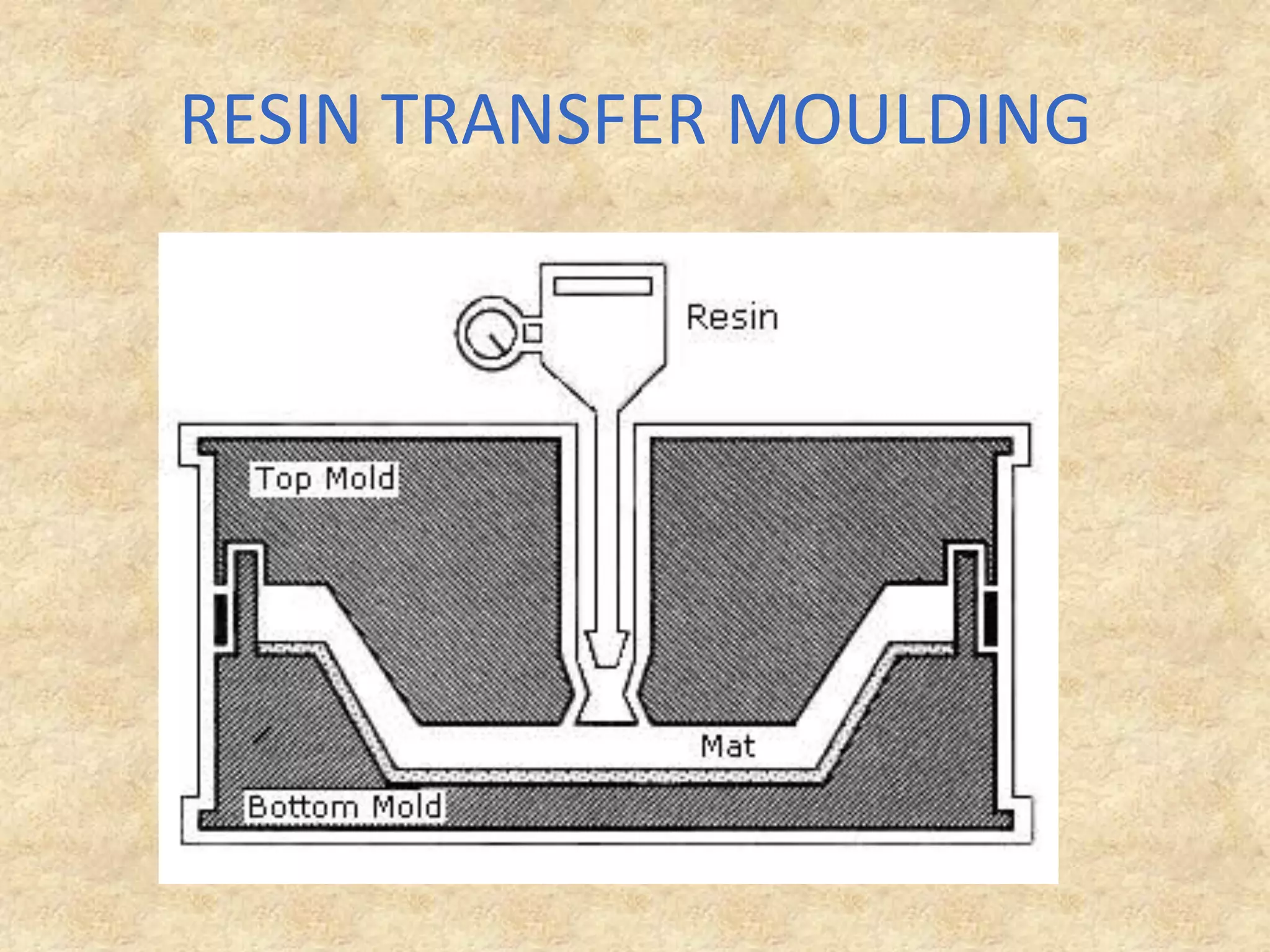
There are different type of moulding processes which can be utilized to form a composite material. These can beVacuum bag mouldingPressure bag mouldingAutoclave mouldingResin transfer moulding (RTM)
VACUUM BAG MOULDING
AUTO CLAVE MOULDING
RESIN TRANSFER MOULDING
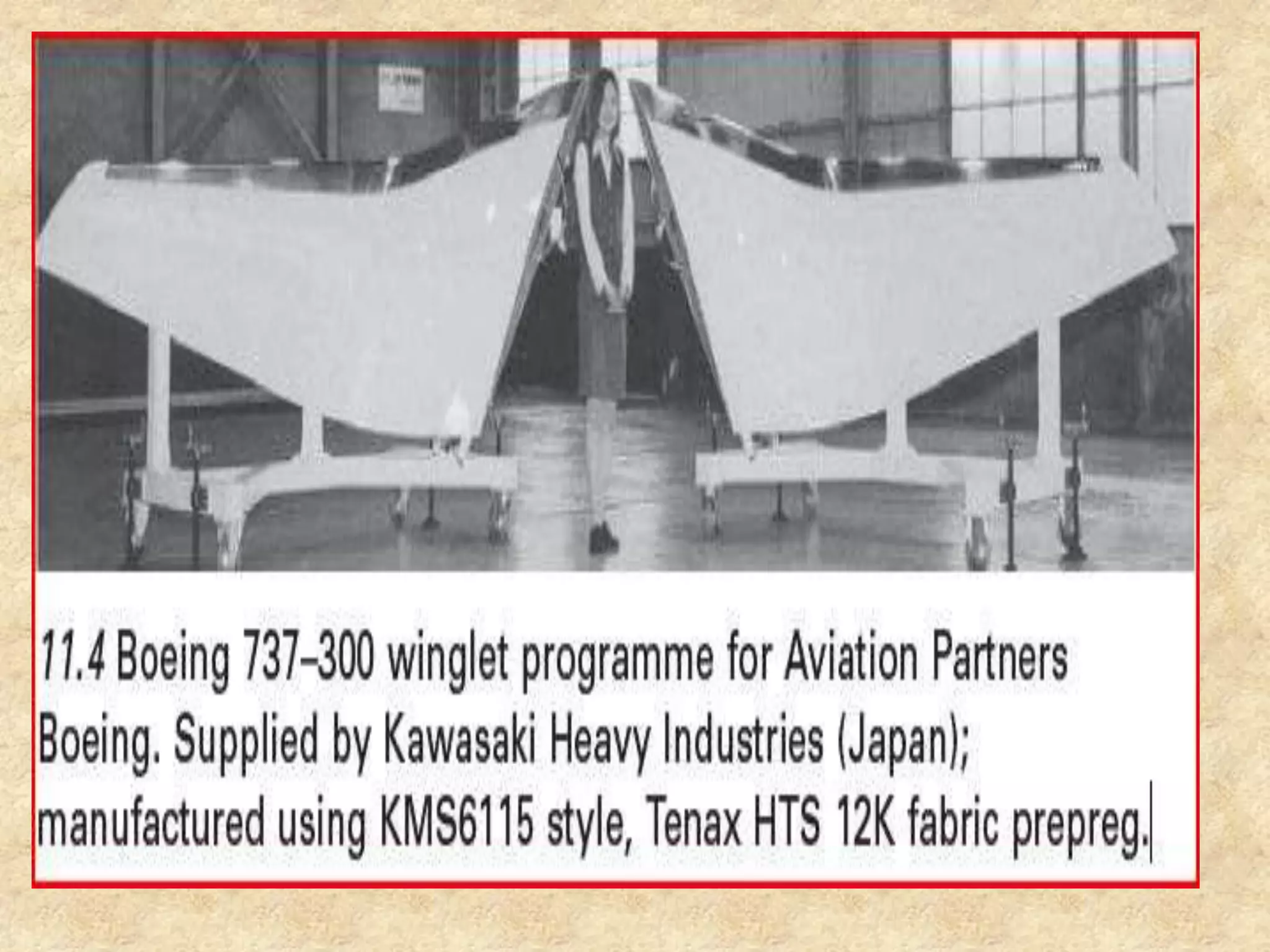
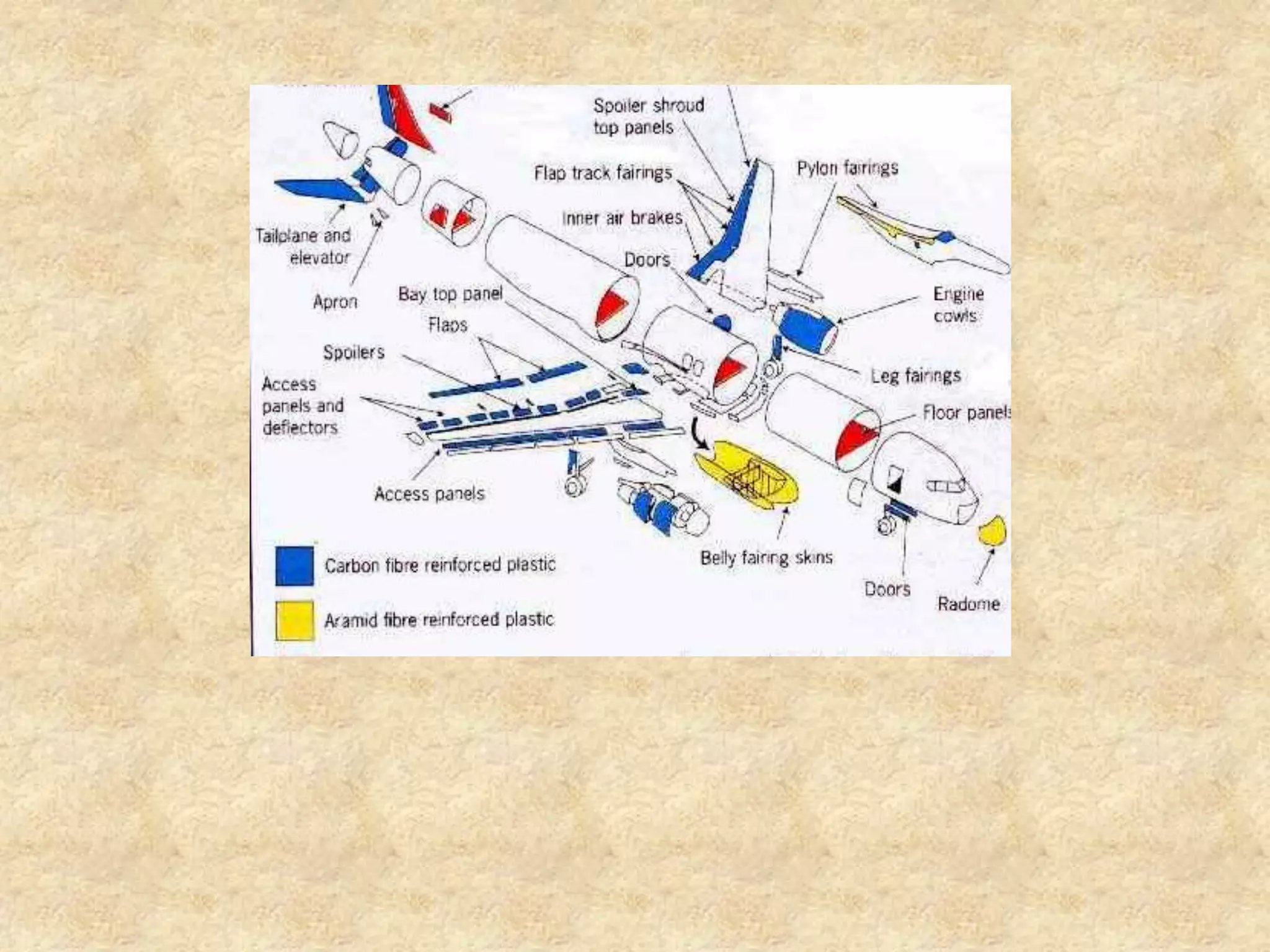
TEXTILE COMPOSITES...THE WAY FORWARDAPPLICATIONS IN THE AEROSPACE INDUSTRY: composite materials comprise more than 20% of the A380's airframe. Carbon-fibre reinforced plastic, glass-fibre reinforced plastic and quartz-fibre reinforced plastic are used extensively in wings, fuselage sections (such as the undercarriage and rear end of fuselage), tail surfaces, and doors.
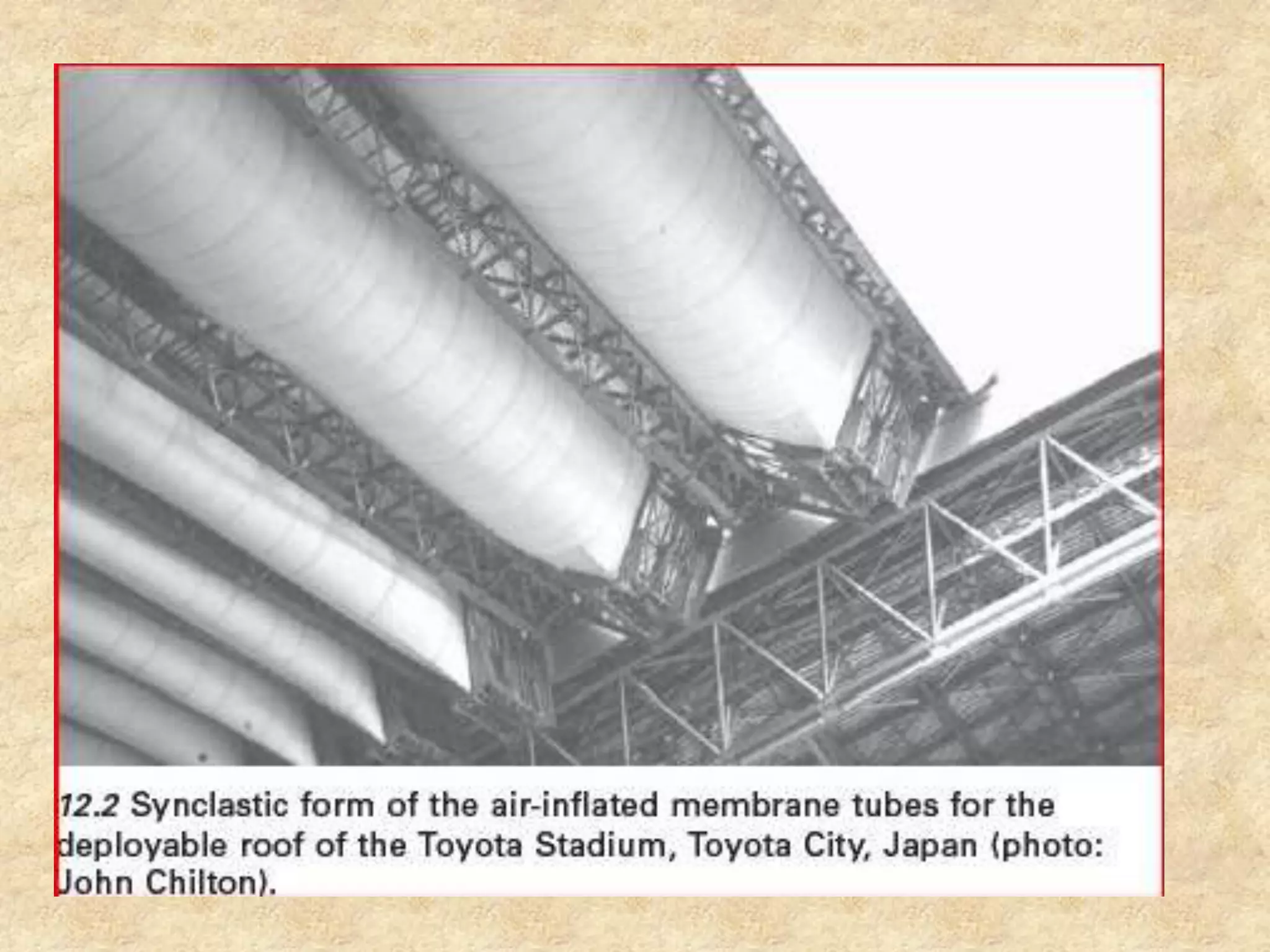
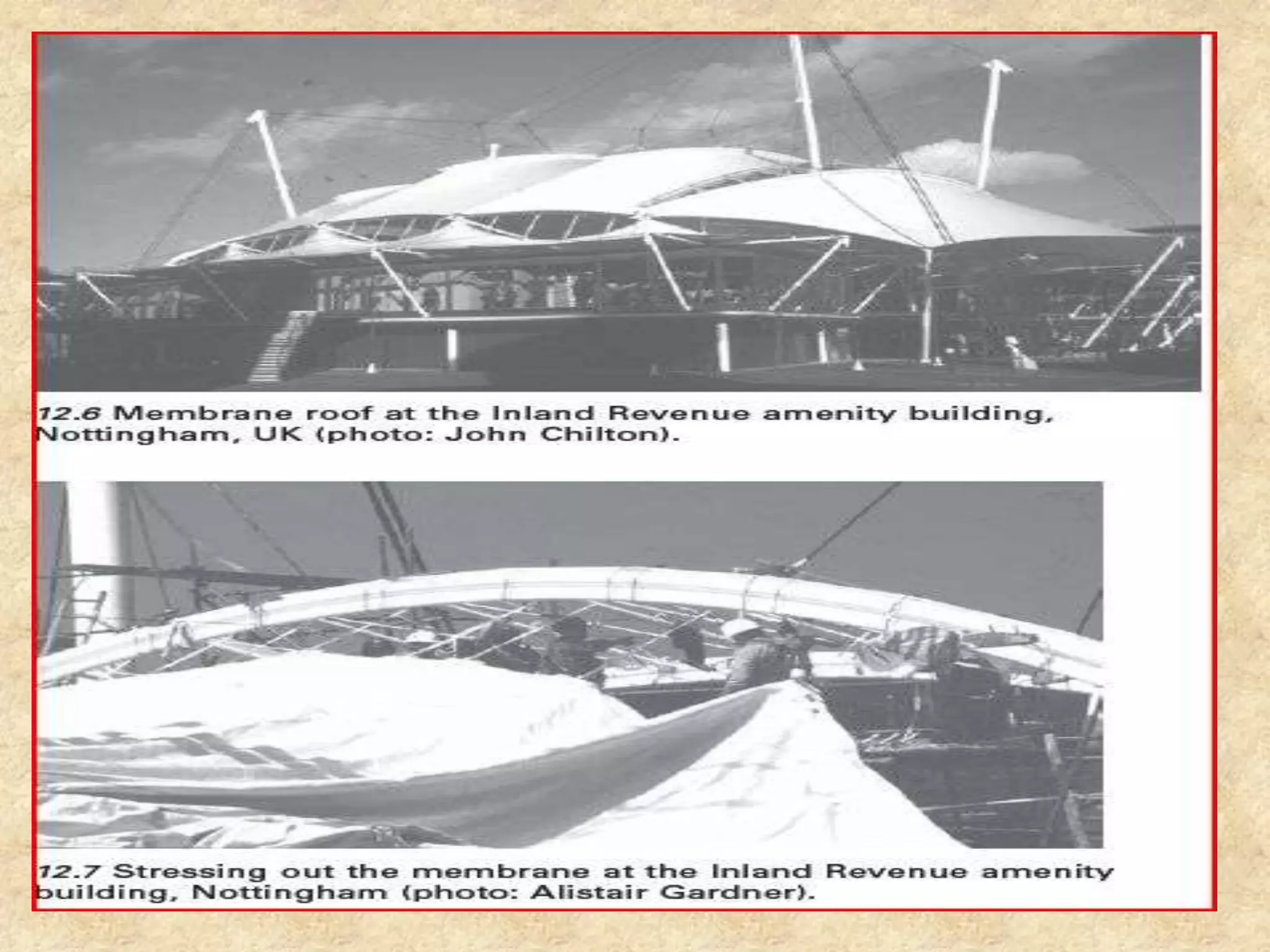
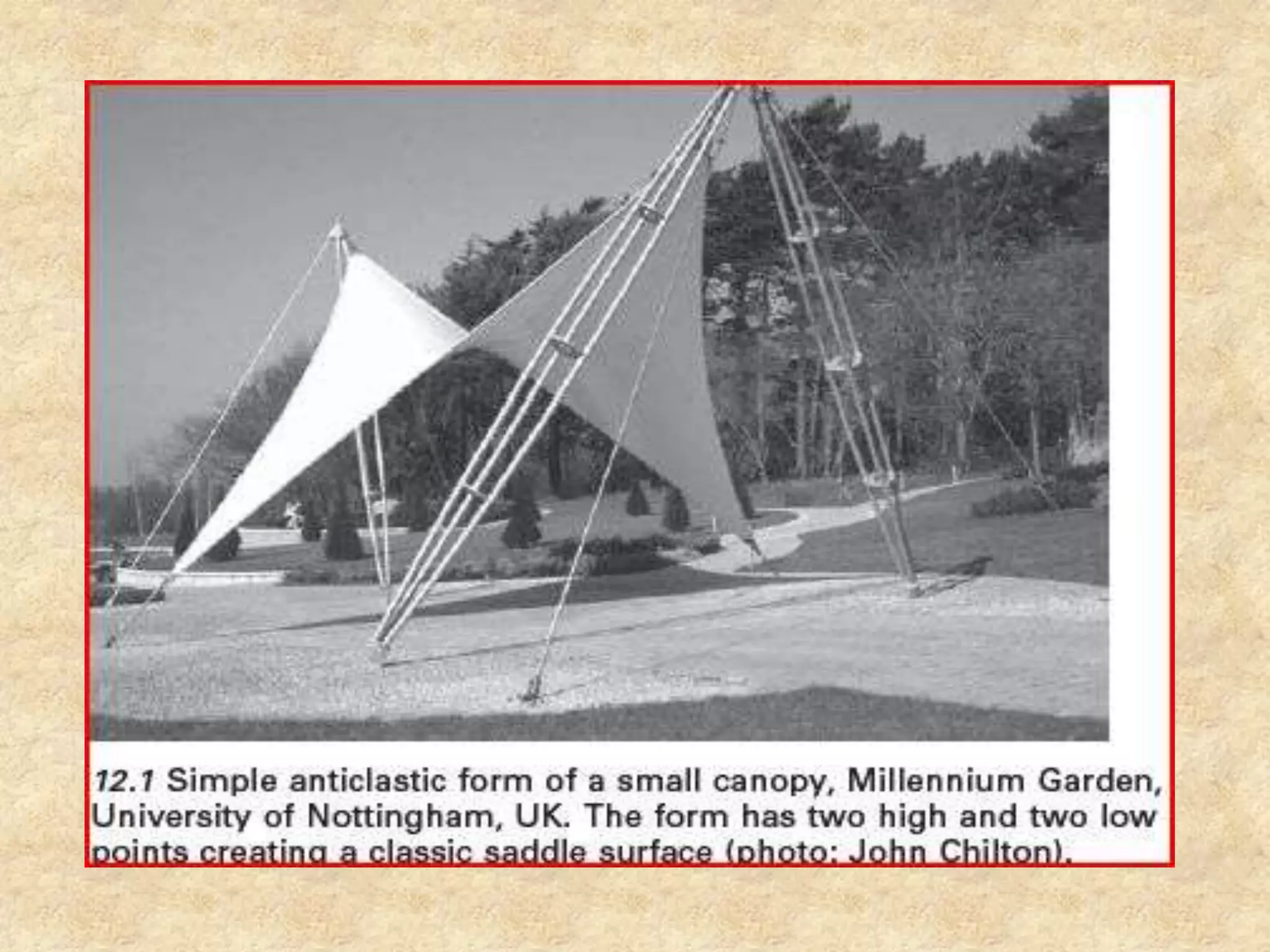
APPLICATIONS IN THE CONSTRUCTION INDUSTRYTextile composites have been used in construction since the 1960s, andthough they do not hold a prominent place compared with that of traditionalconstruction materials, their use is on the increase
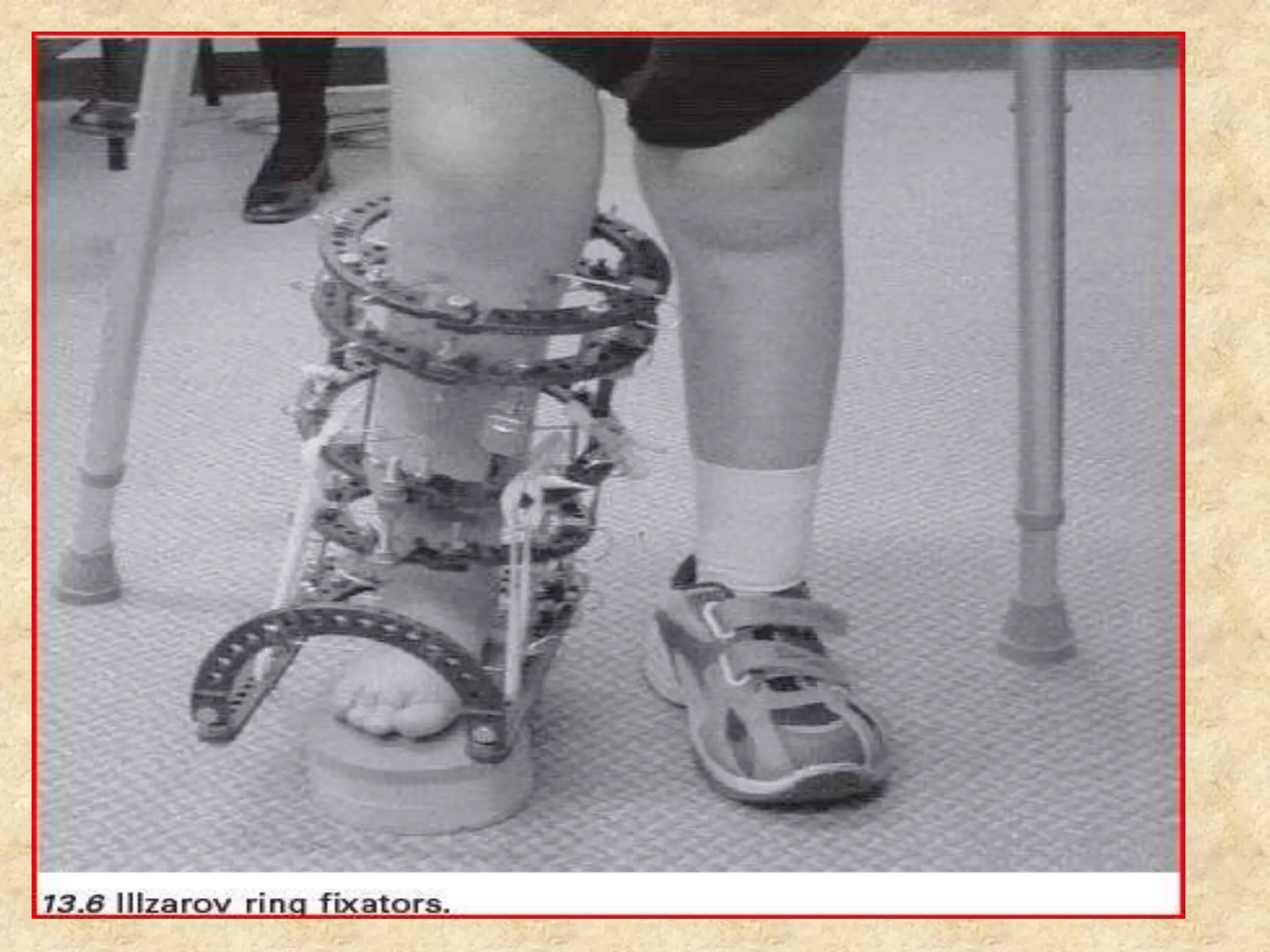
APPLICATIONS IN THE MEDICAL INDUSTRYSplinting materials for the repair of broken bones are not only the largestmedical market for textile reinforced composites, but the oldest
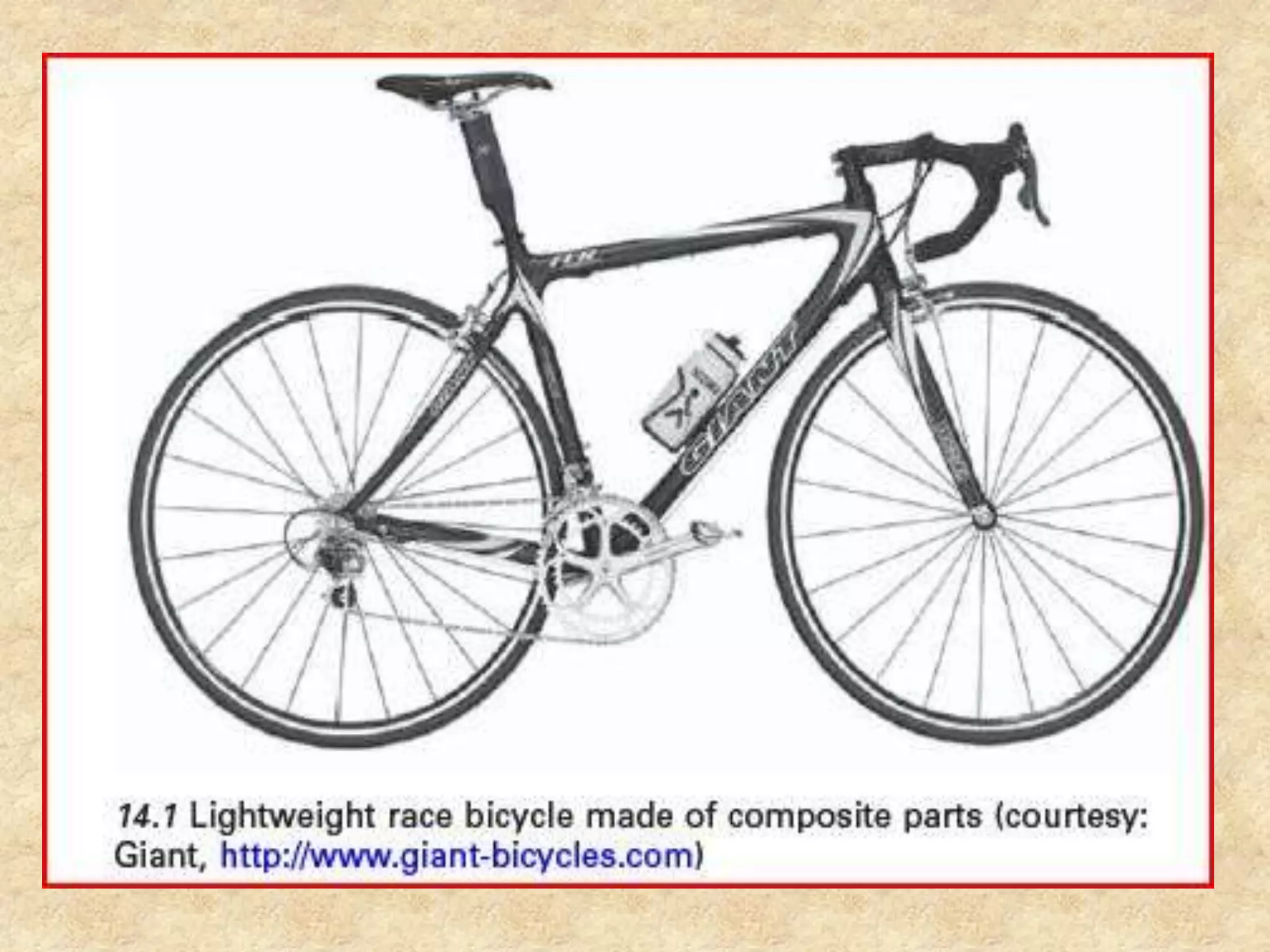
APPLICATIONS IN THE SPORTS INDUSTRYConventional composite materials generally consist of a reinforcing textile structure and a surrounding matrix with other mechanical properties
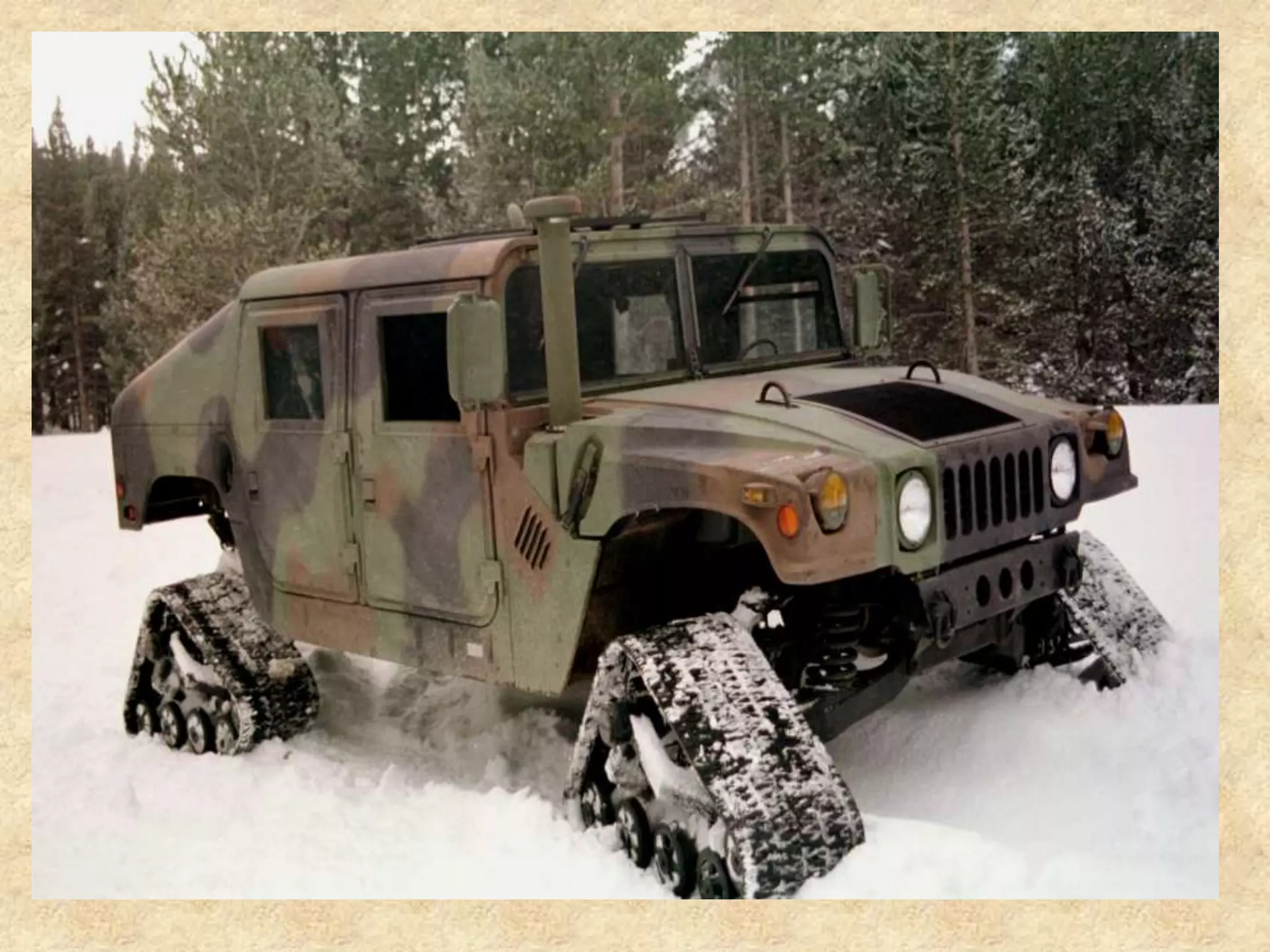
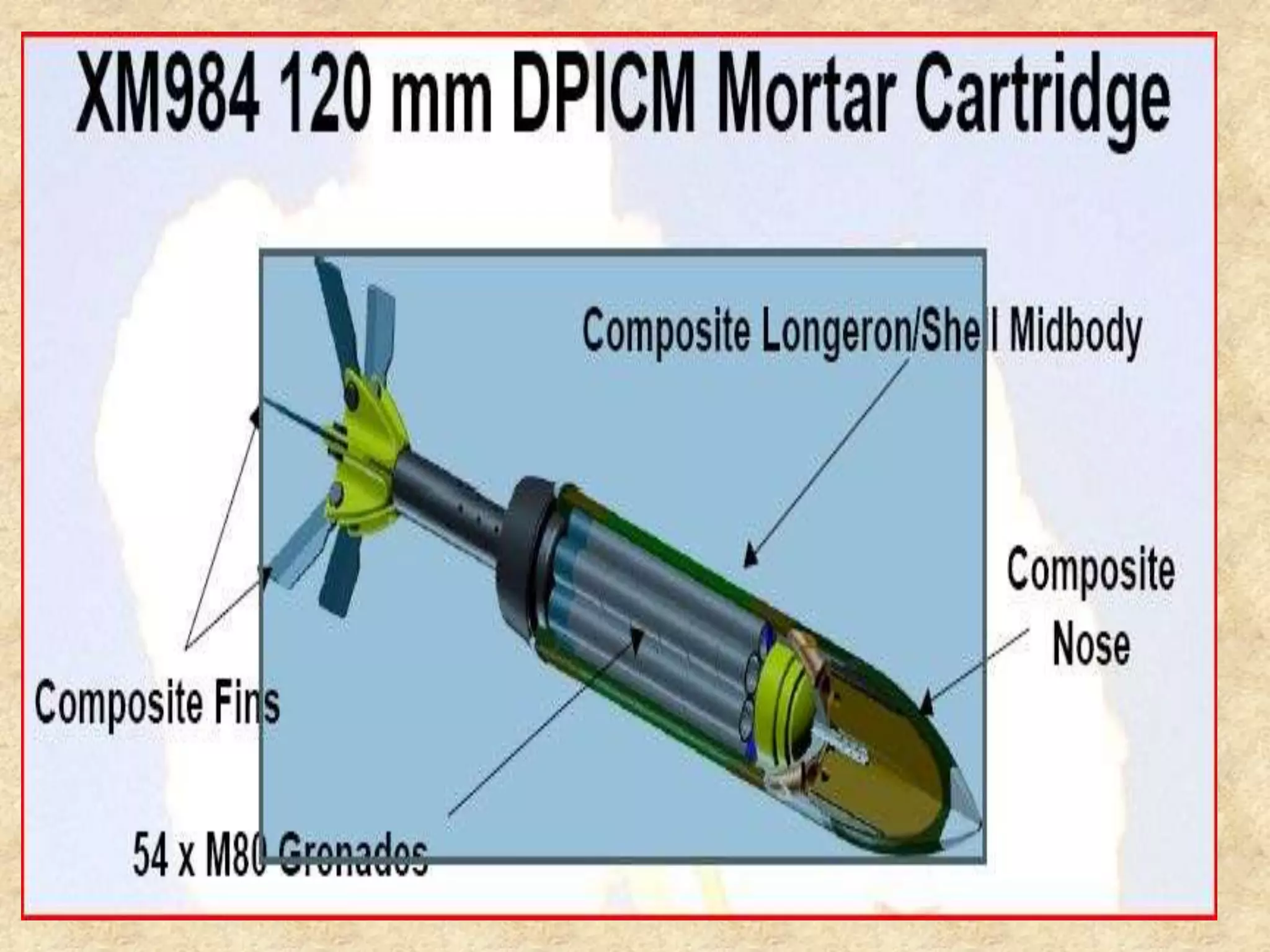
APPLICATIONS IN THE DEFENCE INDUSTRYIn 2007 an all-composite military High Mobility Multi-purpose Wheeled Vehicle (HMMWV or Hummvee) was introduced by TPI Composites Inc and Armor Holdings Inc, the first all-composite military vehicle. By using composites the vehicle is lighter, allowing higher payloads
Considering the given examples, one can easily see that a virtually limitlessnumber of material combinations are possibleHence, THINK BIG THINK COMPOSITES!!!!!THANK YOU

Textile Composites

  • 1.
    TEXTILE COMPOSITES Waqas YounusParachaSenior Research AssistantTextile Research and Innovation Centre (TRIC) Textile Institute of Pakistan
  • 2.
    TYPES OF ENGINEERINGMATERIALS.The basic types of engineering materials are: METALS.POLYMERS (Plastics).CERAMICS.COMPOSITES.
  • 3.
    What is acomposite?The term "composite" can be used in several different ways, and the definition can range from general to very specific. A broad definition of a composite is: "Two or more dissimilar materials which when combined are stronger than the individual materials."
  • 4.
    What is acomposite? While the broad definition of composites is accurate, it is too general. Composite materials (or composites for short) are engineered materials made from two or more constituent materials with significantly different mechanical properties and which remain separate and distinct within the finished structure.
  • 6.
  • 8.
    Brief History ofCompositesThe use of natural composite materials has been a part of man's technology since the first ancient builder used straw to reinforce mud bricks.
  • 9.
    HISTORY OF COMPOSITESIsraelites'use of chopped straw in their brick
  • 10.
    HISTORY OF COMPOSITEStheEgyptian sarcophagi fashioned from glued and laminated wood veneer and also their use of cloth tape soaked in resin for mummy embalming
  • 11.
    The Etruscan "Sarcophagusof the Spouses", at the National Etruscan Museum
  • 12.
    HISTORY OF COMPOSITEStheMongol warriors' high-performance, recurved archery bows of bullock tendon, horn, bamboo strips, silk and pine resin, which are 80% as strong as our modern fiberglass bows
  • 13.
    A modern reconstruction,in fibreglass and wood, of a historical composite bow
  • 14.
    HISTORY OF COMPOSITESChinesebamboo rockets reinforced with rope wrappingsJapanese Samurai swords formed by the repeated folding of a steel bar back on itself the early fabrication of steel and of iron gun barrels in DamascusRoman artisans' use of ground marble in their lime plaster, frescoes and pozzolanic mortar.
  • 15.
    Time scale ofcomposite advancements
  • 16.
    COMPOSITION OF ACOMPOSITE MATERIAL: Composites are made up of individual materials referred to as constituent materialsThere are two categories of constituent materialsmatrix Reinforcement
  • 17.
    MATRIX (RESIN SYSTEMS)matrix holds the reinforcements in an orderly patternthe matrix also helps to transfer load Matrix materials are usually some type of plastic, and these composites are often called reinforced plasticsThere are other types of matrices, such as metal or ceramic, but plastics are by far the most common
  • 18.
    MATRIX (RESIN SYSTEMS)The choice of a resin system for use in any component depends on a number of its characteristics., with the following probably being the most important for most composite structures:1.      Adhesive Properties2.      Mechanical Properties3.      Micro-Cracking resistance4.      Fatigue Resistance5.      Degradation from Water Ingress
  • 19.
    TYPES OF MATRIX (RESIN SYSTEMS)Most commonly used resin systems are: Polyester resinsVinyl ester resinsEpoxy resins
  • 20.
    Some properties ofresin systems:
  • 21.
    REINFORCEMENTSThe role ofthe reinforcement in a composite material is fundamentally one of increasing the mechanical properties All of the different fibres used in composites have different properties and so affect the properties of the composite in different ways
  • 22.
    REINFORCEMENTSindividual fibres orfibre bundles can only be used on their own in a few processes such as filament winding. For most other applications, the fibres need to be arranged into some form of sheet, known as a fabric, to make handling possible.
  • 23.
    These fabrics canbe made through different textile techniques such as braiding, weaving, knitting and sometimes even Non wovens can be used as reinforcements.Therefore the utilization of all these textile techniques gave rise to the name TEXTILE COMPOSITES.

  • 24.
    PROPERTIES OF REINFORCINGFIBERSThe four main factors that govern the fibre’s contribution are:1.      The basic mechanical properties of the fibre itself.2.      The surface interaction of fibre and resin (the ‘interface’).3.      The amount of fibre in the composite (‘Fibre Volume Fraction’).4.      The orientation of the fibres in the composite.
  • 25.
    TYPICAL PROPERTIES OFSOME REINFORCEMENTS:
  • 27.
    WAYS TO MANUFACTUREA COMPOSITE MATERIALEngineered composite materials must be formed to shapeThe matrix material can be introduced to the reinforcement before or after the reinforcement material is placed into the mold cavity or onto the mold surfaceThe matrix material experiences a melding event, after which the part shape is essentially set
  • 28.
    Depending upon thenature of the matrix material, this melding event can occur in various ways such as chemical polymerization or solidification from the melted state.In general, the reinforcing and matrix materials are combined, compacted and processed to undergo a melding eventAfter the melding event, the part shape is essentially set
  • 29.
    There are differenttype of moulding processes which can be utilized to form a composite material. These can beVacuum bag mouldingPressure bag mouldingAutoclave mouldingResin transfer moulding (RTM)
  • 30.
  • 31.
  • 32.
  • 34.
    TEXTILE COMPOSITES...THE WAYFORWARDAPPLICATIONS IN THE AEROSPACE INDUSTRY: composite materials comprise more than 20% of the A380's airframe. Carbon-fibre reinforced plastic, glass-fibre reinforced plastic and quartz-fibre reinforced plastic are used extensively in wings, fuselage sections (such as the undercarriage and rear end of fuselage), tail surfaces, and doors.
  • 38.
    APPLICATIONS IN THECONSTRUCTION INDUSTRYTextile composites have been used in construction since the 1960s, andthough they do not hold a prominent place compared with that of traditionalconstruction materials, their use is on the increase
  • 42.
    APPLICATIONS IN THEMEDICAL INDUSTRYSplinting materials for the repair of broken bones are not only the largestmedical market for textile reinforced composites, but the oldest
  • 44.
    APPLICATIONS IN THESPORTS INDUSTRYConventional composite materials generally consist of a reinforcing textile structure and a surrounding matrix with other mechanical properties
  • 46.
    APPLICATIONS IN THEDEFENCE INDUSTRYIn 2007 an all-composite military High Mobility Multi-purpose Wheeled Vehicle (HMMWV or Hummvee) was introduced by TPI Composites Inc and Armor Holdings Inc, the first all-composite military vehicle. By using composites the vehicle is lighter, allowing higher payloads
  • 49.
    Considering the givenexamples, one can easily see that a virtually limitlessnumber of material combinations are possibleHence, THINK BIG THINK COMPOSITES!!!!!THANK YOU