User Research Hacks
     UX Lisbon | May 16, 2012
    Gene Smith | @gsmith


           #uxhacks
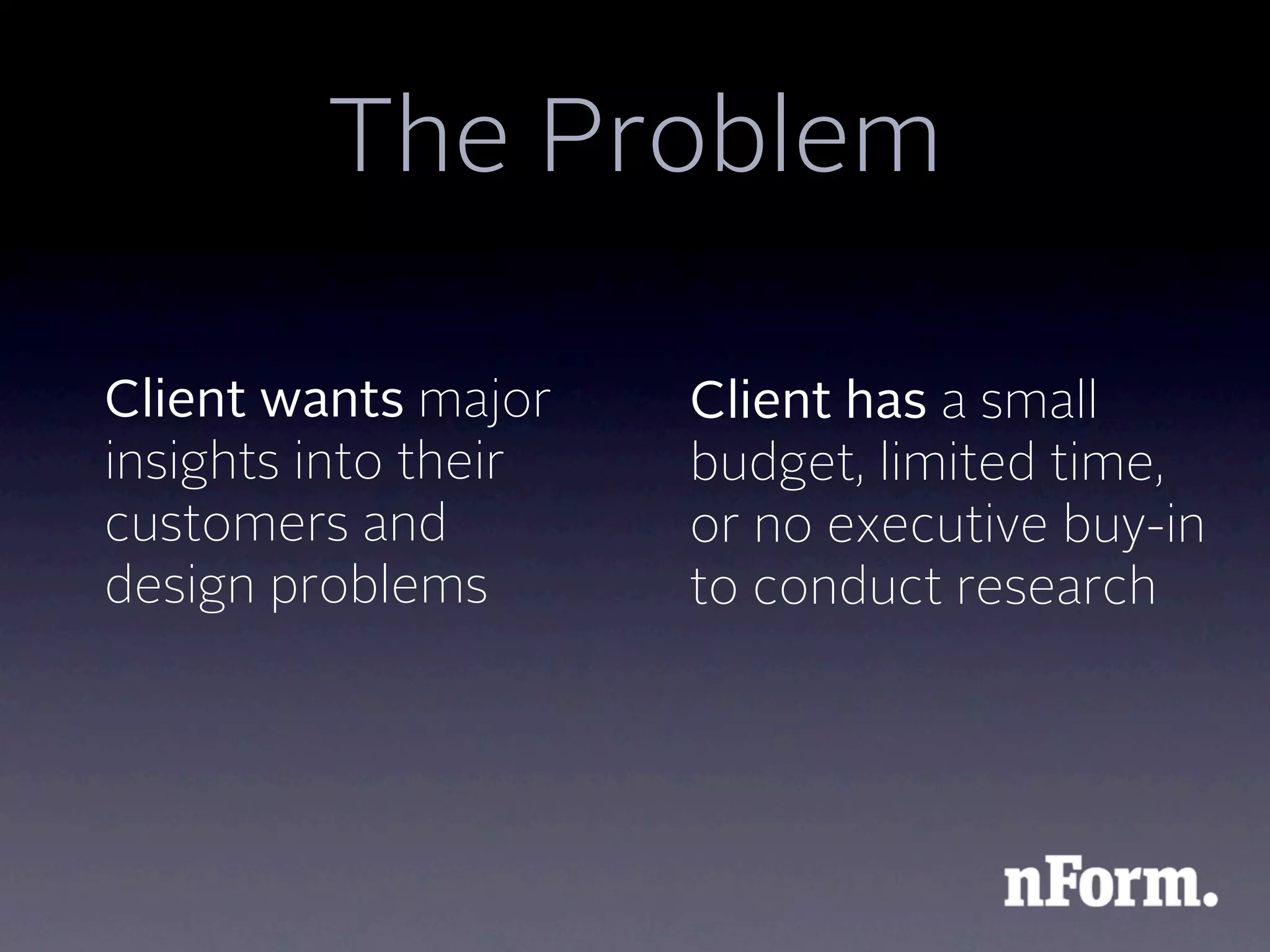
The Problem

Client wants major    Client has a small
insights into their   budget, limited time,
customers and         or no executive buy-in
design problems       to conduct research
The Problem
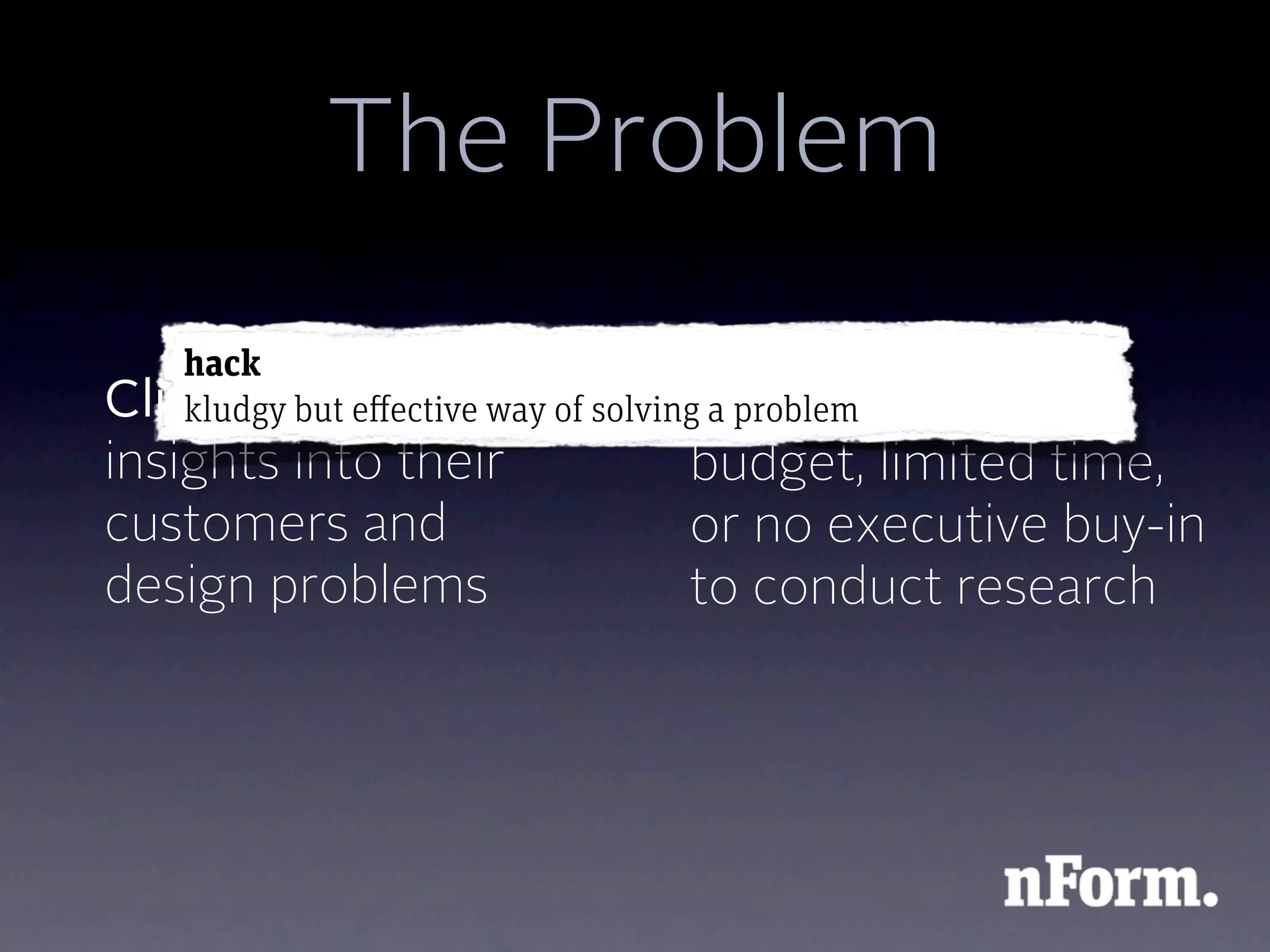
    hack
Client wants major of solvingClient has
    kludgy but effective way a problema small
insights into their        budget, limited time,
customers and              or no executive buy-in
design problems            to conduct research
The Problem
    hack
Client wants major of solvingClient has
    kludgy but effective way a problem     a small
insights into their         budget, limited time,
customers and
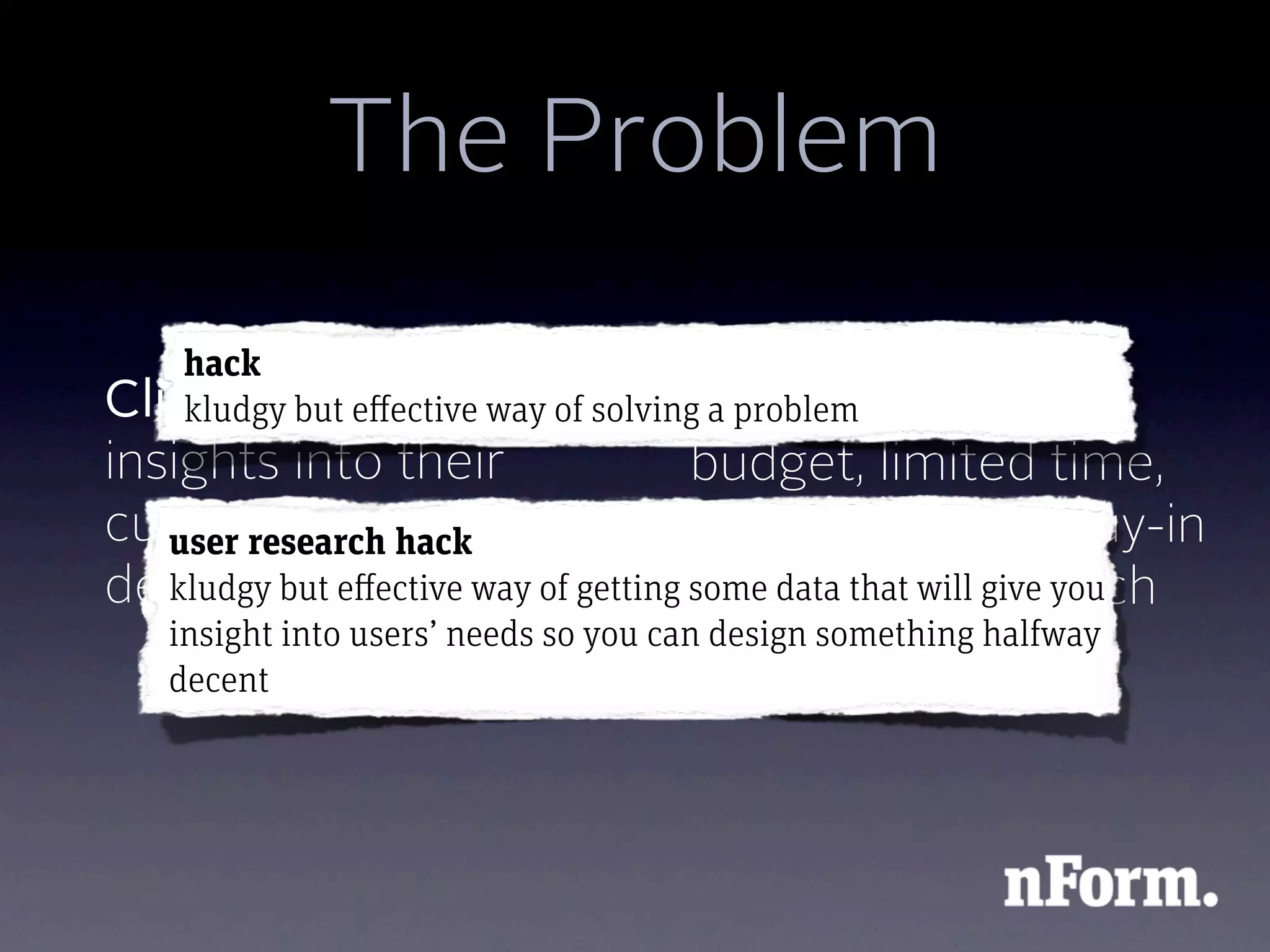
   user research hack       or no executive buy-in
design problems of getting some data that will give you
   kludgy but effective way to conduct research
   insight into users’ needs so you can design something halfway
   decent
Kludgy but effective
• Simple tools
• Creative experimental design or just
  some creative thinking about how to
  improve our results
• Spreadsheets, pivot tables & other
  post-study analysis tools
This Presentation
• Three user research hacks
 1. Determining users’ content priorities
 2. A/B testing mock-ups
 3. Getting better interview responses
• Goal: give you some ideas for your next
  low-budget, high-impact user research
  project
#1. Content Priorities
 The client: regional financial services
 company with 2,500 employees and
 100+ branches
 The project: a ground-up Intranet
 redesign
 The problem: no mandate to conduct
 research with front-line staff.
Our Solution
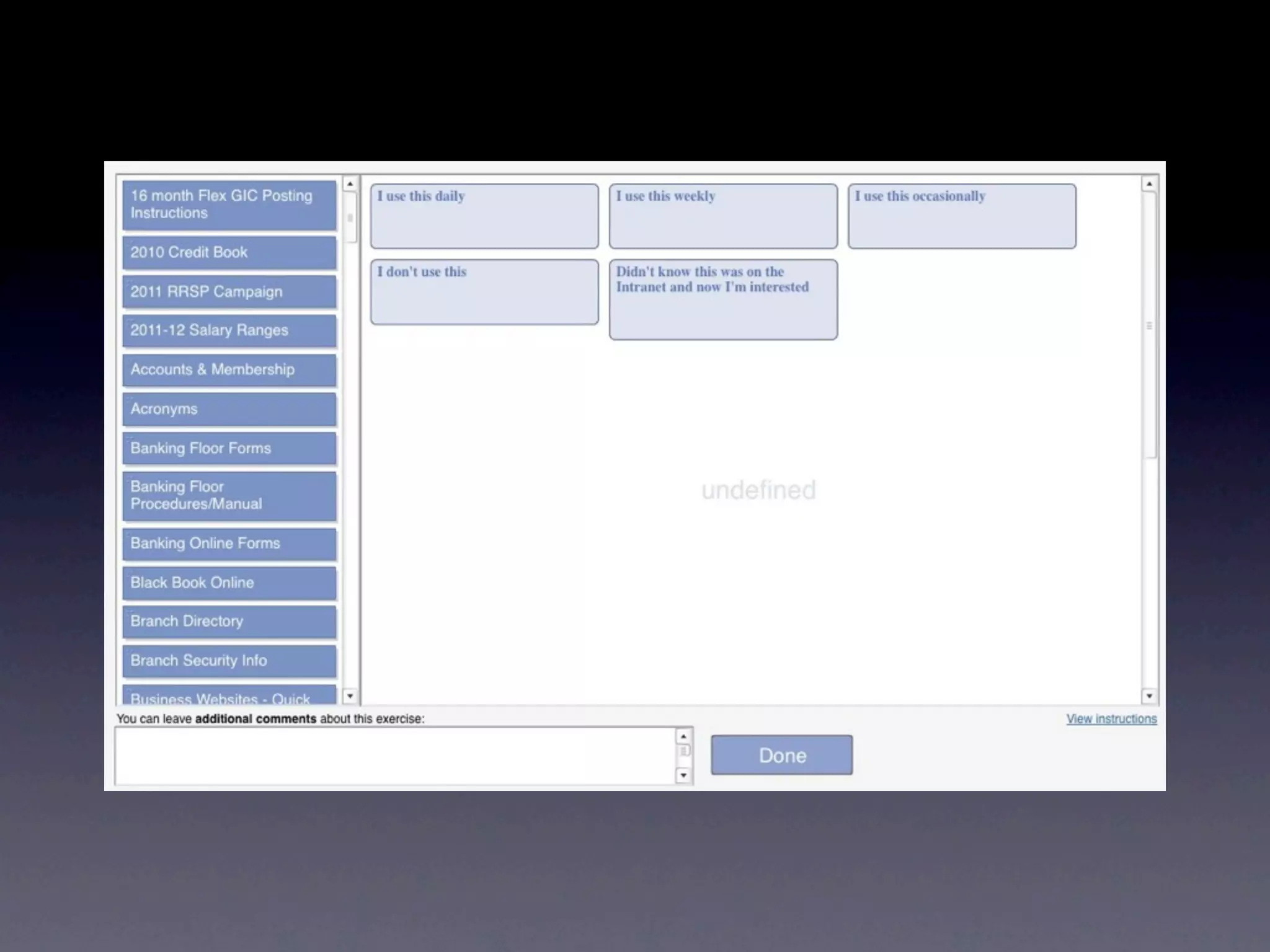
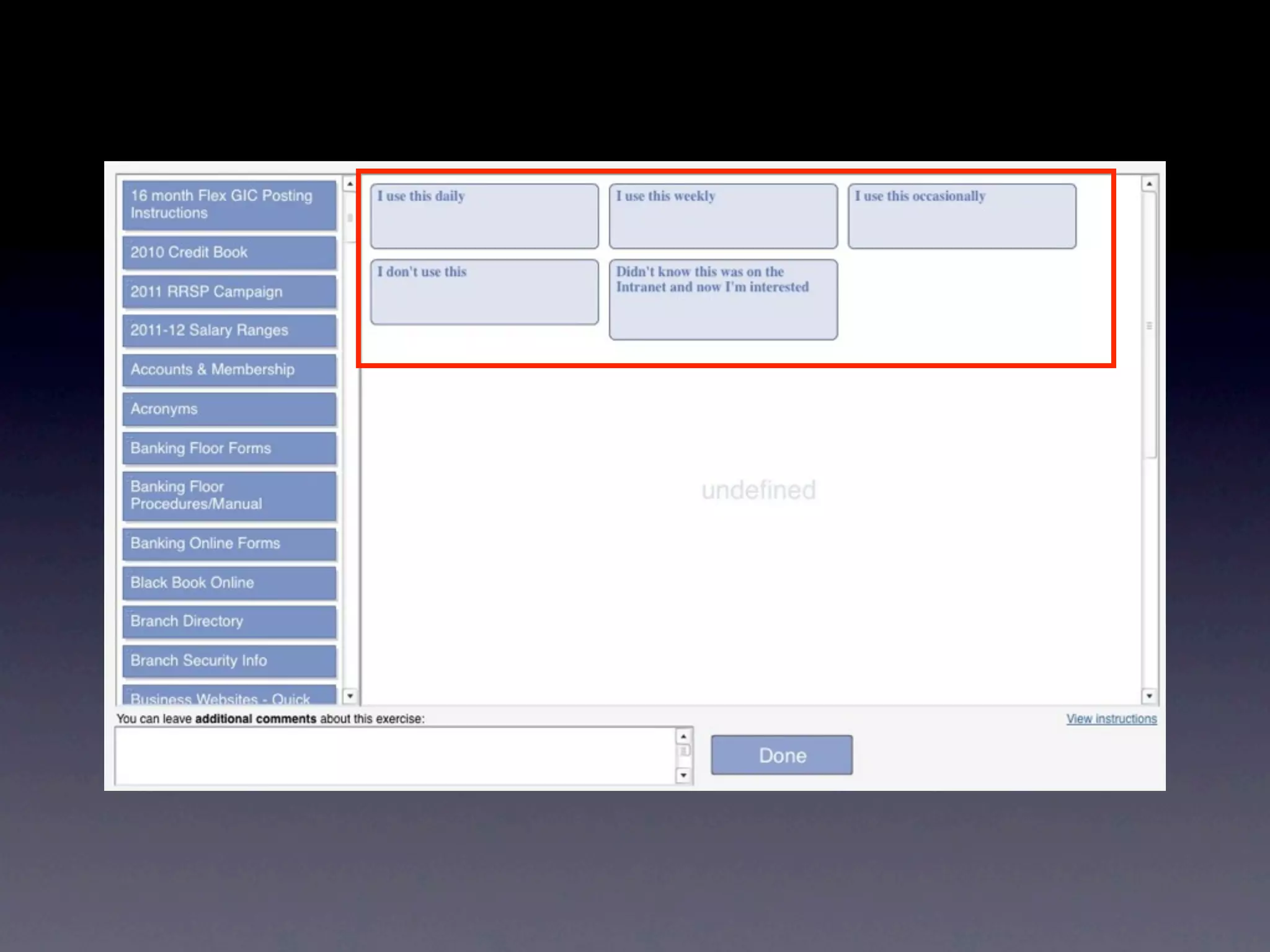
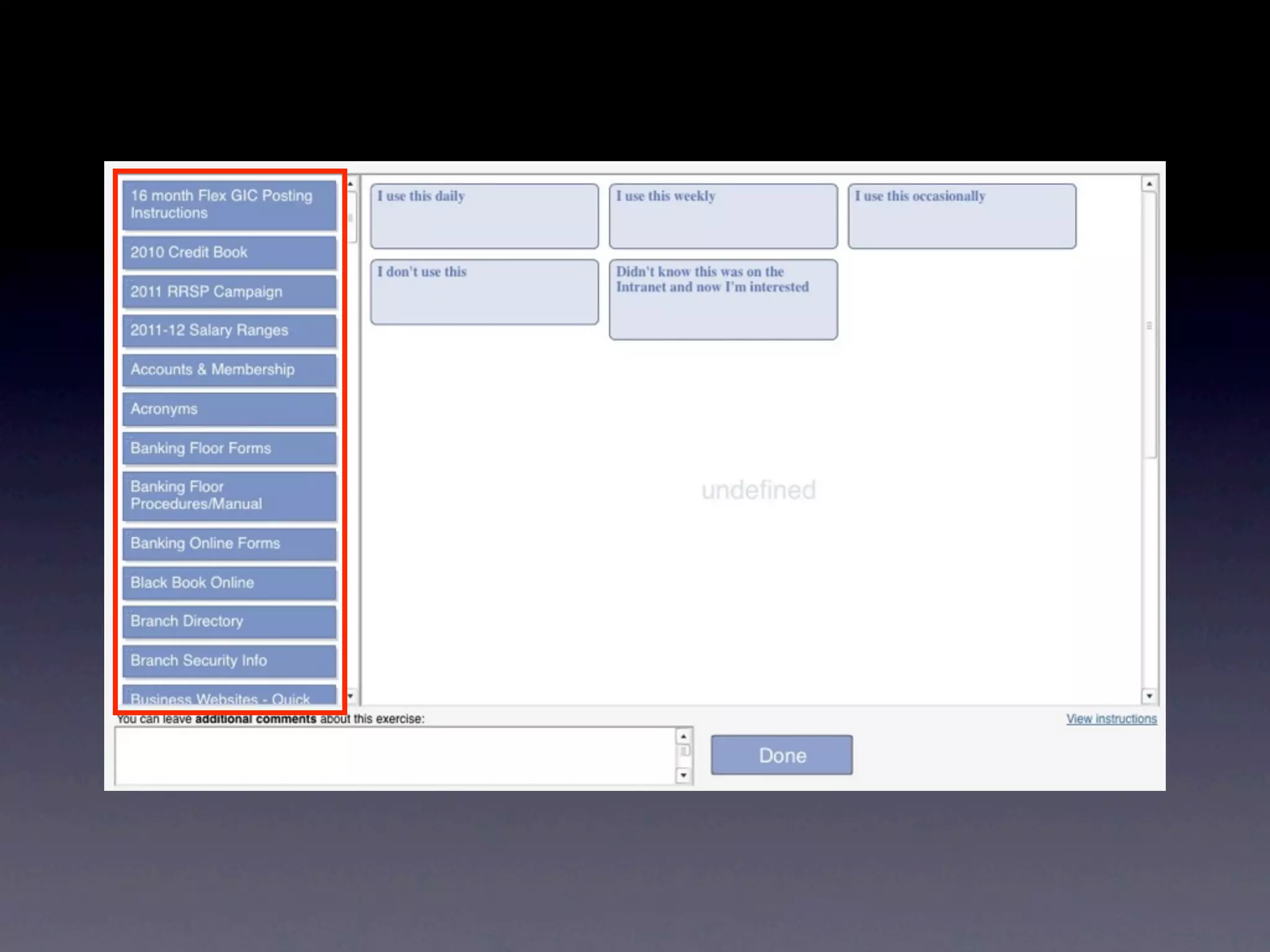
• Content prioritization card sort
• Include questions about region and role
  to segment the data.
• Distribute the surveys directly to
  branch managers and use the tell-two-
  friends method.
Why Content Prioritization?

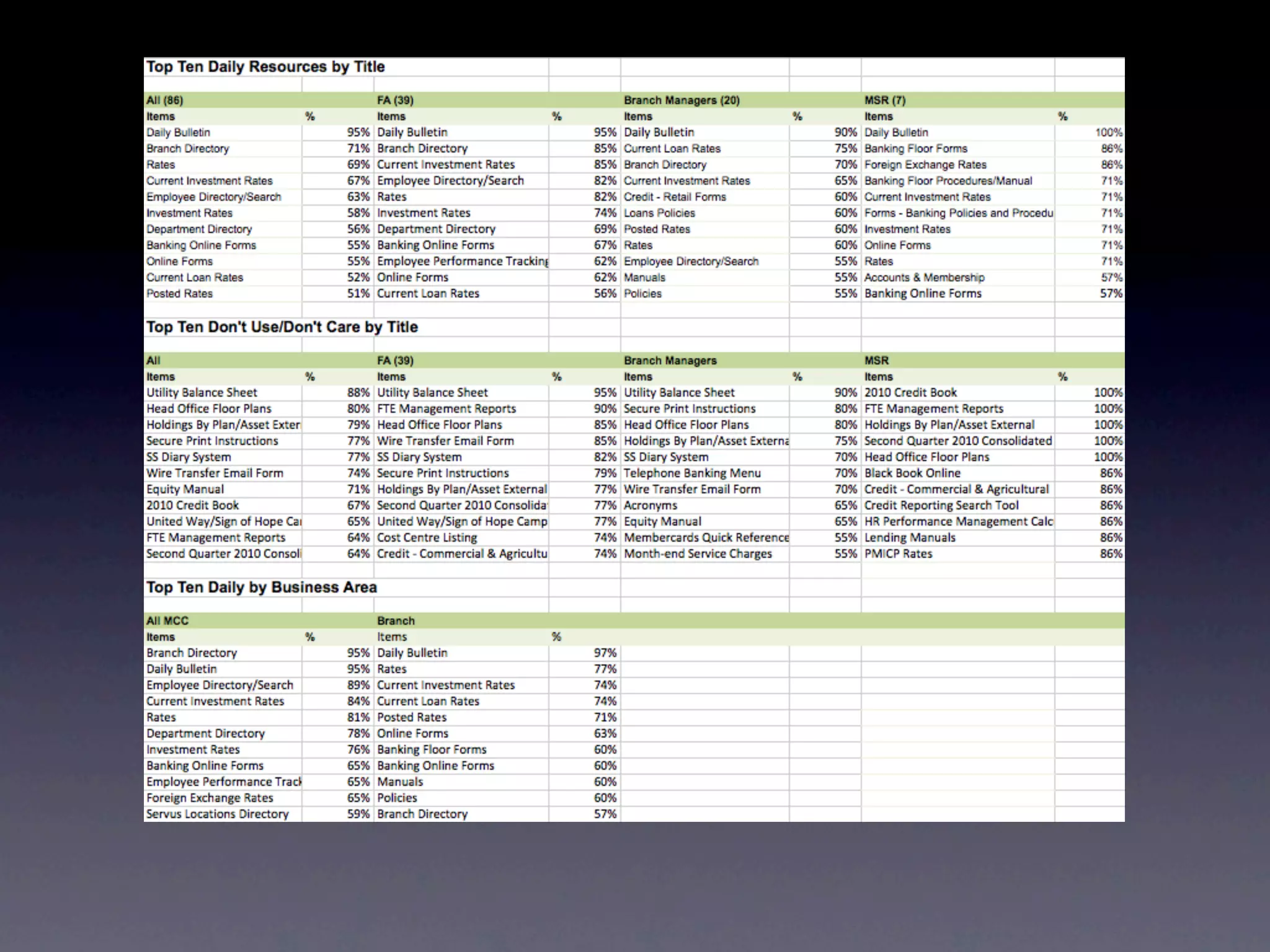
• We needed to understand actual behaviour
• This survey design let us extract a lot
  insights from one data set.
  • What content do people need daily?
  • How does that differ by job function?
  • Are there significant differences between
    different locations or job functions?
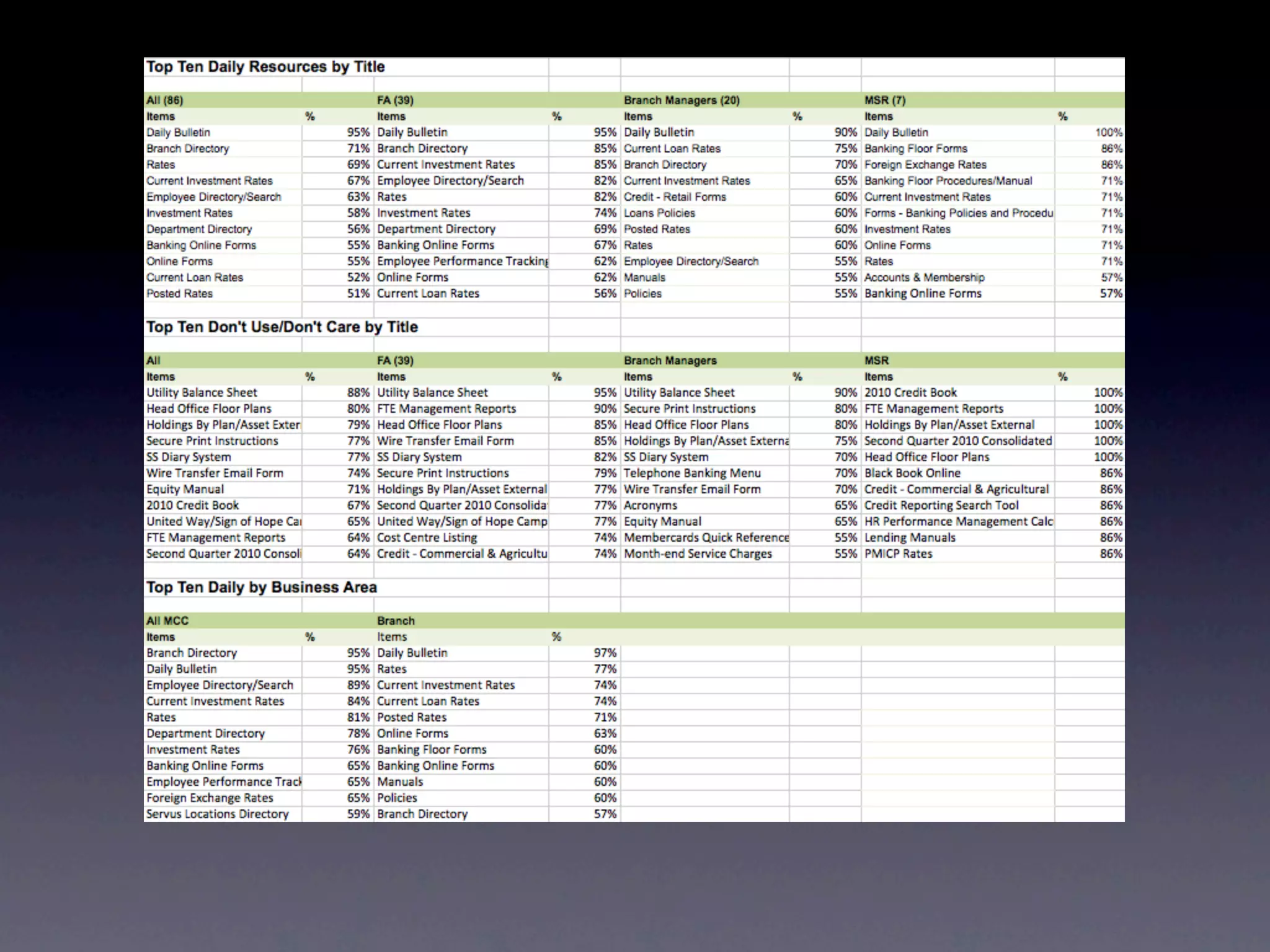
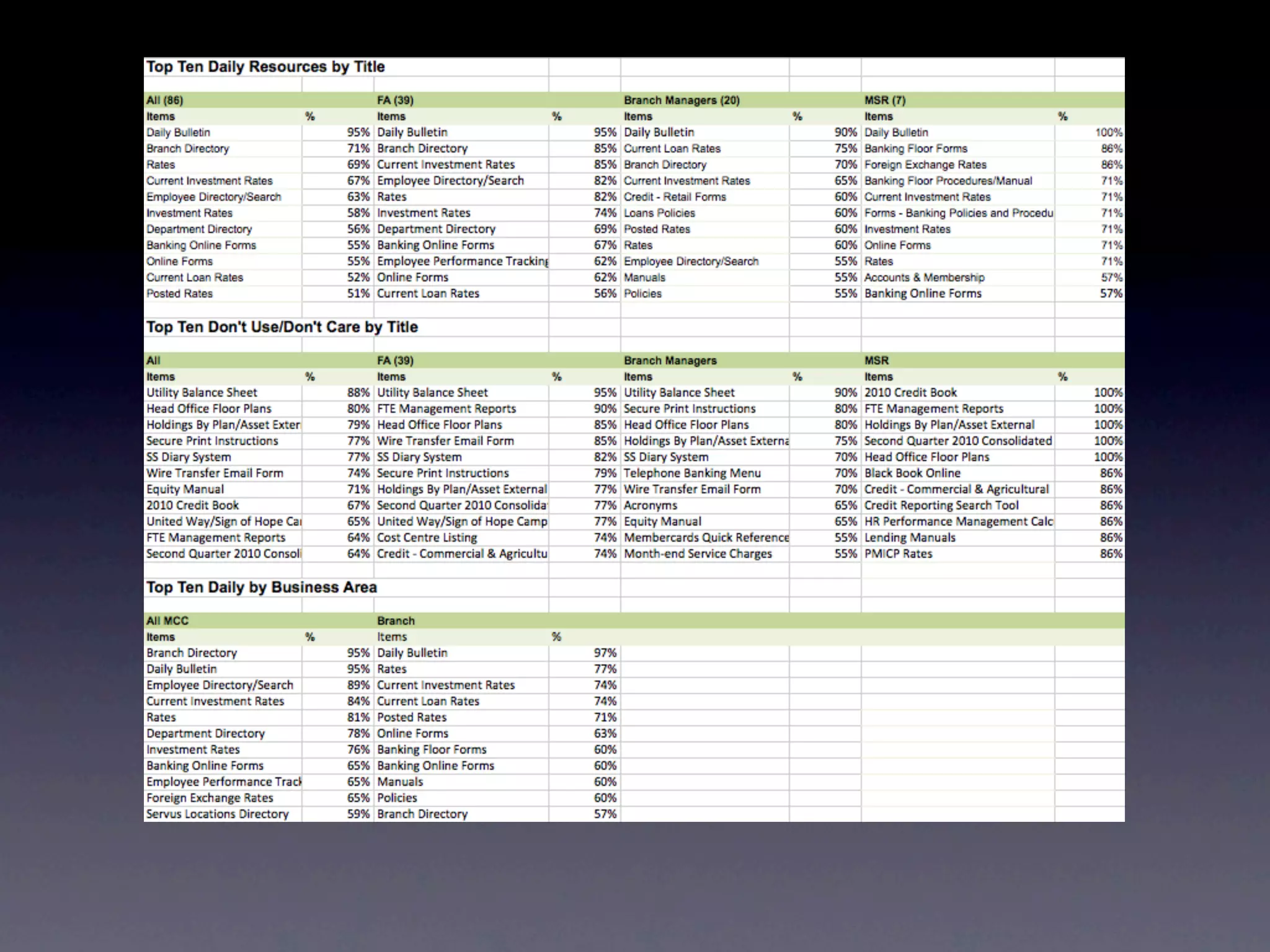
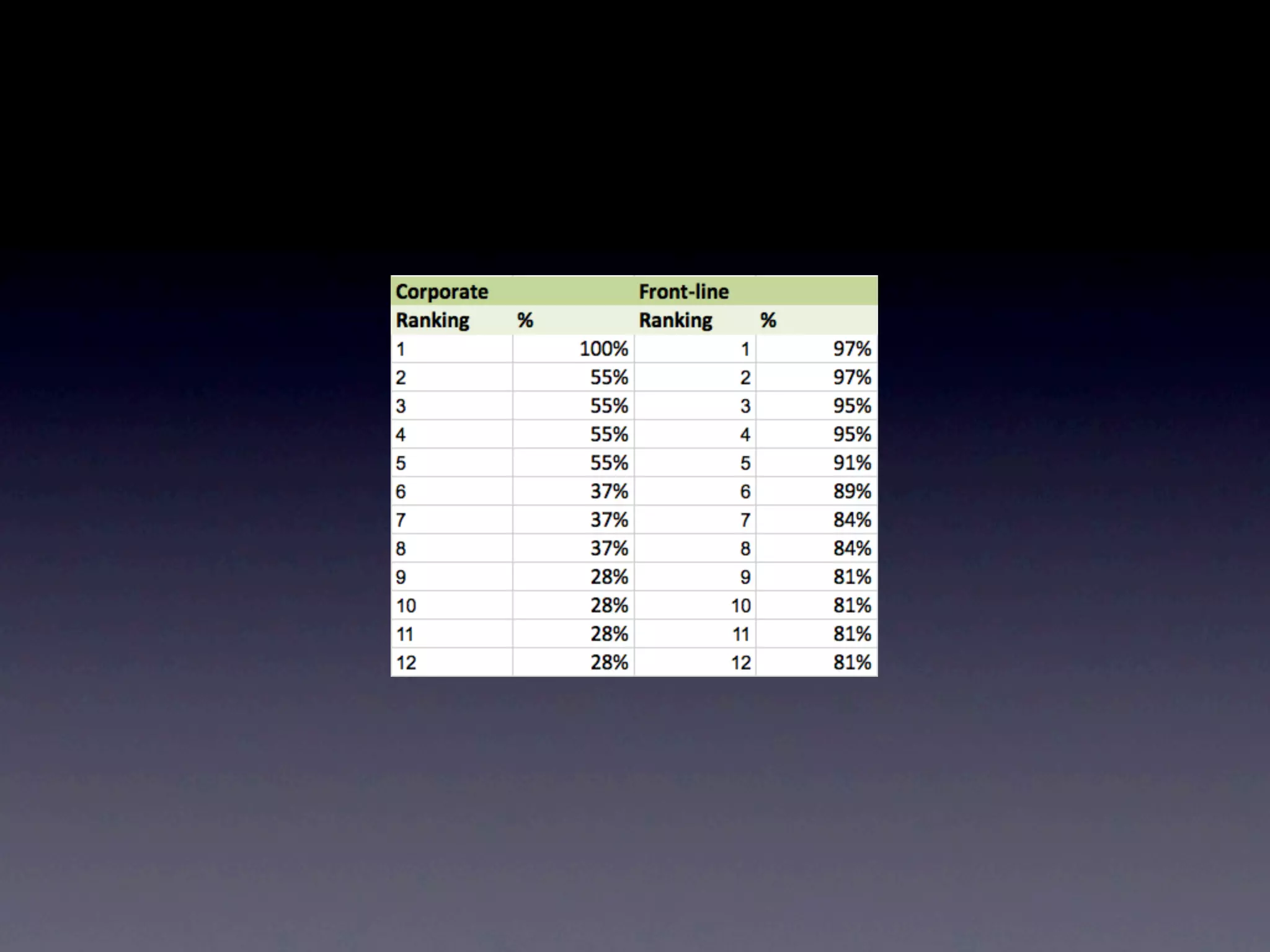
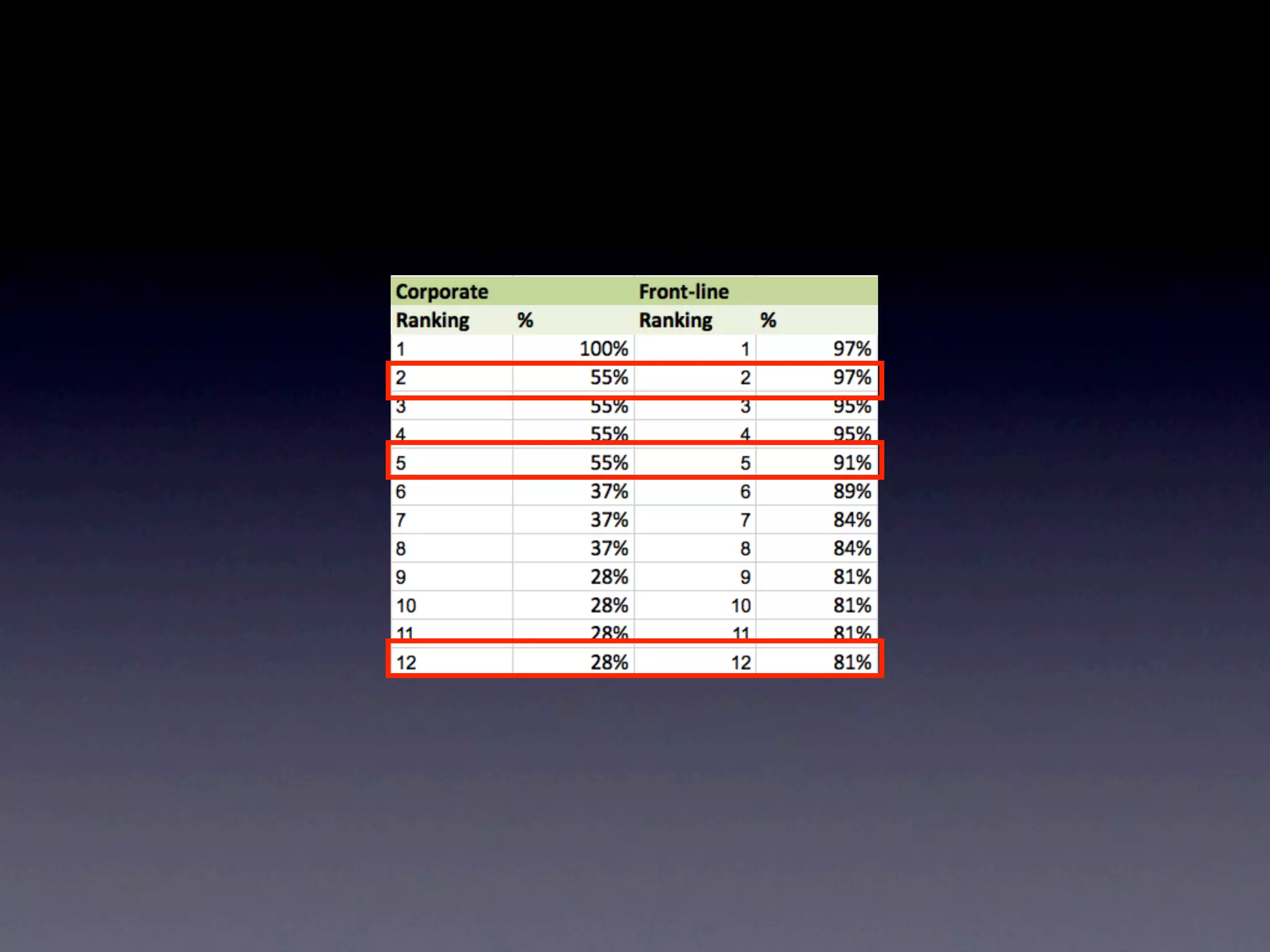
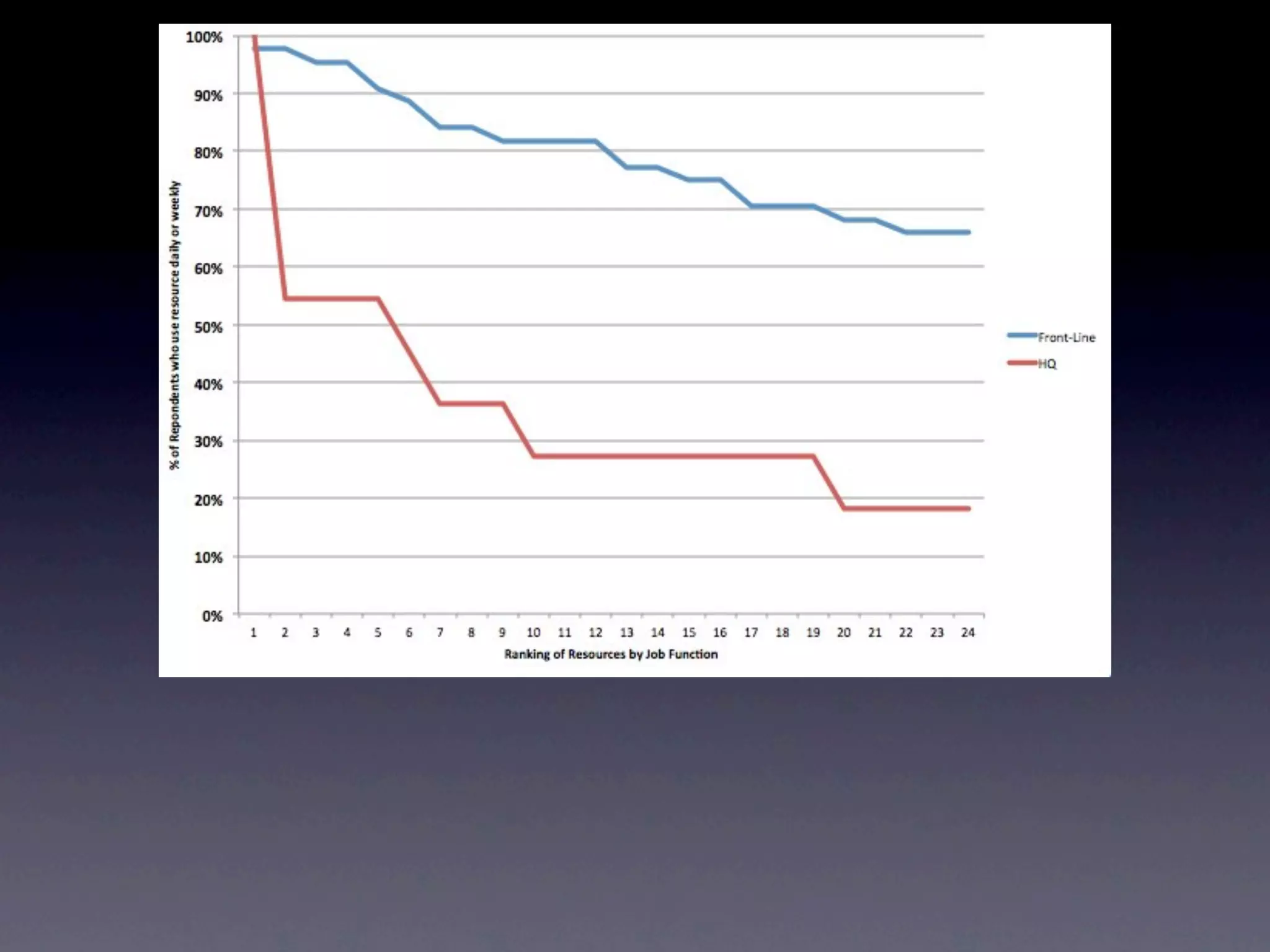
Ranking Content Use
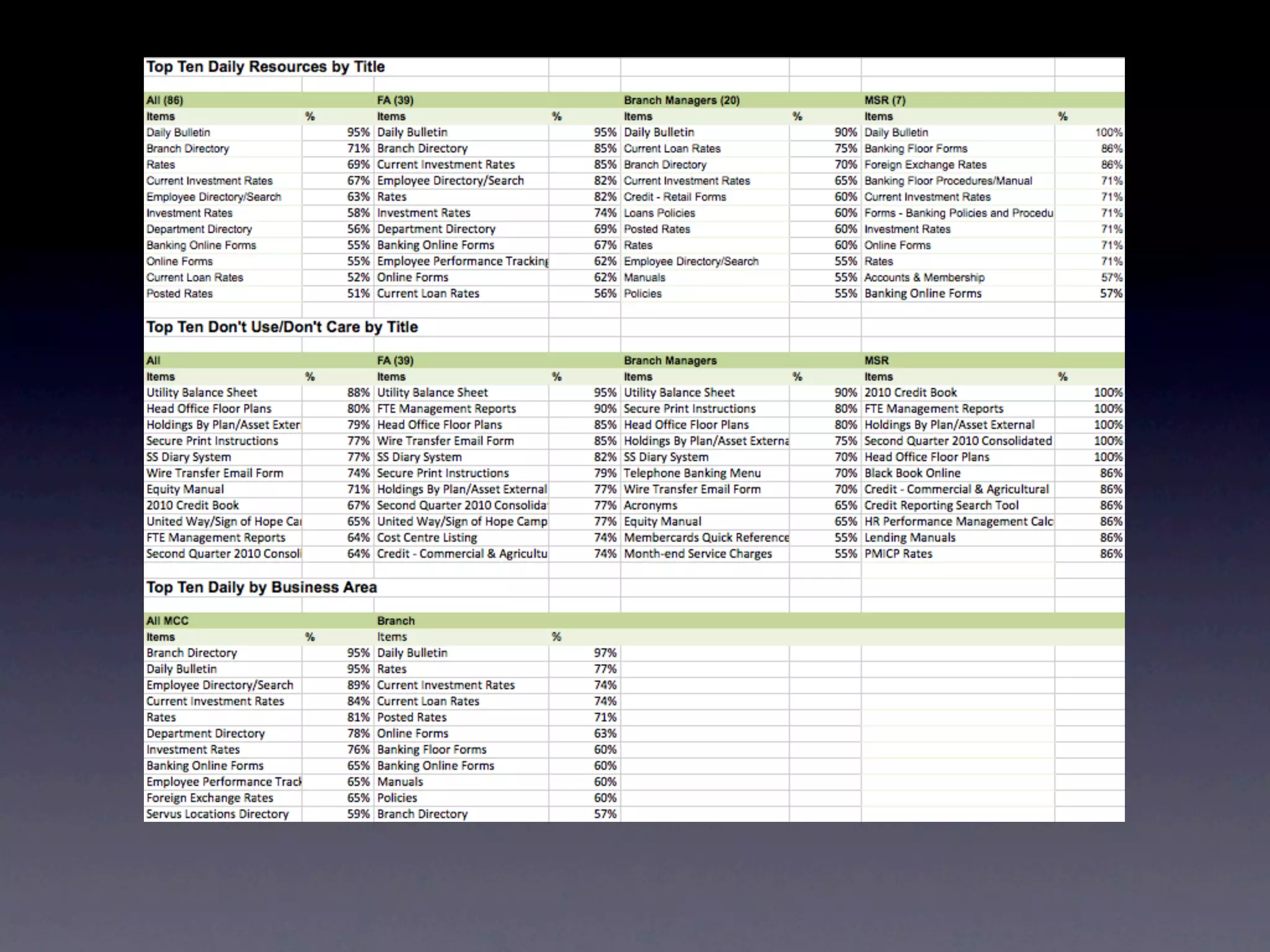
• Hunch: front-line staff relied on Intranet
  heavily for business-critical information. How
  could we show that with the data we had?
• We segmented respondents into two
  groups: all front-line staff and corporate staff
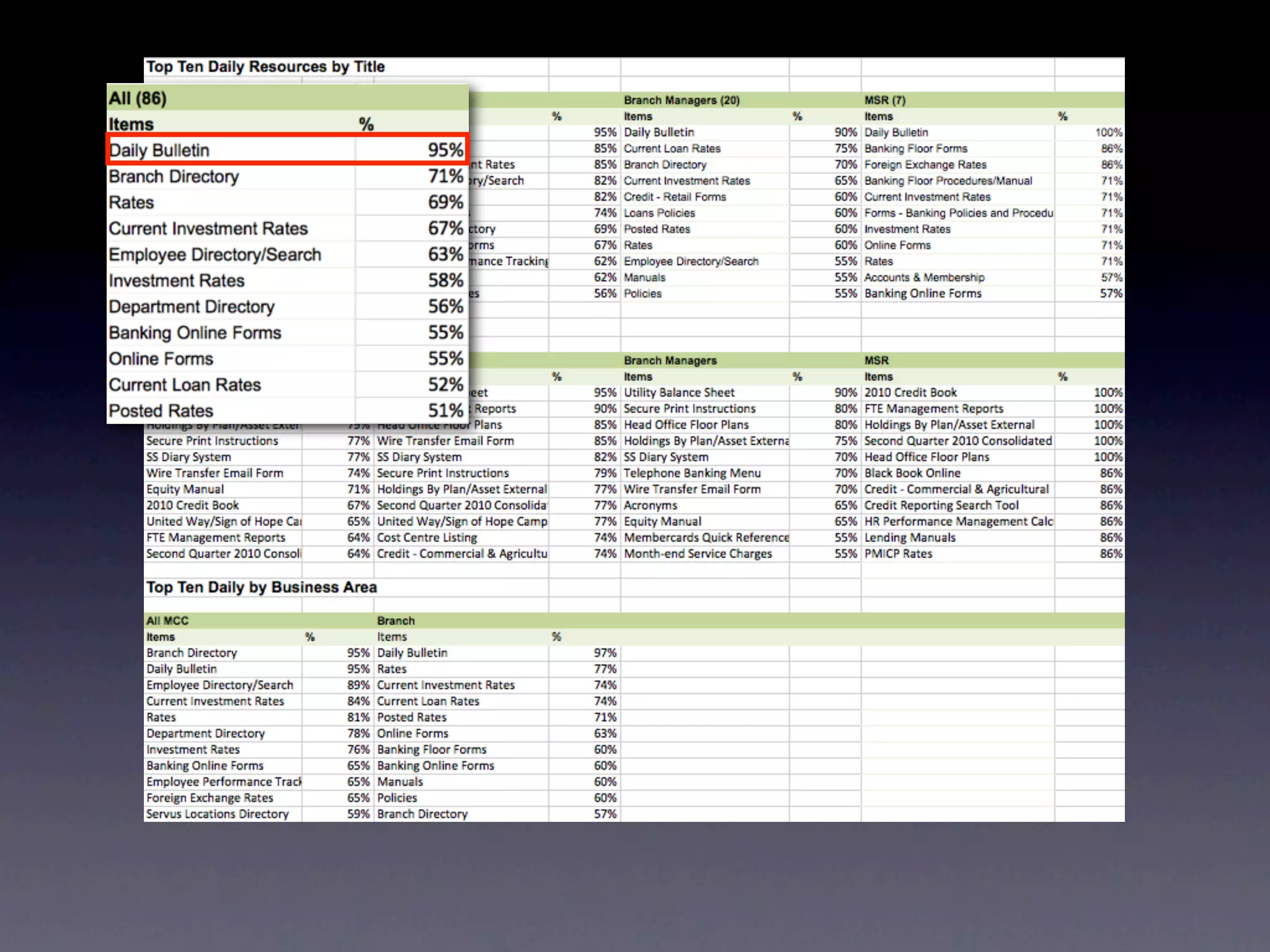
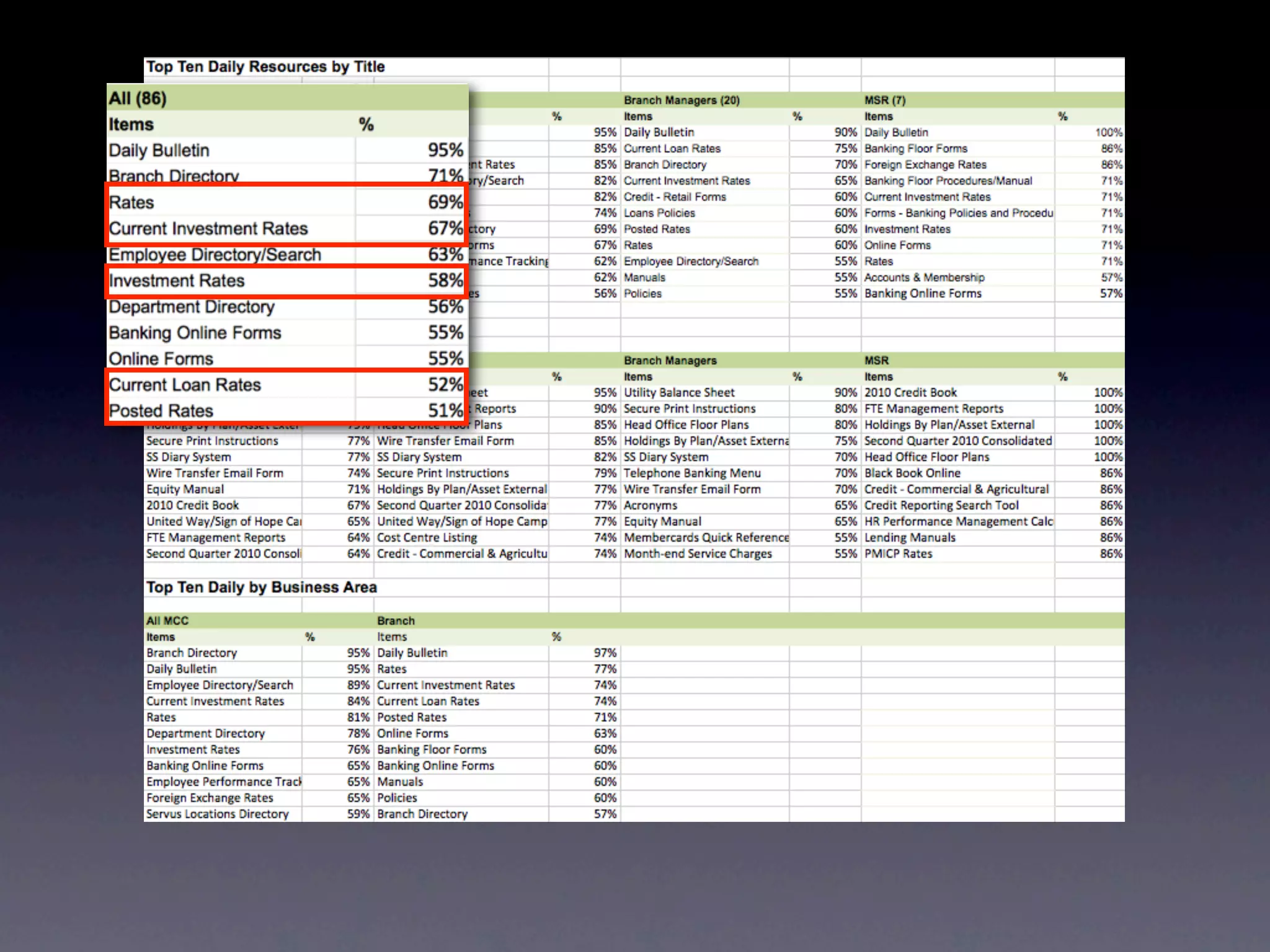
• We looked at the % of content each group
  used daily and ranked their responses
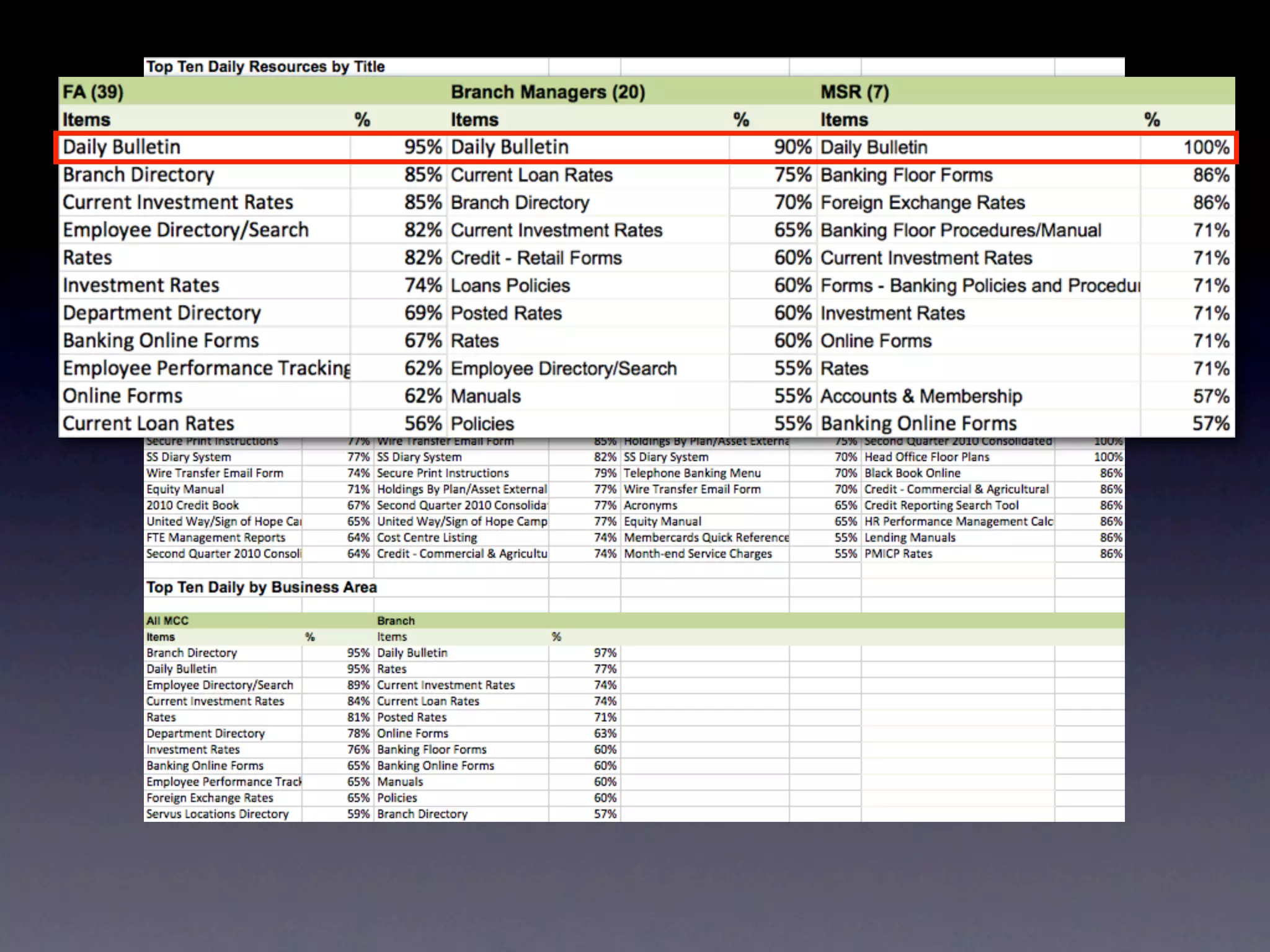
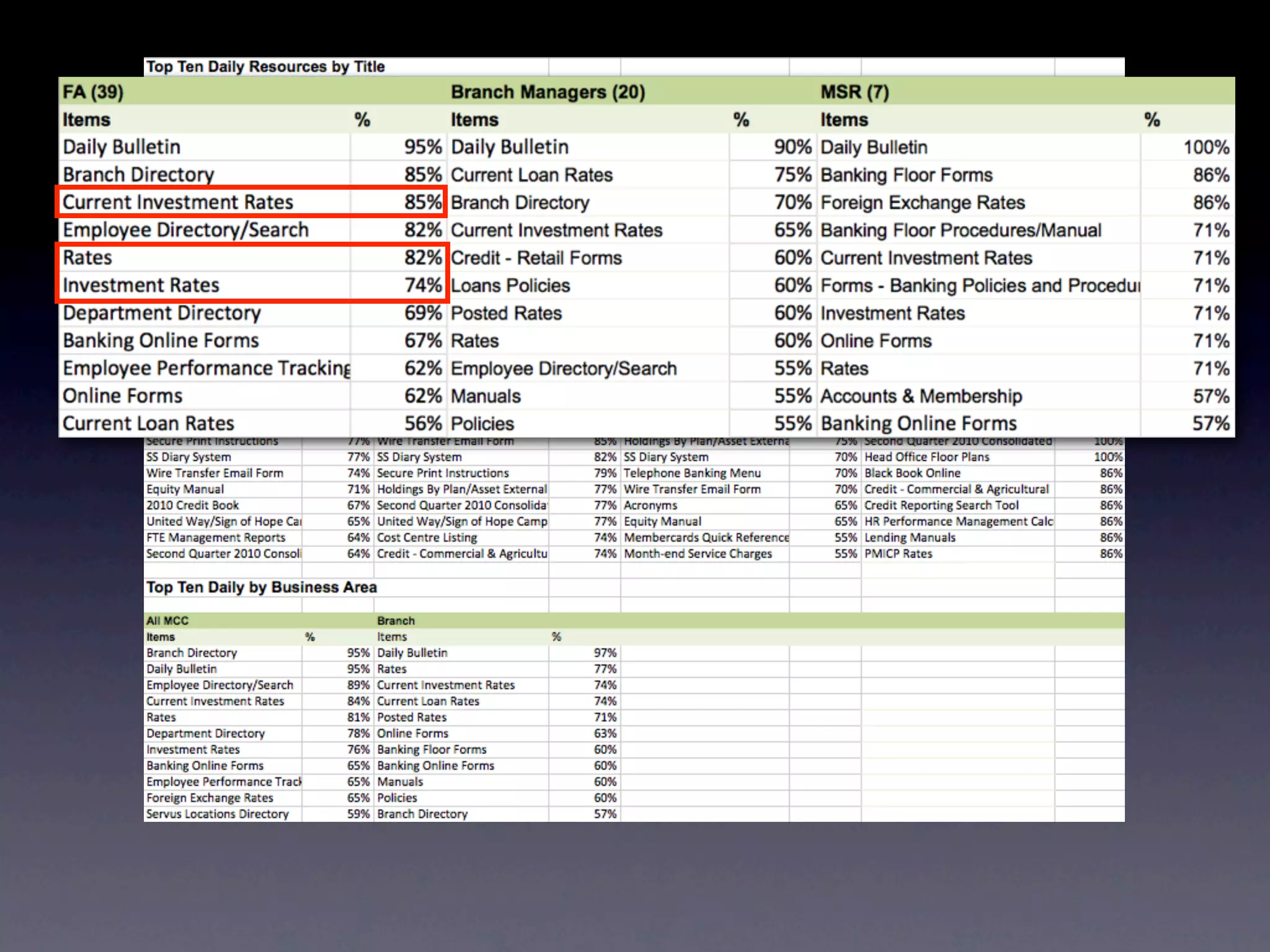
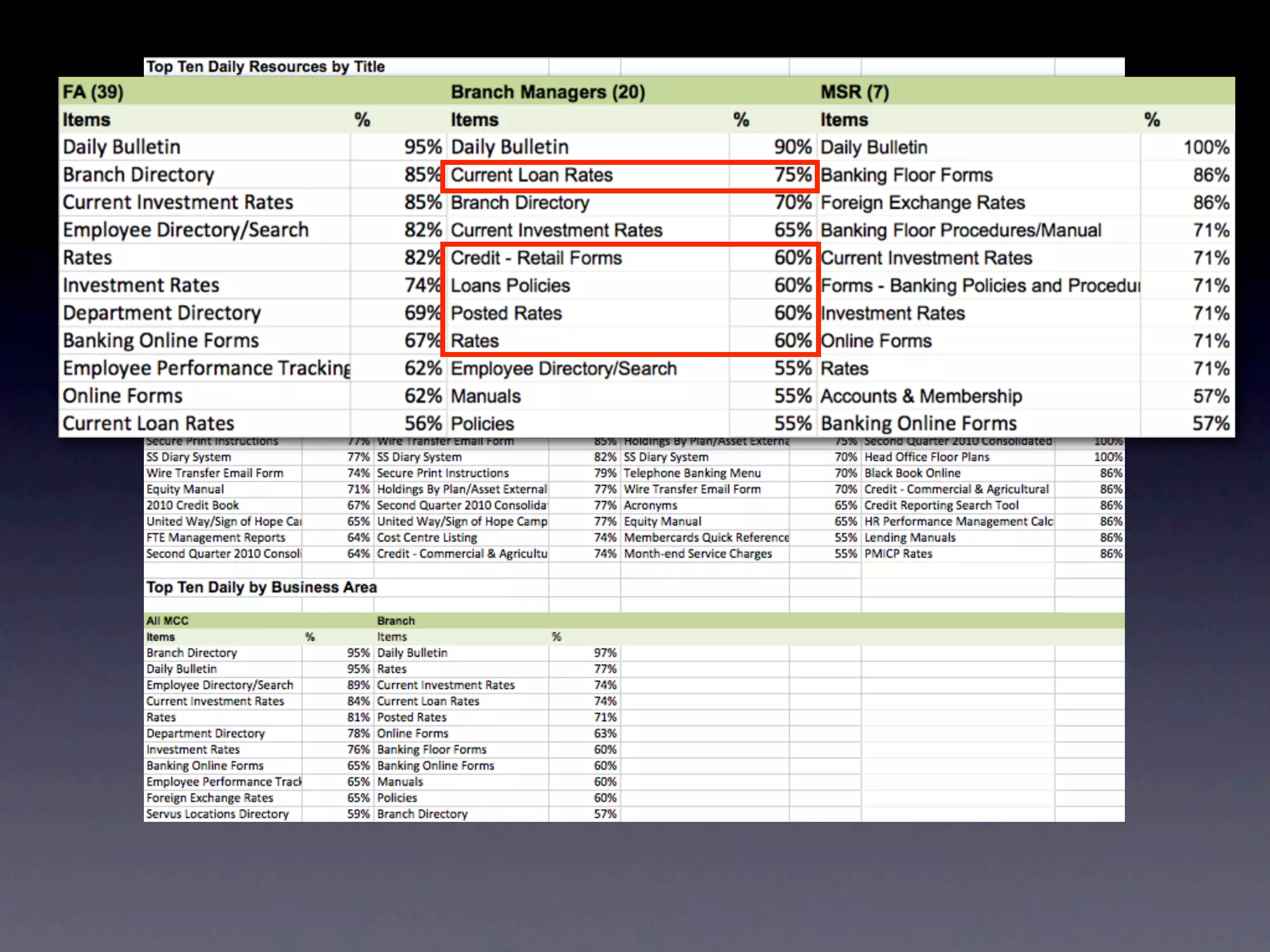
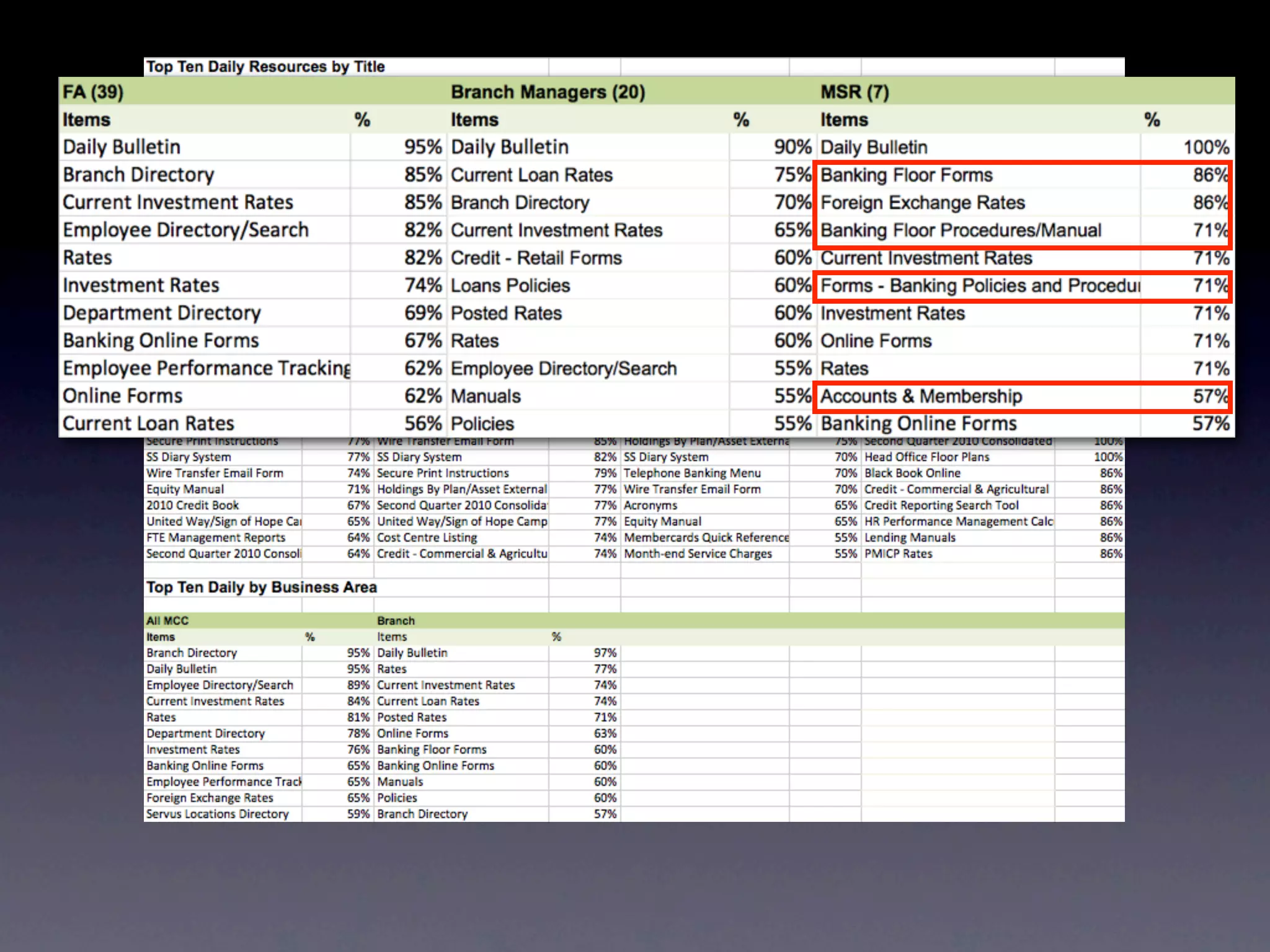
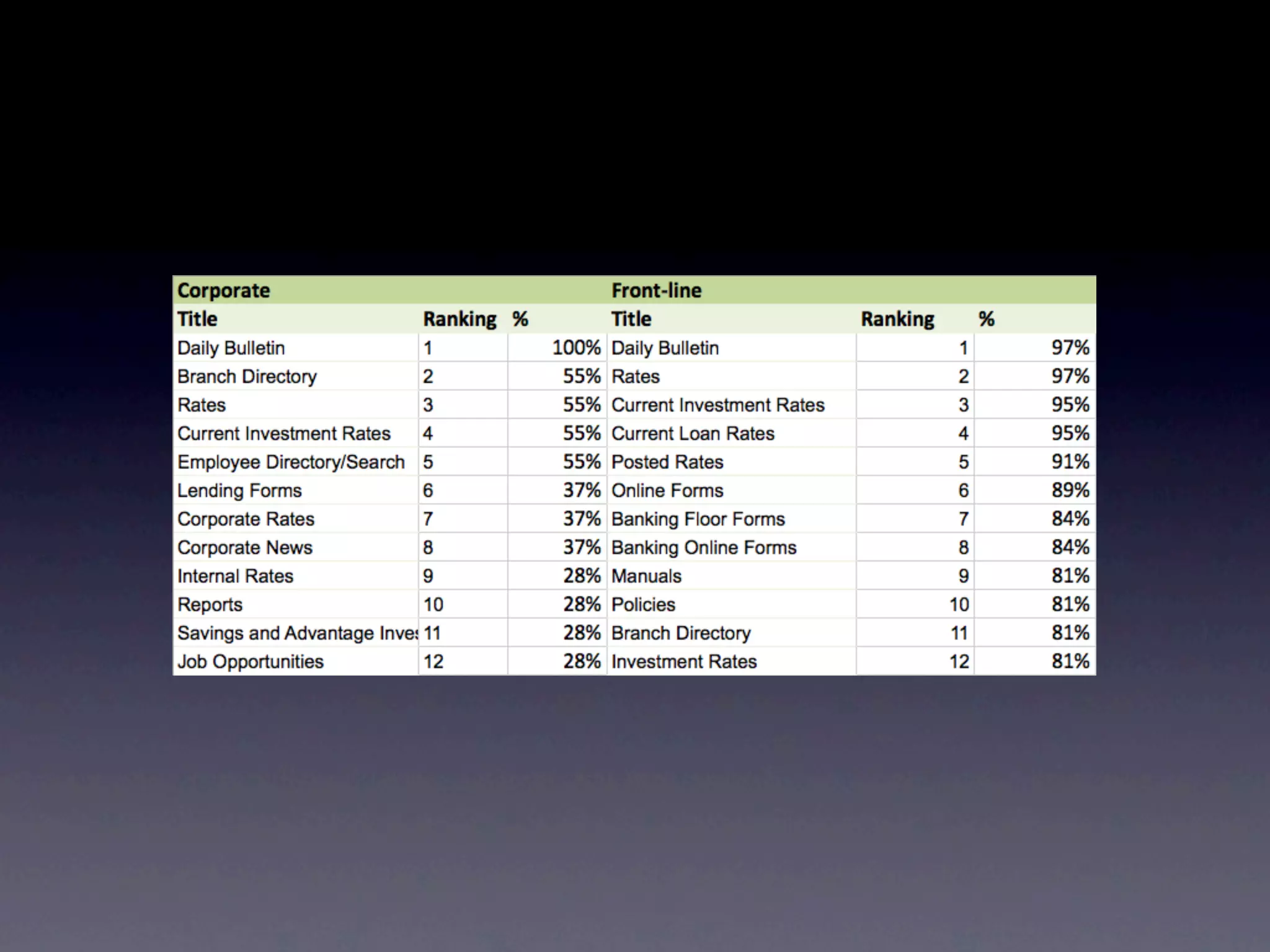
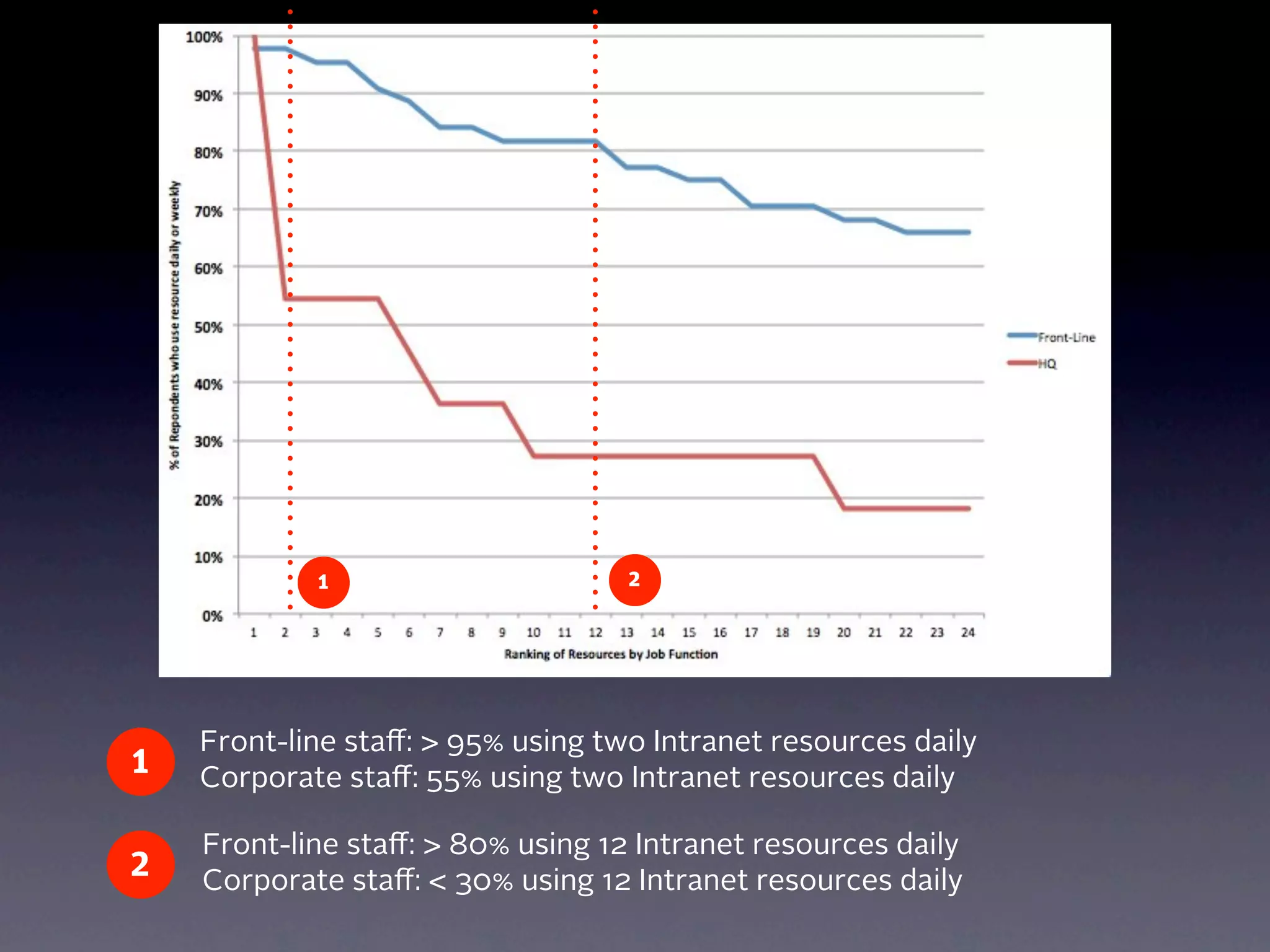
1                      2


    Front-line staff: > 95% using two Intranet resources daily
1   Corporate staff: 55% using two Intranet resources daily

    Front-line staff: > 80% using 12 Intranet resources daily
2   Corporate staff: < 30% using 12 Intranet resources daily
Results
• Much better understanding of information
  needs for major job functions
• Design meaningful role-based
  customization features
• Confirmed that front-line staff relied on
  the Intranet more heavily
• Secured additional participation from
  front-line staff
#2. A/B Testing Mock-ups

 The client: large utility company
 The project: assist them with usability
 evaluation for their website
 The problem: how do we help them
 choose between mock-ups?
Experimental Design:
   A Digression
• In general, good experiments will meet
  these two criteria
 • random sampling of a population
 • random assignment to one or more
   experimental groups
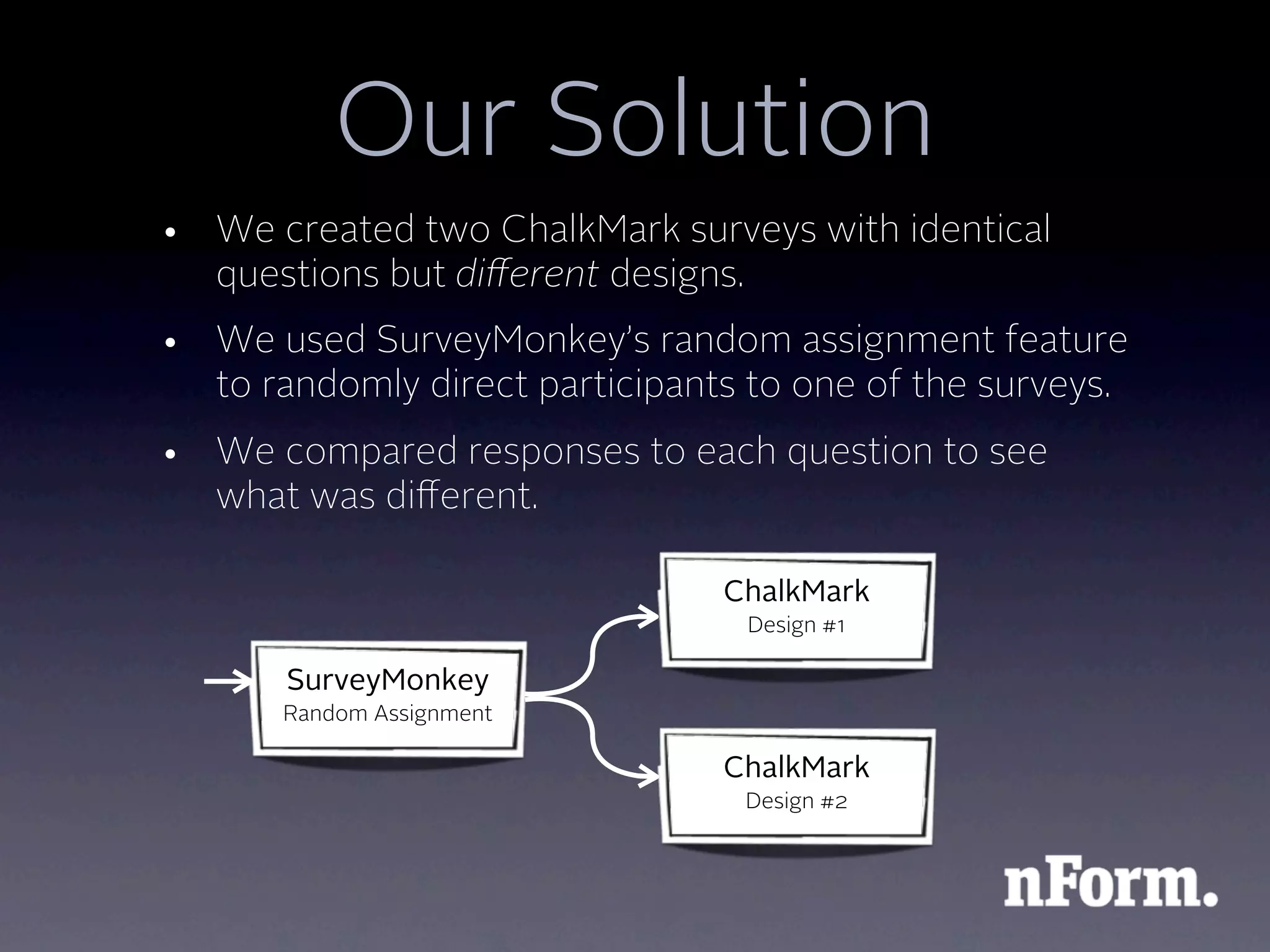
Our Solution
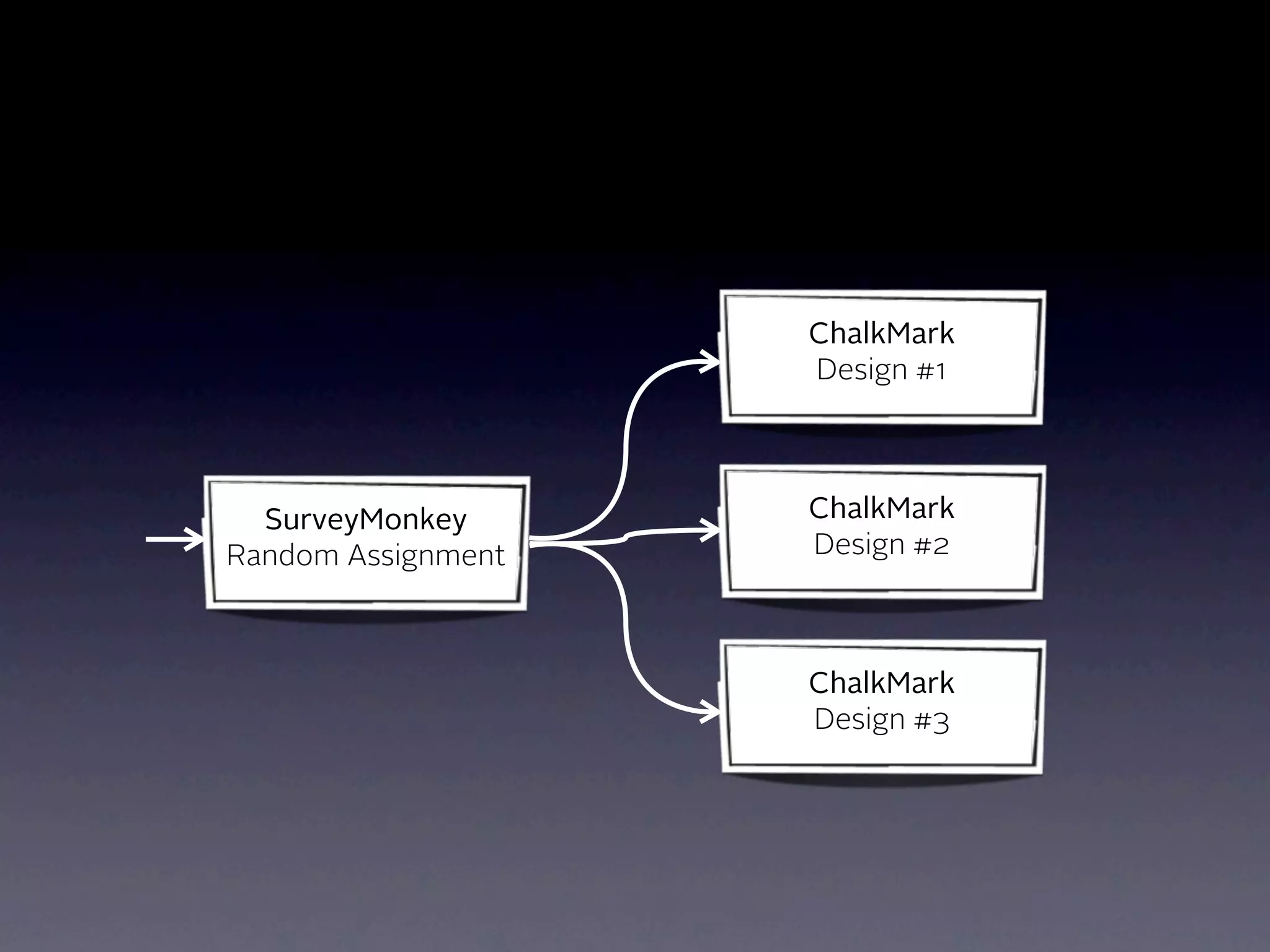
• We created two ChalkMark surveys with identical
  questions but different designs.
• We used SurveyMonkey’s random assignment feature
  to randomly direct participants to one of the surveys.
• We compared responses to each question to see
  what was different.

                                ChalkMark
                                 Design #1

       SurveyMonkey
       Random Assignment

                                ChalkMark
                                 Design #2
ChalkMark
                    Design #1


  SurveyMonkey      ChalkMark
Random Assignment   Design #2


                    ChalkMark
                    Design #3
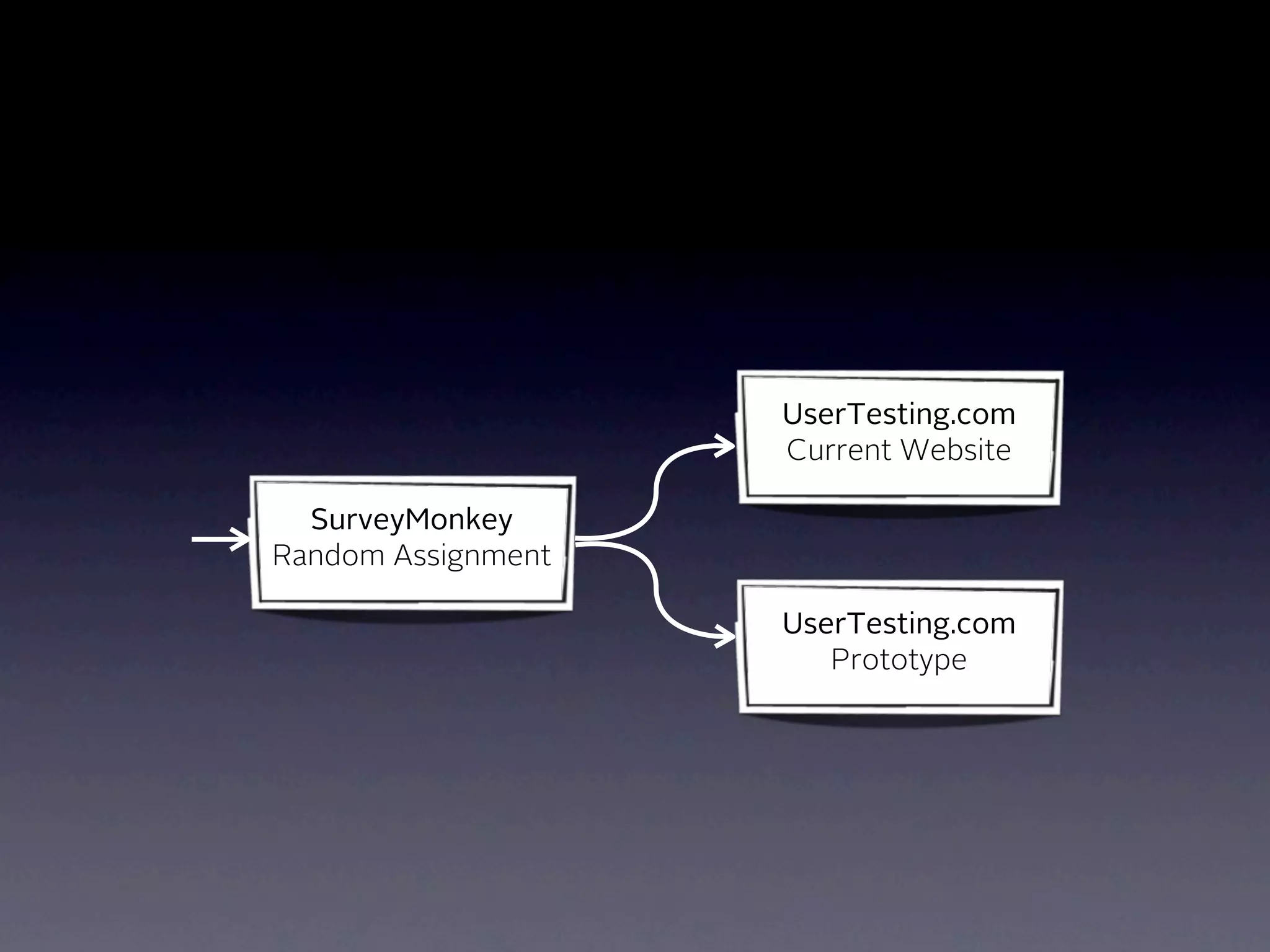
UserTesting.com
                    Current Website

  SurveyMonkey
Random Assignment

                    UserTesting.com
                       Prototype
Lessons Learned
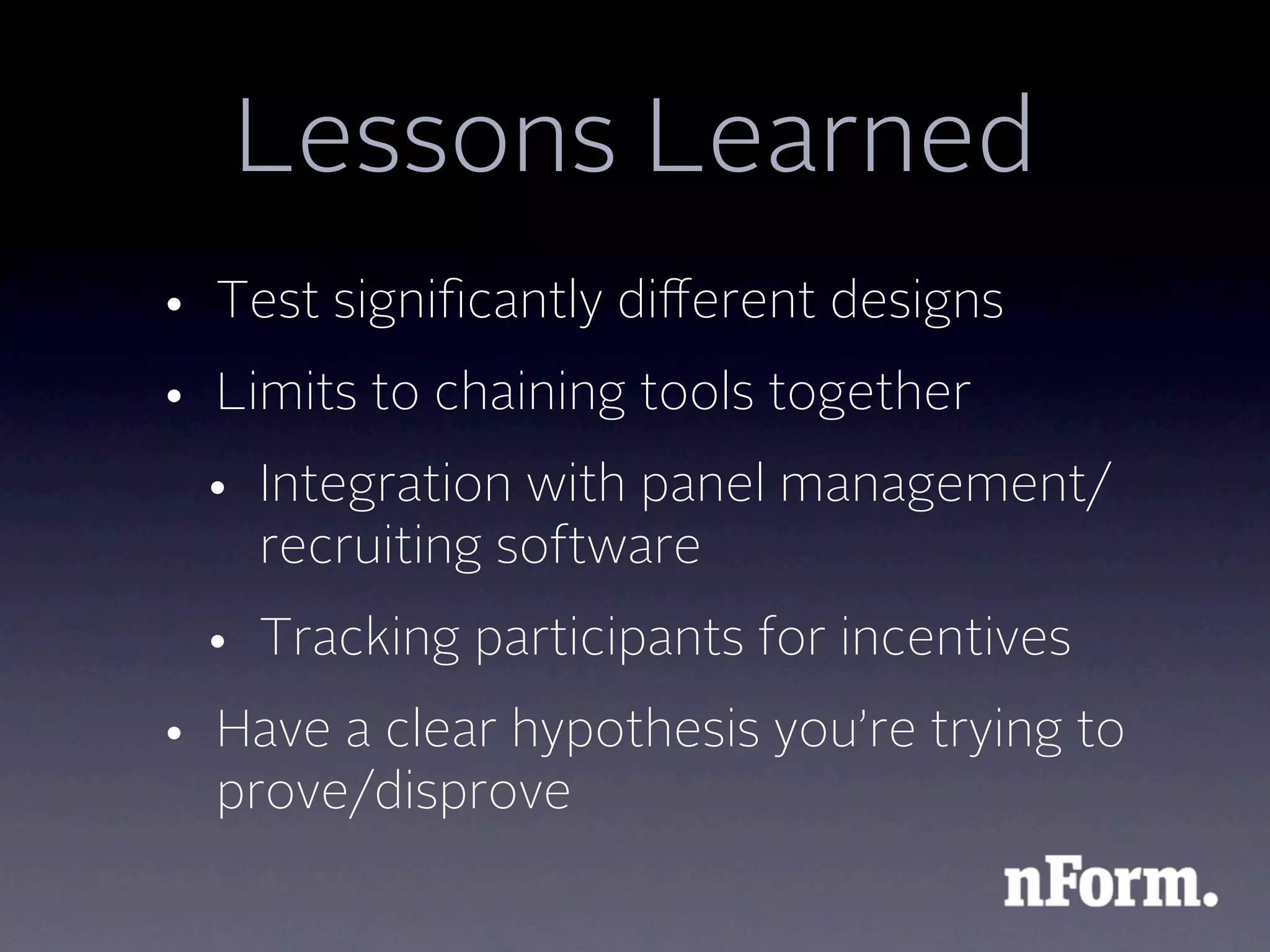
• Test significantly different designs
• Limits to chaining tools together
 • Integration with panel management/
   recruiting software
 • Tracking participants for incentives
• Have a clear hypothesis you’re trying to
  prove/disprove
#3. Boosting Interview
      Responses
The client: regional government
The project: understand how citizens
access and experience government services
The problem: how do we get people to talk
about something abstract like services?
Our Solution
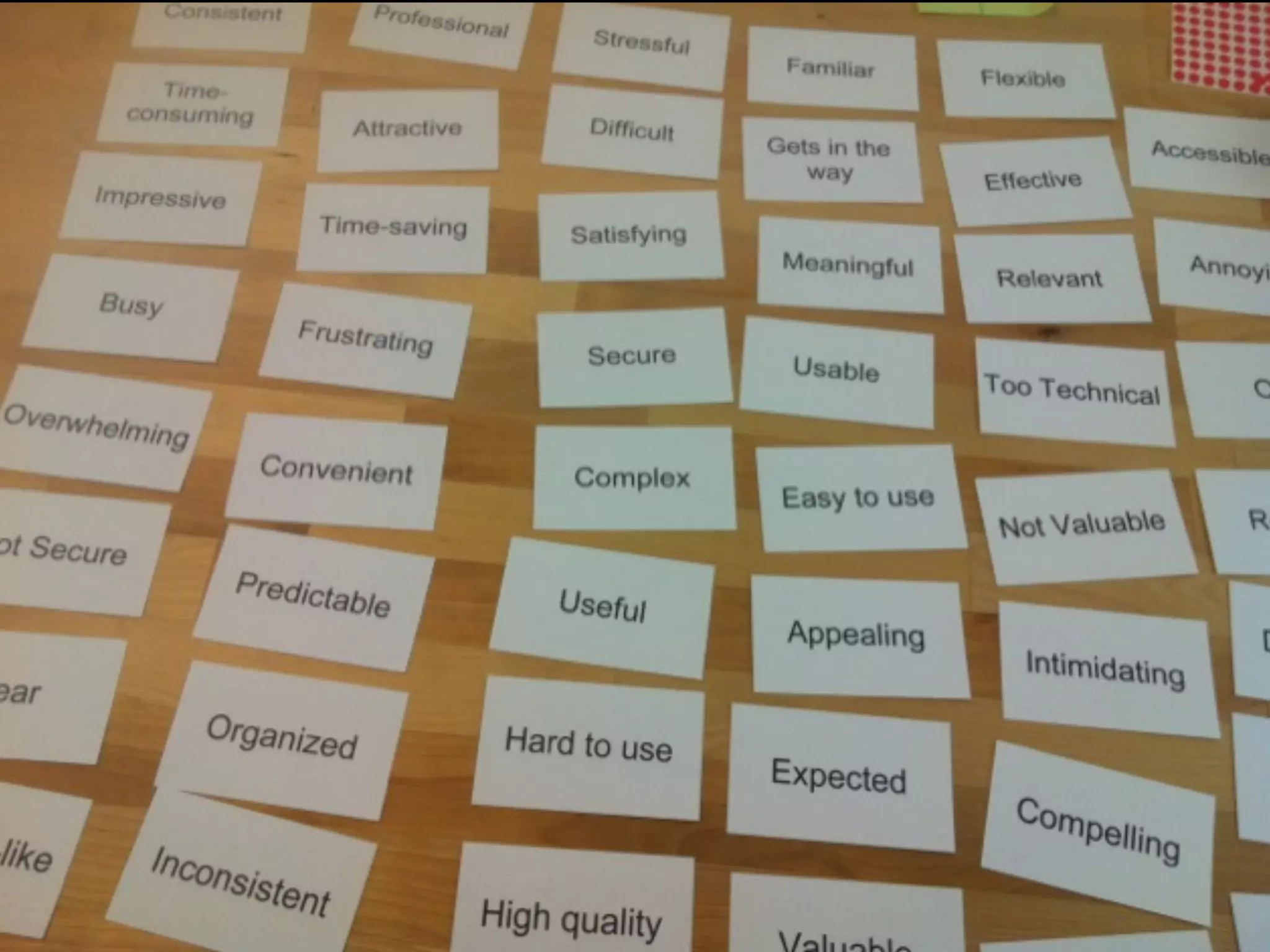
• Emotional response cards
• We used a set of 50 cards with
  emotional adjectives on them to help
  elicit in-depth responses from
  participants.
• Used physical cards in 20 in-home
  interviews, used PDF file for 20
  telephone interviews.
How They Worked
• We started with Microsoft’s Product Reaction
  Cards, which includes a list of 118 product
  characteristics
• We reduced the number of cards to 50 and tried
  to include opposing characteristics (similar to
  BERT)
• At the end of the interview we handed
  participants the cards and asked them to pick the
  cards that described the experiences they had
  just talked about
   http://www.uxmag.com/articles/organized-approach-to-emotional-response-testing
   http://www.uxforthemasses.com/bert/
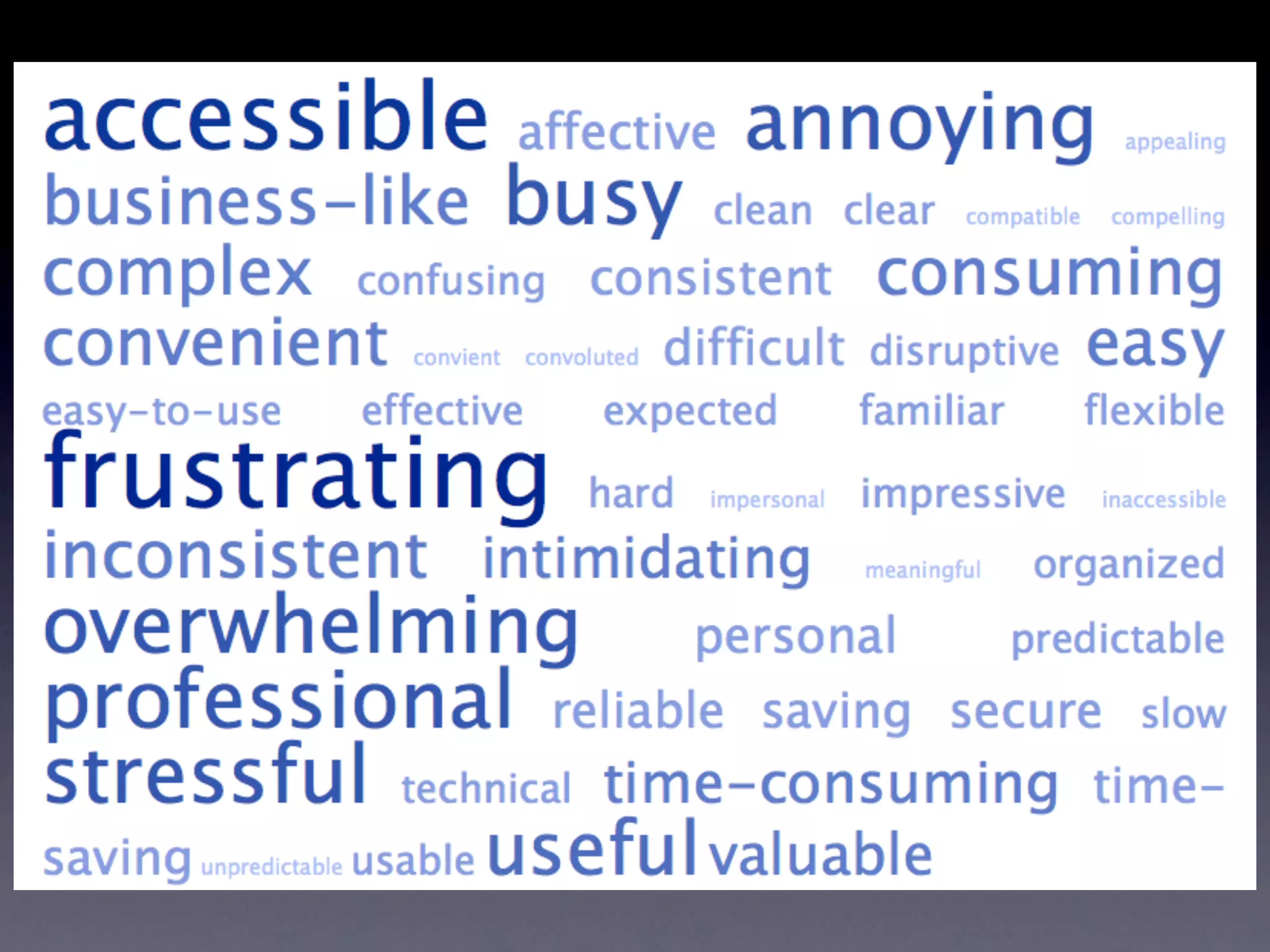
The Results

• People remember emotions
• Few experiences are all +ve or -ve
• Props help people express themselves
• Emotions keep people honest
• Emotions lead to better stories
Conclusion
• These are some ways we’re pushing
  our user research practice
• We’re able to get a lot of value from
  simple tools and creative thinking
• Please share your own ideas at the
  break, on Twitter (#uxhacks) or on your
  blog
Thank you!


Gene Smith             nForm
gene.smith@nform.com   http://nform.com
@gsmith                @nform

UXLX2012 User Research Hacks

  • 1.
    User Research Hacks UX Lisbon | May 16, 2012 Gene Smith | @gsmith #uxhacks
  • 2.
    The Problem Client wantsmajor Client has a small insights into their budget, limited time, customers and or no executive buy-in design problems to conduct research
  • 3.
    The Problem hack Client wants major of solvingClient has kludgy but effective way a problema small insights into their budget, limited time, customers and or no executive buy-in design problems to conduct research
  • 4.
    The Problem hack Client wants major of solvingClient has kludgy but effective way a problem a small insights into their budget, limited time, customers and user research hack or no executive buy-in design problems of getting some data that will give you kludgy but effective way to conduct research insight into users’ needs so you can design something halfway decent
  • 5.
    Kludgy but effective •Simple tools • Creative experimental design or just some creative thinking about how to improve our results • Spreadsheets, pivot tables & other post-study analysis tools
  • 6.
    This Presentation • Threeuser research hacks 1. Determining users’ content priorities 2. A/B testing mock-ups 3. Getting better interview responses • Goal: give you some ideas for your next low-budget, high-impact user research project
  • 7.
    #1. Content Priorities The client: regional financial services company with 2,500 employees and 100+ branches The project: a ground-up Intranet redesign The problem: no mandate to conduct research with front-line staff.
  • 8.
    Our Solution • Contentprioritization card sort • Include questions about region and role to segment the data. • Distribute the surveys directly to branch managers and use the tell-two- friends method.
  • 12.
    Why Content Prioritization? •We needed to understand actual behaviour • This survey design let us extract a lot insights from one data set. • What content do people need daily? • How does that differ by job function? • Are there significant differences between different locations or job functions?
  • 23.
    Ranking Content Use •Hunch: front-line staff relied on Intranet heavily for business-critical information. How could we show that with the data we had? • We segmented respondents into two groups: all front-line staff and corporate staff • We looked at the % of content each group used daily and ranked their responses
  • 28.
    1 2 Front-line staff: > 95% using two Intranet resources daily 1 Corporate staff: 55% using two Intranet resources daily Front-line staff: > 80% using 12 Intranet resources daily 2 Corporate staff: < 30% using 12 Intranet resources daily
  • 29.
    Results • Much betterunderstanding of information needs for major job functions • Design meaningful role-based customization features • Confirmed that front-line staff relied on the Intranet more heavily • Secured additional participation from front-line staff
  • 30.
    #2. A/B TestingMock-ups The client: large utility company The project: assist them with usability evaluation for their website The problem: how do we help them choose between mock-ups?
  • 31.
    Experimental Design: A Digression • In general, good experiments will meet these two criteria • random sampling of a population • random assignment to one or more experimental groups
  • 32.
    Our Solution • Wecreated two ChalkMark surveys with identical questions but different designs. • We used SurveyMonkey’s random assignment feature to randomly direct participants to one of the surveys. • We compared responses to each question to see what was different. ChalkMark Design #1 SurveyMonkey Random Assignment ChalkMark Design #2
  • 33.
    ChalkMark Design #1 SurveyMonkey ChalkMark Random Assignment Design #2 ChalkMark Design #3
  • 34.
    UserTesting.com Current Website SurveyMonkey Random Assignment UserTesting.com Prototype
  • 35.
    Lessons Learned • Testsignificantly different designs • Limits to chaining tools together • Integration with panel management/ recruiting software • Tracking participants for incentives • Have a clear hypothesis you’re trying to prove/disprove
  • 36.
    #3. Boosting Interview Responses The client: regional government The project: understand how citizens access and experience government services The problem: how do we get people to talk about something abstract like services?
  • 37.
    Our Solution • Emotionalresponse cards • We used a set of 50 cards with emotional adjectives on them to help elicit in-depth responses from participants. • Used physical cards in 20 in-home interviews, used PDF file for 20 telephone interviews.
  • 39.
    How They Worked •We started with Microsoft’s Product Reaction Cards, which includes a list of 118 product characteristics • We reduced the number of cards to 50 and tried to include opposing characteristics (similar to BERT) • At the end of the interview we handed participants the cards and asked them to pick the cards that described the experiences they had just talked about http://www.uxmag.com/articles/organized-approach-to-emotional-response-testing http://www.uxforthemasses.com/bert/
  • 41.
    The Results • Peopleremember emotions • Few experiences are all +ve or -ve • Props help people express themselves • Emotions keep people honest • Emotions lead to better stories
  • 42.
    Conclusion • These aresome ways we’re pushing our user research practice • We’re able to get a lot of value from simple tools and creative thinking • Please share your own ideas at the break, on Twitter (#uxhacks) or on your blog
  • 43.
    Thank you! Gene Smith nForm gene.smith@nform.com http://nform.com @gsmith @nform