HPV INFECTION
Human Papilloma Virus (HPV)
• DNA virus that infect epithelial cells
• More than 100 strains
• Persistent and oncogenic* (gene that has

potential to cause cancer.)
• Most normal cells undergo a programmed form

of death (apoptosis). Oncogenes can cause
those cells that ought to die to survive and
proliferate instead. Most oncogenes require an
additional step, such as mutations in another
gene, or environmental factors, such as viral
infection, to cause cancer. Many cancer drugs
target proteins encoded by oncogenes
• Infects epithelium of

cervix, vagina, vulva, anus, penis, mouth, a
nd sinus
• ~ 30 strains have the potential to transform
epithelial cells into pre-malignant, and
ultimately malignant, cells
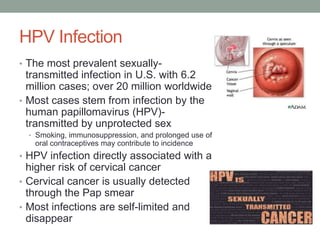
HPV Infection
• The most prevalent sexually-

transmitted infection in U.S. with 6.2
million cases; over 20 million worldwide
• Most cases stem from infection by the
human papillomavirus (HPV)transmitted by unprotected sex
• Smoking, immunosuppression, and prolonged use of

oral contraceptives may contribute to incidence

• HPV infection directly associated with a

higher risk of cervical cancer
• Cervical cancer is usually detected
through the Pap smear
• Most infections are self-limited and
disappear
4

Human Papillomavirus (HPV)

Hill
Companie
s. All
Rights
Reserved

• Diagnosis and treatment
• Diagnosed based on the appearance of lesions
• Often detected during routine PAP tests
• Special tests can detect HPV and distinguish among
the more common strains, including those that cause
most cases of cervical cancer
• Treatment focuses on reducing the number and size
of warts
• Cryosurgery (freezing)
• Electrocautery (burning)
• Laser surgery
• Acid treatments
Cervical cancer
• Over 500,000 cases

diagnosed annually
worldwide with 260,00
deaths;in the US, 9,710
cases and 3,700 deaths
• Cervical cancer is 2nd
leading cause of death
among women worldwide
• Most common in women in
their 20’s and 30’s

5
HPV Infection
• Evades immune system destruction by:

- Downregulating cellular immune
response
- No release of inflammatory cytokines
- Poor response of antibody
• End result is establishment of a persistent asymptomatic
infection that may lead to pre-malignant cellular reactions
Diagnosis of Infection
• Usually diagnosed by the detection of an abnormal Pap

smear indicating chronic infection
• Asymptomatic infection is common; occasionally, genital
warts
Cervical Cancer
• Prevention of cervical cancer

can be accomplished with use
of an effective HPV vaccine
• PAP test is a highly effective

screening test for this cancer
• All sexually active women ages 18-65
should be tested regularly
HPV Vaccine
• Vaccine effectiveness is 90-95% in most population trials;
• Clinical studies involving nearly 10 years of follow-up show that the
vaccine efficiacy.
• girls who are vaccinated do not exhibit the kinds of cell changes that preceed

cervical cancer.
• results for nearly 100 % of cases for HPV types vaccine is for.
• vaccine has the most effect when it is given to girls who have not had any
sexual encounters,

• 2 HPV vaccines approved by FDA :Gardasil, Cervarix
• Gardasil
• Quadrivalent vaccine (mix of 4 )developed by Merck
• Protects against 4 types of HPV virus :
• Most effective before the onset of sexual activity
• vaccine is 93 %effective for girls who are vaccinated at age 10 to 13, whereas effect
is about 70 % for young women aged 14-17
• Also prevents 90% of genital warts
• Approved for boys and men

• Cervarix

• Doesn’t protect against genital warts, but may be more effective in protections

against cervical cancer
Vaccine admin
• recommend vaccine for girls and women ages 9

through 26; ideally, prior to the onset of sexual
activity
• Administered in 3 doses over 6 months
• Cost issues - $360 per 3 dose regimen
• Covered by most form of insurance; special
programs through Medicaid and SCHIP
• Vaccines for other HPV strains in development
Vaccine Acceptability
• Evidence suggests high degree of acceptability by

physicians, gynecologists, patients, and parents
• Issue/concern on the part of some parents that use will
increase sexual activity
• Issue of mandating vaccine in the states; no state
currently has such a statute
• A study of nearly a million girls in Sweden and Denmark
eradicates showed no serious side effetcs.
Controversy: get girls
vaccinated? For or
against?

HPV

  • 1.
  • 2.
    Human Papilloma Virus(HPV) • DNA virus that infect epithelial cells • More than 100 strains • Persistent and oncogenic* (gene that has potential to cause cancer.) • Most normal cells undergo a programmed form of death (apoptosis). Oncogenes can cause those cells that ought to die to survive and proliferate instead. Most oncogenes require an additional step, such as mutations in another gene, or environmental factors, such as viral infection, to cause cancer. Many cancer drugs target proteins encoded by oncogenes • Infects epithelium of cervix, vagina, vulva, anus, penis, mouth, a nd sinus • ~ 30 strains have the potential to transform epithelial cells into pre-malignant, and ultimately malignant, cells
  • 3.
    HPV Infection • Themost prevalent sexually- transmitted infection in U.S. with 6.2 million cases; over 20 million worldwide • Most cases stem from infection by the human papillomavirus (HPV)transmitted by unprotected sex • Smoking, immunosuppression, and prolonged use of oral contraceptives may contribute to incidence • HPV infection directly associated with a higher risk of cervical cancer • Cervical cancer is usually detected through the Pap smear • Most infections are self-limited and disappear
  • 4.
    4 Human Papillomavirus (HPV) Hill Companie s.All Rights Reserved • Diagnosis and treatment • Diagnosed based on the appearance of lesions • Often detected during routine PAP tests • Special tests can detect HPV and distinguish among the more common strains, including those that cause most cases of cervical cancer • Treatment focuses on reducing the number and size of warts • Cryosurgery (freezing) • Electrocautery (burning) • Laser surgery • Acid treatments
  • 5.
    Cervical cancer • Over500,000 cases diagnosed annually worldwide with 260,00 deaths;in the US, 9,710 cases and 3,700 deaths • Cervical cancer is 2nd leading cause of death among women worldwide • Most common in women in their 20’s and 30’s 5
  • 6.
    HPV Infection • Evadesimmune system destruction by: - Downregulating cellular immune response - No release of inflammatory cytokines - Poor response of antibody • End result is establishment of a persistent asymptomatic infection that may lead to pre-malignant cellular reactions
  • 7.
    Diagnosis of Infection •Usually diagnosed by the detection of an abnormal Pap smear indicating chronic infection • Asymptomatic infection is common; occasionally, genital warts
  • 8.
    Cervical Cancer • Preventionof cervical cancer can be accomplished with use of an effective HPV vaccine • PAP test is a highly effective screening test for this cancer • All sexually active women ages 18-65 should be tested regularly
  • 9.
    HPV Vaccine • Vaccineeffectiveness is 90-95% in most population trials; • Clinical studies involving nearly 10 years of follow-up show that the vaccine efficiacy. • girls who are vaccinated do not exhibit the kinds of cell changes that preceed cervical cancer. • results for nearly 100 % of cases for HPV types vaccine is for. • vaccine has the most effect when it is given to girls who have not had any sexual encounters, • 2 HPV vaccines approved by FDA :Gardasil, Cervarix • Gardasil • Quadrivalent vaccine (mix of 4 )developed by Merck • Protects against 4 types of HPV virus : • Most effective before the onset of sexual activity • vaccine is 93 %effective for girls who are vaccinated at age 10 to 13, whereas effect is about 70 % for young women aged 14-17 • Also prevents 90% of genital warts • Approved for boys and men • Cervarix • Doesn’t protect against genital warts, but may be more effective in protections against cervical cancer
  • 10.
    Vaccine admin • recommendvaccine for girls and women ages 9 through 26; ideally, prior to the onset of sexual activity • Administered in 3 doses over 6 months • Cost issues - $360 per 3 dose regimen • Covered by most form of insurance; special programs through Medicaid and SCHIP • Vaccines for other HPV strains in development
  • 11.
    Vaccine Acceptability • Evidencesuggests high degree of acceptability by physicians, gynecologists, patients, and parents • Issue/concern on the part of some parents that use will increase sexual activity • Issue of mandating vaccine in the states; no state currently has such a statute • A study of nearly a million girls in Sweden and Denmark eradicates showed no serious side effetcs.
  • 12.