Melaku Yitbarek(M.D)
Internal Medicine Unit
March,2018
Lecture Outline
 Introduction
 Classification
 Acute viral Hepatitis
 Virologyand Etiology
 Pathology
 Clinical features
 Laboratory features
 Complications
 Treatment
 Prophylaxis
Introduction
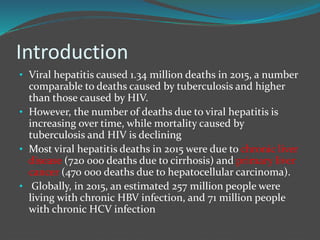
• Viral hepatitis caused 1.34 million deaths in 2015, a number
comparable to deaths caused by tuberculosis and higher
than those caused by HIV.
• However, the number of deaths due to viral hepatitis is
increasing over time, while mortality caused by
tuberculosis and HIV is declining
• Most viral hepatitis deaths in 2015 were due to chronic liver
disease (720 000 deaths due to cirrhosis) and primary liver
cancer (470 000 deaths due to hepatocellular carcinoma).
• Globally, in 2015, an estimated 257 million people were
living with chronic HBV infection, and 71 million people
with chronic HCV infection
Viral Hepatitis
 Acute viral Hepatitis
 Chronic viral Hepatitis
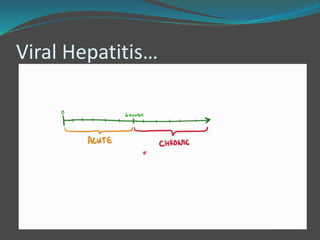
Viral Hepatitis…
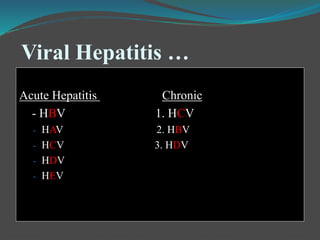
Viral Hepatitis …
Acute Hepatitis Chronic
- HBV 1. HCV
- HAV 2. HBV
- HCV 3. HDV
- HDV
- HEV
Acute Viral Hepatitis
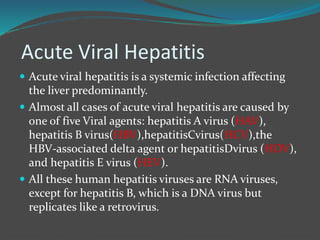
 Acute viral hepatitis is a systemic infection affecting
the liver predominantly.
 Almost all cases of acute viral hepatitis are caused by
one of five Viral agents: hepatitis A virus (HAV),
hepatitis B virus(HBV),hepatitisCvirus(HCV),the
HBV-associated delta agent or hepatitisDvirus (HDV),
and hepatitis E virus (HEV).
 All these human hepatitis viruses are RNA viruses,
except for hepatitis B, which is a DNA virus but
replicates like a retrovirus.
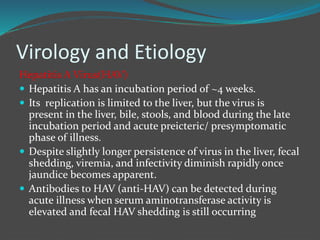
Virology and Etiology
Hepatitis A Virus(HAV)
 Hepatitis A has an incubation period of ~4 weeks.
 Its replication is limited to the liver, but the virus is
present in the liver, bile, stools, and blood during the late
incubation period and acute preicteric/ presymptomatic
phase of illness.
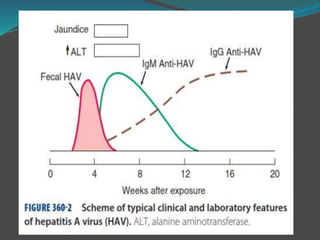
 Despite slightly longer persistence of virus in the liver, fecal
shedding, viremia, and infectivity diminish rapidly once
jaundice becomes apparent.
 Antibodies to HAV (anti-HAV) can be detected during
acute illness when serum aminotransferase activity is
elevated and fecal HAV shedding is still occurring
HAV…
Virology:
 This early antibody response is predominantly of the
IgM class and persists for several (~3) months
 After acute illness, anti-HAV of the IgG class remains
detectable indefinitely, and patients with serum anti-
HAV are immune to reinfection
Virology…
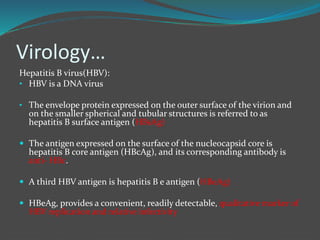
Hepatitis B virus(HBV):
• HBV is a DNA virus
• The envelope protein expressed on the outer surface of the virion and
on the smaller spherical and tubular structures is referred to as
hepatitis B surface antigen (HBsAg)
 The antigen expressed on the surface of the nucleocapsid core is
hepatitis B core antigen (HBcAg), and its corresponding antibody is
anti- HBc.
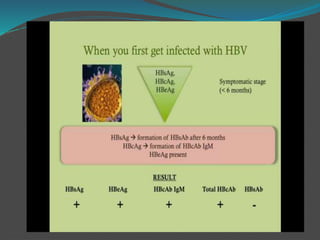
 A third HBV antigen is hepatitis B e antigen (HBeAg)
 HBeAg, provides a convenient, readily detectable, qualitative marker of
HBV replication and relative infectivity
13
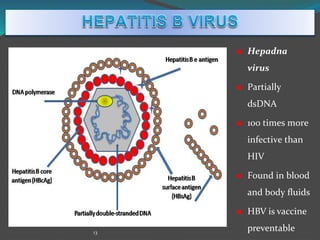
 Hepadna
virus
 Partially
dsDNA
 100 times more
infective than
HIV
 Found in blood
and body fluids
 HBV is vaccine
preventable
Virology…
HBV…
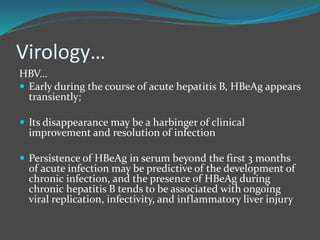
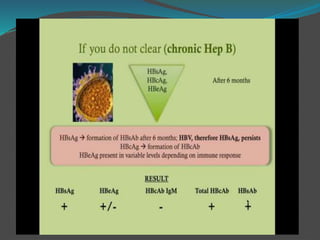
 Early during the course of acute hepatitis B, HBeAg appears
transiently;
 Its disappearance may be a harbinger of clinical
improvement and resolution of infection
 Persistence of HBeAg in serum beyond the first 3 months
of acute infection may be predictive of the development of
chronic infection, and the presence of HBeAg during
chronic hepatitis B tends to be associated with ongoing
viral replication, infectivity, and inflammatory liver injury
Virology…
HBV…
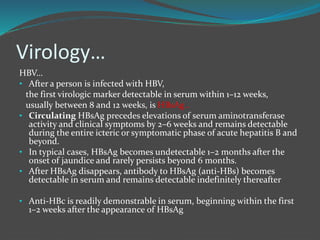
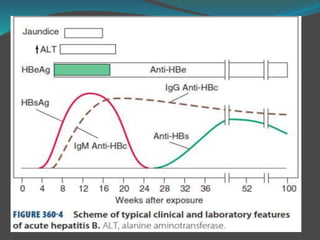
• After a person is infected with HBV,
the first virologic marker detectable in serum within 1–12 weeks,
usually between 8 and 12 weeks, is HBsAg .
• Circulating HBsAg precedes elevations of serum aminotransferase
activity and clinical symptoms by 2–6 weeks and remains detectable
during the entire icteric or symptomatic phase of acute hepatitis B and
beyond.
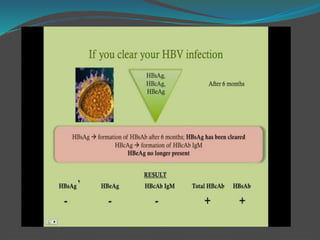
• In typical cases, HBsAg becomes undetectable 1–2 months after the
onset of jaundice and rarely persists beyond 6 months.
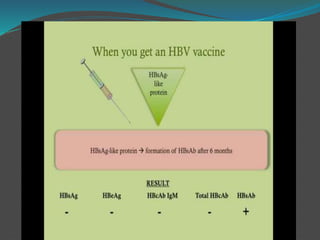
• After HBsAg disappears, antibody to HBsAg (anti-HBs) becomes
detectable in serum and remains detectable indefinitely thereafter
• Anti-HBc is readily demonstrable in serum, beginning within the first
1–2 weeks after the appearance of HBsAg
Virology…
HBV…
• The other readily detectable serologic marker of HBV
infection,HBeAg, appears concurrently with or shortly
after HBsAg.
• Its appearance coincides temporally with high levels
of virus replication and reflects the presence of
circulating intact virions and detectable HBVDNA
Virology…
Hepatitis D(HDV)
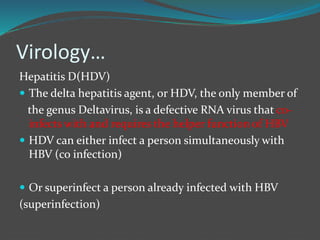
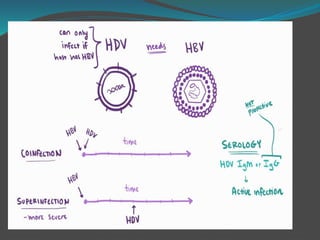
 The delta hepatitis agent, or HDV, the only member of
the genus Deltavirus, is a defective RNA virus that co-
infects with and requires the helper function of HBV
 HDV can either infect a person simultaneously with
HBV (co infection)
 Or superinfect a person already infected with HBV
(superinfection)
Virology
Hepatitis C Virus(HCV):
 Hepatitis C virus, which, before its identification was
labeled “non-A, non-B hepatitis,” is RNA virus.
 The most sensitive indicator of HCV infection is the
presence of HCV RNA
 HCV RNA can be detected within a few days of exposure to
HCV—well before the appearance of anti-HCV—and tends
to persist for the duration of HCV infection
Virology
Hepatitis E Virus(HEV):
• Is RNA virus
• The virus has been detected in stool, bile, and liver and
is excreted in the stool during the late incubation
period.
• Both IgM anti-HEV during early acute infection and
IgG anti-HEV predominating after the first 3 months
can be detected
Pathology
 The typical morphologic lesions of all types of viral
hepatitis are similar and consist of panlobular
infiltration with mononuclear cells, hepatic cell
necrosis, hyperplasia of Kupffer cells
 Liver cell damage consists of hepatic cell degeneration
and necrosis
Clinical features
Symptoms and signs:
 Acute viral hepatitis occurs after an incubation period that varies
according to the responsible agent
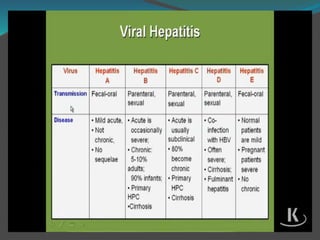
 Generally, incubation periods for hepatitis A range from 15–45
days (mean, 4 weeks), for hepatitis B and D from 30–180 days
(mean, 8–12 weeks),for hepatitis C from 15–160 days (mean, 7
weeks), and for hepatitis E from 14–60 days (mean, 5–6 weeks)
 Constitutional symptoms of anorexia, nausea and vomiting,
fatigue, malaise, arthralgias, myalgias,headache, photophobia,
pharyngitis,cough, and coryza may precede the onset of jaundice
by 1–2 weeks
Clinical…
 The nausea, vomiting, and anorexia are frequently associated with
alterations in olfaction and taste
 A low-grade fever between 38° and 39°C (100°–102°F) is more often
present in hepatitis A and E than in hepatitis B or C, except when
hepatitis B is heralded by a serum sickness–like syndrome; rarely, a
fever of 39.5°–40°C (103°–104°F) may accompany the constitutional
symptoms
 Dark urine and clay-colored stools may be noticed by the patient from
1–5 days before the onset of clinical jaundice
 With the onset of clinical jaundice, the constitutional prodromal
symptoms usually diminish, but in some patients, mild weight loss
(2.5–5 kg) is common and may continue during the entire icteric phase
Clinical…
 The liver becomes enlarged and tender and may be
associated with right upper quadrant pain and
discomfort.
 Splenomegaly and cervical adenopathy are present in
10–20% of patients with acute hepatitis.
Clinical…
 During the recovery phase, constitutional symptoms disappear, but
usually some liver enlargement and abnormalities in liver biochemical
tests are still evident.
 The duration of the posticteric phase is variable, ranging from 2–12
weeks, and is usually more prolonged in acute hepatitis B and C.
 Complete clinical and biochemical recovery is to be expected 1–2
months after all cases of hepatitis A and E and 3–4 months after the
onset of jaundice in three-quarters of uncomplicated,self-limited cases
of hepatitis B and C (among healthy adults, acute hepatitis B is self-
limited in 95–99%, whereas hepatitis C is self -limited in only ~15%).
 Infection with HDV can occur in the presence of acute or chronic HBV
infection; the duration of HBV infection determines the duration of
HDV infection
Laboratory features
 The serum aminotransferases aspartate amino-transferase
(AST) and alanine aminotransferase (ALT) increase to a
variable degree during the prodromal phase of acute viral
hepatitis and precede the rise in bilirubin
 Thelevel of these enzymes, however,does not correlate well
with the degree of liver cell damage.
 Peak levels vary from 400–4000 IU or more; these levels are
usually reached at the time the patient is clinically icteric
and diminish progressively during the recovery phase of
acute hepatitis.
 The diagnosis of anicteric hepatitis is based on clinical
features and on aminotransferase elevations.
Laboratory…
• Jaundice is usually visible in the sclera or skin when the
serum bilirubin value is 2.5 mg/ dL.
• When jaundice appears, the serum bilirubin typically rises
to levels ranging from (5–20 mg/ dL).
• The serum bilirubin may continue to rise despite falling
serum aminotransferase levels.
• In most instances, the total bilirubin is equally divided
between the conjugated and unconjugated fractions.
• Bilirubin levels (20 mg/ dL) extending and persisting late
into the course of viral hepatitis are more likely to be
associated with severe disease.
Laboratory…
 Measurement of the prothrombin time (PT) is important in
patients with acute viral hepatitis because a prolonged value may
reflect a severe hepatic synthetic defect
 A diagnosis of HBV infection can usually be made by detection
of HBsAg in serum.
 Infrequently, levels of HBsAg are too low to be detected during
acute HBV infection, even with contemporary, highly sensitive
immunoassays.
 In such cases, the diagnosis can be established by the presence of
IgM anti-HBc.
 Another important serologic marker in patients with hepatitis B
is HBeAg.
 Its principal clinical usefulness is as an indicator of relative
infectivity
Laboratory…
 Like HBeAg, serum HBV DNA is an indicator of HBV
replication, but tests for HBV DNA are more sensitive and
quantitative
 In patients with hepatitis C, an episodic pattern of
aminotransferase elevation is common.
 A specific serologic diagnosis of hepatitisC can be made by
demonstrating the presence in serum of antiHCV.
 When contemporary immunoassays are used, anti-HCV
canbe detected in acute hepatitis C during the initial phase
of elevated aminotransferase activity and remains
detectable after recovery (rare) and during chronic
infection (common)
Laboratory…
 Assays for HCV RNA are the most sensitive tests for
HCV infection and represent the “gold standard” in
establishing a diagnosis of hepatitis C
Prognosis
 Virtually all previously healthy patients with hepatitis A recover
completely with no clinical sequelae
 Similarly, in acute hepatitis B, 95–99% of previously healthy
adults have a favorable course and recover completely
 Initial presenting features such as ascites, peripheral edema, and
symptoms of hepatic encephalopathy suggest a poorer prognosis
 In addition, a prolonged PT, low serum albumin level,
hypoglycemia, and very high serum bilirubin values suggest
severe hepatocellular disease.
 Patients with these clinical and laboratory features deserve
prompt hospital admission.
 The case fatality rate in hepatitis A and B is very low
(~0.1%) but is increased by advanced age and underlying debilitat-
ing disorders
Prognosis…
 In out breaks of water born Hepatitis E, the case
fatality rate is 1-2%, and up to 10–20% in pregnant
women
 When HDV superinfection occurs in a person with
chronic hepatitis B, the likelihood of fulminant
hepatitis and death is increased substantially
Complications
 A small proportion of patients with hepatitis A experience relapsing hepatitis
weeks to months after apparent recovery from acute hepatitis
 During the prodromal phase of acute hepatitis B, a serum sickness–like
syndrome characterized by arthralgia or arthritis, rash, angioedema, and rarely,
hematuria and proteinuria may develop in 5–10% of patients.
 The most feared complication of viral hepatitis is fulminant hepatitis (massive
hepatic necrosis);
 fortunately, this is a rare event.
 Fulminant hepatitis is seen primarily in hepatitis B, D, and E, but rare
fulminant cases of hepatitis A occur primarily in older adults and in
persons with underlying chronic liver disease
Complications…
Fulminant Hepatitis:
 Patients usually present with signs and symptoms of
encephalopathy that may evolve to deep coma.
 The liver is usually small and the PT excessively
prolonged.
 The combination of rapidly shrinking liver size, rapidly
rising bilirubin level, and marked prolongation of the
PT, even as aminotransferase levels fall, together with
Clinical signs of confusion, disorientation,
somnolence, ascites, and edema, indicates that the
patient has hepatic failure with encephalopathy
Complications…
 The mortality rate is exceedingly high (>80% in
patients with deep coma), but patients who survive
may have a complete biochemical and histologic
recovery.
 If a donor liver can be located in time, liver
transplantation may be life-saving in patients with
fulminant hepatitis
 Chronic hepatitis is an important late complication of
acute hepatitisB occurring in a small proportion of
patients with acute disease
Complications…
The following clinical and laboratory features suggest progression
of acute hepatitis to chronic hepatitis:
(1) lack of complete resolution of clinical symptoms of anorexia,
weight loss, fatigue, and the persistence of hepatomegaly;
(2) the presence of bridging/interface or multilobular hepatic
necrosis on liver biopsy during protracted, severe acute viral
hepatitis;
(3) failure of the serum aminotransferase, bilirubin, and globulin
levels to return to normal within 6–12 months after the acute
illness; and
(4) the persistence of HBeAg for >3 months or HBsAg for
>6 months after acute hepatitis
Complications…
 After acute HCV infection, the likelihood of remaining
chronically infected approaches 85–90%.
 Although many patients with chronic hepatitis C have
no symptoms, cirrhosis may develop in as many as
20% within 10–20 years of acute illness
Differential Diagnosis
 Infectious mononucleosis; those due to
 cytomegalovirus,
 herpes simplex,
 and coxsackieviruses;
 and toxoplasmosis
 drugs and certain anesthetic agents
 Alcoholic hepatitis
 Very rarely,malignancies metastatic to the liver
 Occasionally, genetic or metabolic liver disorders (e.g.,
Wilson’s disease, a antitrypsin deficiency)
 and non alcoholic fatty liver disease
Treatment
 In most cases of typical acute viral hepatitis, specific
treatment generally Is not necessary.
 Although hospitalization may be required for clinically
severe illness, most patients do not require hospital
care
 A high-calorie diet
 Intravenous feeding is necessary in the acute stage if
the patient has persistent vomiting and cannot
maintain oral intake
Treatment
Fulminant Hepatitis:
 the goal of therapy is to support the patient by
maintenanceof fluid balance, support of circulation
and respiration,control of bleeding, correction of
hypoglycemia, and treatment Of other complications
of the comatose state in anticipation of liver
regeneration and repair
 Protein intake should be restricted, and oral lactulose
or neomycin administered
Prophylaxis
 Currently, for hepatitis A, B, and E, active
immunization with vaccines is the preferable approach
to prevention.
Lecture Outline
 Introduction
 Chronic Hepatitis B
 Chronic Hepatitis D
 Chronic Hepatitis C
Introduction
 Chronic hepatitis represents a series of liver disorders of
varying causes and severity in which hepatic inflammation
and necrosis continue for at least 6 months
 Milder forms are non progressive or only slowly
progressive, while more severe forms may be associated
with scarring
 And architectural reorganization, which, when advanced,
lead ultimately to cirrhosis.
 Several categories of chronic hepatitis have been
recognized.
 These include chronic viral hepatitis, drug-induced chronic
hepatitis and autoimmune chronic hepatitis
Chronic Viral Hepatitis
 The entire clinicopathologic spectrum of chronic
hepatitis occurs in patients with chronic viral hepatitis
B and C as well as in patients with chronic hepatitis D
superimposed on chronic hepatitis B
Chronic Hepatitis B
 The likelihood of chronicity after acute hepatitis B varies as
a function of age
 Infection at birth is associated with clinically silent acute
infection but a 90% chance of chronic infection, whereas
infection in young adulthood in immunocompetent
persons is typically associated with clinically apparent
acute hepatitis but a risk of chronicity Of only
approximately 1%
 The spectrum of clinical features of chronic hepatitis B is
broad, ranging from asymptomatic infection to debilitating
disease or even end-stage, fatal hepatic failure.
Chronic…
 Fatigue is a common symptom, and persistent or
intermittent jaundice is a common feature in severe or
advanced cases.
 Intermittent deepening of jaundice and recurrence of
malaise and anorexia, as well as worsening fatigue, are
reminiscent of acute hepatitis;
 such exacerbations may occur spontaneously,often
coinciding with evidence of virologic reactivation; may
lead to progressive liver injury; and, when
superimposed on well-established cirrhosis, may cause
hepatic decompensation
Chronic…
 Complications of cirrhosis occur in end-stage chronic hepatitis
and include ascites, edema, bleeding gastroesophageal varices,
hepatic encephalopathy, coagulopathy, or hypersplenism.
 Occasionally, these complications bring the patient to initial
clinical attention.
 Extrahepatic complications of chronic hepatitis B, similar To
those seen during the prodromal phase of acute hepatitis B, are
Associated With depositionOf circulating hepatitis B antigen–
antibody Immune complexes.
 These include arthralgias and arthritis, which are common,and
the more rare purpuric cutaneous lesions (leukocytoclastic
vasculitis), immune-complex glomerulonephritis, and
generalized vasculitis (polyarteritis nodosa)
Chronic Hepatitis B
Laboratory features:
 Laboratory features of chronic hepatitis B do not
distinguish adequately between histologically mild and
severe hepatitis.
 Aminotransferase elevations tend to be modest for chronic
hepatitis B but may fluctuate in the range of 100-1000 units
 As is true for acute viral hepatitis B, alanine
aminotransferase (ALT) tends to be more elevated than
aspartate aminotransferase (AST);
 however, once cirrhosis Is established, AST tends to exceed
ALT
 Levels of alkaline phosphatase Activity tend to be normal
or only marginally elevated
Chronic…
Lab…
 In severe cases, moderate elevations in serum bilirubin
[3-10 mg/dL]) occur.
 Hypoalbuminemia and prolongation of the
prothrombin time occur in severe or end-stage cases.
 Hyperglobulinemia and detectable circulating
autoantibodies are distinctly absent in chronic
hepatitisB (in contrast to autoimmune hepatitis)
Chronic Hepatitis B
Treatment:
 Management of chronic hepatitis B is directed at
suppressing the level of virus replication
 To date Seven drugs have been approved for treatment
of chronic hepatitis B
 Injectable interferon (IFN) a, and the oral agents
lamivudine, adefovir dipivoxil, entecavir, telbivudine,
and tenofovir
Chronic Hepatitis D
• Chronic hepatitis D virus (HDV) may follow acute co-
infection with HBV but at a rate no higher than the
rate of chronicity of acute hepatitis B
Treatment:
• Management is not well defined.
Chronic Hepatitis C
 A patient who has history of acute hepatitis C, has Upt0 85% odds to have chronic
hepatitis C.
 In patients with chronic hepatitis C followed for 20 years, progression to cirrhosis occurs
in about 20-25%.
 Approximately one-third of patients with chronic hepatitis C have normal or near-
normal aminotransferase activity;
 Although one-third to one-half of these patients have chronic hepatitis on liver biopsy,
the grade of liver injury and stage of fibrosis tend to be mild in the vast majority
 Perhaps the best prognostic indicator in chronic hepatitis C is liver
histology; the rate of hepatic fibrosis may be slow, moderate, or rapid.
 Patients with mild necrosis and inflammation as well as those with
limited fibrosis have an excellent prognosis and limited progression to cirrhosis
Chronic hep C…
• Clinical features of chronic hepatitis C are similar to those
described above for chronic hepatitis B.
• Generally, fatigue is the most common symptom; jaundice
is rare.
• Immune complex-mediated extrahepatic complications of
chronic hepatitis C are less common than in chronic
hepatitis B (despite the fact that assays for immune
complexes are often positive in patients with chronic
hepatitis C), with the exceptionof essential mixed
cryoglobulinemia, which is linked to cutaneous vasculitis
and membranoproliferative glomerulonephritis as well as
lymphoproliferative disorders such as B-cell lymphoma and
unexplained monoclonal gammopathy
Chronic hep C…
Laboratory features:
 similar to those in patients with chronic hepatitis B,
but aminotransferase levels tend to fluctuate more
(the characteristic episodic pattern of
aminotransferase activity) and to be lower, especially
in patients with long-standing disease
Chronic hep C…
Treatment:
Current therapy: Interferon+ Ribavirin
Referrences
 Harrison’s Principles of Internal Medicine ,19th Edition
 Uptodate 21.6
Thank You…

Viral hepatitis

  • 1.
  • 2.
    Lecture Outline  Introduction Classification  Acute viral Hepatitis  Virologyand Etiology  Pathology  Clinical features  Laboratory features  Complications  Treatment  Prophylaxis
  • 3.
    Introduction • Viral hepatitiscaused 1.34 million deaths in 2015, a number comparable to deaths caused by tuberculosis and higher than those caused by HIV. • However, the number of deaths due to viral hepatitis is increasing over time, while mortality caused by tuberculosis and HIV is declining • Most viral hepatitis deaths in 2015 were due to chronic liver disease (720 000 deaths due to cirrhosis) and primary liver cancer (470 000 deaths due to hepatocellular carcinoma). • Globally, in 2015, an estimated 257 million people were living with chronic HBV infection, and 71 million people with chronic HCV infection
  • 4.
    Viral Hepatitis  Acuteviral Hepatitis  Chronic viral Hepatitis
  • 5.
  • 6.
    Viral Hepatitis … AcuteHepatitis Chronic - HBV 1. HCV - HAV 2. HBV - HCV 3. HDV - HDV - HEV
  • 8.
    Acute Viral Hepatitis Acute viral hepatitis is a systemic infection affecting the liver predominantly.  Almost all cases of acute viral hepatitis are caused by one of five Viral agents: hepatitis A virus (HAV), hepatitis B virus(HBV),hepatitisCvirus(HCV),the HBV-associated delta agent or hepatitisDvirus (HDV), and hepatitis E virus (HEV).  All these human hepatitis viruses are RNA viruses, except for hepatitis B, which is a DNA virus but replicates like a retrovirus.
  • 9.
    Virology and Etiology HepatitisA Virus(HAV)  Hepatitis A has an incubation period of ~4 weeks.  Its replication is limited to the liver, but the virus is present in the liver, bile, stools, and blood during the late incubation period and acute preicteric/ presymptomatic phase of illness.  Despite slightly longer persistence of virus in the liver, fecal shedding, viremia, and infectivity diminish rapidly once jaundice becomes apparent.  Antibodies to HAV (anti-HAV) can be detected during acute illness when serum aminotransferase activity is elevated and fecal HAV shedding is still occurring
  • 10.
    HAV… Virology:  This earlyantibody response is predominantly of the IgM class and persists for several (~3) months  After acute illness, anti-HAV of the IgG class remains detectable indefinitely, and patients with serum anti- HAV are immune to reinfection
  • 12.
    Virology… Hepatitis B virus(HBV): •HBV is a DNA virus • The envelope protein expressed on the outer surface of the virion and on the smaller spherical and tubular structures is referred to as hepatitis B surface antigen (HBsAg)  The antigen expressed on the surface of the nucleocapsid core is hepatitis B core antigen (HBcAg), and its corresponding antibody is anti- HBc.  A third HBV antigen is hepatitis B e antigen (HBeAg)  HBeAg, provides a convenient, readily detectable, qualitative marker of HBV replication and relative infectivity
  • 13.
    13  Hepadna virus  Partially dsDNA 100 times more infective than HIV  Found in blood and body fluids  HBV is vaccine preventable
  • 14.
    Virology… HBV…  Early duringthe course of acute hepatitis B, HBeAg appears transiently;  Its disappearance may be a harbinger of clinical improvement and resolution of infection  Persistence of HBeAg in serum beyond the first 3 months of acute infection may be predictive of the development of chronic infection, and the presence of HBeAg during chronic hepatitis B tends to be associated with ongoing viral replication, infectivity, and inflammatory liver injury
  • 15.
    Virology… HBV… • After aperson is infected with HBV, the first virologic marker detectable in serum within 1–12 weeks, usually between 8 and 12 weeks, is HBsAg . • Circulating HBsAg precedes elevations of serum aminotransferase activity and clinical symptoms by 2–6 weeks and remains detectable during the entire icteric or symptomatic phase of acute hepatitis B and beyond. • In typical cases, HBsAg becomes undetectable 1–2 months after the onset of jaundice and rarely persists beyond 6 months. • After HBsAg disappears, antibody to HBsAg (anti-HBs) becomes detectable in serum and remains detectable indefinitely thereafter • Anti-HBc is readily demonstrable in serum, beginning within the first 1–2 weeks after the appearance of HBsAg
  • 16.
    Virology… HBV… • The otherreadily detectable serologic marker of HBV infection,HBeAg, appears concurrently with or shortly after HBsAg. • Its appearance coincides temporally with high levels of virus replication and reflects the presence of circulating intact virions and detectable HBVDNA
  • 22.
    Virology… Hepatitis D(HDV)  Thedelta hepatitis agent, or HDV, the only member of the genus Deltavirus, is a defective RNA virus that co- infects with and requires the helper function of HBV  HDV can either infect a person simultaneously with HBV (co infection)  Or superinfect a person already infected with HBV (superinfection)
  • 24.
    Virology Hepatitis C Virus(HCV): Hepatitis C virus, which, before its identification was labeled “non-A, non-B hepatitis,” is RNA virus.  The most sensitive indicator of HCV infection is the presence of HCV RNA  HCV RNA can be detected within a few days of exposure to HCV—well before the appearance of anti-HCV—and tends to persist for the duration of HCV infection
  • 25.
    Virology Hepatitis E Virus(HEV): •Is RNA virus • The virus has been detected in stool, bile, and liver and is excreted in the stool during the late incubation period. • Both IgM anti-HEV during early acute infection and IgG anti-HEV predominating after the first 3 months can be detected
  • 26.
    Pathology  The typicalmorphologic lesions of all types of viral hepatitis are similar and consist of panlobular infiltration with mononuclear cells, hepatic cell necrosis, hyperplasia of Kupffer cells  Liver cell damage consists of hepatic cell degeneration and necrosis
  • 27.
    Clinical features Symptoms andsigns:  Acute viral hepatitis occurs after an incubation period that varies according to the responsible agent  Generally, incubation periods for hepatitis A range from 15–45 days (mean, 4 weeks), for hepatitis B and D from 30–180 days (mean, 8–12 weeks),for hepatitis C from 15–160 days (mean, 7 weeks), and for hepatitis E from 14–60 days (mean, 5–6 weeks)  Constitutional symptoms of anorexia, nausea and vomiting, fatigue, malaise, arthralgias, myalgias,headache, photophobia, pharyngitis,cough, and coryza may precede the onset of jaundice by 1–2 weeks
  • 28.
    Clinical…  The nausea,vomiting, and anorexia are frequently associated with alterations in olfaction and taste  A low-grade fever between 38° and 39°C (100°–102°F) is more often present in hepatitis A and E than in hepatitis B or C, except when hepatitis B is heralded by a serum sickness–like syndrome; rarely, a fever of 39.5°–40°C (103°–104°F) may accompany the constitutional symptoms  Dark urine and clay-colored stools may be noticed by the patient from 1–5 days before the onset of clinical jaundice  With the onset of clinical jaundice, the constitutional prodromal symptoms usually diminish, but in some patients, mild weight loss (2.5–5 kg) is common and may continue during the entire icteric phase
  • 29.
    Clinical…  The liverbecomes enlarged and tender and may be associated with right upper quadrant pain and discomfort.  Splenomegaly and cervical adenopathy are present in 10–20% of patients with acute hepatitis.
  • 30.
    Clinical…  During therecovery phase, constitutional symptoms disappear, but usually some liver enlargement and abnormalities in liver biochemical tests are still evident.  The duration of the posticteric phase is variable, ranging from 2–12 weeks, and is usually more prolonged in acute hepatitis B and C.  Complete clinical and biochemical recovery is to be expected 1–2 months after all cases of hepatitis A and E and 3–4 months after the onset of jaundice in three-quarters of uncomplicated,self-limited cases of hepatitis B and C (among healthy adults, acute hepatitis B is self- limited in 95–99%, whereas hepatitis C is self -limited in only ~15%).  Infection with HDV can occur in the presence of acute or chronic HBV infection; the duration of HBV infection determines the duration of HDV infection
  • 31.
    Laboratory features  Theserum aminotransferases aspartate amino-transferase (AST) and alanine aminotransferase (ALT) increase to a variable degree during the prodromal phase of acute viral hepatitis and precede the rise in bilirubin  Thelevel of these enzymes, however,does not correlate well with the degree of liver cell damage.  Peak levels vary from 400–4000 IU or more; these levels are usually reached at the time the patient is clinically icteric and diminish progressively during the recovery phase of acute hepatitis.  The diagnosis of anicteric hepatitis is based on clinical features and on aminotransferase elevations.
  • 32.
    Laboratory… • Jaundice isusually visible in the sclera or skin when the serum bilirubin value is 2.5 mg/ dL. • When jaundice appears, the serum bilirubin typically rises to levels ranging from (5–20 mg/ dL). • The serum bilirubin may continue to rise despite falling serum aminotransferase levels. • In most instances, the total bilirubin is equally divided between the conjugated and unconjugated fractions. • Bilirubin levels (20 mg/ dL) extending and persisting late into the course of viral hepatitis are more likely to be associated with severe disease.
  • 33.
    Laboratory…  Measurement ofthe prothrombin time (PT) is important in patients with acute viral hepatitis because a prolonged value may reflect a severe hepatic synthetic defect  A diagnosis of HBV infection can usually be made by detection of HBsAg in serum.  Infrequently, levels of HBsAg are too low to be detected during acute HBV infection, even with contemporary, highly sensitive immunoassays.  In such cases, the diagnosis can be established by the presence of IgM anti-HBc.  Another important serologic marker in patients with hepatitis B is HBeAg.  Its principal clinical usefulness is as an indicator of relative infectivity
  • 34.
    Laboratory…  Like HBeAg,serum HBV DNA is an indicator of HBV replication, but tests for HBV DNA are more sensitive and quantitative  In patients with hepatitis C, an episodic pattern of aminotransferase elevation is common.  A specific serologic diagnosis of hepatitisC can be made by demonstrating the presence in serum of antiHCV.  When contemporary immunoassays are used, anti-HCV canbe detected in acute hepatitis C during the initial phase of elevated aminotransferase activity and remains detectable after recovery (rare) and during chronic infection (common)
  • 35.
    Laboratory…  Assays forHCV RNA are the most sensitive tests for HCV infection and represent the “gold standard” in establishing a diagnosis of hepatitis C
  • 36.
    Prognosis  Virtually allpreviously healthy patients with hepatitis A recover completely with no clinical sequelae  Similarly, in acute hepatitis B, 95–99% of previously healthy adults have a favorable course and recover completely  Initial presenting features such as ascites, peripheral edema, and symptoms of hepatic encephalopathy suggest a poorer prognosis  In addition, a prolonged PT, low serum albumin level, hypoglycemia, and very high serum bilirubin values suggest severe hepatocellular disease.  Patients with these clinical and laboratory features deserve prompt hospital admission.  The case fatality rate in hepatitis A and B is very low (~0.1%) but is increased by advanced age and underlying debilitat- ing disorders
  • 37.
    Prognosis…  In outbreaks of water born Hepatitis E, the case fatality rate is 1-2%, and up to 10–20% in pregnant women  When HDV superinfection occurs in a person with chronic hepatitis B, the likelihood of fulminant hepatitis and death is increased substantially
  • 38.
    Complications  A smallproportion of patients with hepatitis A experience relapsing hepatitis weeks to months after apparent recovery from acute hepatitis  During the prodromal phase of acute hepatitis B, a serum sickness–like syndrome characterized by arthralgia or arthritis, rash, angioedema, and rarely, hematuria and proteinuria may develop in 5–10% of patients.  The most feared complication of viral hepatitis is fulminant hepatitis (massive hepatic necrosis);  fortunately, this is a rare event.  Fulminant hepatitis is seen primarily in hepatitis B, D, and E, but rare fulminant cases of hepatitis A occur primarily in older adults and in persons with underlying chronic liver disease
  • 39.
    Complications… Fulminant Hepatitis:  Patientsusually present with signs and symptoms of encephalopathy that may evolve to deep coma.  The liver is usually small and the PT excessively prolonged.  The combination of rapidly shrinking liver size, rapidly rising bilirubin level, and marked prolongation of the PT, even as aminotransferase levels fall, together with Clinical signs of confusion, disorientation, somnolence, ascites, and edema, indicates that the patient has hepatic failure with encephalopathy
  • 40.
    Complications…  The mortalityrate is exceedingly high (>80% in patients with deep coma), but patients who survive may have a complete biochemical and histologic recovery.  If a donor liver can be located in time, liver transplantation may be life-saving in patients with fulminant hepatitis  Chronic hepatitis is an important late complication of acute hepatitisB occurring in a small proportion of patients with acute disease
  • 41.
    Complications… The following clinicaland laboratory features suggest progression of acute hepatitis to chronic hepatitis: (1) lack of complete resolution of clinical symptoms of anorexia, weight loss, fatigue, and the persistence of hepatomegaly; (2) the presence of bridging/interface or multilobular hepatic necrosis on liver biopsy during protracted, severe acute viral hepatitis; (3) failure of the serum aminotransferase, bilirubin, and globulin levels to return to normal within 6–12 months after the acute illness; and (4) the persistence of HBeAg for >3 months or HBsAg for >6 months after acute hepatitis
  • 42.
    Complications…  After acuteHCV infection, the likelihood of remaining chronically infected approaches 85–90%.  Although many patients with chronic hepatitis C have no symptoms, cirrhosis may develop in as many as 20% within 10–20 years of acute illness
  • 43.
    Differential Diagnosis  Infectiousmononucleosis; those due to  cytomegalovirus,  herpes simplex,  and coxsackieviruses;  and toxoplasmosis  drugs and certain anesthetic agents  Alcoholic hepatitis  Very rarely,malignancies metastatic to the liver  Occasionally, genetic or metabolic liver disorders (e.g., Wilson’s disease, a antitrypsin deficiency)  and non alcoholic fatty liver disease
  • 44.
    Treatment  In mostcases of typical acute viral hepatitis, specific treatment generally Is not necessary.  Although hospitalization may be required for clinically severe illness, most patients do not require hospital care  A high-calorie diet  Intravenous feeding is necessary in the acute stage if the patient has persistent vomiting and cannot maintain oral intake
  • 45.
    Treatment Fulminant Hepatitis:  thegoal of therapy is to support the patient by maintenanceof fluid balance, support of circulation and respiration,control of bleeding, correction of hypoglycemia, and treatment Of other complications of the comatose state in anticipation of liver regeneration and repair  Protein intake should be restricted, and oral lactulose or neomycin administered
  • 46.
    Prophylaxis  Currently, forhepatitis A, B, and E, active immunization with vaccines is the preferable approach to prevention.
  • 48.
    Lecture Outline  Introduction Chronic Hepatitis B  Chronic Hepatitis D  Chronic Hepatitis C
  • 49.
    Introduction  Chronic hepatitisrepresents a series of liver disorders of varying causes and severity in which hepatic inflammation and necrosis continue for at least 6 months  Milder forms are non progressive or only slowly progressive, while more severe forms may be associated with scarring  And architectural reorganization, which, when advanced, lead ultimately to cirrhosis.  Several categories of chronic hepatitis have been recognized.  These include chronic viral hepatitis, drug-induced chronic hepatitis and autoimmune chronic hepatitis
  • 50.
    Chronic Viral Hepatitis The entire clinicopathologic spectrum of chronic hepatitis occurs in patients with chronic viral hepatitis B and C as well as in patients with chronic hepatitis D superimposed on chronic hepatitis B
  • 51.
    Chronic Hepatitis B The likelihood of chronicity after acute hepatitis B varies as a function of age  Infection at birth is associated with clinically silent acute infection but a 90% chance of chronic infection, whereas infection in young adulthood in immunocompetent persons is typically associated with clinically apparent acute hepatitis but a risk of chronicity Of only approximately 1%  The spectrum of clinical features of chronic hepatitis B is broad, ranging from asymptomatic infection to debilitating disease or even end-stage, fatal hepatic failure.
  • 52.
    Chronic…  Fatigue isa common symptom, and persistent or intermittent jaundice is a common feature in severe or advanced cases.  Intermittent deepening of jaundice and recurrence of malaise and anorexia, as well as worsening fatigue, are reminiscent of acute hepatitis;  such exacerbations may occur spontaneously,often coinciding with evidence of virologic reactivation; may lead to progressive liver injury; and, when superimposed on well-established cirrhosis, may cause hepatic decompensation
  • 53.
    Chronic…  Complications ofcirrhosis occur in end-stage chronic hepatitis and include ascites, edema, bleeding gastroesophageal varices, hepatic encephalopathy, coagulopathy, or hypersplenism.  Occasionally, these complications bring the patient to initial clinical attention.  Extrahepatic complications of chronic hepatitis B, similar To those seen during the prodromal phase of acute hepatitis B, are Associated With depositionOf circulating hepatitis B antigen– antibody Immune complexes.  These include arthralgias and arthritis, which are common,and the more rare purpuric cutaneous lesions (leukocytoclastic vasculitis), immune-complex glomerulonephritis, and generalized vasculitis (polyarteritis nodosa)
  • 54.
    Chronic Hepatitis B Laboratoryfeatures:  Laboratory features of chronic hepatitis B do not distinguish adequately between histologically mild and severe hepatitis.  Aminotransferase elevations tend to be modest for chronic hepatitis B but may fluctuate in the range of 100-1000 units  As is true for acute viral hepatitis B, alanine aminotransferase (ALT) tends to be more elevated than aspartate aminotransferase (AST);  however, once cirrhosis Is established, AST tends to exceed ALT  Levels of alkaline phosphatase Activity tend to be normal or only marginally elevated
  • 55.
    Chronic… Lab…  In severecases, moderate elevations in serum bilirubin [3-10 mg/dL]) occur.  Hypoalbuminemia and prolongation of the prothrombin time occur in severe or end-stage cases.  Hyperglobulinemia and detectable circulating autoantibodies are distinctly absent in chronic hepatitisB (in contrast to autoimmune hepatitis)
  • 56.
    Chronic Hepatitis B Treatment: Management of chronic hepatitis B is directed at suppressing the level of virus replication  To date Seven drugs have been approved for treatment of chronic hepatitis B  Injectable interferon (IFN) a, and the oral agents lamivudine, adefovir dipivoxil, entecavir, telbivudine, and tenofovir
  • 57.
    Chronic Hepatitis D •Chronic hepatitis D virus (HDV) may follow acute co- infection with HBV but at a rate no higher than the rate of chronicity of acute hepatitis B Treatment: • Management is not well defined.
  • 58.
    Chronic Hepatitis C A patient who has history of acute hepatitis C, has Upt0 85% odds to have chronic hepatitis C.  In patients with chronic hepatitis C followed for 20 years, progression to cirrhosis occurs in about 20-25%.  Approximately one-third of patients with chronic hepatitis C have normal or near- normal aminotransferase activity;  Although one-third to one-half of these patients have chronic hepatitis on liver biopsy, the grade of liver injury and stage of fibrosis tend to be mild in the vast majority  Perhaps the best prognostic indicator in chronic hepatitis C is liver histology; the rate of hepatic fibrosis may be slow, moderate, or rapid.  Patients with mild necrosis and inflammation as well as those with limited fibrosis have an excellent prognosis and limited progression to cirrhosis
  • 59.
    Chronic hep C… •Clinical features of chronic hepatitis C are similar to those described above for chronic hepatitis B. • Generally, fatigue is the most common symptom; jaundice is rare. • Immune complex-mediated extrahepatic complications of chronic hepatitis C are less common than in chronic hepatitis B (despite the fact that assays for immune complexes are often positive in patients with chronic hepatitis C), with the exceptionof essential mixed cryoglobulinemia, which is linked to cutaneous vasculitis and membranoproliferative glomerulonephritis as well as lymphoproliferative disorders such as B-cell lymphoma and unexplained monoclonal gammopathy
  • 60.
    Chronic hep C… Laboratoryfeatures:  similar to those in patients with chronic hepatitis B, but aminotransferase levels tend to fluctuate more (the characteristic episodic pattern of aminotransferase activity) and to be lower, especially in patients with long-standing disease
  • 61.
    Chronic hep C… Treatment: Currenttherapy: Interferon+ Ribavirin
  • 62.
    Referrences  Harrison’s Principlesof Internal Medicine ,19th Edition  Uptodate 21.6
  • 63.

Editor's Notes

  • #7 Parental : B, C, D, G, TT Entral: A, E