1
CERVICAL CANCER
BY
DR. AYODELE, NOSRULLAH S
FMC, BIRNIN KEBBI
OUTLINE
 INTRODUCTION
 EPIDEMIOLOGY
 AETIOLOGY
 PATHOGENESIS
 CLINICAL PRESENTATION
 INVESTIGATIONS
 COMPLICATIONS
 TREATMENT
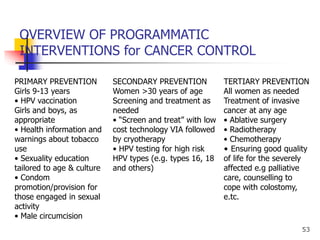
 PREVENTION
 SUMMARY
 CONCLUSION
 REFERENCES 2
INTRODUCTION
 Cervical cancer is the most common
gynecologic cancer in women globallly 1,2
 It ranks third among all malignancies for
women
 More common in the younger population of
women
 Until recently, ca cervix was linked with many
viral infections as the cause, e.g. CMV, HSV II
3
INTRODUCTION
 Human Papilloma Virus (HPV) is now
considered a sexually transmitted disease
with particular types being highly oncogenic
as cause of ca cervix
 More than 150 types of HPV have been
described 3
 Screening for HPV is very important in the
prevention and management of ca cervix
4
INTRODUCTION
 Screening is usually done with Pap smear
sampling and typically begins in young
adulthood
 Recently, highly specific HPV DNA tests have
been developed for the detection of HPV in
cervical /vaginal preparations e.g.
 Polymerase Chain Reaction tests
 Hybrid II Capture tests
5
INTRODUCTION
 Screening for precursor lesions of the cervix
has led to a marked reduction in cervical
cancer death rate by about 70%
 Other tests used in low resource settings
include
 Visual inspection with Lugol’s iodine (VILI)
 Visual inspection with acetic acid (VIA)
 Vaccines are currently available for prevention
6
EPIDEMIOLOGY
 Worldwide about 500,000 women acquire the
disease annually
 About 75-85% are from developing countries
 About 300,000 women die of the disease
annually
 Incidence has fallen considerably in Europe
and America due to
 Improved public health measures - the screening
procedures
 Lifestyle modification
 Pap smear screening 7
EPIDEMIOLOGY
 In Nigeria ca cervix ranks as the 2nd leading
cause of female cancer 7
 About 14,089 new cases are diagnosed
annually 7
 A 2012 study found the rate to be
17.1/100,000 women/year 7 (similar with
many other studies)
 About 8,240 cervical cancer deaths occur
annually in Nigeria (2nd leading cause of
cancer death in women) 7
8
AETIOLOGY
 The WHO in 1996 declared HPV as the major
cause of cancer of the cervix 2
 The WHO's International Agency for Research
on Cancer (IARC) has classified the HPV into
three groups 2
 carcinogenic (HPV types 16 and 18)
 probably carcinogenic (HPV types 31 and 33)
 possibly carcinogenic (other HPV types except 6
and 11)
9
AETIOLOGY
 The commonest strain is type 16, can be
retrieved in over 80% of ca cervix specimens
 Type 18 seen in a few cases and usually
affect the endocervical glands
 Other types involved in cervical changes
include but not limited to the following types:
 31, 33, 51, 53, 35 etc.
 In developing countries type 35 may be second to
type 16.
10
RISK FACTORS
 Lack of regular cervical screening
 High risk sexual behaviour
 Early coitarche (age at first coitus, <20yrs).
 Early marriage.
 Multiple child births (P2=2 fold, P7=4 fold)
 Frequent change of partners (promiscuity and
prostitution)
 Having a male partner with multiple sexual
partners
11
RISK FACTORS
 Family history
 Smoking (2-3x)
 Low socioeconomic status
 Long term COCP use (up to 4 fold)
 Low immunity
 Age :30-39 and 60-69 years, mean age=
51.4yrs
 Race – more in Africans
12
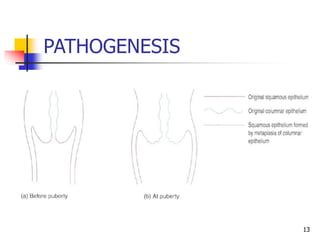
PATHOGENESIS
13
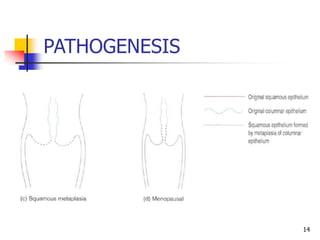
PATHOGENESIS
14
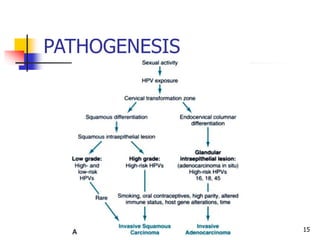
15
PATHOGENESIS
PATHOGENESIS
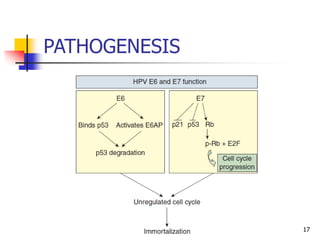
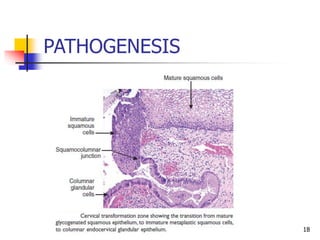
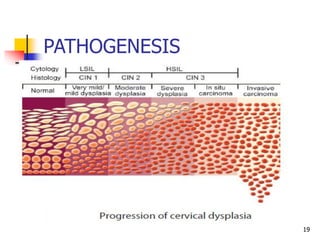
 Like most other DNA viruses, HPV uses host
cell DNA polymerases to replicate its genome
and produce virions
 Highly virulent HPV produces two viral
oncoproteins, E6 and E7.
 The proteins inhibit p53, P21 and RB,
respectively – three potent tumor suppressors
that act to suppress the division of squamous
cells as they mature.
16
PATHOGENESIS
17
PATHOGENESIS
18
PATHOGENESIS
19
PATHOGENESIS
20
PATHOGENESIS
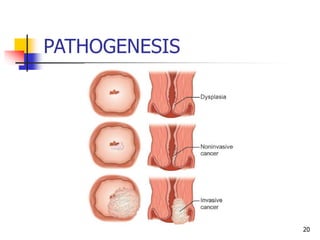
 Following tumorigenesis, the pattern of local
growth may be:
 Exophytic (cauliflower growth) - if a cancer arises
from the ectocervix,
 Endophytic (ulcerative growth) - if it arises from
the endocervical canal
 Tumour spread
 Direct extension
 Lymphatic
 Hematogenous (rare)
 Transceolomic 21
PATHOLOGY
 The main histological types of carcinoma of
the cervix are:
1. Squamous cell carcinoma (85- 90%).
 Large cell keratinising or non-keratinising
 Small cell
 Verrucous
2. Adeno-carcinoma (10- 15%)
 Typical endocervical
 Clear cell
 Endometroid
 Adenoid cystic (basaloid cylindroma)
 Adenoma malignum 22
PATHOLOGY
3. Mixed
 Adeno -squamous
 Glassy cell
4. Neuroendocrine
 Large cell neuroendocrine
 Small cell neuroendocrine
5. Other types
 lymphoma
 melanoma
 sarcoma
23
CLINICAL PRESENTATION
 May be asymptomatc or symptomatic
 Asymptomatic (early stages)
 discovered accidentally through screening
procedures or at Family Planning clinics
24
CLINICAL PRESENTATION
 Symptomatic
 Vaginal bleeding - irregular, intermenstrual, post-
coital, postmenopausal
 Vaginal discharge – copious, purulent, malodorous
 Cachexia
 Micturition symptoms – dysuria, frequency, urinary
incontinence from VVF
 Rectal symptoms – rectal pain
 Pedal oedema
 Pain – dyspareunia, low backache, deep pelvic
ache, sciatica. 25
DIFFERENTIAL DIAGNOSIS
 Ulcers of the cervix - tubercular and syphilitic
 Polyps - mucus, cervical, and fibroid polyps
 Endometrial carcinoma
26
GENERAL EXAMINATION
 Depending on the time of presentation.
 Early presentation - no specific findings
 Late presentation
 Anaemia
 Lymphadenopathy (inguinal, supraclavicular etc)
 Pedal oedema
 Ascites (rare)
27
PELVIC EXAMINATION
 Speculum vaginal examination – may reveal
lesions e.g.
 proliferative, cauliflower-like, vascular, friable
growth which bleed on touch
 ulcerative lesions with flat indurated areas
 Offensive vaginal smell
 Digital vaginal examination
 Feels firm with palpable nodules
 Bulky uterus due to pyometra
28
PELVIC EXAMINATION
 Rectal examination
 Nodules or masses, which indicate the possibility
of locally invasive disease
 Thickening and induration of uterosacral ligaments
 Parametrial nodularity
29
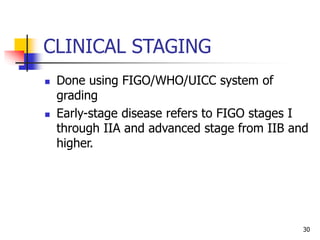
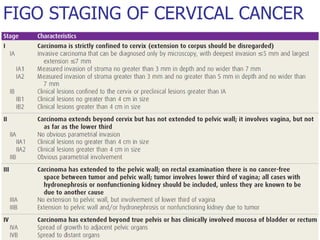
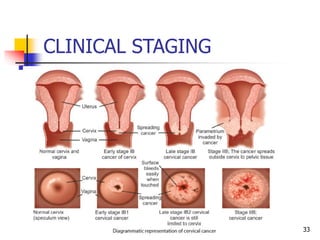
CLINICAL STAGING
 Done using FIGO/WHO/UICC system of
grading
 Early-stage disease refers to FIGO stages I
through IIA and advanced stage from IIB and
higher.
30
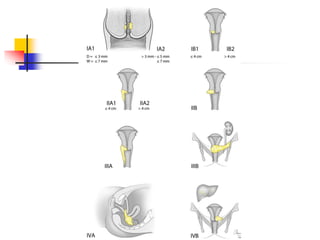
FIGO STAGING OF CERVICAL CANCER
CLINICAL STAGING
33
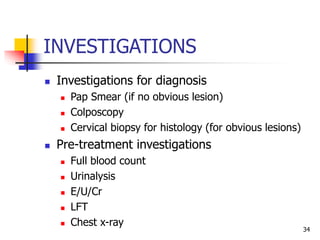
INVESTIGATIONS
 Investigations for diagnosis
 Pap Smear (if no obvious lesion)
 Colposcopy
 Cervical biopsy for histology (for obvious lesions)
 Pre-treatment investigations
 Full blood count
 Urinalysis
 E/U/Cr
 LFT
 Chest x-ray
34
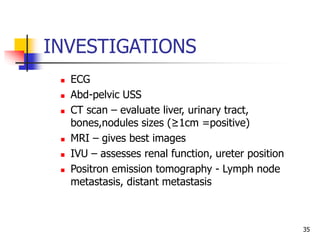
INVESTIGATIONS
 ECG
 Abd-pelvic USS
 CT scan – evaluate liver, urinary tract,
bones,nodules sizes (≥1cm =positive)
 MRI – gives best images
 IVU – assesses renal function, ureter position
 Positron emission tomography - Lymph node
metastasis, distant metastasis
35
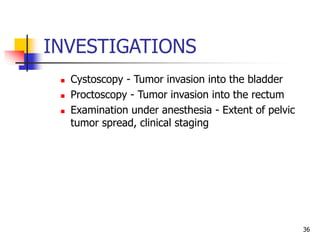
INVESTIGATIONS
 Cystoscopy - Tumor invasion into the bladder
 Proctoscopy - Tumor invasion into the rectum
 Examination under anesthesia - Extent of pelvic
tumor spread, clinical staging
36
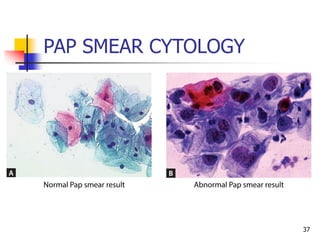
PAP SMEAR CYTOLOGY
37
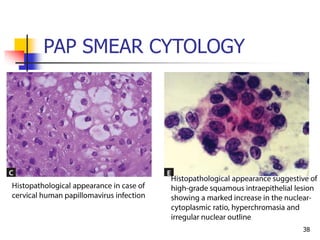
PAP SMEAR CYTOLOGY
38
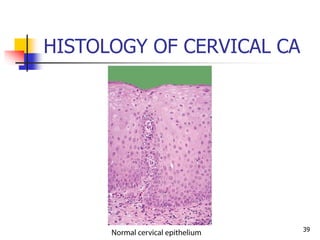
HISTOLOGY OF CERVICAL CA
39
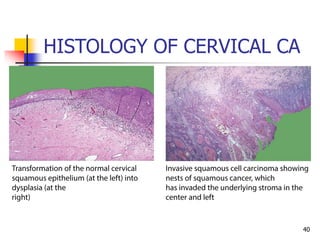
HISTOLOGY OF CERVICAL CA
40
HISTOLOGY OF CERVICAL CA
41
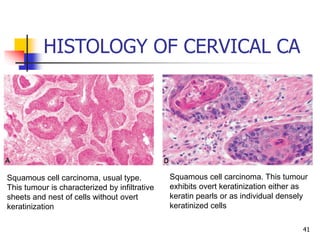
Squamous cell carcinoma, usual type.
This tumour is characterized by infiltrative
sheets and nest of cells without overt
keratinization
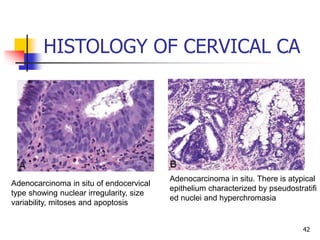
Squamous cell carcinoma. This tumour
exhibits overt keratinization either as
keratin pearls or as individual densely
keratinized cells
HISTOLOGY OF CERVICAL CA
42
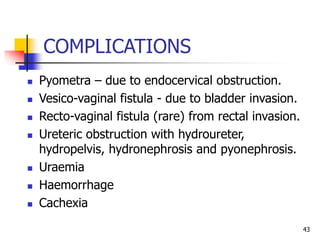
Adenocarcinoma in situ of endocervical
type showing nuclear irregularity, size
variability, mitoses and apoptosis
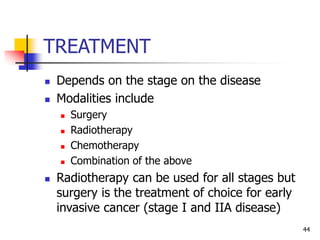
Adenocarcinoma in situ. There is atypical
epithelium characterized by pseudostratifi
ed nuclei and hyperchromasia
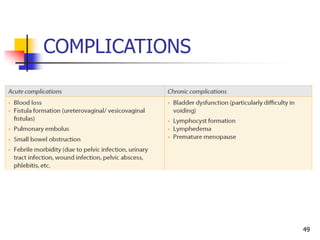
COMPLICATIONS
 Pyometra – due to endocervical obstruction.
 Vesico-vaginal fistula - due to bladder invasion.
 Recto-vaginal fistula (rare) from rectal invasion.
 Ureteric obstruction with hydroureter,
hydropelvis, hydronephrosis and pyonephrosis.
 Uraemia
 Haemorrhage
 Cachexia
43
TREATMENT
 Depends on the stage on the disease
 Modalities include
 Surgery
 Radiotherapy
 Chemotherapy
 Combination of the above
 Radiotherapy can be used for all stages but
surgery is the treatment of choice for early
invasive cancer (stage I and IIA disease)
44
TREATMENT
 In more advanced cases, radiation combined
with chemotherapy is the current standard of
care 6
 In patients with disseminated disease,
chemotherapy or radiation provides symptom
palliation.
 bleeding, pelvic pain and urinary or partial large
bowel obstructions resulting from pelvic disease
45
TREATMENT
 Adjuvant chemoradiation is used in patients
discovered to have high-risk cervical cancer
after radical hysterectomy and in patients
with locally advanced cervical cancer (Peter’s
criteria)
 Pathologically involved lymph nodes
 Microscopic parametrial invasion
 Positive surgical margins.
46
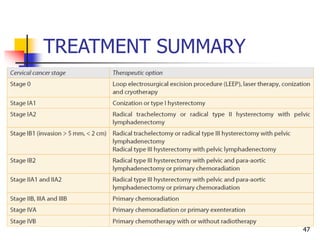
TREATMENT SUMMARY
47
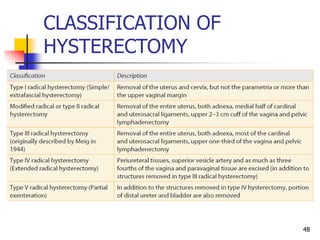
CLASSIFICATION OF
HYSTERECTOMY
48
COMPLICATIONS
49
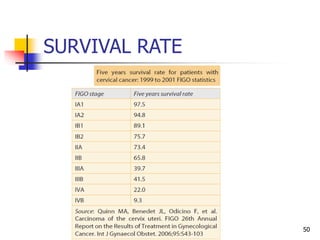
SURVIVAL RATE
50
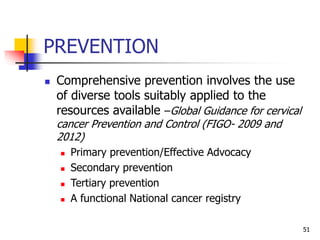
PREVENTION
 Comprehensive prevention involves the use
of diverse tools suitably applied to the
resources available –Global Guidance for cervical
cancer Prevention and Control (FIGO- 2009 and
2012)
 Primary prevention/Effective Advocacy
 Secondary prevention
 Tertiary prevention
 A functional National cancer registry
51
ADVOCACY: SOGON SUGGESTION FOR
NATIONAL CERVICAL SCREENING
PROGRAM
 All women aged 30-64 years should have
screening at least once in their life time
 Coverage should aim at 40% first year of
program, 60% coverage second year, 90% by the
fifth year, to make a sustainable impact on
cancer reduction and death
 Age at first test- 30 years or 2 years after the
first childbirth
 Screening interval 3-yearly
 High coverage is vital in the prevention strategy
and impacts on incidence reduction 52
53
PRIMARY PREVENTION
Girls 9-13 years
• HPV vaccination
Girls and boys, as
appropriate
• Health information and
warnings about tobacco
use
• Sexuality education
tailored to age & culture
• Condom
promotion/provision for
those engaged in sexual
activity
• Male circumcision
SECONDARY PREVENTION
Women >30 years of age
Screening and treatment as
needed
• “Screen and treat” with low
cost technology VIA followed
by cryotherapy
• HPV testing for high risk
HPV types (e.g. types 16, 18
and others)
TERTIARY PREVENTION
All women as needed
Treatment of invasive
cancer at any age
• Ablative surgery
• Radiotherapy
• Chemotherapy
• Ensuring good quality
of life for the severely
affected e.g palliative
care, counselling to
cope with colostomy,
e.tc.
OVERVIEW OF PROGRAMMATIC
INTERVENTIONS for CANCER CONTROL
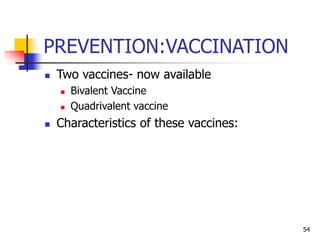
PREVENTION:VACCINATION
 Two vaccines- now available
 Bivalent Vaccine
 Quadrivalent vaccine
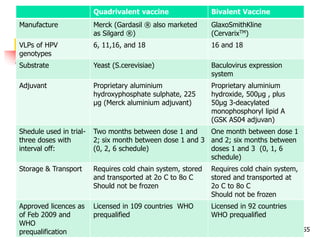
 Characteristics of these vaccines:
54
55
Quadrivalent vaccine Bivalent Vaccine
Manufacture Merck (Gardasil ® also marketed
as Silgard ®)
GlaxoSmithKline
(CervarixTM)
VLPs of HPV
genotypes
6, 11,16, and 18 16 and 18
Substrate Yeast (S.cerevisiae) Baculovirus expression
system
Adjuvant Proprietary aluminium
hydroxyphosphate sulphate, 225
μg (Merck aluminium adjuvant)
Proprietary aluminium
hydroxide, 500μg , plus
50μg 3-deacylated
monophosphoryl lipid A
(GSK AS04 adjuvan)
Shedule used in trial-
three doses with
interval off:
Two months between dose 1 and
2; six month between dose 1 and 3
(0, 2, 6 schedule)
One month between dose 1
and 2; six months between
doses 1 and 3 (0, 1, 6
schedule)
Storage & Transport Requires cold chain system, stored
and transported at 2o C to 8o C
Should not be frozen
Requires cold chain system,
stored and transported at
2o C to 8o C
Should not be frozen
Approved licences as
of Feb 2009 and
WHO
prequalification
Licensed in 109 countries WHO
prequalified
Licensed in 92 countries
WHO prequalified
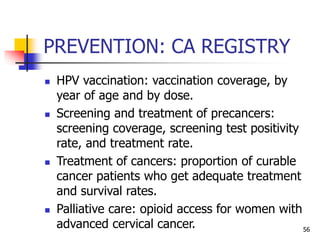
PREVENTION: CA REGISTRY
 HPV vaccination: vaccination coverage, by
year of age and by dose.
 Screening and treatment of precancers:
screening coverage, screening test positivity
rate, and treatment rate.
 Treatment of cancers: proportion of curable
cancer patients who get adequate treatment
and survival rates.
 Palliative care: opioid access for women with
advanced cervical cancer. 56
SUMMARY
 HPV is the major cause of ca cervix which is
established in the presence of other
favourable factors
 Pap smear among other tests are used for its
early detection.
 Presentation may be asymptomatic especially
in the early stages
 Treatment depends on the stage of the
diseases
 Survival can be very high when treated early57
CONCLUSION
Available evidences have shown that HPV plays a
vital role in the cause of cancer of the cervix and
recent researches have continued to make its
management possible. Therefore, personal lifestyle
modification, effective screening facilities coupled
with prompt and appropriate management with
favourable government policies will help to curb the
menace of the disease and thereby reduce its
morbidity and mortality
58
RESOURCES
1. Hoffman BL, Schorge JO, Bradshaw KD, Halvorson LM, Schaffer
JI, Corton MM. Williams gynecology. McGraw Hill Professional.
2016 Apr 22.
2. Kwawukume EY, Emuveyan EE. Comprehensive Obstetrics in
the Tropics 1st edition. Assante & Hittscher Printing Press Ltd.
2002
3. Ebughe GA, Ekanem IA, Omoronyia OE, Omotoso AJ, Ago BU,
Agan TU, Ugbem TI. Incidence of Cervical Cancer in Calabar,
Nigeria.
4. Campbell S, Monga A, editors. Gynaecology by ten teachers.
London: Arnold; 2000 Sep 20.
5. Kumar V, Abbas AK, Fausto NR, Aster JR. Cotran. Pathological
basis of diseases. 7th edition: Elsevier Singapore. 2006;289.
59
RESOURCES
6. Kumar V, Abbas AK, Aster JC. Robbins Basic Pathology E-Book.
Elsevier Health Sciences. 2017 Mar 8.
7. Saxena R. Bedside Obstetrics & Gynecology. JP Medical Ltd;
2014 Mar 20.
8. Bruni L, Barrionuevo-Rosas L, Albero G, Serrano B, Mena M,
Gómez D, Muñoz J, Bosch FX, de Sanjosé S. ICO/IARC
Information Centre on HPV and Cancer (HPV Information
Centre). Human Papillomavirus and Related Diseases in
Nigeria. Summary Report 27 July 2017. [Accessed 20th April,
2018]
9. Etedafe PG. Cervical cancer: Advances in prevention.
Presentation for Part one update course in Obstetrics and
Gynaecology. 2014.
60
61
THANK YOU
FOR LISTENING

Cervical cancer

  • 1.
    1 CERVICAL CANCER BY DR. AYODELE,NOSRULLAH S FMC, BIRNIN KEBBI
  • 2.
    OUTLINE  INTRODUCTION  EPIDEMIOLOGY AETIOLOGY  PATHOGENESIS  CLINICAL PRESENTATION  INVESTIGATIONS  COMPLICATIONS  TREATMENT  PREVENTION  SUMMARY  CONCLUSION  REFERENCES 2
  • 3.
    INTRODUCTION  Cervical canceris the most common gynecologic cancer in women globallly 1,2  It ranks third among all malignancies for women  More common in the younger population of women  Until recently, ca cervix was linked with many viral infections as the cause, e.g. CMV, HSV II 3
  • 4.
    INTRODUCTION  Human PapillomaVirus (HPV) is now considered a sexually transmitted disease with particular types being highly oncogenic as cause of ca cervix  More than 150 types of HPV have been described 3  Screening for HPV is very important in the prevention and management of ca cervix 4
  • 5.
    INTRODUCTION  Screening isusually done with Pap smear sampling and typically begins in young adulthood  Recently, highly specific HPV DNA tests have been developed for the detection of HPV in cervical /vaginal preparations e.g.  Polymerase Chain Reaction tests  Hybrid II Capture tests 5
  • 6.
    INTRODUCTION  Screening forprecursor lesions of the cervix has led to a marked reduction in cervical cancer death rate by about 70%  Other tests used in low resource settings include  Visual inspection with Lugol’s iodine (VILI)  Visual inspection with acetic acid (VIA)  Vaccines are currently available for prevention 6
  • 7.
    EPIDEMIOLOGY  Worldwide about500,000 women acquire the disease annually  About 75-85% are from developing countries  About 300,000 women die of the disease annually  Incidence has fallen considerably in Europe and America due to  Improved public health measures - the screening procedures  Lifestyle modification  Pap smear screening 7
  • 8.
    EPIDEMIOLOGY  In Nigeriaca cervix ranks as the 2nd leading cause of female cancer 7  About 14,089 new cases are diagnosed annually 7  A 2012 study found the rate to be 17.1/100,000 women/year 7 (similar with many other studies)  About 8,240 cervical cancer deaths occur annually in Nigeria (2nd leading cause of cancer death in women) 7 8
  • 9.
    AETIOLOGY  The WHOin 1996 declared HPV as the major cause of cancer of the cervix 2  The WHO's International Agency for Research on Cancer (IARC) has classified the HPV into three groups 2  carcinogenic (HPV types 16 and 18)  probably carcinogenic (HPV types 31 and 33)  possibly carcinogenic (other HPV types except 6 and 11) 9
  • 10.
    AETIOLOGY  The commoneststrain is type 16, can be retrieved in over 80% of ca cervix specimens  Type 18 seen in a few cases and usually affect the endocervical glands  Other types involved in cervical changes include but not limited to the following types:  31, 33, 51, 53, 35 etc.  In developing countries type 35 may be second to type 16. 10
  • 11.
    RISK FACTORS  Lackof regular cervical screening  High risk sexual behaviour  Early coitarche (age at first coitus, <20yrs).  Early marriage.  Multiple child births (P2=2 fold, P7=4 fold)  Frequent change of partners (promiscuity and prostitution)  Having a male partner with multiple sexual partners 11
  • 12.
    RISK FACTORS  Familyhistory  Smoking (2-3x)  Low socioeconomic status  Long term COCP use (up to 4 fold)  Low immunity  Age :30-39 and 60-69 years, mean age= 51.4yrs  Race – more in Africans 12
  • 13.
  • 14.
  • 15.
  • 16.
    PATHOGENESIS  Like mostother DNA viruses, HPV uses host cell DNA polymerases to replicate its genome and produce virions  Highly virulent HPV produces two viral oncoproteins, E6 and E7.  The proteins inhibit p53, P21 and RB, respectively – three potent tumor suppressors that act to suppress the division of squamous cells as they mature. 16
  • 17.
  • 18.
  • 19.
  • 20.
  • 21.
    PATHOGENESIS  Following tumorigenesis,the pattern of local growth may be:  Exophytic (cauliflower growth) - if a cancer arises from the ectocervix,  Endophytic (ulcerative growth) - if it arises from the endocervical canal  Tumour spread  Direct extension  Lymphatic  Hematogenous (rare)  Transceolomic 21
  • 22.
    PATHOLOGY  The mainhistological types of carcinoma of the cervix are: 1. Squamous cell carcinoma (85- 90%).  Large cell keratinising or non-keratinising  Small cell  Verrucous 2. Adeno-carcinoma (10- 15%)  Typical endocervical  Clear cell  Endometroid  Adenoid cystic (basaloid cylindroma)  Adenoma malignum 22
  • 23.
    PATHOLOGY 3. Mixed  Adeno-squamous  Glassy cell 4. Neuroendocrine  Large cell neuroendocrine  Small cell neuroendocrine 5. Other types  lymphoma  melanoma  sarcoma 23
  • 24.
    CLINICAL PRESENTATION  Maybe asymptomatc or symptomatic  Asymptomatic (early stages)  discovered accidentally through screening procedures or at Family Planning clinics 24
  • 25.
    CLINICAL PRESENTATION  Symptomatic Vaginal bleeding - irregular, intermenstrual, post- coital, postmenopausal  Vaginal discharge – copious, purulent, malodorous  Cachexia  Micturition symptoms – dysuria, frequency, urinary incontinence from VVF  Rectal symptoms – rectal pain  Pedal oedema  Pain – dyspareunia, low backache, deep pelvic ache, sciatica. 25
  • 26.
    DIFFERENTIAL DIAGNOSIS  Ulcersof the cervix - tubercular and syphilitic  Polyps - mucus, cervical, and fibroid polyps  Endometrial carcinoma 26
  • 27.
    GENERAL EXAMINATION  Dependingon the time of presentation.  Early presentation - no specific findings  Late presentation  Anaemia  Lymphadenopathy (inguinal, supraclavicular etc)  Pedal oedema  Ascites (rare) 27
  • 28.
    PELVIC EXAMINATION  Speculumvaginal examination – may reveal lesions e.g.  proliferative, cauliflower-like, vascular, friable growth which bleed on touch  ulcerative lesions with flat indurated areas  Offensive vaginal smell  Digital vaginal examination  Feels firm with palpable nodules  Bulky uterus due to pyometra 28
  • 29.
    PELVIC EXAMINATION  Rectalexamination  Nodules or masses, which indicate the possibility of locally invasive disease  Thickening and induration of uterosacral ligaments  Parametrial nodularity 29
  • 30.
    CLINICAL STAGING  Doneusing FIGO/WHO/UICC system of grading  Early-stage disease refers to FIGO stages I through IIA and advanced stage from IIB and higher. 30
  • 31.
    FIGO STAGING OFCERVICAL CANCER
  • 33.
  • 34.
    INVESTIGATIONS  Investigations fordiagnosis  Pap Smear (if no obvious lesion)  Colposcopy  Cervical biopsy for histology (for obvious lesions)  Pre-treatment investigations  Full blood count  Urinalysis  E/U/Cr  LFT  Chest x-ray 34
  • 35.
    INVESTIGATIONS  ECG  Abd-pelvicUSS  CT scan – evaluate liver, urinary tract, bones,nodules sizes (≥1cm =positive)  MRI – gives best images  IVU – assesses renal function, ureter position  Positron emission tomography - Lymph node metastasis, distant metastasis 35
  • 36.
    INVESTIGATIONS  Cystoscopy -Tumor invasion into the bladder  Proctoscopy - Tumor invasion into the rectum  Examination under anesthesia - Extent of pelvic tumor spread, clinical staging 36
  • 37.
  • 38.
  • 39.
  • 40.
  • 41.
    HISTOLOGY OF CERVICALCA 41 Squamous cell carcinoma, usual type. This tumour is characterized by infiltrative sheets and nest of cells without overt keratinization Squamous cell carcinoma. This tumour exhibits overt keratinization either as keratin pearls or as individual densely keratinized cells
  • 42.
    HISTOLOGY OF CERVICALCA 42 Adenocarcinoma in situ of endocervical type showing nuclear irregularity, size variability, mitoses and apoptosis Adenocarcinoma in situ. There is atypical epithelium characterized by pseudostratifi ed nuclei and hyperchromasia
  • 43.
    COMPLICATIONS  Pyometra –due to endocervical obstruction.  Vesico-vaginal fistula - due to bladder invasion.  Recto-vaginal fistula (rare) from rectal invasion.  Ureteric obstruction with hydroureter, hydropelvis, hydronephrosis and pyonephrosis.  Uraemia  Haemorrhage  Cachexia 43
  • 44.
    TREATMENT  Depends onthe stage on the disease  Modalities include  Surgery  Radiotherapy  Chemotherapy  Combination of the above  Radiotherapy can be used for all stages but surgery is the treatment of choice for early invasive cancer (stage I and IIA disease) 44
  • 45.
    TREATMENT  In moreadvanced cases, radiation combined with chemotherapy is the current standard of care 6  In patients with disseminated disease, chemotherapy or radiation provides symptom palliation.  bleeding, pelvic pain and urinary or partial large bowel obstructions resulting from pelvic disease 45
  • 46.
    TREATMENT  Adjuvant chemoradiationis used in patients discovered to have high-risk cervical cancer after radical hysterectomy and in patients with locally advanced cervical cancer (Peter’s criteria)  Pathologically involved lymph nodes  Microscopic parametrial invasion  Positive surgical margins. 46
  • 47.
  • 48.
  • 49.
  • 50.
  • 51.
    PREVENTION  Comprehensive preventioninvolves the use of diverse tools suitably applied to the resources available –Global Guidance for cervical cancer Prevention and Control (FIGO- 2009 and 2012)  Primary prevention/Effective Advocacy  Secondary prevention  Tertiary prevention  A functional National cancer registry 51
  • 52.
    ADVOCACY: SOGON SUGGESTIONFOR NATIONAL CERVICAL SCREENING PROGRAM  All women aged 30-64 years should have screening at least once in their life time  Coverage should aim at 40% first year of program, 60% coverage second year, 90% by the fifth year, to make a sustainable impact on cancer reduction and death  Age at first test- 30 years or 2 years after the first childbirth  Screening interval 3-yearly  High coverage is vital in the prevention strategy and impacts on incidence reduction 52
  • 53.
    53 PRIMARY PREVENTION Girls 9-13years • HPV vaccination Girls and boys, as appropriate • Health information and warnings about tobacco use • Sexuality education tailored to age & culture • Condom promotion/provision for those engaged in sexual activity • Male circumcision SECONDARY PREVENTION Women >30 years of age Screening and treatment as needed • “Screen and treat” with low cost technology VIA followed by cryotherapy • HPV testing for high risk HPV types (e.g. types 16, 18 and others) TERTIARY PREVENTION All women as needed Treatment of invasive cancer at any age • Ablative surgery • Radiotherapy • Chemotherapy • Ensuring good quality of life for the severely affected e.g palliative care, counselling to cope with colostomy, e.tc. OVERVIEW OF PROGRAMMATIC INTERVENTIONS for CANCER CONTROL
  • 54.
    PREVENTION:VACCINATION  Two vaccines-now available  Bivalent Vaccine  Quadrivalent vaccine  Characteristics of these vaccines: 54
  • 55.
    55 Quadrivalent vaccine BivalentVaccine Manufacture Merck (Gardasil ® also marketed as Silgard ®) GlaxoSmithKline (CervarixTM) VLPs of HPV genotypes 6, 11,16, and 18 16 and 18 Substrate Yeast (S.cerevisiae) Baculovirus expression system Adjuvant Proprietary aluminium hydroxyphosphate sulphate, 225 μg (Merck aluminium adjuvant) Proprietary aluminium hydroxide, 500μg , plus 50μg 3-deacylated monophosphoryl lipid A (GSK AS04 adjuvan) Shedule used in trial- three doses with interval off: Two months between dose 1 and 2; six month between dose 1 and 3 (0, 2, 6 schedule) One month between dose 1 and 2; six months between doses 1 and 3 (0, 1, 6 schedule) Storage & Transport Requires cold chain system, stored and transported at 2o C to 8o C Should not be frozen Requires cold chain system, stored and transported at 2o C to 8o C Should not be frozen Approved licences as of Feb 2009 and WHO prequalification Licensed in 109 countries WHO prequalified Licensed in 92 countries WHO prequalified
  • 56.
    PREVENTION: CA REGISTRY HPV vaccination: vaccination coverage, by year of age and by dose.  Screening and treatment of precancers: screening coverage, screening test positivity rate, and treatment rate.  Treatment of cancers: proportion of curable cancer patients who get adequate treatment and survival rates.  Palliative care: opioid access for women with advanced cervical cancer. 56
  • 57.
    SUMMARY  HPV isthe major cause of ca cervix which is established in the presence of other favourable factors  Pap smear among other tests are used for its early detection.  Presentation may be asymptomatic especially in the early stages  Treatment depends on the stage of the diseases  Survival can be very high when treated early57
  • 58.
    CONCLUSION Available evidences haveshown that HPV plays a vital role in the cause of cancer of the cervix and recent researches have continued to make its management possible. Therefore, personal lifestyle modification, effective screening facilities coupled with prompt and appropriate management with favourable government policies will help to curb the menace of the disease and thereby reduce its morbidity and mortality 58
  • 59.
    RESOURCES 1. Hoffman BL,Schorge JO, Bradshaw KD, Halvorson LM, Schaffer JI, Corton MM. Williams gynecology. McGraw Hill Professional. 2016 Apr 22. 2. Kwawukume EY, Emuveyan EE. Comprehensive Obstetrics in the Tropics 1st edition. Assante & Hittscher Printing Press Ltd. 2002 3. Ebughe GA, Ekanem IA, Omoronyia OE, Omotoso AJ, Ago BU, Agan TU, Ugbem TI. Incidence of Cervical Cancer in Calabar, Nigeria. 4. Campbell S, Monga A, editors. Gynaecology by ten teachers. London: Arnold; 2000 Sep 20. 5. Kumar V, Abbas AK, Fausto NR, Aster JR. Cotran. Pathological basis of diseases. 7th edition: Elsevier Singapore. 2006;289. 59
  • 60.
    RESOURCES 6. Kumar V,Abbas AK, Aster JC. Robbins Basic Pathology E-Book. Elsevier Health Sciences. 2017 Mar 8. 7. Saxena R. Bedside Obstetrics & Gynecology. JP Medical Ltd; 2014 Mar 20. 8. Bruni L, Barrionuevo-Rosas L, Albero G, Serrano B, Mena M, Gómez D, Muñoz J, Bosch FX, de Sanjosé S. ICO/IARC Information Centre on HPV and Cancer (HPV Information Centre). Human Papillomavirus and Related Diseases in Nigeria. Summary Report 27 July 2017. [Accessed 20th April, 2018] 9. Etedafe PG. Cervical cancer: Advances in prevention. Presentation for Part one update course in Obstetrics and Gynaecology. 2014. 60
  • 61.