Downloaded 293 times
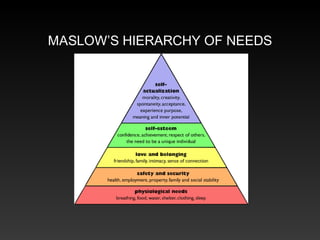
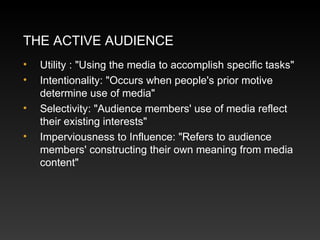
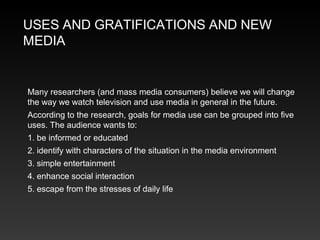

Uses and gratifications theory posits that audiences actively seek out specific media to satisfy needs and motives. It focuses on why and how people use media rather than how media affects people. The theory assumes audiences are goal-oriented, proactively choose media, and can provide accurate insights into their own media use. Early studies identified motives like emotional gratification and wishful thinking. Later work organized motives into categories like diversion, social interaction, identity, and surveillance. The theory holds that social contexts shape audiences' needs and media use. It also argues people construct their own meanings from media rather than being passively influenced.


