URINARY DIVERSION
Urinary diversion
Overview
Urinary diversion procedures are performed to divert
urine from the bladder to a new exit site, usually
through a surgically created opening (stoma) in the
skin.
These procedures are primarily performed when a
bladder tumor necessitates removal of the entire
bladder (cystectomy).
Urinary diversion has also been used in managing pelvic
malignancy, birth defects, strictures, trauma to ureters
and urethra, neurogenic bladder, chronic infection
causing severe ureteral and renal damage, and intractable
interstitial cystitis and as a last resort in managing
incontinence.
Indications of urinary diversion
1. Cancer or tumor of the urinary bladder, less frequently,
a benign condition
2. Management of pelvic malignancy
3. Birth defects
4. Strictures
5. Trauma to the ureters and urethra
6. Neurogenic bladder
7. Chronic inflammatory conditions causing severe
ureteral and renal damage
Complication of urinary diversion
• Numerous surgical procedures have been developed
for urinary diversion.
• All types of procedures have variety of complications
because urinary diversion procedures are complex,
early and late post- surgical complications frequently
occur.
Possible complications including...
1. Alterations in bowel motility
2.Anastomotic leaks
3. Fluid collections ( abscess, urinoma,lymphocele
and hematoma)
4.Fistulas
5.Peristomal herniation
6.Ureteral strictures
7.Renal calculi and tumor reoccurrence
Types of urinary diversion
• There are two categories of urinary diversion:
1. Cutaneous urinary diversion : in which urine
drains through an opening created in the abdominal
wall and skin.
2. Continent urinary diversion : in which a portion
of the intestine is used to create a new reservoir for
urine.
Types of urinary diversion
1. CUTANEOUSURINARY DIVERSION
A) ileal conduit (ileal loop)
B) Cutaneous ureterostomy
2. CONTINENTURINARY DIVERSION
A) Continent ileal urinary diversion ( Formerly
know as “ Indiana pouch)
B) Ureterosigmoidostomy
Cutaneous urinary diversion
1. ileal conduit ( ileal loop)
• This method of urinary diversion is the oldest and
most common of the UD because of the low number
of complications and surgeon’s familiarity with the
procedure.
• in an ileal conduit, the urine is diverted by
implanting, the ureters into a 12-cm loop of ileum
that is led out through the abdominal wall.
ileal conduit ( ileal loop)
• Stents, usually made of thin pliable tubing, are
placed in the ureters to prevent occlusion secondary
to post-surgical edema.
• The bilateral ureteral stents allow urine to drain
from the kidney to the stoma and provide a method
for accurate monitoring of urine output.
• After surgical procedure, a skin barrier and a
transparent, disposable urinary drainage bag are
applied around the conduit and connected to
drainage.
• The clear bag allows the stoma to be inspected and
the patency of the stent and urine output to be
monitored.
Common complications
Wound infection or wound dehiscence
Urinary leakage
Ureteral obstruction or blockage
Hyperchloremic acidosis
Small intestine obstruction
Gangrene of the stoma
Renal calculi and pyelonephritis
Renal deterioration due to chronic reflux
Nursing management
• Throughout the patient’s hospitalization, the nurse
monitors closely for complications, reports signs and
symptoms of them promptly, and intervenes quickly to
prevent their progression.
• The nursing management including in the post
operative period monitor urine out put ever hour.
• Monitor closely for complications.
• Practice hand hygiene and aseptic technique during
care of the patient.
• Providing stoma and skin care
• Testing urine and caring for the ostomy
• Encouraging fluids an reliving anxiety
• Prevention of infection and complications
• Patient teaching
Cutaneous ureterostomy
• A cutaneous ureterostomy in which the ureters are
directed through the abdominal wall and attached
to an opening in the skin, is used for selected
patients with ureteral obstruction.
• Because it requires less extensive surgery than
other types of urinary diversion.
• CONTINENTURINARY
DIVERSION
Continent ileal urinary reservoir (
Indiana pouch)
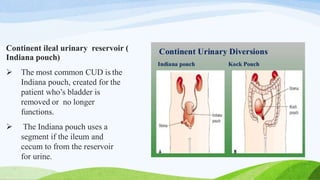
 The most common CUD is the
Indiana pouch, created for the
patient who’s bladder is
removed or no longer
functions.
 The Indiana pouch uses a
segment if the ileum and
cecum to from the reservoir
for urine.
What is temporary urinary diversion?
• Temporary urinary diversion reroutes the
flow of urine for several days or weeks.
• Temporary urinary diversions drain urine
until the cause of blockage is treated or
after urinary tract surgery.
• This type of urinary diversion includes a
nephrostomy and urinary catheterization.
What is permanent urinary diversion?
• Permanent urinary diversion requires
surgery to reroute urine flow to an
external pouch through an opening in
the wall of the abdomen, called a stoma,
or to a surgically created internal
reservoir.

Urinary diversion

  • 1.
  • 2.
  • 3.
    Overview Urinary diversion proceduresare performed to divert urine from the bladder to a new exit site, usually through a surgically created opening (stoma) in the skin. These procedures are primarily performed when a bladder tumor necessitates removal of the entire bladder (cystectomy).
  • 4.
    Urinary diversion hasalso been used in managing pelvic malignancy, birth defects, strictures, trauma to ureters and urethra, neurogenic bladder, chronic infection causing severe ureteral and renal damage, and intractable interstitial cystitis and as a last resort in managing incontinence.
  • 5.
    Indications of urinarydiversion 1. Cancer or tumor of the urinary bladder, less frequently, a benign condition 2. Management of pelvic malignancy 3. Birth defects 4. Strictures 5. Trauma to the ureters and urethra 6. Neurogenic bladder 7. Chronic inflammatory conditions causing severe ureteral and renal damage
  • 6.
    Complication of urinarydiversion • Numerous surgical procedures have been developed for urinary diversion. • All types of procedures have variety of complications because urinary diversion procedures are complex, early and late post- surgical complications frequently occur.
  • 7.
    Possible complications including... 1.Alterations in bowel motility 2.Anastomotic leaks 3. Fluid collections ( abscess, urinoma,lymphocele and hematoma) 4.Fistulas 5.Peristomal herniation 6.Ureteral strictures 7.Renal calculi and tumor reoccurrence
  • 8.
    Types of urinarydiversion • There are two categories of urinary diversion: 1. Cutaneous urinary diversion : in which urine drains through an opening created in the abdominal wall and skin. 2. Continent urinary diversion : in which a portion of the intestine is used to create a new reservoir for urine.
  • 9.
    Types of urinarydiversion 1. CUTANEOUSURINARY DIVERSION A) ileal conduit (ileal loop) B) Cutaneous ureterostomy 2. CONTINENTURINARY DIVERSION A) Continent ileal urinary diversion ( Formerly know as “ Indiana pouch) B) Ureterosigmoidostomy
  • 10.
    Cutaneous urinary diversion 1.ileal conduit ( ileal loop) • This method of urinary diversion is the oldest and most common of the UD because of the low number of complications and surgeon’s familiarity with the procedure. • in an ileal conduit, the urine is diverted by implanting, the ureters into a 12-cm loop of ileum that is led out through the abdominal wall.
  • 11.
    ileal conduit (ileal loop) • Stents, usually made of thin pliable tubing, are placed in the ureters to prevent occlusion secondary to post-surgical edema. • The bilateral ureteral stents allow urine to drain from the kidney to the stoma and provide a method for accurate monitoring of urine output.
  • 12.
    • After surgicalprocedure, a skin barrier and a transparent, disposable urinary drainage bag are applied around the conduit and connected to drainage. • The clear bag allows the stoma to be inspected and the patency of the stent and urine output to be monitored.
  • 13.
    Common complications Wound infectionor wound dehiscence Urinary leakage Ureteral obstruction or blockage Hyperchloremic acidosis Small intestine obstruction Gangrene of the stoma Renal calculi and pyelonephritis Renal deterioration due to chronic reflux
  • 14.
    Nursing management • Throughoutthe patient’s hospitalization, the nurse monitors closely for complications, reports signs and symptoms of them promptly, and intervenes quickly to prevent their progression. • The nursing management including in the post operative period monitor urine out put ever hour. • Monitor closely for complications. • Practice hand hygiene and aseptic technique during care of the patient.
  • 15.
    • Providing stomaand skin care • Testing urine and caring for the ostomy • Encouraging fluids an reliving anxiety • Prevention of infection and complications • Patient teaching
  • 16.
    Cutaneous ureterostomy • Acutaneous ureterostomy in which the ureters are directed through the abdominal wall and attached to an opening in the skin, is used for selected patients with ureteral obstruction. • Because it requires less extensive surgery than other types of urinary diversion.
  • 17.
  • 18.
    Continent ileal urinaryreservoir ( Indiana pouch)  The most common CUD is the Indiana pouch, created for the patient who’s bladder is removed or no longer functions.  The Indiana pouch uses a segment if the ileum and cecum to from the reservoir for urine.
  • 19.
    What is temporaryurinary diversion? • Temporary urinary diversion reroutes the flow of urine for several days or weeks. • Temporary urinary diversions drain urine until the cause of blockage is treated or after urinary tract surgery. • This type of urinary diversion includes a nephrostomy and urinary catheterization.
  • 20.
    What is permanenturinary diversion? • Permanent urinary diversion requires surgery to reroute urine flow to an external pouch through an opening in the wall of the abdomen, called a stoma, or to a surgically created internal reservoir.