GEETA JOSHI
STATE COLLEGE OF
NURSING
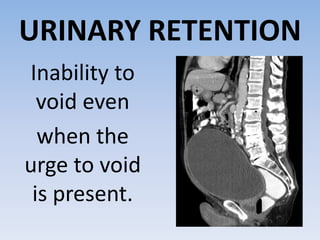
URINARY RETENTION
Inability to
void even
when the
urge to void
is present.
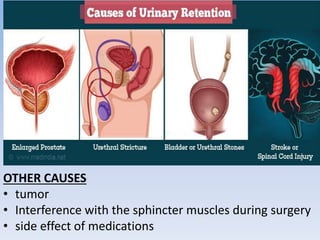
CAUSES OF RETENTION
OTHER CAUSES
• tumor
• Interference with the sphincter muscles during surgery
• side effect of medications
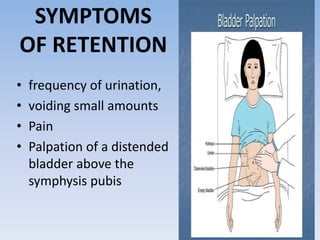
SYMPTOMS
OF RETENTION
• frequency of urination,
• voiding small amounts
• Pain
• Palpation of a distended
bladder above the
symphysis pubis
DIAGNOSIS
• check for residual urine-
1.bladder scan (The bladder scan uses ultrasound
waves to identify the amount of urine remaining in
the bladder. This method is preferred because it is
noninvasive, decreasing the risk of urinary tract
infection (UTI).)
2. inserting an intermittent straight catheter (can also
be used to empty the bladder of the remaining urine
increases the client’s chance of contracting a UTI.)
The amount of urine left in the bladder, residual
urine, should be less than 50 mL.
TREATMENT
• analgesics -to help the client relax.
• Cholinergic medications - to promote
contraction of the bladder muscle, which
promotes bladder emptying.
• Antispasmodic medications - encourage
relaxation of the bladder muscle
consequently decreasing the urge to void.
• urinary catheter may be used to empty
the bladder
• surgery may be performed to remove any
obstruction (stones, strictures, tumors,
etc.).
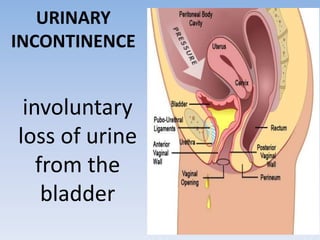
URINARY
INCONTINENCE
involuntary
loss of urine
from the
bladder
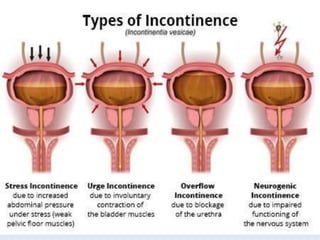
TYPES
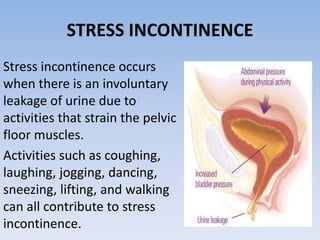
STRESS INCONTINENCE
Stress incontinence occurs
when there is an involuntary
leakage of urine due to
activities that strain the pelvic
floor muscles.
Activities such as coughing,
laughing, jogging, dancing,
sneezing, lifting, and walking
can all contribute to stress
incontinence.
MANAGEMENT
OF STRESS
INCONTINENCE
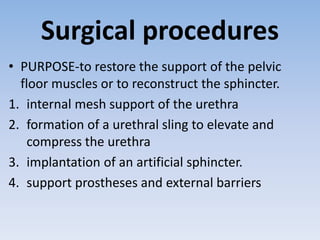
Surgical procedures
• PURPOSE-to restore the support of the pelvic
floor muscles or to reconstruct the sphincter.
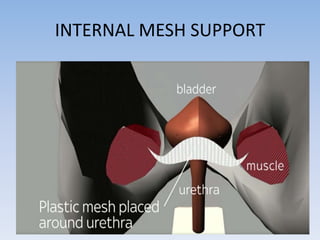
1. internal mesh support of the urethra
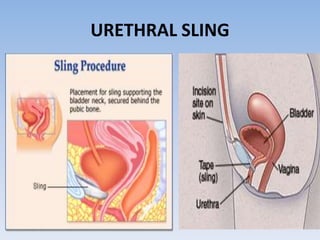
2. formation of a urethral sling to elevate and
compress the urethra
3. implantation of an artificial sphincter.
4. support prostheses and external barriers
URETHRAL SLING
INTERNAL MESH SUPPORT
ARTIFICIAL URETHRAL SPHICTER
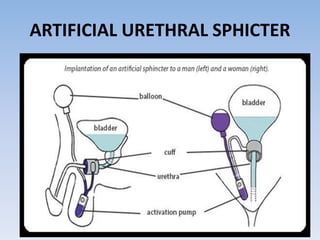
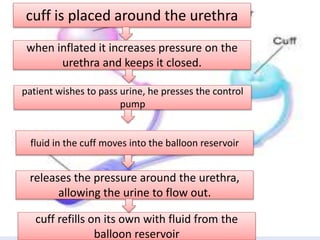
cuff is placed around the urethra
when inflated it increases pressure on the
urethra and keeps it closed.
patient wishes to pass urine, he presses the control
pump
fluid in the cuff moves into the balloon reservoir
releases the pressure around the urethra,
allowing the urine to flow out.
cuff refills on its own with fluid from the
balloon reservoir
Pelvic floor exercises (Kegel exercises)
PURPOSE- to strengthen the muscles,
thereby preventing or minimizing stress
incontinence.
BLADDER RETRAINING
Bladder retraining begins with-
• assessing the client’s ability to recognize
the urge to void
• completion of a 3-day voiding pattern
history.
Once a voiding pattern has been
established, encourage the client to void
30 minutes before the projected time of
incontinence.
URGE INCONTINENCE
• occurs when a person is unable to suppress
the sudden urge or need to urinate.
• The bladder muscles send strong signals to the
brain indicating that it is time to void
regardless of the amount of urine in the
bladder.
• The client is unable to control the strong
signals and consequently leaks urine without
any warning.
CAUSES OF URGE INCONTINENCE
• irritated bladder
• urinary tract infections
• Neurologic dysfunction
• Uninhibited detrusor
contraction
TREATMENT OF URGE INCONTNENCE
• Anticholinergic medications- to relax the
smooth muscle and increase bladder capacity.
• Treatment of infection
• Increasing fluid intake- to prevent infection
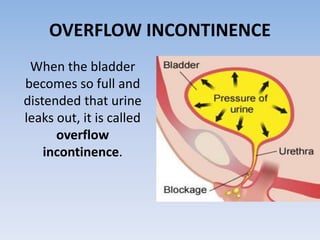
OVERFLOW INCONTINENCE
When the bladder
becomes so full and
distended that urine
leaks out, it is called
overflow
incontinence.
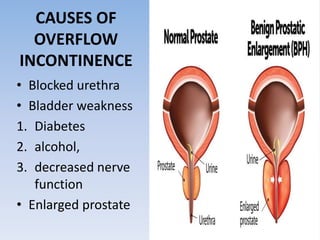
CAUSES OF
OVERFLOW
INCONTINENCE
• Blocked urethra
• Bladder weakness
1. Diabetes
2. alcohol,
3. decreased nerve
function
• Enlarged prostate
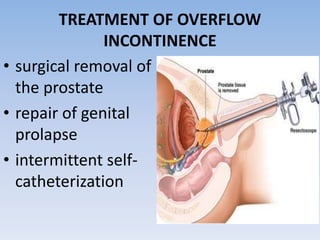
TREATMENT OF OVERFLOW
INCONTINENCE
• surgical removal of
the prostate
• repair of genital
prolapse
• intermittent self-
catheterization
FUNCTIONAL INCONTINENCE
Functional incontinence occurs
as a result of cognitive,
neurological, and behavioral
malfunctions.
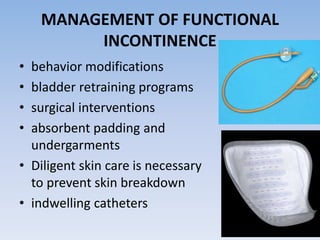
MANAGEMENT OF FUNCTIONAL
INCONTINENCE
• behavior modifications
• bladder retraining programs
• surgical interventions
• absorbent padding and
undergarments
• Diligent skin care is necessary
to prevent skin breakdown
• indwelling catheters
NOCTURNAL ENURESIS
• Incontinence that occurs during sleep is called
nocturnal enuresis.
• Limiting fluid intake after 6 p.m. helps the
client remain continent during the night.
• The total fluid intake for 24 hours, however,
should remain the same.
• The bladder should be emptied immediately
before going to bed.
Urinary retention and incontinence

Urinary retention and incontinence

  • 1.
  • 2.
    URINARY RETENTION Inability to voideven when the urge to void is present.
  • 3.
    CAUSES OF RETENTION OTHERCAUSES • tumor • Interference with the sphincter muscles during surgery • side effect of medications
  • 4.
    SYMPTOMS OF RETENTION • frequencyof urination, • voiding small amounts • Pain • Palpation of a distended bladder above the symphysis pubis
  • 5.
    DIAGNOSIS • check forresidual urine- 1.bladder scan (The bladder scan uses ultrasound waves to identify the amount of urine remaining in the bladder. This method is preferred because it is noninvasive, decreasing the risk of urinary tract infection (UTI).) 2. inserting an intermittent straight catheter (can also be used to empty the bladder of the remaining urine increases the client’s chance of contracting a UTI.) The amount of urine left in the bladder, residual urine, should be less than 50 mL.
  • 6.
    TREATMENT • analgesics -tohelp the client relax. • Cholinergic medications - to promote contraction of the bladder muscle, which promotes bladder emptying. • Antispasmodic medications - encourage relaxation of the bladder muscle consequently decreasing the urge to void. • urinary catheter may be used to empty the bladder • surgery may be performed to remove any obstruction (stones, strictures, tumors, etc.).
  • 8.
  • 9.
  • 10.
    STRESS INCONTINENCE Stress incontinenceoccurs when there is an involuntary leakage of urine due to activities that strain the pelvic floor muscles. Activities such as coughing, laughing, jogging, dancing, sneezing, lifting, and walking can all contribute to stress incontinence.
  • 11.
  • 12.
    Surgical procedures • PURPOSE-torestore the support of the pelvic floor muscles or to reconstruct the sphincter. 1. internal mesh support of the urethra 2. formation of a urethral sling to elevate and compress the urethra 3. implantation of an artificial sphincter. 4. support prostheses and external barriers
  • 13.
  • 14.
  • 15.
  • 16.
    cuff is placedaround the urethra when inflated it increases pressure on the urethra and keeps it closed. patient wishes to pass urine, he presses the control pump fluid in the cuff moves into the balloon reservoir releases the pressure around the urethra, allowing the urine to flow out. cuff refills on its own with fluid from the balloon reservoir
  • 17.
    Pelvic floor exercises(Kegel exercises) PURPOSE- to strengthen the muscles, thereby preventing or minimizing stress incontinence.
  • 18.
    BLADDER RETRAINING Bladder retrainingbegins with- • assessing the client’s ability to recognize the urge to void • completion of a 3-day voiding pattern history. Once a voiding pattern has been established, encourage the client to void 30 minutes before the projected time of incontinence.
  • 19.
    URGE INCONTINENCE • occurswhen a person is unable to suppress the sudden urge or need to urinate. • The bladder muscles send strong signals to the brain indicating that it is time to void regardless of the amount of urine in the bladder. • The client is unable to control the strong signals and consequently leaks urine without any warning.
  • 20.
    CAUSES OF URGEINCONTINENCE • irritated bladder • urinary tract infections • Neurologic dysfunction • Uninhibited detrusor contraction
  • 21.
    TREATMENT OF URGEINCONTNENCE • Anticholinergic medications- to relax the smooth muscle and increase bladder capacity. • Treatment of infection • Increasing fluid intake- to prevent infection
  • 22.
    OVERFLOW INCONTINENCE When thebladder becomes so full and distended that urine leaks out, it is called overflow incontinence.
  • 23.
    CAUSES OF OVERFLOW INCONTINENCE • Blockedurethra • Bladder weakness 1. Diabetes 2. alcohol, 3. decreased nerve function • Enlarged prostate
  • 24.
    TREATMENT OF OVERFLOW INCONTINENCE •surgical removal of the prostate • repair of genital prolapse • intermittent self- catheterization
  • 25.
    FUNCTIONAL INCONTINENCE Functional incontinenceoccurs as a result of cognitive, neurological, and behavioral malfunctions.
  • 26.
    MANAGEMENT OF FUNCTIONAL INCONTINENCE •behavior modifications • bladder retraining programs • surgical interventions • absorbent padding and undergarments • Diligent skin care is necessary to prevent skin breakdown • indwelling catheters
  • 27.
    NOCTURNAL ENURESIS • Incontinencethat occurs during sleep is called nocturnal enuresis. • Limiting fluid intake after 6 p.m. helps the client remain continent during the night. • The total fluid intake for 24 hours, however, should remain the same. • The bladder should be emptied immediately before going to bed.

Editor's Notes

  • #4 stress benign prostatic hypertrophy (BPH), obstruction of the urethra by calculi (concentration of mineral salts, known as stones), tumor, infection, Interference with the sphincter muscles during surgery side effect of medications trauma.