Urea cycle and its significance
Introduction
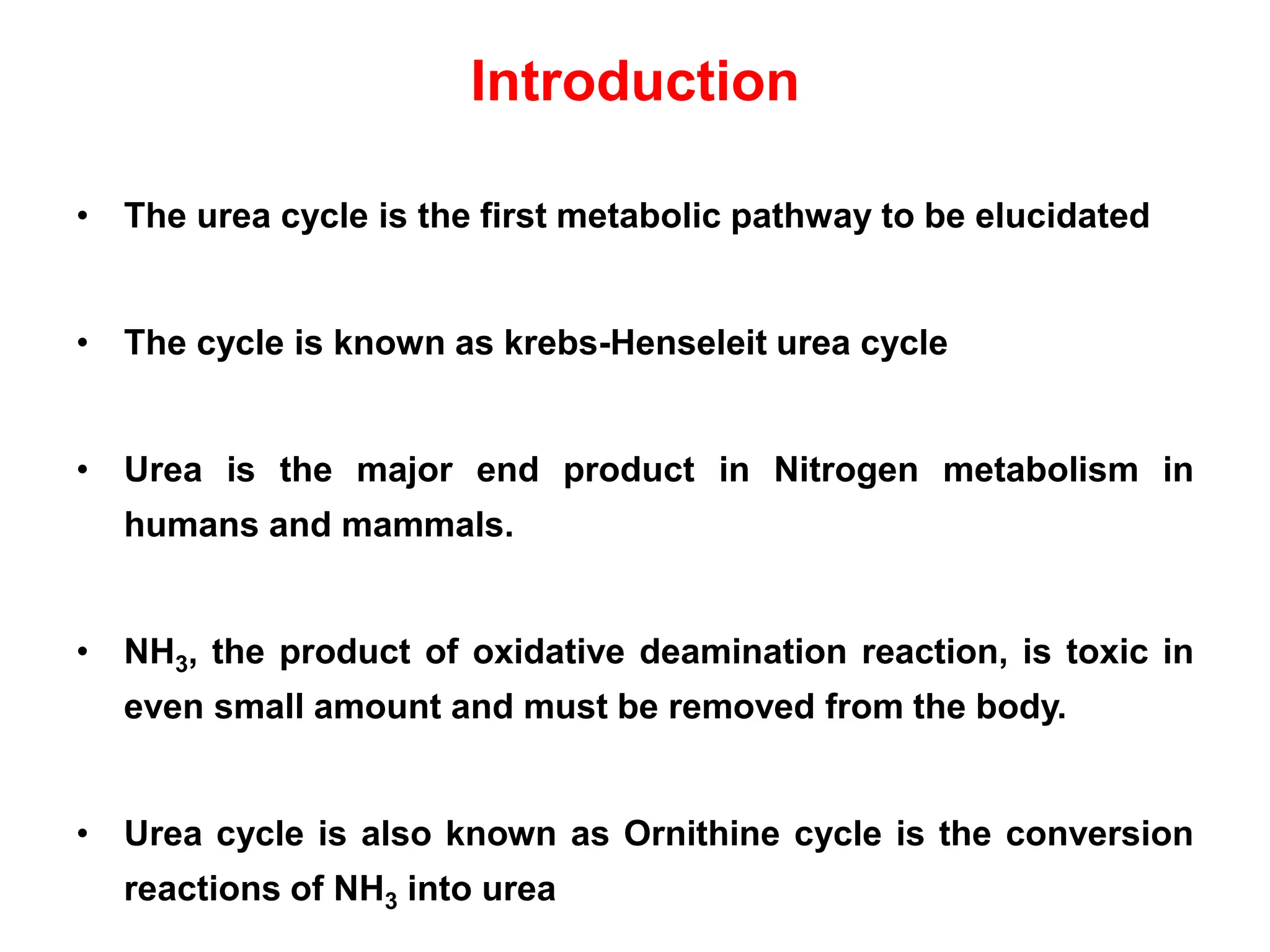
• The urea cycle is the first metabolic pathway to be elucidated
• The cycle is known as krebs-Henseleit urea cycle
• Urea is the major end product in Nitrogen metabolism in
humans and mammals.
• NH3, the product of oxidative deamination reaction, is toxic in
even small amount and must be removed from the body.
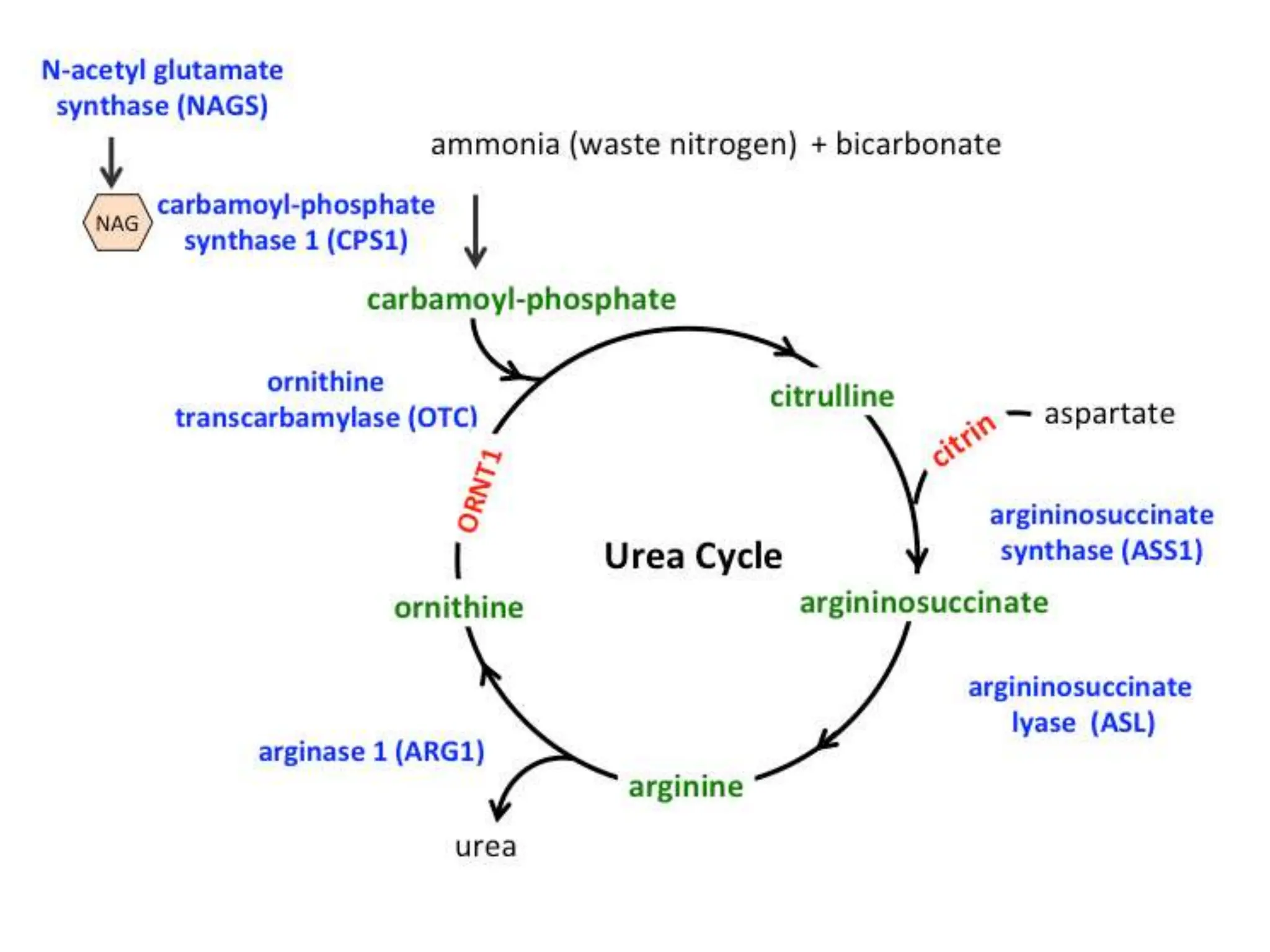
• Urea cycle is also known as Ornithine cycle is the conversion
reactions of NH3 into urea
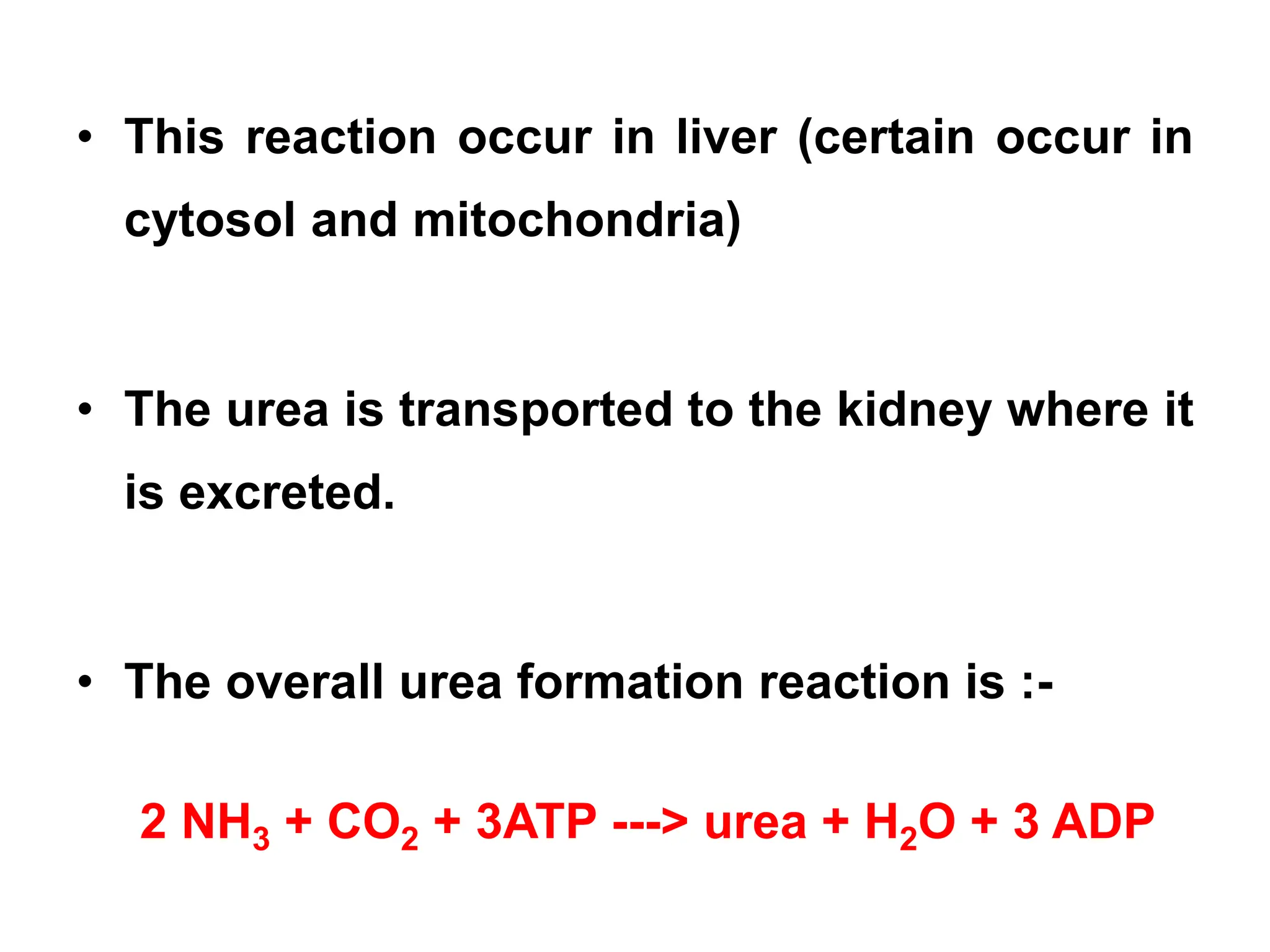
• This reaction occur in liver (certain occur in
cytosol and mitochondria)
• The urea is transported to the kidney where it
is excreted.
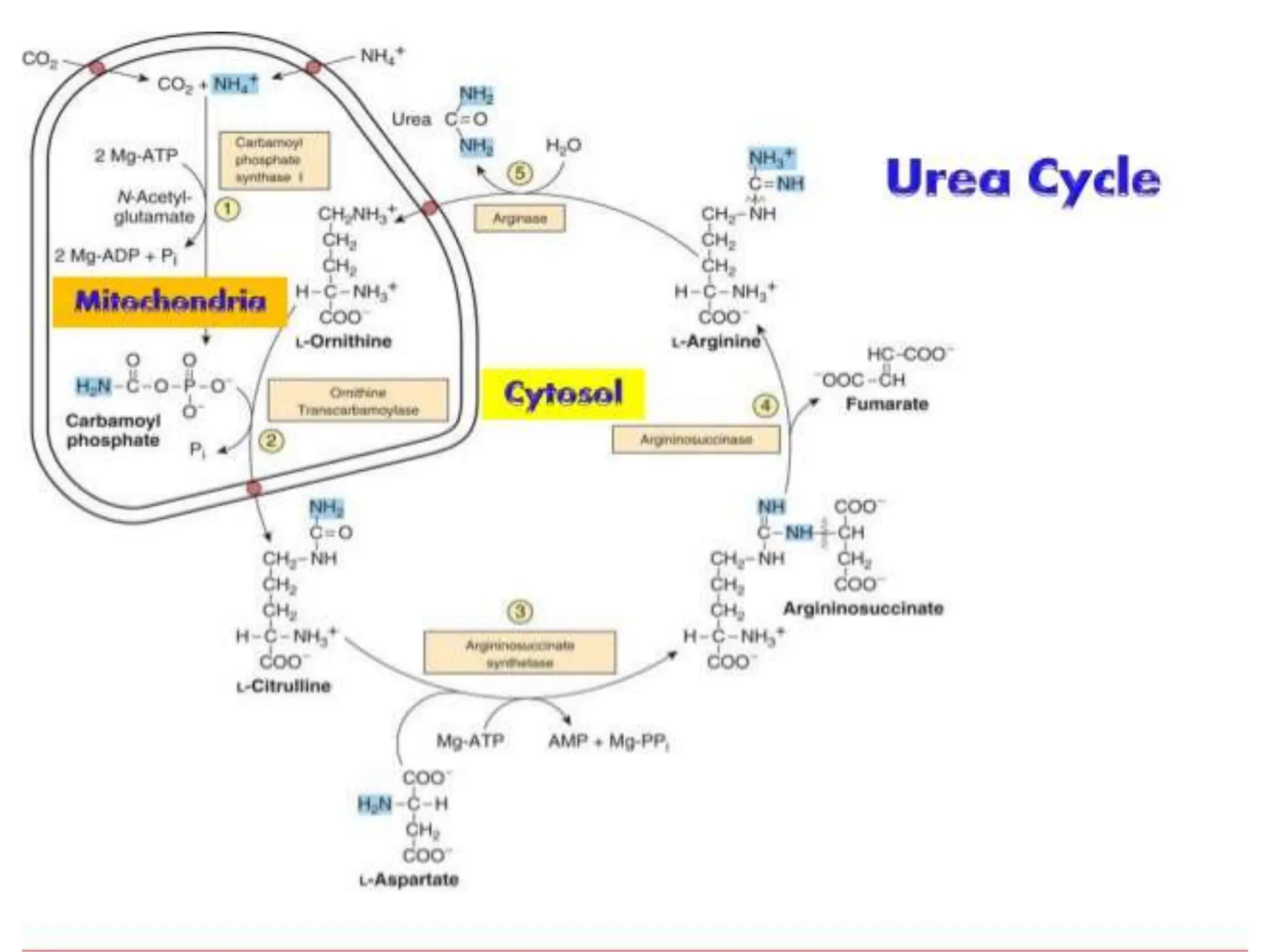
• The overall urea formation reaction is :-
2 NH3 + CO2 + 3ATP ---> urea + H2O + 3 ADP
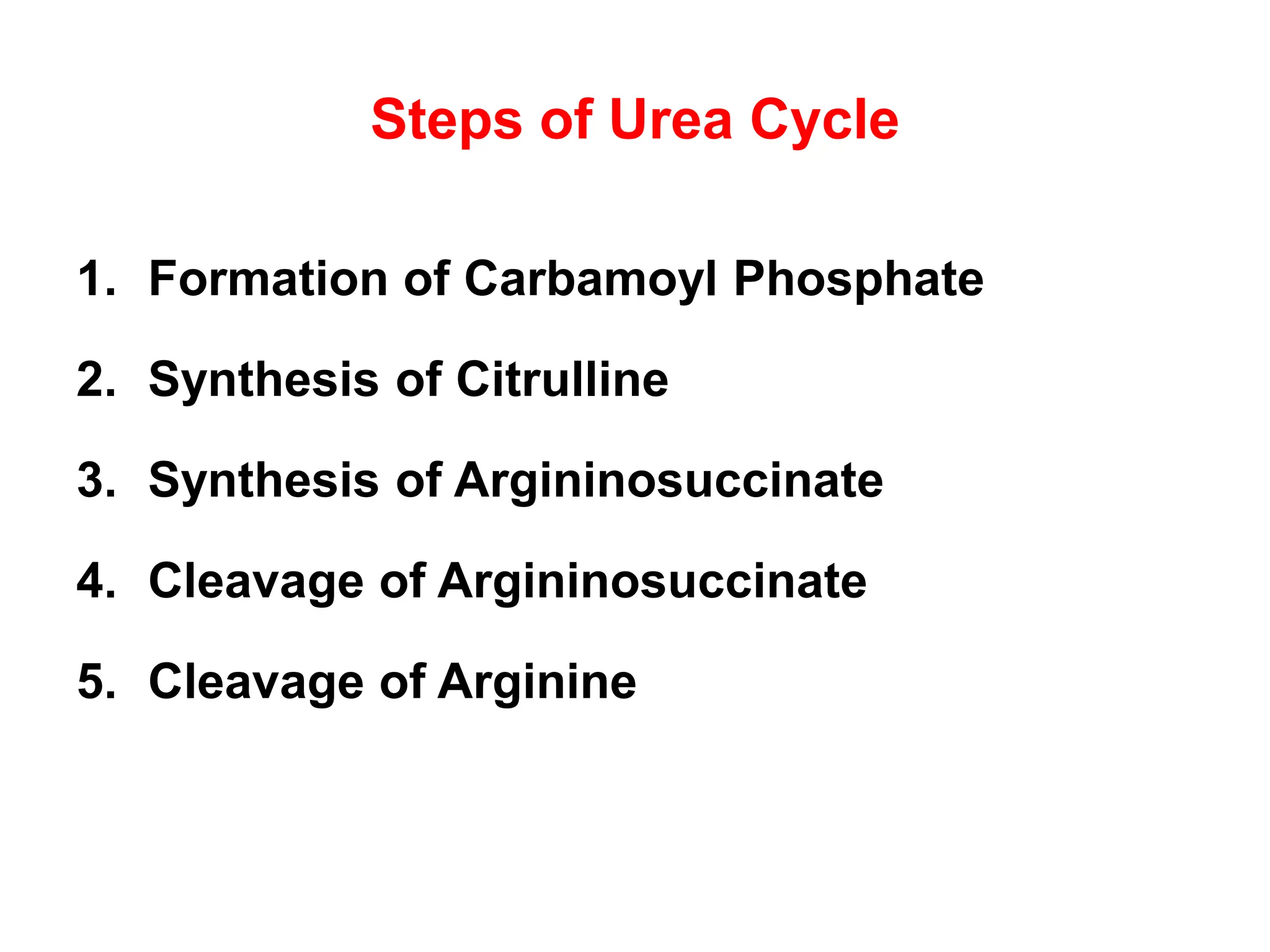
Steps of Urea Cycle
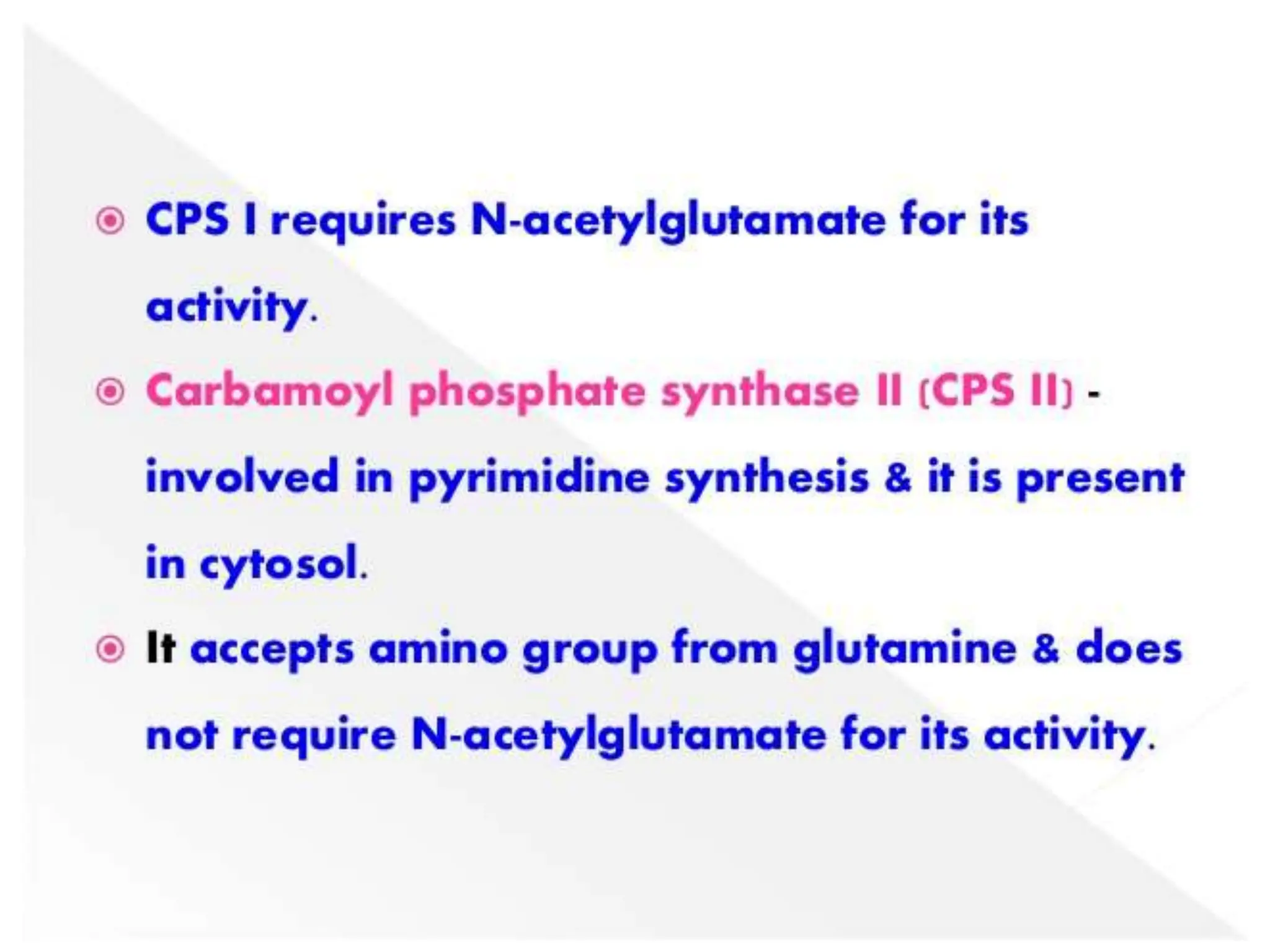
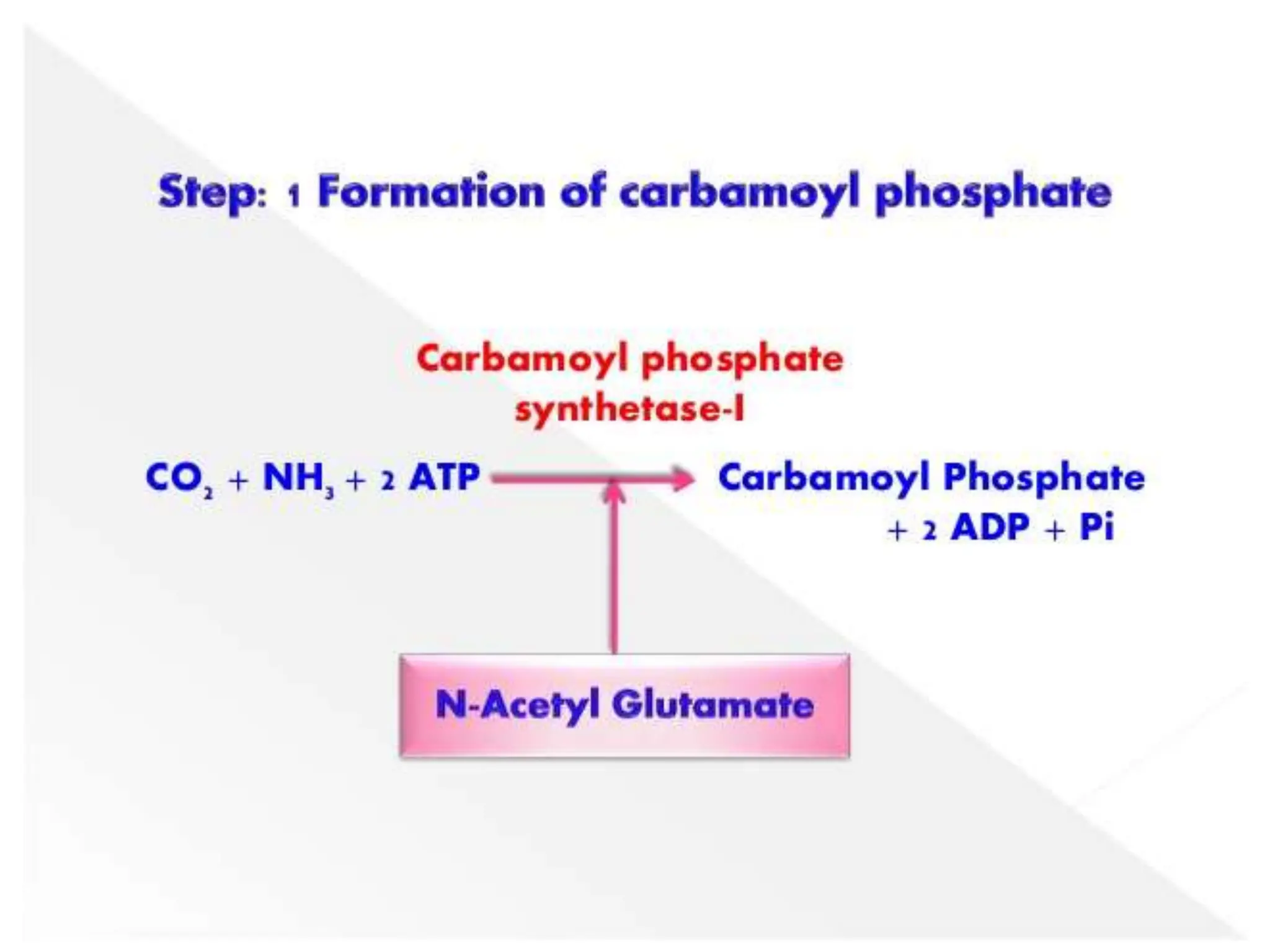
1. Formation of Carbamoyl Phosphate
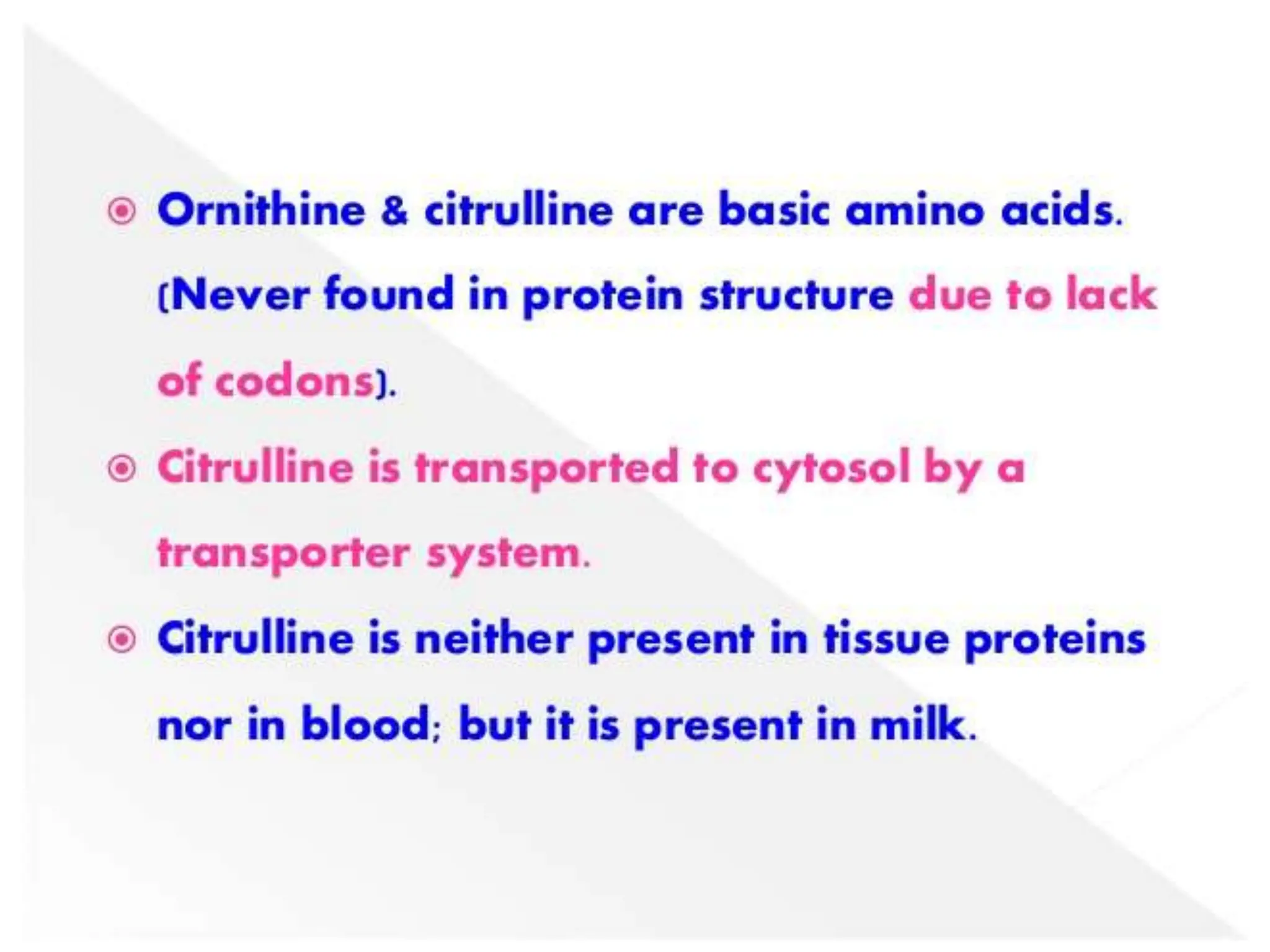
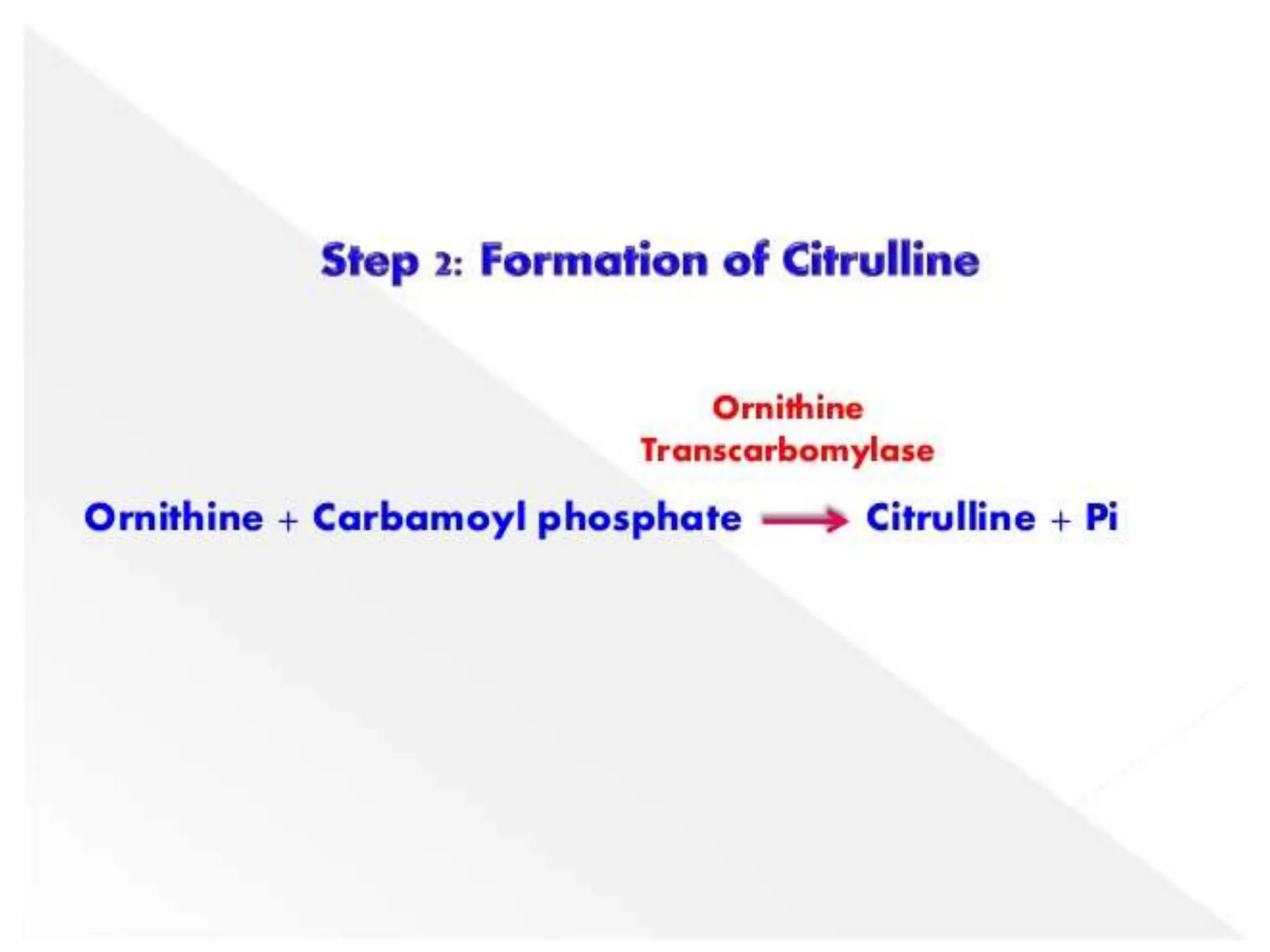
2. Synthesis of Citrulline
3. Synthesis of Argininosuccinate
4. Cleavage of Argininosuccinate
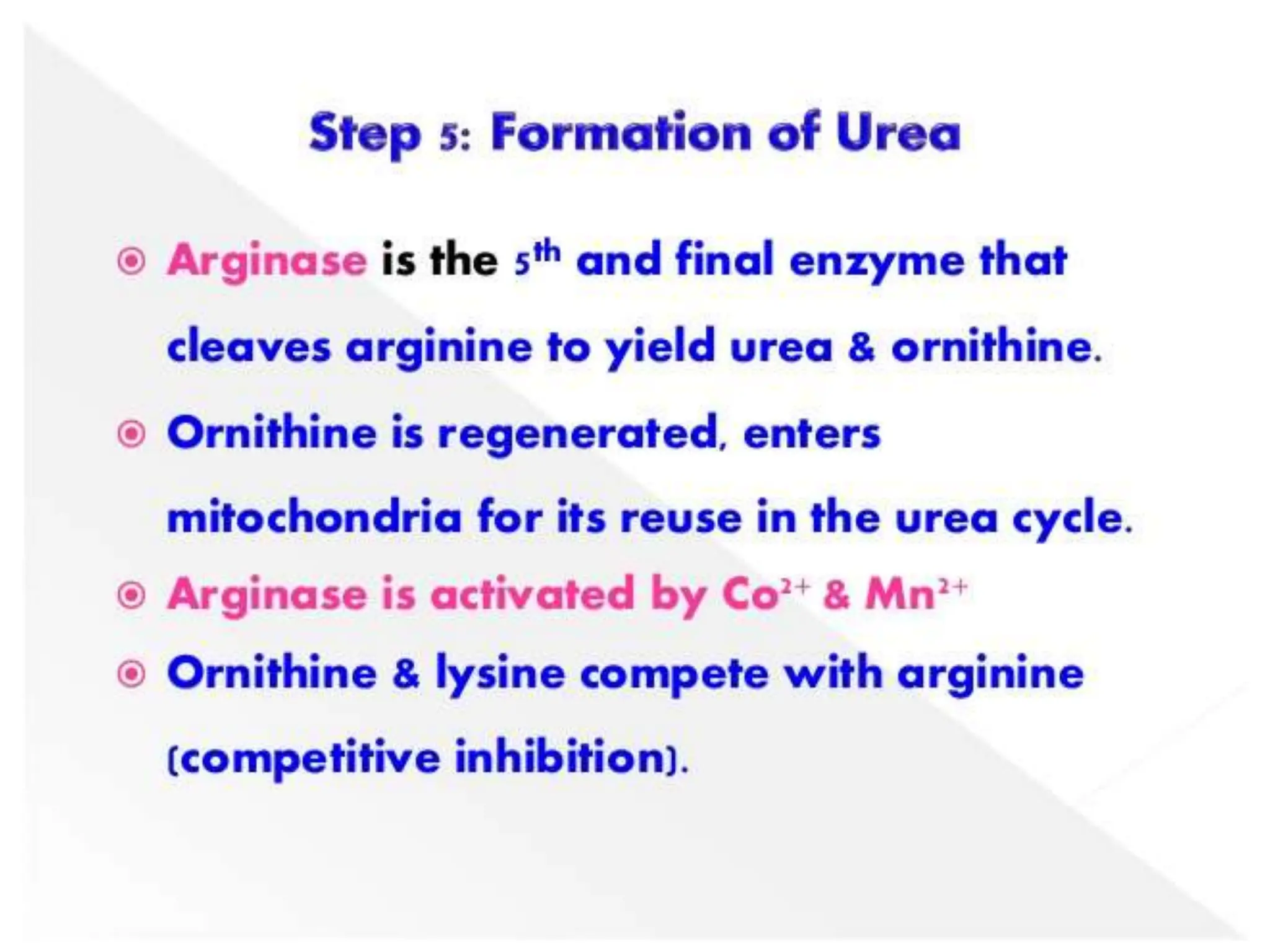
5. Cleavage of Arginine
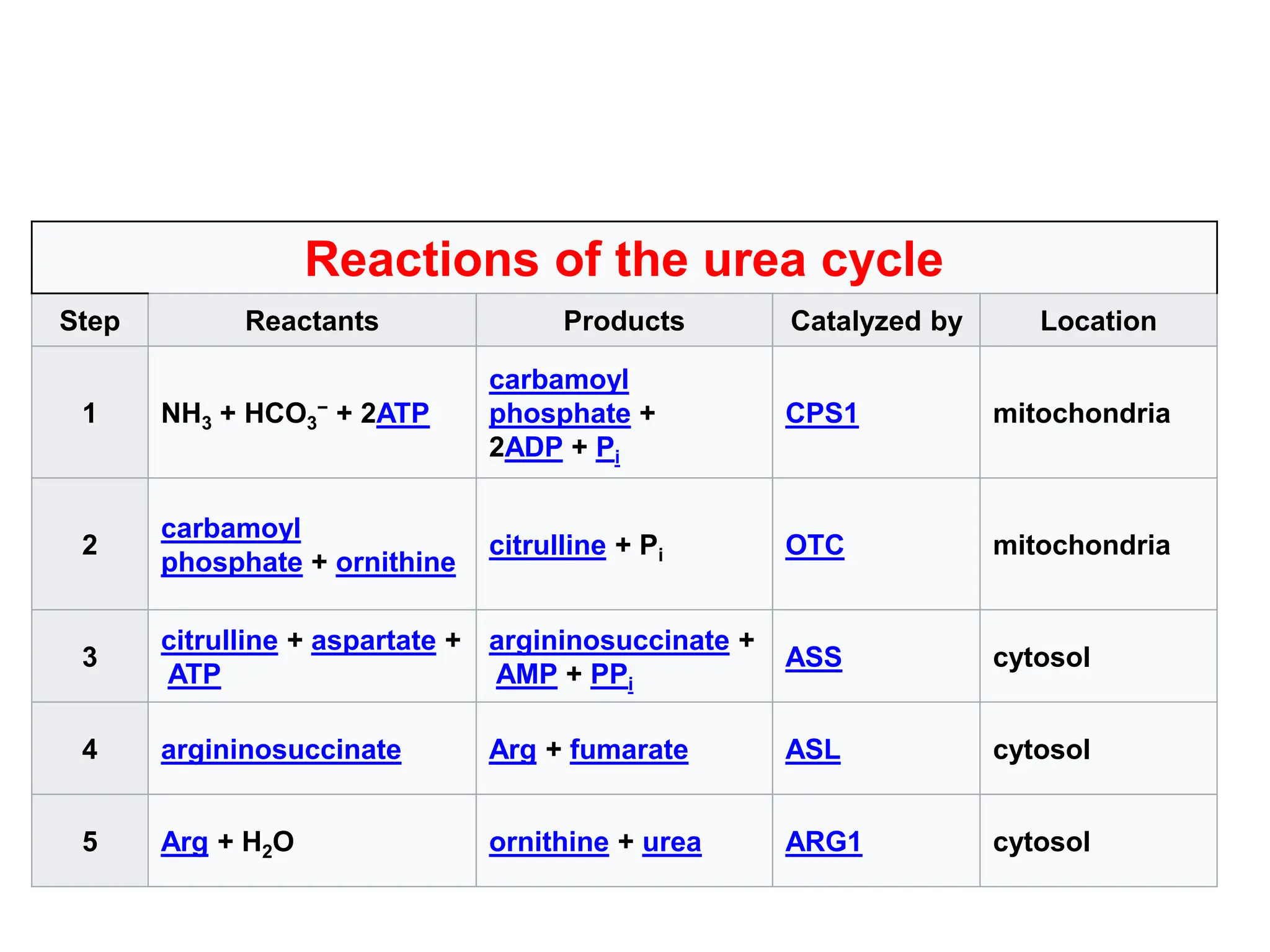
Reactions of the urea cycle
Step Reactants Products Catalyzed by Location
1 NH3 + HCO3
− + 2ATP
carbamoyl
phosphate +
2ADP + Pi
CPS1 mitochondria
2
carbamoyl
phosphate + ornithine
citrulline + Pi OTC mitochondria
3
citrulline + aspartate +
ATP
argininosuccinate +
AMP + PPi
ASS cytosol
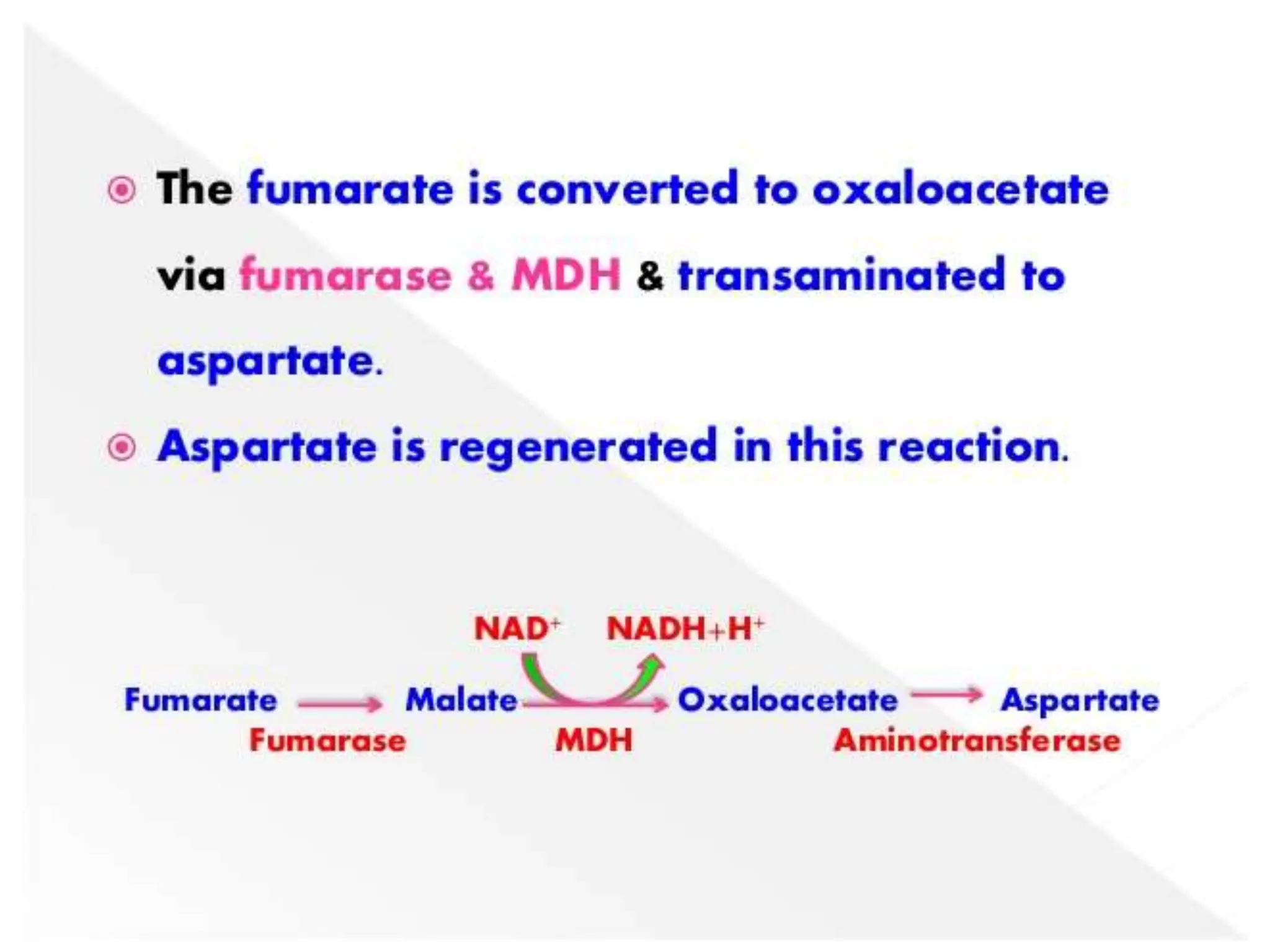
4 argininosuccinate Arg + fumarate ASL cytosol
5 Arg + H2O ornithine + urea ARG1 cytosol
Significance of Urea Cycle
• The Urea cycle or the 'Ammonia detox cycle'
is the process of removal of ammonia from
the body.
• Ammonia is the end product of protein
metabolism, which is toxic to the human
body, especially the CNS.
• Hence, Ammonia is converted into a
harmless water soluble compound called
'urea' which is expelled through urine.
Urea cycle formation and its significance

Urea cycle formation and its significance

  • 1.
    Urea cycle andits significance
  • 2.
    Introduction • The ureacycle is the first metabolic pathway to be elucidated • The cycle is known as krebs-Henseleit urea cycle • Urea is the major end product in Nitrogen metabolism in humans and mammals. • NH3, the product of oxidative deamination reaction, is toxic in even small amount and must be removed from the body. • Urea cycle is also known as Ornithine cycle is the conversion reactions of NH3 into urea
  • 3.
    • This reactionoccur in liver (certain occur in cytosol and mitochondria) • The urea is transported to the kidney where it is excreted. • The overall urea formation reaction is :- 2 NH3 + CO2 + 3ATP ---> urea + H2O + 3 ADP
  • 4.
    Steps of UreaCycle 1. Formation of Carbamoyl Phosphate 2. Synthesis of Citrulline 3. Synthesis of Argininosuccinate 4. Cleavage of Argininosuccinate 5. Cleavage of Arginine
  • 5.
    Reactions of theurea cycle Step Reactants Products Catalyzed by Location 1 NH3 + HCO3 − + 2ATP carbamoyl phosphate + 2ADP + Pi CPS1 mitochondria 2 carbamoyl phosphate + ornithine citrulline + Pi OTC mitochondria 3 citrulline + aspartate + ATP argininosuccinate + AMP + PPi ASS cytosol 4 argininosuccinate Arg + fumarate ASL cytosol 5 Arg + H2O ornithine + urea ARG1 cytosol
  • 22.
    Significance of UreaCycle • The Urea cycle or the 'Ammonia detox cycle' is the process of removal of ammonia from the body. • Ammonia is the end product of protein metabolism, which is toxic to the human body, especially the CNS. • Hence, Ammonia is converted into a harmless water soluble compound called 'urea' which is expelled through urine.