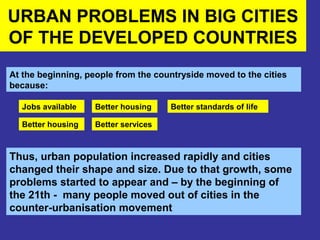
URBAN PROBLEMS IN BIG CITIES 
OF THE DEVELOPED COUNTRIES 
At the beginning, people from the countryside moved to the cities 
because: 
Jobs available Better housing Better standards of life 
Better housing Better services 
Thus, urban population increased rapidly and cities 
changed their shape and size. Due to that growth, some 
problems started to appear and – by the beginning of 
the 21th - many people moved out of cities in the 
counter-urbanisation movement
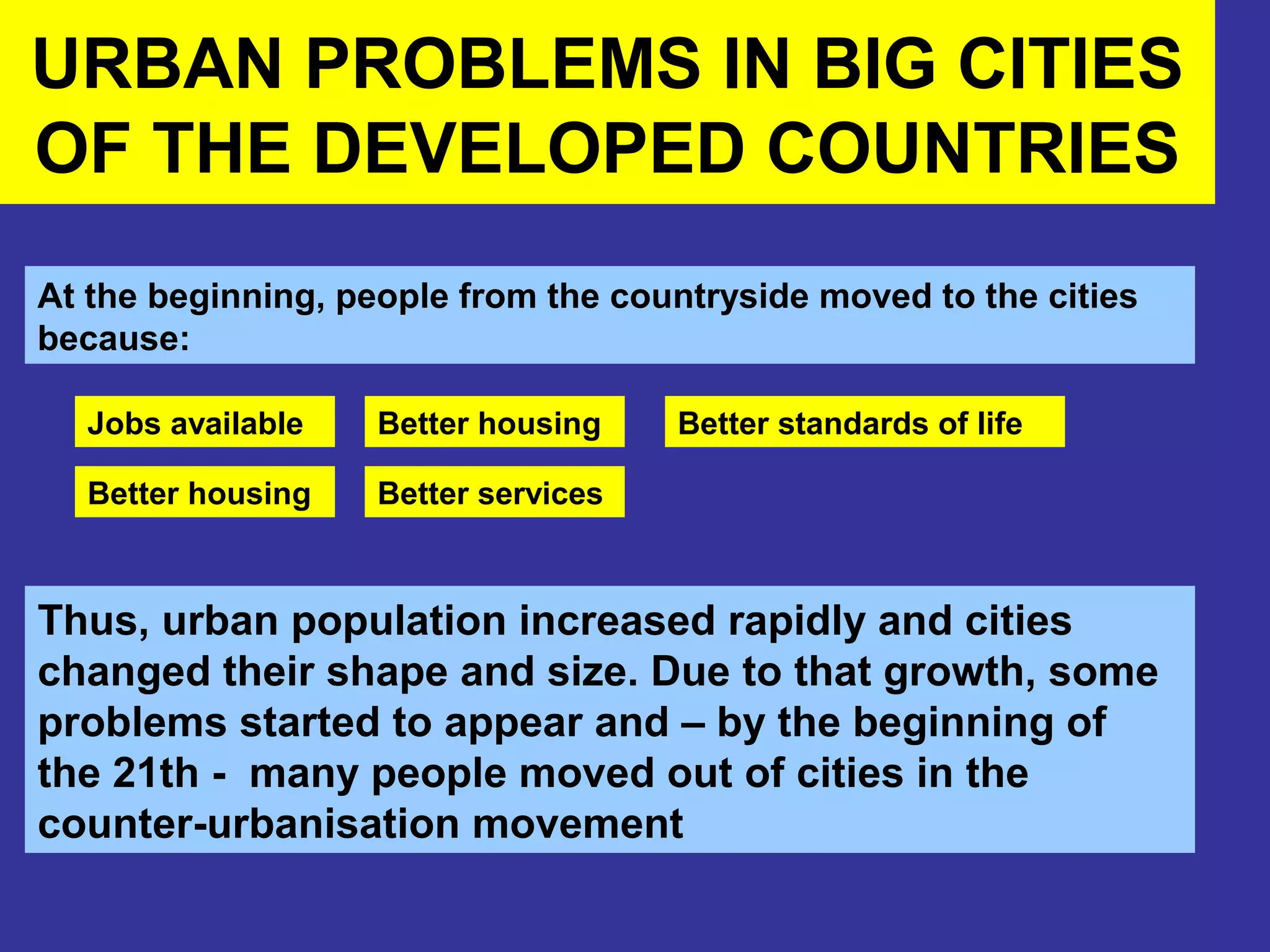
PROBLEMS IN THE CITIES 
Urban problems are different depending on the place of the city that 
we are talking about 
PROBLEMS IN THE C.B.D. 
Social / housing: 
Crime (muggings) Homeless 
Economical: 
High land values  High rents for 
Time lost by traffic 
companies and expensive homes 
congestion 
Environmental: 
Noise and air pollution due to the 
traffic 
Problems of waste 
collection
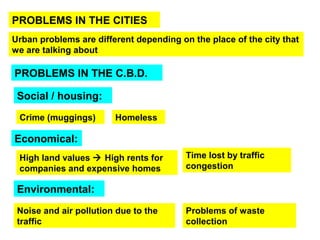
PROBLEMS IN THE SUBURBS 
Social / housing: 
Price Crime  Burglary of housing is increasing 
Economical: 
Commuting to work in the city centre is expensive and people 
waste their time 
Environmental: 
Noise and air pollution due to the traffic on main roads
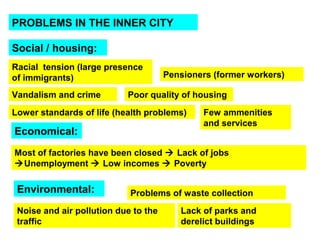
PROBLEMS IN THE INNER CITY 
Social / housing: 
Racial tension (large presence 
of immigrants) Pensioners (former workers) 
Vandalism and crime 
Poor quality of housing 
Lower standards of life (health problems) Few ammenities 
and services 
Economical: 
Most of factories have been closed  Lack of jobs 
Unemployment  Low incomes  Poverty 
Environmental: 
Noise and air pollution due to the 
traffic 
Problems of waste collection 
Lack of parks and 
derelict buildings
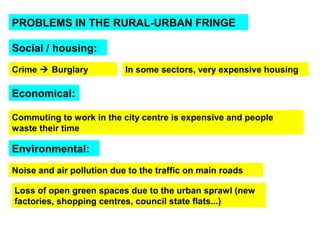
PROBLEMS IN THE RURAL-URBAN FRINGE 
Social / housing: 
In some sectors, Crime  Burglary very expensive housing 
Economical: 
Commuting to work in the city centre is expensive and people 
waste their time 
Environmental: 
Noise and air pollution due to the traffic on main roads 
Loss of open green spaces due to the urban sprawl (new 
factories, shopping centres, council state flats...)
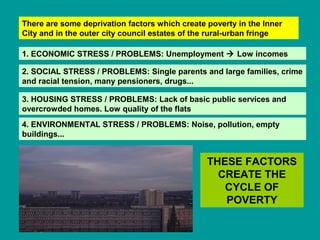
There are some deprivation factors which create poverty in the Inner 
City and in the outer city council estates of the rural-urban fringe 
1. ECONOMIC STRESS / PROBLEMS: Unemployment  Low incomes 
2. SOCIAL STRESS / PROBLEMS: Single parents and large families, crime 
and racial tension, many pensioners, drugs... 
3. HOUSING STRESS / PROBLEMS: Lack of basic public services and 
overcrowded homes. Low quality of the flats 
4. ENVIRONMENTAL STRESS / PROBLEMS: Noise, pollution, empty 
buildings... 
THESE FACTORS 
CREATE THE 
CYCLE OF 
POVERTY
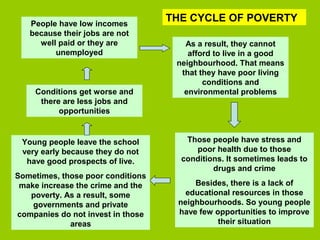
THE CYCLE OF POVERTY People have low incomes 
because their jobs are not 
well paid or they are 
unemployed 
As a result, they cannot 
afford to live in a good 
neighbourhood. That means 
that they have poor living 
conditions and 
environmental problems 
Those people have stress and 
poor health due to those 
conditions. It sometimes leads to 
drugs and crime 
Besides, there is a lack of 
educational resources in those 
neighbourhoods. So young people 
have few opportunities to improve 
their situation 
Conditions get worse and 
there are less jobs and 
opportunities 
Young people leave the school 
very early because they do not 
have good prospects of live. 
Sometimes, those poor conditions 
make increase the crime and the 
poverty. As a result, some 
governments and private 
companies do not invest in those 
areas
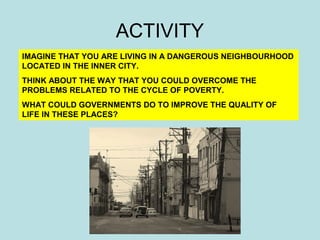
ACTIVITY 
IMAGINE THAT YOU ARE LIVING IN A DANGEROUS NEIGHBOURHOOD 
LOCATED IN THE INNER CITY. 
THINK ABOUT THE WAY THAT YOU COULD OVERCOME THE 
PROBLEMS RELATED TO THE CYCLE OF POVERTY. 
WHAT COULD GOVERNMENTS DO TO IMPROVE THE QUALITY OF 
LIFE IN THESE PLACES?

Urban problems in big cities

  • 1.
    URBAN PROBLEMS INBIG CITIES OF THE DEVELOPED COUNTRIES At the beginning, people from the countryside moved to the cities because: Jobs available Better housing Better standards of life Better housing Better services Thus, urban population increased rapidly and cities changed their shape and size. Due to that growth, some problems started to appear and – by the beginning of the 21th - many people moved out of cities in the counter-urbanisation movement
  • 2.
    PROBLEMS IN THECITIES Urban problems are different depending on the place of the city that we are talking about PROBLEMS IN THE C.B.D. Social / housing: Crime (muggings) Homeless Economical: High land values  High rents for Time lost by traffic companies and expensive homes congestion Environmental: Noise and air pollution due to the traffic Problems of waste collection
  • 3.
    PROBLEMS IN THESUBURBS Social / housing: Price Crime  Burglary of housing is increasing Economical: Commuting to work in the city centre is expensive and people waste their time Environmental: Noise and air pollution due to the traffic on main roads
  • 4.
    PROBLEMS IN THEINNER CITY Social / housing: Racial tension (large presence of immigrants) Pensioners (former workers) Vandalism and crime Poor quality of housing Lower standards of life (health problems) Few ammenities and services Economical: Most of factories have been closed  Lack of jobs Unemployment  Low incomes  Poverty Environmental: Noise and air pollution due to the traffic Problems of waste collection Lack of parks and derelict buildings
  • 5.
    PROBLEMS IN THERURAL-URBAN FRINGE Social / housing: In some sectors, Crime  Burglary very expensive housing Economical: Commuting to work in the city centre is expensive and people waste their time Environmental: Noise and air pollution due to the traffic on main roads Loss of open green spaces due to the urban sprawl (new factories, shopping centres, council state flats...)
  • 6.
    There are somedeprivation factors which create poverty in the Inner City and in the outer city council estates of the rural-urban fringe 1. ECONOMIC STRESS / PROBLEMS: Unemployment  Low incomes 2. SOCIAL STRESS / PROBLEMS: Single parents and large families, crime and racial tension, many pensioners, drugs... 3. HOUSING STRESS / PROBLEMS: Lack of basic public services and overcrowded homes. Low quality of the flats 4. ENVIRONMENTAL STRESS / PROBLEMS: Noise, pollution, empty buildings... THESE FACTORS CREATE THE CYCLE OF POVERTY
  • 7.
    THE CYCLE OFPOVERTY People have low incomes because their jobs are not well paid or they are unemployed As a result, they cannot afford to live in a good neighbourhood. That means that they have poor living conditions and environmental problems Those people have stress and poor health due to those conditions. It sometimes leads to drugs and crime Besides, there is a lack of educational resources in those neighbourhoods. So young people have few opportunities to improve their situation Conditions get worse and there are less jobs and opportunities Young people leave the school very early because they do not have good prospects of live. Sometimes, those poor conditions make increase the crime and the poverty. As a result, some governments and private companies do not invest in those areas
  • 8.
    ACTIVITY IMAGINE THATYOU ARE LIVING IN A DANGEROUS NEIGHBOURHOOD LOCATED IN THE INNER CITY. THINK ABOUT THE WAY THAT YOU COULD OVERCOME THE PROBLEMS RELATED TO THE CYCLE OF POVERTY. WHAT COULD GOVERNMENTS DO TO IMPROVE THE QUALITY OF LIFE IN THESE PLACES?