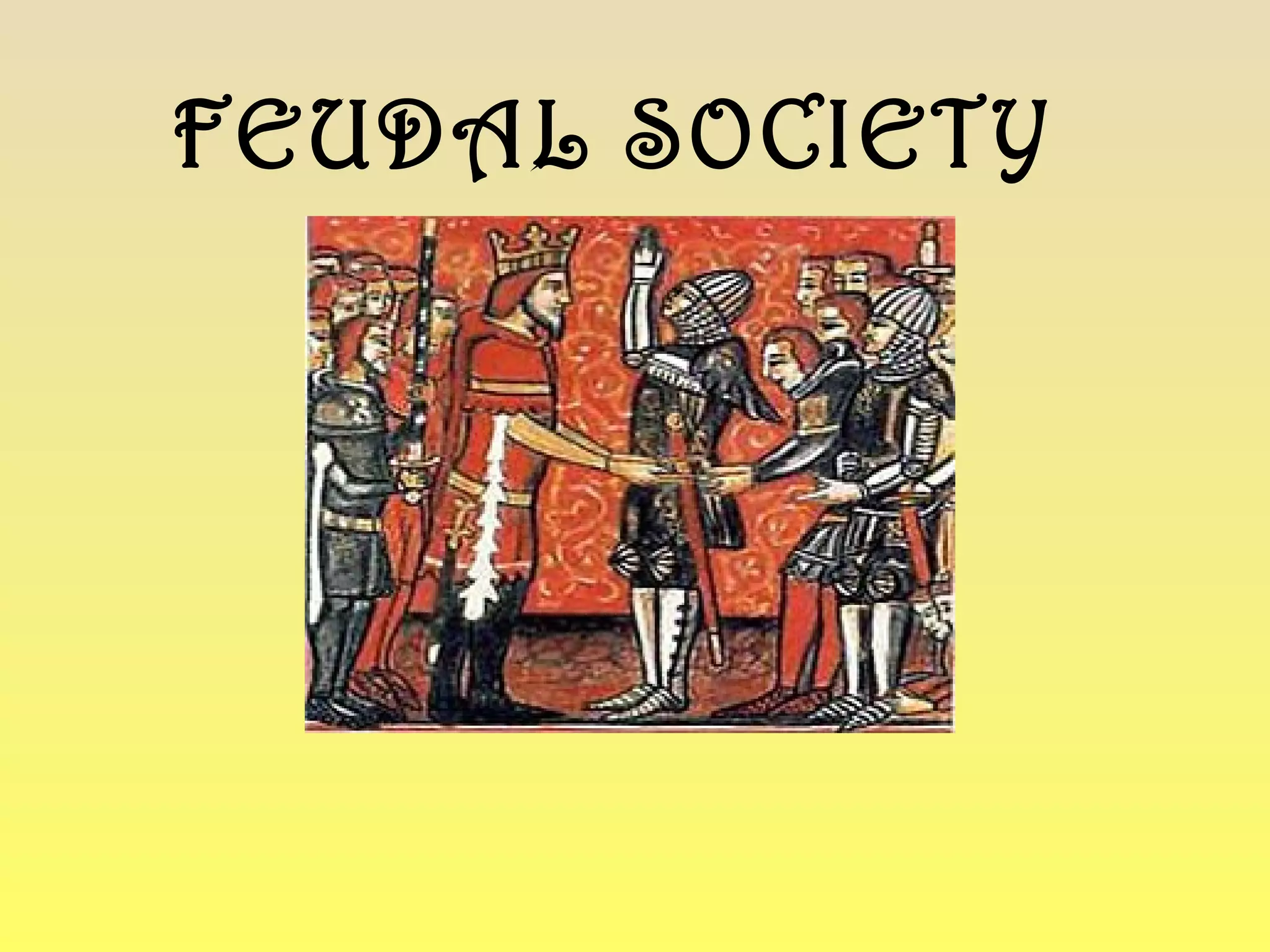
FEUDAL SOCIETY
WHAT WERE THE SECOND 
INVASIONS? 
NEW INVASIONS 
From 850 to 1100, 
Europe was weak. 
Why? 
As a result of the division of the 
Carolingian Empire and the decline of 
the Byzantine Empire 
Thus, new peoples invaded Europe 
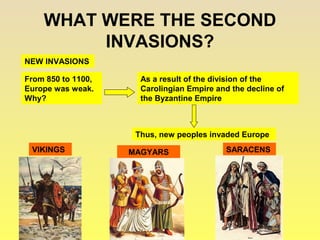
VIKINGS MAGYARS SARACENS
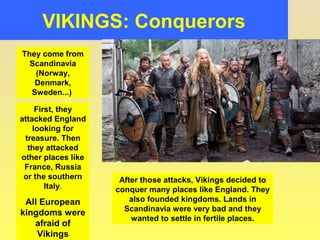
VIKINGS: Conquerors 
They come from 
Scandinavia 
(Norway, 
Denmark, 
Sweden...) 
First, they 
attacked England 
looking for 
treasure. Then 
they attacked 
other places like 
France, Russia 
or the southern 
Italy. 
All European 
kingdoms were 
afraid of 
Vikings 
After those attacks, Vikings decided to 
conquer many places like England. They 
also founded kingdoms. Lands in 
Scandinavia were very bad and they 
wanted to settle in fertile places.
VIKINGS: Merchants 
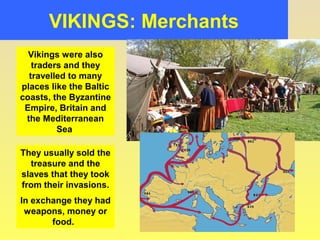
Vikings were also 
traders and they 
travelled to many 
places like the Baltic 
coasts, the Byzantine 
Empire, Britain and 
the Mediterranean 
Sea 
They usually sold the 
treasure and the 
slaves that they took 
from their invasions. 
In exchange they had 
weapons, money or 
food.
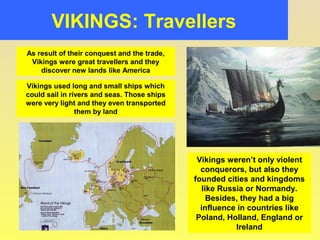
VIKINGS: Travellers 
As result of their conquest and the trade, 
Vikings were great travellers and they 
discover new lands like America 
Vikings used long and small ships which 
could sail in rivers and seas. Those ships 
were very light and they even transported 
them by land 
Vikings weren’t only violent 
conquerors, but also they 
founded cities and kingdoms 
like Russia or Normandy. 
Besides, they had a big 
influence in countries like 
Poland, Holland, England or 
Ireland
VIKINGS: Important dates to know 
793: The first Viking raid, on Lindisfarne monastery. After 
that attack, Vikings devastated many cities and villages of 
the European coasts 
878: Vikings settled in the north of England and Ireland. That 
land was known as Danelaw 
911: Vikings settled in Normandy – north of France – making 
a deal with the king of France 
911: Vikings arrived in America 
1100: All Vikings became Christians 
1066: The VIkings from Norway tried to conquer England, but 
they failled. Months later, the Vikings from Normandy 
conquered England after the battle of Hastings defeating 
the last Anglo-Saxon English king.
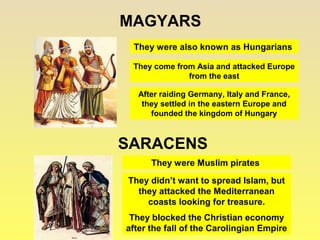
MAGYARS 
They were also known as Hungarians 
They come from Asia and attacked Europe 
from the east 
After raiding Germany, Italy and France, 
they settled in the eastern Europe and 
founded the kingdom of Hungary 
SARACENS 
They were Muslim pirates 
They didn’t want to spread Islam, but 
they attacked the Mediterranean 
coasts looking for treasure. 
They blocked the Christian economy 
after the fall of the Carolingian Empire
HOMEWORK 
Work in groups of four. Look for more informations about the 
Vikings. Concentrate on three aspects: 
• Their life 
• Their beliefs 
• Trade and exploration 
• Most important kings 
You can use the BBC website and other ones like wikipedia or 
an encyclopedia 
Then you will prepare a PowerPoint presentation with your 
research 
Group 1: Vikings from Norway Group 2: Vikings from Sweden 
Group 3: Normans (Normandy) Group 4: Vikings in Iceland 
Group 5: Vikings from Denmark Group 6: Vikings in England

Second Invasions

  • 1.
  • 2.
    WHAT WERE THESECOND INVASIONS? NEW INVASIONS From 850 to 1100, Europe was weak. Why? As a result of the division of the Carolingian Empire and the decline of the Byzantine Empire Thus, new peoples invaded Europe VIKINGS MAGYARS SARACENS
  • 3.
    VIKINGS: Conquerors Theycome from Scandinavia (Norway, Denmark, Sweden...) First, they attacked England looking for treasure. Then they attacked other places like France, Russia or the southern Italy. All European kingdoms were afraid of Vikings After those attacks, Vikings decided to conquer many places like England. They also founded kingdoms. Lands in Scandinavia were very bad and they wanted to settle in fertile places.
  • 4.
    VIKINGS: Merchants Vikingswere also traders and they travelled to many places like the Baltic coasts, the Byzantine Empire, Britain and the Mediterranean Sea They usually sold the treasure and the slaves that they took from their invasions. In exchange they had weapons, money or food.
  • 5.
    VIKINGS: Travellers Asresult of their conquest and the trade, Vikings were great travellers and they discover new lands like America Vikings used long and small ships which could sail in rivers and seas. Those ships were very light and they even transported them by land Vikings weren’t only violent conquerors, but also they founded cities and kingdoms like Russia or Normandy. Besides, they had a big influence in countries like Poland, Holland, England or Ireland
  • 6.
    VIKINGS: Important datesto know 793: The first Viking raid, on Lindisfarne monastery. After that attack, Vikings devastated many cities and villages of the European coasts 878: Vikings settled in the north of England and Ireland. That land was known as Danelaw 911: Vikings settled in Normandy – north of France – making a deal with the king of France 911: Vikings arrived in America 1100: All Vikings became Christians 1066: The VIkings from Norway tried to conquer England, but they failled. Months later, the Vikings from Normandy conquered England after the battle of Hastings defeating the last Anglo-Saxon English king.
  • 7.
    MAGYARS They werealso known as Hungarians They come from Asia and attacked Europe from the east After raiding Germany, Italy and France, they settled in the eastern Europe and founded the kingdom of Hungary SARACENS They were Muslim pirates They didn’t want to spread Islam, but they attacked the Mediterranean coasts looking for treasure. They blocked the Christian economy after the fall of the Carolingian Empire
  • 8.
    HOMEWORK Work ingroups of four. Look for more informations about the Vikings. Concentrate on three aspects: • Their life • Their beliefs • Trade and exploration • Most important kings You can use the BBC website and other ones like wikipedia or an encyclopedia Then you will prepare a PowerPoint presentation with your research Group 1: Vikings from Norway Group 2: Vikings from Sweden Group 3: Normans (Normandy) Group 4: Vikings in Iceland Group 5: Vikings from Denmark Group 6: Vikings in England