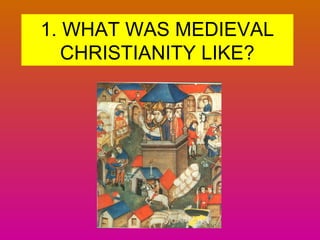
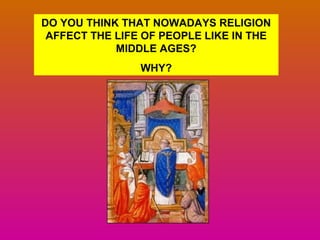
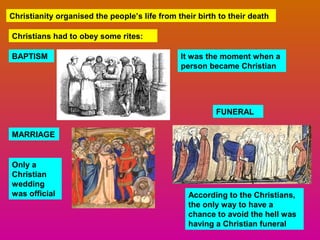
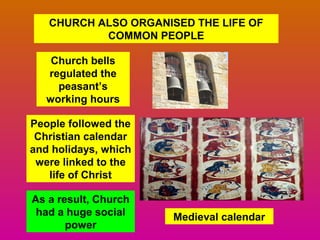
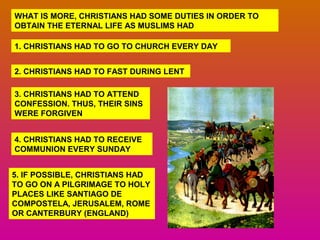
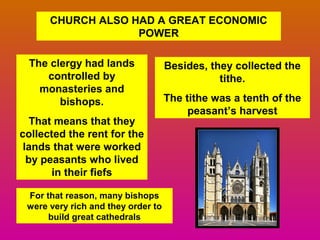
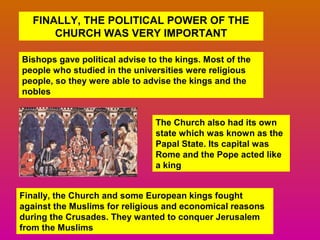
Medieval Christianity had a profound influence on everyday life. The Church organized people's lives from birth through death, requiring rituals like baptism, Christian marriage, and funeral. It also regulated working hours and holidays. As a result, the Church had immense social power. Christians had religious duties to obtain salvation, such as weekly confession and communion. Politically, bishops advised kings while the Pope governed the Papal States. The Church also wielded significant economic power through tithes and ownership of lands worked by peasants. Overall, Christianity dominated medieval European society.