▪ Students will demonstrate the
  following enduring
  understanding

▪ People rely on the environment to
  fulfill a variety of needs, including
  food, shelter, and energy.

▪ Environment and economic needs both
  determine how people choose to use
  lands.

▪ Recognize the difference between
  renewable and nonrenewable
  resources.
 Humans depend on their natural
  environment to survive. We need the
  environment to provide energy, water,
  food, and other materials. In prehistoric
  times, people lived in areas where they
  could hunt and gather foods. Later they
  moved to pastures and fertile soils for
  farming. Today, rapid transportation and
  technology allow people to be less
  dependent on their immediate
  environment. However, people still need
  access to resources.
    ▪ Remember the lack of rain this summer and how
      much we needed it to rain.
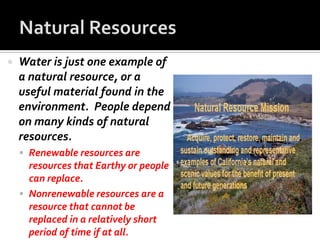
   Water is just one example of
    a natural resource, or a
    useful material found in the
    environment. People depend
    on many kinds of natural
    resources.
     Renewable resources are
      resources that Earthy or people
      can replace.
     Nonrenewable resources are a
      resource that cannot be
      replaced in a relatively short
      period of time if at all.
 Fossil fuels are
  nonrenewable resources
  formed over millions of
  years from the remains of
  plants and animals.
 Coal natural gas, and
  petroleum are important
  fossil fuels. When
  nonrenewable resources
  are used up, they are
  gone.
   Sources of energy are
    important for human
    activity. Some resources,
    such as wind and sunlight
    are renewable.
   Today, we mostly rely on
    nonrenewable energy
    resources such as coal
    and petroleum. Because
    these resources are
    nonrenewable, Earth will
    eventually run out of
    them.
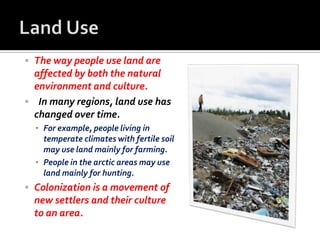
 The way people use land are
  affected by both the natural
  environment and culture.
 In many regions, land use has
  changed over time.
  ▪ For example, people living in
    temperate climates with fertile soil
    may use land mainly for farming.
  ▪ People in the arctic areas may use
    land mainly for hunting.
 Colonization is a movement of
  new settlers and their culture
  to an area.
   All people need food,
    water, clothing, and
    shelter. To meet
    these needs, people
    have to use materials
    from their
    environment. As a
    result, people have
    impacts on their
    environment in their
    daily lives.
   People extract, or
    remove, many kinds of
    natural resources from
    their environment.
     Ex… Cutting down trees to get
      wood
    Extracting resources can be
       harm ecosystems and the
       environment.
    Deforestation is the loss
    of forest cover in a region.
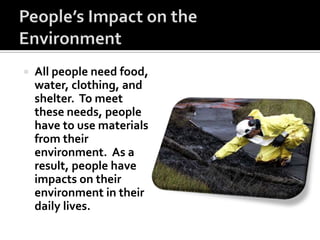
    Drilling oil wells and
    transporting oil can lead to      Oil spill in Gulf of Mexico on April
                                      20, 2010.
    oils spills.
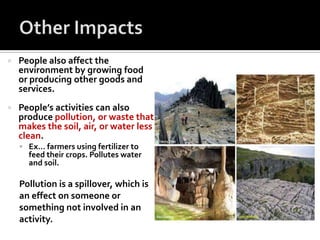
   People also affect the
    environment by growing food
    or producing other goods and
    services.
   People’s activities can also
    produce pollution, or waste that
    makes the soil, air, or water less
    clean.
     Ex… farmers using fertilizer to
      feed their crops. Pollutes water
      and soil.

    Pollution is a spillover, which is
    an effect on someone or
    something not involved in an
    activity.
   People try to increase the
    positive and decrease the
    negative effects of using
    resources.
     For example, using a resource
      might lead to economic
      growth but also create
      pollution that needs to be
      reduced.
    Working together, people,
    governments, and businesses
                                       These wind turbines in Canada
    can try to use resources wisely.   convert wind energy into electricity.

Human environment interaction

  • 2.
    ▪ Students willdemonstrate the following enduring understanding ▪ People rely on the environment to fulfill a variety of needs, including food, shelter, and energy. ▪ Environment and economic needs both determine how people choose to use lands. ▪ Recognize the difference between renewable and nonrenewable resources.
  • 3.
     Humans dependon their natural environment to survive. We need the environment to provide energy, water, food, and other materials. In prehistoric times, people lived in areas where they could hunt and gather foods. Later they moved to pastures and fertile soils for farming. Today, rapid transportation and technology allow people to be less dependent on their immediate environment. However, people still need access to resources. ▪ Remember the lack of rain this summer and how much we needed it to rain.
  • 4.
    Water is just one example of a natural resource, or a useful material found in the environment. People depend on many kinds of natural resources.  Renewable resources are resources that Earthy or people can replace.  Nonrenewable resources are a resource that cannot be replaced in a relatively short period of time if at all.
  • 5.
     Fossil fuelsare nonrenewable resources formed over millions of years from the remains of plants and animals.  Coal natural gas, and petroleum are important fossil fuels. When nonrenewable resources are used up, they are gone.
  • 6.
    Sources of energy are important for human activity. Some resources, such as wind and sunlight are renewable.  Today, we mostly rely on nonrenewable energy resources such as coal and petroleum. Because these resources are nonrenewable, Earth will eventually run out of them.
  • 7.
     The waypeople use land are affected by both the natural environment and culture.  In many regions, land use has changed over time. ▪ For example, people living in temperate climates with fertile soil may use land mainly for farming. ▪ People in the arctic areas may use land mainly for hunting.  Colonization is a movement of new settlers and their culture to an area.
  • 8.
    All people need food, water, clothing, and shelter. To meet these needs, people have to use materials from their environment. As a result, people have impacts on their environment in their daily lives.
  • 9.
    People extract, or remove, many kinds of natural resources from their environment.  Ex… Cutting down trees to get wood Extracting resources can be harm ecosystems and the environment. Deforestation is the loss of forest cover in a region. Drilling oil wells and transporting oil can lead to Oil spill in Gulf of Mexico on April 20, 2010. oils spills.
  • 10.
    People also affect the environment by growing food or producing other goods and services.  People’s activities can also produce pollution, or waste that makes the soil, air, or water less clean.  Ex… farmers using fertilizer to feed their crops. Pollutes water and soil. Pollution is a spillover, which is an effect on someone or something not involved in an activity.
  • 11.
    People try to increase the positive and decrease the negative effects of using resources.  For example, using a resource might lead to economic growth but also create pollution that needs to be reduced. Working together, people, governments, and businesses These wind turbines in Canada can try to use resources wisely. convert wind energy into electricity.