The Impact of Urbanization on
Environment
Submitted by
 Muhammad Yasir Anwar
Department of Economics
Pakistan Institute of Development Economics
Islamabad
Urbanization and Environment
Table of Contents
•Introduction
•Case Study
•Literature Review
•Methodology
•Impact of Urbanization
•Graphical Analysis
•Conclusion
Introduction:
 Urbanization refers to general increase in population of cities or
expansion of the cities either through migration from rural areas to
urban center or the increase in population of urban centers
 The last two centuries observed a rapid rise in the size of cities, in
1800 a very small portion of world masses lived in urban areas
which was approximately 2% but now this percentage is about 50%.
 The UN estimates showed that the increase in urbanization in terms
of rising number of megacities with population of 10 million or
more, in 1975 there were only four megacities in the world, the
number rise to 18 in 2000 while it will be 22 in 2015.
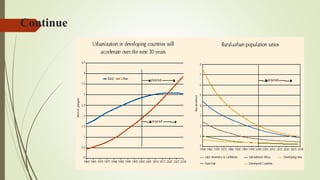
 It is estimated that by 2050 about 64% of the developing world and
86% of the developed world will be urbanized
Continue
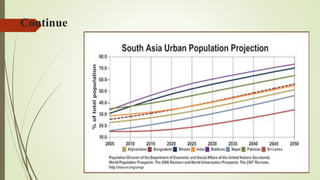
 The level and growth of urban centers differ considerably by region
to region; the east and south Asia will have the highest growing
rates in coming decades.
 In future most of the world masses will grow in towns and cities and
this redistribution of the world population will likely to further
affect the natural system of the earth.
 Due to the high population influx to urban centers cause many
problems to the environment in terms of deforestation, environment
degradation due to more vehicles and industrialization, poor water
quality, food insecurity, land insecurity, air pollution, noise pollution
and excessive solid waste material.
 The phenomenon is very closely related to the environment because
the problems are very complex and very difficult to observe the
overall/net impact of urbanization on environment.
Case Study
 We will focus on the point that how the redistribution of world
population in the recent centuries have changed the global
environment and how this replacement and migration of the
population along with high birth rate change the whole dynamics of
the long run growth.
 We will also observe the advantages and disadvantages of the
process of urbanization to the environment.
 How can policymakers suggest an environment friendly way
forward for the long run sustainability of this globe with prosperious
and balanced growth and development.
Literature Review
 Sarasvati and Mukherjee (2011) the study evaluated impact of different
population related variables by regressing the data from different states of
India and found that the effect of URBANIZATION is significantly
negative (among all variables) on environment.
 Zaozo (2008) develop a framework to analyze the relationship between
urbanization and CO2 emission for different set of countries and found
that effects of urbanization is higher in developing countries.
 Nyambod (2010) in this paper author selected the some urban areas and
evaluated the effect of urbanization on lifestyle and environment. He
found that human settlement conditions in the world particularly in
developing countries are deteriorating.
 The rural people moving to urban areas for better living standards, and
urban areas are overcrowded and have more inhabitants than capacity.
This situation often causes loss of property or life by accidents or diseases.
Continue
 Vakkilainen and Varis (1999) study evaluated that with increase in urbanization, the
demand for different goods will also rise. The production process will increase the
use of water and emit more pollutants. But in many developing countries due to poor
mechanism of check and balance waste water is not being treated effectively.
 Many multinational companies launch their production plants in developing
countries because of flexible environmental laws and poor control systems.
 HABITAT (1996) study describes that with the increase in air pollution level the
disease rate increases, this pollution comes from fossil fuels, industry, motor
vehicles, heating and electricity generation which are the main causes of greenhouse
gas emission.
 In another study the author found that most of the cities in subject areas have
improper sewerage handling system. In that regions untreated garbage and toxic
water is dumped to the rivers and seas. This severely affects the marine life and
fisheries as well as the touring in beach areas.
Continue
 Ogu (2000) study found that with increase in population in cities amount of solid waste
also raises. He also found that in most of developing countries normally less than one
half of solid waste is collected, while in some poor countries (Africa) only 10% solid
waste is collected.
 World Water Development Report 2012, indicated that urbanization is the main cause of
point source pollution. Particularly the condition become severe when urban wastewater
is combined with untreated industrial water. The study shows that in many fast growing
cities waste water infrastructure is non-existent, inadequate or outdated.
 According to the estimates of WHO about 70 to 80% beds in hospitals are occupied by
patient suffered from waterborne diseases in urban centres of developing countries which
shows that water supply and sanitation system have strong impact on living conditions.
Methodology
 We will follow the descriptive approach in which we will discuss the post
urbanization impacts on environment and graphically analyze the
redistribution of the world populations over the time.
 We will focus on the impacts of urbanization on environment which are
negative and apparently there are no positive impacts on the environment.
Urbanization and its Impacts on nature:
 Urbanization will leads to overpopulation and major cause of most
environmental problems is the rapidly growing human population. About
90 million babies are born each year and at this rate, by the year 2050,
global population will reach 10 billion.
 The population growth takes place mostly in developing countries and
these countries are the cause of 90 percent of current population growth. It
has been estimated that by the year 2025 even 84 percent of the world’s
people will live in developing regions
 Growing urbanization means more consumption and need of different
products, and as a result of growing population demand for water, food,
housing, heat, energy, clothing, and consumer goods will increase
dramatically.
Continue
 At this moment world’s population is 7 billion people, and half of the
world population is living in urban centers means urbanization is about 50
percent and remaining is living in the rural areas.
 The population living in the rural area have to produce food for the urban
masses and most of the population growth takes place in urban areas,
which means more pressure to the rural people to produce food for the
growing amount of urban people.
 In order to meet the increasing demand for the civic amenities, we have to
setup new industries, institutions and factories for the production of goods
and serviecs which means higher level of emission in the air and more
generation of industrial waste took place.
Continue
 Increased number of vehicles in urban cities has increased the use of fossils fuels
and greenhouse gas emission and such type of growth in road vehicles is a big
problem to urban cities and also to the environment.
 The pollution is high due to constant traffic jams and rising number of
automobiles which causes respiratory diseases to city habitants.
 Industrial, hospital and institutional wastes are more problematic than household
wastes because household wastes are less hazardous as compared to industrial
waste which contains hazardous and toxic chemicals.
 The garbage combustion creates yet another environmental problem. People want
to get rid of the wastes and they burn them in their backyards. The gases
produced by burning can cause different respiratory diseases also effects our
environment.
Graphical Analysis
Continue
Continue
Conclusion
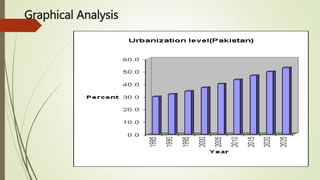
 Both theoretically and graphically it is found that, though urbanization
leads to economic growth through industrialization. But urbanization
severely effected the natural living environment of human beings as well
as ecological framework of the globe.
 The damages of urbanization founded at large scale in developing
countries because of poor urban planning and infrastructure is
substandard, this is due to rapid urbanization in subjected regions.
 the developed countries have build the infrastructure of high quality which
is able to overcome the negative environmental impacts of rising
urbanization; So impacts of urbanization varies from developed to
developing region.
Continue
 One of the most important implication of urbanization is that it badly
affect those regions which heavy depends upon the agriculture economy in
terms of decrease in area of cultivation and rapidly convert into housing
societies.
Way Forward
 With proper planning and careful long run management the impacts of
urbanization could be tackled and the strong urban planning can lead to
the growth.
 The public private partnership also help to reduce the effects of
urbanization on environment by setting the priorities in way to make the
environment friendly development for the people living in large cities.
Q & A

Urbanization on environment

  • 1.
    The Impact ofUrbanization on Environment
  • 2.
    Submitted by  MuhammadYasir Anwar Department of Economics Pakistan Institute of Development Economics Islamabad
  • 3.
    Urbanization and Environment Tableof Contents •Introduction •Case Study •Literature Review •Methodology •Impact of Urbanization •Graphical Analysis •Conclusion
  • 4.
    Introduction:  Urbanization refersto general increase in population of cities or expansion of the cities either through migration from rural areas to urban center or the increase in population of urban centers  The last two centuries observed a rapid rise in the size of cities, in 1800 a very small portion of world masses lived in urban areas which was approximately 2% but now this percentage is about 50%.  The UN estimates showed that the increase in urbanization in terms of rising number of megacities with population of 10 million or more, in 1975 there were only four megacities in the world, the number rise to 18 in 2000 while it will be 22 in 2015.  It is estimated that by 2050 about 64% of the developing world and 86% of the developed world will be urbanized
  • 5.
    Continue  The leveland growth of urban centers differ considerably by region to region; the east and south Asia will have the highest growing rates in coming decades.  In future most of the world masses will grow in towns and cities and this redistribution of the world population will likely to further affect the natural system of the earth.  Due to the high population influx to urban centers cause many problems to the environment in terms of deforestation, environment degradation due to more vehicles and industrialization, poor water quality, food insecurity, land insecurity, air pollution, noise pollution and excessive solid waste material.  The phenomenon is very closely related to the environment because the problems are very complex and very difficult to observe the overall/net impact of urbanization on environment.
  • 6.
    Case Study  Wewill focus on the point that how the redistribution of world population in the recent centuries have changed the global environment and how this replacement and migration of the population along with high birth rate change the whole dynamics of the long run growth.  We will also observe the advantages and disadvantages of the process of urbanization to the environment.  How can policymakers suggest an environment friendly way forward for the long run sustainability of this globe with prosperious and balanced growth and development.
  • 7.
    Literature Review  Sarasvatiand Mukherjee (2011) the study evaluated impact of different population related variables by regressing the data from different states of India and found that the effect of URBANIZATION is significantly negative (among all variables) on environment.  Zaozo (2008) develop a framework to analyze the relationship between urbanization and CO2 emission for different set of countries and found that effects of urbanization is higher in developing countries.  Nyambod (2010) in this paper author selected the some urban areas and evaluated the effect of urbanization on lifestyle and environment. He found that human settlement conditions in the world particularly in developing countries are deteriorating.  The rural people moving to urban areas for better living standards, and urban areas are overcrowded and have more inhabitants than capacity. This situation often causes loss of property or life by accidents or diseases.
  • 8.
    Continue  Vakkilainen andVaris (1999) study evaluated that with increase in urbanization, the demand for different goods will also rise. The production process will increase the use of water and emit more pollutants. But in many developing countries due to poor mechanism of check and balance waste water is not being treated effectively.  Many multinational companies launch their production plants in developing countries because of flexible environmental laws and poor control systems.  HABITAT (1996) study describes that with the increase in air pollution level the disease rate increases, this pollution comes from fossil fuels, industry, motor vehicles, heating and electricity generation which are the main causes of greenhouse gas emission.  In another study the author found that most of the cities in subject areas have improper sewerage handling system. In that regions untreated garbage and toxic water is dumped to the rivers and seas. This severely affects the marine life and fisheries as well as the touring in beach areas.
  • 9.
    Continue  Ogu (2000)study found that with increase in population in cities amount of solid waste also raises. He also found that in most of developing countries normally less than one half of solid waste is collected, while in some poor countries (Africa) only 10% solid waste is collected.  World Water Development Report 2012, indicated that urbanization is the main cause of point source pollution. Particularly the condition become severe when urban wastewater is combined with untreated industrial water. The study shows that in many fast growing cities waste water infrastructure is non-existent, inadequate or outdated.  According to the estimates of WHO about 70 to 80% beds in hospitals are occupied by patient suffered from waterborne diseases in urban centres of developing countries which shows that water supply and sanitation system have strong impact on living conditions.
  • 10.
    Methodology  We willfollow the descriptive approach in which we will discuss the post urbanization impacts on environment and graphically analyze the redistribution of the world populations over the time.  We will focus on the impacts of urbanization on environment which are negative and apparently there are no positive impacts on the environment.
  • 11.
    Urbanization and itsImpacts on nature:  Urbanization will leads to overpopulation and major cause of most environmental problems is the rapidly growing human population. About 90 million babies are born each year and at this rate, by the year 2050, global population will reach 10 billion.  The population growth takes place mostly in developing countries and these countries are the cause of 90 percent of current population growth. It has been estimated that by the year 2025 even 84 percent of the world’s people will live in developing regions  Growing urbanization means more consumption and need of different products, and as a result of growing population demand for water, food, housing, heat, energy, clothing, and consumer goods will increase dramatically.
  • 12.
    Continue  At thismoment world’s population is 7 billion people, and half of the world population is living in urban centers means urbanization is about 50 percent and remaining is living in the rural areas.  The population living in the rural area have to produce food for the urban masses and most of the population growth takes place in urban areas, which means more pressure to the rural people to produce food for the growing amount of urban people.  In order to meet the increasing demand for the civic amenities, we have to setup new industries, institutions and factories for the production of goods and serviecs which means higher level of emission in the air and more generation of industrial waste took place.
  • 13.
    Continue  Increased numberof vehicles in urban cities has increased the use of fossils fuels and greenhouse gas emission and such type of growth in road vehicles is a big problem to urban cities and also to the environment.  The pollution is high due to constant traffic jams and rising number of automobiles which causes respiratory diseases to city habitants.  Industrial, hospital and institutional wastes are more problematic than household wastes because household wastes are less hazardous as compared to industrial waste which contains hazardous and toxic chemicals.  The garbage combustion creates yet another environmental problem. People want to get rid of the wastes and they burn them in their backyards. The gases produced by burning can cause different respiratory diseases also effects our environment.
  • 14.
  • 15.
  • 16.
  • 17.
    Conclusion  Both theoreticallyand graphically it is found that, though urbanization leads to economic growth through industrialization. But urbanization severely effected the natural living environment of human beings as well as ecological framework of the globe.  The damages of urbanization founded at large scale in developing countries because of poor urban planning and infrastructure is substandard, this is due to rapid urbanization in subjected regions.  the developed countries have build the infrastructure of high quality which is able to overcome the negative environmental impacts of rising urbanization; So impacts of urbanization varies from developed to developing region.
  • 18.
    Continue  One ofthe most important implication of urbanization is that it badly affect those regions which heavy depends upon the agriculture economy in terms of decrease in area of cultivation and rapidly convert into housing societies.
  • 19.
    Way Forward  Withproper planning and careful long run management the impacts of urbanization could be tackled and the strong urban planning can lead to the growth.  The public private partnership also help to reduce the effects of urbanization on environment by setting the priorities in way to make the environment friendly development for the people living in large cities.
  • 20.