Sexual
Reproduction in
Animals
Unit Four, Lesson 4.5
By Margielene D. Judan
Lesson Outline
 Internal and External Fertilization
 Internal and External Development
 Sexual Reproduction Among Some Animals
1. Tapeworms and Earthworms
2. Frog
3. Bird
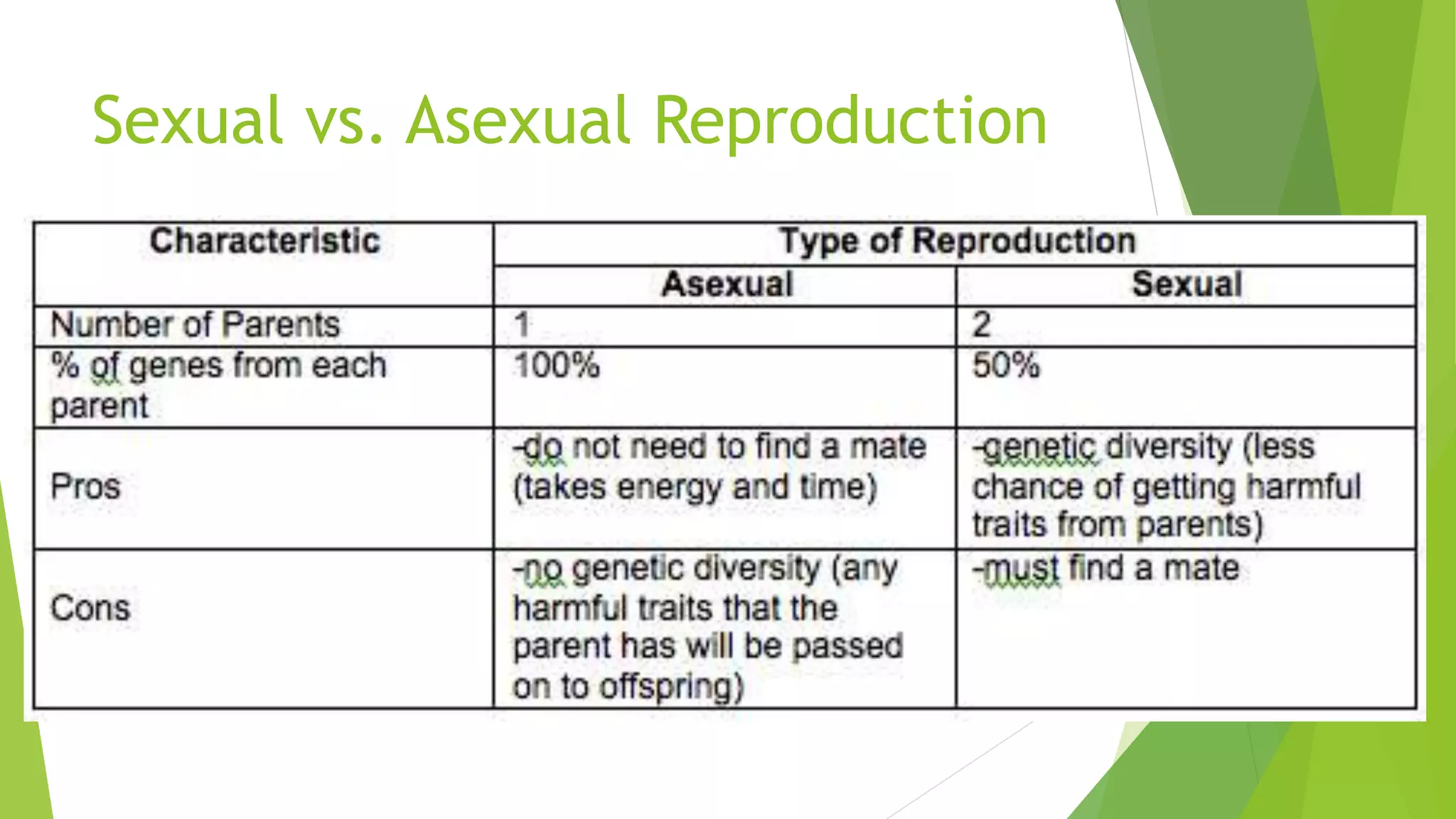
 Sexual vs. Asexual Reproduction
Internal and External Fertilization
and Development
 Internal fertilization – fertilization inside
the body
 External fertilization – fertilization outside
the body
 Internal development – development inside
the body
 External development – development
outside the body
Internal and External Fertilization
 Internal
fertilization –sperm
is introduced inside
the female body
through sexual
intercourse or
copulation (eg.
humans, mammals,
birds)
Internal and External
Fertilization
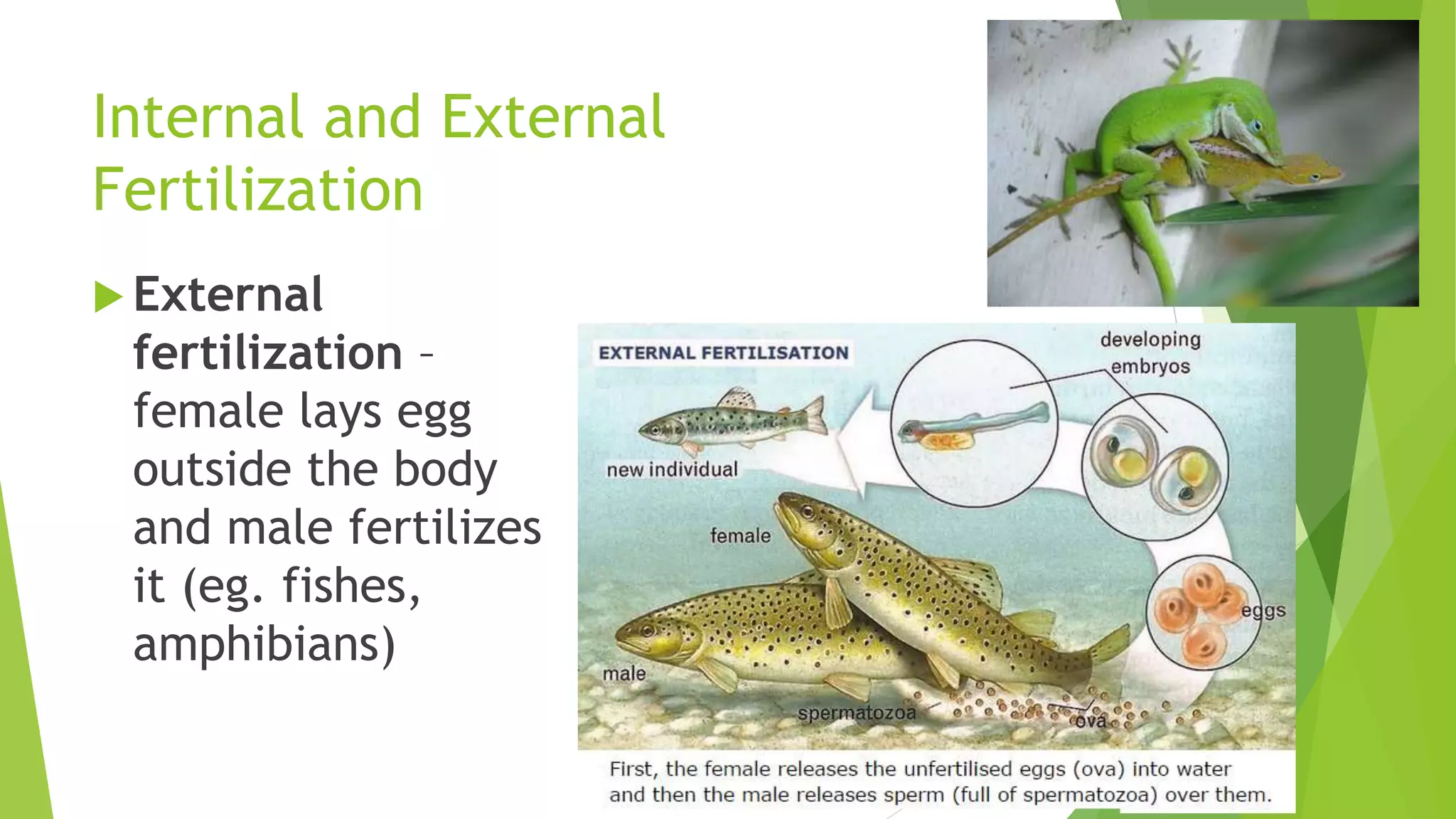
 External
fertilization –
female lays egg
outside the body
and male fertilizes
it (eg. fishes,
amphibians)
Internal and External Fertilization
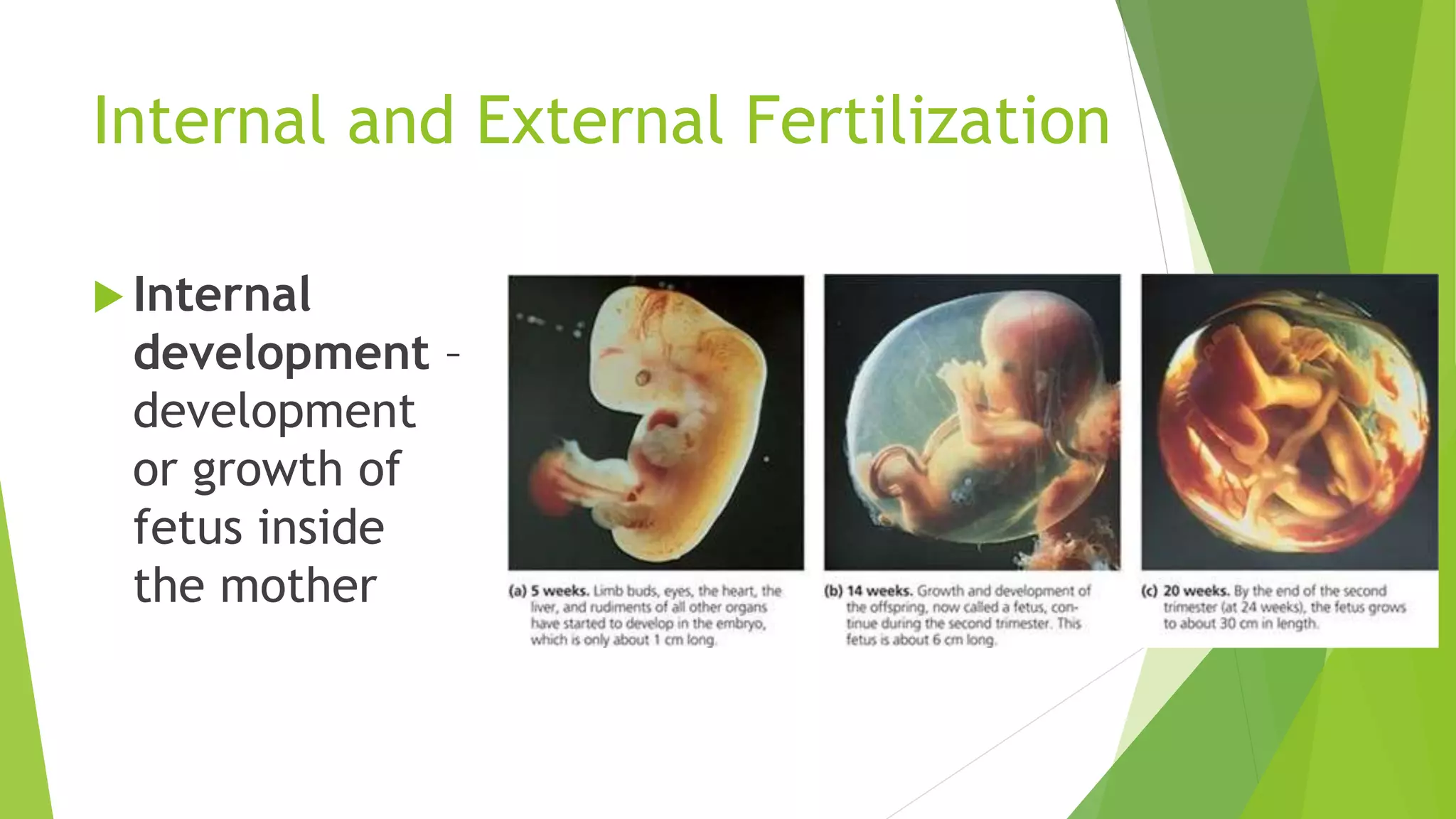
 Internal
development –
development
or growth of
fetus inside
the mother
Internal and External Fertilization
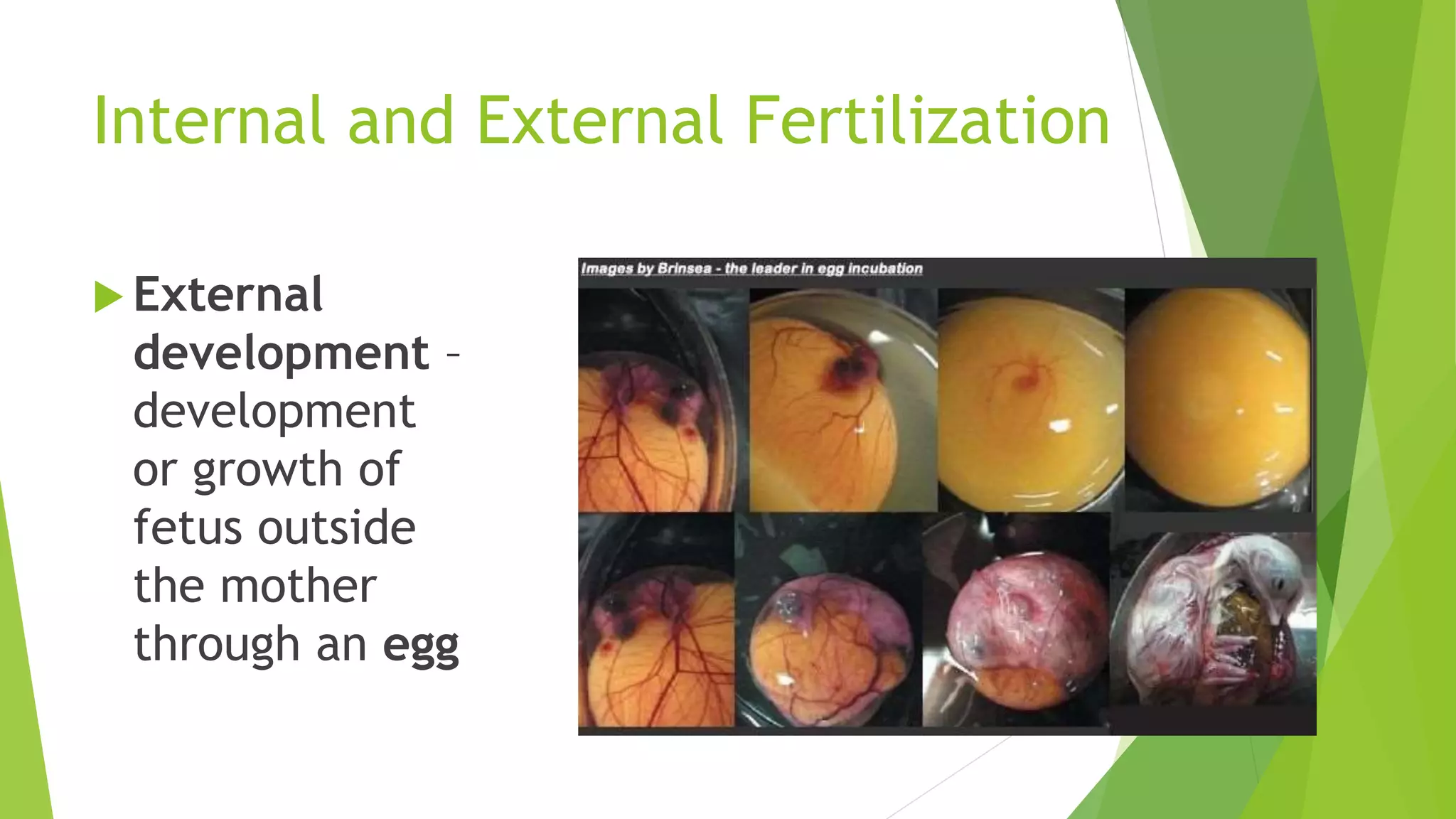
 External
development –
development
or growth of
fetus outside
the mother
through an egg
Fertilization and Development
Among Animals
 Internal fertilization and internal
development (ex. humans, pig)
 Internal fertilization and external
development (ex. chicken)
 External fertilization and external
development (ex. frogs, fishes)
1. Tapeworms and Earthworms
 They are hermaphroditic (contains both male
and female sex organs)
 Tapeworm vs. Earthworms
1. Tapeworm can self-fertilize itself.
2. Even though earthworms have the male and
female sex organs, they cannot self-fertilize
and needs a partner (cross-fertilization)
1. Tapeworms and Earthworms
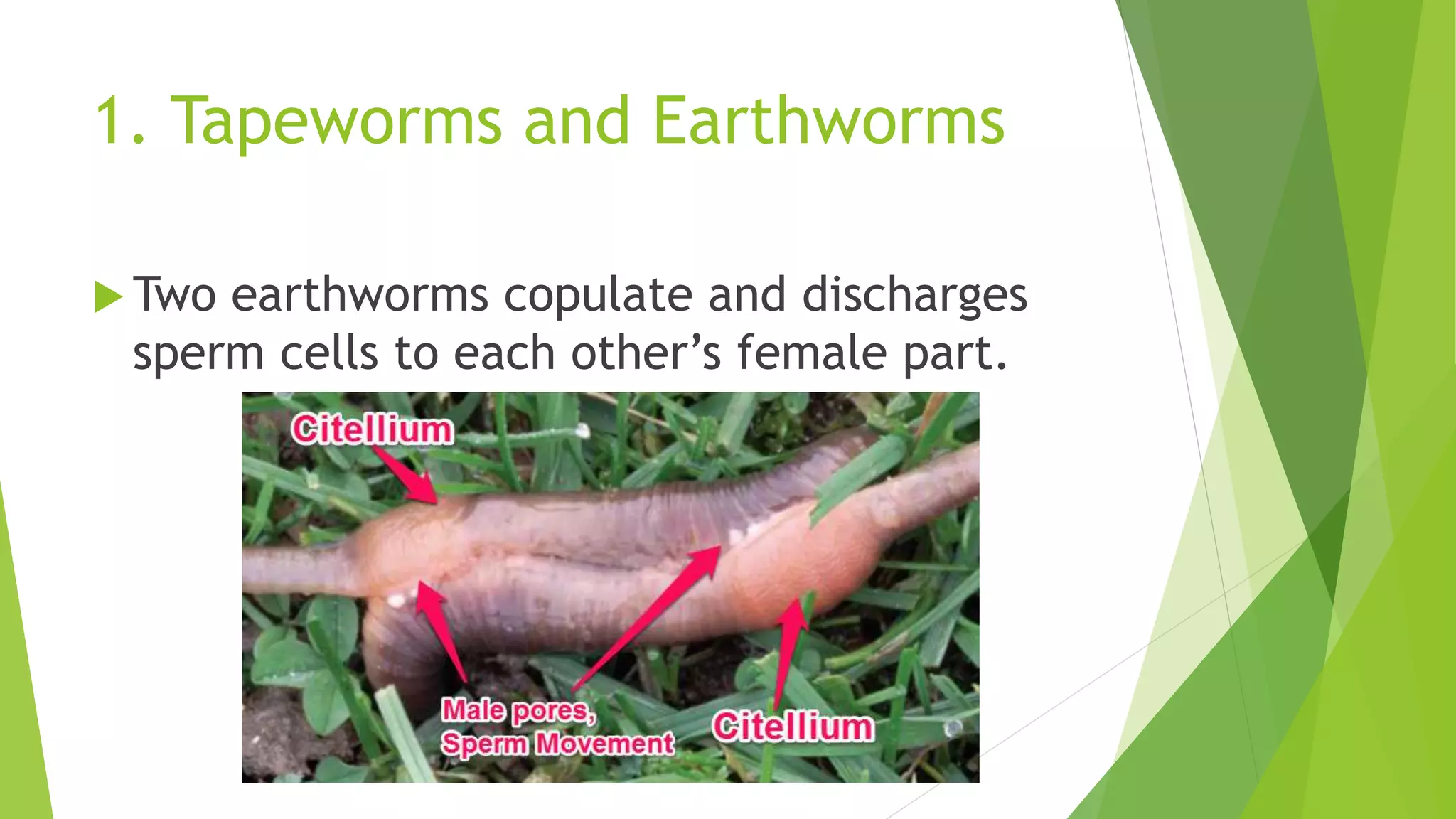
 Two earthworms copulate and discharges
sperm cells to each other’s female part.
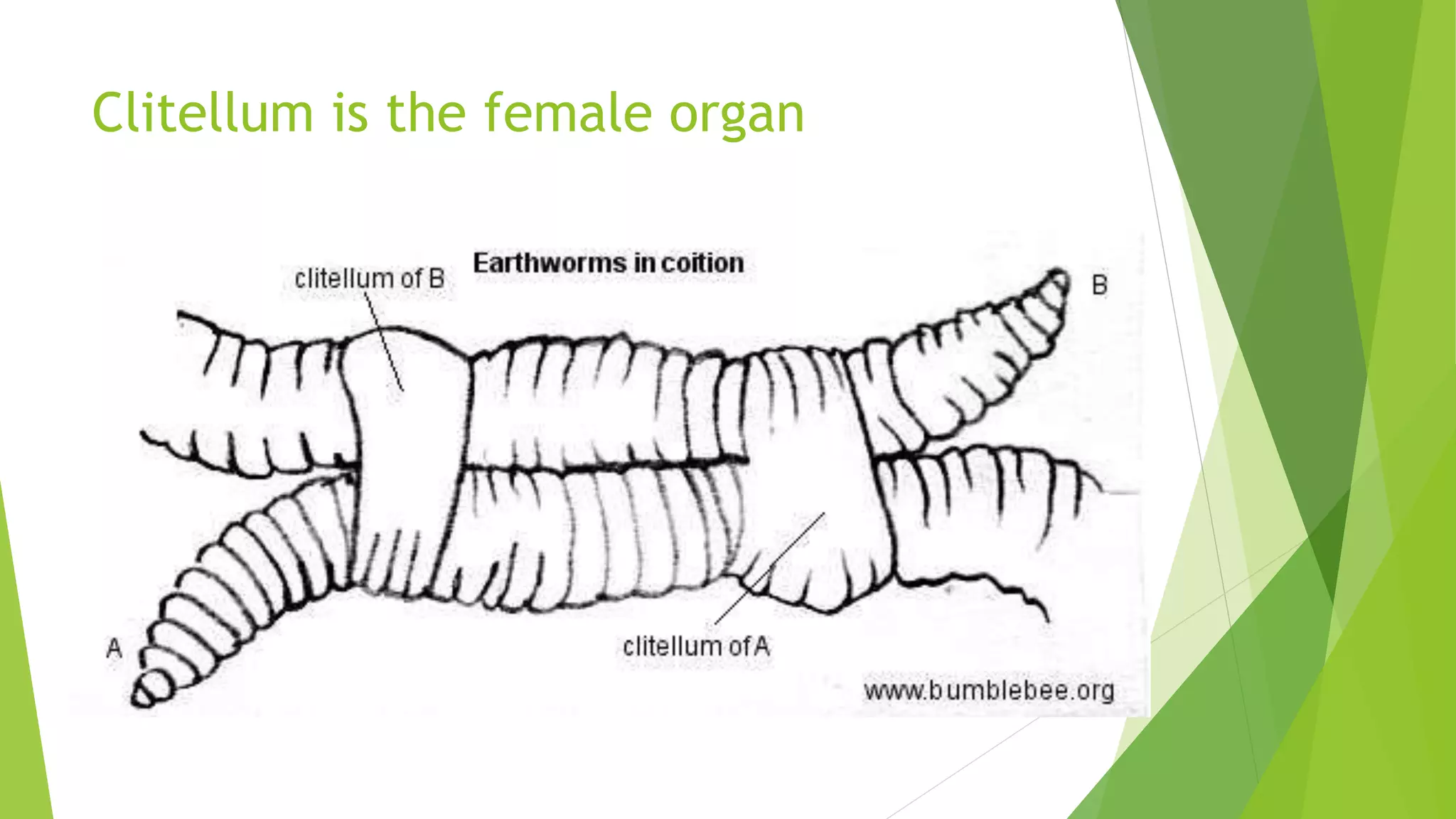
Clitellum is the female organ
1. Tapeworms and Earthworms
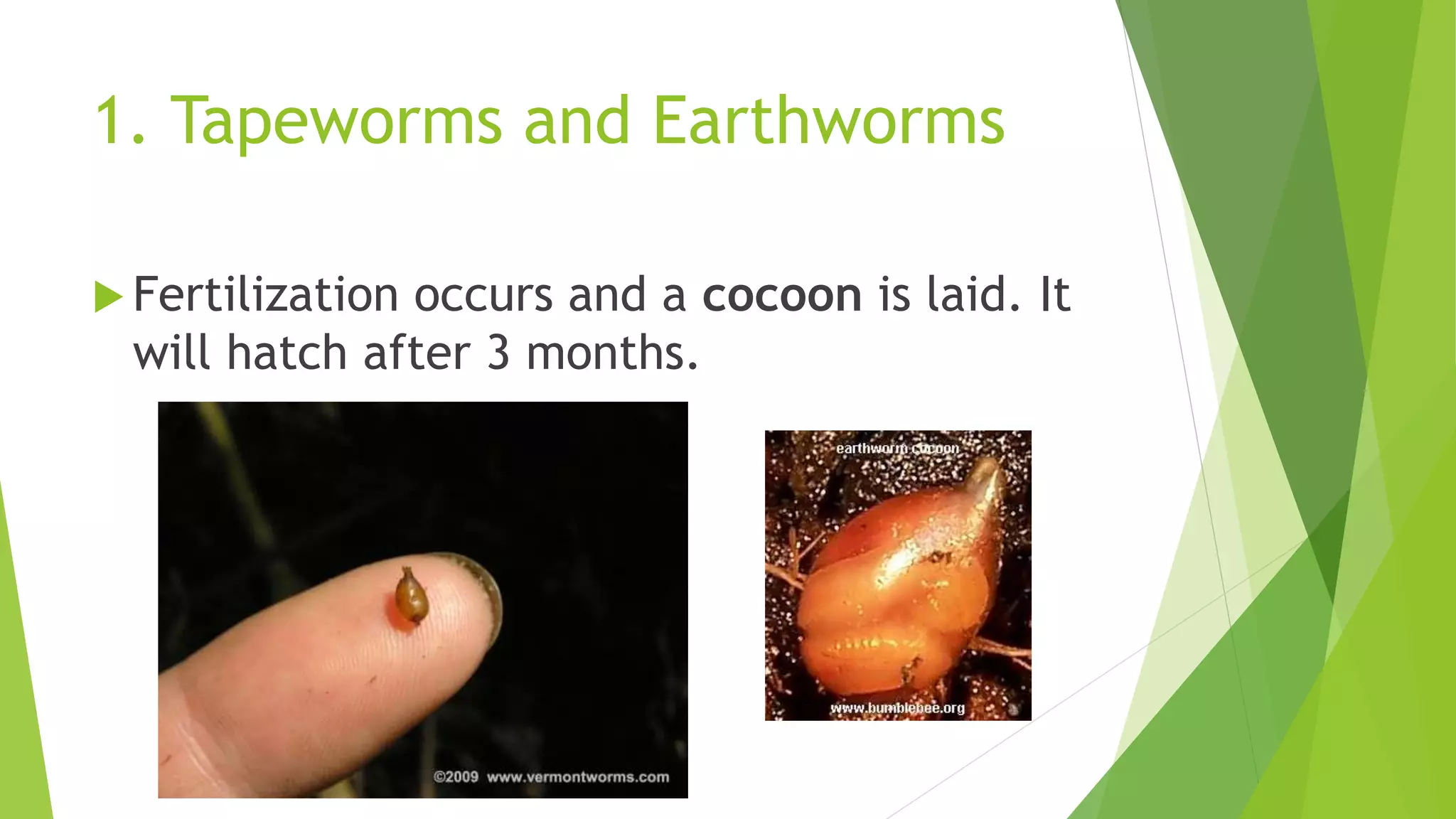
 Fertilization occurs and a cocoon is laid. It
will hatch after 3 months.
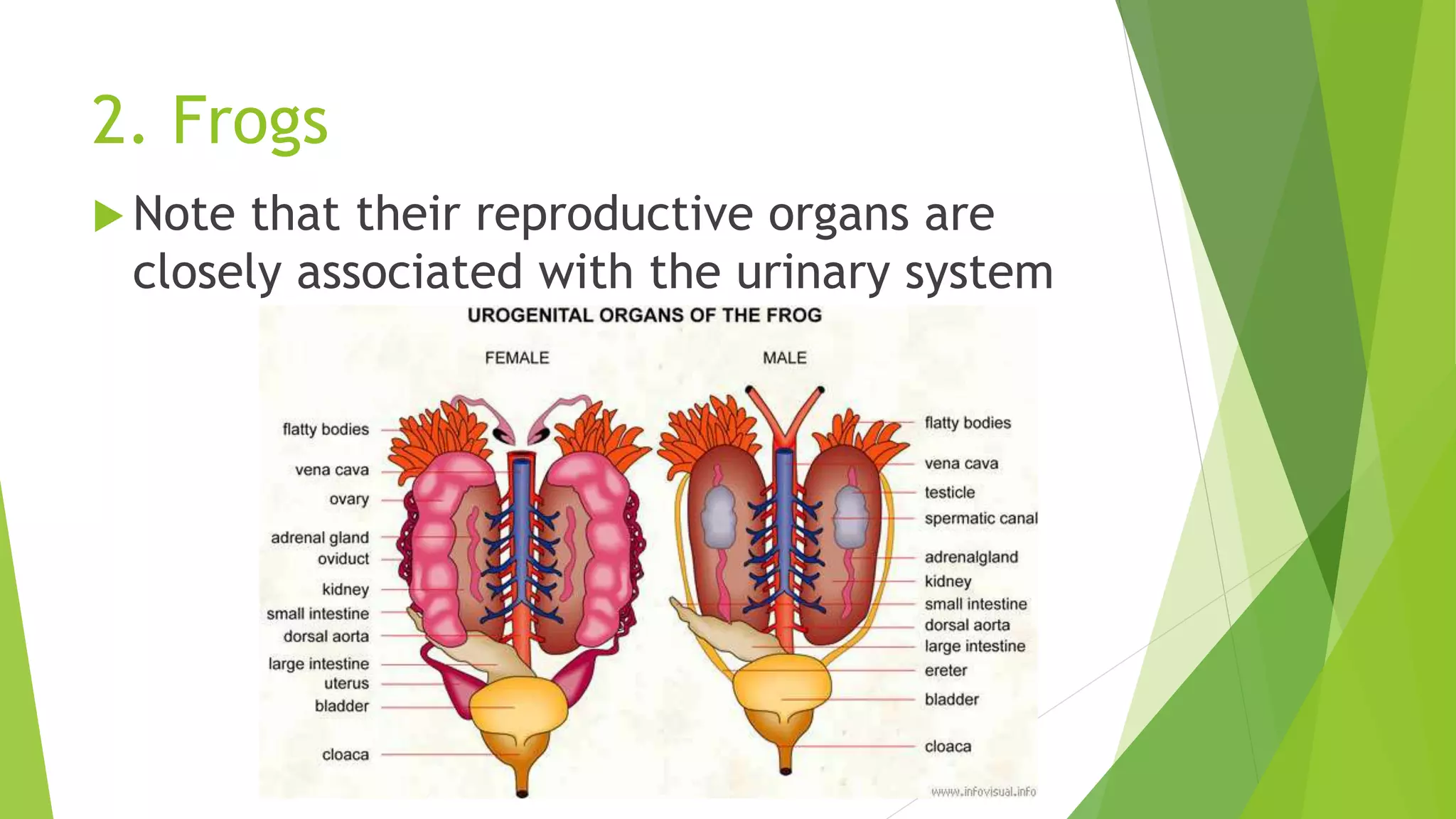
2. Frogs
 Note that their reproductive organs are
closely associated with the urinary system
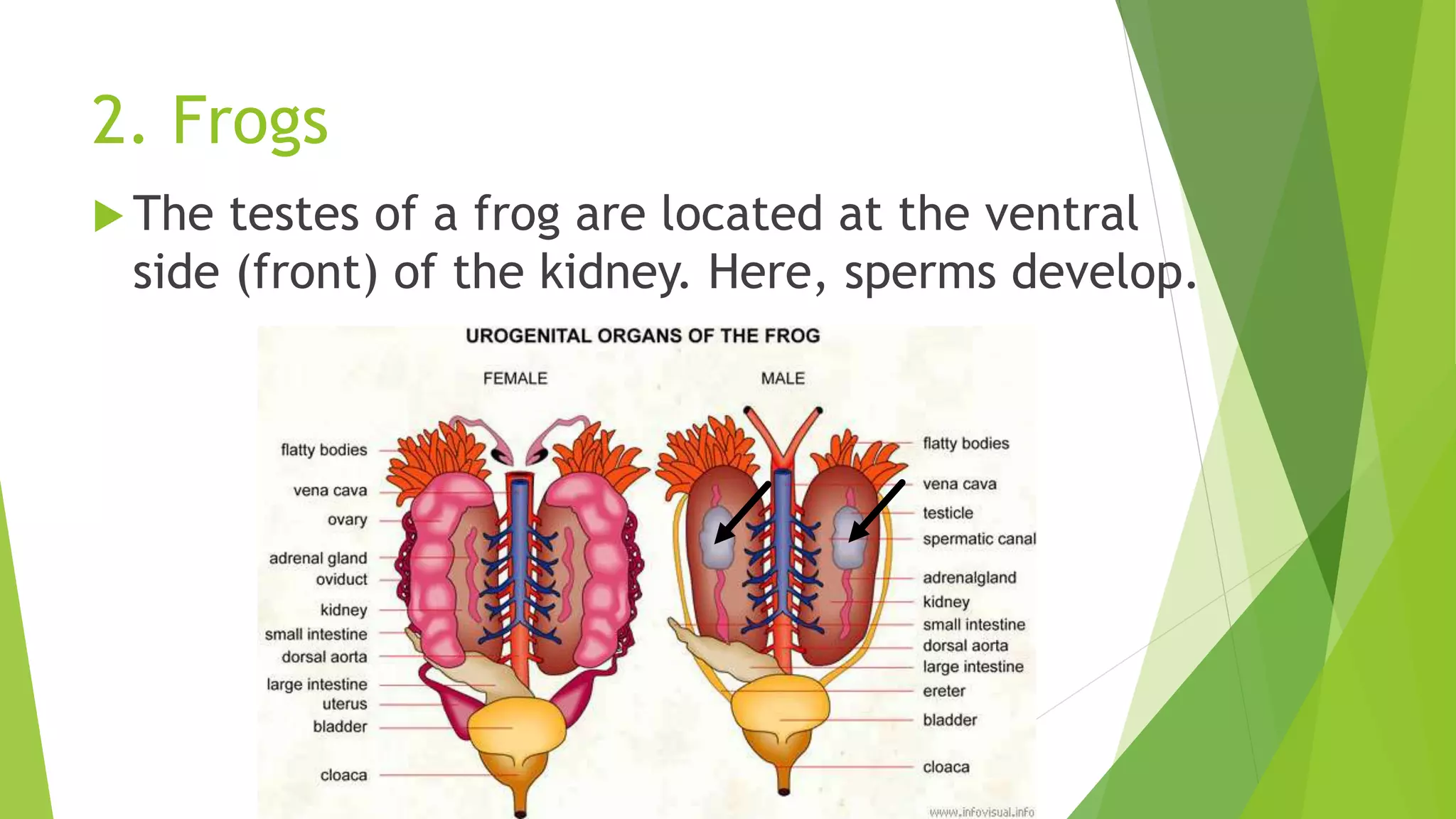
2. Frogs
 The testes of a frog are located at the ventral
side (front) of the kidney. Here, sperms develop.
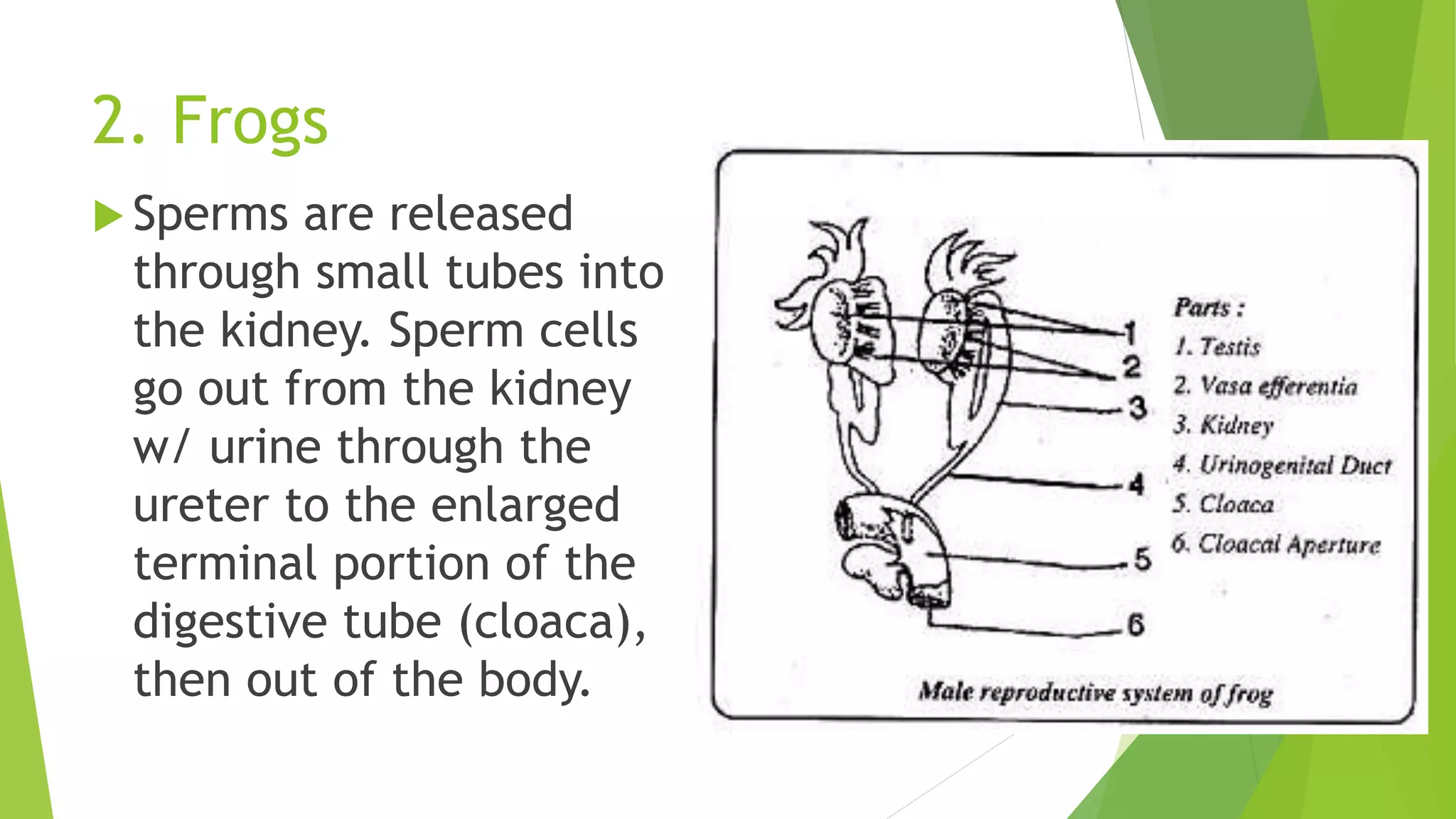
2. Frogs
 Sperms are released
through small tubes into
the kidney. Sperm cells
go out from the kidney
w/ urine through the
ureter to the enlarged
terminal portion of the
digestive tube (cloaca),
then out of the body.
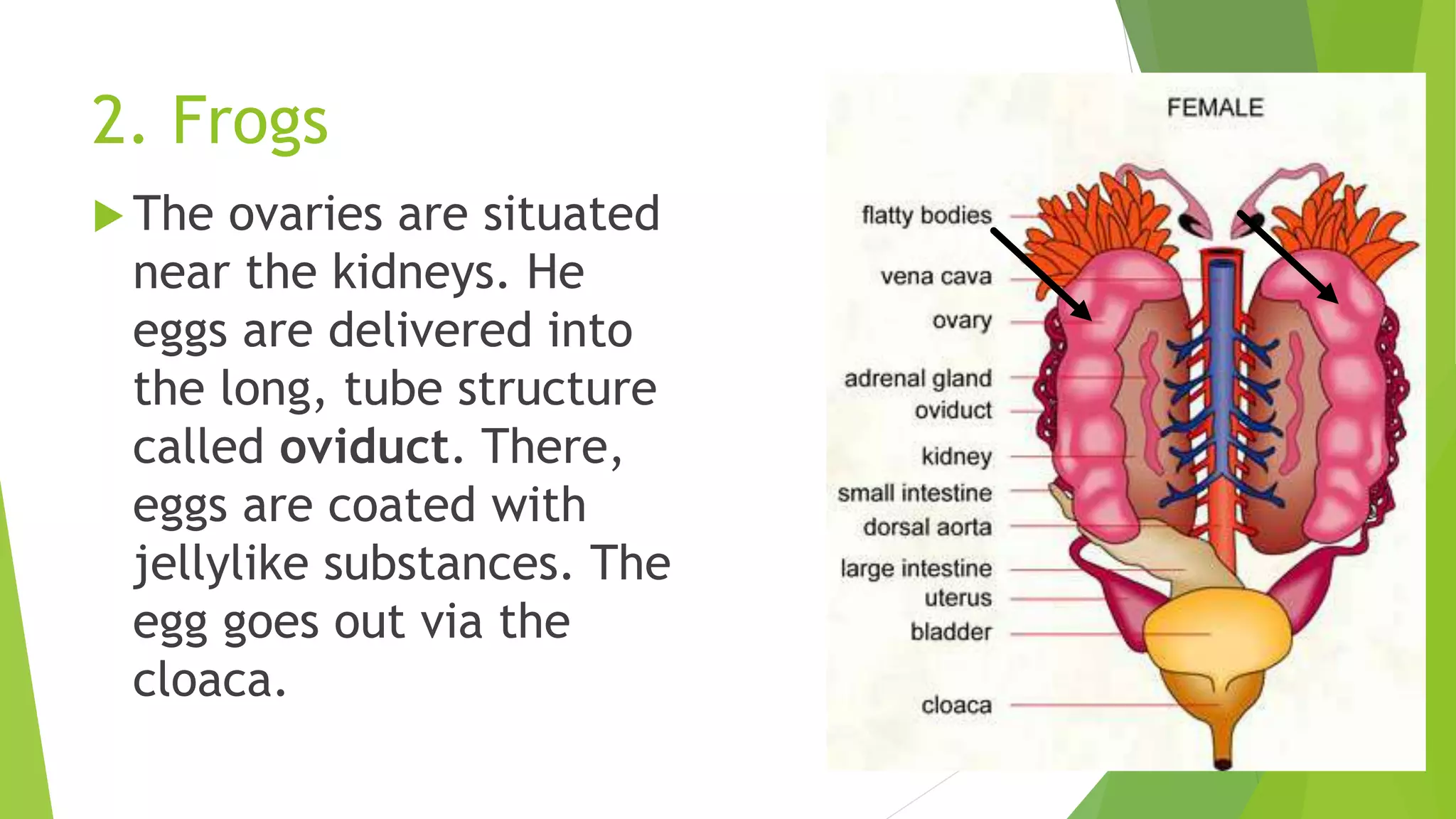
2. Frogs
 The ovaries are situated
near the kidneys. He
eggs are delivered into
the long, tube structure
called oviduct. There,
eggs are coated with
jellylike substances. The
egg goes out via the
cloaca.
2. Frogs
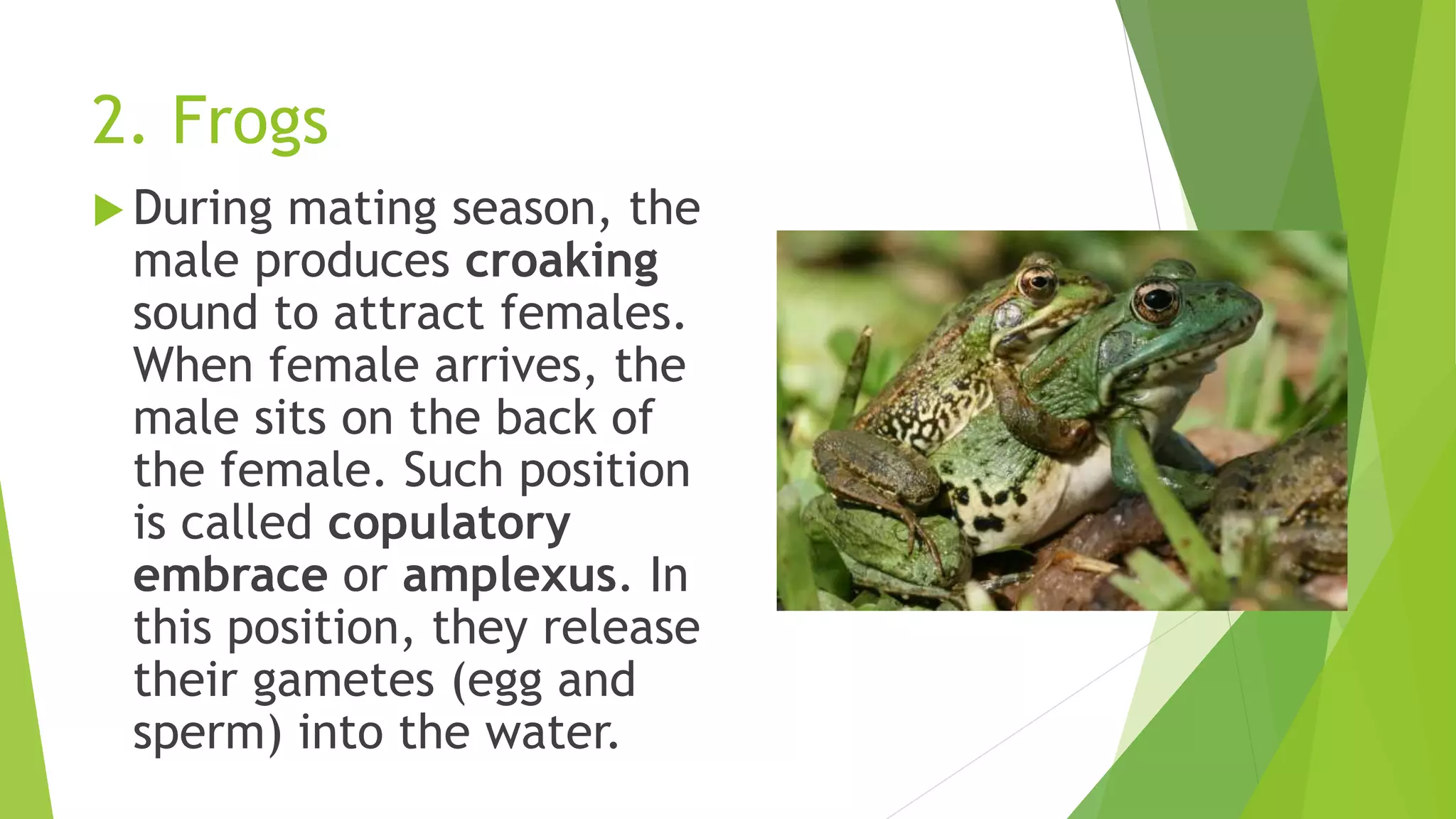
 During mating season, the
male produces croaking
sound to attract females.
When female arrives, the
male sits on the back of
the female. Such position
is called copulatory
embrace or amplexus. In
this position, they release
their gametes (egg and
sperm) into the water.
2. Frogs
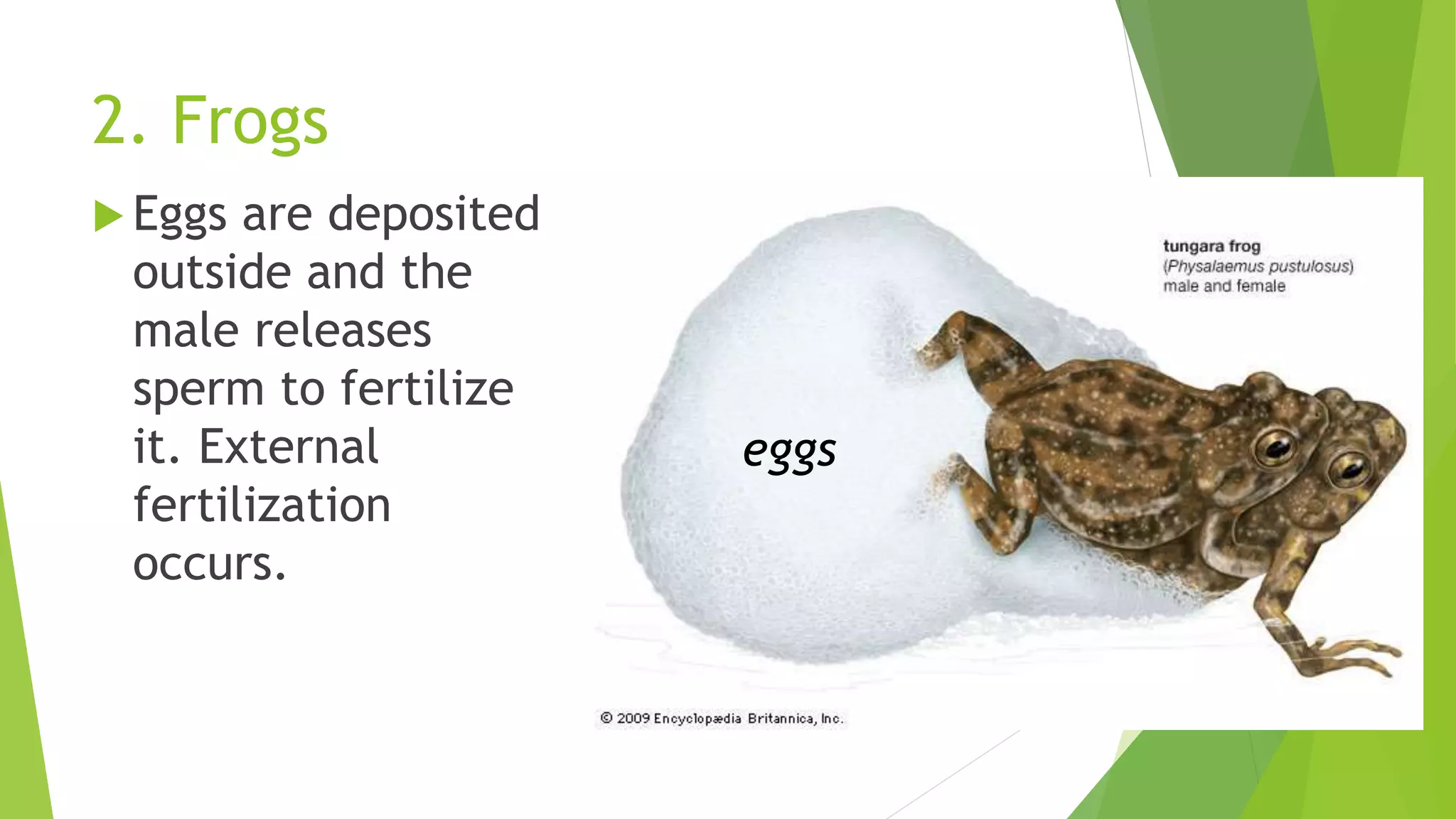
 Eggs are deposited
outside and the
male releases
sperm to fertilize
it. External
fertilization
occurs.
eggs
3. Birds
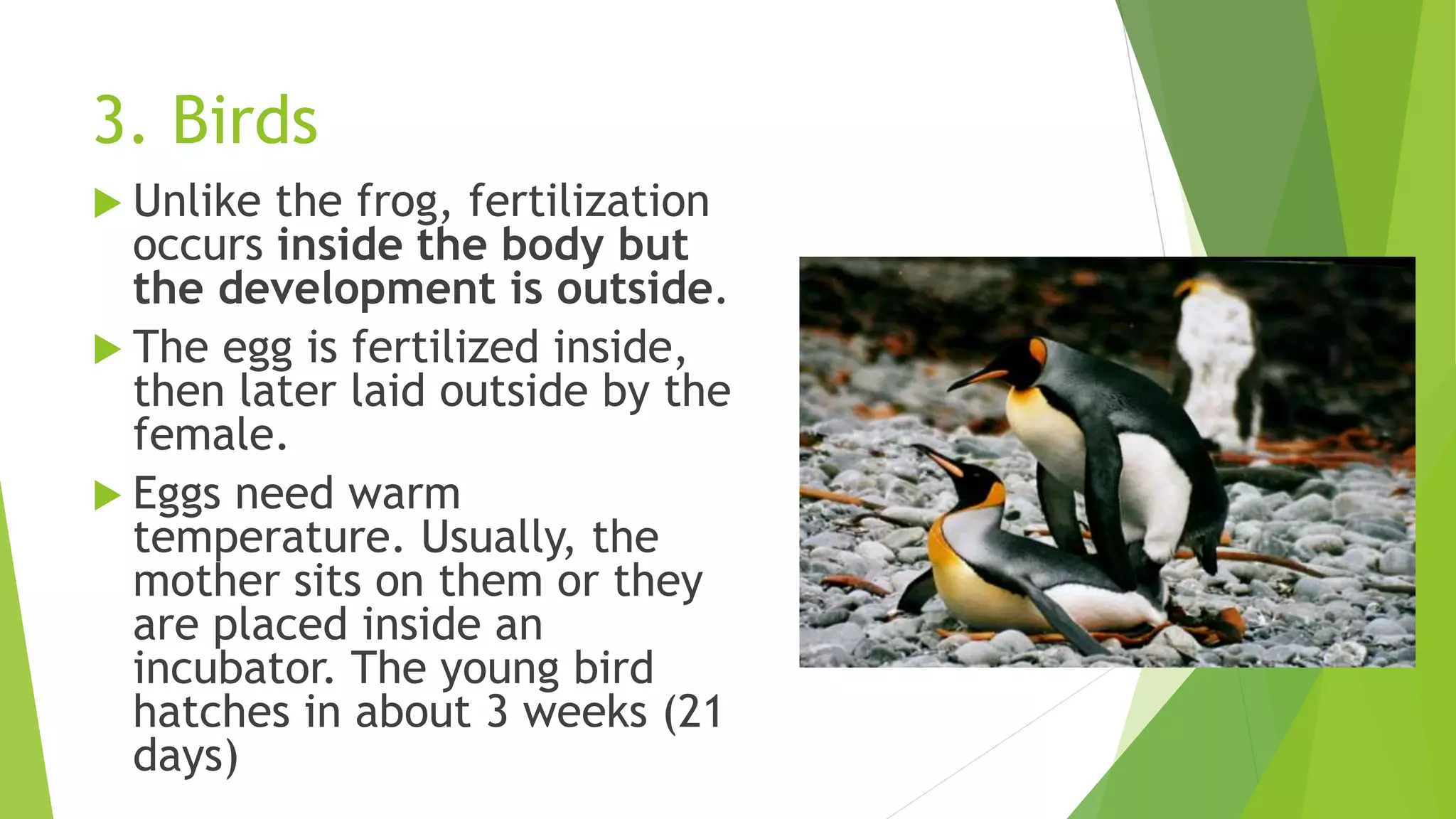
 Unlike the frog, fertilization
occurs inside the body but
the development is outside.
 The egg is fertilized inside,
then later laid outside by the
female.
 Eggs need warm
temperature. Usually, the
mother sits on them or they
are placed inside an
incubator. The young bird
hatches in about 3 weeks (21
days)
3. Birds
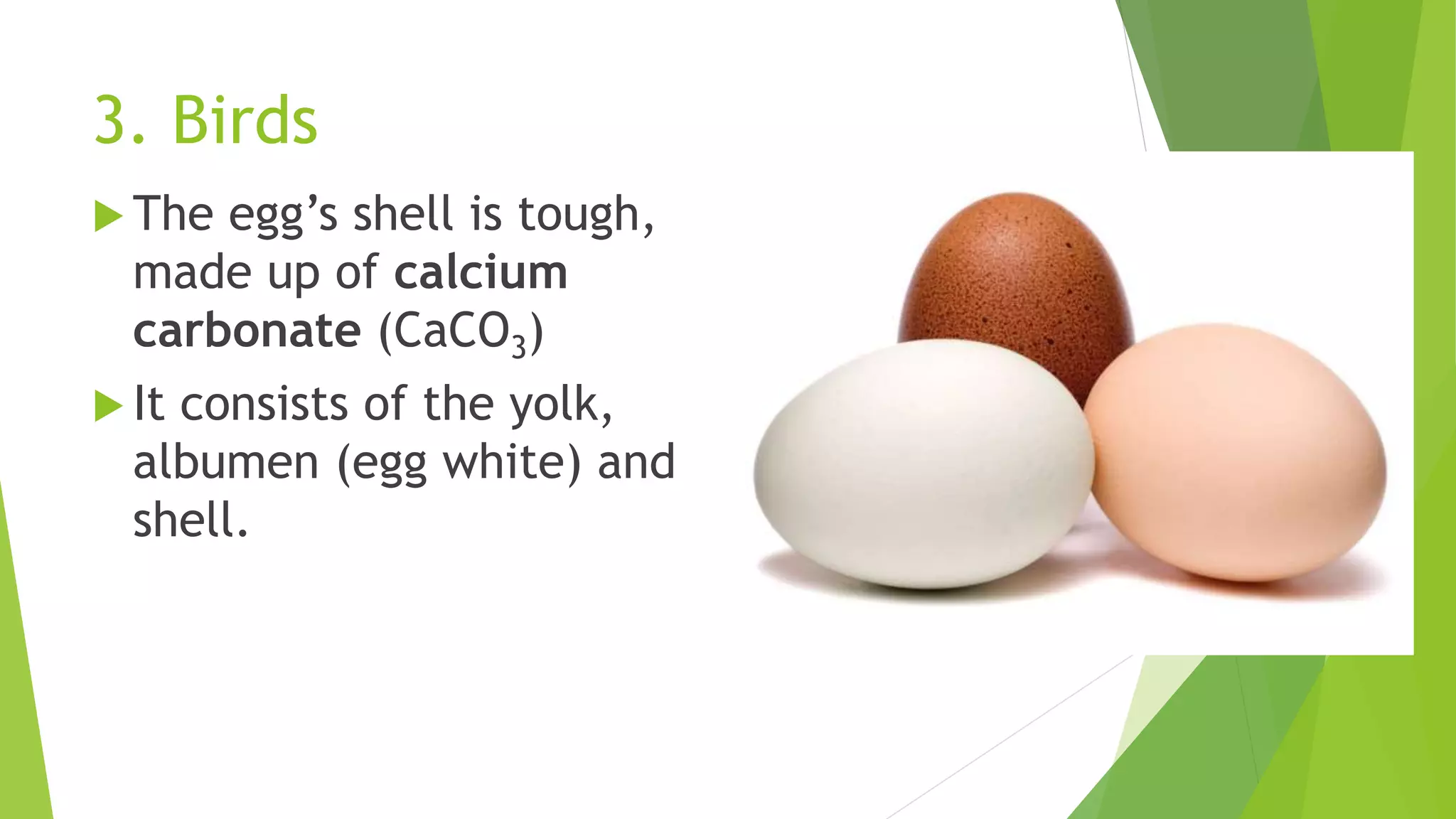
 The egg’s shell is tough,
made up of calcium
carbonate (CaCO3)
 It consists of the yolk,
albumen (egg white) and
shell.
We will not study human
reproduction. You will study that in
the next grade level.
Sexual vs. Asexual Reproduction
Activity: ½ crosswise
Answer “Check Your Understanding” p. 143
Assignment: Notebook
Answer “Check Your Knowledge B”,
#s 1-5, p. 143
Sources:
 Science Links 7

Unit 4, Lesson 4.5 - Sexual Reproduction in Animals

  • 1.
    Sexual Reproduction in Animals Unit Four,Lesson 4.5 By Margielene D. Judan
  • 2.
    Lesson Outline  Internaland External Fertilization  Internal and External Development  Sexual Reproduction Among Some Animals 1. Tapeworms and Earthworms 2. Frog 3. Bird  Sexual vs. Asexual Reproduction
  • 3.
    Internal and ExternalFertilization and Development  Internal fertilization – fertilization inside the body  External fertilization – fertilization outside the body  Internal development – development inside the body  External development – development outside the body
  • 4.
    Internal and ExternalFertilization  Internal fertilization –sperm is introduced inside the female body through sexual intercourse or copulation (eg. humans, mammals, birds)
  • 5.
    Internal and External Fertilization External fertilization – female lays egg outside the body and male fertilizes it (eg. fishes, amphibians)
  • 6.
    Internal and ExternalFertilization  Internal development – development or growth of fetus inside the mother
  • 7.
    Internal and ExternalFertilization  External development – development or growth of fetus outside the mother through an egg
  • 8.
    Fertilization and Development AmongAnimals  Internal fertilization and internal development (ex. humans, pig)  Internal fertilization and external development (ex. chicken)  External fertilization and external development (ex. frogs, fishes)
  • 9.
    1. Tapeworms andEarthworms  They are hermaphroditic (contains both male and female sex organs)  Tapeworm vs. Earthworms 1. Tapeworm can self-fertilize itself. 2. Even though earthworms have the male and female sex organs, they cannot self-fertilize and needs a partner (cross-fertilization)
  • 10.
    1. Tapeworms andEarthworms  Two earthworms copulate and discharges sperm cells to each other’s female part.
  • 11.
    Clitellum is thefemale organ
  • 12.
    1. Tapeworms andEarthworms  Fertilization occurs and a cocoon is laid. It will hatch after 3 months.
  • 13.
    2. Frogs  Notethat their reproductive organs are closely associated with the urinary system
  • 14.
    2. Frogs  Thetestes of a frog are located at the ventral side (front) of the kidney. Here, sperms develop.
  • 15.
    2. Frogs  Spermsare released through small tubes into the kidney. Sperm cells go out from the kidney w/ urine through the ureter to the enlarged terminal portion of the digestive tube (cloaca), then out of the body.
  • 16.
    2. Frogs  Theovaries are situated near the kidneys. He eggs are delivered into the long, tube structure called oviduct. There, eggs are coated with jellylike substances. The egg goes out via the cloaca.
  • 17.
    2. Frogs  Duringmating season, the male produces croaking sound to attract females. When female arrives, the male sits on the back of the female. Such position is called copulatory embrace or amplexus. In this position, they release their gametes (egg and sperm) into the water.
  • 18.
    2. Frogs  Eggsare deposited outside and the male releases sperm to fertilize it. External fertilization occurs. eggs
  • 19.
    3. Birds  Unlikethe frog, fertilization occurs inside the body but the development is outside.  The egg is fertilized inside, then later laid outside by the female.  Eggs need warm temperature. Usually, the mother sits on them or they are placed inside an incubator. The young bird hatches in about 3 weeks (21 days)
  • 20.
    3. Birds  Theegg’s shell is tough, made up of calcium carbonate (CaCO3)  It consists of the yolk, albumen (egg white) and shell.
  • 21.
    We will notstudy human reproduction. You will study that in the next grade level.
  • 22.
    Sexual vs. AsexualReproduction
  • 23.
    Activity: ½ crosswise Answer“Check Your Understanding” p. 143
  • 24.
    Assignment: Notebook Answer “CheckYour Knowledge B”, #s 1-5, p. 143
  • 25.