

INCUBATION,
HATCHING, AND
BROODING
Dr. P. Ravikanth Reddy
MVSc, PhD
Guest Faculty
KBR College of Agriculture and Horticulture
Acharya NG Ranga Agricultural University
Dr. YSR Horticulture University
 Principles of incubation
 Temperature
 Humidity
 Turning of eggs
 Position of eggs
 Ventilation
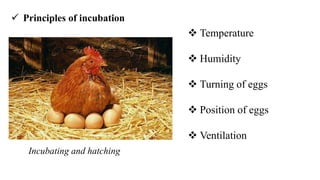
Incubating and hatching
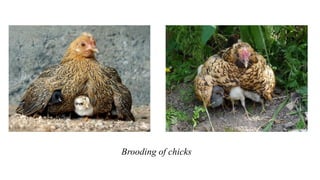
Brooding of chicks
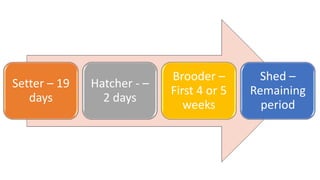
Setter – 19
days
Hatcher - –
2 days
Brooder –
First 4 or 5
weeks
Shed –
Remaining
period
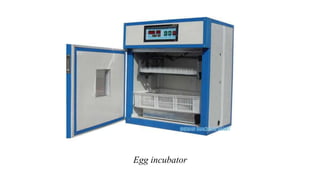
Egg incubator
Temperature
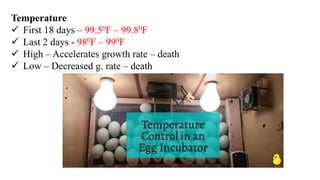
 First 18 days – 99.50F – 99.80F
 Last 2 days - 980F – 990F
 High – Accelerates growth rate – death
 Low – Decreased g. rate – death
Humidity
 Low humidity – evaporation of egg contents – small chick
 High humidity – No evaporation of egg contents – Big chick
 For pipping (Preventing beak sticking).
 Setter – 60% RH
 Hatcher – 70-75% RH
 RH requirement depends upon the shell thickness,
shell quality, season of hatch, and age of breeding
flock.
Dry and Wet bulb thermometers
Air requirement
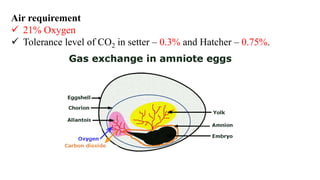
 21% Oxygen
 Tolerance level of CO2 in setter – 0.3% and Hatcher – 0.75%.
Position of eggs in incubator
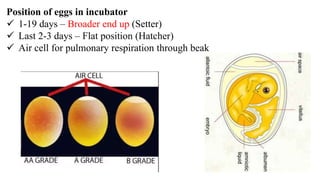
 1-19 days – Broader end up (Setter)
 Last 2-3 days – Flat position (Hatcher)
 Air cell for pulmonary respiration through beak
Turning of eggs
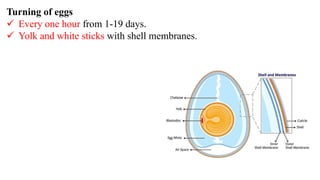
 Every one hour from 1-19 days.
 Yolk and white sticks with shell membranes.
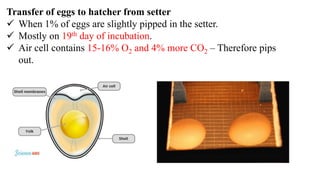
Transfer of eggs to hatcher from setter
 When 1% of eggs are slightly pipped in the setter.
 Mostly on 19th day of incubation.
 Air cell contains 15-16% O2 and 4% more CO2 – Therefore pips
out.
 Disinfection - HCHO
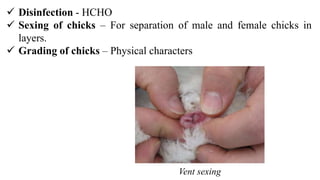
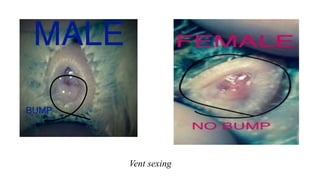
 Sexing of chicks – For separation of male and female chicks in
layers.
 Grading of chicks – Physical characters
Vent sexing
Vent sexing
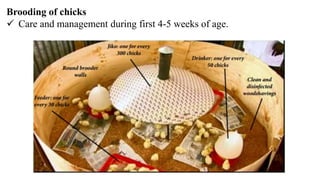
Brooding of chicks
 Care and management during first 4-5 weeks of age.
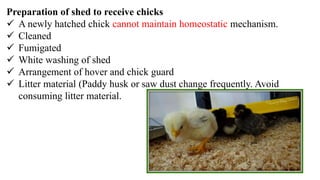
Preparation of shed to receive chicks
 A newly hatched chick cannot maintain homeostatic mechanism.
 Cleaned
 Fumigated
 White washing of shed
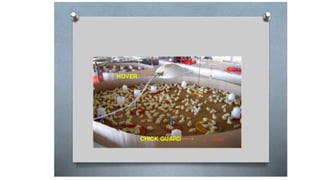
 Arrangement of hover and chick guard
 Litter material (Paddy husk or saw dust change frequently. Avoid
consuming litter material.
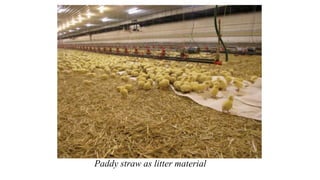
Paddy straw as litter material
 Temp – 950F for first week and decreased 50F every week till it
reaches room temperature.
 First 2 days – Maize
 After that – Mash diet containing 20% CP, and 2800 Kcal ME.
 Optimum spaces for feeders and waters.
 Light is required for 24 hrs upto 8 weeks period.
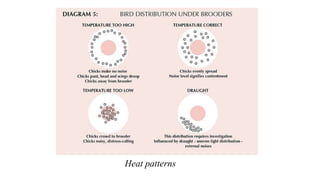
Heat patterns

Unit 13 Incubation, hatching and brooding.pptx

  • 1.
    INCUBATION, HATCHING, AND BROODING Dr. P.Ravikanth Reddy MVSc, PhD Guest Faculty KBR College of Agriculture and Horticulture Acharya NG Ranga Agricultural University Dr. YSR Horticulture University
  • 2.
     Principles ofincubation  Temperature  Humidity  Turning of eggs  Position of eggs  Ventilation Incubating and hatching
  • 3.
  • 4.
    Setter – 19 days Hatcher- – 2 days Brooder – First 4 or 5 weeks Shed – Remaining period
  • 5.
  • 7.
    Temperature  First 18days – 99.50F – 99.80F  Last 2 days - 980F – 990F  High – Accelerates growth rate – death  Low – Decreased g. rate – death
  • 8.
    Humidity  Low humidity– evaporation of egg contents – small chick  High humidity – No evaporation of egg contents – Big chick  For pipping (Preventing beak sticking).
  • 9.
     Setter –60% RH  Hatcher – 70-75% RH  RH requirement depends upon the shell thickness, shell quality, season of hatch, and age of breeding flock. Dry and Wet bulb thermometers
  • 10.
    Air requirement  21%Oxygen  Tolerance level of CO2 in setter – 0.3% and Hatcher – 0.75%.
  • 11.
    Position of eggsin incubator  1-19 days – Broader end up (Setter)  Last 2-3 days – Flat position (Hatcher)  Air cell for pulmonary respiration through beak
  • 12.
    Turning of eggs Every one hour from 1-19 days.  Yolk and white sticks with shell membranes.
  • 13.
    Transfer of eggsto hatcher from setter  When 1% of eggs are slightly pipped in the setter.  Mostly on 19th day of incubation.  Air cell contains 15-16% O2 and 4% more CO2 – Therefore pips out.
  • 14.
     Disinfection -HCHO  Sexing of chicks – For separation of male and female chicks in layers.  Grading of chicks – Physical characters Vent sexing
  • 15.
  • 16.
    Brooding of chicks Care and management during first 4-5 weeks of age.
  • 17.
    Preparation of shedto receive chicks  A newly hatched chick cannot maintain homeostatic mechanism.  Cleaned  Fumigated  White washing of shed  Arrangement of hover and chick guard  Litter material (Paddy husk or saw dust change frequently. Avoid consuming litter material.
  • 19.
    Paddy straw aslitter material
  • 20.
     Temp –950F for first week and decreased 50F every week till it reaches room temperature.  First 2 days – Maize  After that – Mash diet containing 20% CP, and 2800 Kcal ME.  Optimum spaces for feeders and waters.  Light is required for 24 hrs upto 8 weeks period.
  • 21.