Basic Hatchery
Requirements
.
Hatchery
Hatchery is a machine
which provides the basic
requirement forthe
development of embryo
into a health chick
.
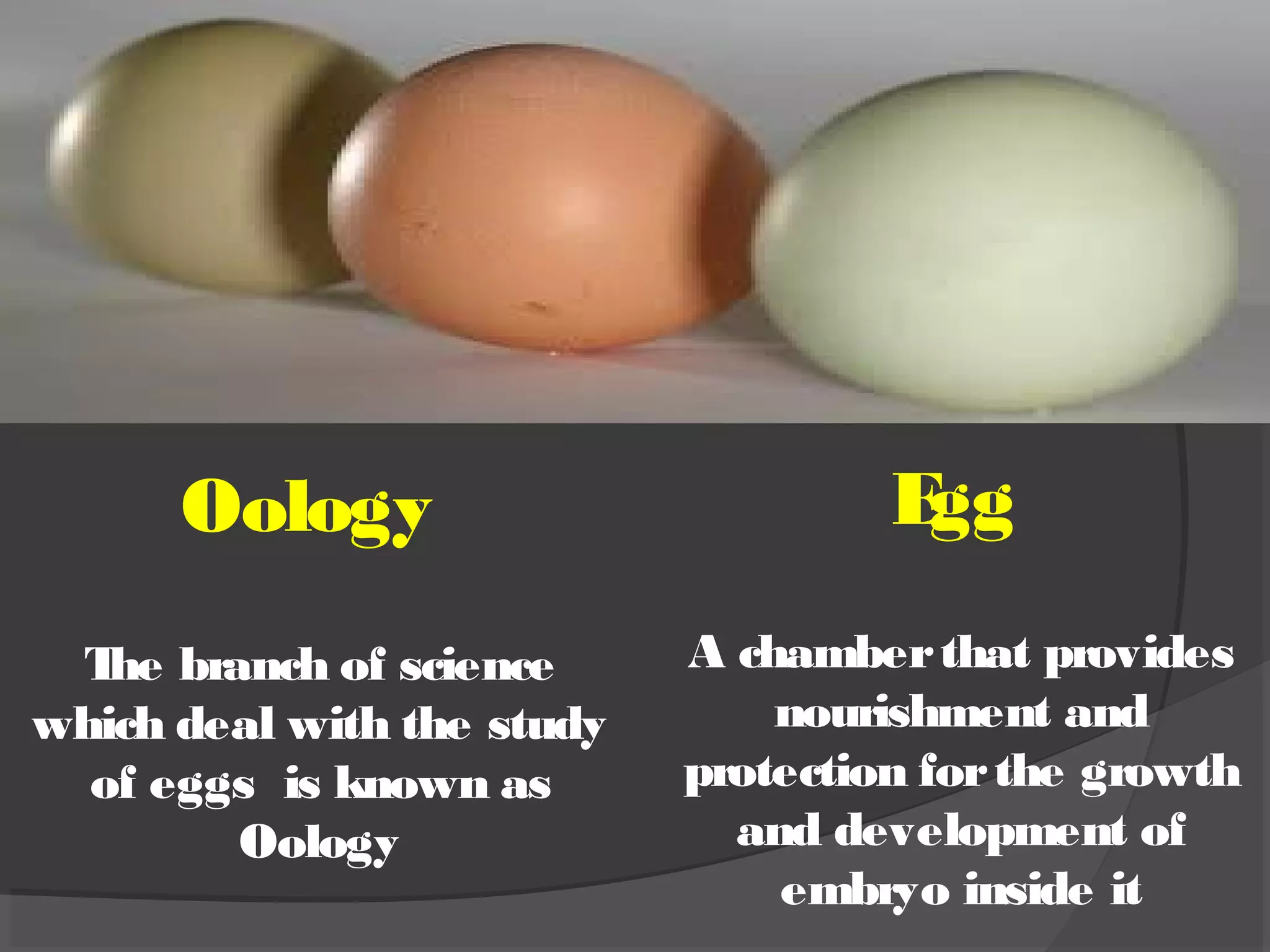
Oology
The branch of science
which deal with the study
of eggs is known as
Oology
Egg
A chamberthat provides
nourishment and
protection forthe growth
and development of
embryo inside it
.
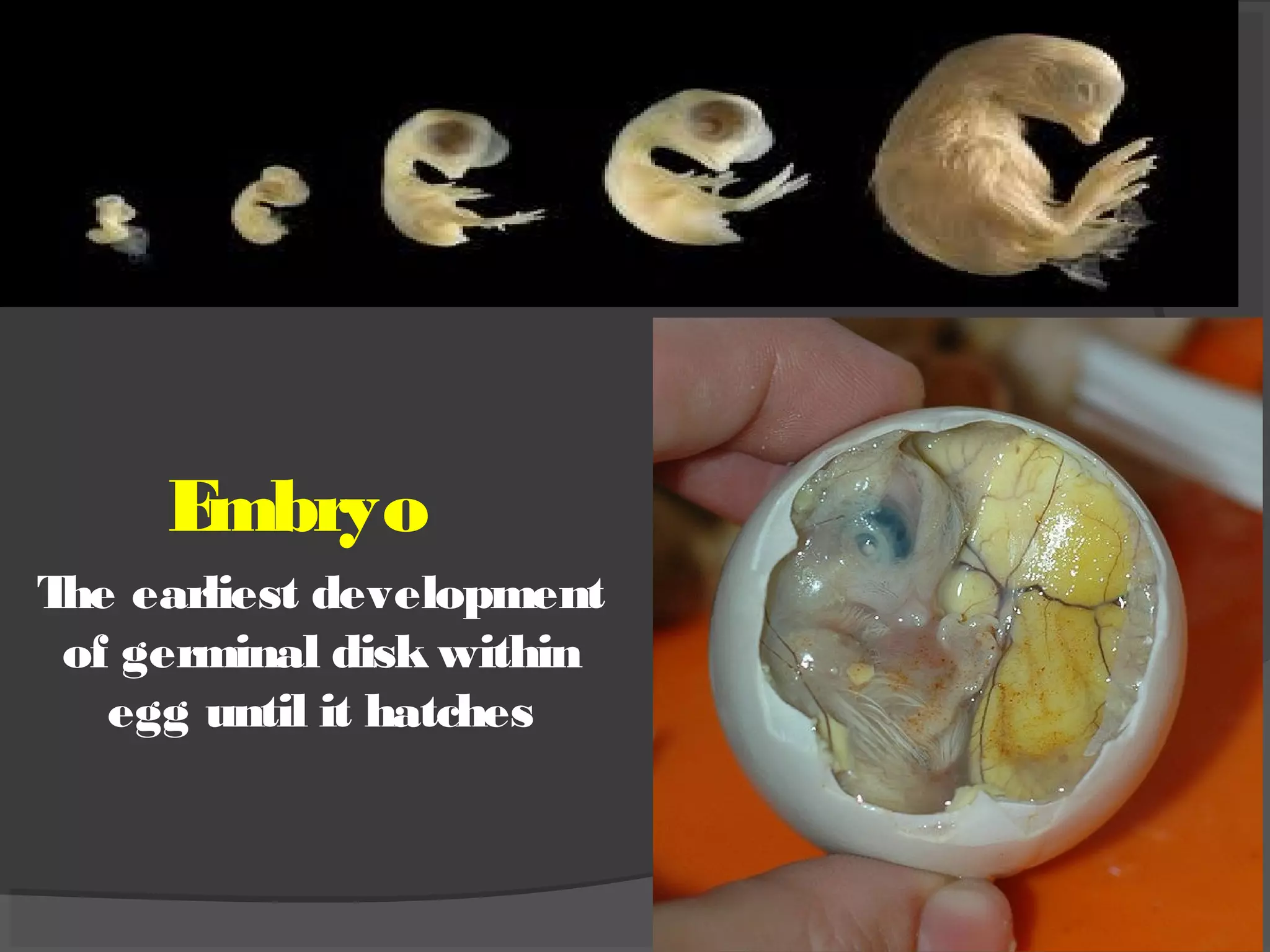
Embryo
The earliest development
of germinal disk within
egg until it hatches
.
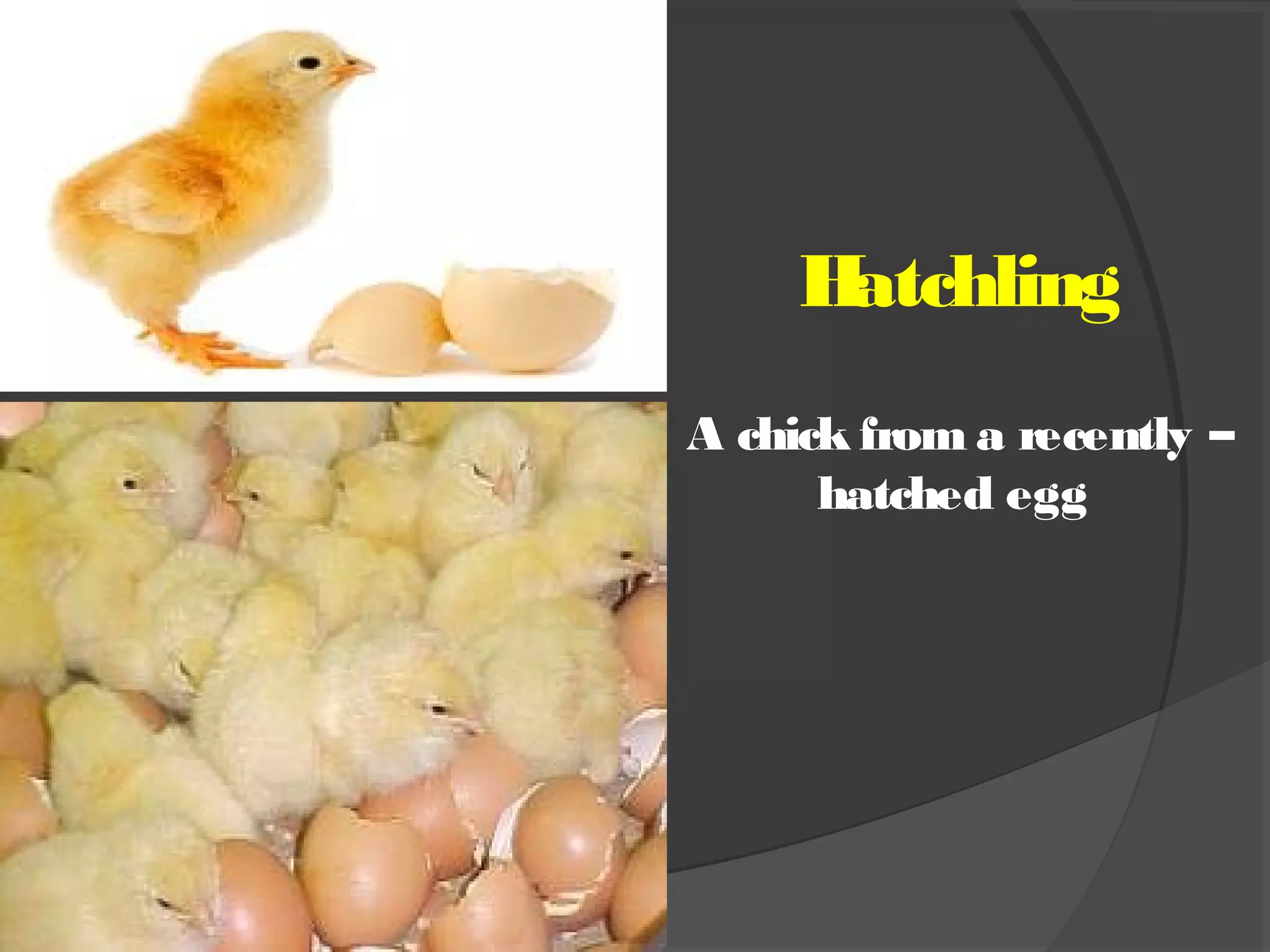
Hatchling
A chick from a recently –
hatched egg
.
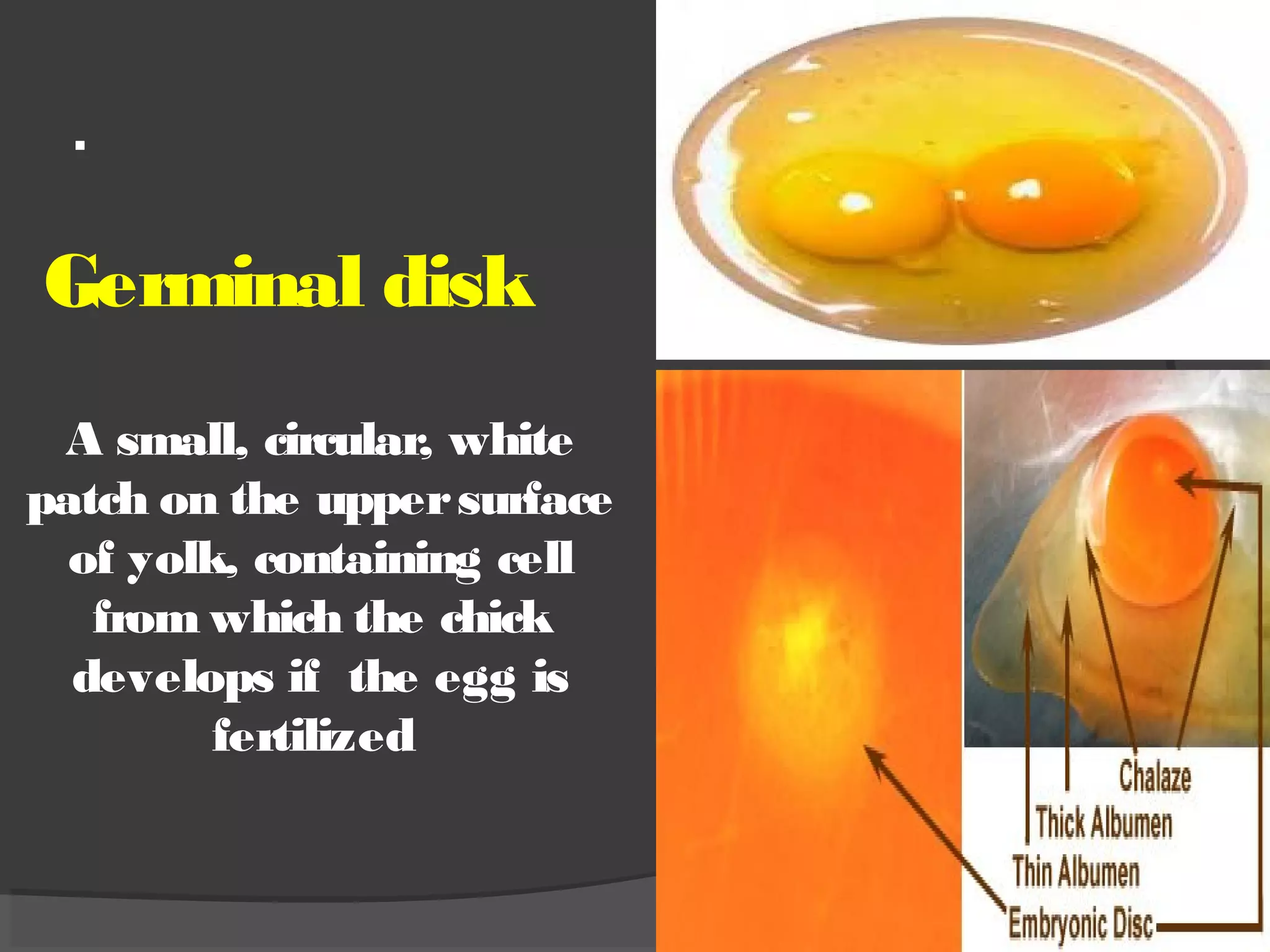
Germinal disk
A small, circular, white
patch on the uppersurface
of yolk, containing cell
from which the chick
develops if the egg is
fertilized
.
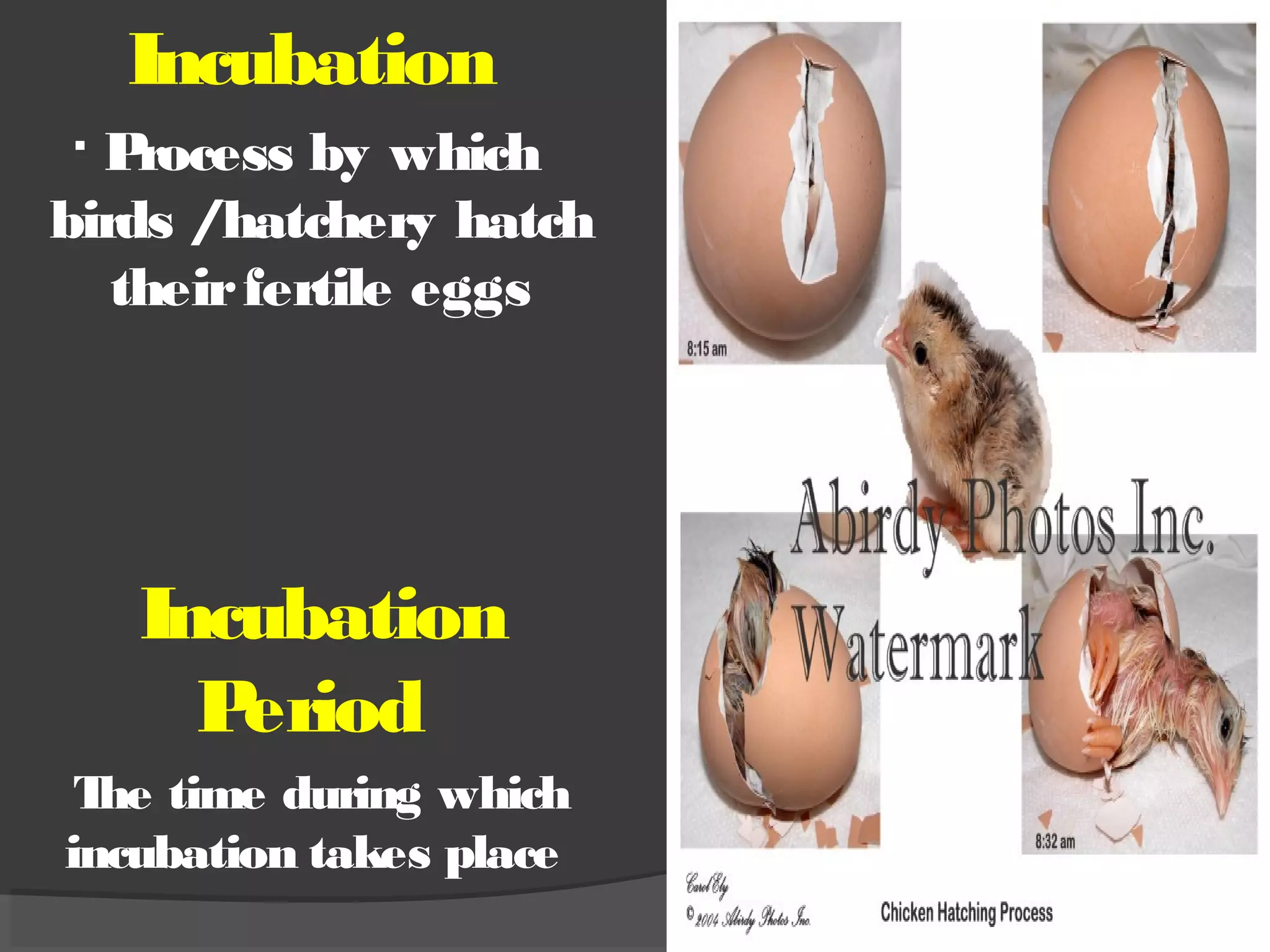
Incubation
Process by which
birds /hatchery hatch
theirfertile eggs
Incubation
Period
The time during which
incubation takes place
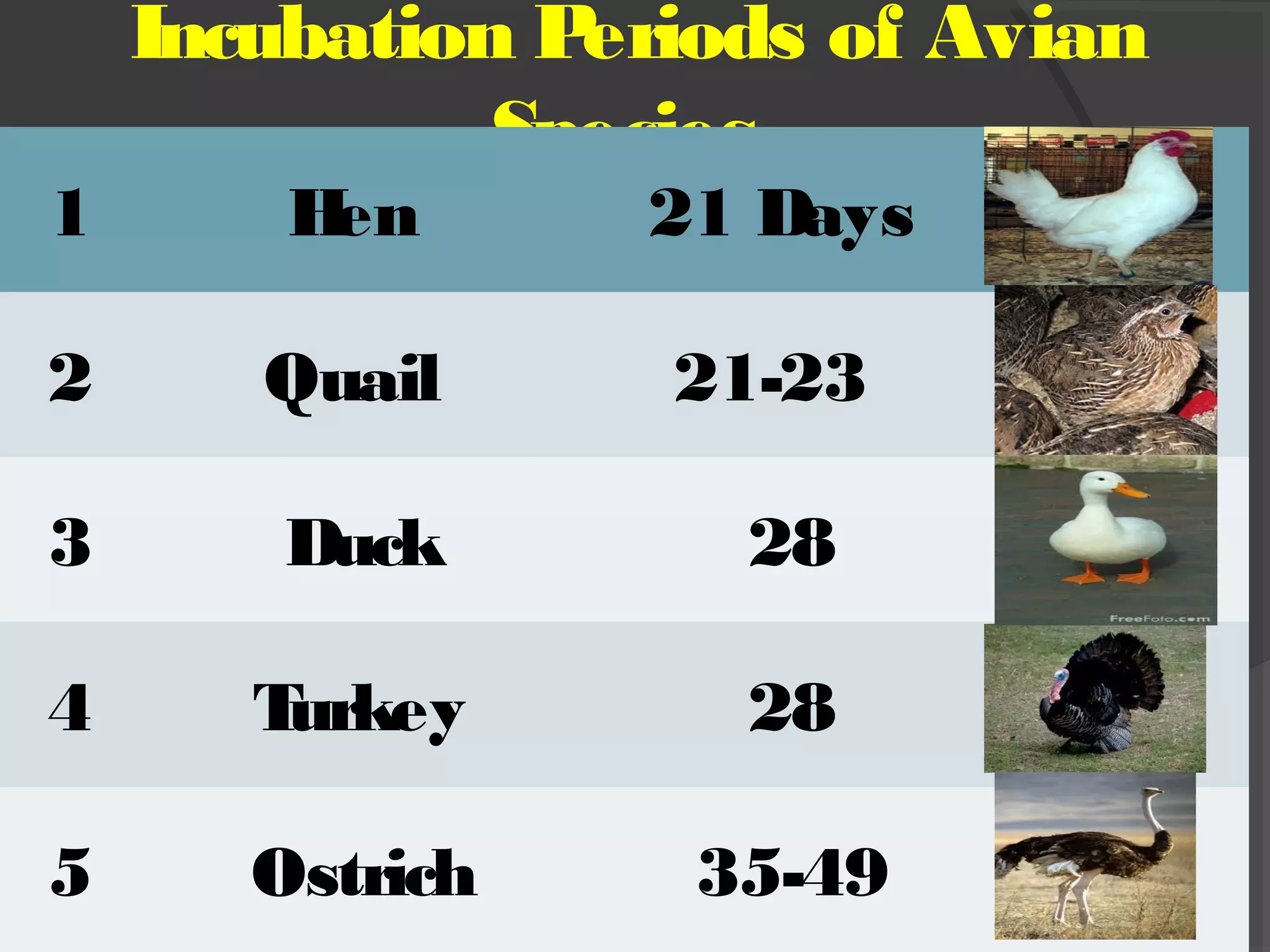
Incubation Periods of Avian
Species
.
1 Hen 21 Days
2 Quail 21-23
3 Duck 28
4 Turkey 28
5 Ostrich 35-49
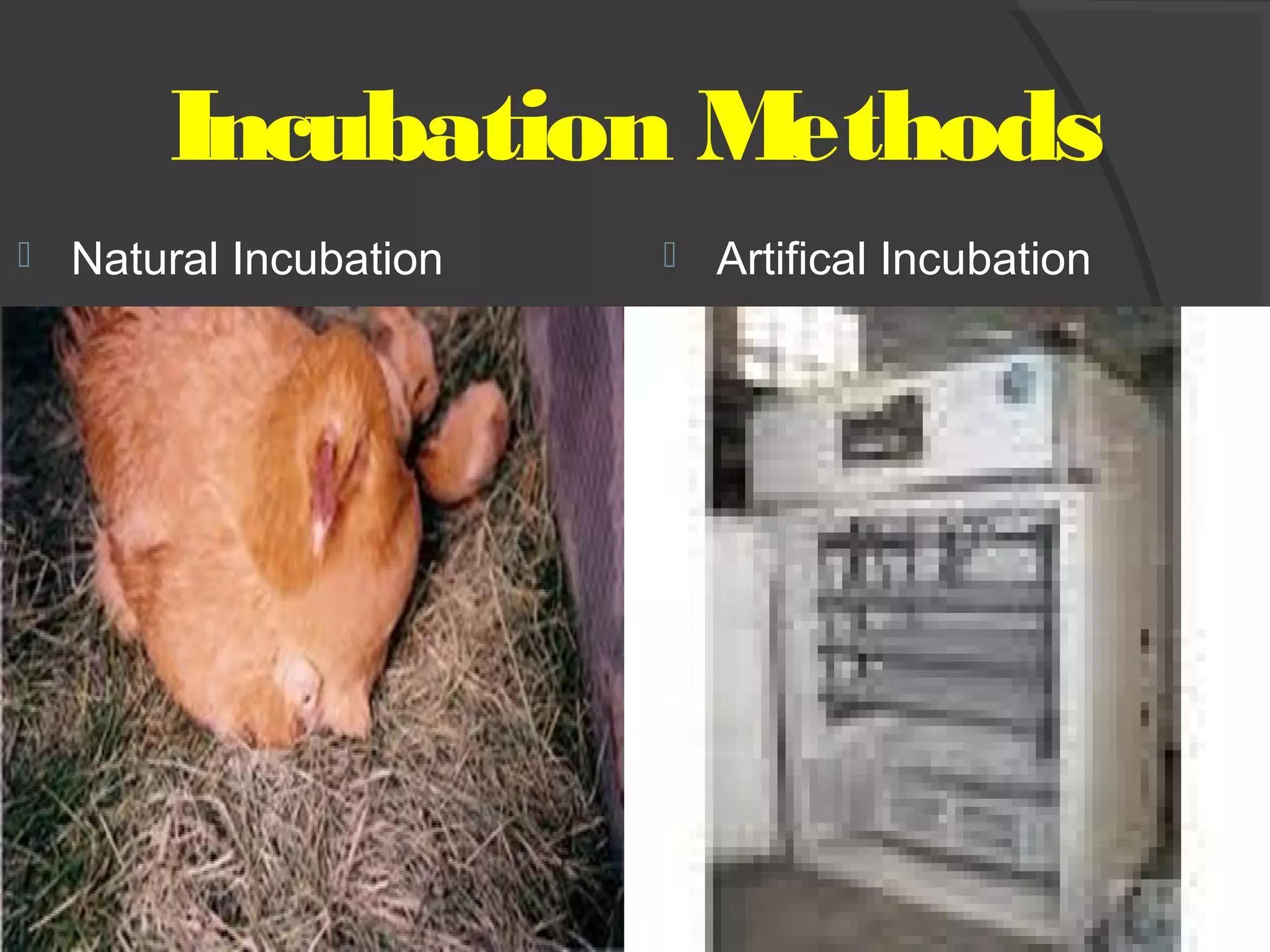
Incubation Methods
 Natural Incubation  Artifical Incubation
Natural Incubation
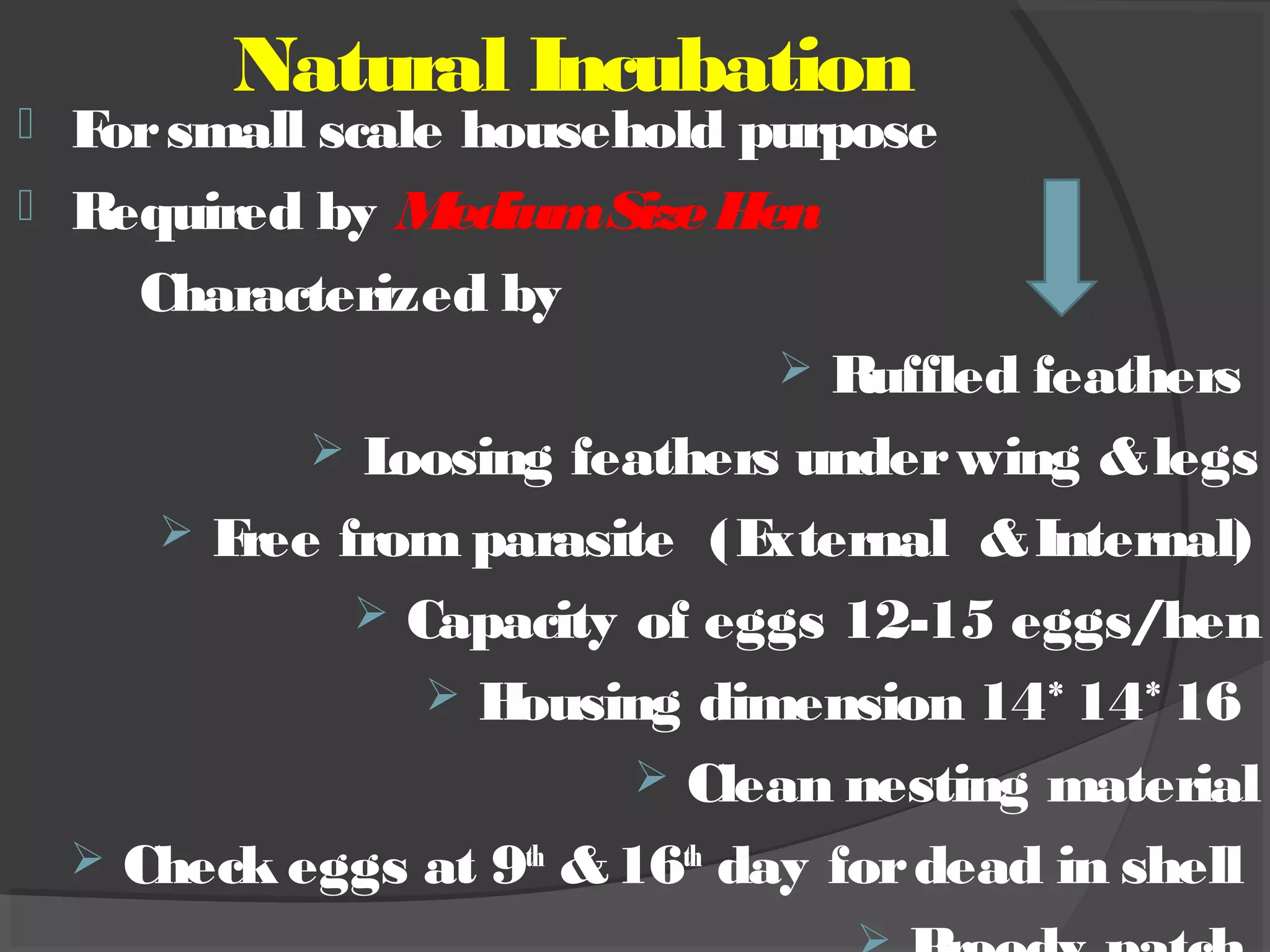
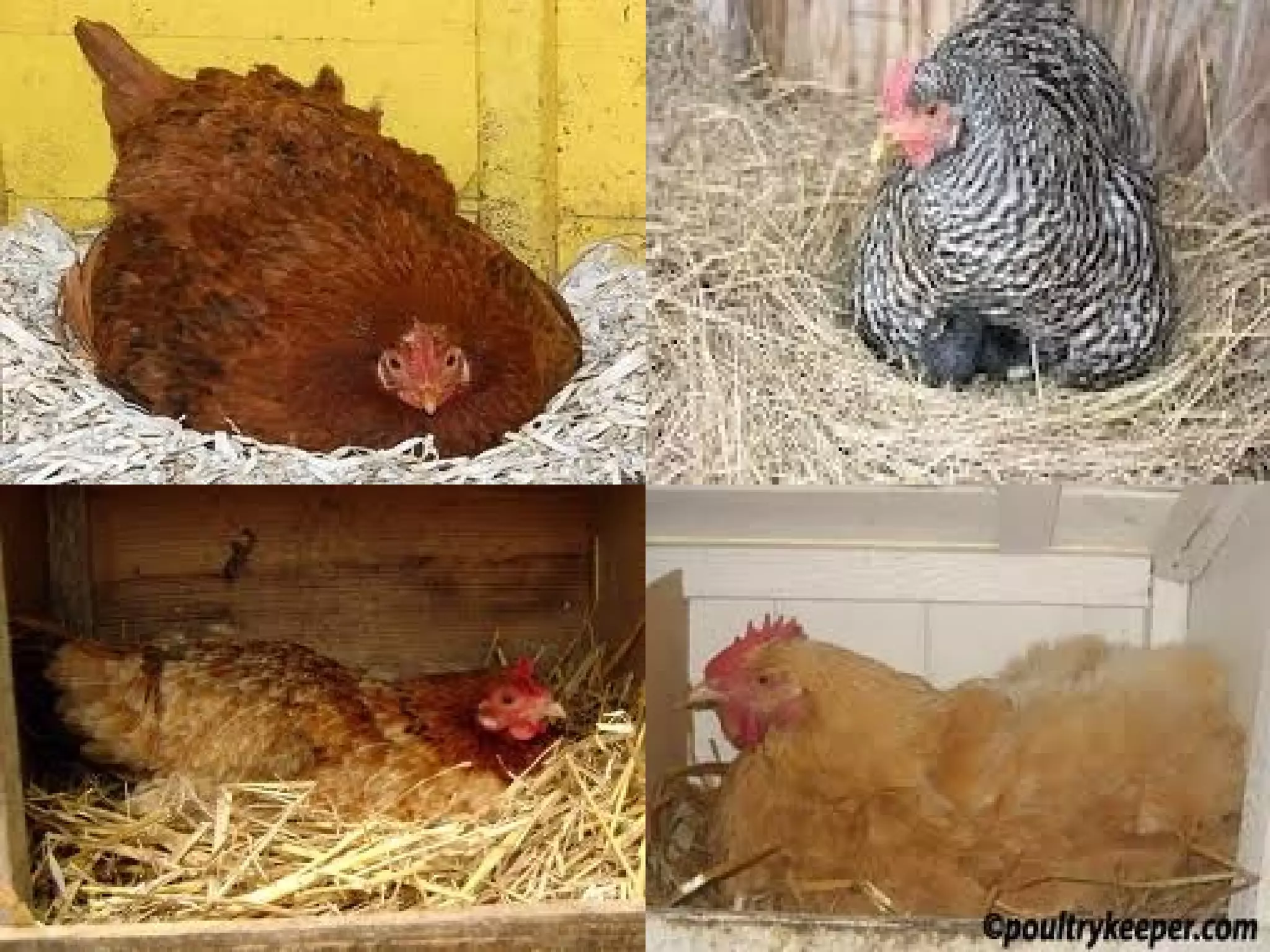
 Forsmall scale household purpose
 Required by MediumSizeHen
Characterized by
 Ruffled feathers
 Loosing feathers underwing &legs
 Free from parasite (External &Internal)
 Capacity of eggs 12-15 eggs/hen
 Housing dimension 14*14*16
 Clean nesting material
 Check eggs at 9th
&16th
day fordead in shell
.
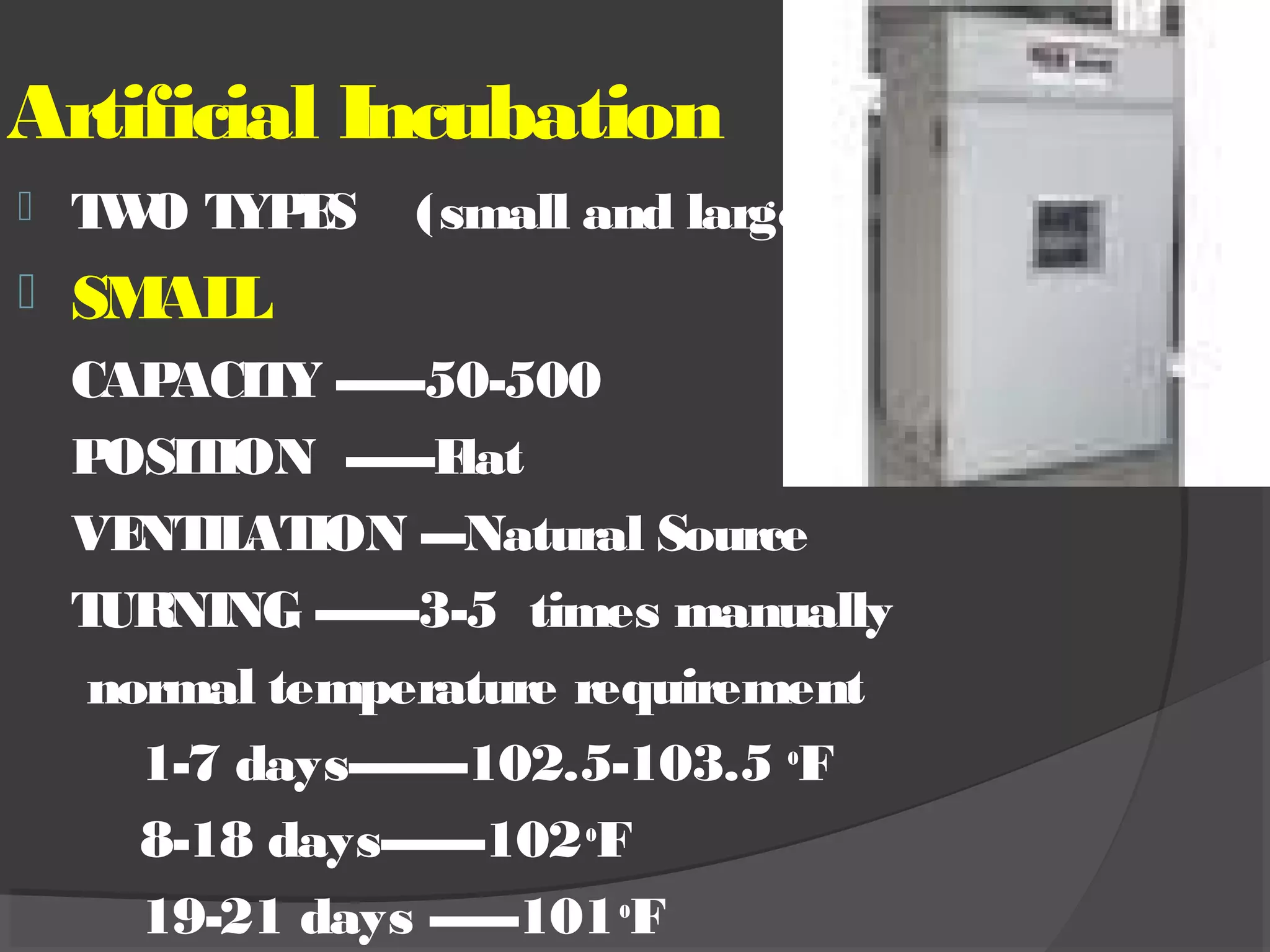
Artificial Incubation
 TWO TYPES (small and large )
 SMALL
CAPACITY ------50-500
POSITION ------Flat
VENTILATION ---Natural Source
TURNING -------3-5 times manually
normal temperature requirement
1-7 days--------102.5-103.5 o
F
8-18 days-------102o
F
19-21 days ------101o
F
.
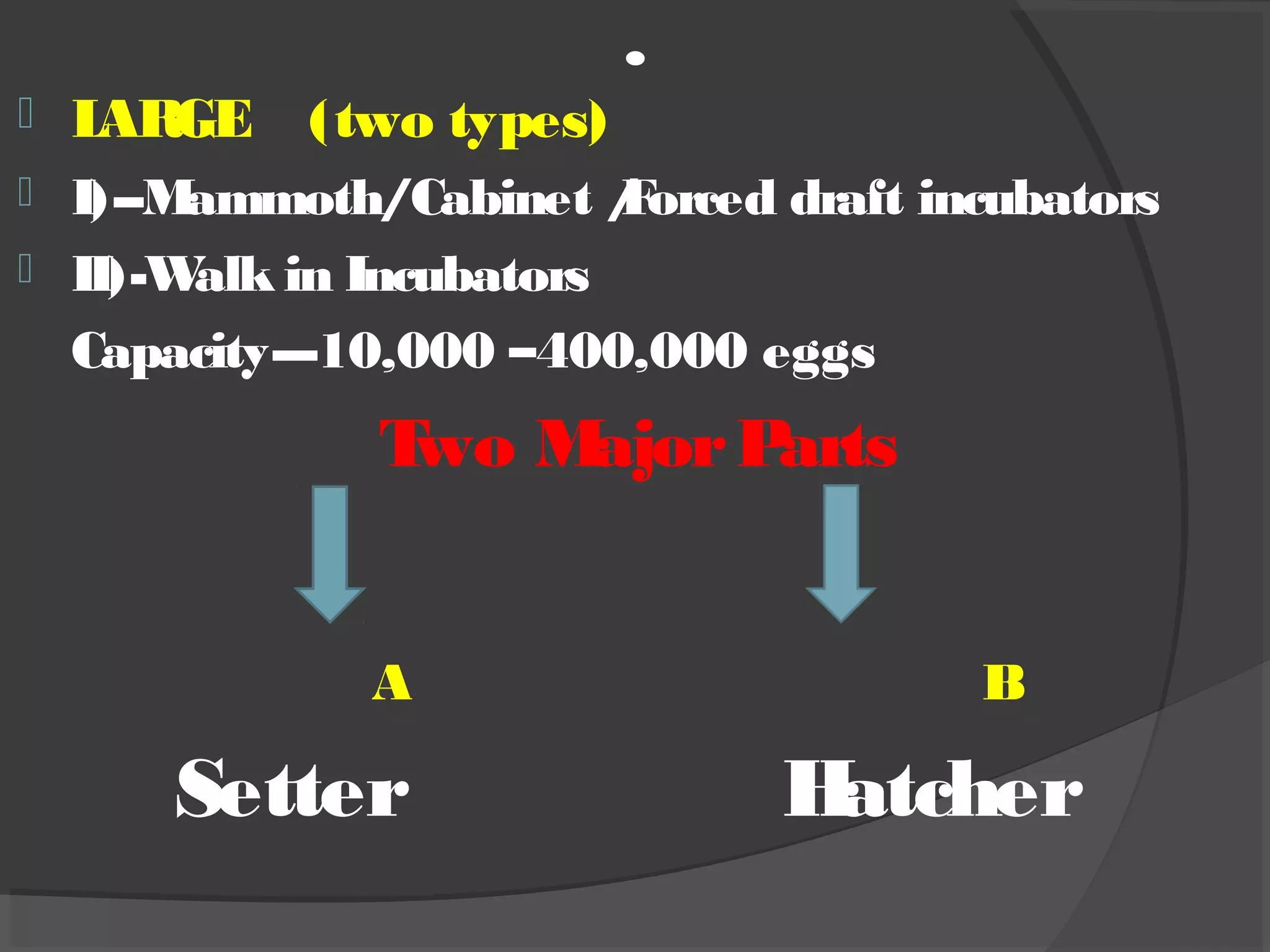
 LARGE (two types)
 I)--Mammoth/Cabinet /Forced draft incubators
 II)-Walk in Incubators
Capacity---10,000 –400,000 eggs
Two MajorParts
A B
Setter Hatcher
 Setter
 From 1-18 days
 Broaderend up &Pointerend at bottom
 Turning automatically--------6-8 times
 It has multiple trays
 Ventilators forVentilations
 Heat source –electricity with fansfor uniform
distribution
.
Setter
. .
 Hatcher
 19-21 days
 1/3 capacity of setter
 No turning
 Heat source –electricity with fansfor uniform distribution
.
Hatcher
. .
 .  .
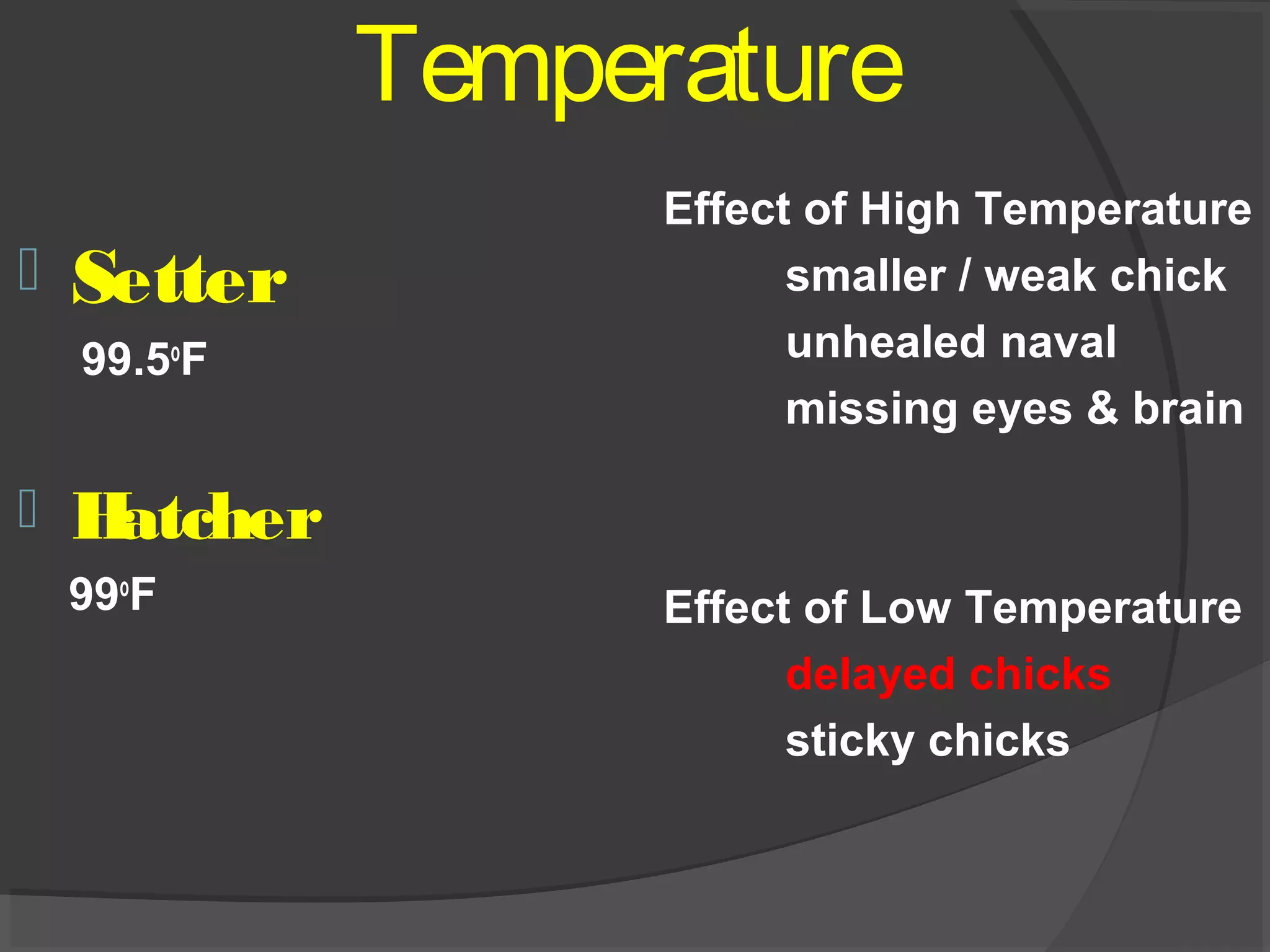
Temperature
 Setter
99.5o
F
 Hatcher
99o
F
Effect of High Temperature
smaller / weak chick
unhealed naval
missing eyes & brain
Effect of Low Temperature
delayed chicks
sticky chicks
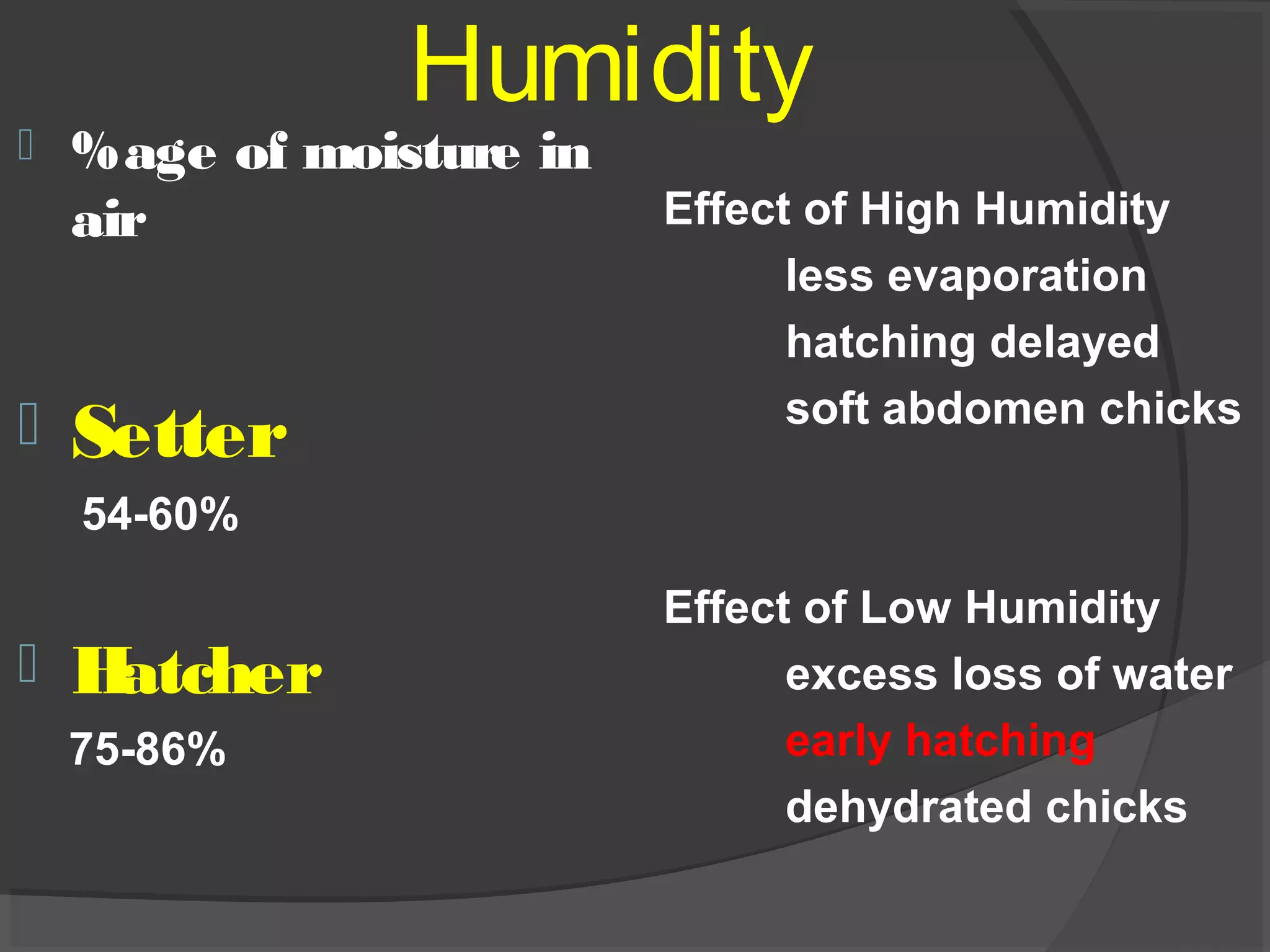
Humidity
 %age of moisture in
air
 Setter
54-60%
 Hatcher
75-86%
Effect of High Humidity
less evaporation
hatching delayed
soft abdomen chicks
Effect of Low Humidity
excess loss of water
early hatching
dehydrated chicks
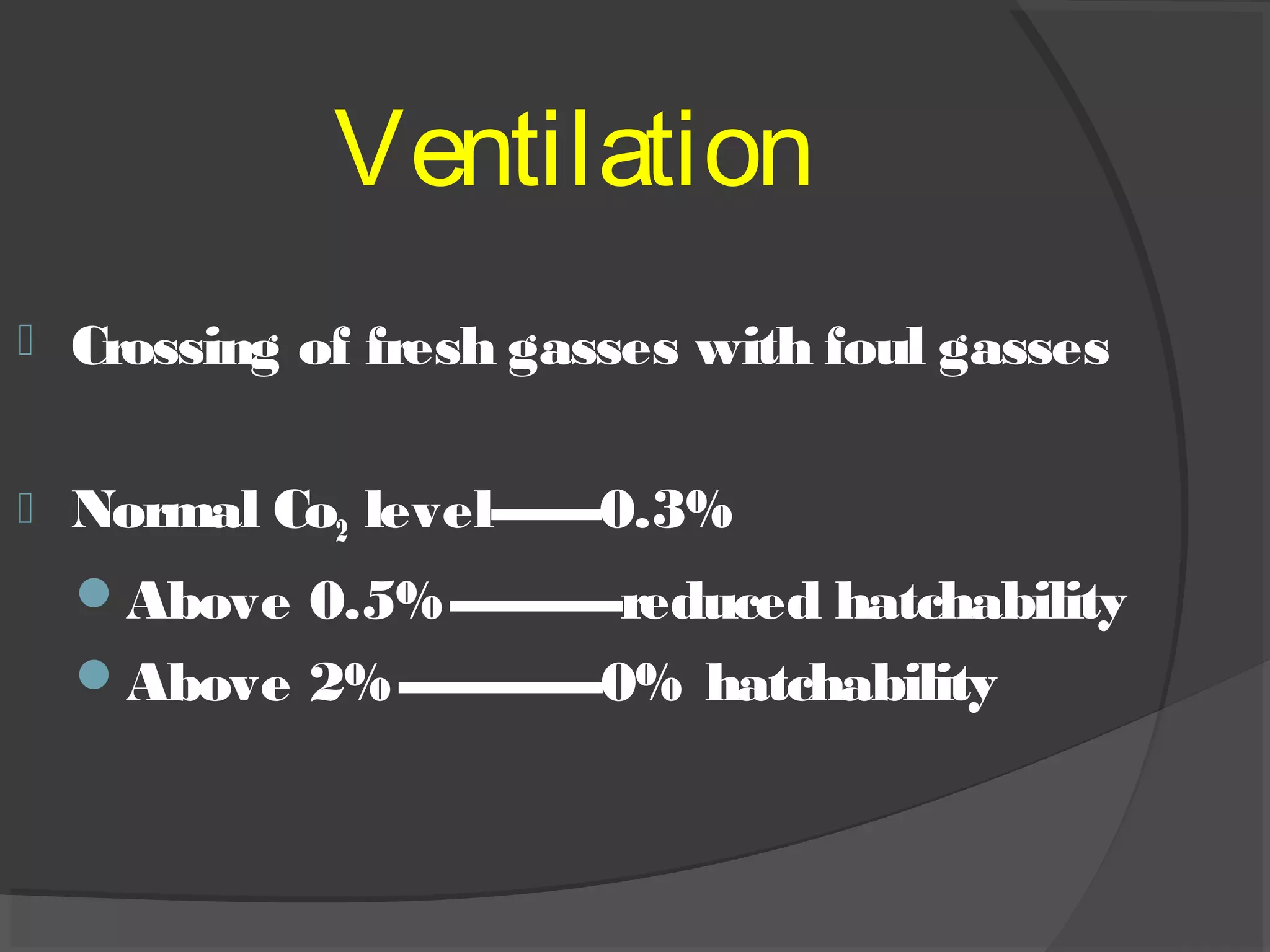
Ventilation
 Crossing of fresh gasses with foul gasses
 Normal Co2 level-------0.3%
Above 0.5%-----------reduced hatchability
Above 2%-------------0% hatchability
Altitude
 High altitude – reduced hatchability
 Normal hatchability is –85%
 At 2500 ft--------85%
 At 4950 ft--------74%
 At 7160 ft--------64%
Recommended sea level –2500 ft
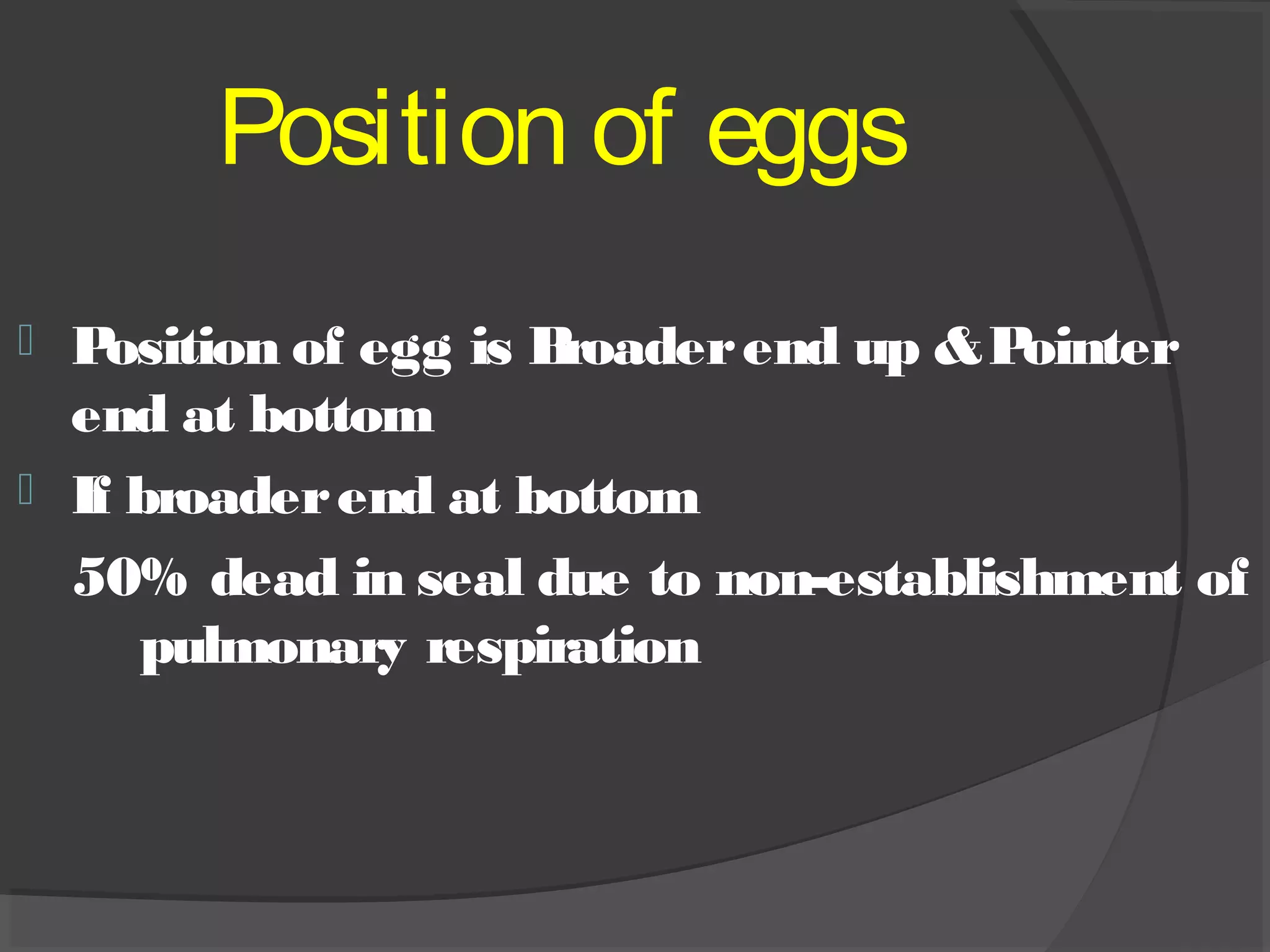
Position of eggs
 Position of egg is Broaderend up &Pointer
end at bottom
 If broaderend at bottom
50% dead in seal due to non-establishment of
pulmonary respiration
Turning of eggs
 Normal turning angel 40-45o
each side
 6-8 times turning /24 hours
 If turning in circle
 it will rapture allantois membrane
Normal turning provides
 uniform temperature
 reduce sticky chicks
 50% dead in shell due to non-establishment of pulmonary respiration

Basic hatchery requirement

  • 1.
  • 2.
    . Hatchery Hatchery is amachine which provides the basic requirement forthe development of embryo into a health chick
  • 3.
    . Oology The branch ofscience which deal with the study of eggs is known as Oology Egg A chamberthat provides nourishment and protection forthe growth and development of embryo inside it
  • 4.
    . Embryo The earliest development ofgerminal disk within egg until it hatches
  • 5.
    . Hatchling A chick froma recently – hatched egg
  • 6.
    . Germinal disk A small,circular, white patch on the uppersurface of yolk, containing cell from which the chick develops if the egg is fertilized
  • 7.
    . Incubation Process by which birds/hatchery hatch theirfertile eggs Incubation Period The time during which incubation takes place
  • 8.
    Incubation Periods ofAvian Species . 1 Hen 21 Days 2 Quail 21-23 3 Duck 28 4 Turkey 28 5 Ostrich 35-49
  • 9.
    Incubation Methods  NaturalIncubation  Artifical Incubation
  • 10.
    Natural Incubation  Forsmallscale household purpose  Required by MediumSizeHen Characterized by  Ruffled feathers  Loosing feathers underwing &legs  Free from parasite (External &Internal)  Capacity of eggs 12-15 eggs/hen  Housing dimension 14*14*16  Clean nesting material  Check eggs at 9th &16th day fordead in shell
  • 11.
  • 12.
    Artificial Incubation  TWOTYPES (small and large )  SMALL CAPACITY ------50-500 POSITION ------Flat VENTILATION ---Natural Source TURNING -------3-5 times manually normal temperature requirement 1-7 days--------102.5-103.5 o F 8-18 days-------102o F 19-21 days ------101o F
  • 13.
    .  LARGE (twotypes)  I)--Mammoth/Cabinet /Forced draft incubators  II)-Walk in Incubators Capacity---10,000 –400,000 eggs Two MajorParts A B Setter Hatcher
  • 14.
     Setter  From1-18 days  Broaderend up &Pointerend at bottom  Turning automatically--------6-8 times  It has multiple trays  Ventilators forVentilations  Heat source –electricity with fansfor uniform distribution .
  • 15.
  • 16.
     Hatcher  19-21days  1/3 capacity of setter  No turning  Heat source –electricity with fansfor uniform distribution .
  • 17.
  • 18.
    Temperature  Setter 99.5o F  Hatcher 99o F Effectof High Temperature smaller / weak chick unhealed naval missing eyes & brain Effect of Low Temperature delayed chicks sticky chicks
  • 19.
    Humidity  %age ofmoisture in air  Setter 54-60%  Hatcher 75-86% Effect of High Humidity less evaporation hatching delayed soft abdomen chicks Effect of Low Humidity excess loss of water early hatching dehydrated chicks
  • 20.
    Ventilation  Crossing offresh gasses with foul gasses  Normal Co2 level-------0.3% Above 0.5%-----------reduced hatchability Above 2%-------------0% hatchability
  • 21.
    Altitude  High altitude– reduced hatchability  Normal hatchability is –85%  At 2500 ft--------85%  At 4950 ft--------74%  At 7160 ft--------64% Recommended sea level –2500 ft
  • 22.
    Position of eggs Position of egg is Broaderend up &Pointer end at bottom  If broaderend at bottom 50% dead in seal due to non-establishment of pulmonary respiration
  • 23.
    Turning of eggs Normal turning angel 40-45o each side  6-8 times turning /24 hours  If turning in circle  it will rapture allantois membrane Normal turning provides  uniform temperature  reduce sticky chicks  50% dead in shell due to non-establishment of pulmonary respiration