Chapter Twelve:  Understanding Sexuality
Biological Bases of Human Sexuality Genetic basis XX = female XY = male Gonadal basis Structural development Male genital development  Female genital development Biological sexuality and the childhood years Puberty Females: Menarche Males
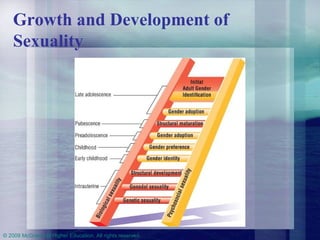
Growth and Development of Sexuality
Psychosocial Bases of Human Sexuality   Psychosocial sexuality:  Masculine and feminine aspects of sexuality Gender : Biological basis of sexuality Gender identity:  Recognition of one’s gender Gender preference:  Emotional and intellectual acceptance of one’s own gender
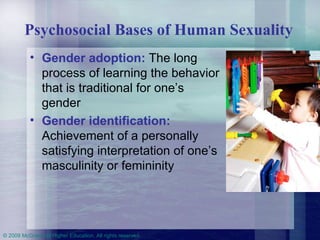
Psychosocial Bases of Human Sexuality   Gender adoption:  The long process of learning the behavior that is traditional for one’s gender Gender identification:  Achievement of a personally satisfying interpretation of one’s masculinity or femininity
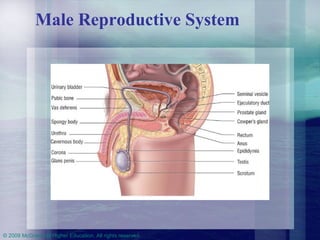
Male Reproductive System Testes Sperm development Interstitial cell-stimulating hormone Follicle-stimulating hormone Scrotum Ducts Seminal vesicles Prostate gland Cowper’s glands Penis
Male Reproductive System
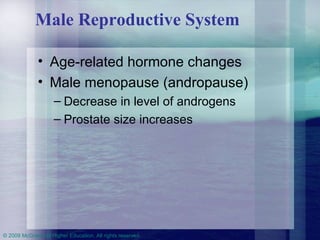
Male Reproductive System Age-related hormone changes Male menopause (andropause) Decrease in level of androgens Prostate size increases
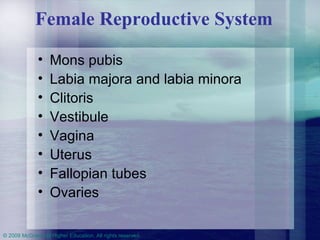
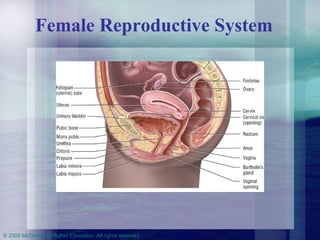
Female Reproductive System Mons pubis Labia majora and labia minora Clitoris Vestibule Vagina Uterus Fallopian tubes Ovaries
Female Reproductive System
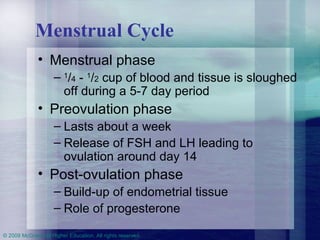
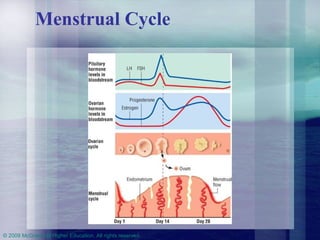
Menstrual Cycle Menstrual phase  1 / 4  -  1 / 2  cup of blood and tissue is sloughed off during a 5-7 day period Preovulation phase  Lasts about a week  Release of FSH and LH leading to ovulation around day 14 Post-ovulation phase  Build-up of endometrial tissue  Role of progesterone
Menstrual Cycle
Related Conditions Premenstrual syndrome (PMS)  Physical and psychological symptoms that recur during the same phase of the menstrual cycle Premenstrual dysphoric disorder (PMDD) Severe form of PMS Fibrocystic breast condition  Excessive secretory activity producing swollen, firm, or hardened tender breast tissue Menopause  Gradual decline in reproductive system function, usually by late 40s to mid 50s
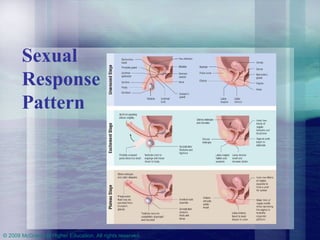
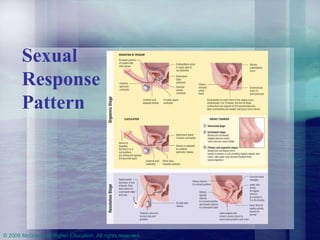
The Human Sexual Response Pattern Excitement stage  – arousal stage Plateau stage  – leveling off of arousal immediately before climax Orgasmic stage  – neuromuscular tension is released Resolution stage  – return of the body to a preexcitement stage
Sexual Response Pattern
Differences Between Men and Women in the Sexual Response Pattern Men are not multiorgasmic  Men reach orgasm quicker during coitus Women are multiorgasmic Women reach orgasm as quickly as men during masturbation
Patterns of Sexual Behavior Celibacy   Self-imposed avoidance of sexual intimacy Masturbation   Self-stimulation of the genitals Fantasy and erotic dreams Shared touching   Genital contact
Patterns of Sexual Behavior Oral-genital stimulation   Fellatio (oral stimulation of a male’s genitalia) Cunnilingus (oral stimulation of a female’s genitalia) Intercourse   Penile penetration of vagina Associated with procreation Anal sex   Performed by both heterosexual couples and gay men
Aging and Sexuality Sexual activity does decline with age but a significant population of older adults remain sexually active Changes in women:   Vaginal lubrication decreases Reduction in orgasmic contractions Changes in men:   Erection process is prolonged Decrease in contractions at orgasm Ejaculation decreases in force and volume
Sexual Orientation Heterosexuality  – Sexual attraction to the opposite gender Homosexuality  – Sexual attraction to the same gender “ Gay” refers to a male homosexual “ Lesbian” refers to a female homosexual Bisexuality  – Sexual attraction toward both genders
Bonds Between People Love   Emotional attachment of various levels Intimacy   Sharing of deep feelings
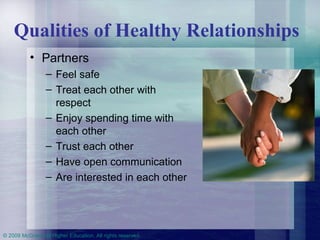
Qualities of Healthy Relationships Partners  Feel safe Treat each other with respect Enjoy spending time with each other Trust each other Have open communication Are interested in each other
Bonds Between People Communication in relationships Key to all healthy relationships Recognizing unhealthy relationships Excessive jealousy Dishonesty, irresponsibility, lack of patience Drug abuse Ending a relationship Respect and courtesy Keep message clear and simple
Relationships and Lifestyles Singlehood Cohabitation Gay and Lesbian Partnerships  Same-Sex Marriage Single parenthood Marriage Divorce Half of all marriages end in divorce Unrealistic expectations
Chapter Twelve:  Understanding Sexuality

Understanding Sexuality

  • 1.
    Chapter Twelve: Understanding Sexuality
  • 2.
    Biological Bases ofHuman Sexuality Genetic basis XX = female XY = male Gonadal basis Structural development Male genital development Female genital development Biological sexuality and the childhood years Puberty Females: Menarche Males
  • 3.
  • 4.
    Psychosocial Bases ofHuman Sexuality Psychosocial sexuality: Masculine and feminine aspects of sexuality Gender : Biological basis of sexuality Gender identity: Recognition of one’s gender Gender preference: Emotional and intellectual acceptance of one’s own gender
  • 5.
    Psychosocial Bases ofHuman Sexuality Gender adoption: The long process of learning the behavior that is traditional for one’s gender Gender identification: Achievement of a personally satisfying interpretation of one’s masculinity or femininity
  • 6.
    Male Reproductive SystemTestes Sperm development Interstitial cell-stimulating hormone Follicle-stimulating hormone Scrotum Ducts Seminal vesicles Prostate gland Cowper’s glands Penis
  • 7.
  • 8.
    Male Reproductive SystemAge-related hormone changes Male menopause (andropause) Decrease in level of androgens Prostate size increases
  • 9.
    Female Reproductive SystemMons pubis Labia majora and labia minora Clitoris Vestibule Vagina Uterus Fallopian tubes Ovaries
  • 10.
  • 11.
    Menstrual Cycle Menstrualphase 1 / 4 - 1 / 2 cup of blood and tissue is sloughed off during a 5-7 day period Preovulation phase Lasts about a week Release of FSH and LH leading to ovulation around day 14 Post-ovulation phase Build-up of endometrial tissue Role of progesterone
  • 12.
  • 13.
    Related Conditions Premenstrualsyndrome (PMS) Physical and psychological symptoms that recur during the same phase of the menstrual cycle Premenstrual dysphoric disorder (PMDD) Severe form of PMS Fibrocystic breast condition Excessive secretory activity producing swollen, firm, or hardened tender breast tissue Menopause Gradual decline in reproductive system function, usually by late 40s to mid 50s
  • 14.
    The Human SexualResponse Pattern Excitement stage – arousal stage Plateau stage – leveling off of arousal immediately before climax Orgasmic stage – neuromuscular tension is released Resolution stage – return of the body to a preexcitement stage
  • 15.
  • 16.
  • 17.
    Differences Between Menand Women in the Sexual Response Pattern Men are not multiorgasmic Men reach orgasm quicker during coitus Women are multiorgasmic Women reach orgasm as quickly as men during masturbation
  • 18.
    Patterns of SexualBehavior Celibacy Self-imposed avoidance of sexual intimacy Masturbation Self-stimulation of the genitals Fantasy and erotic dreams Shared touching Genital contact
  • 19.
    Patterns of SexualBehavior Oral-genital stimulation Fellatio (oral stimulation of a male’s genitalia) Cunnilingus (oral stimulation of a female’s genitalia) Intercourse Penile penetration of vagina Associated with procreation Anal sex Performed by both heterosexual couples and gay men
  • 20.
    Aging and SexualitySexual activity does decline with age but a significant population of older adults remain sexually active Changes in women: Vaginal lubrication decreases Reduction in orgasmic contractions Changes in men: Erection process is prolonged Decrease in contractions at orgasm Ejaculation decreases in force and volume
  • 21.
    Sexual Orientation Heterosexuality – Sexual attraction to the opposite gender Homosexuality – Sexual attraction to the same gender “ Gay” refers to a male homosexual “ Lesbian” refers to a female homosexual Bisexuality – Sexual attraction toward both genders
  • 22.
    Bonds Between PeopleLove Emotional attachment of various levels Intimacy Sharing of deep feelings
  • 23.
    Qualities of HealthyRelationships Partners Feel safe Treat each other with respect Enjoy spending time with each other Trust each other Have open communication Are interested in each other
  • 24.
    Bonds Between PeopleCommunication in relationships Key to all healthy relationships Recognizing unhealthy relationships Excessive jealousy Dishonesty, irresponsibility, lack of patience Drug abuse Ending a relationship Respect and courtesy Keep message clear and simple
  • 25.
    Relationships and LifestylesSinglehood Cohabitation Gay and Lesbian Partnerships Same-Sex Marriage Single parenthood Marriage Divorce Half of all marriages end in divorce Unrealistic expectations
  • 26.
    Chapter Twelve: Understanding Sexuality