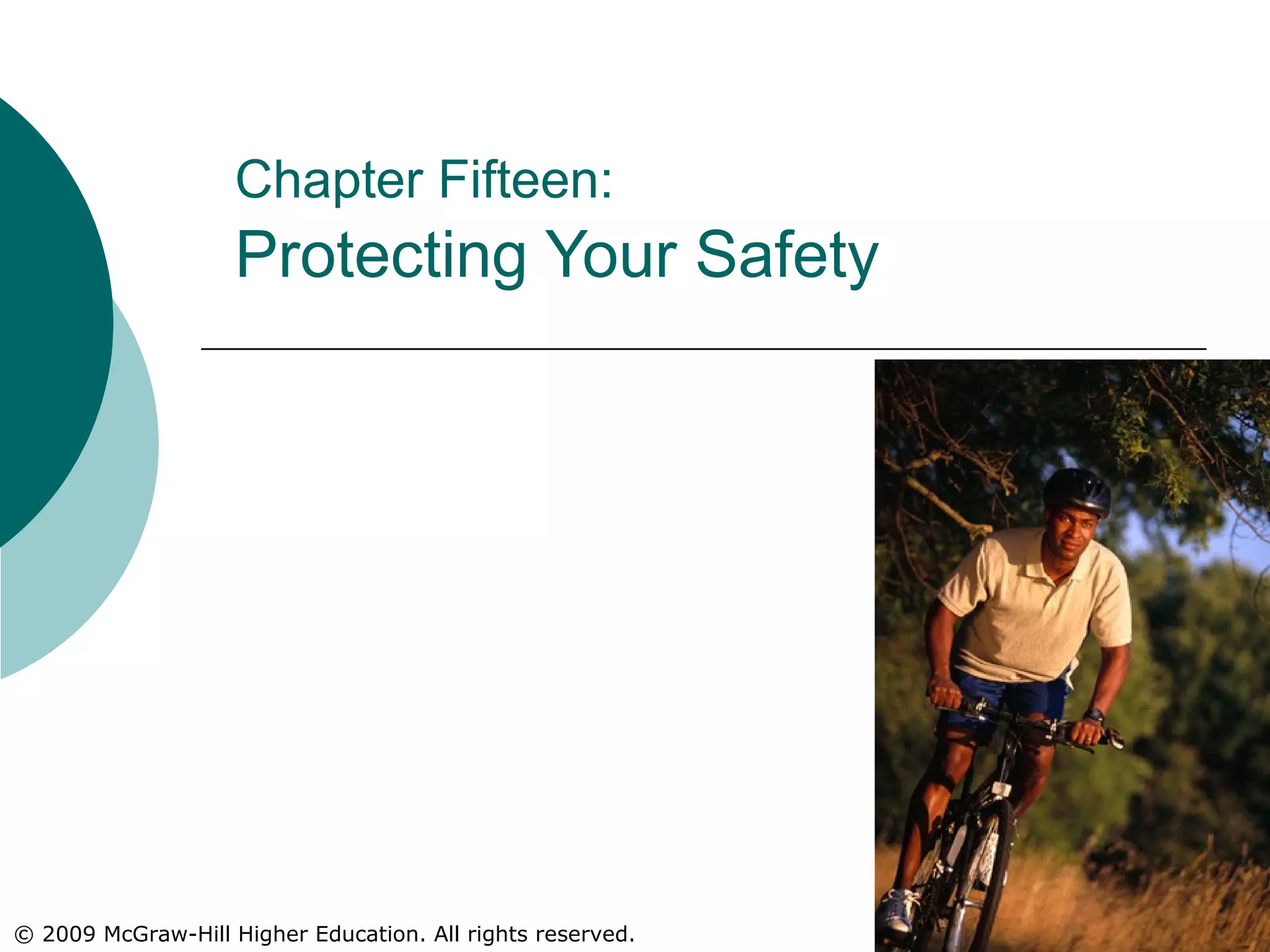
Chapter Fifteen:   Protecting Your Safety
What Are Intentional Injuries? Injuries purposefully inflicted By the victim By another person Interpersonal violence Family violence Violence in communities
Interpersonal Violence Homicide The intentional taking of one person’s life by another person Assault Robbery Rates of violence crime victimization Higher for males than females for all types of violence except rape and other sexual assault Higher for young adults Higher for African Americans
Interpersonal Violence Stalking Repeated visual or physical proximity, nonconsensual communication, or threats that would cause fear in a reasonable person Rape and sexual assault Crime of sexual aggression in which the victim is forced to have sexual intercourse Acquaintance/date rape Forced sexual encounter between individuals who know each other Use of alcohol, Rohypnol (roofies), ketamine hydrochloride (special K), and gamma-hydroxybutyrate (GHB) play a role in date rapes
Interpersonal Violence Sexual harassment   Unwanted attention of a sexual nature  Could occur in a campus, class, or work environment Workshops and educational seminars are now common and serve to educate men and women on this topic
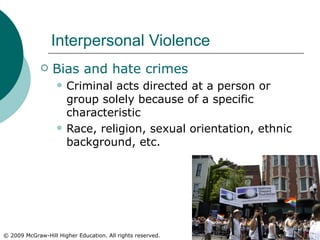
Interpersonal Violence Bias and hate crimes   Criminal acts directed at a person or group solely because of a specific characteristic Race, religion, sexual orientation, ethnic background, etc.
Family Violence Use of physical force by one family member against another with the intent to hurt, injure, or cause harm Intimate partner violence Maltreatment of children Maltreatment of elders
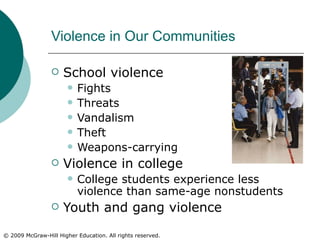
Violence in Our Communities School violence Fights Threats Vandalism Theft Weapons-carrying Violence in college College students experience less violence than same-age nonstudents Youth and gang violence
Campus Safety Be aware of potential threats Think constructively about your personal safety Use campus safety resources
Identity Theft Prevention Order a copy of your credit report and review it carefully Avoid obvious, commonly used passwords Keep personal information at home secure Ask about security procedures at work/school Read all bills carefully and recognize all charges Do not give out personal information by parties requesting it unless you have consented Be wary of pickpockets and carry only the information needed If you are a victim, contact the police and credit bureaus quickly
Unintentional Injuries Injuries that occur without anyone’s intending that harm be done Recognize that injuries are preventable Be aware of injuries that occur in the following environments or situations: Motor vehicles Home/residence Recreational activities
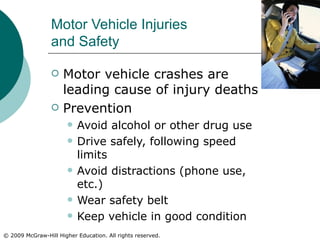
Motor Vehicle Injuries  and Safety Motor vehicle crashes are leading cause of injury deaths Prevention Avoid alcohol or other drug use Drive safely, following speed limits Avoid distractions (phone use, etc.) Wear safety belt Keep vehicle in good condition
Motor Vehicle Injuries and Safety Motorcycle safety Wear a helmet Protect skin from serious injury Gloves, boots, heavy clothing Get proper training Don’t ride on wet roads if you don’t have to Ride defensively Avoid alcohol or other drug use
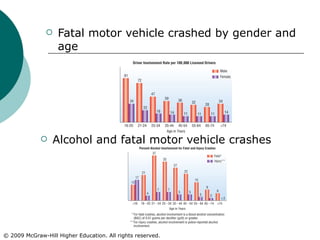
Fatal motor vehicle crashed by gender and age Alcohol and fatal motor vehicle crashes
Residential Injuries and Safety Poisonings Falls Exposure to heat, smoke, flames Suffocation Firearms
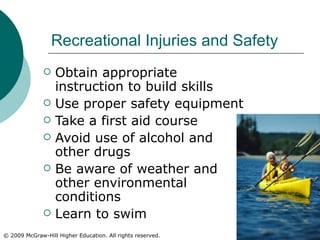
Recreational Injuries and Safety Obtain appropriate instruction to build skills Use proper safety equipment Take a first aid course Avoid use of alcohol and other drugs Be aware of weather and other environmental conditions Learn to swim
Chapter Fifteen:  Protecting Your Safety

Protecting your Safety

  • 1.
    Chapter Fifteen: Protecting Your Safety
  • 2.
    What Are IntentionalInjuries? Injuries purposefully inflicted By the victim By another person Interpersonal violence Family violence Violence in communities
  • 3.
    Interpersonal Violence HomicideThe intentional taking of one person’s life by another person Assault Robbery Rates of violence crime victimization Higher for males than females for all types of violence except rape and other sexual assault Higher for young adults Higher for African Americans
  • 4.
    Interpersonal Violence StalkingRepeated visual or physical proximity, nonconsensual communication, or threats that would cause fear in a reasonable person Rape and sexual assault Crime of sexual aggression in which the victim is forced to have sexual intercourse Acquaintance/date rape Forced sexual encounter between individuals who know each other Use of alcohol, Rohypnol (roofies), ketamine hydrochloride (special K), and gamma-hydroxybutyrate (GHB) play a role in date rapes
  • 5.
    Interpersonal Violence Sexualharassment Unwanted attention of a sexual nature Could occur in a campus, class, or work environment Workshops and educational seminars are now common and serve to educate men and women on this topic
  • 6.
    Interpersonal Violence Biasand hate crimes Criminal acts directed at a person or group solely because of a specific characteristic Race, religion, sexual orientation, ethnic background, etc.
  • 7.
    Family Violence Useof physical force by one family member against another with the intent to hurt, injure, or cause harm Intimate partner violence Maltreatment of children Maltreatment of elders
  • 8.
    Violence in OurCommunities School violence Fights Threats Vandalism Theft Weapons-carrying Violence in college College students experience less violence than same-age nonstudents Youth and gang violence
  • 9.
    Campus Safety Beaware of potential threats Think constructively about your personal safety Use campus safety resources
  • 10.
    Identity Theft PreventionOrder a copy of your credit report and review it carefully Avoid obvious, commonly used passwords Keep personal information at home secure Ask about security procedures at work/school Read all bills carefully and recognize all charges Do not give out personal information by parties requesting it unless you have consented Be wary of pickpockets and carry only the information needed If you are a victim, contact the police and credit bureaus quickly
  • 11.
    Unintentional Injuries Injuriesthat occur without anyone’s intending that harm be done Recognize that injuries are preventable Be aware of injuries that occur in the following environments or situations: Motor vehicles Home/residence Recreational activities
  • 12.
    Motor Vehicle Injuries and Safety Motor vehicle crashes are leading cause of injury deaths Prevention Avoid alcohol or other drug use Drive safely, following speed limits Avoid distractions (phone use, etc.) Wear safety belt Keep vehicle in good condition
  • 13.
    Motor Vehicle Injuriesand Safety Motorcycle safety Wear a helmet Protect skin from serious injury Gloves, boots, heavy clothing Get proper training Don’t ride on wet roads if you don’t have to Ride defensively Avoid alcohol or other drug use
  • 14.
    Fatal motor vehiclecrashed by gender and age Alcohol and fatal motor vehicle crashes
  • 15.
    Residential Injuries andSafety Poisonings Falls Exposure to heat, smoke, flames Suffocation Firearms
  • 16.
    Recreational Injuries andSafety Obtain appropriate instruction to build skills Use proper safety equipment Take a first aid course Avoid use of alcohol and other drugs Be aware of weather and other environmental conditions Learn to swim
  • 17.
    Chapter Fifteen: Protecting Your Safety

Editor's Notes

  • #2 Image source: Royalty-Free/Corbis